Struggling to fill open positions quickly while managing multiple clients and candidate pipelines?
As hiring demands increase, staffing agencies often spend valuable time sourcing candidates, screening resumes, and handling repetitive recruitment tasks instead of focusing on successful placements.
That is why recruiting tools have become essential for modern staffing agencies.
The right solution can help you automate manual work, connect with qualified candidates faster, and improve hiring efficiency across every stage of the recruitment process.
In this guide, you'll learn:
- Why staffing agencies need recruiting tools
- The 11 best recruiting tools for staffing agencies
- How to choose the right recruiting software
- Common mistakes to avoid before making a decision
Why Staffing Agencies Need Recruiting Tools to Fill Roles Faster
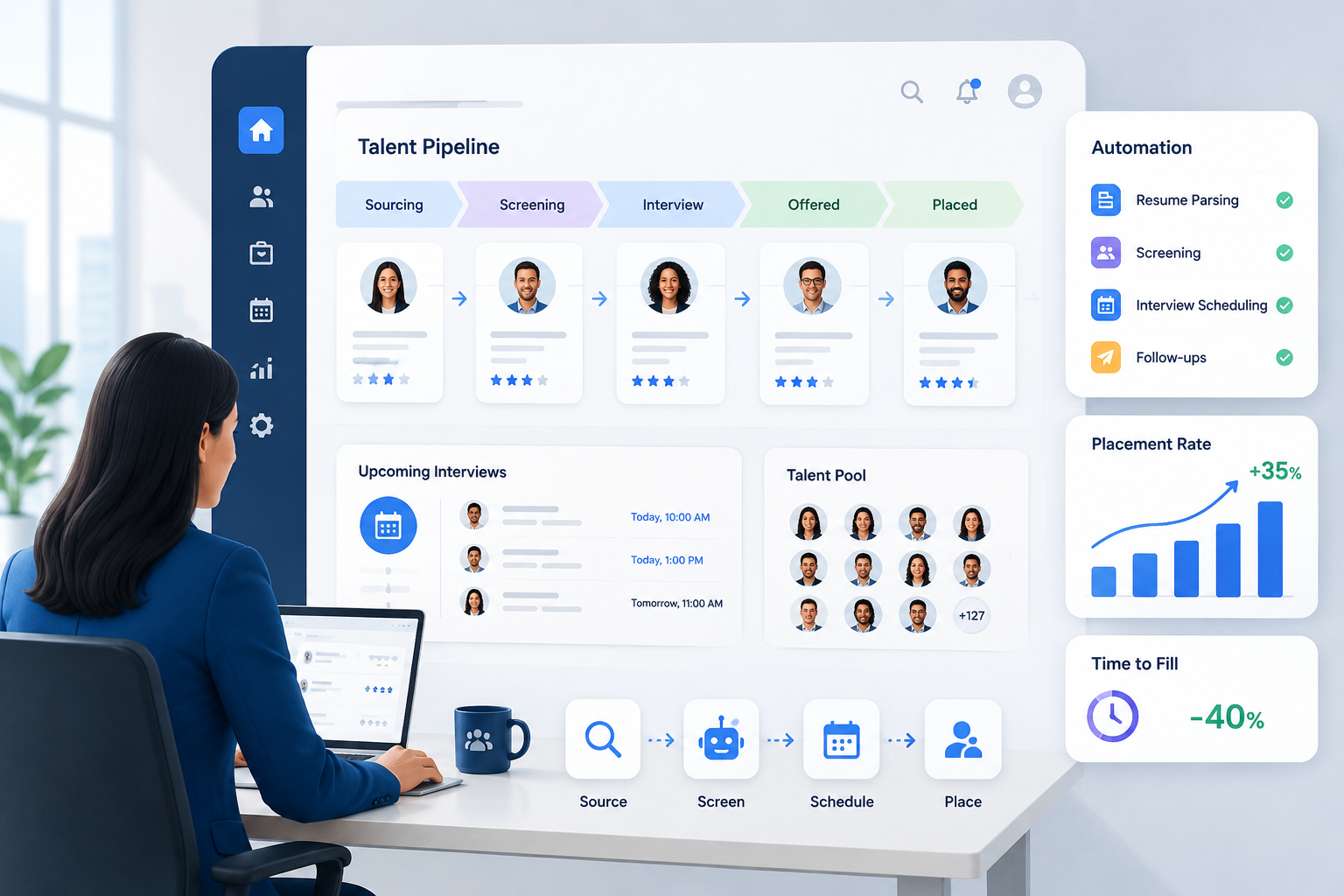
The pressure on staffing agencies has never been higher. Clients expect faster hiring, candidates expect quick communication, and recruiters are expected to manage everything efficiently.
Without the right recruiting tools, keeping up with these demands becomes increasingly difficult.
Growing Hiring Demands Are Hard to Manage Manually
As agencies take on more clients and job openings, manual recruitment processes quickly become overwhelming.
Tracking candidates, reviewing resumes, and managing communication across multiple roles can slow down the entire hiring process.
Recruiting tools help centralize these activities, making it easier to manage growing workloads without losing productivity.
Faster Placements Create a Better Client Experience
Clients want qualified candidates as quickly as possible. Delays in sourcing, screening, or scheduling interviews can impact client satisfaction and reduce the chances of winning repeat business.
With recruiting software, you can shorten hiring timelines and deliver candidates faster, creating a more reliable and responsive client experience.
Recruiters Spend Too Much Time on Administrative Tasks
Many recruiters spend a large portion of their day on repetitive tasks such as updating records, scheduling interviews, and sending follow-up emails.
These activities are necessary but take time away from relationship-building and candidate engagement.
Recruiting tools automate routine work, allowing recruiters to focus on high-value tasks that drive placements.
Suggested Reading:
How Recruitment Automation Is Transforming Hiring in USAAccess to Better Talent Improves Placement Success
Finding the right candidate is often more challenging than filling the position quickly. Agencies need access to larger talent pools and better search capabilities to identify strong matches.
Modern recruiting platforms make it easier to source, organize, and evaluate candidates from multiple channels in one place.
Automation Helps Agencies Scale Without Expanding Teams
As placement volumes increase, hiring additional recruiters is not always the most efficient solution. Scaling manually can increase costs and create operational challenges.
Recruiting tools automate key parts of the hiring process, helping your agency handle more roles, serve more clients, and grow efficiently without significantly increasing headcount.
11 Best Recruiting Tools for Staffing Agencies
Now that you understand why recruiting tools are essential, the next step is choosing the right platform.
While every staffing agency has different requirements, the tools below are among the most widely used for improving sourcing, screening, engagement, and placement speed.
1. Leelu AI
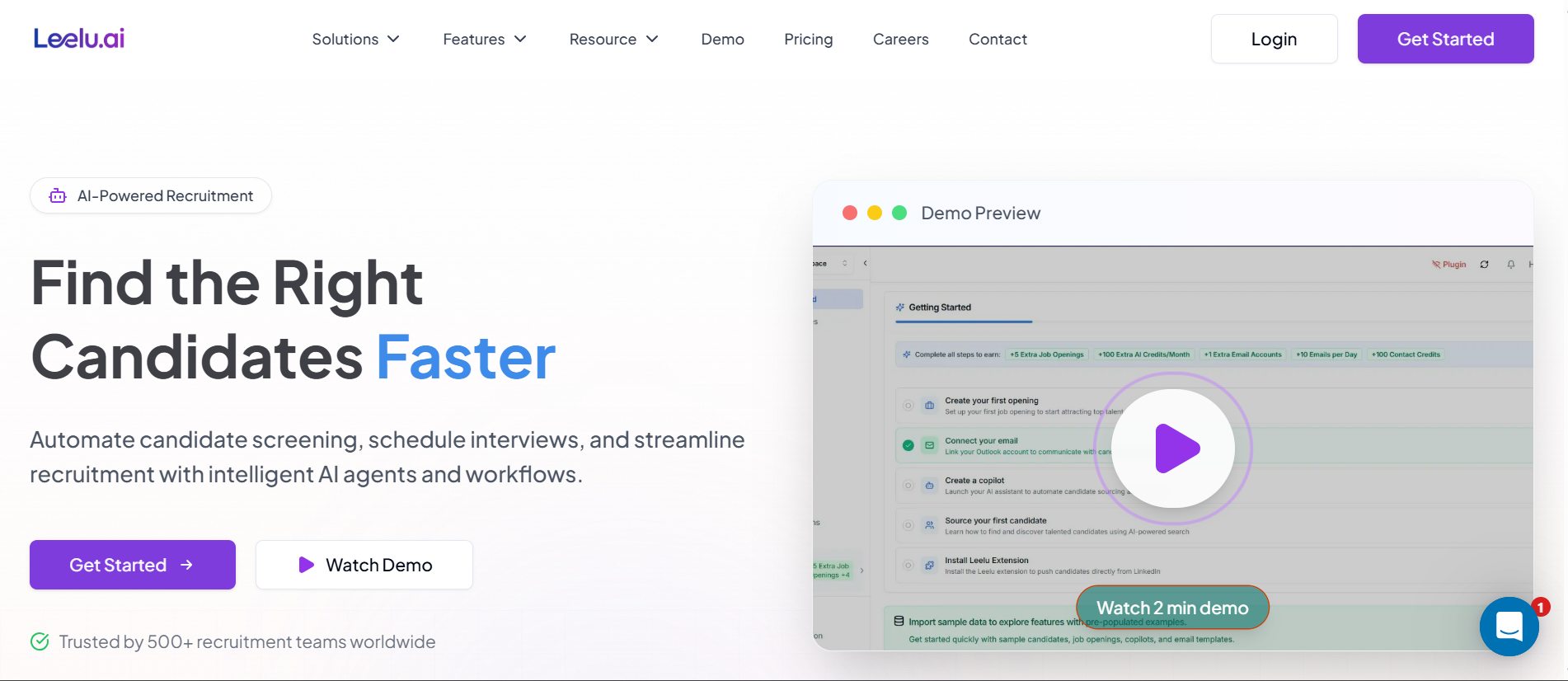
Leelu AI is an AI recruiting copilot designed to automate sourcing, candidate screening, outreach, and interview scheduling.
It helps staffing agencies reduce manual recruiting work while filling roles faster.
Best For
Staffing agencies that want to automate large parts of their recruitment process and scale placements without increasing recruiter workload.
Key Features
- Access to 500M+ candidate profiles across LinkedIn, job boards, and ATS platforms
- AI-powered candidate sourcing and matching
- Automated email, LinkedIn, and SMS outreach
- AI resume screening and candidate scoring
- AI interview scheduling and follow-ups
- Multi-client recruitment management
- ATS and CRM integrations
- Autonomous sourcing agents that run continuously
Pricing
- Starter: $79/month
- Growth: $149/month
- Scale: $249/month
- Agency Pro: Custom pricing for staffing agencies
2. Bullhorn
Bullhorn is one of the most established recruiting platforms in the staffing industry. It combines ATS, CRM, and workforce management capabilities into a single system.
Best For
Large staffing agencies and enterprise recruitment firms manage high hiring volumes.
Key Features
- ATS and CRM functionality
- Candidate relationship management
- Recruitment automation workflows
- Reporting and analytics
- Workforce and staffing management tools
- Extensive integration ecosystem
Pricing
Bullhorn does not publicly disclose pricing. Industry estimates suggest costs typically range between $99 and $315 per user per month, with annual contracts often starting around $20,000 or more depending on agency size and implementation requirements.
3. Recruit CRM
Recruit CRM is a cloud-based ATS and CRM platform known for its user-friendly interface and affordability. It is particularly popular among small and mid-sized staffing agencies.
Best For
Small to mid-sized recruitment agencies looking for an easy-to-use ATS and CRM solution.
Key Features
- Candidate tracking and pipeline management
- Resume parsing
- Email integrations
- Workflow automation
- Client and contact management
- Reporting dashboards
- Mobile recruiting capabilities
Pricing
Recruit CRM pricing starts at approximately:
- Pro: $100 per user/month
- Business: $150 per user/month
- Enterprise: Custom pricing
Pricing may vary based on billing terms and additional features.
4. Zoho Recruit
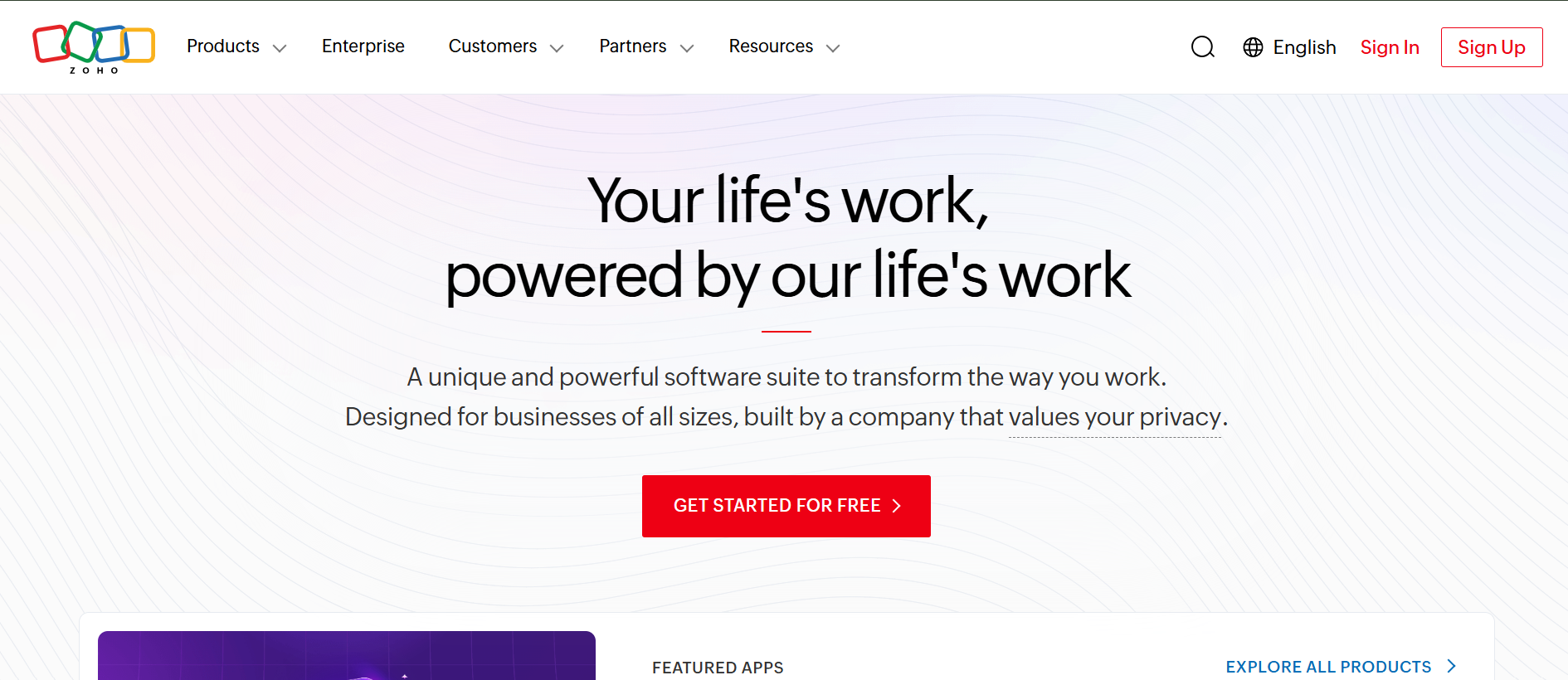
Zoho Recruit combines applicant tracking, candidate sourcing, recruitment automation, and CRM capabilities in one platform.
It is often chosen by agencies that need flexibility without enterprise-level costs.
Best For
Growing staffing agencies that need recruitment automation and strong customization options.
Key Features
- AI-powered candidate matching
- Resume management and parsing
- Social recruiting tools
- Interview scheduling
- Recruitment workflows and automation
- Candidate and staffing portals
- Advanced reporting and analytics
- 50+ integrations
Pricing
Zoho Recruit offers multiple plans:
- Free Plan: $0
- Standard: Starts around $30/user/month
- Enterprise: Up to approximately $75/user/month for staffing agencies
- Custom enterprise options available
5. LinkedIn Recruiter
LinkedIn Recruiter gives agencies direct access to LinkedIn's massive professional network, making it one of the most effective sourcing tools available.
Best For
Recruiters focused on sourcing passive candidates and building talent pipelines.
Key Features
- Access to LinkedIn's global professional network
- Advanced candidate search filters
- AI-powered talent recommendations
- InMail messaging
- Talent pipeline management
- Team collaboration features
- Recruiting analytics and insights
Pricing
LinkedIn does not publicly publish Recruiter pricing. However, industry estimates place LinkedIn Recruiter plans between $170 and $900+ per month, depending on seat count, recruiter access levels, and contract terms.
For agencies that rely heavily on LinkedIn sourcing, the investment is often justified by access to one of the largest professional talent databases available.
6. Manatal
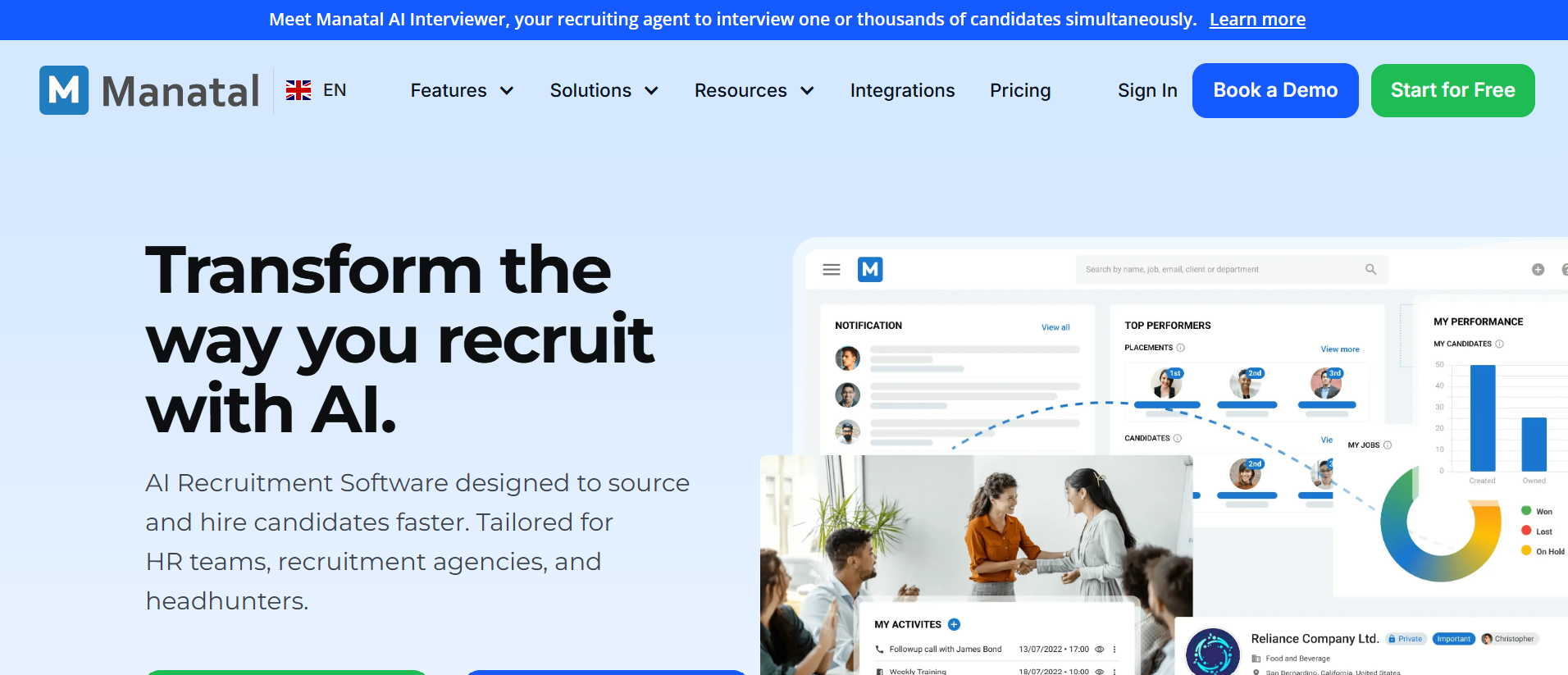
Manatal is an AI-powered recruitment platform that combines applicant tracking, candidate relationship management, and recruitment automation.
Its affordable pricing and modern interface make it a popular choice for growing staffing agencies.
Best For
Small and mid-sized staffing agencies looking for AI-powered recruiting features without enterprise-level costs.
Key Features
- AI candidate recommendations
- Applicant Tracking System (ATS)
- Recruitment CRM
- Resume parsing
- Candidate enrichment from social profiles
- Workflow automation
- Interview scheduling
- Analytics and recruitment reporting
Pricing
Manatal offers transparent pricing:
- Professional: $19/user/month
- Enterprise: $39/user/month
- Custom plans available for larger organizations
7. JobAdder
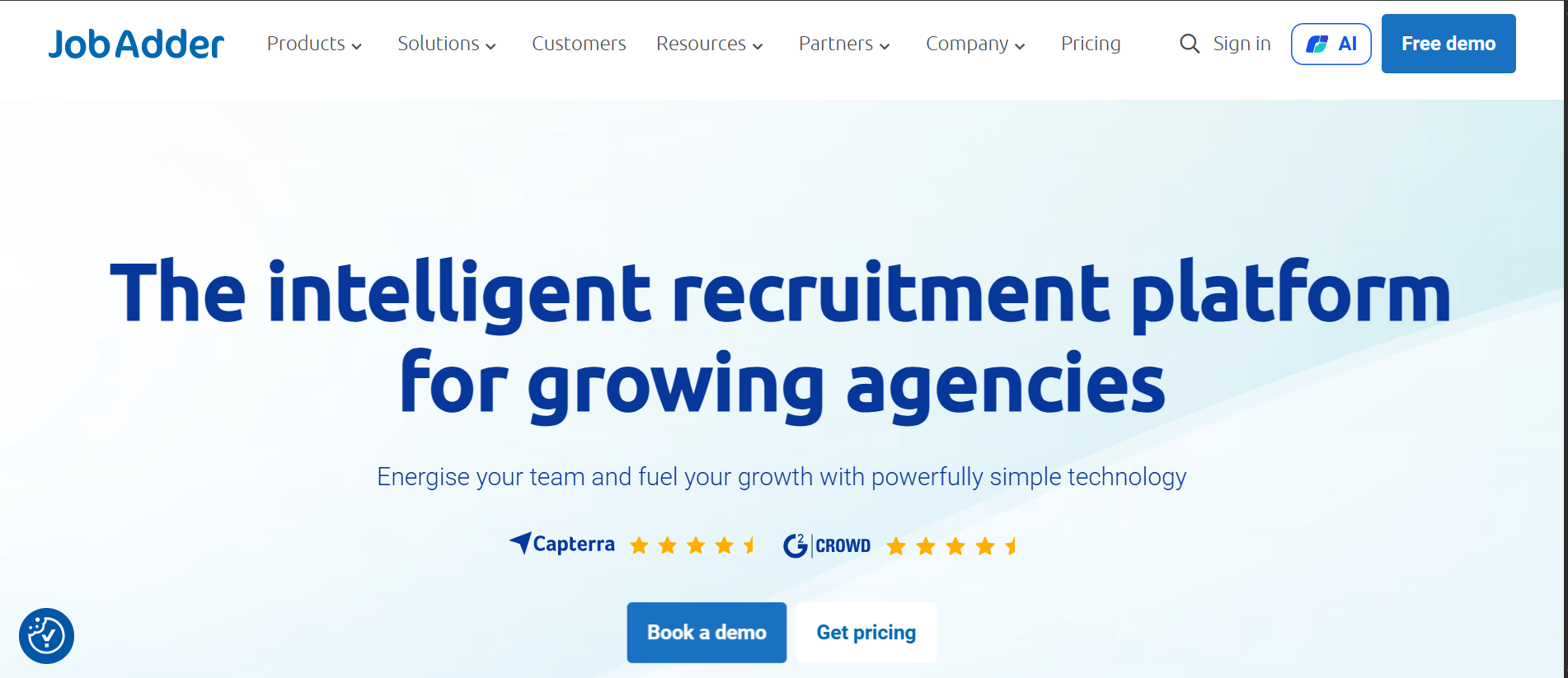
JobAdder is a recruitment management platform designed to help agencies manage sourcing, candidate pipelines, client relationships, and placements from one system.
Best For
Recruitment agencies that need a balance between recruiting functionality and client relationship management.
Key Features
- ATS and CRM functionality
- Candidate sourcing tools
- Job board integrations
- Recruitment workflow automation
- Interview scheduling
- Candidate communication tracking
- Mobile recruiting capabilities
- Placement and performance reporting
Pricing
JobAdder pricing starts at:
- Lite: Around $129/user/month
- Essential: Around $179/user/month
- Professional: Custom pricing
Final pricing depends on features, integrations, and team size.
8. Gem
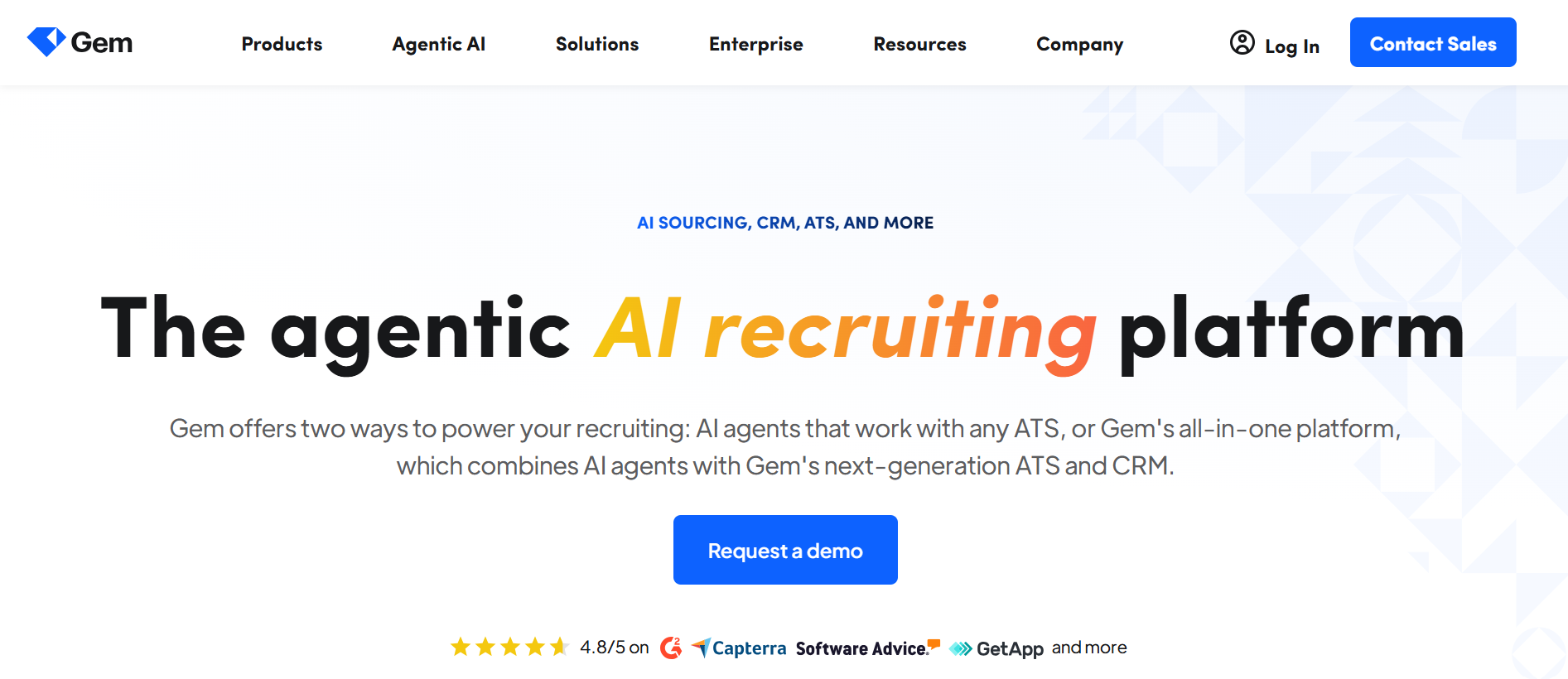
Gem is a talent engagement and sourcing platform that helps recruiters build candidate pipelines, automate outreach, and improve recruiting efficiency through data-driven insights.
Best For
Staffing agencies focused on proactive sourcing and candidate engagement strategies.
Key Features
- Talent sourcing and pipeline management
- Automated outreach campaigns
- Email sequence automation
- Talent relationship management
- Recruitment analytics
- Diversity recruiting insights
- ATS integrations
- Candidate engagement tracking
Pricing
Gem does not publicly list pricing on its website.
According to industry reports, pricing typically starts around $10,000–$15,000 annually and can increase significantly based on recruiter seats, sourcing volume, and additional modules.
9. Greenhouse
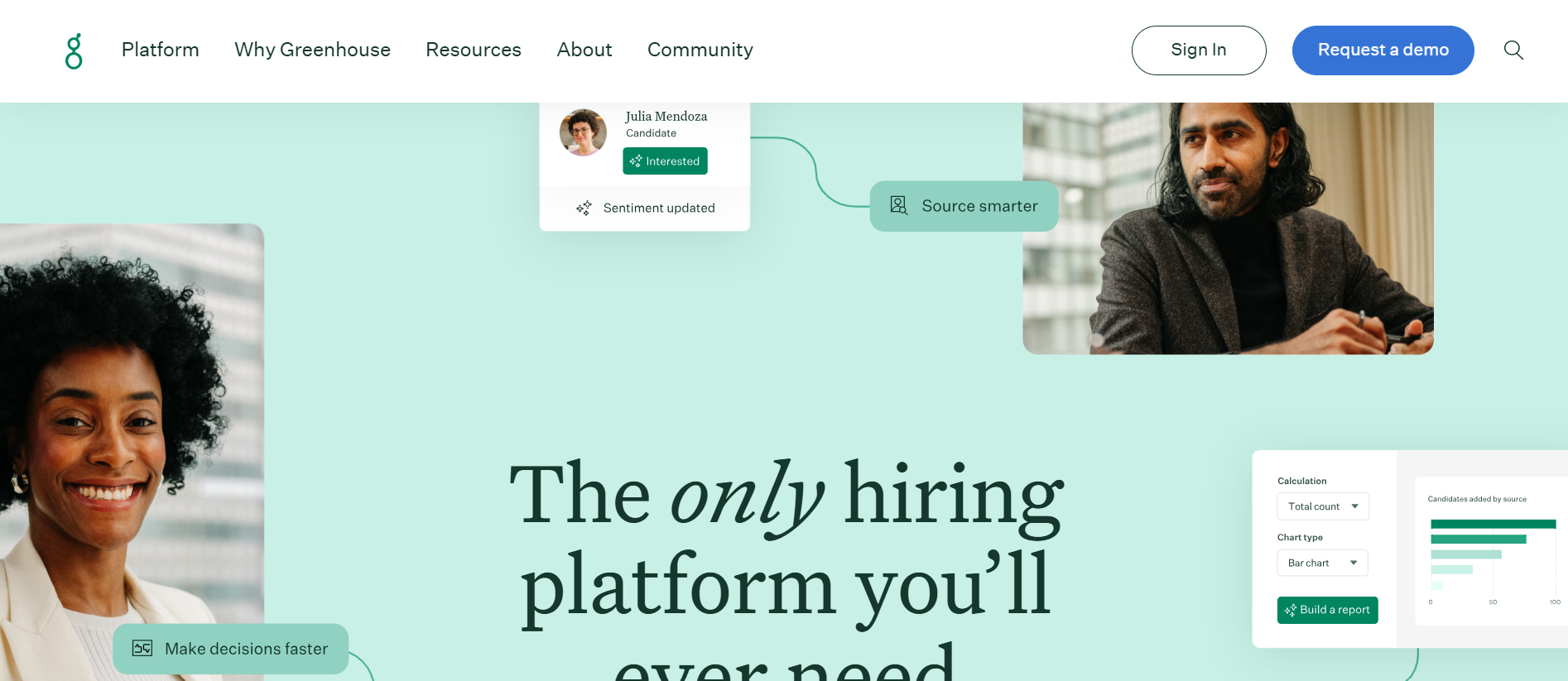
Greenhouse is one of the most widely adopted hiring platforms among high-growth companies and recruitment teams. It focuses on structured hiring processes and collaborative recruiting.
Best For
Agencies that need advanced hiring workflows, collaboration tools, and robust reporting capabilities.
Key Features
- Applicant tracking system
- Structured interview management
- Candidate scorecards
- Automated workflows
- Recruiting analytics
- Job posting management
- Talent pipeline tracking
- More than 500 integrations
Pricing
Greenhouse does not publicly disclose pricing.
Most industry estimates place Greenhouse implementation and subscription costs between $6,000 and $25,000+ annually, depending on company size, hiring volume, and required features.
10. Workable
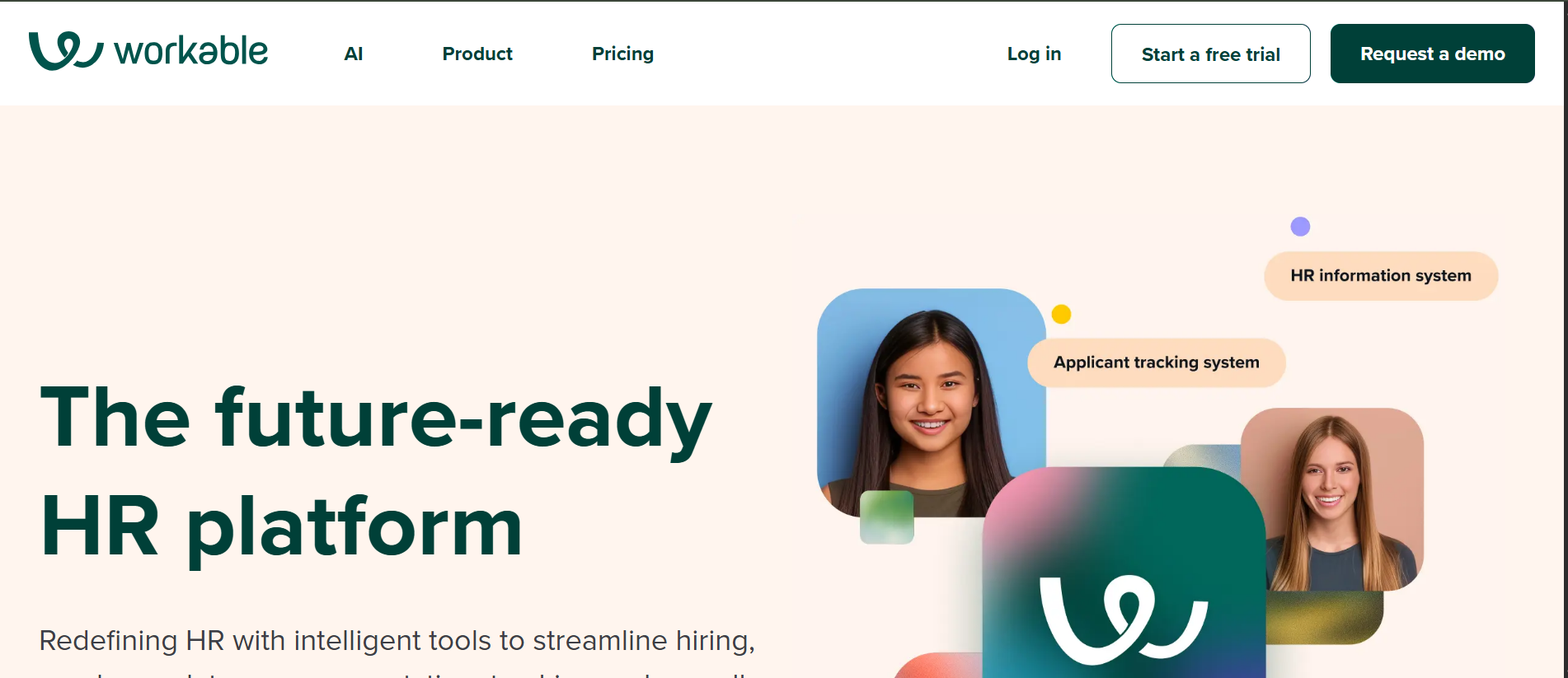
Workable is an all-in-one recruiting platform that combines sourcing, applicant tracking, assessments, and candidate communication tools.
It is known for its ease of use and extensive job board distribution.
Best For
Staffing agencies that need a straightforward recruiting platform with strong sourcing capabilities.
Key Features
- Access to 400M+ candidate profiles
- One-click job posting to multiple job boards
- Applicant tracking system
- Candidate assessments
- AI-powered sourcing recommendations
- Interview scheduling
- Team collaboration tools
- Recruitment reporting
Pricing
Workable offers multiple plans:
- Starter: Approximately $169/month
- Standard: Approximately $360/month
- Premier: Custom pricing
Costs vary based on recruiter seats and hiring volume.
11. Ceipal
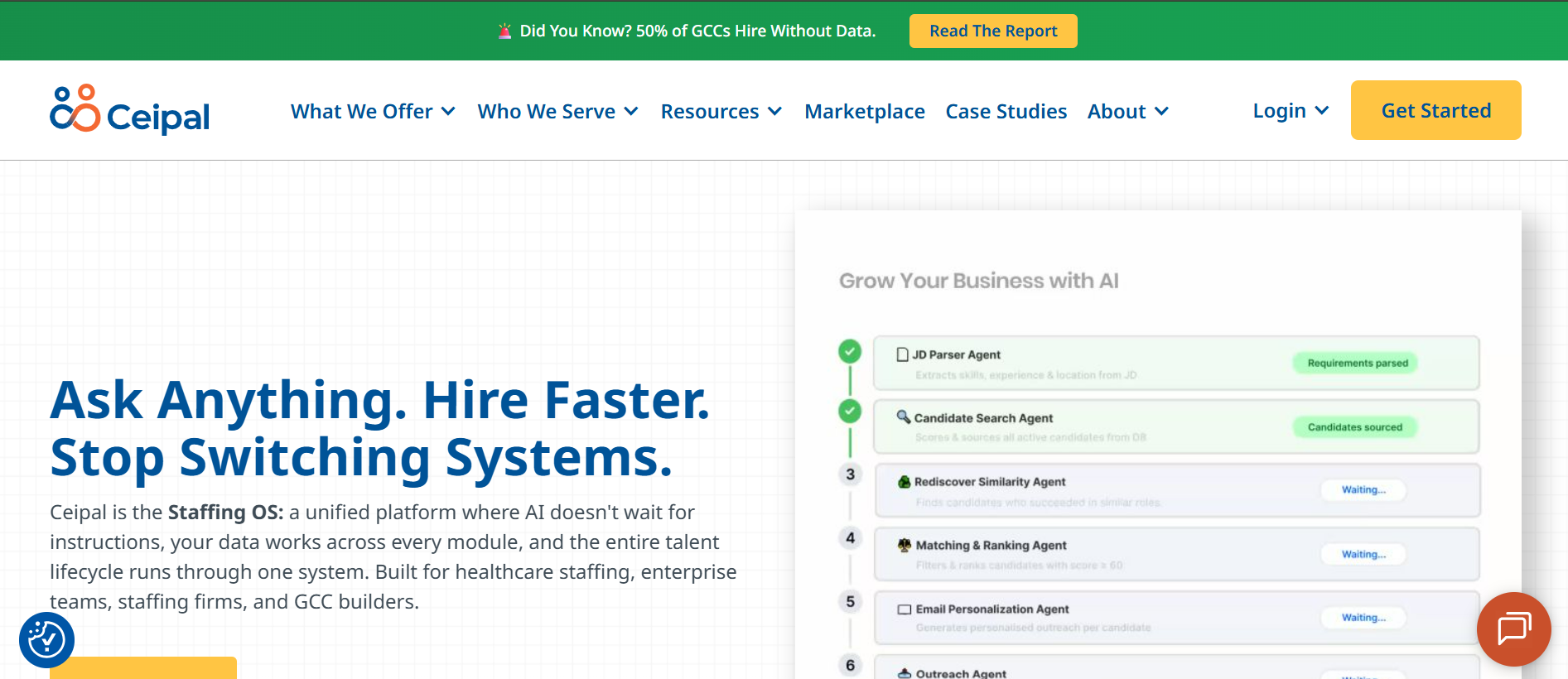
Ceipal is an AI-powered talent acquisition platform built specifically for staffing and workforce management firms.
It combines ATS, CRM, vendor management, and recruitment automation in a single ecosystem.
Best For
Staffing agencies managing high-volume recruiting and contingent workforce hiring.
Key Features
- AI-powered candidate matching
- Applicant Tracking System (ATS)
- Recruitment CRM
- Resume parsing and screening
- Vendor Management System (VMS) integration
- Workforce management tools
- Recruitment automation
- Advanced analytics and dashboards
Pricing
Ceipal does not publicly publish detailed pricing information.
Based on industry estimates, pricing generally starts around $24–$30 per user/month, with custom enterprise packages available for larger staffing organizations.
The platform typically requires a custom quote based on team size, recruiting volume, and selected modules.
How to Choose the Best Recruiting Tool for Your Staffing Agency
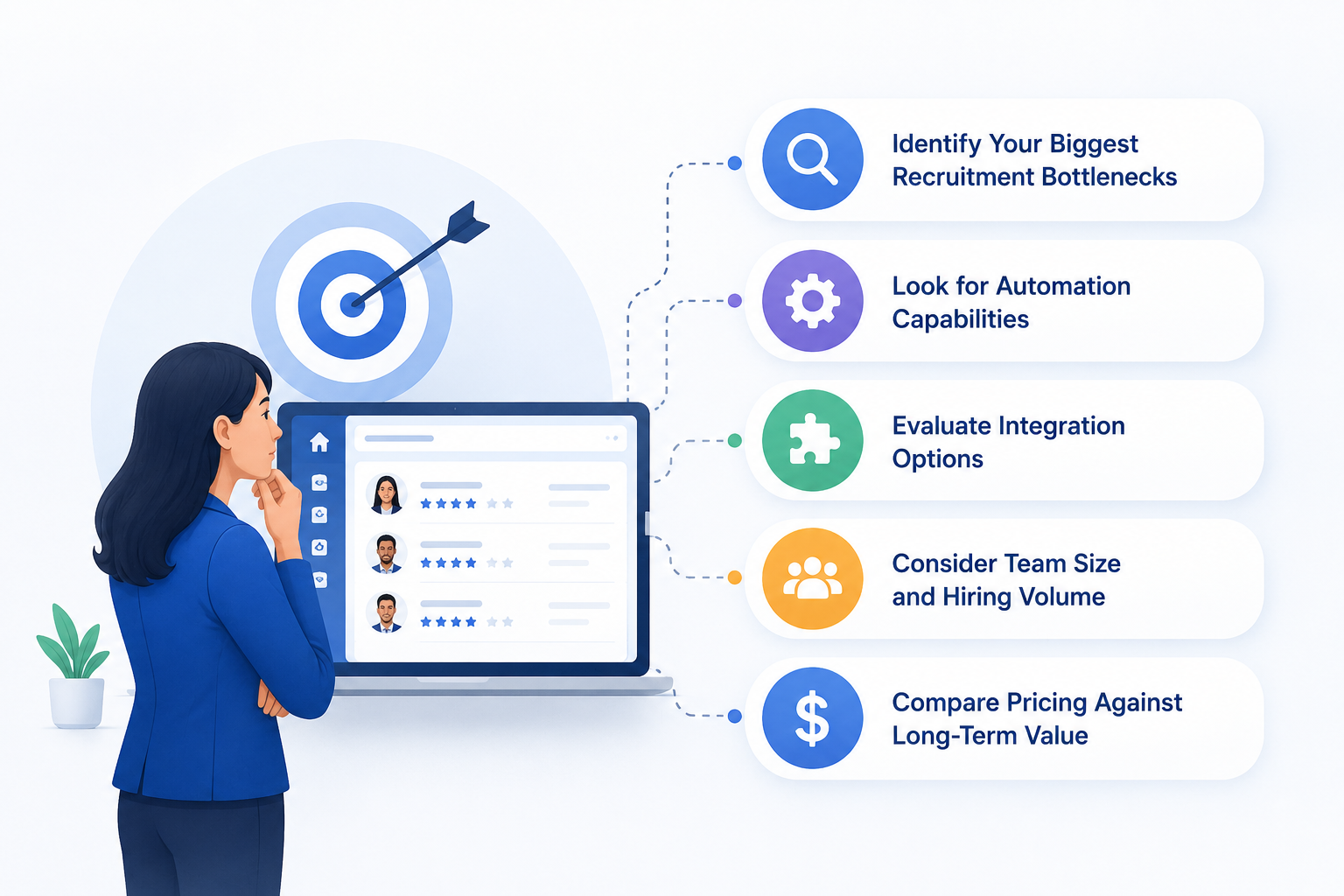
With so many recruiting platforms available, choosing the right one can feel overwhelming.
The best recruiting tool is not necessarily the one with the most features, but the one that solves your agency's biggest hiring challenges and supports long-term growth.
Suggested Reading:
How to Hire Faster: 12 Proven Ways to Cut Time-to-HireIdentify Your Biggest Recruitment Bottlenecks
Before comparing software options, take a close look at your current recruitment process.
Understanding where your team loses time will help you focus on tools that deliver the greatest impact.
Common recruitment bottlenecks include:
- Slow candidate sourcing
- Manual resume screening
- Low candidate response rates
- Interview scheduling delays
- Poor client and candidate tracking
- Disconnected recruitment systems
Once you identify these challenges, it becomes easier to evaluate which platform can address them effectively.
Look for Automation Capabilities
Recruiters often spend hours on repetitive tasks that could be automated.
A recruiting tool should help reduce administrative work so your team can focus on building relationships and making placements.
Look for features such as:
- Automated candidate sourcing
- Resume parsing and screening
- Candidate matching and ranking
- Automated outreach campaigns
- Interview scheduling
- Follow-up reminders and workflows
The more routine tasks your software can automate, the more efficiently your recruiters can operate.
Evaluate Integration Options
Even the most powerful recruiting software can create challenges if it does not work with your existing technology stack.
Integration capabilities should be a key part of your evaluation process.
Consider whether the platform integrates with:
- ATS systems
- CRM platforms
- Email providers
- Calendar applications
- Job boards
- HR and payroll systems
Strong integrations help eliminate duplicate data entry and create a smoother workflow across your recruitment operations.
Consider Team Size and Hiring Volume
A recruiting tool that works well for a small agency may not be suitable for a larger organization managing hundreds of open roles.
Your current needs are important, but so is your future growth.
Ask yourself:
- How many recruiters will use the platform?
- How many positions do you fill each month?
- Are you planning to expand your team?
- Will hiring volumes increase over time?
Choosing software that can scale with your agency can prevent costly migrations in the future.
Compare Pricing Against Long-Term Value
Price is always a factor, but focusing only on monthly subscription costs can be misleading.
The real value of recruiting software comes from the time it saves and the placements it helps generate.
When comparing solutions, consider:
- Time saved through automation
- Increased recruiter productivity
- Faster placement cycles
- Improved candidate quality
- Reduced operational costs
- Scalability and future growth potential
A slightly higher investment may deliver a much greater return if it helps your agency fill roles faster and serve more clients efficiently.
Common Mistakes to Avoid When Choosing Recruiting Software
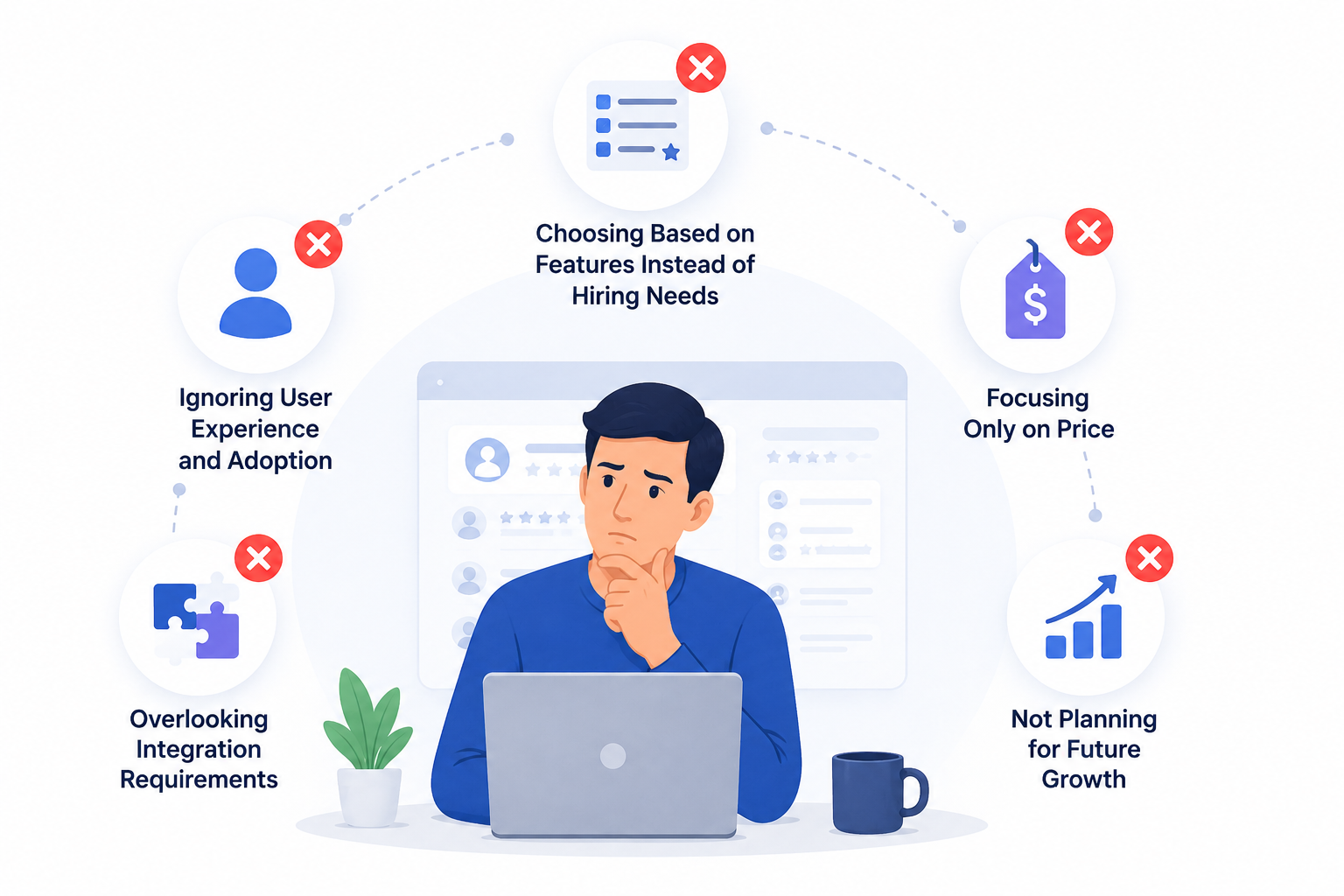
Choosing recruiting software is a long-term investment that can significantly impact your agency's efficiency and growth.
While many platforms offer impressive features, making the wrong decision can lead to wasted resources, low adoption, and operational challenges.
Understanding these common mistakes can help you select a solution that delivers lasting value.
Choosing Based on Features Instead of Hiring Needs
One of the biggest mistakes agencies make is selecting software simply because it has the longest list of features.
While advanced capabilities may look appealing, they are not always necessary for your recruitment process.
Instead, focus on features that solve your specific challenges, such as:
- Candidate sourcing
- Resume screening
- Interview scheduling
- Recruitment automation
- Client management
The best recruiting tool is the one that aligns with your agency's goals, not the one with the most features.
Ignoring User Experience and Adoption
Even the most powerful recruiting platform can fail if your team finds it difficult to use. Complex systems often lead to poor adoption rates and inconsistent usage across recruiters.
When evaluating software, consider:
- Ease of navigation
- Learning curve
- Mobile accessibility
- User support and training
- Overall recruiter experience
A user-friendly platform can help your team become productive faster and maximize the return on your investment.
Overlooking Integration Requirements
Recruitment software rarely operates in isolation. Most staffing agencies rely on multiple tools to manage candidates, clients, communication, and reporting.
Before making a decision, verify whether the platform integrates with:
- ATS systems
- CRM software
- Email platforms
- Calendar applications
- Job boards
- HR and payroll solutions
Strong integrations reduce manual work and create a more efficient recruitment workflow.
Focusing Only on Price
Budget is important, but choosing software based solely on the lowest price can create problems later.
A cheaper solution may lack automation, scalability, or essential features that improve recruiter productivity.
Rather than looking only at subscription costs, evaluate factors such as:
- Time savings
- Placement efficiency
- Candidate quality
- Automation capabilities
- Long-term operational value
In many cases, a slightly higher investment can generate significantly better results over time.
Not Planning for Future Growth
Many agencies choose recruiting software based only on their current needs.
While this may work initially, it can create limitations as hiring volumes, recruiter headcount, and client demands increase.
Look for a platform that can support future growth through:
- Additional user capacity
- Advanced automation features
- Expanded integrations
- Higher sourcing volumes
- Multi-client recruitment management
Choosing a scalable solution today can help you avoid costly software migrations and operational disruptions in the future.
By avoiding these common mistakes, you can select recruiting software that not only improves your current hiring process but also supports your agency's long-term success.
Final Thoughts
The right recruiting tool can help your staffing agency fill roles faster, improve recruiter productivity, and deliver a better experience for both clients and candidates.
While every agency has unique hiring needs, the best solution is one that streamlines your workflow, automates repetitive tasks, and supports future growth.
Take time to evaluate your requirements, compare available options, and focus on long-term value.
Investing in the right recruiting software today can create a stronger and more scalable recruitment process for years to come.
Frequently Asked Questions
What are recruiting tools for staffing agencies?
Recruiting tools help staffing agencies manage sourcing, candidate screening, outreach, interview scheduling, and hiring workflows.
They reduce manual work and help recruiters fill positions faster.
Which recruiting tool is best for staffing agencies?
The best recruiting tool depends on your agency's needs.
Some platforms focus on applicant tracking, while others provide AI-powered sourcing, automation, candidate engagement, and workflow management.
How do recruiting tools help staffing agencies fill roles faster?
Recruiting tools automate repetitive tasks such as candidate sourcing, resume screening, follow-ups, and interview scheduling.
This allows recruiters to spend more time engaging qualified candidates and clients.
What features should staffing agencies look for in recruiting software?
Staffing agencies should look for AI sourcing, applicant tracking, candidate matching, outreach automation, interview scheduling, reporting, and ATS integrations to improve recruitment efficiency.
Can AI recruiting tools replace human recruiters?
No. AI recruiting tools are designed to support recruiters, not replace them.
They automate time-consuming tasks, while recruiters continue to build relationships, evaluate candidates, and make hiring decisions.