
Finding qualified candidates used to mean spending hours switching between LinkedIn, job boards, spreadsheets, Chrome extensions, and ATS platforms.
Now, recruiters are expected to move faster while still delivering quality hires. That’s exactly why sourcing tools have become a core part of modern recruiting workflows.
The right sourcing platform can help you:
- Discover candidates faster
- Automate repetitive sourcing tasks
- Improve outreach response rates
- Build stronger talent pipelines
- Reduce manual recruiter workload
In this guide, you’ll discover the best sourcing tools for recruiters, what makes each one useful, and which type of hiring teams they work best for.
What Are Sourcing Tools for Recruiters?
Before choosing a platform, it helps to understand what sourcing tools actually solve.
Recruiters today don’t just post jobs and wait for applications anymore. Most high-quality candidates are passive candidates, meaning you have to proactively find and engage them.
That’s where sourcing tools for recruiters help.
These tools are designed to help you:
- Search candidate databases
- Find profiles across multiple platforms
- Enrich contact information
- Screen resumes faster
- Automate outreach
- Organize talent pipelines
Some recruiting tools for sourcing focus only on candidate discovery, while others automate the entire sourcing workflow from outreach to scheduling.
Why Recruiters Are Investing More in Sourcing Tools
Hiring has become more competitive across almost every industry.
The challenge is no longer just getting applications. It’s identifying the right candidates quickly before competitors reach them first.
That’s why recruiters are increasingly using top sourcing tools for recruiters to reduce manual work and speed up hiring cycles.
A strong sourcing platform can help you:
- Reduce time-to-hire
- Reach passive candidates faster
- Improve recruiter productivity
- Eliminate repetitive sourcing tasks
- Centralize candidate data
- Scale outreach without scaling recruiter workload
For lean recruiting teams, the impact becomes even bigger because automation allows recruiters to focus more on relationship-building instead of repetitive admin work.
8 Best Sourcing Tools for Recruiters
Not every sourcing platform solves the same problem.
Some tools are great for outbound sourcing, while others focus on AI screening, candidate enrichment, or automated engagement.
Here are some of the best sourcing tools for recruiters right now.
1. Leelu AI
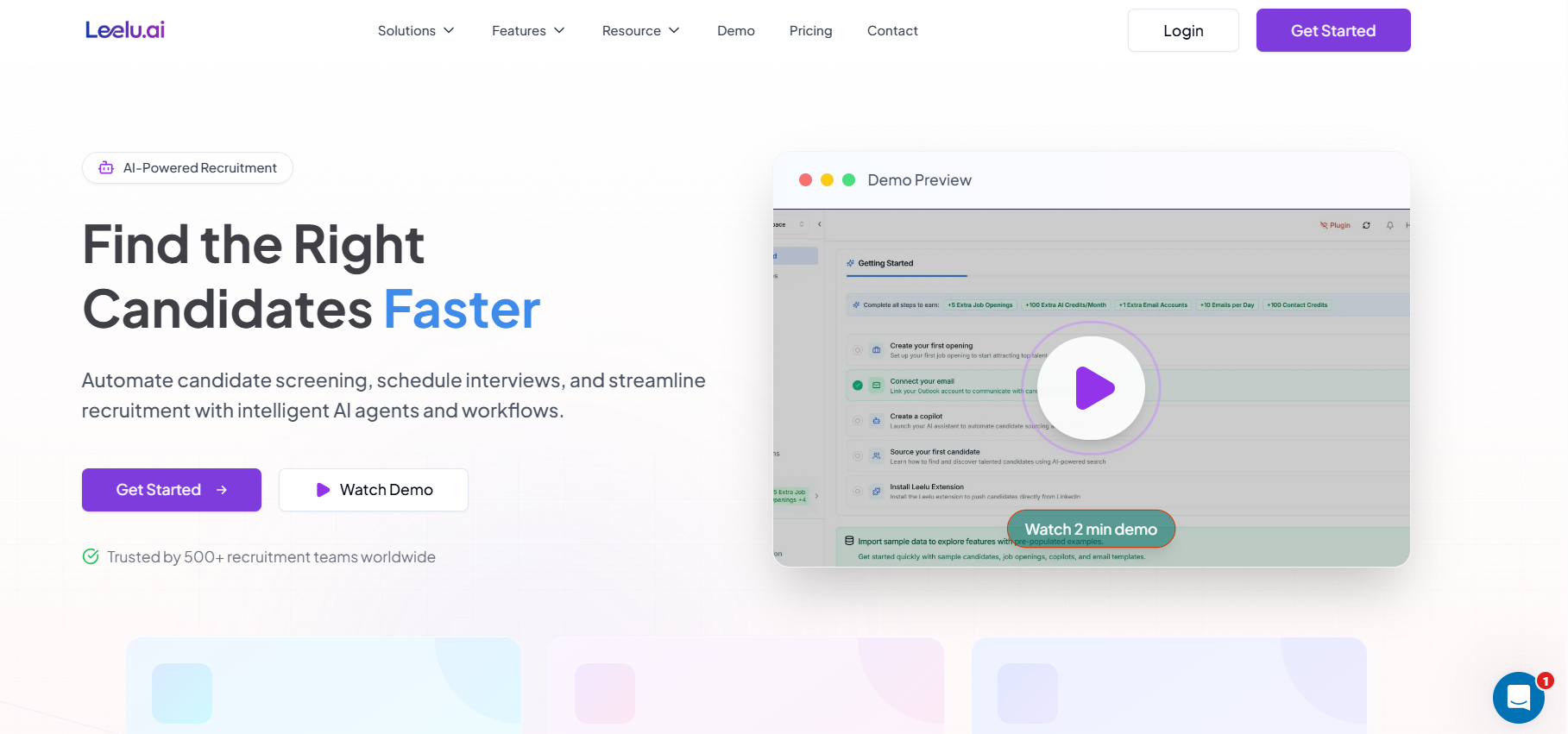
Leelu AI is an AI recruiting copilot designed to help recruiters streamline sourcing, candidate engagement, and hiring workflows from one platform.
Instead of relying on multiple tools for sourcing, screening, outreach, and interview coordination, recruiters can manage the entire process in a centralized system.
The platform helps recruiters:
- Source candidates from 500M+ profiles
- Search across LinkedIn, Indeed, Monster, and ATS systems
- Identify top candidates using AI-powered matching
- Automate outreach and follow-ups
- Schedule interviews automatically
- Reduce repetitive manual recruiting tasks
For teams handling large hiring volumes, this helps speed up recruiting workflows while improving overall efficiency.
Why Recruiters Use Leelu AI
Recruiters often spend hours switching between sourcing tools, spreadsheets, outreach platforms, and scheduling systems.
Leelu AI simplifies this process by bringing sourcing, candidate engagement, and interview management into a single workflow.
Key capabilities include:
- AI-powered multi-platform sourcing
- Resume parsing and candidate scoring
- Personalized outreach automation
- 24/7 automated follow-ups
- Smart interview scheduling
- ATS integrations
This makes Leelu AI especially useful for recruiting teams looking to improve sourcing efficiency without increasing operational complexity.
Best For
- High-volume recruiting teams
- Recruitment agencies managing multiple open roles
- Recruiters looking to automate sourcing and outreach
- Teams trying to reduce manual screening work
- Companies hiring across multiple sourcing platforms
Standout Feature
AI-powered recruiting automation that combines sourcing, candidate screening, outreach, follow-ups, and interview scheduling within a single workflow.
Limitations
Since Leelu AI focuses heavily on automation, recruiters who prefer highly manual and relationship-driven sourcing workflows may need some time to adapt initially.
It may also offer more functionality than smaller teams need if they are only looking for a basic sourcing solution rather than a complete recruiting workflow platform.
2. LinkedIn Recruiter
LinkedIn Recruiter is a recruiting platform that helps you find and connect with professionals across LinkedIn’s global network. It is mainly used for outbound sourcing and passive candidate discovery.
It allows recruiters to directly search talent using advanced filters and reach out to candidates who are not actively applying for jobs.
Key Capabilities
- Advanced candidate search with filters
- Skill, title, and experience-based targeting
- Location and industry-based sourcing
- Hiring intent signals for better targeting
Best For
- Enterprise recruiting teams
- Passive candidate sourcing
- Leadership and executive hiring
Limitation
- High subscription cost for small teams
- Low response rates due to heavy outreach volume
- Depends on accurate and updated profiles
- Still requires manual follow-ups and engagement
3. HireEZ
HireEZ is an AI-powered recruiting platform that helps teams source candidates across multiple platforms and automate early-stage outreach. It focuses on reducing manual sourcing effort through AI-driven workflows.
It combines candidate search, engagement, and tracking into a single streamlined system.
Key Capabilities
- Multi-platform candidate sourcing
- AI-powered semantic search
- Automated outreach and follow-ups
- Centralized pipeline tracking
Best For
- High-volume hiring teams
- Recruitment agencies
- AI-assisted sourcing workflows
Limitation
- Requires learning curve for effective AI search
- Data quality depends on external sources
- Automated messaging needs manual optimization
- Not a full ATS replacement
4. SeekOut
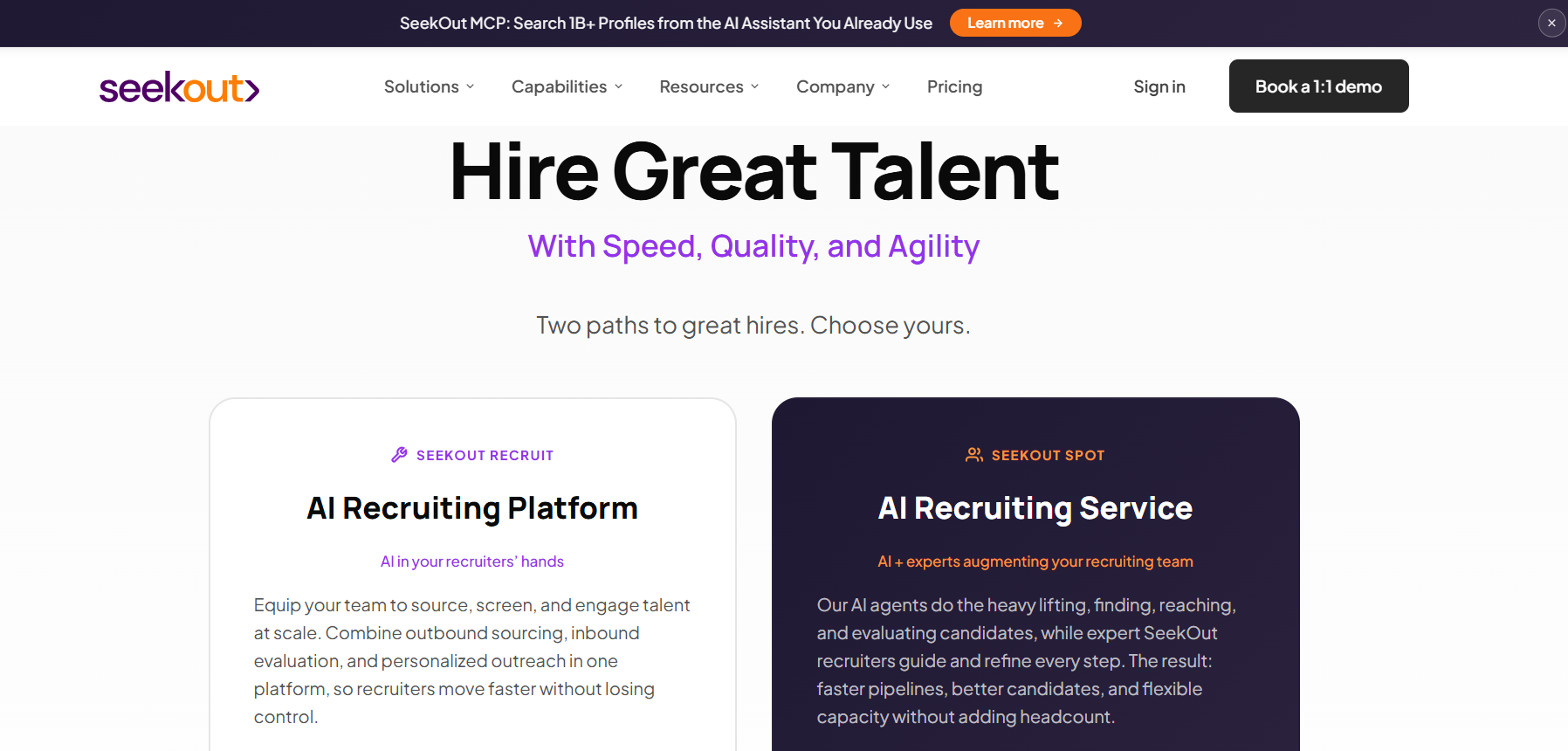
SeekOut is a talent intelligence and sourcing platform that helps recruiters discover hard-to-find and specialized candidates. It is widely used for technical hiring and diversity-focused recruitment.
It gives deeper visibility into candidate profiles by enriching data beyond basic resumes or job profiles.
Key Capabilities
- Advanced talent search with deep filters
- Strong candidate enrichment and profiling
- Diversity hiring search capabilities
- Technical skill-based talent discovery
Best For
- Technical recruiting teams
- Niche and hard-to-fill roles
- Diversity hiring initiatives
Limitation
- Can feel complex for first-time users
- Pricing may be high for smaller teams
- Data accuracy depends on external profile sources
- Learning curve for advanced filtering and search
5. Gem
Gem is a recruiting CRM platform that helps teams manage candidate relationships, outreach, and hiring pipelines in one place. It focuses more on engagement and tracking rather than pure sourcing.
It is designed to help recruiters build long-term talent relationships instead of one-time hiring.
Key Capabilities
- Candidate relationship management (CRM)
- Automated outreach sequences
- Pipeline tracking and visibility
- Recruiting analytics and reporting
Best For
- Relationship-driven recruiting teams
- Talent pipeline management
- Recruitment marketing and engagement tracking
Limitation
- Not a sourcing tool on its own
- Requires integration with other platforms
- Can be overwhelming for small teams
- Limited value without active outreach strategy
6. AmazingHiring
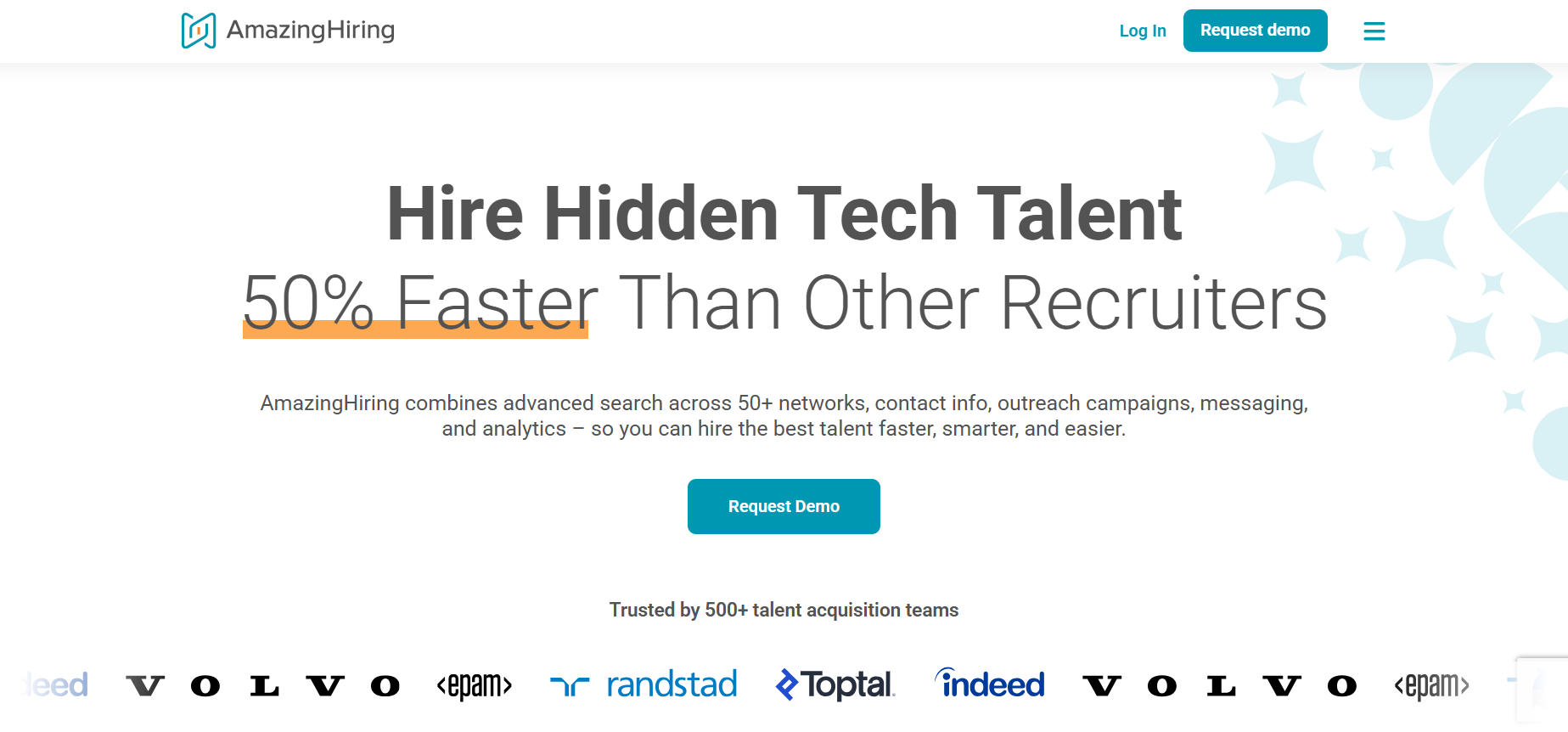
AmazingHiring is a technical recruiting platform that helps recruiters find and evaluate developers by aggregating profiles from multiple tech and professional communities. It focuses on giving a deeper view of engineering talent beyond traditional resumes.
It is especially useful when hiring for highly technical or niche engineering roles where GitHub activity and project history matter.
Key Capabilities
- Aggregates developer profiles from GitHub, Stack Overflow, Kaggle, and LinkedIn
- Provides enriched technical candidate insights
- Helps evaluate real-world coding and project activity
- Expands sourcing beyond traditional job platforms
Best For
- Engineering and developer hiring
- Technical talent sourcing
- Niche and specialized tech roles
Limitation
- Limited value for non-technical roles
- Data quality depends on public developer activity
- Can be overwhelming for non-technical recruiters
- Requires interpretation of technical signals for best use
7. ContactOut
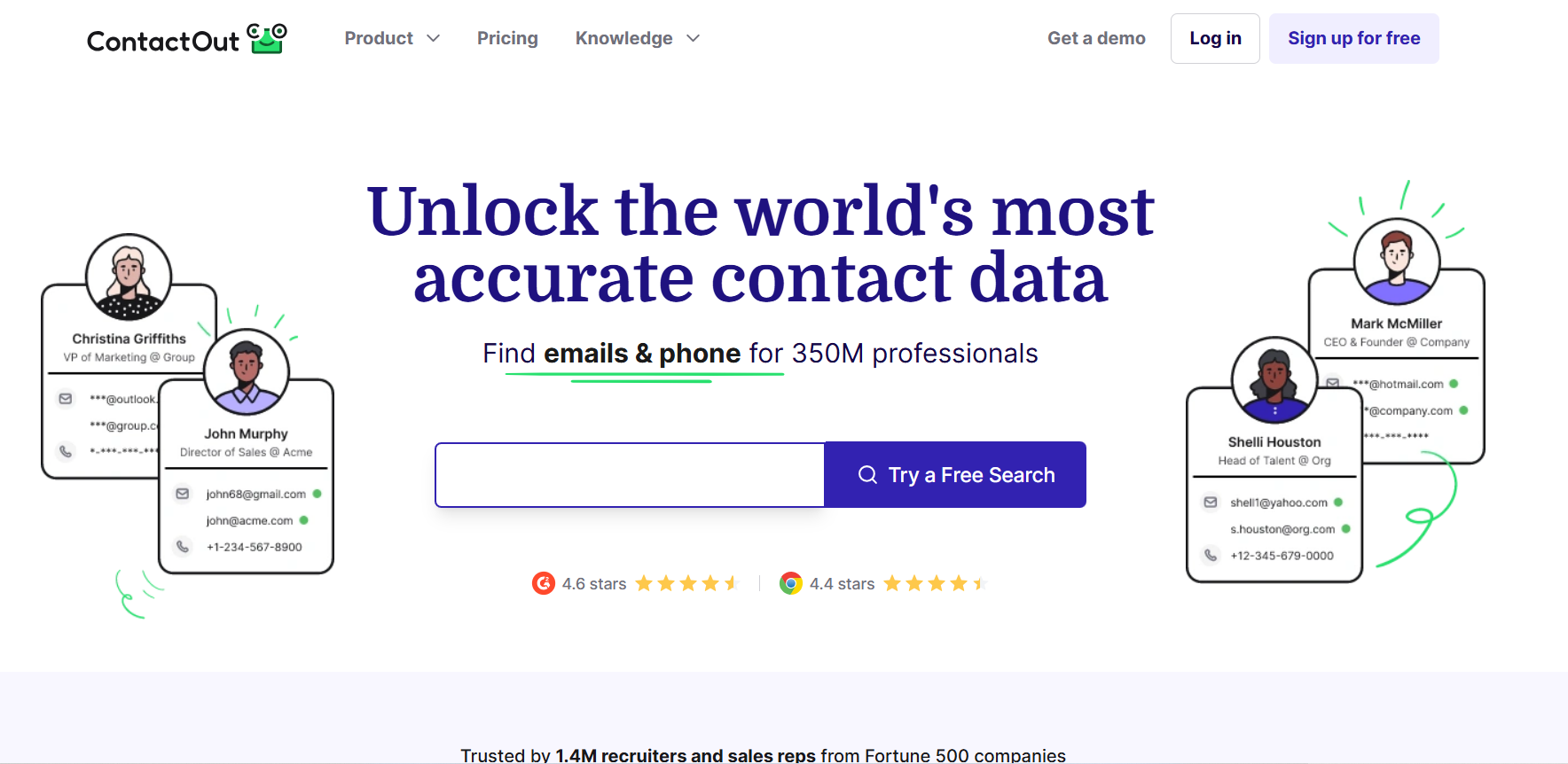
ContactOut is a contact discovery tool that helps recruiters find verified email addresses and phone numbers for candidates, mainly through LinkedIn integration. It is used to support outbound recruiting and candidate outreach.
It simplifies the process of reaching candidates directly without relying only on platform messaging.
Key Capabilities
- Finds verified email addresses and phone numbers
- Chrome extension for LinkedIn profile extraction
- Social profile discovery and enrichment
- Fast candidate contact lookup for outreach campaigns
Best For
- Outbound recruiting teams
- Candidate contact enrichment
- Sales-style recruiting outreach
Limitation
- Accuracy varies depending on candidate data availability
- Limited value without a strong outreach strategy
- Not a sourcing or ATS tool
- Can raise compliance concerns if misused for cold outreach
8. Fetcher
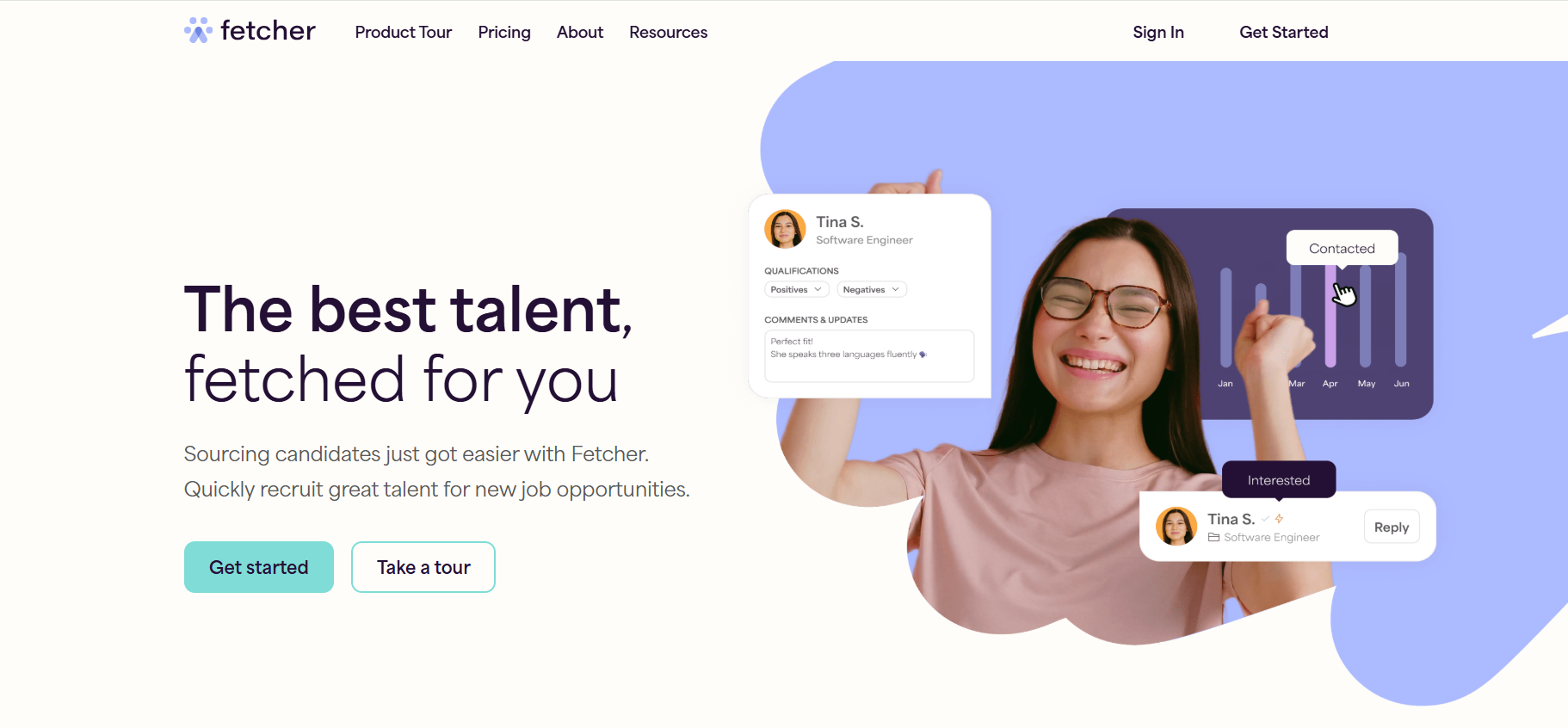
Fetcher is an AI-driven recruiting platform that automates candidate sourcing and outreach while keeping recruiters involved in final selection decisions. It helps reduce repetitive sourcing work through AI recommendations.
It is mainly used by lean recruiting teams that want faster sourcing without losing control over hiring decisions.
Key Capabilities
- AI-assisted candidate sourcing and recommendations
- Automated sourcing workflows
- Outreach automation support
- Streamlined candidate discovery process
Best For
- Automated sourcing workflows
- Startup and lean recruiting teams
- Fast-paced hiring environments
Limitation
- Limited control over AI-suggested candidate quality
- Less effective for highly niche or specialized roles
- Still requires recruiter validation of recommendations
- Not a full end-to-end ATS system
How to Choose the Right Recruiting Tools for Sourcing
The best sourcing tools for recruiters depend on your hiring goals, team size, and recruiting workflow.
A startup hiring a few employees every month may need a simple and affordable sourcing platform, while enterprise recruiting teams usually require advanced automation, AI screening, and ATS integrations.
That’s why it’s important to choose a platform based on how well it fits your hiring process instead of simply picking the tool with the most features.
Here are the key factors to consider when evaluating recruiting tools for sourcing.
1. Candidate Database Access
The size and quality of a platform’s candidate database play a major role in sourcing success.
Tools with broader sourcing coverage help recruiters discover candidates faster across job boards, professional networks, ATS systems, and resume databases.
This becomes especially valuable for recruiters hiring niche or hard-to-fill roles.
2. AI Matching & Screening
Manual resume screening takes significant time, especially during high-volume hiring.
AI-powered sourcing tools help recruiters automatically identify candidates that match job requirements based on skills, experience, and role relevance.
This reduces manual screening effort and speeds up shortlisting.
3. Outreach Automation
Finding candidates is only part of the sourcing process.
Recruiters also need to consistently engage candidates through follow-ups and personalized communication.
Many sourcing platforms now include:
- Automated email sequences
- Personalized outreach templates
- Follow-up reminders
- Engagement tracking
This helps improve response rates without increasing recruiter workload.
4. ATS Integration
A sourcing tool should integrate smoothly with your existing recruiting systems.
Strong ATS integrations help recruiters sync candidate data directly into platforms like Greenhouse, Lever, or Workday without manual data entry.
This keeps recruiting workflows organized and reduces administrative work.
Suggested Reading:
HRBP vs HR Manager: Understanding the Key Differences5. Workflow Automation
One of the biggest benefits of modern sourcing tools is automation.
Many platforms now automate repetitive recruiting tasks like:
- Candidate sourcing
- Resume screening
- Outreach campaigns
- Interview scheduling
- Pipeline updates
The more manual work a platform removes, the more time recruiters can spend building relationships with candidates and improving hiring outcomes.
Final Thoughts
The best sourcing tools for recruiters are no longer just candidate search platforms.
Modern recruiting teams need tools that help them source, screen, engage, and schedule candidates faster while reducing manual effort.
Some platforms specialize in technical sourcing.
Others focus on outreach automation or pipeline management.
And newer AI-driven platforms like Leelu AI are helping recruiters automate larger parts of the recruiting workflow end-to-end.
The right choice ultimately depends on:
- Your hiring volume
- Recruiting team size
- Technical hiring needs
- Budget
- Existing recruiting stack
But one thing is clear — recruiters who adopt smarter sourcing workflows gain a major advantage in competitive hiring markets.
Frequently Asked Questions
What are the best sourcing tools for recruiters?
Some of the best sourcing tools for recruiters include LinkedIn Recruiter, SeekOut, HireEZ, Gem, AmazingHiring, ContactOut, and AI-powered platforms like Leelu AI.
The right tool depends on your hiring volume, sourcing strategy, and workflow requirements.
How do AI sourcing tools help recruiters?
AI sourcing tools help recruiters automate candidate discovery, resume screening, outreach, and follow-ups.
This reduces manual recruiting work while helping teams identify qualified candidates faster.
What should recruiters look for in sourcing tools?
Recruiters should evaluate sourcing tools based on candidate database size, AI matching capabilities, outreach automation, ATS integrations, workflow automation, and reporting features.
The best platform should fit smoothly into the existing recruiting workflow.
Can sourcing tools improve hiring speed?
Yes, modern recruiting tools for sourcing can significantly reduce time-to-hire by automating repetitive tasks like candidate search, screening, outreach, and interview scheduling.
This allows recruiters to focus more on candidate engagement and relationship-building.


