You’re scaling your team, hiring more people, and suddenly you’re told — “You need stronger HR.”
So you start exploring roles.
And that’s where the confusion begins.
You come across HRBP vs HR Manager, and at first, they sound almost identical.
Both seem to handle hiring, people issues, and team support.
But when you try to decide which one your business actually needs, it’s not so clear anymore.
Because one focuses on keeping HR operations running smoothly, while the other works closely with leadership to shape business strategy through people.
And choosing the wrong one at the wrong time can slow down your growth without you even realizing it.
In this guide, you’ll understand:
- What an HRBP and HR Manager actually do
- The real differences in how they operate
- When your business should choose one over the other
What Is an HR Business Partner (HRBP)?
Now that you have a general idea, let’s zoom into the first role.
An HR Business Partner (HRBP) is not just someone who manages HR tasks.
Instead, you can think of an HRBP as someone who works closely with leadership to align people's strategies with business goals.
They don’t just focus on hiring or employee issues — they focus on how HR can drive growth.
For example, an HRBP might help leaders plan future hiring based on business expansion, improve team performance, or solve deeper organizational challenges.
Their role is more strategic than operational.
They act as advisors to leadership, helping shape decisions that impact the company long-term.
Example:
If a company plans to expand into a new market, the HRBP will identify what kind of talent is needed, plan team structure, and guide leaders on hiring strategy.
What Is an HR Manager?
Now, this is where things start to contrast clearly.
An HR Manager is responsible for making sure all HR operations run smoothly on a day-to-day basis.
You can think of them as the backbone of HR execution.
They handle tasks like recruitment processes, employee onboarding, payroll coordination, compliance, and resolving employee concerns.
While they may contribute ideas, their primary focus is execution.
They ensure policies are followed, processes are efficient, and employees have a structured experience.
Example:
When the hiring plan is ready, the HR Manager posts jobs, schedules interviews, manages candidate communication, and ensures new employees are onboarded properly.
In simple terms, if an HRBP focuses on what should be done and why, an HR Manager focuses on how it gets done properly.
HRBP vs HR Manager: Key Differences at a Glance
At a high level, both roles work with people and hiring.
But the way they think, decide, and contribute to the business is completely different.
Let’s break this down in a simple and practical way.
1. Strategic vs Operational Focus
The biggest difference between HRBP vs HR Manager starts with focus.
An HRBP looks at the bigger picture.
They think about where the business is going and how people strategy can support that direction.
On the other hand, an HR Manager focuses on execution.
They ensure that hiring, onboarding, and employee processes are running smoothly every day.
2. Core Responsibilities and Scope
When you compare HRBP vs HR Manager, their responsibilities naturally reflect their focus areas.
An HRBP works on workforce planning, leadership alignment, performance strategy, and organizational development.
Their scope is broad and tied closely to business outcomes.
An HR Manager handles recruitment execution, employee relations, payroll coordination, and compliance.
Their scope is more process-driven and operational.
3. Decision-Making Authority
Another key difference in HRBP vs HR Manager is how decisions are made.
An HRBP is involved in high-level decision-making.
They advise leadership and influence choices related to hiring strategy, team structure, and performance.
An HR Manager makes decisions within defined processes.
They ensure policies are followed and take action on day-to-day HR matters.
4. Stakeholder Interaction and Influence
The way both roles interact with stakeholders also differs.
An HRBP works closely with senior leadership and department heads.
Their role is to guide, influence, and align HR with business priorities.
An HR Manager interacts more with employees and mid-level managers.
They focus on solving issues, managing processes, and ensuring smooth communication.
5. KPIs and Success Metrics
Success looks different for both roles.
For an HRBP, success is measured by business impact.
This could include team performance, employee retention, and how well HR supports company growth.
For an HR Manager, success is measured by efficiency.
Metrics like time-to-hire, process accuracy, compliance, and employee satisfaction are more relevant.
6. Involvement in Business Strategy
When it comes to strategy, the difference becomes even clearer.
An HRBP is actively involved in shaping business strategy through people.
They contribute insights that influence long-term planning.
An HR Manager plays a supporting role.
They execute the plans created and ensure everything runs as expected.
7. Role in Talent Acquisition and Workforce Planning
In hiring, both roles are involved — but at different levels.
An HRBP defines talent strategy.
They decide what kind of roles are needed, when to hire, and how hiring aligns with business goals.
An HR Manager executes the hiring process.
They manage sourcing, interviews, and onboarding to bring that strategy to life.
HRBP vs HR Manager: Comparison Table
Here’s a clear side-by-side view to simplify everything further:
This side-by-side view makes one thing clear.
The difference between HRBP vs HR Manager is not about who is more important.
It’s about what the business needs at a particular stage.
One builds the direction, while the other ensures everything runs smoothly along that path.
HRBP vs HR Manager Roles in Recruitment
Now that you’ve seen the overall differences, let’s narrow it down to one of the most important areas — recruitment.
This is where the distinction in HRBP vs HR Manager becomes very practical.
Both roles are involved in hiring.
But they contribute at completely different stages of the process.
1. Who Owns Talent Strategy?
When it comes to defining what kind of talent the business needs, this responsibility sits with the HRBP.
They don’t just think about current hiring.
They look at where the business is heading and plan talent needs accordingly.
This includes identifying future skill gaps, planning team structures, and aligning hiring with business goals.
For example, if your company plans to launch a new product line, the HRBP will decide what roles are required and what kind of profiles would drive success.
In simple terms, the HRBP answers: “Who should we hire and why?”
2. Who Handles Hiring Execution?
Once the strategy is clear, execution becomes the priority.
This is where the HR Manager takes over.
They are responsible for turning the hiring plan into action.
This includes managing job postings, coordinating interviews, communicating with candidates, and ensuring a smooth onboarding process.
For example, after the HRBP defines the need for a product team, the HR Manager ensures those roles are filled efficiently and without delays.
So, the HR Manager answers: “How do we hire them efficiently?”
3. How AI Is Changing Both Roles
Recruitment is evolving quickly, and AI is changing how both roles operate.
For HRBPs, AI provides better visibility into hiring data.
They can make smarter decisions using insights like talent availability, hiring trends, and pipeline performance.
This helps them build more accurate and scalable talent strategies.
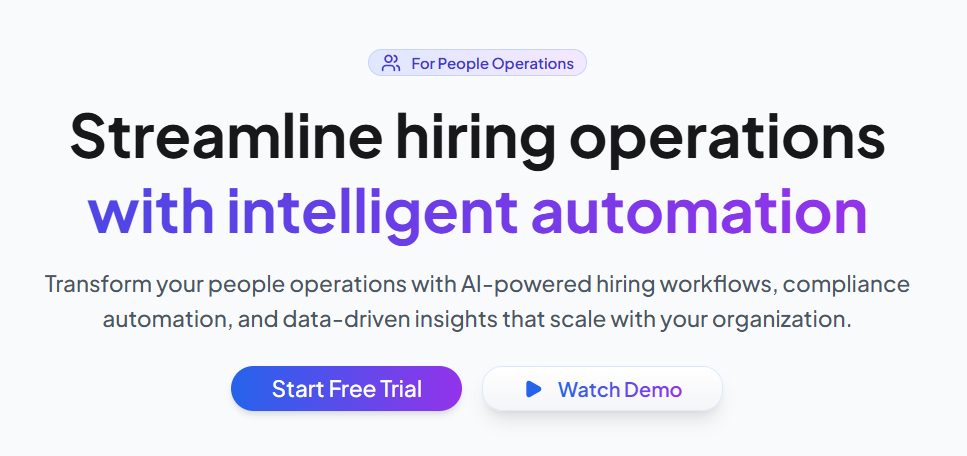
For HR Managers, AI reduces manual work significantly.
Tasks like sourcing candidates, screening resumes, and scheduling interviews can now be automated.
This allows them to focus more on candidate experience and process quality instead of repetitive tasks.
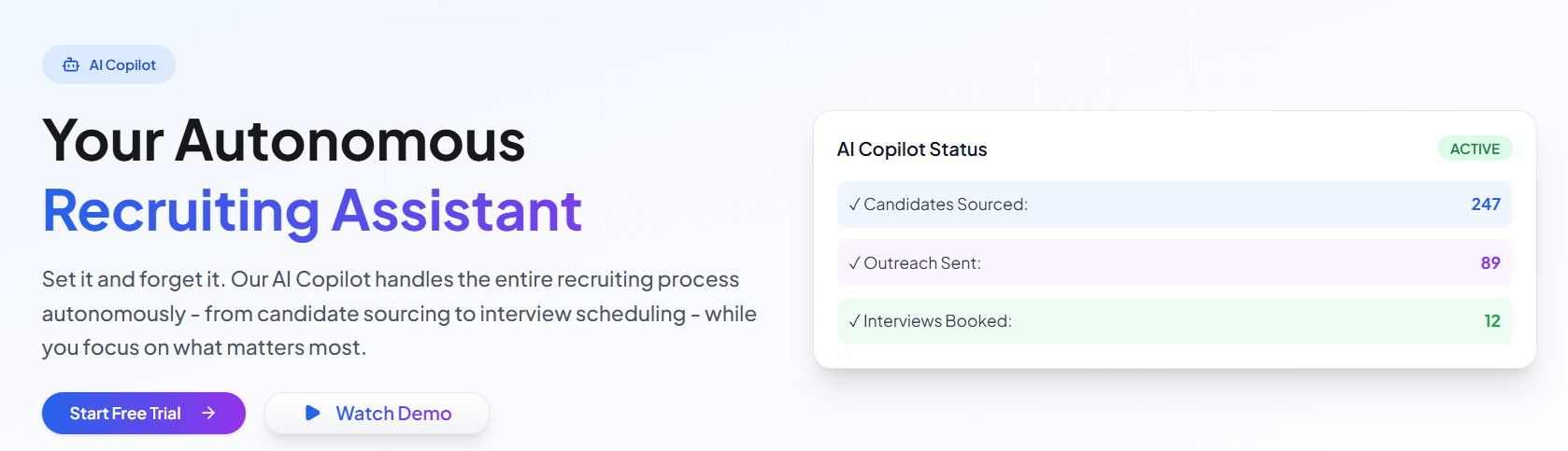
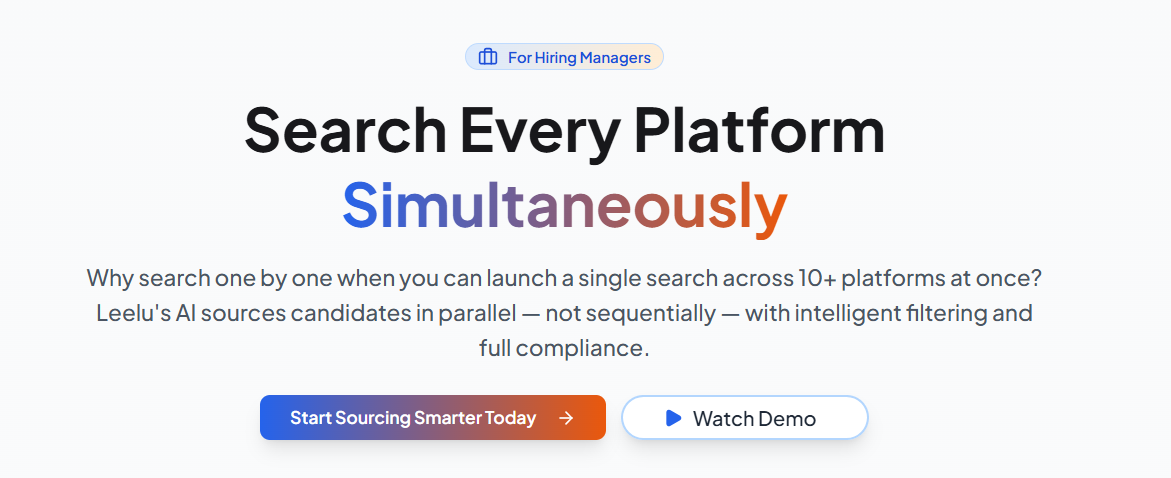
Tools like Leelu act as an AI recruiting copilot by handling sourcing, screening, outreach, and interview scheduling end-to-end.
Instead of juggling multiple tools, you can manage the entire hiring workflow in one place while saving a significant amount of time and effort.
This shift makes one thing clear.
AI is not replacing these roles — it’s helping both HRBP and HR Managers work faster, smarter, and more effectively.
When Should a Company Hire an HRBP vs HR Manager?
Now that you understand the difference between HRBP vs HR Manager, the next step is knowing when your business actually needs one.
The answer depends on your growth stage, challenges, and priorities.
Let’s break it down simply.
1. Based on Company Size and Growth Stage
In early-stage or small companies, the focus is usually on building processes and managing day-to-day HR tasks.
This is where an HR Manager becomes essential.
But as your company grows, teams expand, and decisions become more complex.
You start needing someone who can connect people strategy with business goals — and that’s where an HRBP comes in.
2. When You Need Strategic HR Leadership (HRBP)
You should consider hiring an HRBP when your challenges move beyond execution.
This typically happens when you are:
- Expanding into new markets or teams
- Planning long-term workforce growth
- Facing performance or structure-related issues
- Trying to align hiring with business outcomes
In these situations, you need someone who can guide decisions, not just execute them.
3. When You Need Operational HR Execution (HR Manager)
If your main challenge is handling HR tasks efficiently, an HR Manager is the better fit.
This includes:
- Managing hiring and onboarding processes
- Handling employee relations and HR queries
- Ensuring compliance and policy implementation
- Keeping day-to-day operations smooth
Here, the priority is consistency and execution.
4. Budget and Resource Considerations
Budget also plays a key role in deciding between HRBP vs HR Manager.
An HRBP typically requires more experience and comes at a higher cost.
So if you’re just starting out, it often makes sense to invest in an HR Manager first.
Once your operations are stable and your needs grow, you can bring in an HRBP for strategic direction.
5. Hiring Both Roles: When It Makes Sense
At a certain stage, choosing between the two is no longer enough.
You need both roles working together.
This usually happens in growing or larger companies where strategy and execution must run in parallel.
The HRBP focuses on direction and alignment, while the HR Manager ensures everything runs smoothly on the ground.
This makes the decision much clearer.
It’s not about which role is better.
It’s about what your business needs right now.
Can an HR Manager Become an HRBP?
Yes, an HR Manager can absolutely become an HRBP.
In fact, it’s one of the most common career progressions in HR.
But the shift is not just about experience — it’s about changing how you think and operate.
As an HR Manager, your focus is on execution.
You manage hiring, processes, and employee operations to keep everything running smoothly.
To move into an HRBP role, you need to go beyond execution and start thinking strategically.
This means understanding business goals, working closely with leadership, and making decisions that impact long-term growth.
For example, instead of just filling roles, you start asking:
- Are we hiring the right people for where the business is going?
- How can team structure improve performance?
- What skills will we need in the future?
In simple terms, you shift from “managing HR tasks” to “shaping business outcomes through people.”
How AI Tools Like Leelu Support Both HRBP and HR Managers
As roles evolve, so does the way work gets done.
This is where AI tools are starting to play a big role in simplifying hiring for both HRBP and HR Managers.
For HR Managers, a lot of time goes into repetitive tasks like sourcing candidates, screening resumes, sending outreach, and scheduling interviews.
AI can automate these steps, helping you save time and reduce manual effort.
Instead of juggling multiple tools, you can manage the entire hiring workflow in one place.
For HRBPs, the value is slightly different.
They benefit from better visibility and data.
With access to hiring insights, pipeline performance, and talent trends, they can make more informed decisions and build stronger hiring strategies.
Tools like Leelu act as an AI recruiting copilot that handles sourcing, screening, outreach, and interview scheduling end-to-end.
This means you can move faster from job creation to candidate engagement, while improving both efficiency and hiring quality.
The result is simple.
HR Managers get more time to focus on execution quality, and HRBPs get better data to drive strategic decisions.
Final Thoughts
At the end of the day, the difference between HRBP vs HR Manager is not about which role is better.
It’s about what your business needs at a specific point in time.
If your focus is on building strong processes, managing hiring, and ensuring smooth day-to-day operations, an HR Manager is the right fit.
But if you’re looking to align people strategy with business growth, improve team performance, and plan for the future, an HRBP becomes essential.
In many growing companies, both roles eventually work together.
One focuses on direction, while the other ensures execution.
And when both are aligned, your HR function becomes a true driver of business success.
The key is simple.
Understand your current challenges, your growth stage, and where you want to go — then choose the role that helps you get there faster.
Frequently Asked Questions
1. Is HRBP a higher role than HR Manager?
Not always — HRBP is more strategic, but both roles serve different functions and can be at similar levels.
2. Can an HR Manager transition into an HRBP role?
Yes, by developing strategic thinking, business understanding, and leadership collaboration skills.
3. Do small companies need an HRBP?
Usually no — they typically need an HR Manager first, and add an HRBP as they scale.
4. How does AI impact HRBP and HR Manager roles?
AI automates repetitive tasks for HR Managers and provides data insights for HRBPs to make better strategic decisions.


