Hiring often feels reactive—you open a role, scramble to find candidates, and hope something works out.
But without a strong talent pipeline, you are always starting from zero, which slows down hiring and affects quality.
That’s where talent pipeline management changes the game by helping you build, nurture, and convert candidates proactively instead of rushing at the last minute.
In this guide, you will learn:
- What talent pipeline management really means
- Why it directly impacts hiring speed and quality
- 10 practical strategies to build a stronger pipeline
What Is Talent Pipeline Management
Talent pipeline management is the process of continuously sourcing, organizing, and nurturing potential candidates so you always have a pool of qualified people ready when hiring needs arise.
Instead of reacting to job openings, you build relationships with candidates in advance and move them through different stages of readiness.
Think of it like having a warm list of candidates rather than searching in a rush every single time.
A well-managed talent pipeline typically includes:
- Candidates sourced from multiple channels over time
- Segmentation based on skills, experience, or role fit
- Ongoing engagement through updates, outreach, or content
- Clear tracking of where each candidate stands
This approach shifts your hiring from reactive to proactive.
You reduce time-to-hire because you already know who to reach out to, and you improve quality because you have had time to evaluate candidates properly.
More importantly, it gives you predictability in hiring, which is something most teams struggle with.
Key Components of an Effective Talent Pipeline
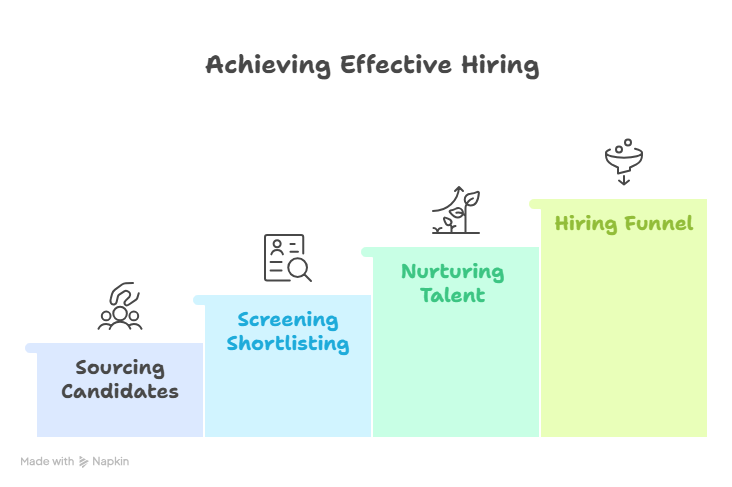
Now that you understand what talent pipeline management is, the next step is knowing what actually makes a pipeline work.
A strong pipeline is not just about collecting resumes, it is about building a structured flow that moves candidates from discovery to hiring smoothly.
Each component plays a specific role in making your hiring faster, more predictable, and more efficient.
1. Sourcing the Right Candidates
Everything starts with bringing the right people into your pipeline.
Instead of relying on one channel, you need to consistently source candidates from multiple platforms and build a diverse pool over time.
The focus here is not just volume, but relevance, because a smaller pool of qualified candidates is far more valuable than a large unfiltered list.
When sourcing is done right, you always have a steady inflow of potential hires aligned with your needs.
2. Screening and Shortlisting Efficiently
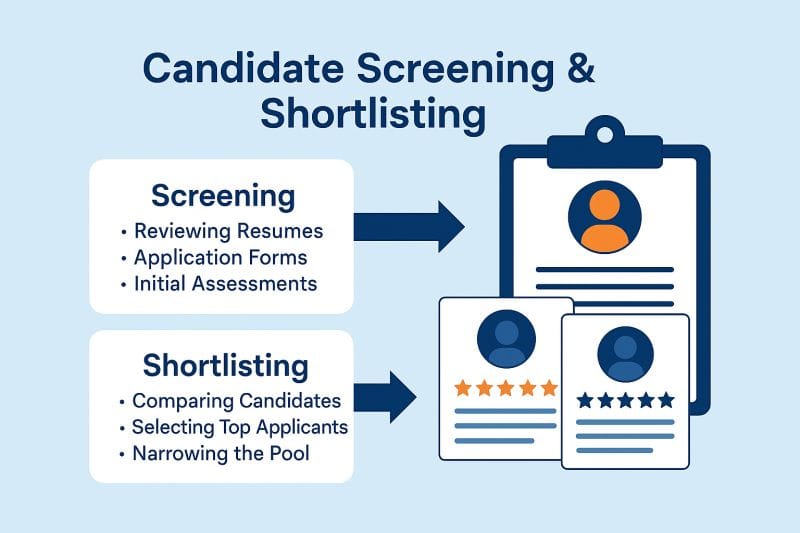
Once candidates enter your pipeline, the next step is filtering them without slowing things down.
This is where structured screening helps you quickly identify who actually fits the role and who does not.
Rather than manually reviewing every profile, you need a system that helps you prioritize top candidates based on skills, experience, and role fit.
Efficient screening ensures your pipeline stays clean, focused, and actionable.
3. Nurturing and Engaging Talent Over Time
Not every candidate is ready to be hired immediately, and that is completely normal.
This is why engagement becomes a critical part of talent pipeline management.
You need to stay in touch with potential candidates through updates, conversations, or relevant opportunities so they do not lose interest.
Consistent engagement turns cold candidates into warm prospects who are more likely to respond when the right role opens up.
4. Moving Candidates Through the Hiring Funnel
A pipeline only works when candidates keep moving forward instead of getting stuck.
You need clear stages that guide candidates from initial contact to interview and final selection.
Tracking where each candidate stands helps you take timely actions and avoid delays or drop-offs.
When movement through the funnel is smooth, your hiring becomes faster, more organized, and far more predictable.
10 Talent Pipeline Management Strategies to Improve Hiring
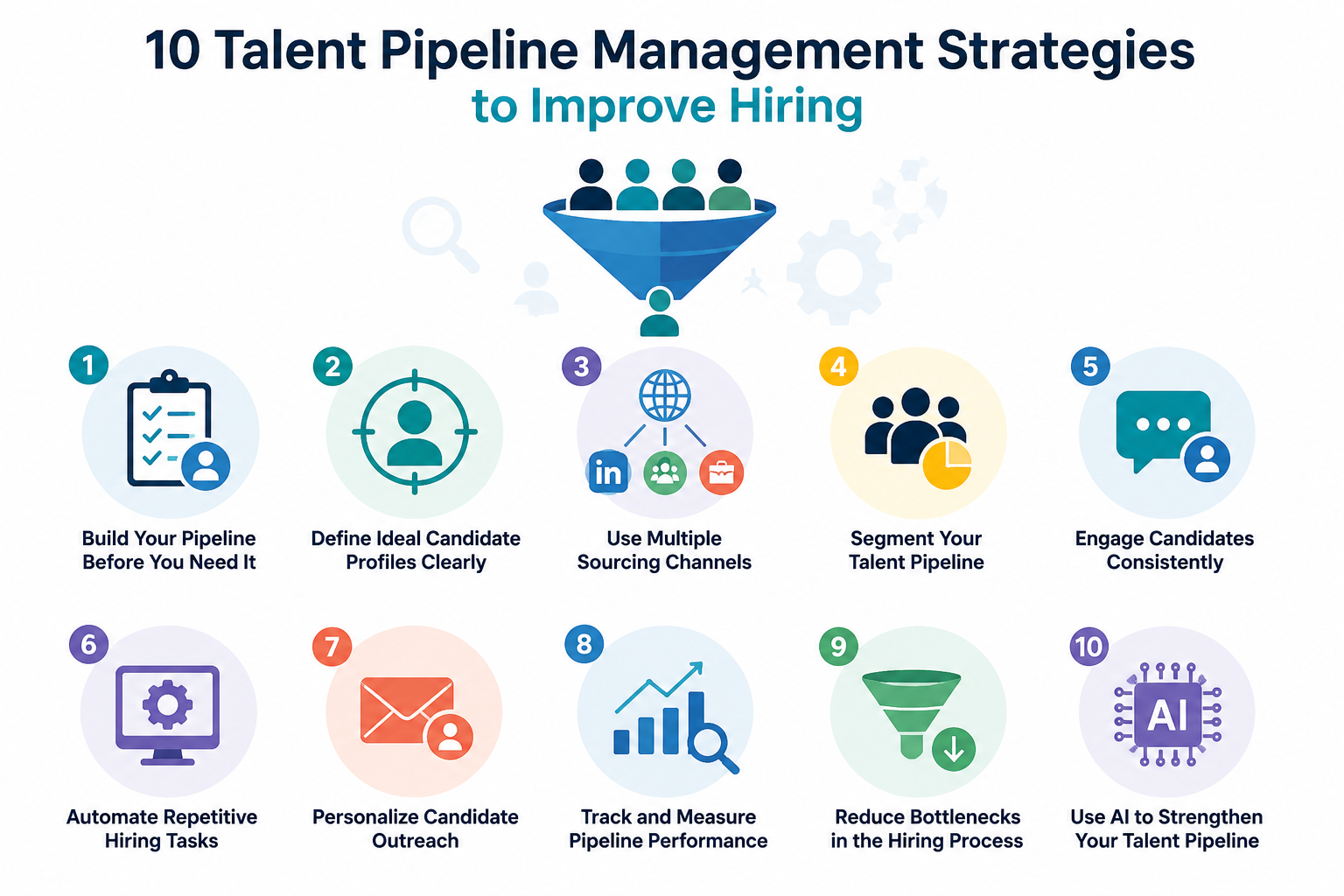
Now that you understand the core components of a talent pipeline, the next step is making it actually work in real hiring scenarios.
The difference between an average pipeline and a high-performing one comes down to the strategies you apply consistently.
These strategies help you move from reactive hiring to a system that is always prepared, organized, and efficient.
1. Build Your Pipeline Before You Need It
One of the biggest mistakes in hiring is waiting until a role opens to start looking for candidates.
By the time you begin sourcing, you are already behind, which leads to rushed decisions and longer hiring cycles.
Instead, you should continuously build your pipeline even when there are no immediate openings.
This means identifying potential candidates early, saving their profiles, and keeping them engaged over time.
When a role finally opens, you already have a pool of qualified candidates ready to reach out to.
2. Define Ideal Candidate Profiles Clearly
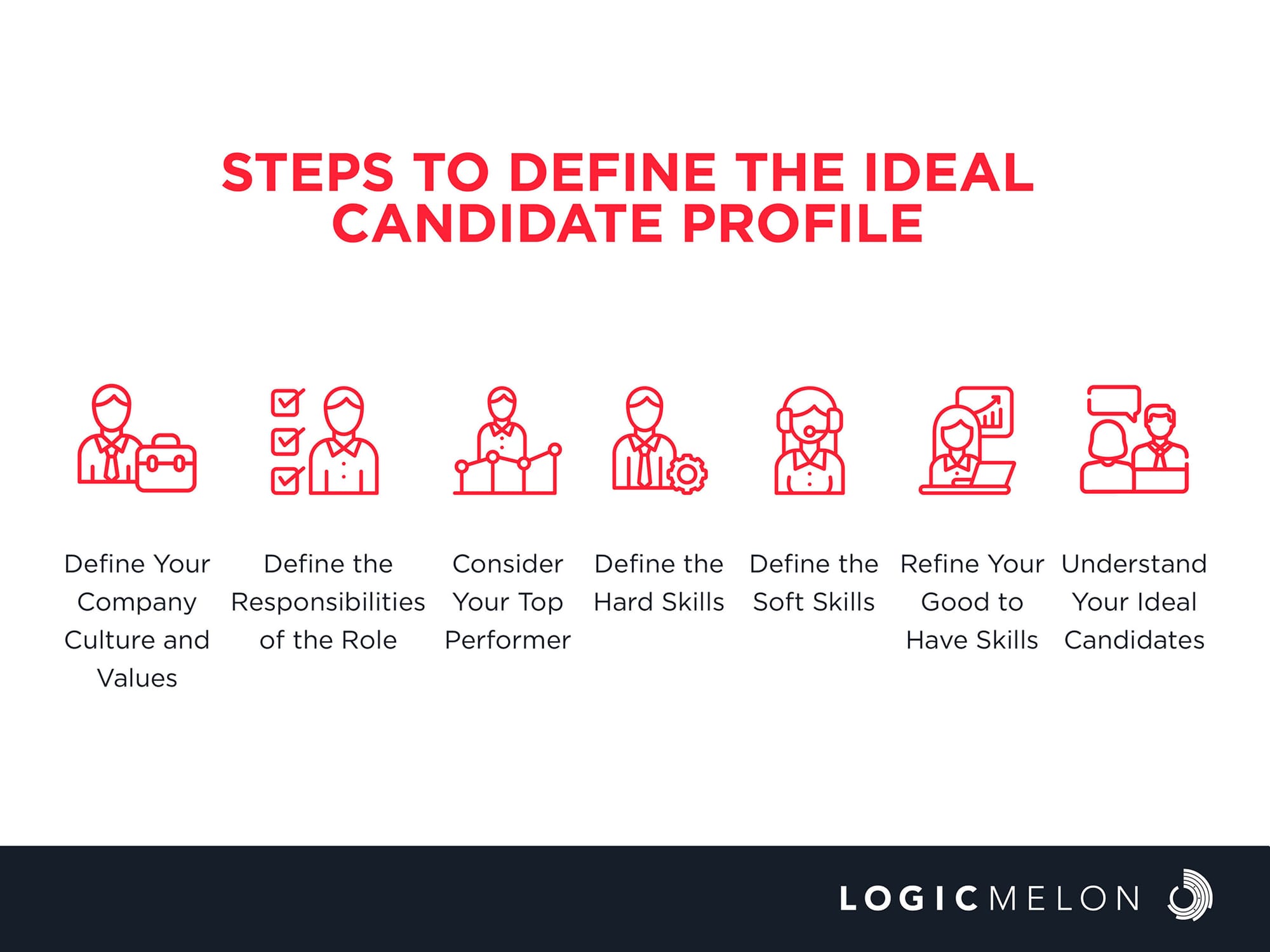
If you are not clear about who you are looking for, your pipeline will quickly become cluttered and ineffective.
That is why defining ideal candidate profiles is a critical step in talent pipeline management.
You need to go beyond job titles and think about skills, experience, behaviors, and even cultural fit.
A well-defined profile helps you filter candidates faster and ensures consistency in your hiring decisions.
It also makes sourcing more targeted, which improves the overall quality of your pipeline.
3. Use Multiple Sourcing Channels
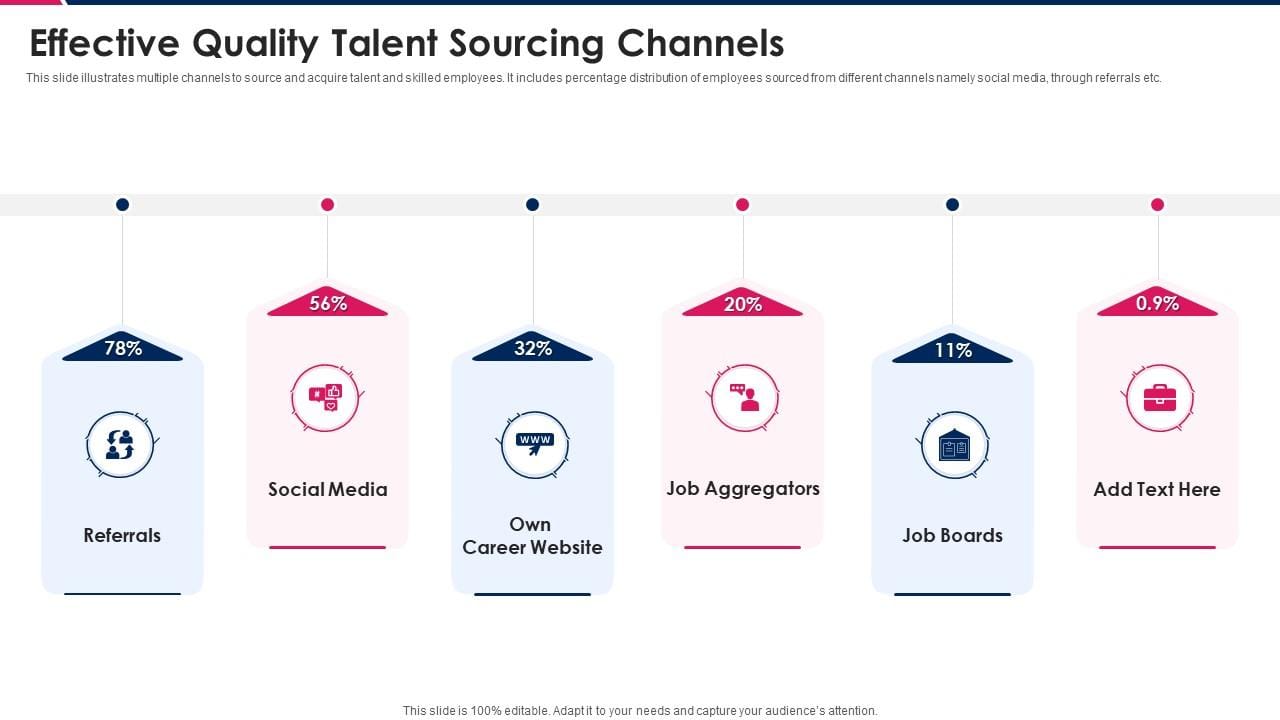
Relying on a single sourcing channel limits your access to talent and reduces your chances of finding the right candidates.
To build a strong pipeline, you need to diversify where you source from.
This can include job boards, professional networks, employee referrals, talent communities, and even passive candidates.
Using multiple channels not only increases your reach but also improves the diversity and quality of your candidate pool.
Over time, this creates a more resilient and scalable hiring pipeline.
Suggested Reading:
10 Candidate Sourcing Channels That Deliver Better Hires Fast4. Segment Your Talent Pipeline
Not all candidates in your pipeline are the same, and treating them that way can lead to confusion and missed opportunities.
Segmentation helps you organize candidates based on criteria like skills, experience level, role type, or readiness to switch jobs.
When your pipeline is segmented, it becomes easier to search, filter, and take action quickly.
You can tailor your outreach and engagement based on each segment, making your communication more relevant and effective.
This level of organization significantly improves how efficiently you can move candidates forward.
5. Engage Candidates Consistently
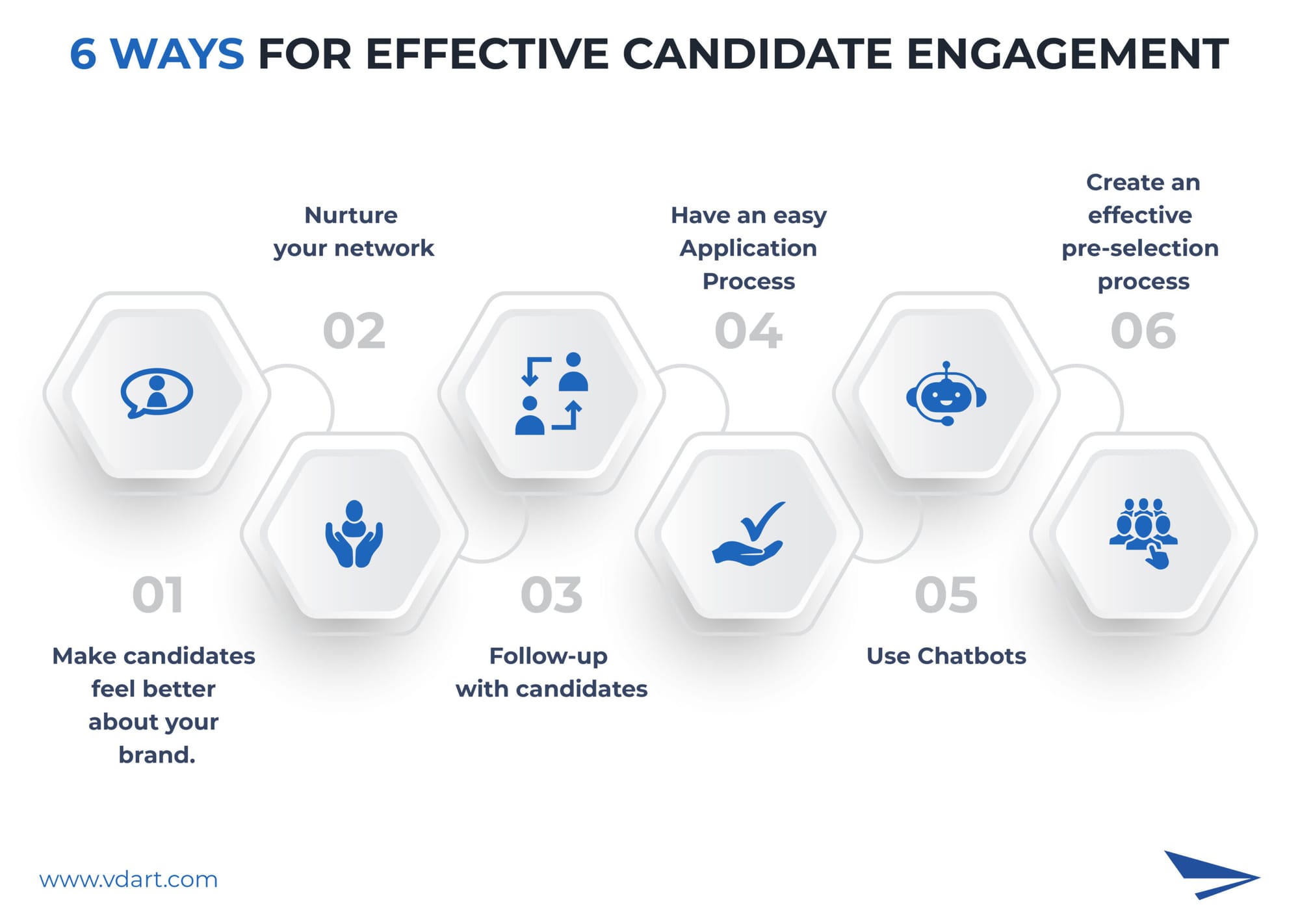
Building a pipeline is not just about adding candidates, it is about maintaining relationships over time.
If you only reach out when you have an opening, candidates are less likely to respond or show interest.
Consistent engagement keeps your brand top of mind and builds trust with potential hires.
This can include sharing updates, checking in periodically, or informing them about relevant opportunities.
When candidates feel valued and informed, they are much more likely to engage when the right role comes up.
6. Automate Repetitive Hiring Tasks
As your pipeline grows, manual work can quickly slow everything down.
Tasks like sourcing, screening, follow-ups, and scheduling can take up hours if done repeatedly.
This is where automation becomes essential in talent pipeline management.
By automating repetitive steps, you reduce manual effort and ensure that no candidate is missed or delayed.
You can set up workflows for resume screening, outreach sequences, and interview scheduling so your process runs consistently in the background.
This not only saves time but also brings speed and consistency to your hiring process.
When routine tasks are handled automatically, you can focus more on decision-making and candidate experience.
7. Personalize Candidate Outreach
Even with a strong pipeline, generic communication can reduce your chances of getting responses.
Candidates today expect messages that feel relevant and tailored to their experience.
Personalized outreach helps you stand out and build stronger connections with potential hires.
This means going beyond basic templates and customizing your communication based on the candidate’s skills, background, or interests.
Even small touches like referencing their work or experience can make a big difference in engagement.
When candidates feel that your message is specifically meant for them, they are more likely to respond and stay interested.
8. Track and Measure Pipeline Performance
If you are not measuring your pipeline, you will not know what is working and what needs improvement.
Tracking performance gives you visibility into how candidates move through each stage of your hiring process.
Key metrics like conversion rates, time-to-hire, and source effectiveness help you understand where you are gaining or losing momentum.
This data allows you to make informed decisions instead of relying on guesswork.
Over time, consistent tracking helps you optimize your strategy and build a more predictable hiring system.
Suggested Reading:
Top HR Metrics Every HR Professional Should Track9. Reduce Bottlenecks in the Hiring Process
Even with a well-built pipeline, delays at any stage can slow down your entire hiring process.
Bottlenecks often happen during screening, interview scheduling, or decision-making stages.
Identifying and fixing these delays is critical to maintaining a smooth pipeline flow.
You need to regularly review your process to spot where candidates are getting stuck or dropping off.
Once identified, you can streamline those stages by improving coordination, setting clear timelines, or simplifying workflows.
Reducing bottlenecks ensures that candidates move forward without unnecessary delays, improving both speed and experience.
10. Use AI to Strengthen Your Talent Pipeline
As hiring becomes more competitive, relying only on manual processes can limit your ability to scale.
This is where AI can significantly enhance your talent pipeline management.
AI can help you source candidates faster, screen profiles more accurately, and prioritize the best matches based on data.
It can also automate outreach and engagement, ensuring consistent communication without extra effort.
For example, tools like Leelu AI act as a recruiting copilot that handles sourcing, screening, outreach, and scheduling in one workflow.
This allows you to move from fragmented hiring processes to a more unified and efficient system.
When used effectively, AI not only saves time but also improves the quality and speed of your hiring decisions.
How Leelu AI Helps You Build a Strong Talent Pipeline
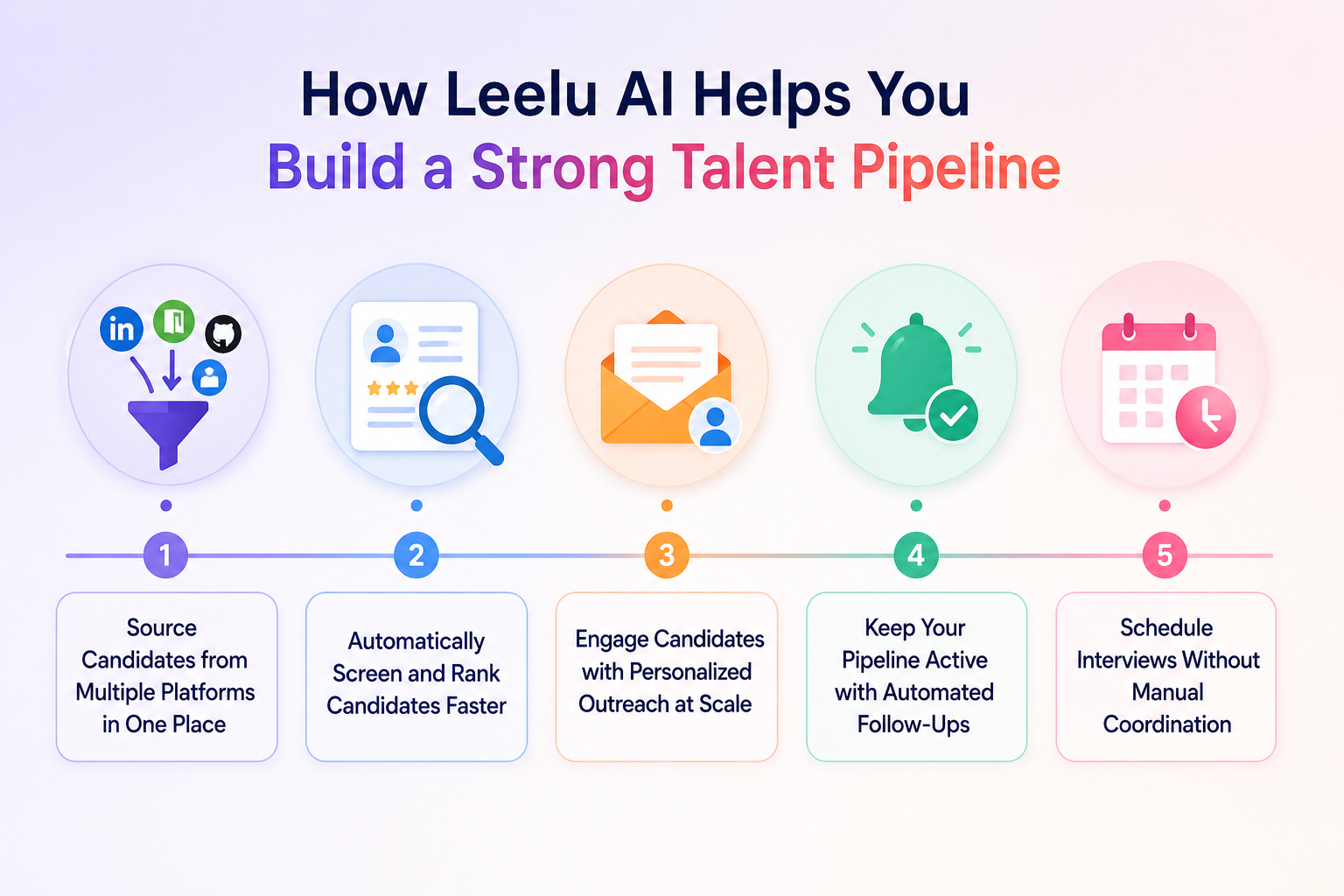
So far, you have seen what it takes to build and manage a strong talent pipeline.
But executing all of this manually can quickly become overwhelming as your hiring needs grow.
This is where the right tools can help you bring structure, speed, and consistency into your pipeline.
Leelu.AI fits naturally into this process by helping you automate and streamline each stage of talent pipeline management without adding complexity.
1. Source Candidates from Multiple Platforms in One Place
Sourcing candidates from different platforms manually can be time-consuming and fragmented.
You often end up switching between tools, which slows down your workflow and limits your reach.
Leelu AI solves this by allowing you to source candidates from multiple platforms in one place.
It scans millions of profiles across job boards, professional networks, and ATS systems to help you find relevant candidates faster.
This ensures you always have a steady inflow of qualified candidates without extra effort.
2. Automatically Screen and Rank Candidates Faster
Screening hundreds of profiles manually is not only slow but also inconsistent.
It becomes difficult to identify the best candidates quickly when everything depends on manual review.
Leelu AI uses intelligent screening to automatically parse and rank candidates based on job fit.
This helps you instantly identify top candidates without going through every single profile.
As a result, your pipeline stays focused on high-quality talent, and your shortlisting process becomes significantly faster.
3. Engage Candidates with Personalized Outreach at Scale
Engaging candidates consistently is essential, but doing it manually does not scale.
You either end up sending generic messages or missing out on follow-ups.
Leelu AI helps you send personalized outreach messages across channels like email and LinkedIn at scale.
It tailors communication based on candidate profiles, making your outreach more relevant and effective.
This improves response rates and keeps candidates actively engaged in your pipeline.
4. Keep Your Pipeline Active with Automated Follow-Ups
A pipeline only works when candidates remain engaged over time.
Without regular follow-ups, even strong candidates can lose interest or move on.
Leelu AI automates follow-ups and candidate conversations, ensuring consistent communication without manual effort.
It keeps your pipeline active 24/7, so you do not miss opportunities due to delays or gaps in engagement.
This continuous interaction helps you build stronger relationships with potential hires.
5. Schedule Interviews Without Manual Coordination
Interview scheduling is often one of the most time-consuming parts of the hiring process.
Coordinating between candidates and hiring teams can lead to delays and unnecessary back-and-forth.
Leelu AI simplifies this by automatically scheduling interviews with calendar integrations.
Candidates can choose available slots, and interviews are booked instantly without manual coordination.
This speeds up your hiring process and ensures a smoother experience for both candidates and your team.
Common Mistakes in Talent Pipeline Management
Even with the right strategies in place, small mistakes can quietly weaken your entire talent pipeline.
These mistakes often go unnoticed until hiring slows down or candidate quality starts to drop.
Understanding them early helps you avoid inefficiencies and build a pipeline that actually supports long-term hiring success.
1. Waiting Until There Is an Urgent Role
One of the most common mistakes is treating hiring as a last-minute activity.
When you only start building your pipeline after a role opens, you are forced into reactive hiring.
This leads to rushed sourcing, limited candidate options, and longer time-to-hire.
Instead of being prepared, you end up scrambling to fill positions quickly.
A strong pipeline should always be active, so you already have candidates ready when the need arises.
2. Ignoring Candidate Experience
Your pipeline is not just a database, it is a network of real people evaluating your company.
If candidates have a poor experience, they are less likely to respond, engage, or accept offers.
Delays in communication, generic outreach, or lack of clarity can quickly damage your employer brand.
Even candidates who are not selected can influence how others perceive your hiring process.
Focusing on clear communication and timely updates helps you build trust and keep candidates interested.
3. Not Updating the Pipeline Regularly
A pipeline that is not maintained quickly becomes outdated and unreliable.
Candidates may change jobs, lose interest, or become unavailable over time.
If you do not regularly update your pipeline, you risk reaching out to inactive or irrelevant candidates.
This slows down your hiring process and reduces efficiency.
Keeping your pipeline clean, updated, and organized ensures that your data stays accurate and actionable.
Conclusion
Building a strong talent pipeline is no longer optional if you want faster and more reliable hiring.
When you move from reactive hiring to a structured pipeline approach, everything becomes more predictable and efficient.
You spend less time searching and more time engaging the right candidates.
By applying the right strategies, avoiding common mistakes, and using the right tools when needed, you can create a pipeline that consistently delivers quality hires.
In the long run, a well-managed talent pipeline becomes your biggest advantage in scaling hiring without increasing effort.
Frequently Asked Questions
1. What is the main goal of talent pipeline management?
The main goal is to ensure you always have a pool of qualified candidates ready before a role opens.
Instead of starting from scratch every time, you build and nurture relationships so hiring becomes faster and more predictable.
2. How is a talent pipeline different from a candidate database?
A candidate database is usually static and only stores profiles.
A talent pipeline is active, where candidates are continuously engaged, segmented, and moved through different stages based on readiness.
3. How early should you start building a talent pipeline?
You should start as early as possible, even when there are no open roles.
Building your pipeline in advance gives you a strong advantage when hiring demand suddenly increases.
4. What are the key metrics to track in a talent pipeline?
Some important metrics include time-to-hire, candidate conversion rates, source effectiveness, and pipeline engagement levels.
Tracking these helps you understand where your process is working and where it needs improvement.


