
Finding skilled tech talent is harder than ever.
Recruiters often spend hours searching across platforms, screening profiles, and managing outreach, only to face slow hiring cycles and missed opportunities.
That is why sourcing tools have become an essential part of modern tech recruiting.
The right platform can help you find qualified candidates faster, automate repetitive tasks, and improve hiring outcomes.
In this guide, you will learn:
- The key features to look for in sourcing tools
- The 9 best tech recruiting sourcing tools
- Common mistakes recruiters should avoid
Key Capabilities of the Best Tech Recruiting Sourcing Tools
A sourcing tool can either save your recruiting team hours every week or become another platform that creates more work.
The difference usually comes down to the features it offers.
While every recruiting platform claims to simplify hiring, the best tech recruiting sourcing tools share a few essential capabilities that directly impact hiring speed, candidate quality, and recruiter productivity.
1. Multi-Platform Candidate Sourcing
Top tech candidates rarely exist on a single platform.
Some are active on LinkedIn, while others are more visible on GitHub, job boards, talent communities, or your existing ATS database.
The best sourcing tools help you search across multiple channels from one place.
Instead of switching between tabs and platforms all day, you can discover more qualified candidates through a single workflow.
This not only expands your talent pool but also helps you uncover passive candidates that competitors may overlook.
Suggested Reading:
Candidate Sourcing Channels2. AI-Powered Candidate Screening and Matching
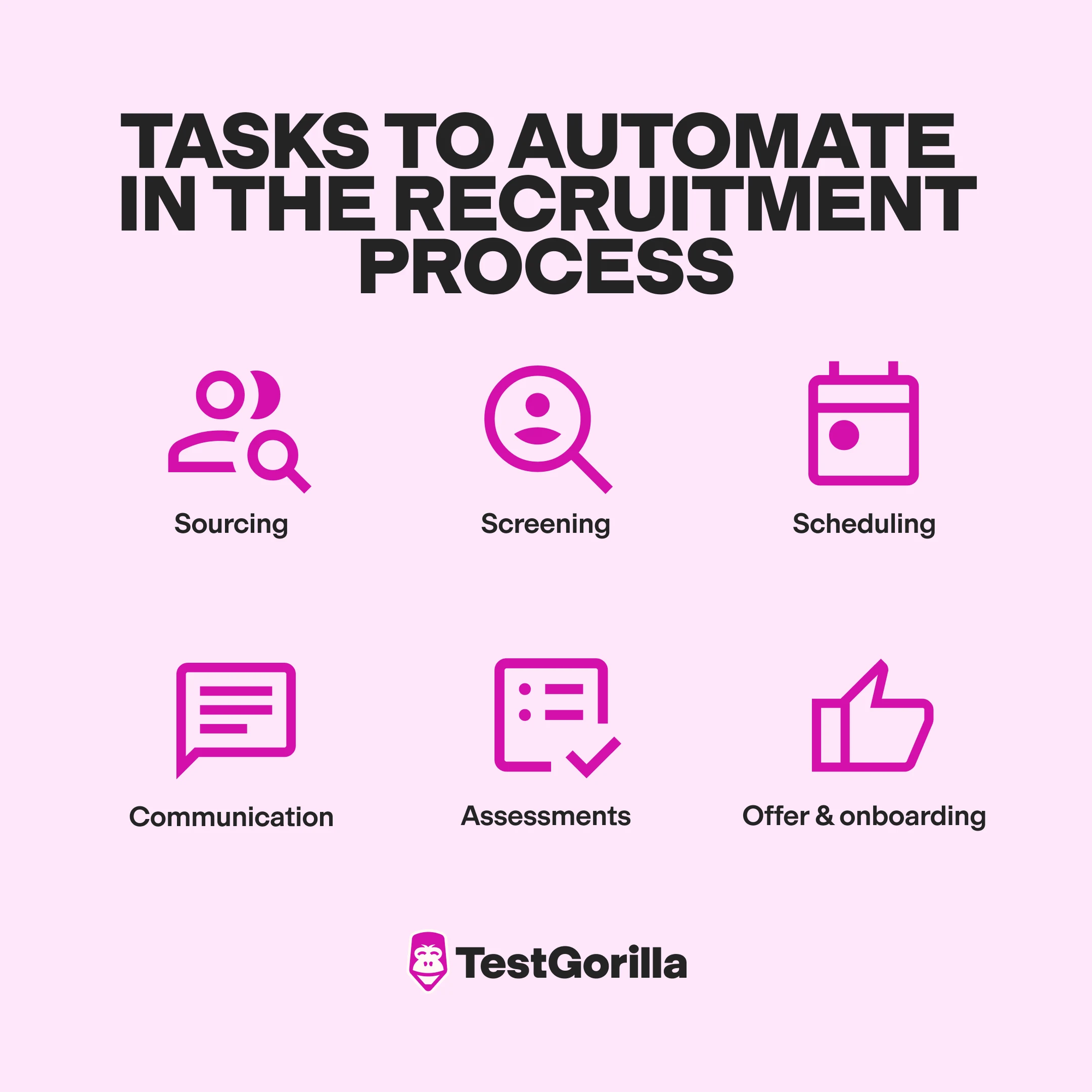
Finding candidates is only half the battle.
The real challenge is identifying which candidates are actually worth pursuing.
AI-powered screening helps you automatically evaluate resumes, skills, experience, and job requirements.
Rather than manually reviewing hundreds of profiles, you can quickly focus on candidates with the highest likelihood of success.
This significantly reduces screening time while improving shortlist quality.
3. Personalized Candidate Outreach Automation
Once you've identified strong candidates, the next step is getting their attention.
That becomes difficult when recruiters are sending dozens of messages every day.
Modern sourcing platforms automate outreach while keeping communication personalized.
You can create tailored email sequences, automate follow-ups, and engage candidates at scale without sacrificing the personal touch that drives responses.
4. Automated Interview Scheduling
Recruiting momentum can disappear quickly when interview scheduling becomes a bottleneck.
Coordinating calendars between recruiters, hiring managers, and candidates often creates unnecessary delays.
The best sourcing tools automate scheduling and calendar synchronization.
As a result, interviews get booked faster and candidates move through the hiring process with fewer delays.
5. ATS Integration and Workflow Automation
Most recruiting teams already use an Applicant Tracking System (ATS).
Without proper integration, recruiters often spend valuable time updating records across multiple tools.
Leading sourcing platforms connect directly with ATS systems and automate data synchronization.
This keeps candidate information accurate while reducing repetitive administrative work.
6. Recruiting Analytics and Hiring Insights
The best recruiters don't rely on assumptions.
They rely on data.
Recruiting analytics help you understand where candidates are coming from, which outreach campaigns perform best, and where hiring bottlenecks exist.
These insights make it easier to optimize sourcing strategies, improve recruiter efficiency, and make better hiring decisions over time.
Best Sourcing Tools for Tech Recruiting
The right sourcing tool can dramatically reduce the time it takes to find and engage qualified tech candidates.
However, every platform approaches recruiting differently. Some focus on candidate discovery, while others automate larger parts of the hiring process.
Let's look at some of the best sourcing tools for tech recruiting and where each one stands out.
1. Leelu.AI
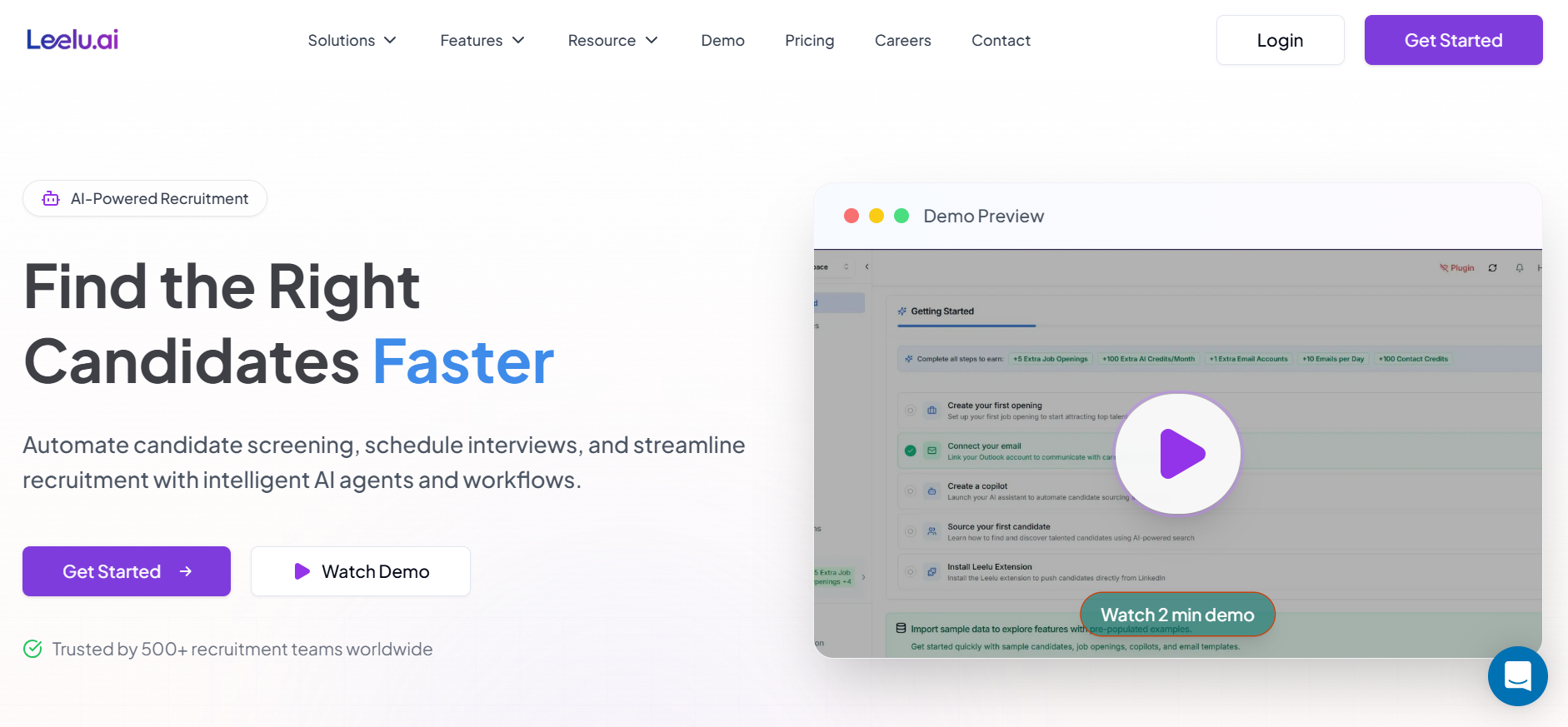
If your team wants to automate more than just sourcing, Leelu.AI is worth considering.
Leelu.AI acts as an AI recruiting copilot that automates sourcing, candidate screening, outreach, and interview scheduling from a single platform.
Instead of managing multiple recruiting tools, you can streamline your entire hiring workflow in one place.
Pricing
- Starts from $79/month for small recruiting teams
- Growth plans range between $149–$499/month with advanced sourcing automation and ATS integrations
- Enterprise pricing is custom based on hiring volume and recruiting requirements
- Free trial available to evaluate platform capabilities
Pros
- Sources candidates from 500M+ profiles across multiple platforms
- AI-powered candidate screening and matching
- Automated personalized outreach campaigns
- Smart interview scheduling with calendar syncing
- ATS integrations for streamlined workflows
- Real-time recruiting analytics and hiring insights
- Reduces manual recruiting effort significantly
Cons
- Advanced features may require higher-tier plans
- Enterprise pricing is not publicly disclosed
- New users may need onboarding to utilize all automation features
2. LinkedIn Recruiter
LinkedIn Recruiter remains one of the most widely used sourcing platforms for hiring technical talent.
Its biggest advantage is direct access to LinkedIn's professional network, making it easier to identify and engage passive candidates.
Pricing
- Recruiter Lite starts around $170/month per user
- LinkedIn Recruiter Corporate plans typically start from $835+/month per seat
- Enterprise pricing available for large organizations
- Annual contracts are generally required
Pros
- Access to a massive professional talent network
- Advanced search filters and talent insights
- Direct InMail messaging capabilities
- Strong employer branding opportunities
- Easy team collaboration features
Cons
- Can become expensive as recruiting teams grow
- Heavy competition for the same candidate pool
- Limited sourcing outside the LinkedIn ecosystem
3. SeekOut
SeekOut is particularly popular among companies hiring hard-to-find technical talent.
Its advanced search capabilities and diversity-focused recruiting features help teams uncover candidates that may be difficult to find through traditional sourcing methods.
Pricing
- Estimated plans start from $499/month
- Mid-market recruiting plans typically range between $1,000–$2,000/month
- Enterprise pricing is custom based on recruiter seats and features
- Demo available upon request
Pros
- Excellent diversity sourcing capabilities
- Strong talent search across multiple sources
- Candidate enrichment and market intelligence
- Advanced Boolean search functionality
- Useful workforce planning insights
Cons
- Learning curve for first-time users
- Premium pricing compared to some competitors
- Outreach features are less comprehensive than engagement-focused platforms
4. hireEZ
hireEZ combines sourcing, engagement, and recruiting automation into a single solution.
The platform helps recruiters identify candidates, automate outreach, and manage talent pipelines without relying heavily on manual processes.
Pricing
- Plans typically start around $169–$299/month per recruiter
- Professional packages range between $500–$1,000/month
- Enterprise pricing available for larger hiring teams
- Custom quotes provided based on feature requirements
Pros
- AI-powered sourcing and candidate matching
- Multi-channel outreach automation
- Talent rediscovery capabilities
- Strong CRM functionality
- Supports proactive recruiting strategies
Cons
- Advanced functionality may increase costs
- User interface can feel overwhelming initially
- Some integrations require additional configuration
5. Gem
Gem is best known for helping recruiting teams improve candidate engagement and recruiting operations.
While it includes sourcing features, its biggest strength lies in outreach automation, recruiting analytics, and candidate relationship management.
Pricing
- Estimated pricing starts around $250–$500/month
- Growth plans range between $750–$2,000/month depending on team size
- Enterprise plans are custom priced
- Demo available for qualified teams
Pros
- Powerful recruiting analytics and reporting
- Excellent outreach automation tools
- Strong candidate relationship management features
- Integrates with major ATS platforms
- Improves recruiting workflow visibility
Cons
- Sourcing capabilities are not as deep as dedicated sourcing platforms
- Higher pricing for smaller recruiting teams
- Often delivers the most value when paired with other recruiting tools
6. Loxo
For recruiting teams that want sourcing, CRM, ATS, and outreach capabilities in one platform, Loxo is a popular option.
The platform combines candidate sourcing with recruiting workflow management, making it useful for agencies and in-house recruiting teams looking to reduce tool sprawl.
Pricing
- Starter plans begin around $119–$199/month per user
- Professional plans range between $300–$800/month with advanced sourcing features
- Enterprise pricing is custom based on team size and hiring volume
- Free demo available upon request
Pros
- Built-in ATS and recruiting CRM
- AI-powered candidate sourcing capabilities
- Outreach automation and email sequencing
- Chrome extension for candidate sourcing
- Strong all-in-one recruiting platform
Cons
- Advanced features can become costly
- Some integrations require premium plans
- Reporting capabilities are less robust than specialized analytics tools
7. Fetcher
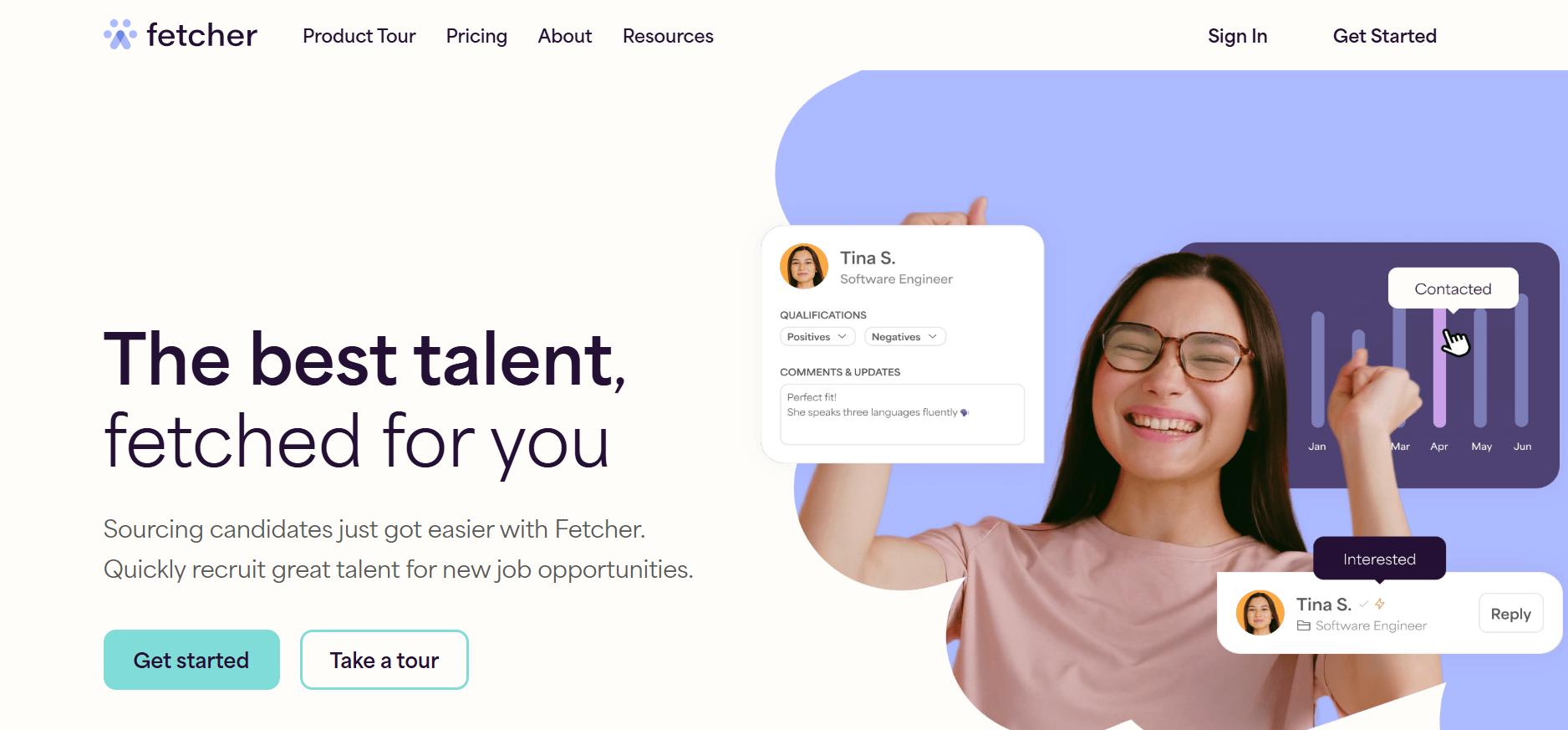
Many recruiters struggle to balance sourcing candidates while managing the rest of their hiring responsibilities.
Fetcher helps solve this challenge by combining AI-powered sourcing with recruiting automation. The platform delivers qualified candidate recommendations while helping recruiters automate outreach campaigns.
Pricing
- Plans typically start around $149–$399/month
- Mid-market plans range between $500–$1,500/month
- Enterprise pricing is available for larger organizations
- Custom quotes provided based on hiring needs
Pros
- AI-generated candidate recommendations
- Automated outreach and follow-up sequences
- Diversity sourcing capabilities
- Easy-to-use interface
- Helps reduce manual sourcing effort
Cons
- Candidate database is smaller than some competitors
- Advanced customization options are limited
- Best suited for teams with ongoing hiring needs
8. AmazingHiring
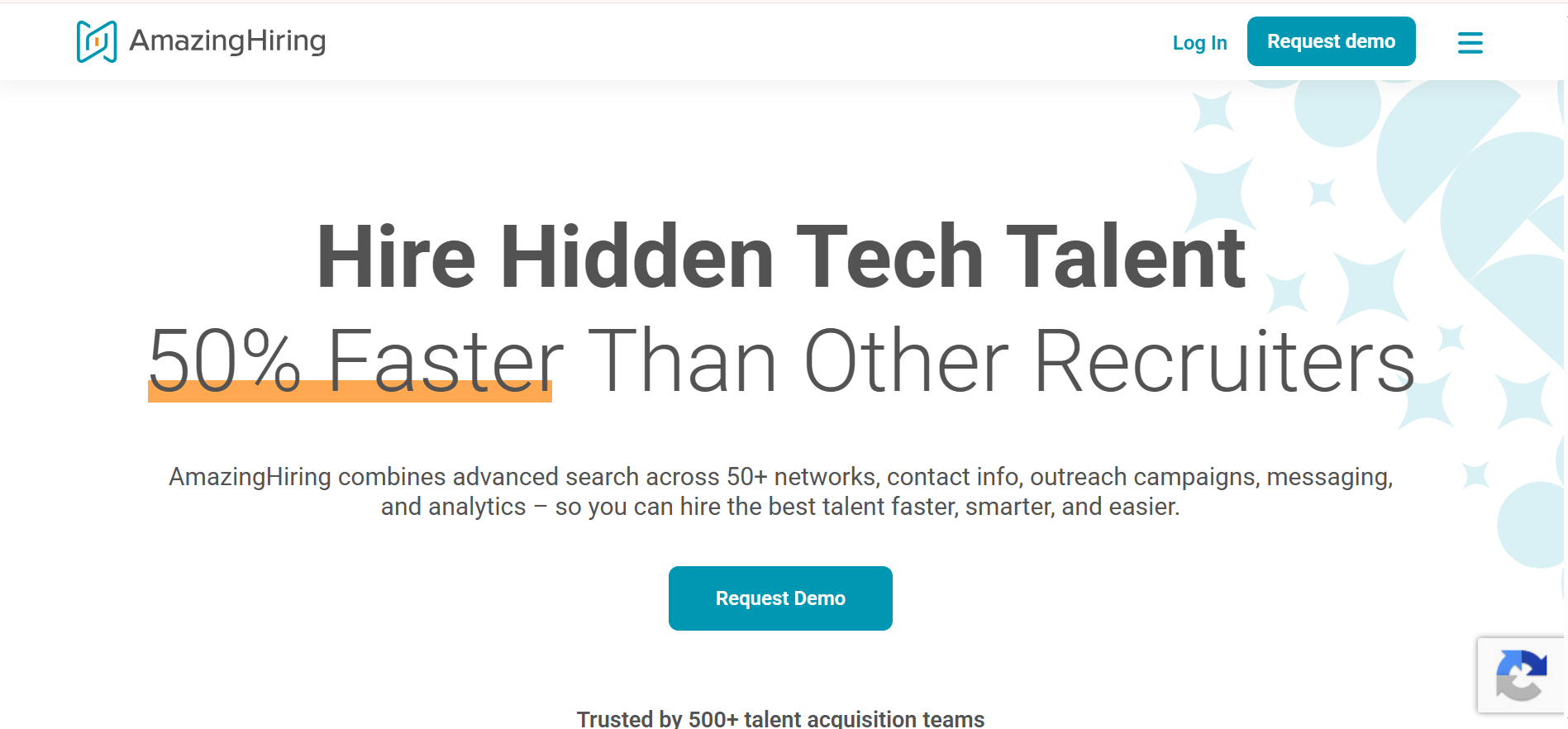
When hiring software engineers and technical professionals, traditional sourcing platforms don't always provide enough visibility into candidate skills.
AmazingHiring focuses specifically on technical recruiting by aggregating candidate data from developer communities, professional networks, and public platforms.
This makes it particularly useful for companies hiring software developers, data engineers, and other specialized tech talent.
Pricing
- Plans generally start around $300–$500/month
- Growth plans range between $1,000–$2,500/month
- Enterprise pricing is custom based on recruiter seats
- Product demonstrations available upon request
Pros
- Built specifically for technical recruiting
- Aggregates profiles from multiple developer platforms
- Strong talent discovery capabilities
- Detailed candidate enrichment data
- Useful for finding passive technical candidates
Cons
- Primarily focused on tech hiring use cases
- Outreach functionality is less advanced than some competitors
- Can require training to maximize search capabilities
9. Entelo
Entelo has long been recognized as a sourcing platform focused on talent discovery and diversity recruiting.
The platform uses predictive analytics and recruiting intelligence to help teams identify candidates who are more likely to be interested in new opportunities.
For recruiters looking to improve sourcing efficiency and candidate engagement, Entelo remains a well-known option.
Pricing
- Estimated plans start around $400–$700/month
- Business plans range between $1,000–$3,000/month
- Enterprise pricing is customized for larger organizations
- Demo available through sales consultation
Pros
- Strong candidate search and discovery features
- Diversity recruiting capabilities
- Predictive recruiting insights
- Candidate enrichment and profile data
- Integrates with major ATS platforms
Cons
- Higher pricing compared to some sourcing alternatives
- Learning curve for new users
- Certain advanced features may require enterprise plans
Common Mistakes Recruiters Make When Using Sourcing Tools
Even the best sourcing tool will not deliver great results if it is used incorrectly.
Many recruiters invest in powerful platforms but still struggle to improve hiring outcomes because of a few common mistakes.
1. Prioritizing Volume Over Candidate Quality
It can be tempting to source as many candidates as possible.
However, a large talent pipeline means little if most candidates are not a good fit for the role.
Focusing on quality over quantity usually leads to better response rates and stronger hires.
2. Sending Generic Outreach Messages
Candidates receive recruiting messages every day.
When outreach feels automated or lacks personalization, it is easy for candidates to ignore it.
Taking the time to reference a candidate's skills, experience, or career interests can significantly improve engagement and response rates.
3. Ignoring Candidate Data Accuracy
Sourcing decisions are only as good as the data behind them.
Outdated contact information, incomplete profiles, and inaccurate candidate records can slow down hiring efforts.
Regularly reviewing and updating candidate data helps ensure your sourcing strategy remains effective and reliable.
Suggested Reading:
Talent Acquisition Strategy, Process & Best PracticesConclusion
Hiring top tech talent is no longer just about finding candidates.
It's about finding the right candidates quickly while keeping recruiters focused on high-value work.
The best sourcing tools help teams automate repetitive tasks, expand their talent reach, improve candidate engagement, and make better hiring decisions with data-driven insights.
Whether you're a growing startup or an enterprise recruiting team, investing in the right sourcing platform can significantly improve hiring outcomes.
By choosing a tool that matches your recruiting needs and avoiding common sourcing mistakes, you can build a stronger talent pipeline and reduce time-to-hire without sacrificing candidate quality.
Frequently Asked Questions
1. What are sourcing tools in recruiting?
Sourcing tools are recruiting platforms that help you find, identify, and engage potential candidates across job boards, professional networks, talent communities, and internal databases more efficiently.
2. Which sourcing tool is best for tech hiring?
The best sourcing tool depends on your hiring needs. Leelu.AI, LinkedIn Recruiter, SeekOut, and hireEZ are popular options for sourcing technical talent effectively.
3. What features should recruiters look for in a sourcing platform?
Recruiters should prioritize multi-platform sourcing, AI-powered candidate matching, outreach automation, ATS integrations, interview scheduling, and recruiting analytics to improve hiring efficiency.
4. Are AI sourcing tools suitable for small recruiting teams?
Yes. AI sourcing tools help small recruiting teams automate repetitive tasks, expand candidate reach, and reduce manual work without increasing hiring resources.
5. Can sourcing tools reduce time-to-hire?
Yes. Sourcing tools accelerate candidate discovery, screening, outreach, and scheduling, helping recruiters move qualified candidates through the hiring process much faster.


