Hiring often feels slower than it should, especially when your team is buried in resume screening, follow-ups, and interview coordination. The right AI hiring assistant helps you move from job post to qualified interviews faster without sacrificing candidate quality.
In this guide, you’ll discover the 10 best AI hiring assistant tools that help you source stronger candidates, automate screening, improve outreach, and reduce time-to-hire.
You’ll also learn which tools fit startups, staffing firms, and enterprise teams so you can choose the right solution for faster, smarter recruiting
Key Benefits of AI Hiring Assistant
An AI hiring assistant helps you reduce repetitive tasks, improve candidate quality, and speed up every hiring stage.
From resume screening to interview scheduling, it keeps workflows consistent, helps recruiters make faster decisions, and creates a smoother candidate experience without adding more manual effort.
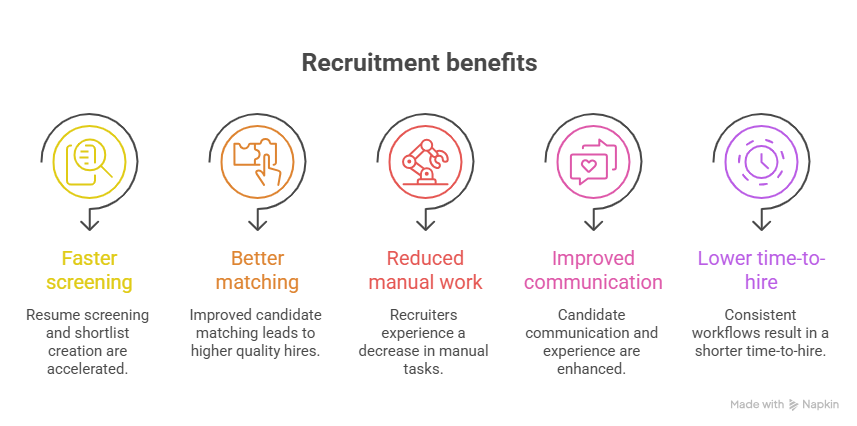
1. Faster resume screening and shortlist creation
The first place most teams feel the impact is resume review.
Instead of manually scanning hundreds of applications, an AI hiring assistant quickly analyzes resumes against job requirements, skills, and experience signals to surface the strongest matches.
This helps you build better shortlists in minutes, reduce manual review time, and move qualified candidates to interviews faster without overlooking strong-fit talent.
2. Better candidate matching and quality hires
Speed only matters when it improves hiring quality too.
A strong AI hiring assistant goes beyond keyword matching and uses skills, role relevance, experience depth, and job-fit signals to rank candidates more accurately.
This gives your team higher-quality shortlists, reduces poor-fit interviews, and helps recruiters spend more time engaging candidates who are genuinely likely to succeed in the role.
3. Reduced manual work for recruiters
After shortlist creation, repetitive coordination work usually becomes the next bottleneck.
An AI hiring assistant automates follow-ups, screening questions, interview scheduling, reminder emails, and status updates that usually consume recruiter bandwidth.
By reducing this admin-heavy workload, your team can focus more on strategic hiring conversations, employer branding, and building stronger relationships with top candidates.
4. Improved candidate communication and experience
A faster process also needs better communication to keep candidates engaged.
With automated reminders, instant replies, personalized updates, and timely follow-ups, an AI hiring assistant keeps every candidate informed throughout the journey.
This reduces drop-offs, improves response rates, and creates a smoother hiring experience that feels faster, more transparent, and more professional from application to interview.
5. Lower time-to-hire with consistent workflows
When every hiring stage follows a clear system, delays naturally start disappearing.
A hiring AI assistant standardizes screening, scheduling, follow-ups, and internal handoffs so the process stays consistent across teams and roles.
This removes workflow bottlenecks, improves collaboration between recruiters and hiring manager, and helps you close positions faster with a more predictable hiring pipeline.
10 Best AI Hiring Assistant Tools for Smarter Recruiting
The best AI hiring assistant depends on your workflow needs, whether that is sourcing, screening, outreach, scheduling, or full-cycle automation.
Some tools suit startups, while others fit enterprise teams, helping improve candidate pipelines, hiring speed, and smarter recruiting decisions at scale.
1. Leelu.ai
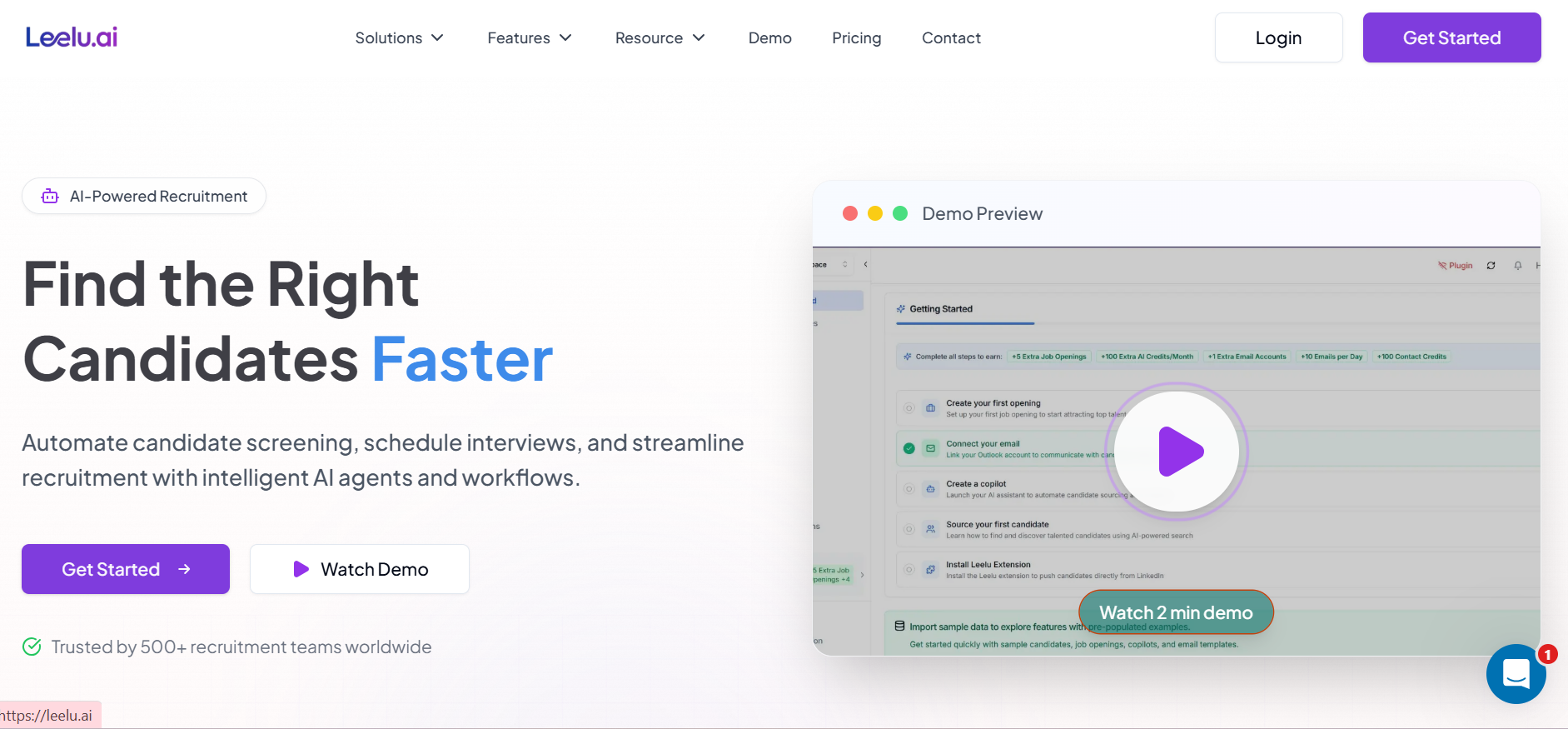
If your recruiting team wants speed without adding more manual work, Leelu is built for exactly that.
As an AI-first AI hiring assistant, it automates sourcing, resume screening, candidate outreach, follow-ups, and interview scheduling in one connected workflow.
Instead of recruiters spending hours switching between sourcing platforms, inboxes, and calendars, the process moves automatically from one stage to the next.
What makes Leelu.ai especially effective is how it combines 500M+ profile sourcing, AI-based candidate ranking, personalized outreach, and automated follow-ups that keep candidates engaged 24/7.
This reduces repetitive recruiter tasks, improves response rates, and helps qualified candidates move faster through the funnel.
For modern hiring teams focused on workflow efficiency, it creates a much smoother path from sourcing to interview.
Pricing:
- Flexible monthly and yearly plans available
- Includes core AI recruiting features across all plans
- Supports team-size based pricing
- Extra add-ons available for AI interviews, candidates, and team seats
- Free trial available
- No credit card required
- Setup in 5 minutes
- Cancel anytime
2. HireVue
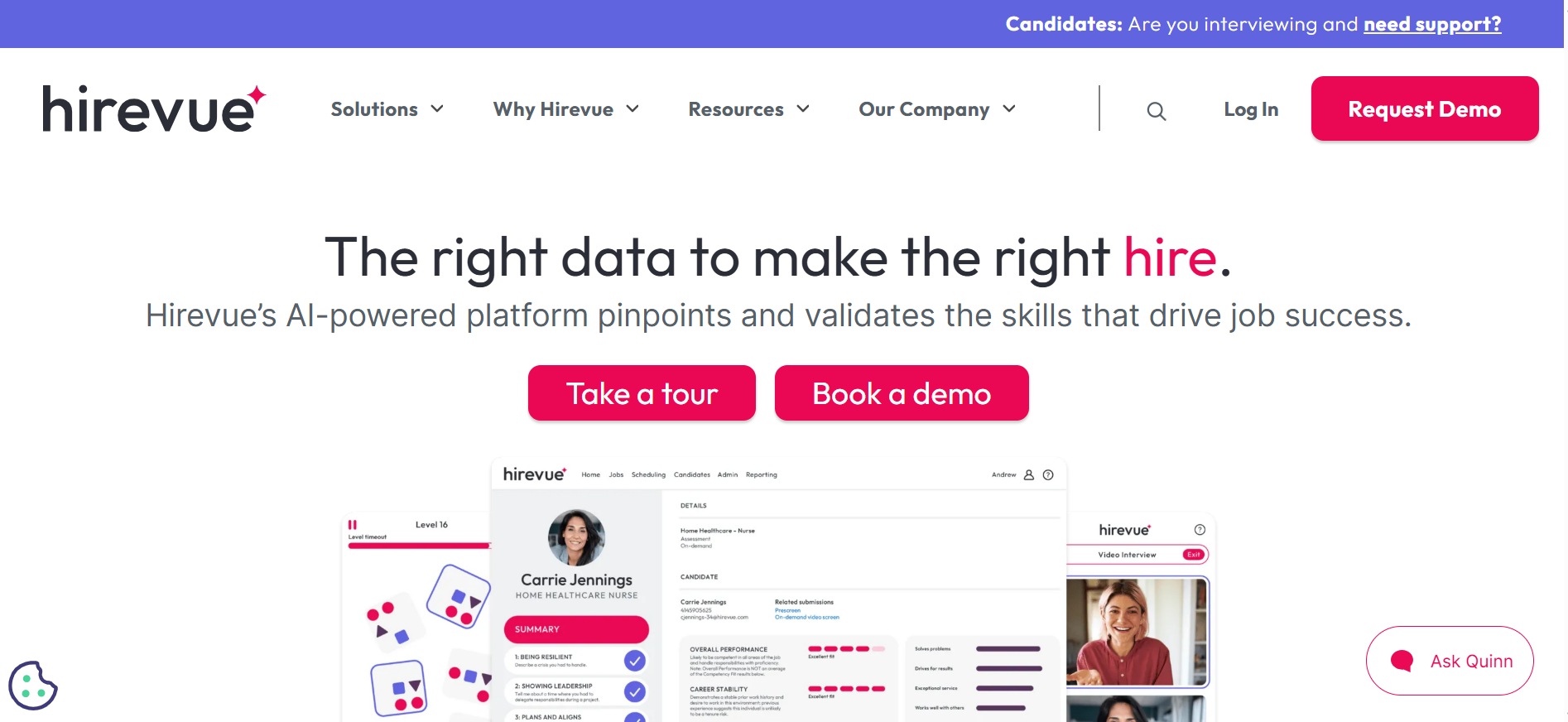
For companies handling high application volume, HireVue helps standardize early-stage hiring decisions.
Its strength lies in video interviews, automated assessments, and AI-supported screening workflows that make it easier to evaluate candidates consistently.
Recruiters can quickly move applicants through structured interview steps without manually coordinating every interaction.
This is especially useful for enterprise and large-scale hiring teams that need faster evaluation, reduced scheduling effort, and more consistent candidate comparisons across multiple hiring managers.
Pricing:
- Custom enterprise pricing
- Best for video interviews and AI assessments
- Ideal for enterprise and high-volume hiring teams
- Pricing depends on interview volume and assessment modules
3. Paradox
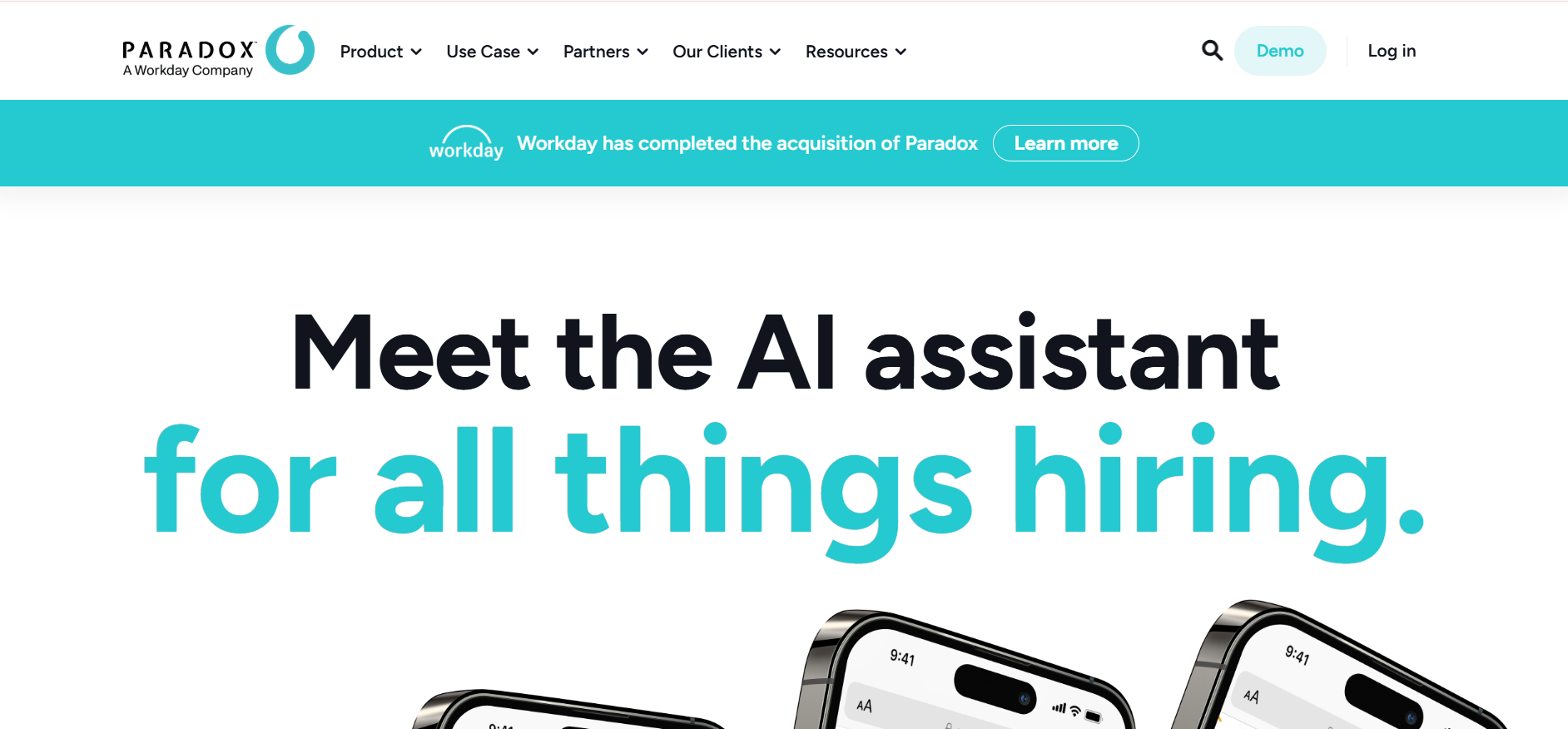
When candidate communication becomes the biggest hiring bottleneck, Paradox stands out.
Its conversational AI uses chat-based interactions to handle screening questions, scheduling, reminders, and common applicant FAQs in real time. This keeps the process moving even outside recruiter working hours.
The biggest advantage is candidate experience. Applicants get quick responses, instant interview slots, and faster updates, which helps reduce drop-offs while making the hiring journey feel smoother and more responsive.
Pricing:
- Custom pricing
- Best for conversational AI and scheduling automation
- Strong fit for frontline and hourly hiring
- Enterprise-focused sales model
4. Eightfold.AI
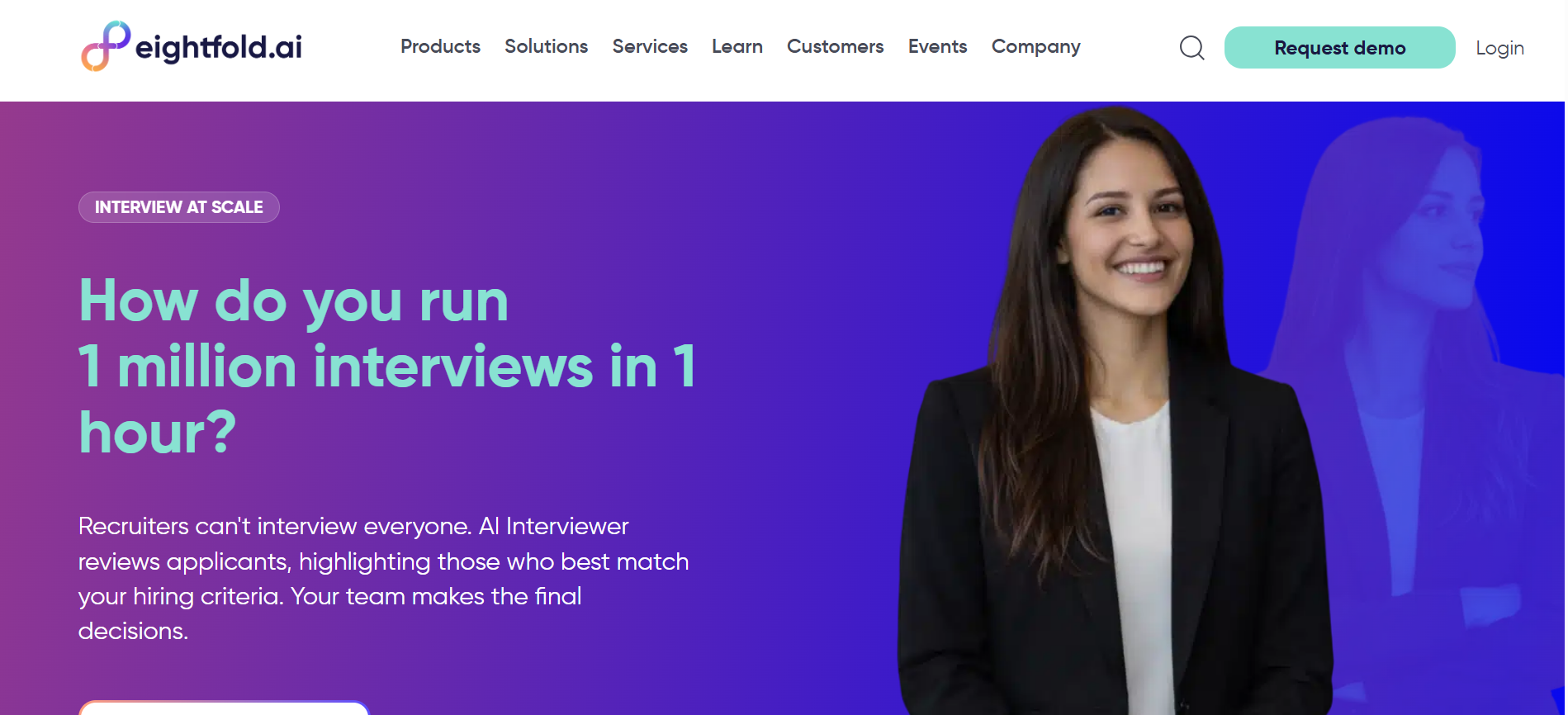
If your hiring process depends heavily on talent intelligence, Eightfold AI is a strong choice.
It uses AI-driven skills matching, career path analysis, and data-backed recommendations to surface the best-fit candidates faster. Rather than relying only on resumes, it looks at deeper capability and growth signals.
This makes it especially powerful for enterprise teams focused on both external hiring and internal mobility, helping you identify strong candidates, uncover hidden talent pools, and make better long-term hiring decisions.
Pricing:
- Custom enterprise pricing
- Best for AI talent intelligence and internal mobility
- Ideal for global enterprise hiring
- Usually requires implementation support
5. Humanly
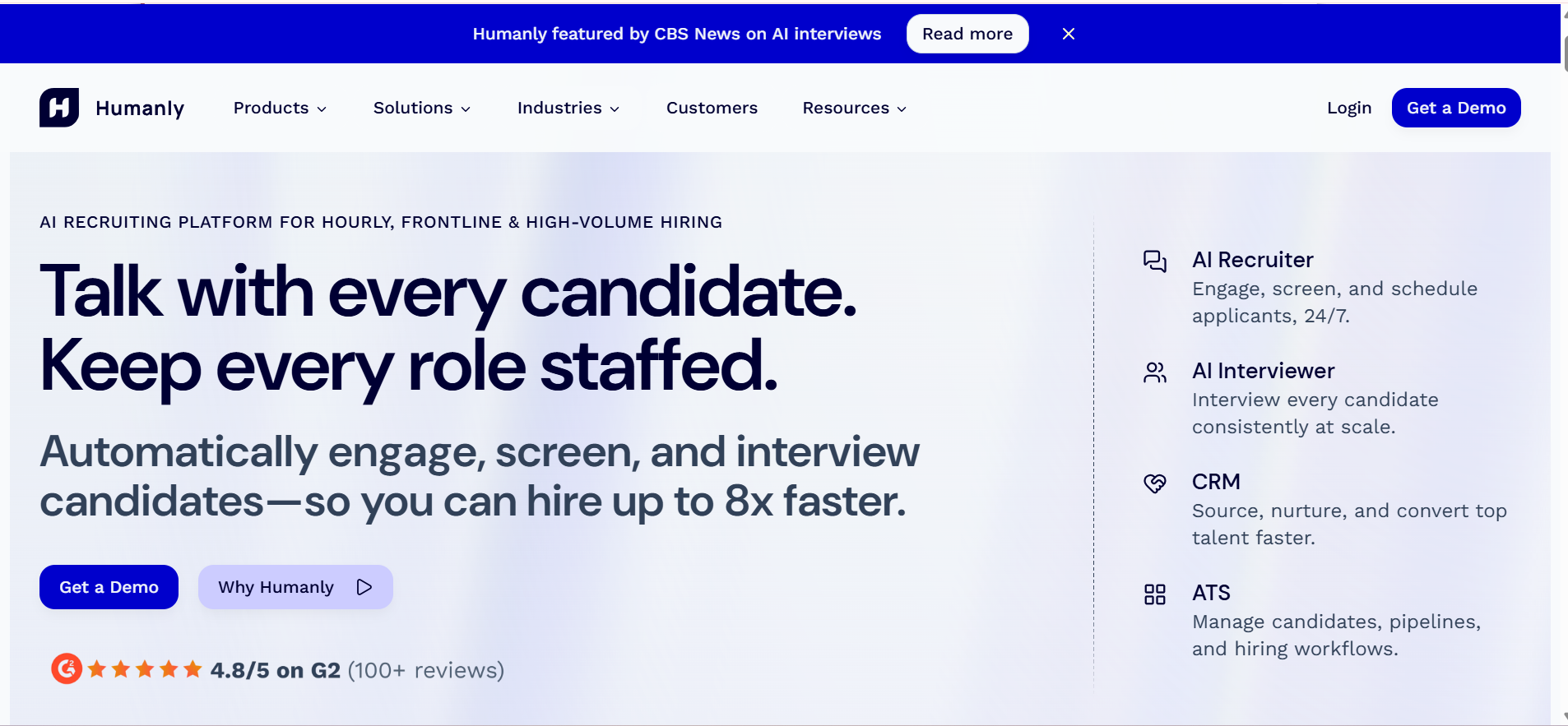
As hiring volume grows, early-stage screening conversations can quickly slow recruiters down.
Humanly helps solve this by automating candidate screening chats, interview coordination, reminders, and status updates in one streamlined workflow.
Instead of recruiters repeating the same qualification questions, the platform handles those conversations automatically and moves qualified candidates forward faster.
This makes it a strong fit for teams looking to scale recruiter efficiency while keeping communication consistent and candidate movement smooth across every hiring stage.
Pricing:
- Custom pricing
- Best for automated screening chats and interview coordination
- Great for teams scaling recruiter productivity
- Pricing varies by workflow volume
6. XOR
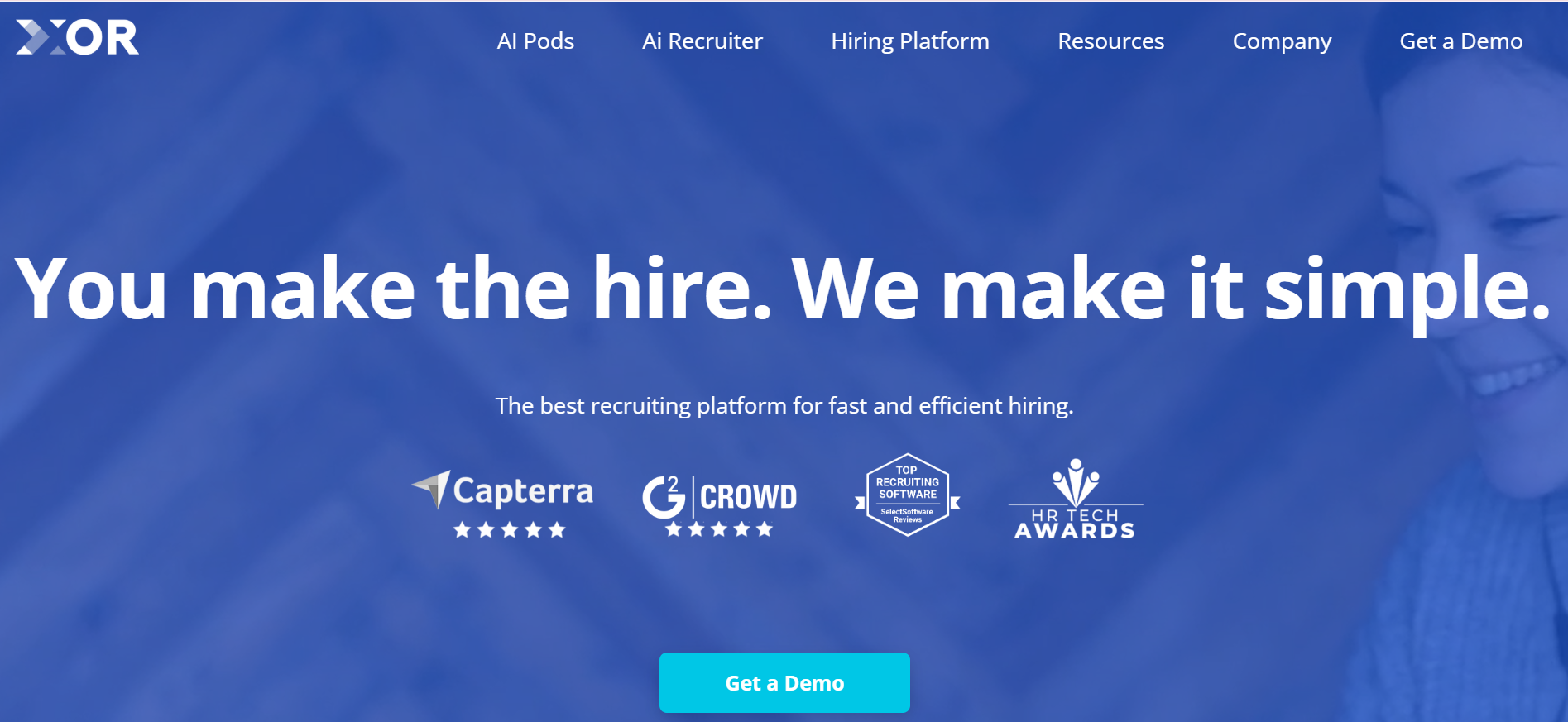
For large-scale frontline and hourly hiring, speed and communication consistency matter the most.
XOR specializes in chatbot-led recruiting automation, helping teams manage screening workflows, interview scheduling, and multilingual candidate communication at scale.
This is especially useful when you are hiring across regions, time zones, or diverse workforce groups.
Its biggest strength is handling repetitive high-volume workflows without slowing down recruiter teams, making it ideal for staffing firms, BPOs, and enterprises with continuous hiring demand.
Pricing:
- Custom pricing
- Best for chatbot recruiting and multilingual automation
- Strong for hourly and frontline hiring
- Better suited for larger hiring operations
7. Fetcher
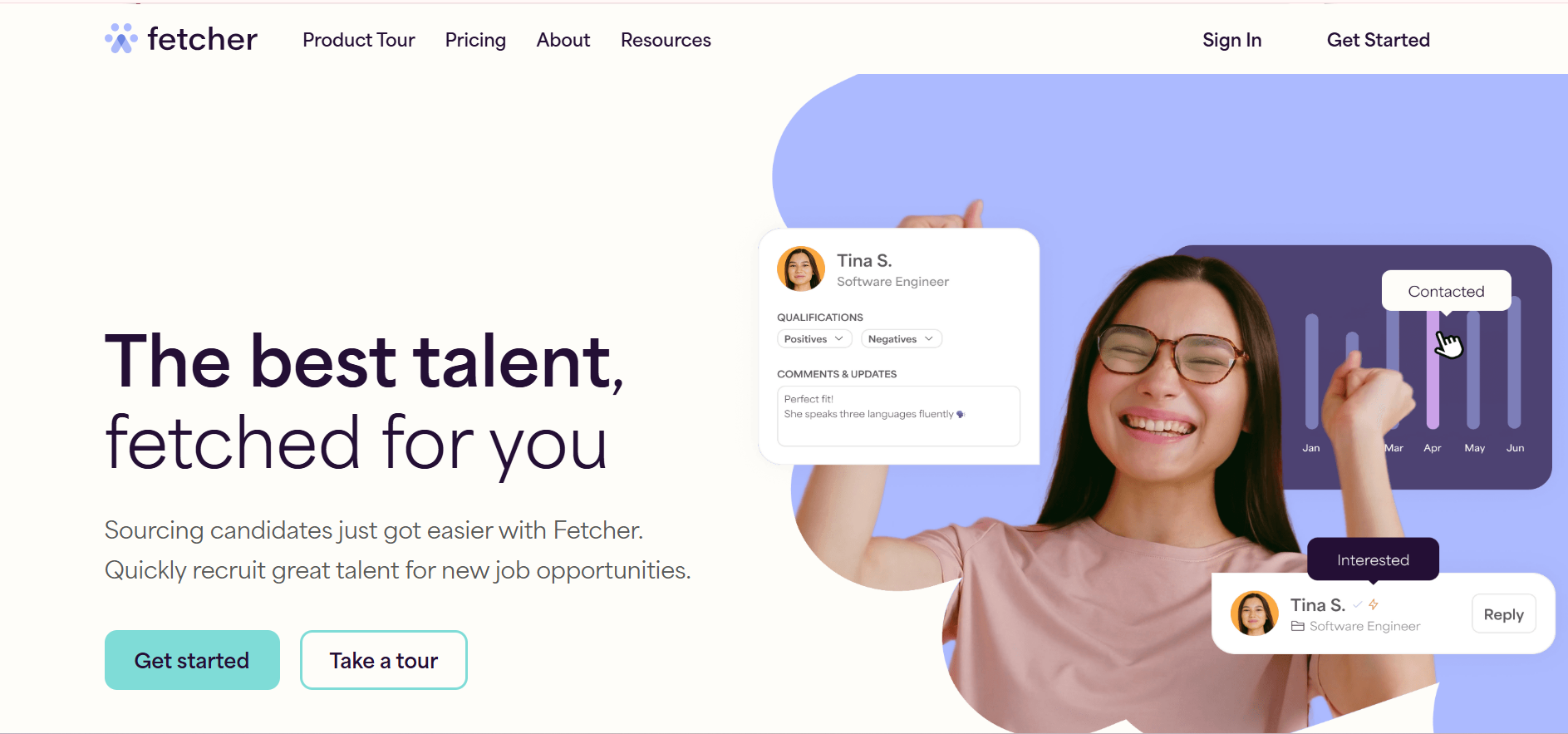
If finding passive candidates takes too much manual effort, Fetcher makes sourcing much simpler.
It uses AI-powered talent sourcing and candidate discovery to help recruiters identify qualified candidates who may not be actively applying. This is valuable when your best-fit talent is hidden inside passive pools rather than inbound applications.By automating prospect discovery and outreach workflows, it reduces recruiter sourcing effort while helping teams build stronger top-of-funnel pipelines faster.
Pricing:
- Custom pricing
- Best for AI sourcing and passive candidate discovery
- Strong top-of-funnel automation
- Pricing depends on sourcing seats and outreach scale
Suggested Reading:
Passive Candidates: How to Source & Hire Top Talent8. Zoho Recruit
For small to mid-sized hiring teams, simplicity inside the ATS matters just as much as AI features.
Zoho Recruit blends AI into existing ATS workflows through resume parsing, candidate ranking, interview coordination, and workflow automation. This helps teams reduce repetitive admin work without adopting a separate recruiting stack.
It works especially well for growing businesses that need practical automation, better shortlist quality, and smoother pipeline visibility at an affordable cost.
Pricing:
- Starts at $25/recruiter/month
- Enterprise with AI features: $50/recruiter/month
- Example team pricing shown: $200/month
- Best for SMBs needing ATS + AI workflows
- Very strong cost-to-feature ratio
9. Workable
As your hiring needs expand, process speed becomes a major growth lever.
Workable supports faster end-to-end recruiting with AI-generated job descriptions, candidate recommendations, automated workflows, and collaborative hiring features.
This helps recruiters and hiring managers move from job creation to interview faster with less manual coordination.
It is a great fit for growing businesses that need scalable hiring workflows without adding operational complexity.
Pricing:
- Starts at $169/month
- Standard hiring plan often ranges $169–$599/month depending on jobs/users
- Best for growing companies
- Great for AI job descriptions and collaborative hiring
10. Manatal
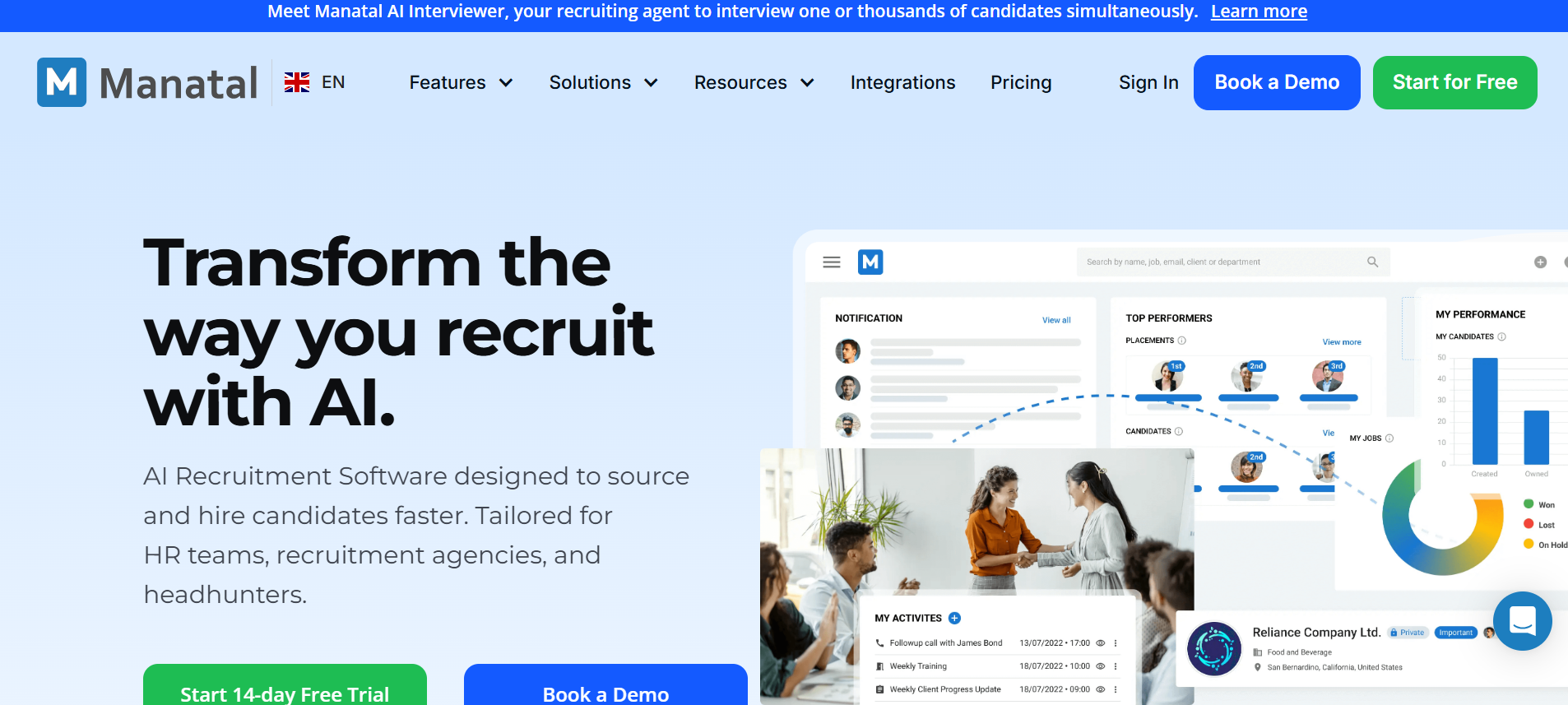
When you are managing multiple roles, pipelines, or client accounts, visibility becomes critical.
Manatal combines AI scoring, candidate profile enrichment, and CRM-style recruiting workflows to make pipeline management easier. Recruiters can quickly rank candidates, track engagement, and manage relationships across multiple hiring streams.
This makes it especially useful for agencies, staffing firms, and internal teams handling multiple open roles at the same time.
Pricing:
- $15/user/month (Professional)
- $35/user/month (Enterprise)
- $55/user/month (Enterprise Plus)
- Best for agencies and multi-pipeline recruiting
- One of the most transparent AI recruiting pricing models
Key Features to Look for in the Best AI Hiring Assistant
The best AI hiring assistant improves more than automation alone.
It strengthens sourcing speed, shortlist quality, recruiter productivity, and candidate movement across every stage, helping your team hire faster, make better decisions, and scale recruiting workflows with greater consistency and efficiency.
1. AI candidate sourcing and matching
The strongest feature to prioritize is sourcing intelligence.
A good AI hiring assistant should quickly scan large talent pools, analyze skills, job history, experience depth, and role-fit signals to improve AI candidate sourcing and surface the most relevant candidates faster.
Instead of relying on manual Boolean searches alone, AI helps uncover stronger-fit profiles that may otherwise be missed.
This leads to better shortlists, faster recruiter action, and improved hiring quality from the very first stage.
Suggested Reading:
AI Virtual Recruiter for Candidate Sourcing & Hiring2. Automated interview scheduling
Once qualified candidates are identified, speed often depends on coordination.
The best tools automate interview scheduling through calendar syncing, instant slot suggestions, timezone handling, reminders, and rescheduling workflows. This removes the constant back-and-forth between recruiters, hiring managers, and candidates.
The result is less scheduling friction, fewer delays, and faster movement from shortlist to interview.
3. Smart screening and ranking
Screening quality is what separates fast hiring from smart hiring.
A reliable hiring AI assistant should automatically prioritize top-fit candidates using skills alignment, relevant experience, role context, and sometimes behavioral or response-based signals. This helps recruiters focus attention where it matters most.
Instead of reviewing every profile manually, your team spends more time interviewing candidates who are far more likely to succeed.
4. Candidate engagement and follow-ups
Even strong pipelines can slow down when communication breaks.
That is why the best tools include automated reminders, personalized follow-up messaging, screening updates, and fast responses that keep applicants engaged throughout the process. Consistent communication helps candidates engagement feel informed and valued.
This reduces drop-offs, improves response rates, and keeps the hiring workflow moving smoothly from application to final decision.
How to Choose the Right AI Hiring Assistant for Your Team
Choosing the right AI hiring assistant depends on your team size, hiring volume, workflow complexity, and existing tools.
Startups need simplicity and speed, while enterprise teams need scale and control. The best choice is the one that aligns with how your team hires every day.
1. For startups and lean teams
If your team is small, speed and simplicity should come first.
Look for an AI hiring assistant with easy setup, automated sourcing, screening, interview scheduling, and candidate follow-ups without requiring a complex implementation. The goal is to reduce recruiter workload quickly and help founders or lean HR teams move fast.
Affordable pricing, ATS-lite workflows, and fast time-to-value usually matter more than advanced enterprise analytics at this stage.
2. For high-volume enterprise recruiting
As hiring volume increases, consistency becomes the bigger priority.
Enterprise teams should focus on AI screening, structured candidate ranking, compliance-ready workflows, analytics dashboards, and workflow standardization across multiple recruiters and hiring managers.
These features help reduce process variation and improve reporting visibility.
A strong hiring AI assistant at this level should also support integrations with ATS, HRIS, and enterprise communication systems to fit smoothly into existing operations.
3. For agencies and staffing teams
Agencies need speed, visibility, and relationship management across multiple pipelines.
The best fit here is an AI hiring assistant with CRM-style workflows, candidate rediscovery, client-specific pipelines, outreach automation, and strong profile enrichment.
These features make it easier to reuse existing talent pools and keep multiple client mandates moving at once.
If your team handles repeat hiring across similar roles, these capabilities can significantly improve placement speed and recruiter productivity.
Suggested Reading:
AI Candidate Sourcing ToolsConclusion
At the end of the day, the best AI hiring assistant is the one that fits the way your team actually hires.
The right platform helps you move faster, reduce repetitive recruiter work, improve candidate quality, and create a smoother hiring journey from sourcing to interviews.
Instead of choosing based only on long feature lists, focus on your hiring workflow, automation depth, team size, and how quickly the tool can remove real bottlenecks.
When you choose based on operational fit, AI becomes a true recruiting advantage rather than just another tool in your stack.
Frequently Asked Questions
1. How does a hiring AI assistant improve recruiter productivity?
A hiring AI assistant automates repetitive tasks like screening, follow-ups, scheduling, and status updates.
This gives recruiters more time to focus on interviews, candidate relationships, and better hiring decisions.
2. Can AI hiring assistants reduce time-to-hire?
Yes, they reduce delays by speeding up screening, interview coordination, and follow-up workflows.
This helps your team move qualified candidates from application to offer much faster.
3. Which teams benefit most from AI hiring assistants?
Startups, staffing firms, and enterprise HR teams all benefit in different ways.
The bigger the hiring volume or workflow complexity, the greater the productivity gains from automation.
4. What features matter most in an AI hiring assistant?
The most valuable features are sourcing, smart matching, scheduling, and candidate engagement automation.
These directly improve hiring speed, shortlist quality, and recruiter efficiency across the funnel.


