Hiring today doesn’t slow down because you lack candidates—it slows down because the process behind finding them is still manual. You post a job, wait for applications, screen resumes one by one, coordinate interviews across calendars, and repeat the same steps every time you hire.
By the time you reach the right candidate, you’ve already spent hours on repetitive work that doesn’t directly improve hiring quality.
This is where recruitment starts to look very different with automation. Instead of recruiters handling every step manually, AI can now take over sourcing, screening, outreach, and even interview scheduling—working continuously in the background while your team focuses on decisions, not coordination.
In this guide, you’ll understand how recruitment automation works and how you can implement it step by step in your hiring process.
We will cover:
- What recruitment automation actually means
- How the end-to-end automated hiring workflow works
- Key benefits for HR teams
- A practical step-by-step guide to implementation
- The first recruitment tasks you should automate
- How Leelu.ai helps streamline the entire process end-to-end
What is Recruitment Automation?
Recruitment automation is the use of AI and intelligent workflows to handle repetitive hiring tasks that usually take up a recruiter’s time. Instead of manually sourcing candidates, screening resumes, sending follow-ups, and scheduling interviews, these steps are handled automatically by systems designed to match job requirements with the right talent.
At its core, recruitment automation helps you move from a reactive hiring process to a proactive and always-on hiring system. You don’t wait for applications to come in and then start working—you continuously discover, engage, and evaluate candidates in the background.
This shift allows HR teams to focus more on decision-making and candidate experience, while automation takes care of execution-heavy tasks.
In simple terms, recruitment automation helps you:
- Reduce manual hiring effort
- Speed up time-to-hire
- Improve candidate quality through better matching
- Keep hiring active 24/7 without constant recruiter involvement
How Recruitment Automation Works (End-to-End Workflow)
Recruitment automation works as a connected system where each stage of hiring flows into the next without manual handoffs. From finding candidates to scheduling interviews, every step is powered by AI-driven workflows that keep the process moving continuously.
Instead of isolated tools for sourcing, screening, and communication, automation brings everything into one unified pipeline.
Here’s how the end-to-end workflow typically works:
1. Automated Candidate Sourcing and Job Distribution
The process begins with AI scanning large talent pools across platforms like LinkedIn, job boards, and ATS databases. It identifies candidates who match your job requirements based on skills, experience, and relevance.
At the same time, job roles can be distributed across multiple channels automatically, ensuring maximum reach without manual posting effort.
This means your hiring pipeline starts filling up instantly, not days after a job is posted.
2. Resume Screening and AI-Powered Shortlisting
Once candidates are sourced, automation takes over the screening process. AI tools parse resumes, extract key information, and evaluate candidates against job criteria.
Instead of manually reviewing hundreds of profiles, the system ranks candidates based on fit and relevance.
This helps recruiters focus only on the most qualified profiles, reducing screening time from hours to minutes while improving shortlist quality.
3. Interview Scheduling and Workflow Automation
After shortlisting, automation simplifies one of the most time-consuming parts of hiring—scheduling.
The system automatically coordinates between candidate and recruiter calendars, finds available time slots, and books interviews without back-and-forth communication.
Workflow automation also ensures that each step—screening, interview rounds, feedback—is triggered automatically based on predefined rules.
4. Candidate Engagement and Communication Automation
Recruitment doesn’t end at sourcing or scheduling. Keeping candidates engaged is critical, and automation ensures no one falls through the cracks.
AI-powered communication systems send personalized messages, follow-ups, and updates across email and professional platforms.
This keeps candidates informed, responsive, and engaged throughout the hiring journey—even when recruiters are not actively involved.
Key Benefits of Recruitment Automation for HR Teams
Recruitment automation doesn’t just speed things up—it simplifies the entire hiring experience for HR teams. Instead of managing everything manually, you get a system that runs in the background and keeps hiring consistent and scalable.
Here are the key benefits:
- Faster Hiring Cycles: AI quickly sources and shortlists candidates, reducing time from job post to interview.
- Reduced Manual Work: Automates repetitive tasks like screening, follow-ups, and scheduling, reducing recruiter workload.
- Better Quality Hiring: AI-based matching ensures only relevant, high-fit candidates reach the shortlist.
- Wider Talent Reach: Expands sourcing across multiple platforms and large talent pools instantly.
- Always-On Engagement: Keeps candidates engaged with automated updates and follow-ups 24/7.
- Unified Hiring Process: Brings sourcing, screening, communication, and scheduling into one connected workflow.
- Data-Driven Decisions: Provides real-time insights into hiring performance and pipeline health for better decisions.
Step-by-Step Guide to Automate Your Recruitment Process
Automating recruitment works best when you follow a structured approach instead of trying to change everything at once. Each step builds on the previous one, helping you move from a manual hiring process to a streamlined, AI-driven workflow that saves time and improves hiring quality.
Below is the first part of the implementation process you should focus on.
Step 1: Audit Your Current Hiring Workflow
The first step is understanding how your hiring process currently works in detail. Before introducing automation, you need clarity on where time is being spent and where delays happen.
Start by mapping your entire recruitment journey:
- Job requisition and approval process
- Job posting and sourcing channels
- Resume screening and shortlisting method
- Interview coordination process
- Final selection and offer handling
While reviewing, focus on identifying repetitive and time-consuming tasks. For example, manual resume screening, constant follow-ups with candidates, or back-and-forth scheduling often take up a large portion of recruiter time.
You should also note:
- Which tools are currently being used
- Where communication gaps occur
- Where candidates drop off in the process
This audit helps you clearly understand what should be automated first. Without this step, automation can become random and ineffective.
Step 2: Define Automation Goals
Once you understand your workflow, the next step is to define what success looks like with automation. This is important because automation without clear goals often leads to scattered implementation.
Your goals should be practical and measurable. For example:
- Reduce time-to-hire by 30–50%
- Improve shortlist quality and relevance
- Reduce manual recruiter effort in sourcing and screening
- Increase candidate response and engagement rates
When your goals are clearly defined, every automation decision becomes easier. You know exactly what outcome you are optimizing for instead of just automating tasks for convenience.
This step also helps align your HR team so everyone is working toward the same hiring improvements.
Step 3: Choose the Right Recruitment Automation Tools
After setting goals, the next step is selecting tools that actually support your hiring needs. Not all recruitment tools offer end-to-end automation, so choosing the right platform is critical.
A strong recruitment automation system should help you:
- Source candidates across multiple platforms
- Automate resume parsing and candidate scoring
- Manage outreach and follow-ups
- Handle interview scheduling automatically
The key is integration. Instead of using separate tools for each step, you should aim for a unified system where sourcing, screening, and communication are connected.
This reduces tool complexity and ensures smoother data flow across the entire hiring pipeline.
When evaluating tools, focus on:
- Ease of use for HR teams
- Level of automation offered
- Quality of candidate matching
- Ability to scale hiring operations
A good tool should reduce effort, not add another layer of complexity.
Step 4: Automate Resume Screening & Shortlisting
Resume screening is one of the most time-consuming stages in recruitment, making it the ideal place to introduce automation early.
With AI-powered screening, resumes are automatically parsed and analyzed based on job requirements. Instead of manually reading every profile, the system evaluates candidates based on skills, experience, and relevance.
The automation process typically includes:
- Extracting key information from resumes
- Matching candidates against job descriptions
- Assigning fit scores or rankings
- Creating a pre-qualified shortlist
This significantly reduces the time spent on initial screening while improving consistency in candidate evaluation.
Instead of reviewing hundreds of resumes manually, recruiters can focus only on the most relevant candidates, making the entire hiring process faster and more efficient.
Step 5: Set Up Automated Candidate Communication
At this stage, the focus shifts to keeping candidates engaged without manual effort. In most hiring processes, delays in communication lead to candidate drop-offs, even when profiles are strong.
Automation helps you maintain consistent communication throughout the journey.
You can set up:
- Instant acknowledgment messages after application or outreach
- Personalized follow-ups based on candidate responses
- Automated status updates at each hiring stage
- Multi-channel messaging through email or LinkedIn
Instead of recruiters manually tracking every candidate, the system ensures no one is left waiting without updates. This improves candidate experience and keeps your pipeline active at all times.
Step 6: Automate Interview Scheduling
Interview scheduling is often one of the most time-consuming coordination tasks in recruitment. It usually involves multiple emails, rescheduling, and availability conflicts.
Automation removes this friction completely.
With smart scheduling systems, you can:
- Sync recruiter and candidate calendars automatically
- Suggest available time slots in real time
- Send calendar invites instantly once a slot is confirmed
- Handle rescheduling without manual intervention
This eliminates unnecessary back-and-forth communication and speeds up the transition from shortlist to interview stage. It also ensures a smoother experience for both recruiters and candidates.
Step 7: Use Data to Optimize Hiring Decisions
Once your recruitment process is automated, it starts generating valuable data across every stage of the hiring funnel.
Instead of guessing what’s working, you can now rely on real insights such as:
- Time taken at each hiring stage
- Candidate drop-off points
- Source effectiveness (which channels bring quality candidates)
- Shortlist-to-hire conversion rates
These insights help HR teams identify bottlenecks and improve hiring performance over time.
For example, if a large number of candidates drop off after screening, it may indicate overly strict filters or misaligned job descriptions. If interview scheduling is slow, it may point to calendar or coordination issues.
Data turns recruitment from a reactive process into a measurable system where decisions are based on evidence, not intuition.
Step 8: Continuously Improve Your Automation Workflow
Recruitment automation is not a one-time setup—it evolves as your hiring needs grow.
Once the system is running, the next step is continuous optimization.
You should regularly:
- Review automation performance across each stage
- Identify delays or friction points in the workflow
- Update screening rules based on hiring outcomes
- Improve messaging and candidate engagement strategies
- Refine scheduling and workflow triggers
Over time, your automation system becomes smarter and more aligned with real hiring patterns.
The goal is not just to automate recruitment, but to make it progressively more efficient with every hiring cycle.
Common Recruitment Tasks You Should Automate First
When you start with recruitment automation, the key is not to automate everything at once. The best approach is to begin with tasks that are repetitive, time-consuming, and do not require deep human judgment.
These early wins help your team see immediate impact while building confidence in the system.
Here are the most important tasks you should automate first:
1. Resume Screening and Shortlisting
This is usually the biggest time-consuming activity in recruitment. Automating resume screening helps you instantly filter and rank candidates based on skills, experience, and job fit.
Instead of manually reviewing every application, AI can surface the most relevant profiles in minutes.
2. Candidate Sourcing
Manually searching for candidates across platforms takes significant effort. Automation allows you to source talent from multiple platforms like job boards, LinkedIn, and ATS databases at the same time.
This expands your reach while reducing manual search work.
3. Initial Candidate Outreach
Sending messages to candidates one by one slows down the hiring process. Automating outreach helps you engage candidates at scale with personalized communication.
This ensures faster responses and better engagement rates.
4. Follow-Ups and Candidate Nurturing
Many candidates drop off simply because there is no timely follow-up. Automation ensures consistent reminders, updates, and nurturing messages throughout the hiring process.
This keeps candidates warm and engaged without recruiter intervention.
5. Interview Scheduling
Coordinating interview timings manually creates delays and back-and-forth communication. Automation tools can sync calendars and schedule interviews instantly based on availability.
This significantly reduces coordination time.
How Leelu.ai Helps You Automate Recruitment End-to-End
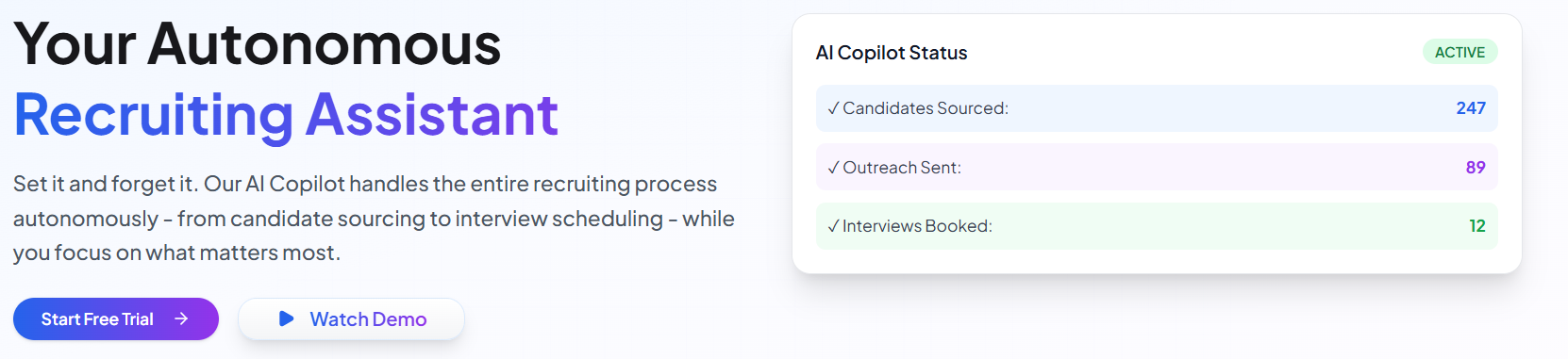
Recruitment automation becomes most powerful when it is not fragmented across multiple tools but unified in one system. This is where Leelu.ai fits in as an end-to-end AI recruiting copilot.
Leelu.ai is designed to handle the entire hiring workflow—from sourcing to scheduling—without requiring manual coordination at every stage.
Here’s how it supports the full recruitment process:
- AI Job Creation: Instantly generates optimized job descriptions in minutes
- Massive Talent Sourcing: Searches across 500M+ profiles from LinkedIn, job boards, and ATS systems
- Smart Candidate Matching: Automatically ranks and shortlists candidates based on job fit
- Personalized Outreach: Sends tailored messages across channels to engage candidates at scale
- Automated Conversations: Handles follow-ups and responses 24/7 without recruiter effort
- Smart Interview Scheduling: Books interviews automatically with calendar integration
- Unified Dashboard: Provides visibility into hiring pipelines and performance metrics
Instead of managing multiple tools for each hiring stage, Leelu.ai brings everything into one connected workflow. This reduces manual effort, improves speed, and creates a consistent hiring experience from start to finish.
With this approach, recruitment shifts from being a series of disconnected tasks to a fully automated, intelligent hiring system.
Final Thoughts
Recruitment automation is reshaping how modern HR teams approach hiring. Instead of spending most of their time on repetitive tasks like sourcing, screening, communication, and scheduling, teams can now rely on AI-driven workflows to handle these steps continuously in the background.
What this really means is a shift from manual effort to strategic hiring. HR teams are no longer stuck coordinating every small step—they can focus on evaluating the right candidates, improving hiring decisions, and building stronger talent pipelines.
When implemented correctly, automation doesn’t just make hiring faster. It makes it more consistent, more data-driven, and far more scalable as your organization grows. You reduce delays, improve candidate experience, and ensure that no opportunity is missed due to manual limitations.
Ultimately, recruitment automation is not about replacing recruiters—it’s about empowering them to work smarter. The teams that embrace this shift early will be able to build stronger hiring systems and stay ahead in competitive talent markets.
Frequently Asked Questions
What tasks should be automated first in recruitment?
The best starting points are resume screening, candidate sourcing, follow-ups, outreach, and interview scheduling since they are repetitive and time-intensive.
Is recruitment automation suitable for small HR teams?
Yes, it is especially useful for small teams because it reduces workload and helps them handle more hiring with fewer resources.
How does recruitment automation help with scaling hiring?
It allows teams to source and engage large volumes of candidates across multiple platforms without increasing manual effort or hiring additional recruiters.


