Healthcare recruiters are expected to fill critical roles faster than ever, but finding qualified candidates remains one of the biggest hiring challenges.
Many healthcare professionals are not actively searching for new opportunities, making it difficult to build a consistent pipeline through traditional sourcing methods alone.
At the same time, recruiter workloads continue to grow, leaving less time for proactive candidate discovery and engagement.
This is where AI-powered recruitment is changing the game.
In this guide, you'll learn:
- Why healthcare recruiters struggle to build larger candidate pipelines
- How AI helps identify and engage qualified healthcare talent
- How Leelu.AI supports healthcare sourcing and pipeline growth
- Ways to improve recruiter productivity while scaling hiring efforts
Why Do Healthcare Recruiters Struggle to Build Larger Candidate Pipelines?
Building a strong healthcare talent pipeline sounds simple in theory. In reality, recruiters often face talent shortages, increasing hiring demands, and limited time to source candidates effectively.
These challenges make it difficult to consistently generate enough qualified candidates for open roles.
1. Limited Visibility Into Passive Candidates
Many healthcare professionals are not actively searching for jobs.
They may be employed, focused on patient care, or simply not engaging with job boards regularly.
As a result, recruiters often miss a large portion of the available talent market because traditional recruiting channels primarily attract active job seekers.
2. Manual Sourcing Consumes Recruiter Time
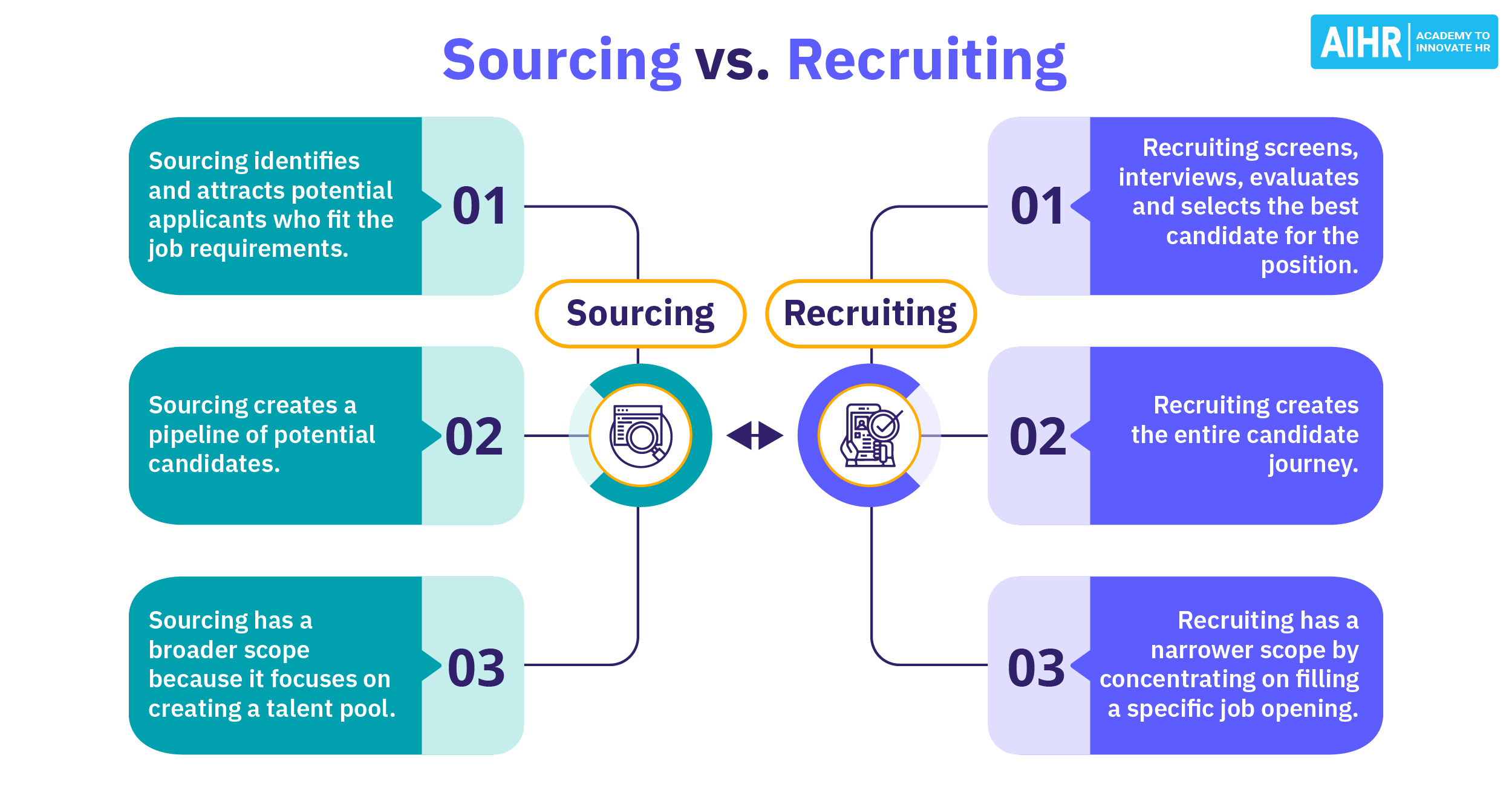
Healthcare recruiters spend significant time searching databases, reviewing profiles, and identifying potential candidates.
While these tasks are essential, they can quickly consume hours that could be spent building relationships and moving candidates through the hiring process.
The more manual the sourcing process becomes, the harder it is to scale hiring efforts.
3. High-Volume Roles Require Continuous Talent Discovery
Roles such as registered nurses, medical assistants, and healthcare support staff often require ongoing hiring.
Because demand remains constant, recruiters cannot rely on occasional sourcing efforts.
They need a continuous flow of qualified candidates entering their pipeline to keep up with hiring needs.
4. Candidate Databases Become Outdated Quickly
Healthcare professionals frequently change employers, earn new certifications, or move into specialized roles.
Candidate databases that are not updated regularly can quickly become inaccurate.
This makes it harder for recruiters to identify the right talent when new hiring needs arise.
Suggested Reading:
10 Recruiter-Tested Ways to Find Passive Candidates FasterHow Can AI Help Healthcare Recruiters Generate More Qualified Candidates?
As healthcare hiring becomes more competitive, recruiters need ways to find candidates faster without increasing manual workload.
This is where AI-powered recruiting tools can provide a significant advantage.
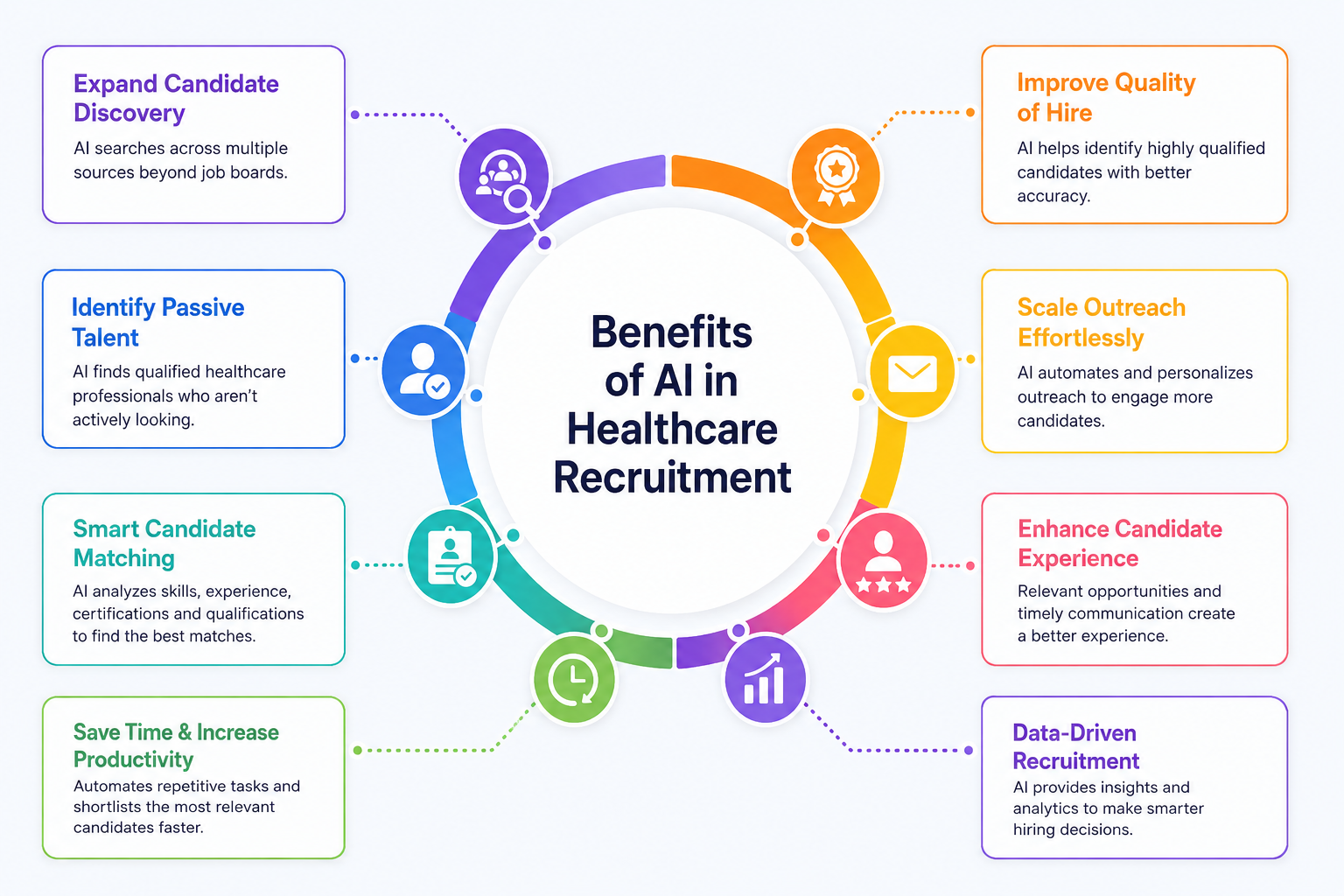
1. Expanding Candidate Discovery Beyond Job Boards
AI can search across multiple talent sources instead of relying solely on traditional job boards.
This broader search approach helps recruiters uncover candidates who may never have applied through conventional channels.
2. Identifying Passive Healthcare Talent
AI can help surface qualified professionals who are not actively looking for new roles but may be open to the right opportunity.
This gives recruiters access to a much larger talent pool than active job seekers alone.
3. Automating Candidate Search and Matching
Instead of manually reviewing hundreds of profiles, AI can analyze candidate skills, experience, certifications, and qualifications automatically.
This helps recruiters identify stronger matches in significantly less time.
4. Scaling Outreach Without Expanding Recruiter Headcount
Finding candidates is only part of the challenge.
Recruiters also need to engage them consistently.
AI can automate personalized outreach, follow-ups, and candidate engagement, allowing recruiting teams to reach more healthcare professionals without adding additional recruiters.
How Does Leelu.AI Help Healthcare Recruiters Build Larger Talent Pipelines?
Finding qualified healthcare candidates is only part of the challenge.
Recruiters also need a way to consistently discover new talent, keep pipelines updated, and engage candidates at scale. This is where Leelu.AI helps streamline the entire sourcing process.
1. Discovering Healthcare Candidates Across Multiple Talent Sources
Leelu.AI helps recruiters expand their search beyond a single platform.
Instead of manually searching for multiple databases, recruiters can discover healthcare talent from a broad network of candidate sources through one platform.
This helps increase candidate visibility and uncover talent that may otherwise be missed.
2. Identifying Candidates Based on Skills and Experience
Finding candidates with the right qualifications is critical in healthcare hiring.
Leelu.AI uses AI-powered matching to identify professionals based on factors such as:
- Clinical skills and specialties
- Years of experience
- Certifications and credentials
- Role-specific qualifications
This allows recruiters to focus on candidates who are most relevant to the role.
3. Building Continuous Healthcare Talent Pipelines
Healthcare hiring rarely stops.
Whether you're recruiting nurses, physicians, therapists, or administrative staff, new hiring needs emerge constantly.
Leelu.AI helps recruiters build ongoing talent pipelines so they can continuously discover and engage qualified candidates instead of starting every search from scratch.
4. Reducing Time Spent on Manual Candidate Sourcing
Manual sourcing can quickly consume a recruiter's day.
Leelu.AI automates much of the candidate discovery process, helping recruiters spend less time searching for talent and more time connecting with qualified candidates and hiring managers.
5. Supporting High-Volume Healthcare Hiring Initiatives
Large healthcare organizations and staffing agencies often need to fill multiple positions simultaneously.
Leelu.AI helps recruiting teams scale sourcing efforts by automating candidate discovery, screening, and outreach workflows.
This allows recruiters to manage larger hiring volumes efficiently without significantly increasing recruiter workload.
What Does a Healthcare Recruitment Workflow Look Like Inside Leelu.AI?
Finding healthcare candidates is only one part of the hiring process.
Recruiters also need to evaluate talent, build shortlists, engage candidates, and continuously expand their pipeline as hiring needs evolve.
Leelu.AI helps streamline these activities into a single workflow, allowing recruiters to move from sourcing to outreach with less manual effort.
Step 1: Define the Healthcare Role Requirements
Every successful search starts with a clear understanding of the role.
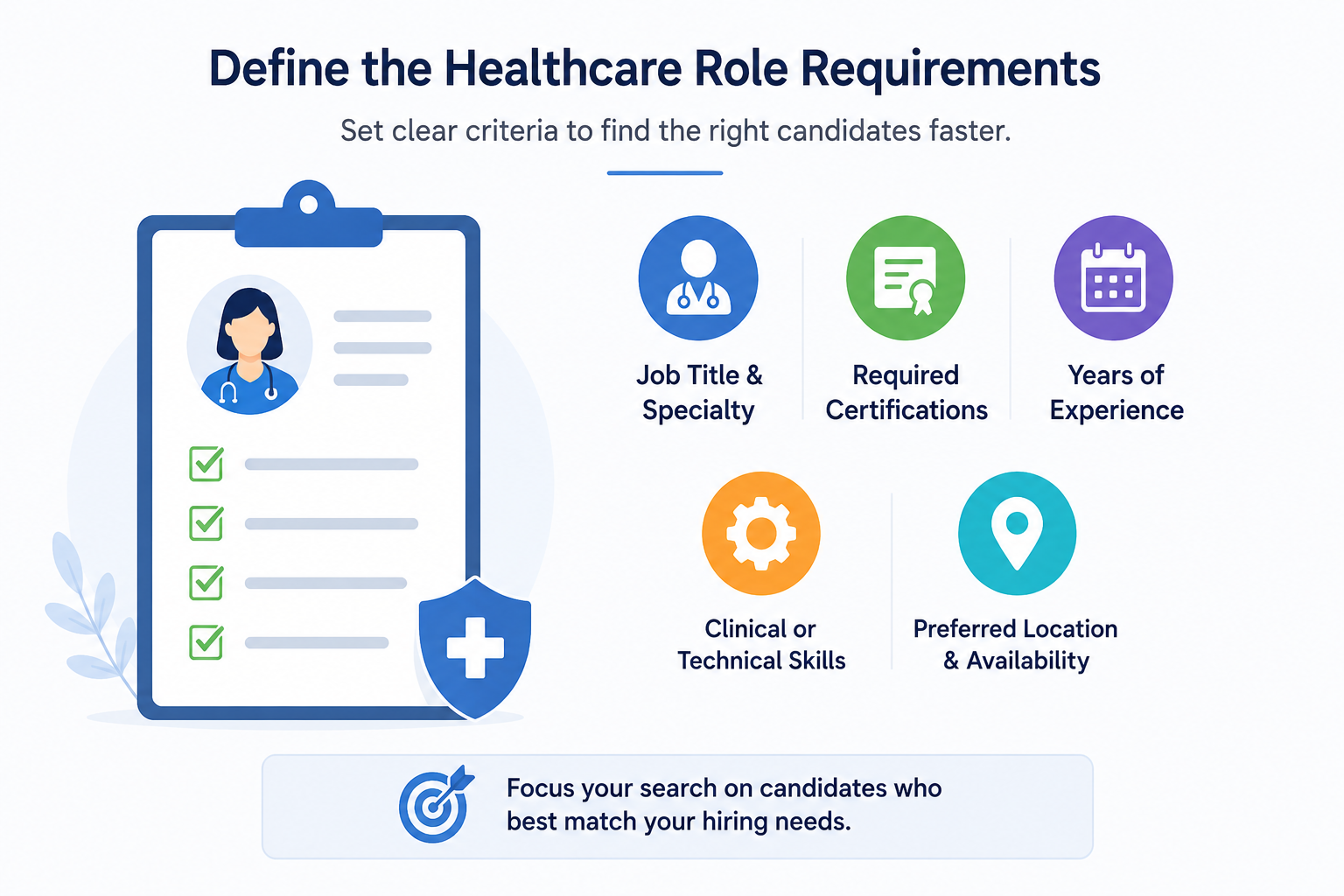
Recruiters can define the position they need to fill by outlining key requirements such as:
- Job title and specialty
- Required certifications
- Years of experience
- Clinical or technical skills
- Preferred location and availability
Having clear criteria helps ensure the search focuses on candidates who closely align with hiring needs.
Step 2: Search for Relevant Healthcare Talent
Once the role requirements are established, Leelu.AI begins searching for relevant candidates.
Instead of relying on a single sourcing channel, the platform scans multiple talent sources to identify professionals who match the defined criteria.
This broader search approach helps recruiters uncover both active and passive candidates who may be a strong fit for the role.
As a result, recruiters gain access to a larger and more diverse talent pool from the start.
Step 3: Filter Candidates by Credentials and Experience
Healthcare hiring often requires specific qualifications that cannot be overlooked.
After generating candidate results, recruiters can narrow the list using filters that focus on the most important requirements.
This may include:
- Professional licenses
- Certifications
- Specialty expertise
- Clinical experience
- Industry background
By filtering candidates early, recruiters can spend less time reviewing unqualified profiles and more time evaluating high-potential talent.
Step 4: Build a Qualified Candidate Shortlist
With candidate data organized and filtered, recruiters can quickly create a shortlist of qualified healthcare professionals.
Instead of manually comparing dozens or even hundreds of profiles, recruiters can focus on the candidates who best meet the role requirements.
This helps simplify decision-making while improving the quality of candidates moving into the next stage of the hiring process.
For high-volume healthcare hiring, this step can significantly reduce screening time.
Step 5: Launch AI-Powered Candidate Outreach
Once a shortlist is created, the next challenge is engaging candidates quickly.
Delays in outreach often lead to missed opportunities, especially in competitive healthcare markets where top talent may receive multiple offers.
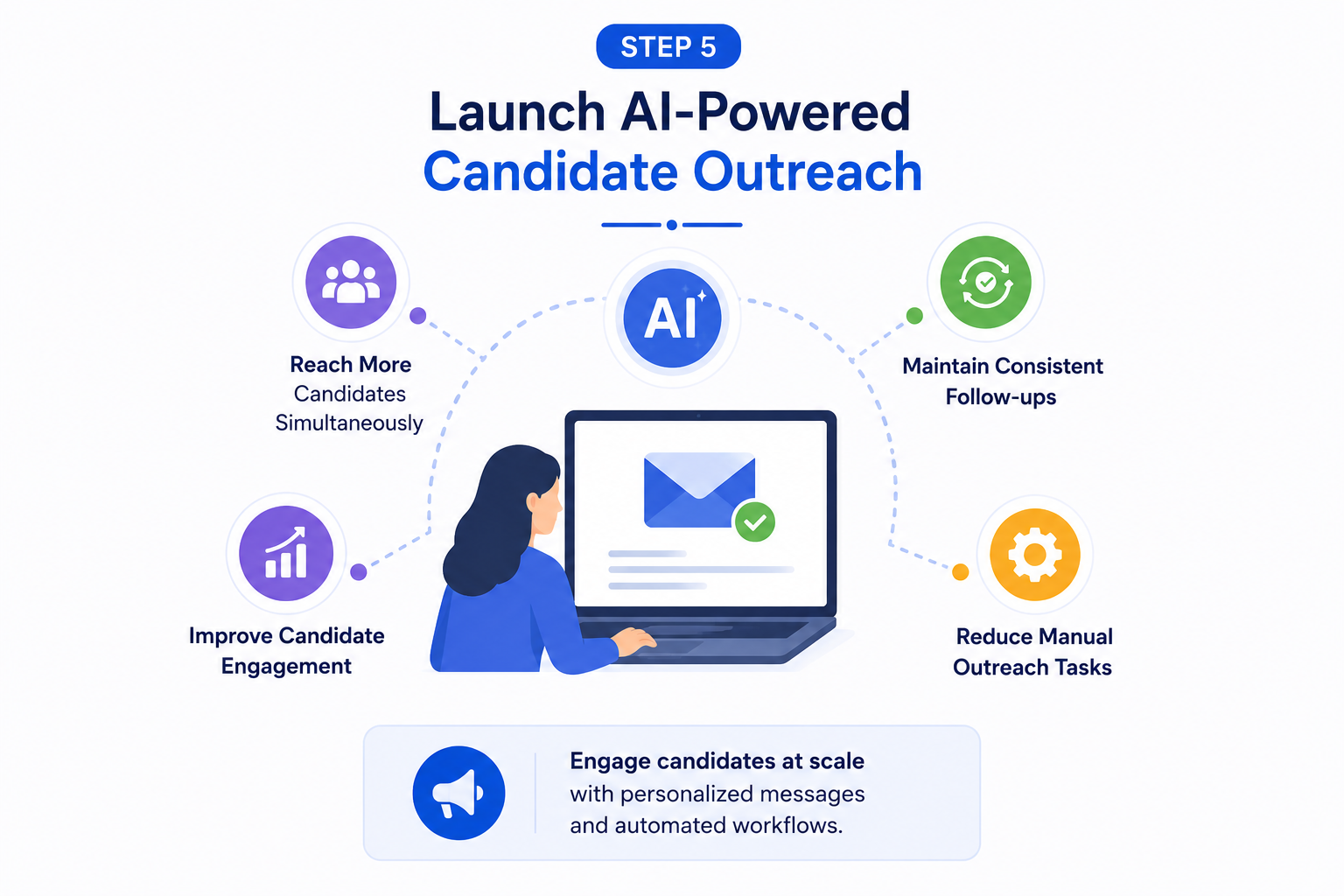
Leelu.AI helps recruiters launch personalized outreach campaigns at scale.
Recruiters can engage candidates through automated messaging workflows while maintaining relevant and professional communication.
This allows teams to:
- Reach more candidates simultaneously
- Maintain consistent follow-ups
- Improve candidate engagement
- Reduce manual outreach tasks
As outreach becomes more efficient, recruiters can focus their attention on meaningful candidate conversations.
Step 6: Expand the Pipeline Continuously as New Talent Appears
Healthcare recruitment is rarely a one-time activity.
New openings emerge regularly, and candidate availability can change quickly.
Rather than restarting the sourcing process for every new position, Leelu.AI continuously helps recruiters identify newly available talent that matches their hiring criteria.
This creates an ongoing pipeline of qualified healthcare professionals that can be accessed whenever hiring needs arise.
Over time, recruiters can build stronger talent pools, reduce sourcing delays, and maintain a more proactive recruiting strategy.
Instead of constantly searching for candidates from scratch, they can focus on moving qualified talent through the hiring process and filling roles faster.
Example Healthcare Roles Recruiters Can Source With Leelu.AI
Healthcare organizations hire for a wide range of clinical, administrative, and specialized positions.
Because every role requires a unique combination of skills, certifications, and experience, recruiters often need access to diverse talent pools.
Leelu.AI helps recruiters identify and engage candidates across multiple healthcare disciplines, making it easier to support both ongoing and urgent hiring needs.
1. Registered Nurses (RNs)
Registered Nurses remain one of the most in-demand healthcare roles.
Whether you're hiring for hospitals, clinics, long-term care facilities, or home healthcare organizations, Leelu.AI can help recruiters discover qualified nursing professionals based on experience, specialties, and credentials.
2. Nurse Practitioners (NPs)
Nurse Practitioners play a critical role in expanding patient care access.
Recruiters can use Leelu.AI to identify NPs across various specialties, including family medicine, acute care, pediatrics, mental health, and primary care.
This helps hiring teams connect with highly qualified advanced practice providers more efficiently.
3. Physicians and Specialists
Physician recruitment often involves longer hiring cycles and highly specific requirements.
Leelu.AI helps recruiters search for candidates across a range of specialties, including:
- Internal Medicine
- Cardiology
- Emergency Medicine
- Radiology
- Orthopedics
- Oncology
This allows recruiters to build stronger pipelines for hard-to-fill physician positions.
4. Medical Assistants
Medical Assistants are essential to the day-to-day operations of many healthcare facilities.
As patient volumes grow, organizations frequently need to hire these professionals at scale.
Leelu.AI helps recruiters identify candidates with relevant clinical and administrative experience, making it easier to support ongoing staffing demands.
5. Physical and Occupational Therapists
Rehabilitation services continue to experience strong demand across healthcare settings.
Recruiters can use Leelu.AI to source Physical Therapists and Occupational Therapists for hospitals, outpatient clinics, rehabilitation centers, and home health organizations.
This helps maintain a consistent pipeline of therapy professionals for both permanent and contract positions.
6. Healthcare Administrators
Successful healthcare organizations depend on strong leadership and operational management.
Leelu.AI can help recruiters identify candidates for roles such as:
- Practice Managers
- Healthcare Operations Leaders
- Clinical Directors
- Department Administrators
- Healthcare Executives
This supports hiring efforts beyond direct patient care positions.
7. Revenue Cycle and Medical Billing Professionals
Revenue cycle teams play a major role in maintaining financial performance within healthcare organizations.
Recruiters can source professionals with expertise in:
- Medical billing
- Coding
- Claims management
- Revenue cycle operations
- Insurance verification
This helps healthcare organizations strengthen both clinical and business operations.
8. Clinical Research and Healthcare Technology Talent
As healthcare innovation continues to grow, demand for research and healthcare technology professionals is increasing.
Leelu.AI can support sourcing for roles such as clinical research coordinators, clinical data specialists, healthcare IT professionals, implementation specialists, and health technology experts.
This enables organizations to build teams that support both patient care and healthcare innovation initiatives.
How Can Healthcare Staffing Agencies Use AI to Triple Their Pipeline?
For healthcare staffing agencies, success often depends on how quickly they can find, engage, and place qualified candidates.
However, as competition for healthcare talent increases, relying solely on traditional sourcing methods can limit growth.
AI helps agencies scale candidate generation without proportionally increasing recruiter workload, making it easier to build larger and more consistent talent pipelines.
1. Expanding Candidate Reach Across Multiple Markets
Many staffing agencies recruit across multiple cities, states, or healthcare networks.
Managing sourcing efforts across these markets manually can quickly become overwhelming.
AI helps recruiters search a broader range of talent sources simultaneously, allowing them to identify qualified candidates across different locations and specialties.
This expanded reach helps agencies uncover more opportunities to connect with healthcare professionals who may otherwise remain undiscovered.
2. Building Larger Talent Pools Without Additional Recruiters
Growing a candidate pipeline traditionally requires additional recruiting resources.
Unfortunately, hiring more recruiters is not always practical or cost-effective.
AI allows staffing agencies to automate many sourcing and candidate discovery tasks, helping teams identify more qualified talent without significantly increasing headcount.
As a result, recruiters can manage larger talent pools while maintaining efficiency.
3. Filling More Open Roles Simultaneously
Healthcare staffing agencies often juggle dozens or even hundreds of open positions at once.
Without scalable processes, recruiters can struggle to keep up with demand.
AI helps streamline candidate sourcing, matching, and engagement so recruiters can work on multiple hiring projects simultaneously.
This creates more opportunities to fill roles faster while maintaining candidate quality.
4. Increasing Recruiter Productivity Through Automation
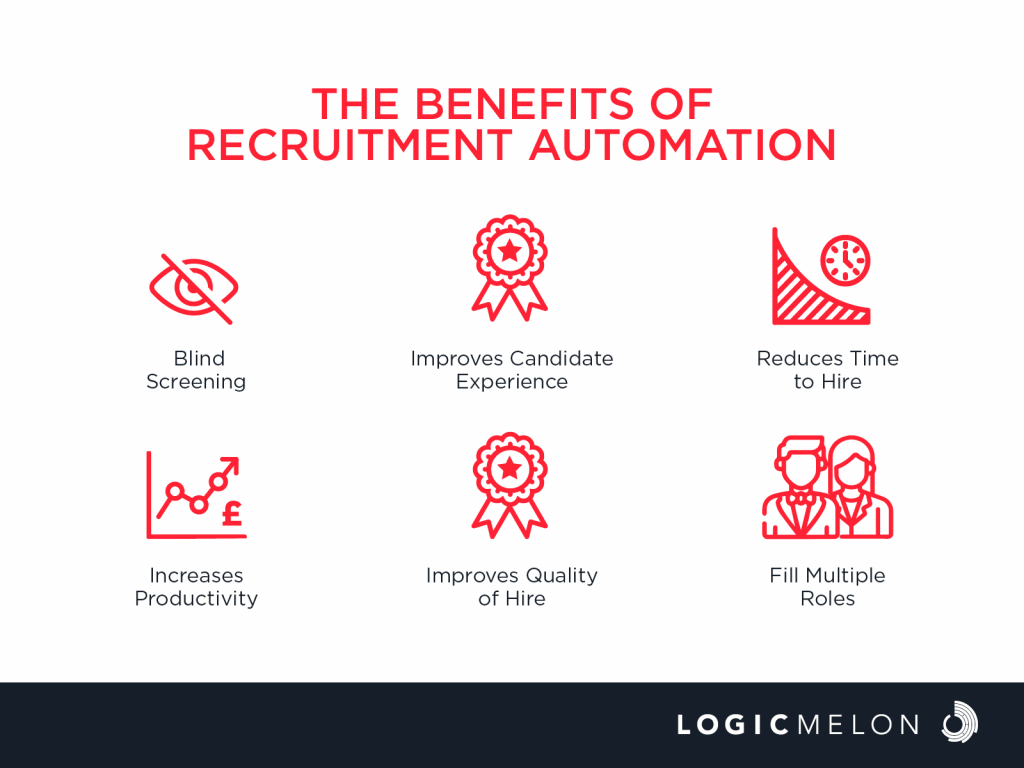
Administrative recruiting tasks can consume a significant portion of the workday.
From sourcing candidates to managing outreach and follow-ups, these repetitive activities reduce the time available for relationship building.
AI helps automate many of these processes, allowing recruiters to focus on higher-value activities such as candidate conversations, client communication, and placement strategy.
Suggested Reading:
Candidate Pipeline AutomationWhy Are Healthcare Recruiting Teams Using Leelu.AI?
As healthcare hiring becomes more competitive, recruiting teams are looking for ways to improve efficiency without sacrificing candidate quality.
Leelu.AI helps simplify sourcing and pipeline-building activities, enabling recruiters to spend more time hiring and less time managing manual tasks.
1. Faster Candidate Discovery
Leelu.AI helps recruiters find qualified healthcare candidates more quickly by searching across multiple talent sources from a single platform.
Instead of switching between tools and databases, recruiters can discover relevant candidates through one streamlined workflow.
This reduces sourcing delays and accelerates hiring efforts.
2. Larger Healthcare Talent Pipelines
Building a strong pipeline requires continuous candidate discovery.
Leelu.AI helps recruiters identify both active and passive healthcare professionals, creating a larger pool of qualified candidates for current and future hiring needs.
This makes it easier to maintain a healthy recruiting pipeline over time.
3. Reduced Manual Recruiting Work
Many recruiting teams spend countless hours searching profiles, organizing candidate information, and managing repetitive tasks.
Leelu.AI automates much of this work, helping recruiters reduce administrative effort and focus on strategic hiring activities.
4. More Efficient Recruiter Workflows
Healthcare hiring often involves multiple systems, processes, and stakeholders.
Leelu.AI brings sourcing, candidate evaluation, and outreach activities into a more streamlined workflow, helping recruiters move candidates through the hiring process more efficiently.
5. Better Hiring Outcomes at Scale
Ultimately, healthcare organizations want to hire qualified candidates faster while supporting long-term growth.
By helping recruiters discover more relevant talent, automate routine tasks, and maintain stronger pipelines, Leelu.AI enables recruiting teams to improve hiring outcomes while scaling their efforts more effectively.
Final Thoughts on Using Leelu.AI for Healthcare Recruitment
Building a larger healthcare talent pipeline requires more than posting jobs and waiting for applications.
Recruiters need a scalable way to discover qualified candidates, engage passive talent, and manage growing hiring demands efficiently.
Leelu.AI helps streamline these efforts by automating sourcing, candidate matching, and outreach workflows in one platform.
Whether you're part of a healthcare organization or staffing agency, Leelu.AI can help you build stronger talent pipelines, improve recruiter productivity, and fill healthcare roles faster at scale.
Frequently Asked Questions
1. How can AI help healthcare recruiters find more qualified candidates?
AI automates sourcing, identifies passive candidates, matches skills accurately, and expands access to qualified healthcare talent.
2. Can AI help healthcare staffing agencies build larger talent pipelines?
Yes, AI continuously discovers candidates across multiple sources, helping agencies grow pipelines without adding recruiters.
3. What healthcare roles can be sourced using AI recruiting platforms?
AI can source nurses, physicians, therapists, administrators, medical assistants, billing specialists, and clinical professionals.
4. How does AI improve healthcare recruitment efficiency?
AI reduces manual sourcing, automates matching and outreach, accelerates hiring workflows, and saves recruiter time.
5. Why are healthcare recruiting teams adopting Leelu.AI?
Leelu.AI helps recruiters find candidates faster, expand pipelines, automate workflows, and improve hiring outcomes.