
Finding passive candidates sounds simple until you realize the best talent is rarely applying for jobs.
They are busy, employed, and often invisible to traditional sourcing methods. That is why recruiters who consistently hire top talent rely on smarter sourcing strategies instead of waiting for applications to arrive.
In this guide, you will learn:
- The fundamentals that make passive sourcing successful
- 10 recruiter-tested ways to find passive candidates faster
- Common mistakes that slow down sourcing efforts and how to avoid them
Get These Fundamentals in Place Before You Source
Most recruiters think passive sourcing starts with finding candidates.
In reality, it starts much earlier.
The recruiters who consistently fill roles faster usually spend less time searching because they have already built the right foundation. They know who they want, how they will attract them, and what happens once a candidate shows interest.
Getting these basics right makes every sourcing effort more effective.
1. A Sharp Definition of Who You're Actually After
When a hiring manager asks for a "great software engineer" or an "experienced sales leader," the search can quickly become overwhelming.
Hundreds of profiles may technically qualify, but only a small percentage will truly fit the role.
Before sourcing begins, define the characteristics that matter most:
- Core skills and expertise
- Relevant industry experience
- Career stage and seniority
- Achievements that indicate success
The clearer your target profile, the easier it becomes to identify strong candidates without wasting hours reviewing irrelevant profiles.
2. An Opportunity Narrative, Not Just a Job Description
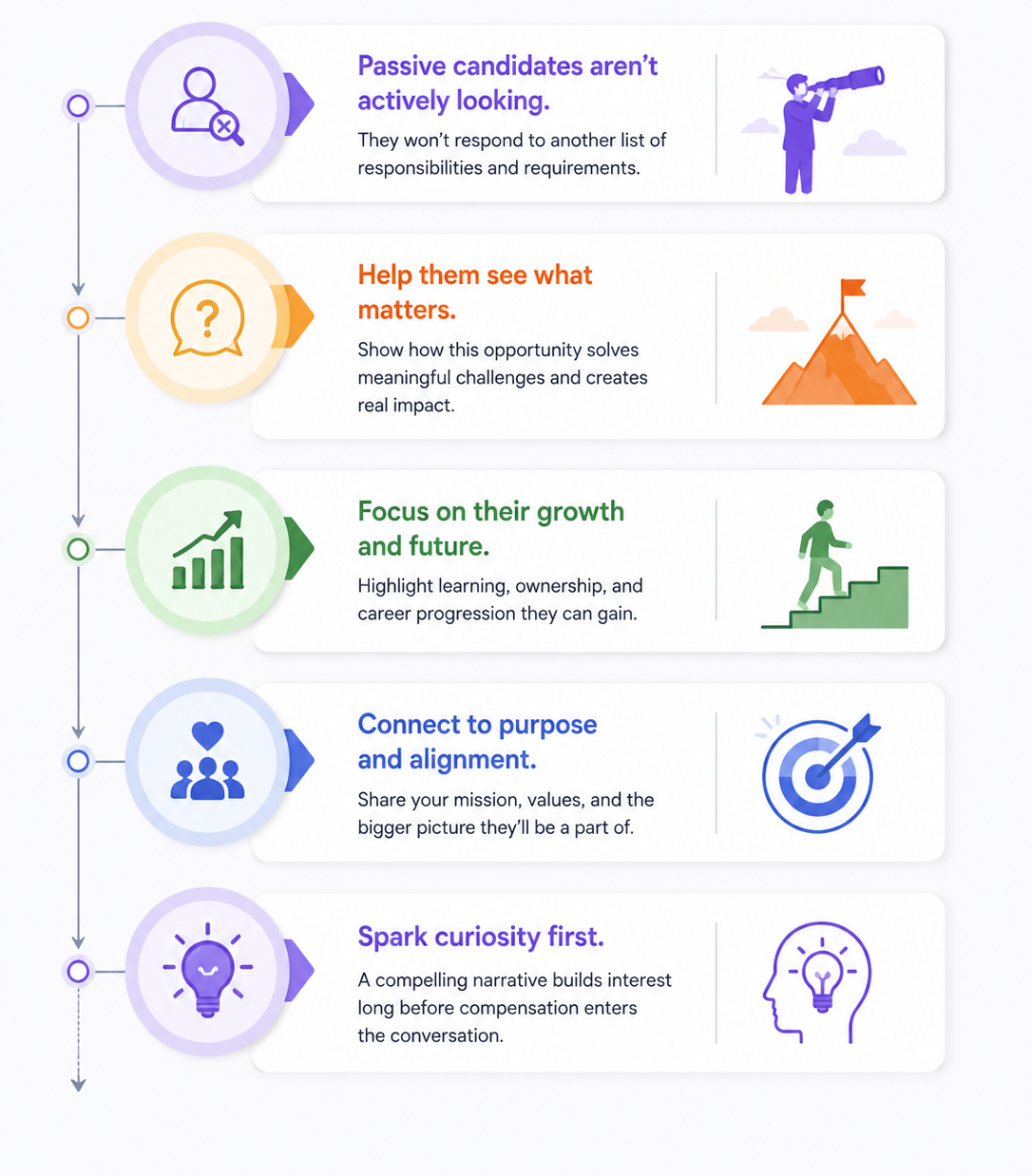
Passive candidates are not actively searching for jobs.
That means they are not looking for another list of responsibilities and requirements. They want to understand whether a new opportunity is worth their attention.
Instead of focusing only on the role, focus on the story behind it. Explain the challenges they will solve, the impact they can make, and the growth opportunities available to them.
A compelling narrative often creates curiosity long before compensation becomes part of the conversation.
3. An Employer Brand That Does Some of the Convincing for You
Even the most personalized outreach message cannot overcome a weak first impression.
After receiving your message, candidates will often research your company before responding. They want evidence that the opportunity matches what you promised.
Strong employer branding helps answer questions before candidates even ask them. Company culture, employee success stories, leadership visibility, and authentic workplace content all contribute to building trust.
The stronger your reputation, the less convincing recruiters have to do during outreach.
4. A Warm Talent Pool You Can Tap Instantly
Many recruiting teams spend hours looking for new candidates while overlooking people they already know.
Your existing network can often produce results much faster than a fresh search.
This includes former applicants, past finalists, employee referrals, previous contractors, and even former employees who left on good terms.
When these relationships are organized and maintained, you can reach qualified candidates within minutes instead of starting from scratch every time a role opens.
5. A Response Process That Moves in Hours
Finding a great passive candidate is only part of the challenge.
What happens next matters just as much.
Top candidates are often approached by multiple companies at the same time. If your team takes days to follow up, schedule calls, or provide updates, momentum disappears quickly.
The best recruiting teams remove unnecessary delays from every stage of the process.
When responses, screening decisions, and interview scheduling happen quickly, candidates stay engaged and opportunities are far less likely to slip away.
10 Recruiter-Tested Ways to Find Passive Candidates Faster
Once the fundamentals are in place, the next challenge is finding the right people without spending days searching through profiles.
The good news is that experienced recruiters rarely rely on a single sourcing channel. Instead, they combine multiple approaches to uncover talent faster while keeping outreach highly targeted.
Let's start with the method that removes much of the manual work altogether.
Way 1 — Let Leelu.AI Surface and Rank Matches for You
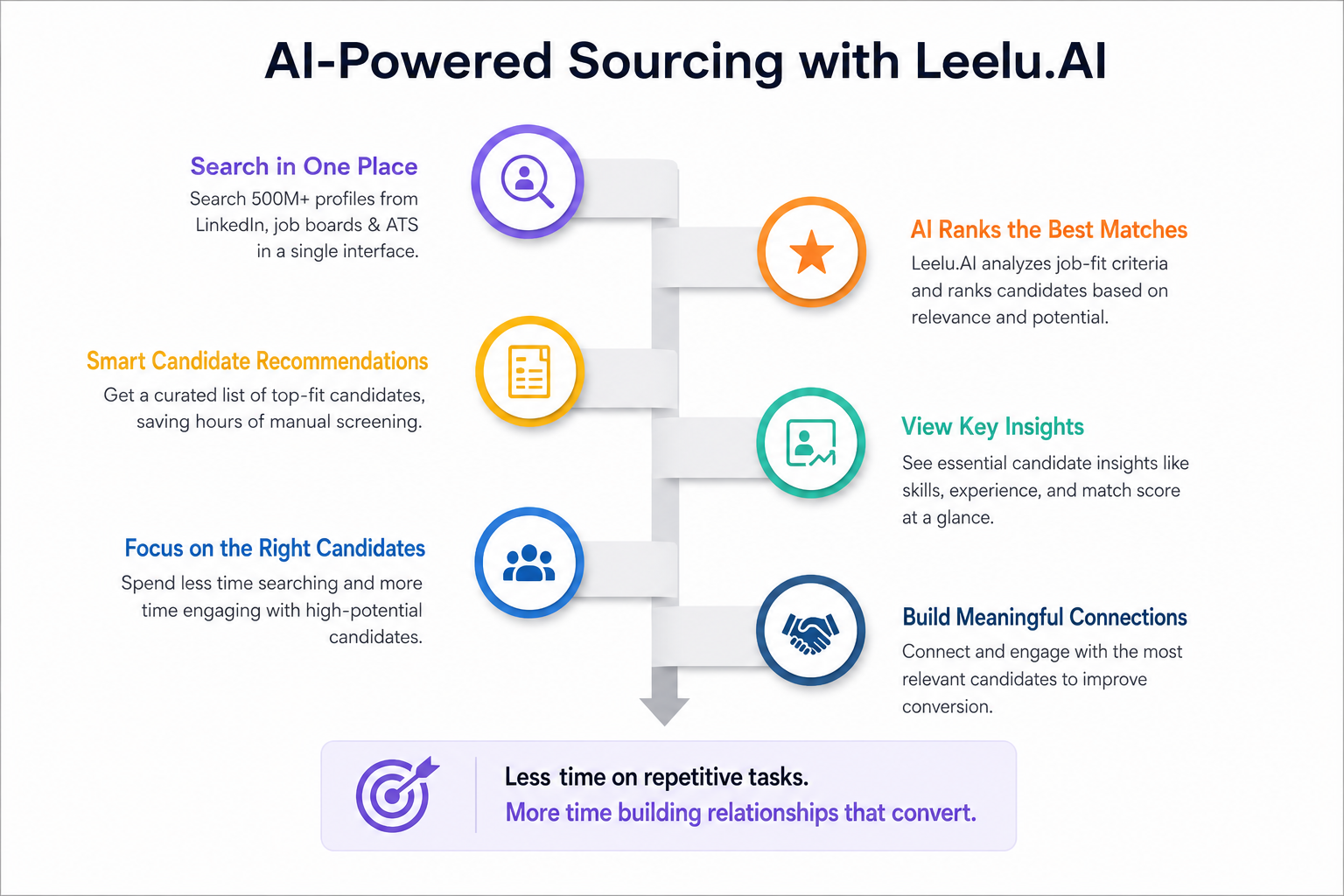
One of the biggest bottlenecks in passive sourcing is the time spent searching, screening, and prioritizing candidates.
You may find hundreds of profiles that look relevant on the surface, but identifying the best matches often requires hours of manual review.
This is where AI-driven sourcing can significantly accelerate the process.
Leelu.AI helps recruiters source candidates from a database of 500M+ profiles across LinkedIn, job boards, and ATS systems. Instead of manually jumping between platforms, you can search from a single interface and receive ranked candidate recommendations based on job-fit criteria.
Rather than spending time on repetitive sourcing tasks, recruiters can focus on building relationships with the candidates most likely to convert.
Suggested Reading:
AI Candidate Sourcing ToolsWay 2 — Re-Engage Your "Silver Medalists" First
Before launching a fresh sourcing campaign, look at the candidates who almost got hired in the past.
These are often referred to as silver medalists—people who impressed your team but lost out to another candidate during the final stages of a hiring process.
They already offer several advantages:
- They understand your company
- They have been assessed before
- They have shown interest in your opportunity
- They typically require less convincing than cold prospects
Because the relationship already exists, outreach tends to feel more personal and relevant.
In many cases, your next great hire may already be sitting in your database.
Way 3 — Mine the Talent Already Buried in Your ATS
Most applicant tracking systems contain far more talent than recruiters realize.
Every year, companies collect thousands of resumes from candidates who applied for previous roles. While they may not have been the right fit at the time, many have gained new skills, changed roles, or become better aligned with current hiring needs.
Instead of starting every search from zero, revisit your ATS and filter candidates by relevant skills, experience levels, or past interview feedback.
This approach often produces qualified prospects much faster than traditional sourcing methods because the candidate information is already available.
Way 4 — Tap Your Alumni and Boomerang Network
Former employees can be one of the most overlooked sources of passive talent.
People who left your organization on good terms already understand your culture, processes, and expectations. If their career goals have changed, they may be open to returning in a new capacity.
Beyond former employees, consider maintaining relationships with:
- Previous contractors
- Interns
- Consultants
- Former referral candidates
These individuals already have some level of familiarity with your organization, making outreach more natural and increasing the likelihood of engagement.
Way 5 — Use Boolean Strings to Cut Straight to the Right People
Not every sourcing challenge requires a larger talent pool.
Sometimes the real problem is filtering through too many irrelevant profiles.
Boolean search techniques help you narrow your search by combining keywords, job titles, skills, locations, and exclusions into a highly targeted query.
Instead of reviewing hundreds of loosely related profiles, you can focus on candidates who closely match your requirements from the start.
For specialized or hard-to-fill roles, a well-structured Boolean string can dramatically reduce sourcing time while improving candidate quality.
The better your search logic, the less time you spend hunting and the more time you spend having meaningful conversations with qualified talent.
Way 6 — Go Where the Work Is Visible for Technical Roles
When recruiting for technical positions, LinkedIn should not be your only destination.
Many skilled developers, engineers, designers, and data professionals actively showcase their work elsewhere. In fact, some of the strongest candidates maintain a much stronger professional presence through their projects than through their resumes.
Depending on the role, you can explore platforms where candidates publicly demonstrate their expertise, including:
- GitHub repositories
- Stack Overflow contributions
- Open-source communities
- Technical forums and niche communities
Looking at actual work provides a deeper understanding of a candidate's skills than a job title alone.
It also gives you valuable context that can make your outreach far more personalized.
Way 7 — Filter for the Quiet "Open to a Conversation" Signals
Not every passive candidate is completely passive.
Many professionals are not actively job hunting, but they are willing to explore the right opportunity if it appears.
The challenge is identifying those subtle signals.
You might notice candidates who recently updated their profile, earned a new certification, expanded their responsibilities, or became more active within professional communities.
While none of these actions explicitly say, "I'm looking for a job," they often indicate a period of career reflection or growth.
These candidates tend to be more receptive to conversations because they are already thinking about what's next.
Way 8 — Turn Employees Into a Referral Shortcut
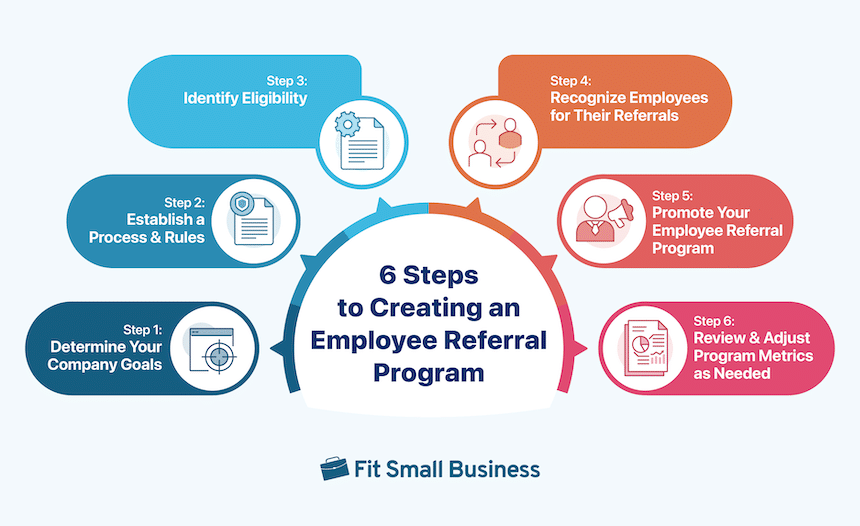
Your employees likely know talented people who match the type of candidates you want to hire.
The problem is that many referral programs are only activated after a role opens.
High-performing recruiting teams take a different approach. They encourage employees to continuously introduce strong professionals from their networks, even when no immediate vacancy exists.
Employee referrals often deliver advantages such as:
- Faster trust-building
- Higher response rates
- Better cultural alignment
- Shorter hiring cycles
People are naturally more willing to engage when an opportunity comes through someone they know and trust.
That makes referrals one of the most efficient passive sourcing channels available.
Way 9 — Catch Candidates at Trigger Moments
Timing plays a much bigger role in recruiting than many people realize.
A candidate who ignores your message today may be highly interested two months later because their circumstances have changed.
Certain career events often create these windows of opportunity, including:
- A recent promotion
- A company acquisition or restructuring
- Leadership changes
- Project completion
- Work anniversaries
These moments naturally cause professionals to reassess their career direction.
When your outreach aligns with a trigger moment, conversations tend to start more easily because the candidate is already evaluating future opportunities.
Way 10 — Personalize a Small Batch Instead of Blasting a Big One
Many recruiters assume higher outreach volume automatically leads to better results.
In practice, the opposite is often true.
Candidates can quickly recognize generic messages that have been copied and pasted hundreds of times. As inboxes become more crowded, personalization becomes a competitive advantage.
Instead of sending 100 identical messages, focus on a smaller group of highly relevant candidates.
Reference something specific, such as:
- A recent achievement
- A project they worked on
- A skill that stands out
- A career milestone
The goal is not to write a lengthy message.
The goal is to demonstrate that you chose them for a reason.
A personalized message takes slightly more effort upfront, but it typically generates stronger engagement and better-quality conversations than a large-scale outreach campaign ever could.
Suggested Reading:
Passive Candidate OutreachMistakes That Slow Your Passive Sourcing Down
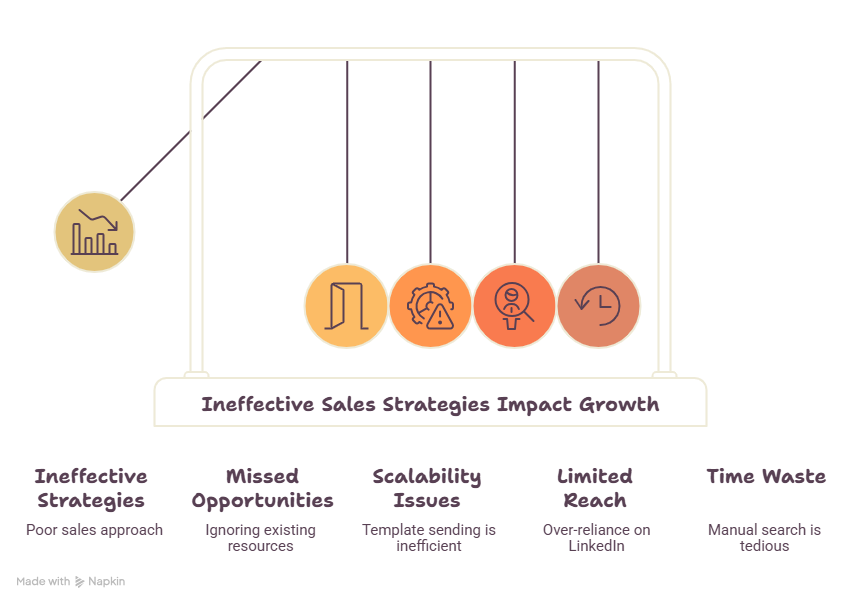
Even experienced recruiters can make passive sourcing harder than it needs to be.
The challenge is that these mistakes rarely feel like mistakes in the moment. They often look like productive work, yet they quietly reduce response rates, extend hiring timelines, and force recruiters to spend more time searching than necessary.
1. Ignoring the Warm Pools You Already Own
One of the most common sourcing mistakes is immediately looking outside the organization for talent.
Before launching a new search, review the candidates and connections you already have access to.
Past applicants, silver-medalist candidates, employee referrals, and former employees are often much closer to a hiring decision than a completely new prospect.
Overlooking these talent pools usually means spending extra time finding people who may be less engaged than candidates already familiar with your company.
2. Sending Templates at Scale
Efficiency matters, but personalization still wins.
Many recruiters rely on mass outreach campaigns that send the same message to hundreds of candidates. While this increases volume, it often decreases engagement because the message feels generic.
Candidates are far more likely to respond when they can see why you reached out specifically to them rather than to everyone who matched a search filter.
3. Leaning Only on LinkedIn
LinkedIn is a valuable sourcing channel, but it should not be your only one.
Some of the strongest candidates are active in industry communities, referral networks, alumni groups, and technical platforms where their expertise is easier to evaluate.
Expanding beyond a single platform helps you uncover talent that many recruiters never see.
4. Doing the Search by Hand Every Time
Manually sourcing candidates from scratch for every open role creates unnecessary work.
Modern recruiting teams increasingly use automation and AI-powered sourcing tools to identify, rank, and prioritize candidates faster.
The less time you spend on repetitive search tasks, the more time you can invest in building meaningful candidate relationships and moving great hires through the pipeline.
Conclusion
Finding passive candidates faster is not about sending more messages or searching more platforms.
It is about building a smarter sourcing process that helps you identify, engage, and convert the right people before your competitors do.
By combining strong sourcing fundamentals, leveraging warm talent pools, using the right technology, and personalizing your outreach, you can consistently reach high-quality candidates without extending hiring timelines.
The goal is simple: spend less time searching and more time building relationships that lead to great hires.
Frequently Asked Questions
1. What is a passive candidate and why are they important?
A passive candidate is someone who is not actively applying for jobs but may be open to new opportunities. They are valuable because they are often experienced, currently employed, and not competing on job boards, which usually means higher-quality talent.
2. How does AI help in finding passive candidates faster?
AI helps by scanning large talent pools, matching candidates based on skills and experience, and ranking them by relevance. This reduces manual sourcing time and helps recruiters focus only on the most suitable profiles.
3. What are “silver medalists” in recruitment?
Silver medalists are candidates who made it far in a previous hiring process but were not selected for the final offer. They are easier to convert because they are already vetted and familiar with the company.
4. Why is employer branding important for passive sourcing?
Employer branding builds trust and interest before outreach happens. When candidates already recognize and respect your company, they are more likely to respond positively to recruitment messages.
5. How can recruiters improve response rates from passive candidates?
Recruiters can improve response rates by personalizing outreach, acting quickly, and avoiding generic templates. A fast and relevant message significantly increases the chances of engagement.


