![9 Best Practices for Candidate Sourcing Intelligence + [How it Works]](https://ghost.leelu.ai/content/images/2026/07/Leelu_Placeholder-1-15.jpg)
Hiring today isn't just about finding candidates—it's about finding the right ones before your competitors do.
Traditional sourcing methods often leave recruiters sorting through countless profiles while missing qualified passive talent.
That's why candidate sourcing intelligence has become essential. By combining AI, data, and market insights, it helps you identify, evaluate, and engage candidates who best match your hiring needs.
Instead of relying on resumes alone, candidate intelligence gives you a deeper understanding of a candidate's skills, experience, and potential fit. In this guide, you'll learn:
- What candidate sourcing intelligence is
- How it works
- Its key components and benefits
- How Leelu AI simplifies intelligent candidate sourcing
What Is Candidate Sourcing Intelligence?
Candidate sourcing intelligence is the process of using AI, candidate data, and market insights to identify, evaluate, and engage the best-fit talent before they enter your hiring pipeline.
Instead of relying only on keyword searches, it helps recruiters make sourcing decisions based on skills, experience, hiring trends, and candidate behavior.
Today's recruiters aren't struggling because they lack candidates—they're struggling because they lack visibility into the right candidates.
Whether you're hiring for one role or scaling recruitment across multiple teams, candidate sourcing intelligence helps you identify qualified talent faster while reducing manual work.
According to LinkedIn, 70% of the global workforce consists of passive candidates, meaning they aren't actively applying for jobs but may be open to the right opportunity.
Imagine you're hiring a Product Manager.
Traditional sourcing may return 600 profiles.
Candidate sourcing intelligence automatically identifies the 40–50 candidates whose skills, experience, and career trajectory best match your requirements.
How It Differs from Traditional Candidate Sourcing
Traditional candidate sourcing focuses on finding as many potential candidates as possible. Recruiters search job boards, LinkedIn, internal databases, and referrals, then manually review profiles to identify suitable matches.
While this approach can build a talent pipeline, it is often time-consuming and heavily dependent on manual effort.
Candidate sourcing intelligence takes a smarter approach. Instead of only collecting profiles, it analyzes candidate data, hiring trends, and AI-driven insights to identify who is most likely to succeed in a role.
This allows recruiters to spend less time searching and more time engaging high-potential talent.
For example, imagine you're hiring a senior software engineer. Traditional sourcing may return 500 profiles based on keywords like "Java" or "Python."
A candidate sourcing intelligence platform goes further by evaluating skills, years of experience, career progression, location preferences, and even previous engagement history to rank the candidates most likely to be a strong fit.
Key Components of Candidate Sourcing Intelligence
Candidate sourcing intelligence combines AI, candidate data, and market insights to help recruiters identify and engage the right talent more efficiently. Its core components include:
- Candidate Data Aggregation: Consolidates candidate information from job boards, LinkedIn, ATS platforms, referrals, and other sources into a unified profile.
- AI-Powered Candidate Matching: Uses AI to evaluate skills, experience, qualifications, and job requirements to rank the best-fit candidates.
- Talent Market Intelligence: Provides insights into talent availability, salary trends, hiring competition, and location-based talent pools.
- Candidate Engagement Intelligence: Tracks candidate interactions and communication preferences to improve outreach and response rates.
- Predictive Hiring Insights: Analyzes historical hiring data to predict candidate responsiveness, job fit, and hiring success.
Together, these components transform candidate sourcing from a manual process into a data-driven strategy that helps recruiters hire faster and more effectively.
How Candidate Sourcing Intelligence Works
Candidate sourcing intelligence follows a step-by-step process that combines candidate data, AI, and automation to simplify sourcing and improve hiring decisions. Instead of relying on manual searches and guesswork, recruiters can identify, engage, and hire the right candidates more efficiently.
Step 1: Collect Candidate Data
The process begins by gathering candidate information from multiple sources, including LinkedIn, job boards, ATS platforms, employee referrals, and talent communities.
All this information is consolidated into a single candidate profile, giving recruiters a complete view without switching between multiple tools.
Example: Instead of searching LinkedIn, Indeed, and your ATS separately, platforms like Leelu AI bring candidate data together in one place, making sourcing faster and more organized.
Step 2: Analyze and Rank Candidates
Once candidate profiles are collected, AI compares them against the job requirements. It evaluates skills, experience, certifications, education, career progression, and other relevant factors to identify the strongest candidates.
Rather than manually reviewing hundreds of resumes, recruiters receive a ranked shortlist based on overall job fit.
Example: If a marketing role receives 500 applications, AI can quickly identify the top 30 candidates that best match the required skills and experience.
Step 3: Engage Candidates with Personalized Outreach
After identifying the best candidates, the next step is reaching out with personalized communication. Candidate sourcing intelligence uses profile insights and previous interactions to help recruiters craft messages that feel relevant instead of generic.
Personalized outreach not only improves candidate engagement but also increases the chances of receiving responses from passive candidates.
Step 4: Manage Interviews and Candidate Progress
As candidates move through the hiring pipeline, interview scheduling, follow-ups, and candidate tracking become easier with automation. This keeps the recruitment process organized while reducing repetitive administrative work.
Example: Instead of manually coordinating interview slots over email, recruiters can automatically schedule interviews, sync calendars, and update candidate status in their ATS.
Suggested Reading:
10 Best AI Talent Acquisition Tools for Modern Recruiting TeamsStep 5: Measure and Optimize Your Hiring Strategy
The final step is continuously improving your sourcing strategy using recruitment analytics. Candidate sourcing intelligence tracks key metrics such as response rates, source effectiveness, time-to-hire, and quality of hire to identify what works best.
These insights help recruiters refine their sourcing approach, improve future hiring campaigns, and build stronger talent pipelines over time.
9 Best Practices for Smarter Candidate Sourcing
Even with access to advanced recruiting tools, successful hiring depends on how you source and engage candidates.
These best practices can help you build a stronger talent pipeline while improving hiring speed and quality.
1. Create a Clear Ideal Candidate Profile
Before you begin sourcing, define the skills, experience, certifications, and qualifications required for the role. A clear candidate profile helps you focus on relevant talent instead of reviewing every available profile.
Example: Instead of searching for "Software Engineer," refine your search to "Senior Java Developer with 5+ years of experience in Spring Boot and AWS."
2. Expand Beyond Traditional Job Boards
Don't limit your search to job boards. Explore professional networks, employee referrals, talent communities, internal databases, and industry-specific platforms to reach a broader talent pool.
Example: If you're hiring cybersecurity professionals, searching niche security communities and employee referrals can uncover candidates who may never apply through job boards.
3. Use AI to Prioritize High-Quality Candidates
AI can analyze resumes, skills, experience, and job requirements to rank candidates based on overall fit. This allows recruiters to focus on the strongest applicants first.
Example: Rather than manually reviewing 600 applications, AI can shortlist the top 40 candidates that closely match your hiring criteria.
4. Personalize Every Candidate Interaction
Candidates are more likely to respond when outreach feels relevant to their background. Mentioning their experience, recent projects, or career achievements makes your message more engaging.
Example: Instead of sending "We're hiring. Interested?", reference a candidate's recent cloud migration project and explain why it aligns with your open role.
5. Build Relationships with Passive Talent
Many highly qualified professionals aren't actively searching for new jobs. Maintaining relationships with passive candidates helps you build a ready-to-hire talent pipeline.
Example: Even if a DevOps engineer isn't interested today, staying in touch through occasional updates or future opportunities can lead to a successful hire months later.
6. Keep Your Candidate Database Updated
Regularly clean and enrich your candidate database by removing duplicates, updating skills, and adding recent work experience. Accurate data leads to better sourcing decisions.
Example: Updating a candidate's profile after they earn an AWS certification makes it easier to match them with future cloud engineering roles.
7. Use Talent Market Insights to Guide Hiring
Understanding hiring trends helps you make smarter sourcing decisions. Analyze talent availability, salary expectations, and hiring competition before launching a recruitment campaign.
Example: If AI engineers are scarce in one region, expanding your search to remote candidates or nearby cities can significantly increase your talent pool.
8. Automate Repetitive Recruiting Tasks
Automating tasks like resume screening, interview scheduling, and follow-ups allows recruiters to spend more time engaging qualified candidates.
Example: Instead of manually emailing every shortlisted applicant, set up automated interview invitations and follow-up reminders after each hiring stage.
9. Measure and Continuously Improve Your Sourcing Strategy
Track sourcing metrics such as time-to-source, candidate response rate, quality of hire, and source effectiveness. These insights help you identify what's working and refine your recruitment strategy.
Example: If employee referrals consistently produce higher-quality hires than job boards, you can invest more in your referral program and optimize your sourcing budget.
Applying these best practices alongside candidate sourcing intelligence helps recruiters make faster, data-driven hiring decisions while building a stronger and more sustainable talent pipeline.
How Leelu AI Simplifies Candidate Sourcing Intelligence
Building an effective candidate sourcing intelligence strategy often means juggling multiple sourcing platforms, spreadsheets, ATS systems, and communication tools.
As your hiring volume grows, so does the time spent switching between systems instead of engaging candidates.
Leelu AI brings these steps together into a single AI-powered recruiting platform, helping recruiters source, screen, engage, and hire top talent faster while reducing manual work.
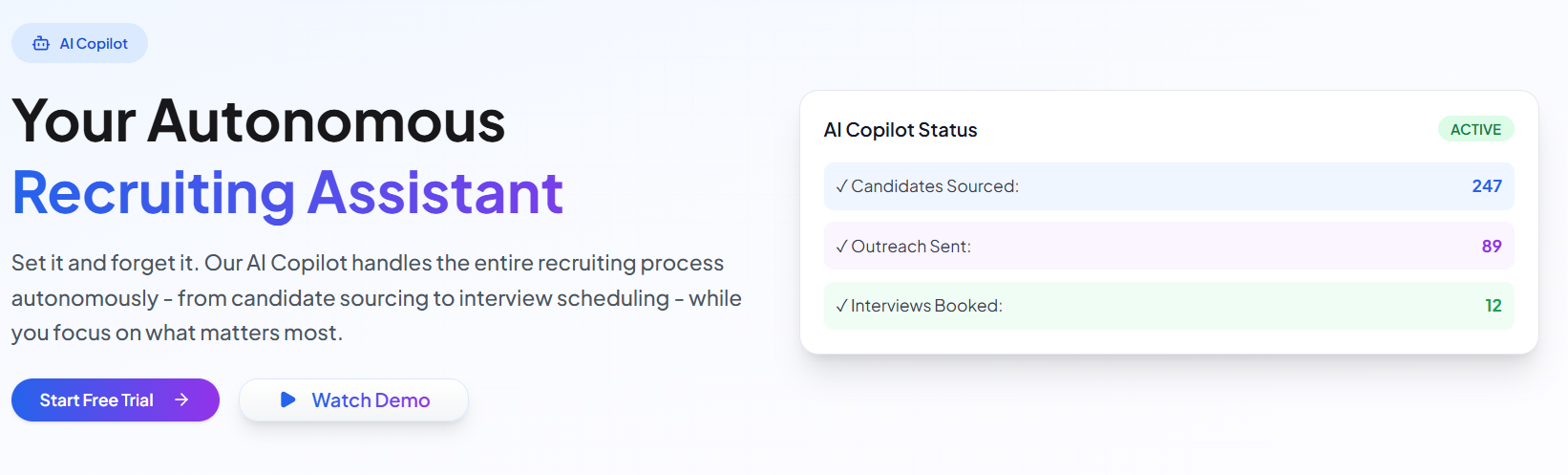
Source Candidates from 500M+ Profiles
Finding qualified candidates becomes difficult when talent is spread across multiple platforms.
Leelu AI searches a network of 500M+ candidate profiles across LinkedIn, Indeed, Monster, CareerBuilder, and integrated ATS platforms through a single search interface.
Instead of repeating the same search across different websites, recruiters can discover qualified talent from one centralized workspace.
Example: If you're hiring a Data Engineer, Leelu AI can simultaneously search multiple talent sources, giving you a much broader talent pool than relying on LinkedIn alone.
Unify Candidate Data Across Multiple Platforms
Recruiters often encounter duplicate profiles, outdated resumes, and fragmented candidate information.
Leelu AI automatically consolidates data from different sources into one unified candidate profile.
Recruiters can view work history, skills, education, certifications, previous interactions, and sourcing history in one place, eliminating repetitive profile reviews.
According to Leelu's internal workflow metrics, unified candidate profiles can reduce manual profile management by up to 80%, allowing recruiters to spend more time engaging candidates rather than organizing data.
AI-Powered Screening and Candidate Matching
Manually reviewing hundreds of resumes is one of the biggest bottlenecks in recruitment.
Leelu AI automatically parses resumes, evaluates candidate qualifications, and ranks applicants based on job fit using AI.
Instead of relying solely on keyword matching, it considers multiple factors, including skills, experience, and role relevance.
Example: For a role with 1,000 applications, recruiters can immediately focus on the highest-ranked candidates instead of manually reviewing every resume.
Leelu AI can screen thousands of resumes within minutes and identify high-fit candidates with up to 90% matching accuracy, helping recruiters build quality shortlists much faster.
Automate Personalized Outreach and Follow-Ups
Finding the right candidates is only half the challenge—getting them to respond is equally important.
Leelu AI generates personalized outreach messages and automatically manages follow-up sequences across multiple communication channels.
This ensures candidates stay engaged without recruiters having to remember every follow-up.
Instead of sending generic emails, recruiters can personalize communication at scale, improving candidate engagement while reducing repetitive administrative work.
Leelu AI supports outreach campaigns that can achieve 40–60% response rates, depending on the role and targeting strategy.
Schedule Interviews and Sync with Your ATS
Interview scheduling often involves lengthy email chains and calendar coordination.
Leelu AI automates interview scheduling by syncing recruiter and candidate calendars, booking available time slots, and updating your ATS automatically.
This reduces scheduling delays and minimizes manual coordination.
In many hiring workflows, interviews can be scheduled in under one minute, helping teams move qualified candidates through the hiring pipeline faster.
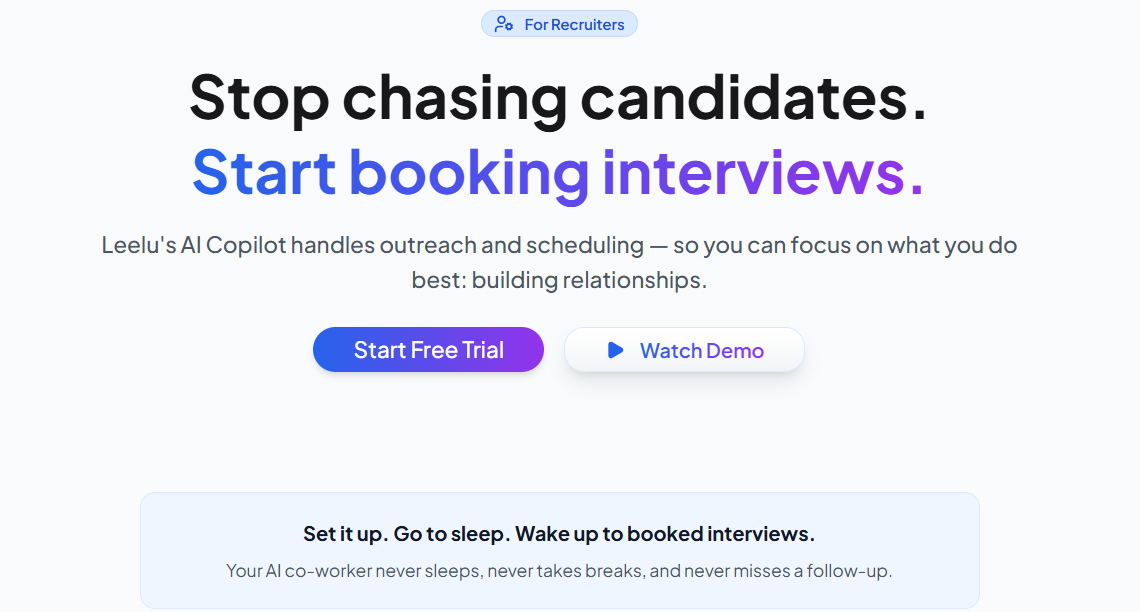
Manage the Entire Recruiting Workflow from One Platform
Modern recruiting involves much more than sourcing candidates.
Leelu AI supports the complete hiring journey—from generating AI-powered job descriptions and sourcing candidates to screening resumes, automating outreach, scheduling interviews, syncing with ATS platforms, and tracking hiring performance through real-time analytics.
Instead of relying on disconnected recruiting tools, recruiters can manage the entire workflow from one platform. According to Leelu's platform metrics, organizations can reduce recruiter effort by 70–85% and accelerate hiring workflows by up to 80–95%, allowing hiring teams to focus on building relationships with the right candidates rather than managing repetitive tasks.
Conclusion
Finding great talent is no longer just about searching through resumes or posting jobs on multiple platforms. To stay competitive, recruiters need a smarter approach that helps them identify, evaluate, and engage the right candidates before others do.
That's where candidate sourcing intelligence makes a real difference. By combining AI, data, and candidate intelligence, it enables recruiters to make faster, more informed hiring decisions while reducing manual effort.
From discovering passive talent to improving candidate quality and shortening time-to-hire, it transforms sourcing into a strategic advantage.
As hiring demands continue to evolve, adopting candidate sourcing intelligence isn't just an upgrade—it's becoming a necessity.
Platforms like Leelu AI take this a step further by bringing sourcing, screening, outreach, and interview scheduling into one intelligent workflow, helping recruitment teams hire faster without compromising on quality.
Frequently Asked Questions
Can candidate sourcing intelligence help reduce hiring bias?
Yes. AI-powered sourcing intelligence can evaluate candidates based on predefined skills, qualifications, and job requirements instead of subjective factors. While human oversight is still important, using data-driven evaluations can help create a more consistent and objective hiring process.
How do you measure the success of a candidate sourcing intelligence strategy?
Success can be measured using metrics such as time-to-hire, quality of hire, candidate response rates, sourcing channel performance, recruiter productivity, interview-to-offer ratio, and cost per hire. Tracking these KPIs helps organizations continuously improve their sourcing strategy and hiring outcomes.
What technologies are commonly used in candidate sourcing intelligence?
Modern candidate sourcing intelligence platforms typically combine artificial intelligence, machine learning, resume parsing, candidate matching algorithms, talent market analytics, automation, and ATS integrations. Together, these technologies help recruiters source, screen, and engage candidates more efficiently.


