
Hiring teams spend hours sourcing candidates, screening resumes, sending follow-ups, and coordinating interviews.
As hiring volume grows, those manual steps quickly become the biggest bottleneck.
The good news is that AI can automate most of this process and keep your pipeline moving without constant recruiter involvement.
In this guide, you'll learn:
- The five building blocks of an automated candidate pipeline
- How AI automates sourcing, screening, outreach, and scheduling
- How to build a complete candidate pipeline automation system in just 10 minutes using Leelu AI
The Five Pieces Every Automated Pipeline Needs
Candidate pipeline automation is not just about sending automated messages.
A high-performing system connects sourcing, screening, engagement, and scheduling into one continuous workflow.
When these pieces work together, candidates move through your hiring process with minimal manual effort.
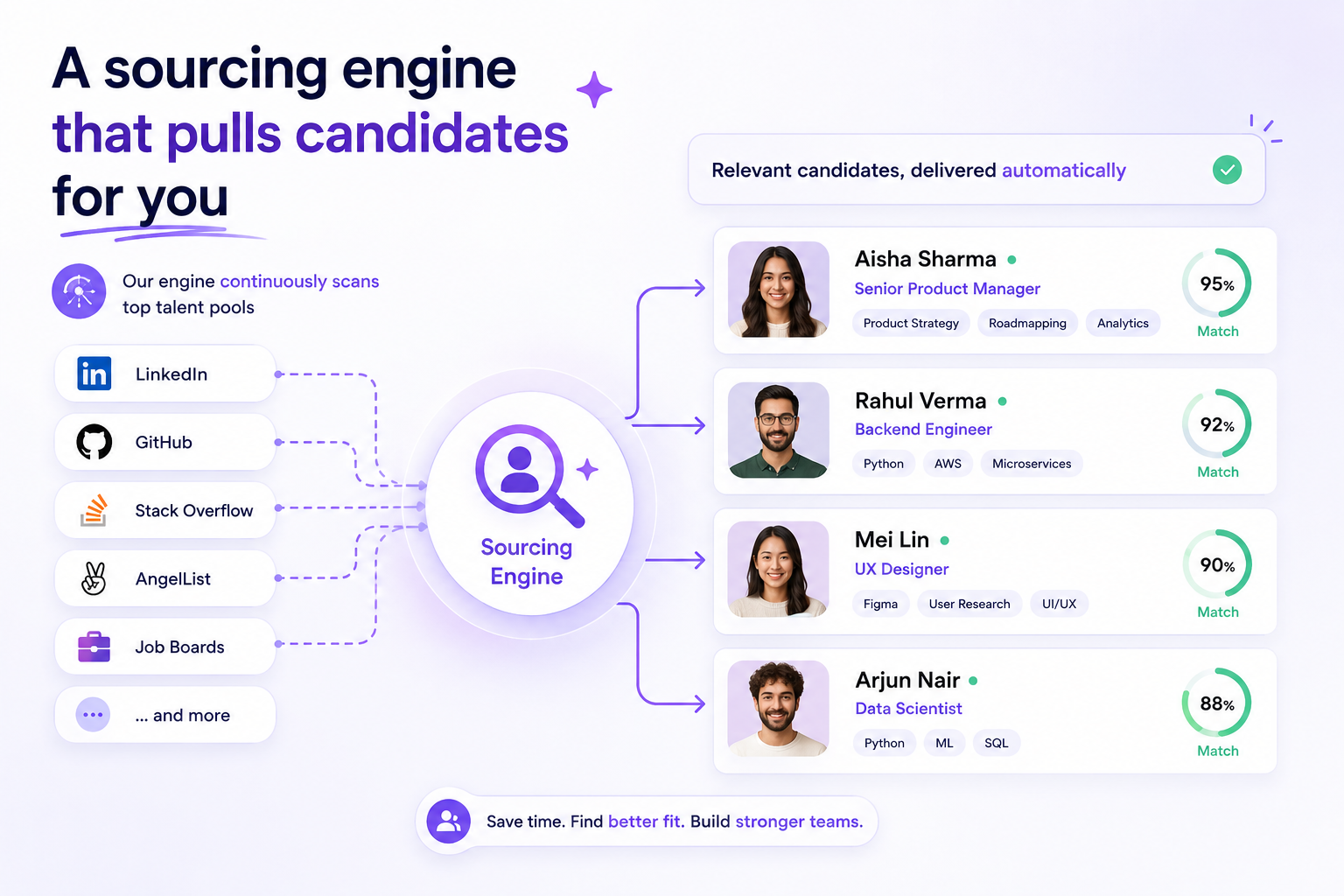
1. A sourcing engine that pulls candidates for you
Everything starts with finding the right people.
Instead of manually searching across multiple platforms, an automated sourcing engine continuously scans talent pools and brings relevant candidates into your pipeline.
The best systems source candidates from multiple channels simultaneously, helping you reach talent that would otherwise remain hidden.
Suggested Reading:
Candidate Sourcing Channels2. A scoring layer that ranks fit before you spend time
Finding candidates is only the first step.
You also need a way to quickly identify who deserves attention first. A scoring layer evaluates candidates against your job requirements and ranks them based on fit.
This helps you focus on high-potential candidates instead of reviewing every profile manually.
3. A personalized outreach sequence
Once candidates are identified, engagement becomes the next priority.
Automated outreach should feel personal, not mass-produced. The system should tailor messages based on candidate background, experience, and role relevance while automatically handling follow-ups.
This keeps conversations moving without creating additional work for recruiters.
4. An always-on conversation handler
Candidate engagement rarely happens on your schedule.
Some candidates reply immediately, while others respond days later. An automated conversation layer keeps communication active by answering questions, handling responses, and managing follow-ups around the clock.
As a result, promising candidates never fall through the cracks.
5. A scheduling step that closes the loop
The final piece is often where hiring teams lose momentum.
After a candidate expresses interest, interview coordination should happen automatically.
Scheduling tools sync calendars, offer available time slots, and confirm interviews without endless back-and-forth emails.
When sourcing, scoring, outreach, conversations, and scheduling work together, you create a candidate pipeline automation system that continuously attracts, engages, and moves candidates toward interviews with very little manual intervention.
Build Your Candidate Pipeline Automation in 10 Minutes Using Leelu AI
Now that you know the core components of an automated hiring pipeline, the next question is simple.
How do you actually put everything together without spending weeks configuring tools?
This is where Leelu AI simplifies the process.
Instead of stitching together separate sourcing, outreach, screening, and scheduling platforms, Leelu acts as an AI recruiting agent that helps you can launch an end-to-end automated pipeline from a single workspace.
Here's what the setup looks like.
Minute 1–2 — Generate the job description
Every hiring workflow starts with defining what you're looking for.
Instead of creating a job description from scratch, Leelu AI generates a structured and optimized JD in under two minutes.
Simply enter the role details, required skills, experience level, and hiring goals.
The AI then creates a job description designed to attract relevant candidates while giving the system a clear understanding of your hiring criteria.
At this point, you've already completed the foundation of your pipeline.
Minute 2–4 — Turn on multi-platform sourcing
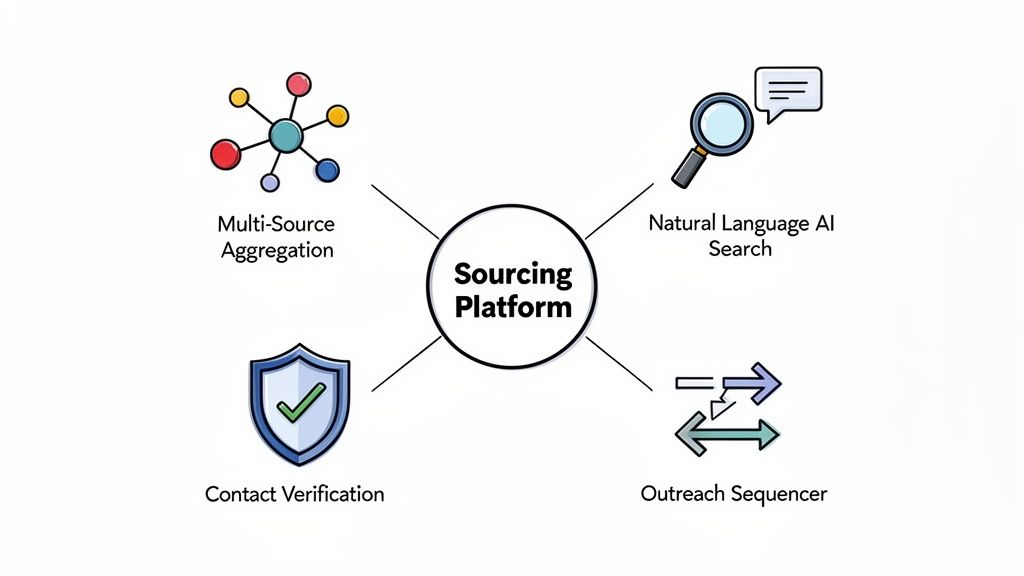
Once the role is ready, sourcing begins automatically.
Leelu AI searches across multiple talent sources simultaneously, helping you discover candidates without manually opening different platforms.
The platform scans:
- Indeed
- Monster
- Existing ATS databases
- Additional connected talent sources
Instead of spending hours searching profiles, qualified candidates begin flowing into your pipeline automatically.
Minute 4–6 — Let AI rank and shortlist

A large candidate pool is only useful if you can quickly identify the best matches.
As candidates enter the system, Leelu AI automatically parses profiles, evaluates qualifications, and ranks candidates against your requirements.
The platform highlights top-fit talent first so your team can focus on the strongest opportunities.
Rather than reviewing hundreds of profiles manually, you receive a prioritized shortlist almost instantly.
Minute 6–8 — Set your outreach sequence
Once your shortlist is ready, candidate engagement becomes the next step.
Leelu AI allows you to create personalized outreach sequences that automatically adapt to each candidate.
You can configure:
- Initial outreach messages
- Follow-up reminders
- Email sequences
- LinkedIn engagement workflows
The system then handles communication at scale while keeping messages relevant and personalized.
This allows you to reach more candidates without sacrificing candidate experience.
Minute 8–10 — Connect scheduling and your ATS
The final step is connecting the systems that move candidates toward interviews.
Leelu AI syncs with your calendars and ATS so interview scheduling happens automatically once candidates show interest.
The platform can:
- Schedule interviews automatically
- Sync candidate data with your ATS
- Eliminate manual data entry
- Keep hiring workflows updated in real time
At this point, your entire pipeline is connected and running.
What it looks like running
Once activated, the process becomes largely self-sustaining.
New roles trigger sourcing automatically.
Qualified candidates are identified and ranked based on fit.
Personalized outreach starts without recruiter intervention.
Candidate questions receive responses through automated conversations.
Interested candidates are scheduled for interviews and synced directly into your ATS.
Instead of managing dozens of repetitive recruiting tasks every day, your team can focus on evaluating top candidates and making hiring decisions.
The result is a candidate pipeline automation system that continuously sources, engages, screens, and advances talent while dramatically reducing manual recruiting effort.
Mistakes That Quietly Break Automated Pipelines
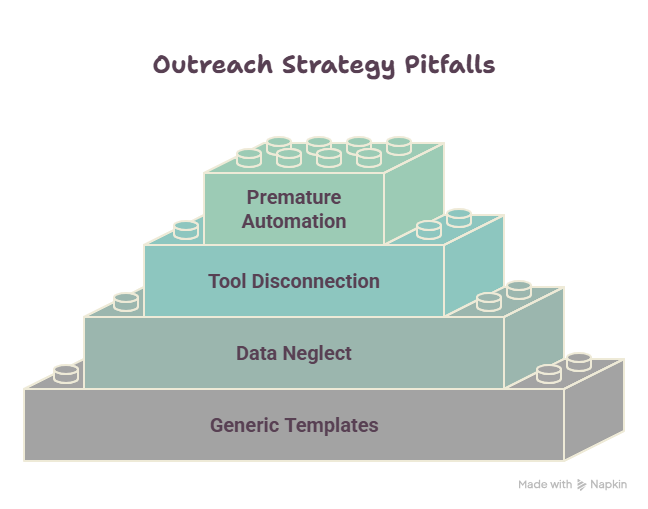
Automation can dramatically improve hiring efficiency, but only when the system is built on the right foundation.
Many hiring teams invest in automation tools and still struggle because of a few common mistakes.
1. Automating outreach before defining who you want
The biggest mistake is automating candidate outreach before clearly defining your ideal hire.
If your job requirements are vague, automation simply helps you reach the wrong people faster.
Before launching any workflow, make sure your candidate criteria, skills, experience requirements, and hiring goals are clearly defined.
2. Setting it and never reading the data
Automation does not mean ignoring your pipeline.
Your hiring data reveals which sourcing channels perform best, which messages generate responses, and where candidates drop off.
Regularly reviewing these insights helps you improve hiring outcomes and make better decisions over time.
3. Letting templates go fully generic
Candidates can quickly recognize mass-produced messages.
While automation saves time, outreach should still feel relevant and personalized.
Adding role-specific details, skills, or career context can significantly improve engagement and response rates.
4. Disconnecting the tools from each other
Many recruiting teams use separate tools for sourcing, outreach, scheduling, and ATS management.
When these systems don't communicate, information gets lost and manual work returns.
An effective automated pipeline works as a connected workflow where candidate data moves seamlessly from sourcing to interview scheduling without constant recruiter intervention.
The more connected your hiring process is, the more value you get from automation.
Conclusion
The goal of candidate pipeline automation is not to remove recruiters from the hiring process. It's to remove the repetitive work that slows them down.
When sourcing, screening, outreach, conversations, and scheduling work together, your hiring team can focus on what matters most—building relationships and making better hiring decisions.
The best part is that you no longer need multiple disconnected tools to make this happen.
With Leelu AI, you can build and launch a complete candidate pipeline automation system in minutes, not weeks.
As hiring becomes more competitive, teams that automate intelligently will fill roles faster, engage candidates more effectively, and create a recruiting process that scales without adding more manual effort.
Frequently Asked Questions
1. How much time can candidate pipeline automation save recruiters?
Candidate pipeline automation reduces manual sourcing, screening, outreach, and scheduling tasks, helping recruiters save hours weekly while focusing more on candidate engagement and hiring decisions.
2. Can small businesses benefit from candidate pipeline automation?
Yes. Small businesses can automate repetitive hiring tasks, improve response times, organize candidate data efficiently, and compete for talent without expanding recruiting teams.
3. Does candidate pipeline automation replace recruiters?
No. Automation handles repetitive processes, while recruiters manage relationships, conduct interviews, evaluate candidates, and make hiring decisions that require human judgment.
4. How do you measure the success of an automated candidate pipeline?
Measure success through time-to-hire, response rates, interview conversions, candidate quality, recruiter productivity, and overall hiring efficiency improvements over time.
5. What integrations should an automated recruiting pipeline have?
An automated pipeline should connect with ATS platforms, calendars, email tools, sourcing channels, and communication systems to streamline candidate management workflows.


