Student outreach recruitment is changing fast as hiring teams try to engage large student pools while maintaining speed, personalization, and quality together.
Traditional campus hiring often depends on manual sourcing, delayed communication, and disconnected tools that slow down overall recruitment efficiency.
As competition for top student talent increases, AI is becoming essential for faster outreach, better engagement, and scalable hiring outcomes.
In this guide, you will learn:
- Core fundamentals that improve student outreach recruitment effectiveness
- 9 AI solutions for scaling campus hiring efficiently
- How Leelu.ai streamlines sourcing, screening, outreach, and scheduling
- Common mistakes to avoid in student recruitment workflows
You will also understand how AI transforms campus hiring into a faster, more structured, and scalable recruitment system.
Core Fundamentals That Improve Student Outreach Recruitment
Student outreach recruitment works best when the foundation is clear, structured, and focused on the right candidates. Without strong fundamentals, even advanced tools fail to deliver consistent hiring outcomes at scale.
Below are the key fundamentals that improve student recruitment effectiveness.
1. Defining ideal student candidate profiles clearly
A strong outreach strategy starts with a well-defined student profile. You need to clearly identify skills, academic background, and behavioral traits.
This clarity helps recruiters avoid irrelevant outreach and focus only on high-potential student candidates. It also improves AI matching accuracy and reduces screening effort significantly.
When profiles are structured well, sourcing becomes faster and more targeted across multiple campus channels.
2. Building personalized outreach strategies for students
Students respond better to communication that feels relevant and personalized to their goals. Generic messages often lead to low engagement and weak response rates.
Personalized outreach should consider skills, interests, and career aspirations of each student group. This increases trust and improves response rates across email, LinkedIn, and campus platforms.
At scale, AI helps tailor messaging without increasing manual workload for recruiters.
3. Creating faster and mobile-friendly candidate experiences
Students expect quick and seamless application experiences, especially on mobile devices. Slow or complex application flows often lead to drop-offs.
Mobile-first design ensures students can apply, respond, and engage anytime without friction. Faster experiences also increase completion rates during campus hiring drives.
Reducing steps in the application process improves both speed and candidate satisfaction.
4. Using automation and analytics to optimize campus hiring
Automation helps recruiters handle repetitive tasks like screening, follow-ups, and scheduling efficiently. This allows teams to focus more on decision-making and engagement.
Analytics provide insights into candidate behavior, outreach performance, and hiring bottlenecks. These insights help improve targeting and optimize future recruitment campaigns.
Together, automation and analytics make student outreach recruitment more scalable, efficient, and data-driven.
Suggested Reading:
How Recruitment Automation Is Transforming Hiring in USA9 AI Solutions for Student Outreach Recruitment at Scale
Scaling student outreach recruitment requires more than effort. It requires intelligent systems that can source, screen, engage, and schedule candidates continuously without manual bottlenecks.
AI enables recruitment teams to manage high-volume campus hiring while improving speed, consistency, and candidate quality.
Below are nine AI-powered solutions that transform student outreach recruitment at scale.
1. AI-powered candidate sourcing for campus and graduate hiring
AI sourcing engines help recruiters discover students from millions of profiles across platforms like LinkedIn, job boards, and ATS databases.
Instead of manually searching, AI identifies relevant candidates based on job requirements, skills, and academic background.
This significantly expands talent reach while reducing sourcing time from hours to minutes.
- Access to 500M+ candidate profiles
- Multi-platform sourcing in one search
- Faster discovery of campus talent pools
AI sourcing ensures recruiters never miss high-potential student candidates across institutions and geographies.
2. Automated resume screening and candidate shortlisting
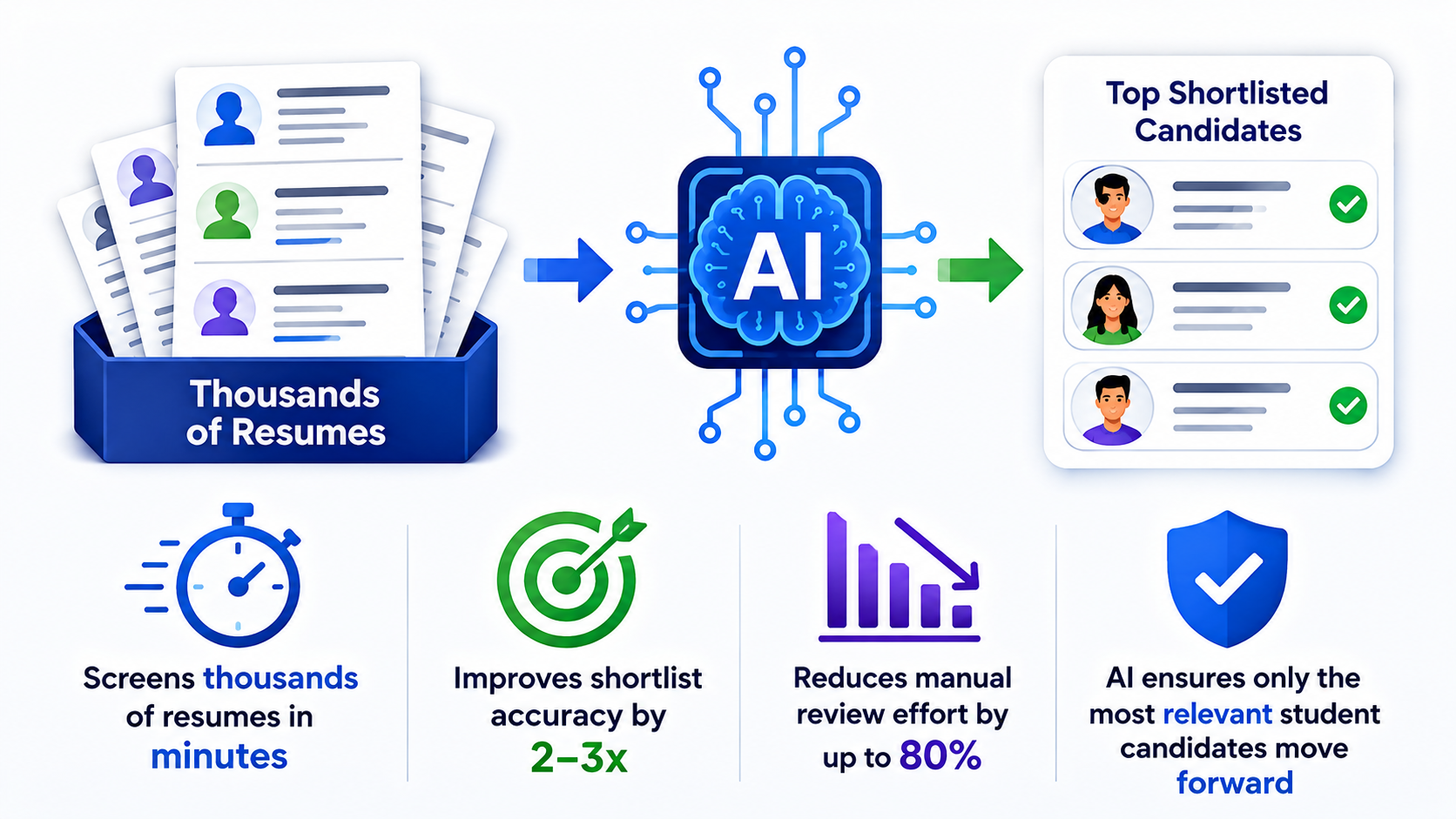
Resume screening is one of the most time-consuming parts of campus hiring. AI automates this process by parsing resumes and evaluating candidate fit instantly.
It ranks candidates based on skills, experience, and job relevance, helping recruiters focus only on top matches.
This reduces screening workload and improves shortlist quality significantly.
- Screens thousands of resumes in minutes
- Improves shortlist accuracy by 2–3x
- Reduces manual review effort by up to 80%
AI ensures only the most relevant student candidates move forward in the hiring pipeline.
3. AI-driven personalized outreach for higher student engagement
Students respond better to messages that feel personalized and relevant. AI enables recruiters to send tailored outreach at scale without manual effort.
It adjusts messaging based on candidate profiles, interests, and job fit.
This improves engagement rates across email and LinkedIn campaigns.
- 100s of personalized messages per day
- 40–60% higher response rates
- Context-aware messaging at scale
Personalized AI outreach builds stronger candidate relationships from the first interaction.
4. Chatbots for 24/7 candidate communication and support
Student candidates often have questions about roles, eligibility, and application steps. AI chatbots provide instant responses anytime, improving engagement and reducing drop-offs.
They handle FAQs, follow-ups, and updates without recruiter involvement.
This ensures continuous communication across all stages of recruitment.
- 24/7 candidate engagement
- Instant responses to queries
- Reduced recruiter workload
Chatbots ensure no candidate is left waiting during critical hiring stages.
5. Automated interview scheduling for bulk student hiring
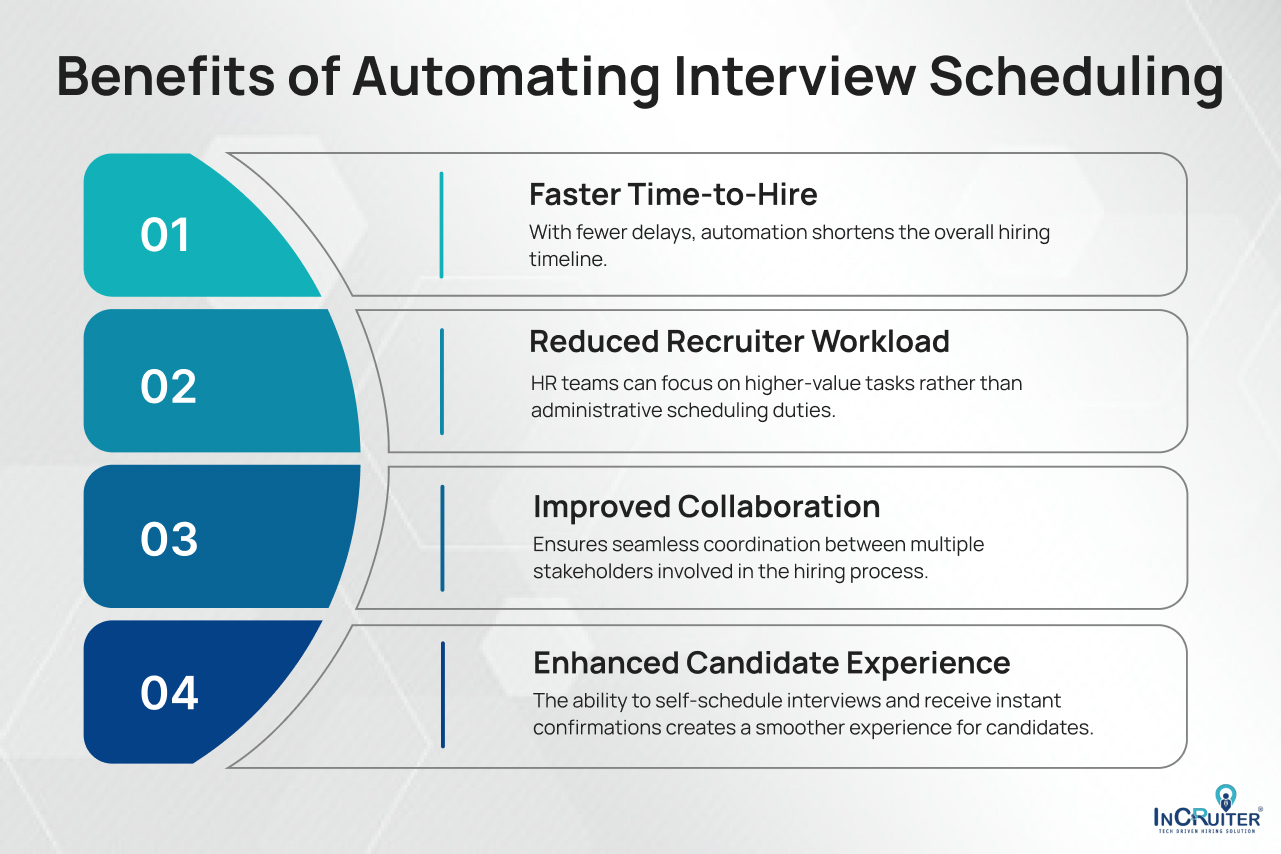
Scheduling interviews manually becomes difficult during campus drives with high candidate volumes. AI automates calendar coordination between recruiters and students.
It finds suitable time slots, sends confirmations, and updates calendars automatically.
This eliminates coordination delays and reduces no-shows.
- Interview scheduling in under 1 minute
- 90% reduction in coordination effort
- Automated calendar syncing
AI scheduling ensures faster interview cycles and smoother hiring execution.
6. AI matching to identify best-fit student candidates faster
AI matching systems analyze candidate profiles and job requirements to identify the best fit instantly.
They go beyond keywords and evaluate contextual relevance and skill alignment.
This improves hiring accuracy and reduces irrelevant shortlisting.
- <5 second candidate ranking
- 90% match accuracy
- Smarter fit prediction beyond resumes
AI matching ensures recruiters focus only on high-quality student talent.
7. Recruitment analytics to improve campus hiring performance
Recruitment analytics help teams understand what is working and what is not in their outreach strategy.
AI tracks candidate behavior, funnel performance, and conversion rates across stages.
These insights help optimize hiring decisions and improve future campaigns.
- End-to-end hiring visibility
- Funnel performance tracking
- Data-driven decision-making
Analytics turn recruitment into a measurable and continuously improving system.
8. Multi-channel outreach automation across email and LinkedIn
Students are active across multiple platforms, so outreach must happen where they are. AI enables automated communication across email, LinkedIn, and other channels simultaneously.
It ensures consistent messaging and follow-ups across all touchpoints.
This increases visibility and response rates significantly.
- Cross-platform outreach automation
- Consistent messaging across channels
- Higher engagement through repetition
Multi-channel automation ensures no candidate is missed in outreach campaigns.
Suggested Reading:
Candidate Engagement Automation9. Centralized hiring workflows to manage campus recruitment at scale
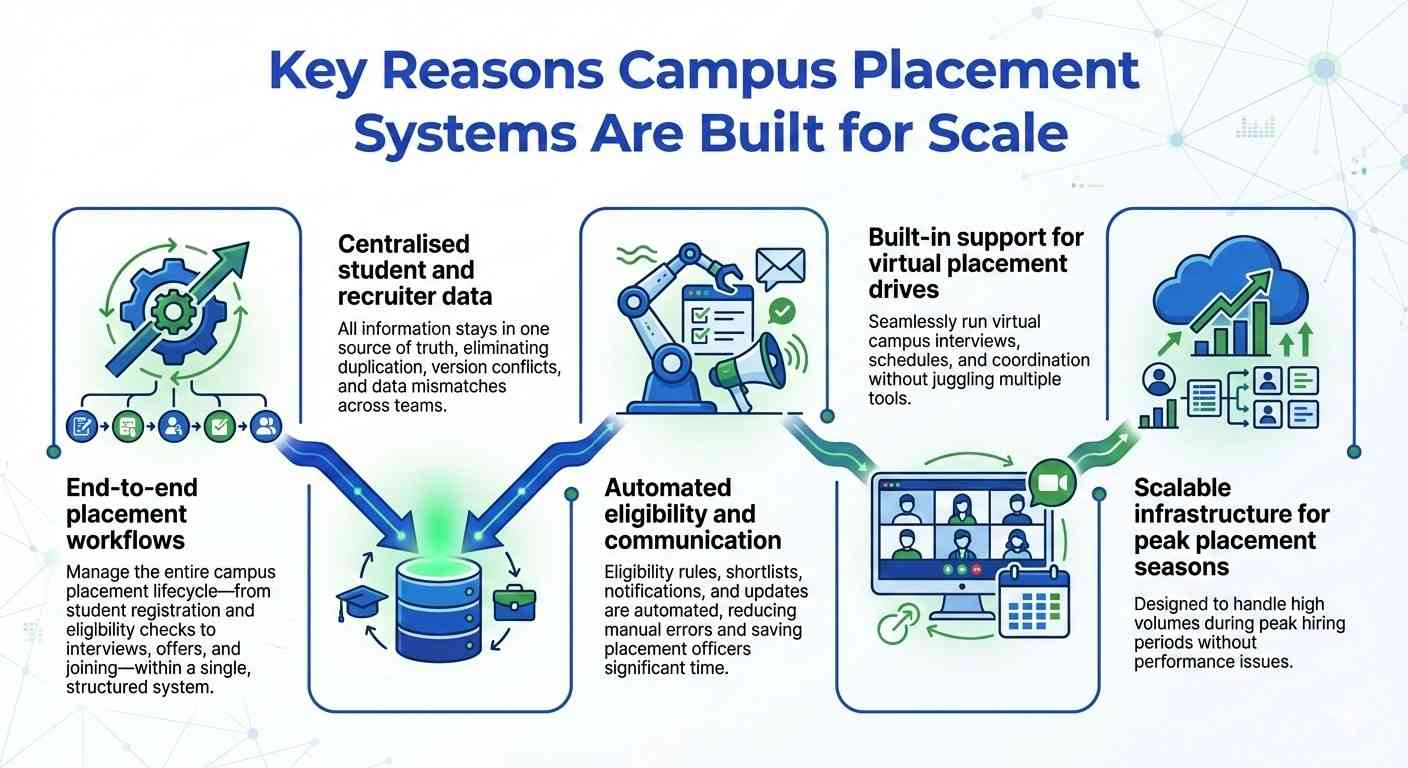
Campus recruitment involves multiple stages like sourcing, screening, outreach, and scheduling. AI brings all these workflows into a unified system.
This eliminates tool fragmentation and improves coordination across teams.
Recruiters get full visibility into the entire hiring pipeline.
- Unified hiring dashboard
- Reduced tool switching
- End-to-end workflow automation
Centralized workflows make large-scale student hiring more organized and efficient.
How Leelu.AI Helps Teams Scale Student Outreach Recruitment Efficiently
Scaling student outreach recruitment becomes significantly easier when teams use an AI-driven system that connects sourcing, screening, outreach, and scheduling in one workflow.
Leelu.ai is designed to reduce manual effort, improve speed, and help recruiters engage students at scale without losing personalization or quality.
Below is how Leelu.ai helps teams streamline student recruitment efficiently.
1. Source candidates from multiple platforms using AI automation
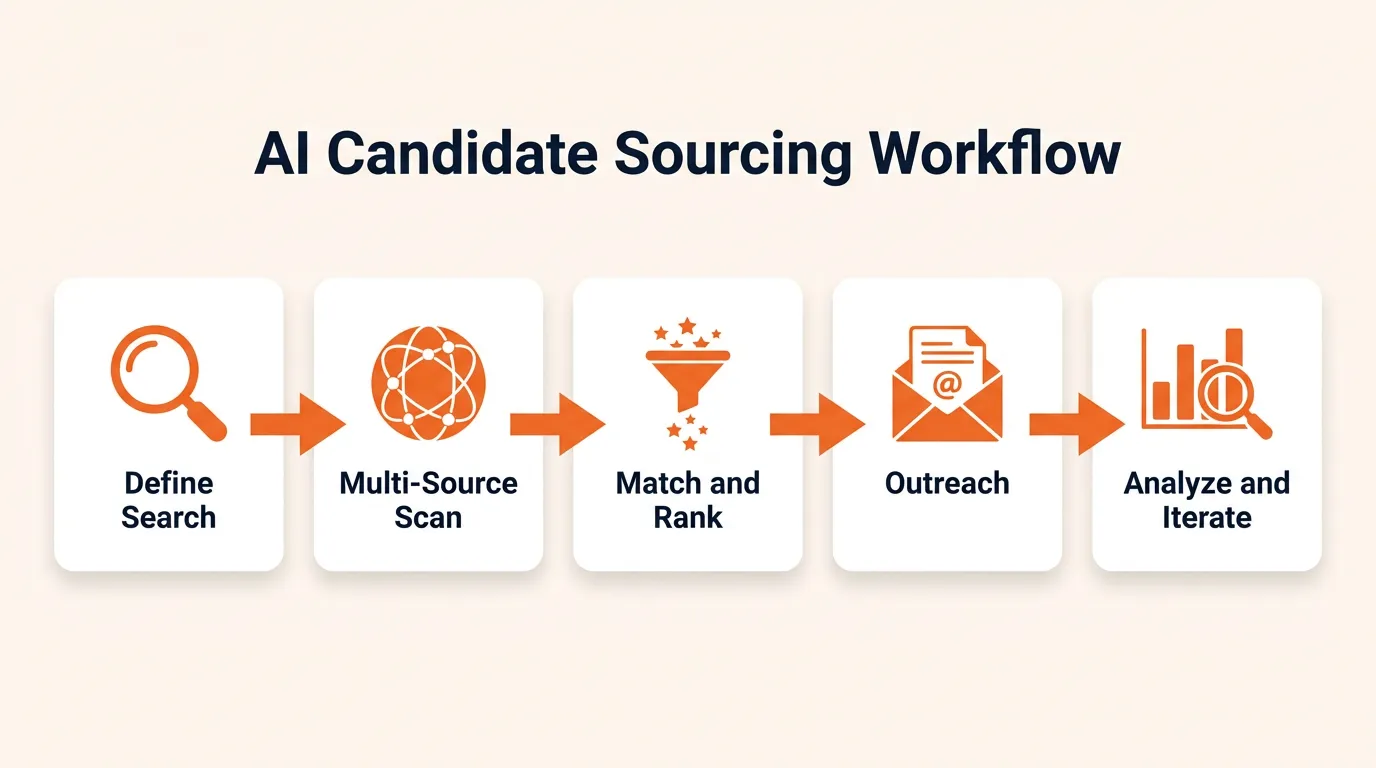
Leelu.ai enables recruiters to source student candidates from multiple platforms simultaneously without switching tools or running separate searches.
It scans large talent pools across LinkedIn, job boards, and ATS systems to find relevant candidates based on job requirements.
This expands reach and ensures recruiters can access high-quality student talent faster.
- Access to large-scale candidate databases
- Multi-platform sourcing in one workflow
- Faster discovery of campus talent
By automating sourcing, teams reduce manual search time and improve hiring speed significantly.
2. Automate candidate screening and shortlisting workflows
Screening large volumes of student applications can slow down campus hiring significantly. Leelu.ai automates this process by parsing resumes and evaluating candidates instantly.
It ranks candidates based on job fit, skills, and relevance to ensure only the most suitable profiles move forward.
This helps recruiters focus on high-quality candidates instead of manual filtering.
- Instant resume parsing and scoring
- Automated ranking of candidates
- Higher accuracy in shortlisting
With AI-driven screening, recruitment teams save time and improve decision-making quality.
3. Personalize outreach and follow-ups at scale
Students are more likely to respond when communication feels personalized and relevant. Leelu.ai enables recruiters to send tailored messages at scale without manual effort.
It adapts outreach based on candidate profiles, interests, and job alignment.
Follow-ups are also automated, ensuring consistent engagement across the entire pipeline.
- Personalized messaging for each candidate
- Automated follow-up sequences
- Higher response and engagement rates
This ensures stronger communication and improved candidate conversion.
4. Engage students with AI-driven communication workflows
Maintaining consistent communication during campus hiring is critical. Leelu uses AI workflows to engage students 24/7 across different stages of recruitment.
It handles queries, updates, and follow-ups without recruiter intervention.
This ensures candidates stay informed and engaged throughout the process.
- Always-on candidate engagement
- Instant responses to queries
- Reduced drop-offs during hiring stages
AI-driven engagement improves candidate experience and reduces communication delays.
5. Manage sourcing, outreach, and scheduling in one platform
Campus hiring often becomes complex when teams use multiple tools for sourcing, outreach, and scheduling. Leelu.ai brings everything into one unified platform.
Recruiters can manage the entire hiring journey from a single dashboard.
This eliminates fragmentation and improves coordination across teams.
- Unified recruitment workflow
- Centralized candidate tracking
- Seamless coordination across hiring stages
With everything in one place, teams can scale student outreach recruitment more efficiently.
Common Mistakes to Avoid in Student Outreach Recruitment
Even with advanced tools, many recruitment teams struggle because of outdated practices and inconsistent execution. Avoiding these mistakes is essential for improving hiring outcomes.
1. Relying only on manual campus hiring processes
Manual hiring processes slow down recruitment and limit scalability. Teams relying only on manual sourcing and screening often miss high-quality candidates.
AI automation is essential to keep up with large-scale student hiring demands.
2. Sending generic outreach messages to all students
Generic messages often lead to low engagement and poor response rates. Students expect communication that reflects their skills and interests.
Personalized outreach significantly improves conversion and engagement.
3. Delaying communication during campus hiring drives
Slow responses can cause candidates to lose interest or accept other offers. Delayed communication negatively impacts candidate experience.
Fast, consistent engagement is critical in campus recruitment cycles.
4. Using disconnected tools across recruiting workflows
Using separate tools for sourcing, screening, and scheduling creates inefficiencies and data gaps.
A unified system improves visibility and reduces operational friction.
5. Ignoring candidate experience during student recruitment
Candidate experience directly impacts employer brand perception among students. Poor communication, slow processes, and unclear updates reduce trust.
A smooth, transparent process improves engagement and long-term hiring success.
Conclusion
Student outreach recruitment is rapidly shifting toward faster, more intelligent, and highly scalable hiring systems.
Traditional manual approaches often struggle to keep up with the volume, speed, and personalization required in modern campus hiring environments.
AI helps bridge this gap by improving sourcing efficiency, enhancing candidate engagement, and accelerating hiring decisions across the entire recruitment funnel.
With the right AI-powered systems, teams can reduce effort, improve accuracy, and consistently hire better student talent at scale.
Platforms like Leelu.ai unify sourcing, screening, outreach, and scheduling into one streamlined workflow, making campus recruitment more efficient and outcome-driven.
Frequently Asked Questions
1. What is student outreach recruitment?
It is the process of connecting with potential students, sharing course details, and guiding them through admissions using emails, calls, social media, and other channels.
2. How does AI improve student outreach recruitment?
AI helps by finding the right students faster, sending personalized messages, automating follow-ups, and improving response tracking across multiple channels.
3. Can AI replace human recruiters in student admissions?
No. AI supports recruiters by handling repetitive tasks, but humans are still needed for conversations, decision-making, and final admissions.
4. What are the biggest benefits of using AI in student recruitment?
Faster communication, better targeting of students, higher conversion rates, and reduced manual work for admission teams.
5. Is AI recruitment suitable for small colleges or only large institutions?
It works for both. Small colleges can use AI to save time and scale outreach, while large institutions use it to manage high volumes efficiently.


