![15 Recruiting Funnel Metrics Every Team Should Track [+ How to Improve]](https://ghost.leelu.ai/content/images/2026/05/Recruiting-Funnel-Metrics-Every-Team-Should-Track_D.jpg)
Tracking recruiting funnel metrics helps you understand where candidates drop off and how efficiently your hiring process performs overall today.
It gives visibility into sourcing, screening, interview, and offer stages so you can identify bottlenecks slowing down hiring success quickly.
With clear data, recruiters can improve conversion rates, reduce time to hire, and build stronger candidate experiences across stages efficiently.
In this guide, you will explore fifteen key metrics and practical ways to improve your recruiting funnel performance today effectively.
Benefits of Tracking Recruiting Funnel Metrics
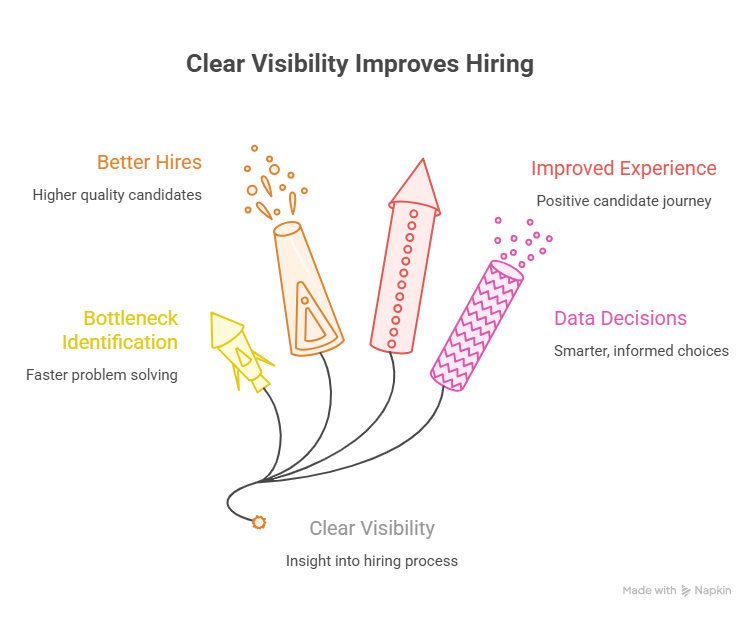
Tracking recruiting funnel metrics improves hiring visibility, identifies bottlenecks early, enhances candidate quality, and enables faster, data-driven, more efficient hiring decisions.
1. Clear Visibility Into Hiring Performance
Clear visibility into hiring performance allows you to see how candidates move through each stage, from sourcing to final offer, in real time tracking effectively.
It helps recruiters understand conversion rates at every step, ensuring no hidden gaps exist in the hiring funnel that slow recruitment outcomes significantly overall process.
2. Faster Identification of Bottlenecks
Faster identification of bottlenecks helps teams quickly detect where candidates drop off in the hiring process, whether during screening, interviews, or final selection stages clearly.
This insight allows recruiters to fix issues faster, optimize workflows, and ensure smoother transitions between hiring stages without unnecessary delays or confusion affecting outcomes overall.
3. Better Quality of Hires
Better quality of hires improves overall team performance by ensuring candidates match both skill requirements and cultural expectations within the organization more consistently long term.
It reduces turnover rates and improves long term retention by bringing in candidates who are better aligned with role expectations and company goals overall success.
4. Improved Candidate Experience
Improved candidate experience ensures applicants feel engaged, informed, and respected throughout the hiring process, increasing their willingness to complete every stage smoothly without unnecessary friction.
This creates a positive employer brand perception, helping organizations attract stronger talent while maintaining consistent communication and faster responses during recruitment interactions across stages.
5. Smarter, Data-Driven Decisions
Smarter, data-driven decisions allow recruiting teams to rely on real insights rather than assumptions, improving accuracy in hiring strategy and workforce planning significantly over time.
With consistent funnel metrics, leaders can forecast hiring needs, optimize budgets, and continuously refine recruitment processes for better efficiency and long term success planning accuracy.
Top-of-Funnel Metrics (Awareness & Attraction)
At this stage, you are measuring visibility, engagement, and initial interest so you can understand which channels bring the strongest talent and where improvements are needed.
1. Career Page Conversion Rate
Career page conversion rate shows how many visitors to your career page actually become applicants, helping you understand if your job content is engaging enough to drive action.
When this rate is low, it usually means your messaging, job clarity, or page experience needs improvement to better guide candidates toward applying.
Key areas to improve include:
- Clear and compelling job descriptions
- Easy application flow without friction
- Strong employer branding and trust signals
2. Job View to Application Rate
Job view to application rate measures how many people who view your job posting actually complete the application process successfully.
This metric highlights whether your job listings are convincing enough to turn interest into action or if candidates are dropping off midway.
Improvement focus areas:
- Simplify application forms for faster completion
- Make job requirements more transparent
- Ensure mobile-friendly application experience
3. Source of Hire
Source of hire identifies which channels, like LinkedIn, job boards, referrals, or ATS systems, are producing your final successful candidates.
This helps you understand where your best talent is coming from so you can invest more in high-performing recruitment channels.
You can optimize by:
- Tracking performance of each hiring channel
- Scaling sources that deliver high-quality candidates
- Reducing spend on low-performing platforms
4. Candidate Traffic by Channel
Candidate traffic by channel shows how many potential applicants are coming from each sourcing platform or marketing channel over time.
It helps you see where awareness is strongest and which channels are underperforming in attracting early-stage candidates.
To improve results:
- Focus on high-traffic channels for visibility
- Test new sourcing platforms regularly
- Balance paid and organic recruitment efforts
5. Cost per Click (CPC) for Job Ads
Cost per click for job ads measures how much you spend each time a candidate clicks on your job advertisement across paid platforms.
It helps you evaluate the efficiency of your recruitment marketing budget and understand if your ads are reaching the right audience.
Ways to optimize CPC include:
- Improving ad targeting and keywords
- Refining job titles and descriptions for clarity
- Testing different platforms for cost efficiency
Suggested Reading:
Candidate Sourcing ChannelsApplication Stage Metrics
Application stage metrics help you understand how smoothly candidates complete the application process and where they may lose interest or drop off during submission.
These insights are important because this stage directly impacts the quality and quantity of your candidate pipeline moving forward into interviews and hiring decisions.
6. Application Completion Rate
Application completion rate measures how many candidates who start an application actually finish and submit it successfully to your hiring system.
It shows whether your application process is simple enough or too complex, which can directly affect the number of candidates reaching your pipeline.
To improve this metric:
- Simplify forms and reduce unnecessary fields
- Enable one-click or autofill applications
- Ensure mobile-friendly application experience
7. Drop-off Rate During Application
Drop-off rate during application shows how many candidates abandon the process before completing their job application submission entirely.
It helps you identify friction points where candidates lose interest, such as long forms, unclear instructions, or technical issues during submission.
Key improvement actions:
- Reduce application steps to minimum required
- Improve page speed and usability
- Clearly show progress indicators during application
8. Qualified Candidate Rate
Qualified candidate rate measures how many applicants meet the job requirements after completing the application process successfully.
This metric helps recruiters understand if job postings are attracting the right talent or generating too many irrelevant applications overall.
To improve quality:
- Write clearer job descriptions with specific requirements
- Use AI-based screening tools for better matching
- Target job ads to relevant candidate segments
9. Time to Apply
Time to apply measures how long it takes for a candidate to complete and submit a job application after opening the job listing.
A shorter time usually indicates a simple and efficient application process, while longer times suggest complexity or friction in the flow.
Ways to optimize:
- Reduce form complexity and required fields
- Allow social or resume-based quick applications
- Improve UX for faster navigation and submission
Screening and Shortlisting Metrics
Screening and shortlisting metrics help you evaluate how quickly and effectively candidates are reviewed, filtered, and moved toward interview stages in the hiring process.
This stage is critical because it directly determines hiring speed, recruiter workload, and the quality of candidates entering final interview rounds.
10. Resume Screening Time
Resume screening time measures how long recruiters or systems take to review and evaluate each candidate’s resume after it enters the hiring pipeline.
It reflects the efficiency of your screening process and shows whether manual effort or automation is slowing down early-stage candidate evaluation.
To improve this metric:
- Use AI-based resume parsing tools
- Automate initial candidate filtering
- Standardize evaluation criteria for faster decisions
11. Screening-to-Interview Ratio
Screening-to-interview ratio shows how many screened candidates are selected for interviews, helping you understand the effectiveness of your screening quality.
A balanced ratio ensures you are neither overloading interview stages nor rejecting too many potentially strong candidates too early in the process.
Ways to optimize:
- Improve job requirement clarity for better screening
- Use structured scoring systems for evaluation
- Align recruiters on consistent shortlisting standards
12. Candidate Response Time
Candidate response time measures how quickly candidates respond after being contacted or moved forward in the screening process.
Faster responses usually indicate strong interest and engagement, while delays may suggest weak communication or poor candidate experience during outreach.
To improve response time:
- Send clear and personalized communication
- Use automated follow-ups for reminders
- Engage candidates through multiple channels consistently
Interview Stage Metrics
Interview stage metrics help you understand how efficiently candidates progress through interviews and how effectively your hiring team converts interviews into final job offers.
This stage is crucial because it directly reflects decision-making speed, candidate experience quality, and overall hiring effectiveness in closing roles successfully.
13. Interview-to-Offer Ratio
Interview-to-offer ratio measures how many interviewed candidates successfully convert into job offers, showing how effective your interviews are in identifying the right talent.
A low ratio may indicate poor candidate screening, unclear role expectations, or misalignment between interview evaluation and job requirements overall process quality.
To improve this metric:
- Standardize interview scoring criteria
- Train interviewers for consistent evaluation
- Align interview questions with job requirements
14. Interview No-Show Rate
Interview no-show rate tracks how many candidates fail to attend scheduled interviews without prior notice or rescheduling communication from their side.
A high no-show rate often signals weak candidate engagement, poor communication, or delays between scheduling and interview execution in the hiring process.
Ways to reduce no-shows:
- Send automated reminders before interviews
- Improve candidate engagement through consistent updates
- Reduce long gaps between scheduling and interview dates
15. Time Between Interview Rounds
Time between interview rounds measures the gap between one interview stage and the next, showing how quickly candidates move through your hiring pipeline.
Long delays can lead to candidate drop-off, while shorter cycles improve engagement and help secure top talent before competitors do.
To optimize timing:
- Streamline interview scheduling across teams
- Use automated calendar coordination tools
- Prioritize faster decision-making between rounds
Offer and Hiring Metrics
Offer and hiring metrics help you measure how efficiently your recruitment process converts shortlisted candidates into final hires while maintaining cost effectiveness and speed across the funnel.
These metrics are essential because they reflect the final success of your hiring pipeline, showing how quickly and effectively you secure top talent for your organization.
1. Offer Acceptance Rate
Offer acceptance rate measures how many candidates accept your job offer after receiving it, indicating how attractive your compensation, role, and employer brand are.
A low acceptance rate may suggest issues with salary alignment, delayed offer communication, or stronger competing offers from other companies in the market.
To improve this metric:
- Align compensation with market standards
- Speed up offer communication after interviews
- Strengthen employer branding and candidate engagement
2. Time to Hire
Time to hire tracks the total duration from when a candidate enters your pipeline to when they accept a job offer, showing overall hiring speed.
Long hiring cycles can lead to losing top candidates, while faster processes improve competitiveness and help secure talent before other employers do.
Ways to optimize:
- Streamline interview and approval workflows
- Reduce delays between hiring stages
- Use automation for scheduling and coordination
3. Cost per Hire
Cost per hire measures the total expense involved in recruiting a new employee, including sourcing, advertising, tools, and recruiter effort.
This metric helps you understand hiring efficiency and identify areas where recruitment spending can be optimized without compromising candidate quality.
To reduce cost per hire:
- Focus on high-performing sourcing channels
- Automate repetitive recruiting tasks
- Improve candidate quality early in the funnel
How to Improve Recruiting Funnel Performance
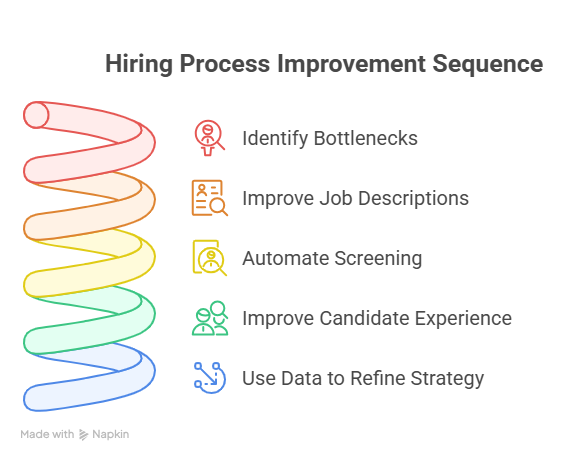
improve Recruiting Funnel Performance by fixing bottlenecks, enhancing job targeting, automating workflows, and using data to continuously optimize hiring outcomes effectively.
1. Identify Bottlenecks in Each Stage
Identifying bottlenecks in each stage helps you understand exactly where candidates slow down or drop off in your hiring funnel, affecting overall conversion rates.
Once you pinpoint problem areas, you can take targeted actions instead of making broad changes that don’t solve real hiring inefficiencies.
Key focus areas include:
- High drop-off stages in the funnel
- Delays between screening and interviews
- Low conversion from interviews to offers
2. Improve Job Descriptions and Targeting
Improving job descriptions and targeting ensures you attract the right candidates from the beginning, reducing irrelevant applications and improving overall hiring quality.
Clear and well-structured job posts help candidates understand expectations better, leading to stronger engagement and higher application completion rates.
To improve effectiveness:
- Write clear role expectations and requirements
- Use targeted keywords for better reach
- Focus job ads on relevant candidate segments
3. Automate Screening and Scheduling
Automating screening and scheduling helps reduce manual workload, speed up decision-making, and ensure candidates move quickly through the hiring pipeline.
Automation also reduces delays between stages, which helps maintain candidate interest and improves overall hiring efficiency significantly.
Automation strategies include:
- AI-based resume screening tools
- Automated interview scheduling systems
- Smart candidate ranking models
4. Improve Candidate Experience
Improving candidate experience ensures applicants stay engaged throughout the hiring process and reduces the chances of drop-offs at any stage.
A positive experience increases the likelihood of candidates accepting offers and improves your employer brand in competitive hiring markets.
Ways to improve experience:
- Maintain clear and timely communication
- Reduce unnecessary application steps
- Provide consistent updates at every stage
5. Use Data to Refine Hiring Strategy
Using data to refine hiring strategy allows you to make informed decisions based on real funnel performance instead of assumptions or guesswork.
This helps continuously improve hiring efficiency, reduce cost per hire, and optimize sourcing channels for better long-term recruitment success.
Key actions include:
- Track funnel metrics regularly
- Analyze source performance trends
- Continuously adjust hiring strategies based on insights
How Leelu.ai Helps Optimize Recruiting Funnel Metrics
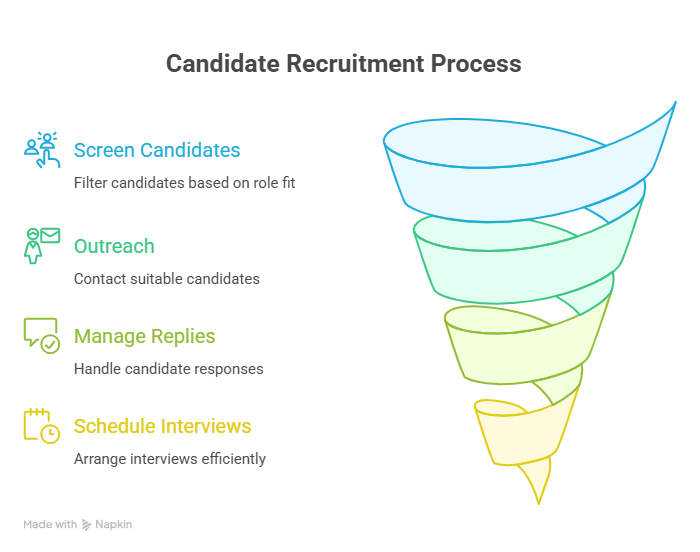
Leelu.ai streamlines the entire recruitment funnel by reducing manual effort at every stage while improving candidate quality, engagement, and conversion rates through AI-driven workflows.
1. Sources Candidates from Multiple Job Boards
Leelu.ai sources candidates from multiple job boards, ensuring recruiters get access to a wide and diverse talent pool without manually searching each platform individually.
It connects with platforms like LinkedIn, Indeed, Monster, and ATS systems to bring all candidates into one unified sourcing flow for faster hiring decisions.
Key benefits include:
- Access to 500M+ candidate profiles
- Faster sourcing across multiple platforms
- Reduced manual searching effort
2. Screens Candidates Automatically Based on Role Fit
Leelu.ai automatically screens candidates by analyzing resumes and matching them against job requirements to identify the most relevant profiles quickly and accurately.
This ensures recruiters only focus on high-quality candidates instead of spending hours reviewing irrelevant applications manually during early screening stages.
How it helps:
- AI-based resume parsing and scoring
- Faster shortlisting of top candidates
- Improved match accuracy for roles
3. Sends Outreach and Manages Candidate Replies
Leelu.ai sends personalized outreach messages to candidates and manages all replies automatically, keeping communication active and consistent throughout the hiring process.
This helps recruiters engage candidates at scale while ensuring no responses are missed, delayed, or lost in manual communication workflows.
Key improvements:
- Personalized multi-channel outreach
- Automated follow-ups and responses
- Higher candidate engagement rates
4. Schedules Interviews Without Manual Back-and-Forth
Leelu.ai automates interview scheduling by syncing calendars and coordinating availability between recruiters and candidates without any manual coordination effort.
This removes delays caused by back-and-forth emails and ensures interviews are scheduled quickly, improving overall hiring speed and candidate experience significantly.
Benefits include:
- Instant calendar-based scheduling
- Reduced coordination delays
- Faster movement across interview stages
Suggested Reading:
Talent Sourcing PlatformsCommon Mistakes to Avoid When Tracking Metrics
Avoiding these mistakes ensures your recruiting funnel metrics stay meaningful, actionable, and directly connected to improving hiring speed, quality, and overall efficiency across stages.
1. Tracking Too Many Metrics
Tracking too many metrics creates confusion and makes it harder for recruitment teams to focus on what truly impacts hiring performance and decision-making.
Instead of improving clarity, it often leads to scattered attention, where important insights get missed and teams struggle to prioritize meaningful hiring improvements effectively.
Key issues include:
- Data overload without actionable focus
- Difficulty identifying priority metrics
- Reduced decision-making speed and clarity
2. Ignoring Data Insights
Ignoring data insights means collecting recruiting metrics but not using them to improve hiring decisions, which reduces the overall value of tracking performance.
When insights are not acted upon, hiring problems continue unresolved, and teams miss opportunities to optimize sourcing, screening, and candidate engagement strategies effectively.
What happens when ignored:
- Repeated hiring inefficiencies
- Poor funnel optimization outcomes
- Slower improvement in recruitment performance
3. Not Aligning Metrics with Hiring Goals
Not aligning metrics with hiring goals leads to tracking numbers that do not reflect actual business needs or recruitment success priorities effectively.
This misalignment causes confusion in decision-making and prevents teams from focusing on the metrics that truly drive better hiring outcomes and talent quality.
Common mistakes include:
- Tracking irrelevant KPIs
- Misaligned hiring priorities
- Lack of strategic focus in reporting
4. Relying Only on Manual Processes
Relying only on manual processes slows down metric tracking and increases the chances of errors, delays, and inconsistent reporting across recruitment teams.
Manual tracking also limits scalability, making it difficult to manage large candidate pipelines efficiently or gain real-time insights into hiring performance trends.
Key challenges:
- Time-consuming data collection
- Higher risk of human error
- Lack of real-time visibility into metrics
Conclusion
Tracking recruiting funnel metrics helps you understand hiring performance better and improve every stage from sourcing to final offer conversion effectively.
When you focus on the right metrics, you can reduce delays, improve candidate quality, and create a smoother hiring experience across your entire recruitment process.
Consistent optimization ensures better decision-making and faster hiring outcomes that align with your business goals and long-term talent needs.
With platforms like Leelu.ai, you can automate sourcing, screening, and hiring workflows to make your recruiting funnel more efficient, data-driven, and scalable.
Frequently Asked Questions
1. How often should recruiting funnel metrics be reviewed?
Recruiting funnel metrics should be reviewed regularly—weekly for active hiring roles and monthly for overall trends. Frequent tracking helps you catch issues early and make quick adjustments.
2. Which recruiting funnel metric is the most important?
There isn’t a single most important metric. It depends on your hiring goals. However, conversion rates between stages and time-to-hire are usually the most critical for identifying inefficiencies.
3. How can small teams track recruiting metrics without complex tools?
Small teams can start with simple tools like spreadsheets or basic ATS reports. The key is consistency in tracking a few important metrics rather than trying to measure everything at once.
4. What is a good benchmark for candidate drop-off rate?
A good drop-off rate varies by industry, but generally, a high drop-off during the application stage signals issues like long forms or poor user experience. Keeping it below 30–40% is often a good target.
5. How do recruiting funnel metrics impact long-term hiring success?
These metrics help you refine your hiring process over time. By improving each stage of the funnel, you not only hire faster but also improve candidate quality and retention in the long run.