
Hiring today isn't just about finding candidates when a position opens. It's about building relationships with talented professionals long before you need them.
Think about the last time a highly qualified candidate declined your offer or accepted another opportunity before you could complete the hiring process.
Chances are, another company stayed connected with them, built trust, and engaged them consistently throughout their job search.
That's why recruiters are shifting from transactional hiring to relationship-driven recruiting. Instead of viewing every interaction as a one-time conversation, they're investing in long-term engagement that creates stronger talent pipelines and improves hiring outcomes.
Candidate relationship management helps recruiters stay connected with both active and passive candidates, making future hiring faster, more personalized, and more effective.
In this guide, you'll learn:
- The candidate relationship management definition
- How candidate relationship management differs from candidate management in recruitment
- How candidate relationship management works
- The role of candidate relationship management systems
- Best practices and AI tools that simplify relationship building
Candidate Relationship Management Definition
Let's start with the basics.
The candidate relationship management definition refers to the process of building, maintaining, and strengthening relationships with potential candidates throughout their hiring journey—even when there isn't an immediate job opportunity available.
Unlike traditional recruiting, where communication often begins after a vacancy is posted, candidate relationship management focuses on continuous engagement.
Recruiters nurture relationships with qualified professionals, keep them informed about future opportunities, and create positive experiences that encourage them to stay connected with the organization.
You can think of it as talent nurturing rather than talent hunting.
Instead of searching for candidates every time a new position opens, recruiters develop a network of professionals who already know the company, understand its culture, and are more likely to respond when the right opportunity becomes available.
This approach is especially valuable when recruiting for highly competitive roles where qualified candidates are difficult to find.
Candidate relationship management typically involves:
- Building and maintaining talent pools
- Recording candidate interactions and communication history
- Sending personalized updates and follow-ups
- Keeping passive candidates engaged
- Re-engaging previous applicants for future openings
- Delivering a consistent candidate experience
The goal isn't simply to fill today's vacancy. It's to create lasting relationships that support future hiring needs while strengthening your employer brand.
Candidate Management in Recruitment vs Candidate Relationship Management
At first glance, these two terms may seem interchangeable. After all, both involve working with candidates throughout the hiring process.
However, candidate management in recruitment and candidate relationship management serve different purposes.
Candidate management focuses on guiding applicants through an active hiring process. It includes reviewing resumes, scheduling interviews, collecting feedback, and moving candidates through different recruitment stages until a hiring decision is made.
Candidate relationship management takes a broader approach. Rather than concentrating only on open roles, it focuses on creating ongoing relationships with both current and future candidates.
The two approaches complement each other rather than compete.
For example, imagine a recruiter interviews a skilled software engineer but ultimately hires another candidate. With traditional candidate management, the process usually ends there.
With candidate relationship management, the recruiter continues nurturing that relationship by sharing relevant opportunities, company updates, or industry insights.
When another suitable role becomes available months later, the recruiter already has an engaged candidate who is familiar with the organization.
This proactive approach reduces sourcing time while creating a stronger hiring pipeline.
Key Features of Candidate Relationship Management Systems
While different platforms offer different capabilities, the best candidate relationship management systems share several core features that simplify relationship building throughout the recruitment process.
Centralized Candidate Profiles
Recruiters often receive candidate information from multiple sources, including job boards, LinkedIn, employee referrals, career pages, and recruitment events.
Without a centralized system, this information quickly becomes scattered across spreadsheets, emails, and multiple recruiting tools.
Candidate relationship management systems bring everything together into a unified profile. Recruiters can access resumes, contact details, skills, interview feedback, communication history, and hiring status from one location.
Having a complete view of every candidate makes future conversations more personalized and eliminates the need to search across multiple platforms.
Suggested Reading:
How to Set Up Recruiting Email Automation for Faster Hiring ProcessTalent Pool Management
Not every qualified candidate is ready to switch jobs immediately.
Some candidates may be interested in future opportunities, while others might be suitable for roles opening months later.
Instead of losing contact with these professionals, recruiters can organize them into dedicated talent pools.
Candidates can be grouped based on factors such as:
- Skills and expertise
- Department or job function
- Industry experience
- Geographic location
- Seniority level
- Certifications
- Future hiring requirements
Well-organized talent pools allow recruiters to quickly identify relevant candidates whenever new positions become available.
Automated Candidate Communication
Maintaining regular communication with hundreds of candidates manually is nearly impossible.
Candidate relationship management systems help automate repetitive communication while still allowing recruiters to personalize their messages.
Recruiters can automate:
- Welcome emails
- Follow-up reminders
- Job alerts
- Event invitations
- Interview confirmations
- Candidate nurturing campaigns
Automation reduces manual effort while ensuring candidates continue receiving timely and relevant updates throughout their journey.
Candidate Segmentation
Every candidate has different interests, skills, and career goals.
Sending the same message to everyone often leads to lower engagement.
Candidate segmentation allows recruiters to divide their talent database into smaller groups based on specific criteria.
For example, recruiters can target:
- Software developers
- Sales professionals
- Marketing specialists
- Entry-level candidates
- Executive leadership
- Remote job seekers
This enables highly relevant communication that resonates with each audience and improves response rates.
Interview and Activity Tracking
Strong candidate relationships rely on context.
Recruiters should know when they last contacted a candidate, what was discussed, and what the next step should be.
Candidate relationship management systems record activities such as:
- Phone calls
- Emails
- Interview feedback
- Recruiter notes
- Follow-up schedules
- Hiring stage updates
Having this history readily available helps recruiters continue conversations naturally instead of asking candidates to repeat information.
Analytics and Reporting
Successful recruiting isn't just about filling positions—it's also about continuously improving hiring strategies.
Most candidate relationship management systems include reporting dashboards that help recruiters understand what's working.
Common metrics include:
- Candidate response rates
- Email engagement
- Talent pool growth
- Time to hire
- Source effectiveness
- Recruitment pipeline performance
These insights help recruiting teams refine their outreach strategies and make more informed hiring decisions.
Benefits of Candidate Relationship Management
- Faster hiring: Access an existing talent pool instead of sourcing candidates from scratch.
- Better candidate experience: Keep candidates engaged with timely, personalized communication.
- Higher candidate engagement: Stay top of mind through consistent follow-ups and relevant updates.
- Stronger employer brand: Build trust and leave a positive impression on potential candidates.
- Improved recruiter productivity: Automate repetitive tasks and spend more time on strategic hiring.
- Stronger talent pipeline: Continuously nurture qualified candidates for current and future hiring needs.
How Candidate Relationship Management Works
Building meaningful candidate relationships doesn't happen through occasional emails or random follow-ups. It requires a structured process that helps recruiters engage candidates consistently throughout their journey.
Here's a step-by-step look at how candidate relationship management works.
Step 1: Build a Talent Pool
The first step is to identify and collect potential candidates from different sourcing channels.
These sources can include previous applicants, employee referrals, LinkedIn, job boards, career fairs, networking events, and your existing ATS database.
Instead of starting from scratch every time a position opens, recruiters continuously build a talent pool of qualified professionals who may be a good fit for current or future roles.
Having an engaged talent pool significantly reduces sourcing time and gives recruiters a head start whenever hiring needs arise.
Step 2: Organize and Segment Candidates
As your talent pool grows, organizing candidate information becomes essential.
Recruiters typically segment candidates based on factors such as:
- Skills and expertise
- Years of experience
- Industry background
- Job function
- Geographic location
- Seniority level
- Hiring readiness
Segmenting candidates makes it easier to send relevant communication instead of generic messages. When candidates receive opportunities that align with their interests and career goals, they're more likely to stay engaged.
Step 3: Engage Candidates Consistently
Candidate relationships shouldn't begin only when there's an open position.
Regular communication helps recruiters stay connected and build trust over time.
This engagement can include:
- Personalized job recommendations
- Company updates
- Industry insights
- Hiring event invitations
- Career resources
- Interview follow-ups
The objective isn't to constantly promote job openings but to provide value and maintain meaningful connections with potential candidates.
Step 4: Track Every Candidate Interaction
As candidates move through different stages of engagement, it's important to maintain a complete history of every interaction.
Recruiters should keep track of:
- Emails and messages
- Phone conversations
- Interview feedback
- Candidate preferences
- Follow-up schedules
- Previous applications
Having this information readily available allows recruiters to continue conversations naturally and provide a more personalized candidate experience.
Step 5: Re-engage Candidates When Opportunities Arise
When a new role becomes available, recruiters don't have to begin another lengthy sourcing process.
Instead, they can search their existing talent pool, identify candidates with the right skills, and reconnect with professionals who already know the company.
Since these candidates have interacted with the organization before, outreach feels more personalized and often results in higher response rates than cold sourcing.
This approach helps reduce time-to-hire while improving the overall candidate experience.
Step 6: Measure and Improve Your Strategy
Candidate relationship management is an ongoing process that should continuously evolve.
Recruiters should regularly monitor metrics such as candidate engagement, response rates, talent pool growth, interview conversions, and hiring outcomes.
These insights help identify what's working, where candidates are dropping off, and how communication strategies can be refined over time.
By following these steps, recruiters shift from reactive hiring to a proactive recruitment strategy. Instead of searching for talent only after vacancies arise, they continuously nurture relationships that create a strong pipeline of qualified candidates for future hiring needs.
Common Challenges in Candidate Relationship Management
While the benefits are significant, maintaining strong candidate relationships isn't always easy.
As hiring volumes increase, recruiters often face challenges that make consistent engagement difficult.
Managing Large Talent Databases
Recruiters may have thousands of candidate profiles collected from multiple hiring campaigns.
Without proper organization, finding the right candidate at the right time becomes difficult, causing recruiters to rely on new sourcing efforts instead of existing talent.
Time-Consuming Manual Follow-Ups
Following up with every candidate manually takes considerable time.
Between sourcing, screening, interviews, and administrative work, recruiters often struggle to maintain consistent communication with their talent pool.
Scattered Candidate Information
Candidate data is frequently spread across spreadsheets, email conversations, LinkedIn messages, applicant tracking systems, and recruitment tools.
Switching between multiple platforms makes it difficult to maintain complete candidate histories and increases the risk of missed follow-ups.
Maintaining Personalization at Scale
As talent pools grow, delivering personalized communication becomes increasingly challenging.
Generic outreach often results in lower engagement, while manually customizing every message is difficult for busy recruiting teams.
Re-engaging Passive Candidates
Many highly qualified professionals aren't actively looking for new opportunities.
Keeping these candidates interested over months—or even years—requires thoughtful communication and consistent relationship building, which can be difficult without the right technology.
These challenges explain why many recruiting teams are adopting AI-powered solutions that automate repetitive tasks while helping recruiters maintain meaningful candidate relationships.
How AI Simplifies Candidate Relationship Management with Leelu AI
Building relationships with candidates is essential, but doing it manually becomes difficult as your hiring pipeline grows.
Recruiters need to source talent, screen resumes, send personalized outreach, schedule interviews, and maintain consistent communication—all while managing multiple open positions.
This is where AI can make a meaningful difference.
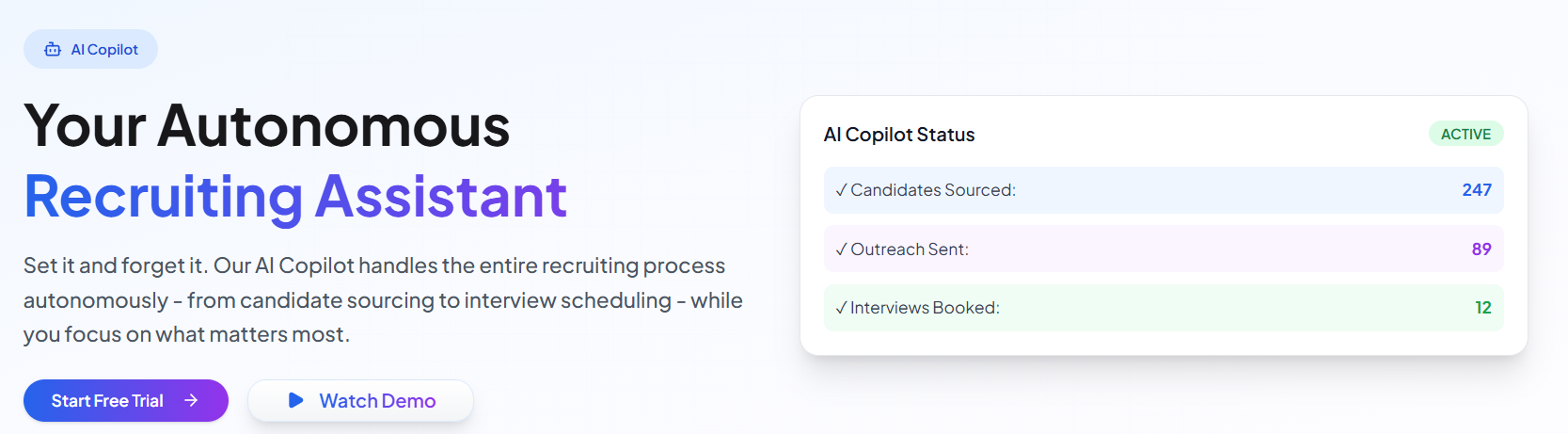
Leelu AI is an AI recruiting copilot designed to automate sourcing, screening, outreach, and interview scheduling while helping recruiters build stronger candidate relationships throughout the hiring process.
Instead of switching between multiple recruiting tools, Leelu brings key hiring activities together into a single workflow.
With Leelu AI, recruiters can:
- Source candidates from over 500 million profiles across LinkedIn, Indeed, Monster, CareerBuilder, and ATS platforms.
- Automatically screen and rank candidates based on job fit using AI-powered matching.
- Create personalized outreach campaigns across email and LinkedIn at scale.
- Automate follow-ups and candidate conversations to maintain engagement without constant manual effort.
- Schedule interviews automatically with calendar synchronization.
- Keep candidate information synchronized with existing ATS platforms.
- Monitor hiring performance through real-time recruitment analytics and pipeline insights.
By automating repetitive recruiting tasks, Leelu allows recruiters to spend more time building genuine relationships with candidates instead of managing administrative work.
The result is a faster hiring process, improved candidate engagement, and a stronger talent pipeline for future hiring needs.
Conclusion
Successful recruiting isn't just about filling today's vacancies. It's about creating relationships that make tomorrow's hiring easier.
By investing in candidate relationship management, recruiters can build engaged talent pools, improve candidate experiences, and reduce the time it takes to find qualified professionals when new roles open.
While strong communication and thoughtful engagement remain the foundation of relationship building, technology can make the process far more efficient.
Modern candidate relationship management systems, especially AI-powered platforms like Leelu AI, help recruiters automate repetitive tasks, maintain personalized communication, and focus on what matters most—building lasting relationships with great talent.
Frequently Asked Questions
What is candidate relationship management?
Candidate relationship management is the process of building and maintaining long-term relationships with candidates before, during, and after the hiring process. It helps recruiters create engaged talent pools that support future hiring.
What is a candidate relationship management system?
A candidate relationship management system is software that helps recruiters organize candidate information, manage communication, build talent pools, automate follow-ups, and nurture relationships with both active and passive candidates.
How is candidate relationship management different from an ATS?
An Applicant Tracking System (ATS) primarily manages candidates applying for current job openings. Candidate relationship management focuses on building ongoing relationships with potential candidates, including those who may be hired in the future.
Why is candidate relationship management important?
It helps recruiters reduce hiring time, improve candidate experience, strengthen employer branding, and maintain a qualified talent pipeline that can be accessed whenever new positions become available.
Can AI improve candidate relationship management?
Yes. AI can automate sourcing, screening, personalized outreach, follow-ups, interview scheduling, and candidate engagement, allowing recruiters to manage larger talent pools while maintaining a better candidate experience.