Hiring the right talent quickly often feels harder than it should, especially when active applicants are limited and competition is high.
That’s where passive candidate outreach becomes a game-changer, helping you tap into high-quality talent who aren’t actively applying but are open to the right opportunity.
In this guide, you’ll discover:
- Proven passive candidate outreach tactics
- Ways to improve response rates
- How to fill roles faster without relying only on job postings
Key Elements of Effective Passive Candidate Outreach
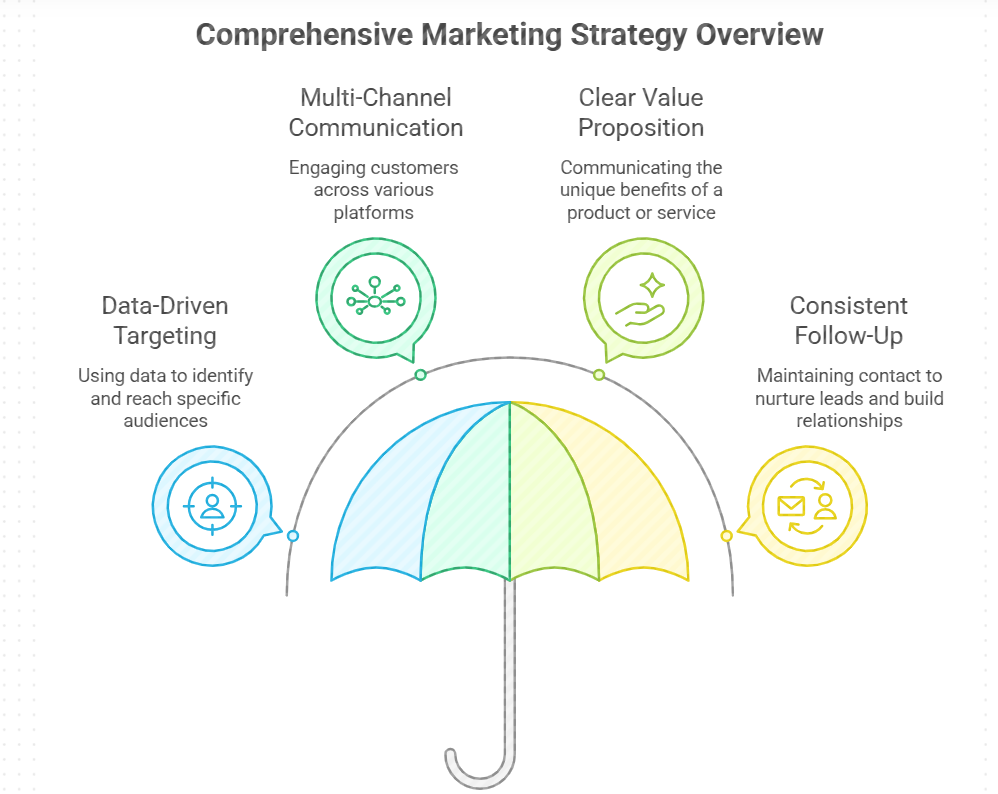
Once you understand why passive candidates matter, the next step is getting your outreach right.
It’s not just about sending messages, it’s about how thoughtfully you approach, engage, and build trust over time.
Here are the elements that make your outreach actually work.
1. Data-driven targeting and segmentation
If you reach out to everyone the same way, you’ll get ignored the same way.
Strong outreach starts with knowing exactly who you’re targeting and why they’re a good fit.
Instead of generic lists, segment candidates based on:
- Skills and experience level
- Industry or domain expertise
- Career stage and intent signals
- Location and work preferences
When your targeting is sharp, your message naturally feels more relevant and personal.
2. Multi-channel communication strategy
Relying on just one channel limits your chances of getting noticed.
Passive candidates are busy, and they may not respond where you expect them to.
A better approach is to meet them where they already are:
- LinkedIn messages for professional context
- Emails for detailed conversations
- Occasional follow-ups through alternate channels
The goal is not to spam, but to create multiple touchpoints that feel natural and well-timed.
3. Clear value proposition and role positioning
Passive candidates are not actively looking, so your message needs to give them a reason to care.
This is where most outreach fails — it focuses too much on the role and not enough on what the candidate gains.
Instead, clearly communicate:
- Why this opportunity is worth exploring
- What makes the role different or exciting
- How it aligns with their experience or goals
When your positioning is clear, curiosity does the rest of the work.
4. Consistent follow-up systems
Most responses don’t come from the first message.
They come from thoughtful, well-timed follow-ups that show genuine interest without being pushy.
A strong follow-up system should include:
- 2–3 spaced follow-up messages
- Slight variations in messaging each time
- Clear intent in every touchpoint
Consistency builds familiarity, and familiarity builds replies.
5. Long-term relationship building approach
Not every passive candidate will convert immediately, and that’s completely fine.
The real value comes from building relationships that you can tap into later.
Think beyond immediate hiring and focus on:
- Staying in touch with promising candidates
- Sharing relevant updates or opportunities
- Building a warm talent pool over time
When you treat outreach as relationship-building instead of a transaction, hiring becomes much faster and easier in the long run.
13 Passive Candidate Outreach Tactics to Fill Roles Quickly
Now that you understand the strategy behind outreach, the next step is applying it in a way that consistently brings responses.
These tactics are designed to help you connect with the right candidates faster while making your outreach feel relevant, thoughtful, and worth responding to.
1. Use AI to source and automate outreach at scale
When you try to manually source and message candidates, it quickly becomes overwhelming and slows down your hiring process.
By using AI, you can identify and reach a much larger pool of relevant candidates without increasing your effort.
Instead of searching manually, tools like Leelu.AI can scan 500M+ candidate profiles across platforms and surface the most relevant matches quickly.
You can also automate outreach by sending hundreds of personalized messages daily, while maintaining a consistent candidate experience.
This helps you stay consistent with outreach while freeing up your time to focus on conversations that actually move candidates forward.
2. Build highly targeted candidate lists using data filters
If your candidate list is too broad, your outreach will feel generic and easy to ignore.
By using filters like skills, experience, location, and intent signals, you can narrow down to candidates who are more likely to be a good fit.
This makes your outreach more relevant and improves your chances of getting responses quickly.
3. Use highly personalized outreach messages based on candidate profiles
When you receive a message that clearly feels copied and pasted, you’re likely to ignore it.
Passive candidates think the same way when outreach lacks personalization and context.
By referencing their experience, projects, or achievements, you make your message feel intentional, which increases the likelihood that they will engage with you.
4. Leverage LinkedIn and social platforms for direct engagement
Most passive candidates spend time on platforms like LinkedIn even if they are not actively job hunting.
This creates an opportunity for you to connect with them in a more natural and less intrusive way.
Engaging with their content or sending thoughtful messages helps you build familiarity before introducing any opportunity.
5. Use multi-step outreach sequences (email + LinkedIn + follow-ups)
You don’t usually respond to the first message you receive, and candidates behave in a similar way.
A structured outreach sequence helps you stay visible without being overwhelming or repetitive.
By combining email, LinkedIn, and follow-ups, you create multiple touchpoints that increase your chances of getting noticed and receiving a reply.
6. Use mutual connections and referrals for warm introductions
Cold outreach can work, but it often takes more effort to build trust from the beginning.
When you reach out through a mutual connection, the conversation starts with more credibility and familiarity.
Referrals make your message feel more trustworthy, increasing the chances that candidates will respond and take the opportunity seriously.
7. Highlight role impact instead of just responsibilities
Most outreach messages focus heavily on job responsibilities, which often feel repetitive and uninspiring.
What actually captures attention is understanding how your work will create impact and growth.
When you highlight outcomes and opportunities, candidates can better visualize their role and feel more interested in exploring it further.
8. Use multi-channel outreach sequences across platforms
Not every candidate checks the same platform regularly, which can limit your visibility if you rely on just one.
By spreading your outreach across multiple channels, you increase the chances of your message being seen.
This approach also gives candidates flexibility to respond on the platform they are most comfortable using.
9. Engage candidates with relevant content before pitching roles
If you immediately pitch a job, it can feel transactional and easy to dismiss.
A better approach is to build context and credibility before making your ask.
Sharing relevant insights or useful content helps you create value first, making your outreach feel more natural and engaging.
10. Optimize outreach timing based on candidate behavior
Timing plays a bigger role in outreach success than most people realize.
If your message reaches candidates when they are inactive, it can easily get lost in their inbox.
By testing different days and times, you can identify when your audience is most responsive and improve your chances of getting replies.
11. Track engagement data and refine outreach continuously
Without tracking performance, it becomes difficult to understand what’s working and what isn’t.
Metrics like open rates, response rates, and conversions provide clear insights into your outreach effectiveness.
By refining your approach based on data, you can continuously improve results and make your outreach more impactful over time.
12. Re-engage past candidates and existing talent pools
You don’t always need to start from zero when filling a role.
Candidates you’ve already interacted with are often more open to hearing from you again.
Re-engaging these candidates helps you move faster since there is already some level of trust and familiarity built from previous conversations.
13. Build long-term talent pipelines instead of one-off outreach
If you only focus on immediate hiring needs, you will keep repeating the same outreach process again and again.
Building a long-term talent pipeline allows you to stay connected with potential candidates over time.
This means when a role opens, you already have a group of engaged candidates ready, making hiring faster and more efficient.
How Leelu.AI Helps You Automate and Scale Passive Candidate Outreach
At this point, you’ve seen what great outreach looks like and the tactics that actually move the needle.
But executing all of this manually can quickly slow you down, especially when you’re hiring at scale.
This is where a system like Leelu.ai helps you turn strategy into consistent execution without increasing effort.
Leelu.ai acts like an AI recruiting copilot that handles sourcing, outreach, and engagement in one continuous workflow.
Instead of juggling multiple tools and spreadsheets, you get a single system that keeps everything moving.
Here’s how it helps you scale passive candidate outreach effectively:
- Automated candidate sourcing across platforms You can find candidates from LinkedIn, job boards, and ATS systems in one place without switching tools.
- AI-powered candidate matching and screening Instead of manually reviewing profiles, you get ranked candidates based on how well they fit your role.
- Personalized outreach at scale You can send tailored messages to hundreds of candidates while still keeping them relevant to each profile.
- Multi-channel outreach and follow-ups Leelu.ai helps you run structured sequences across email and LinkedIn with automated follow-ups.
- Always-on engagement with candidates Conversations don’t stop after the first message, AI handles replies and keeps candidates engaged 24/7.
- Smart interview scheduling without back-and-forth Once candidates respond, interviews can be scheduled automatically without manual coordination.
- Unified candidate data and pipeline visibility Every interaction, profile, and update is available in one place so nothing gets missed.
The real advantage is not just automation, it’s speed with consistency.
You can go from sourcing to interview-ready candidates much faster while maintaining a personalized candidate experience.
When your outreach system runs like this in the background, filling roles quickly becomes far more predictable.
Suggested Reading:
AI Candidate Sourcing ToolsCommon Mistakes in Passive Candidate Outreach
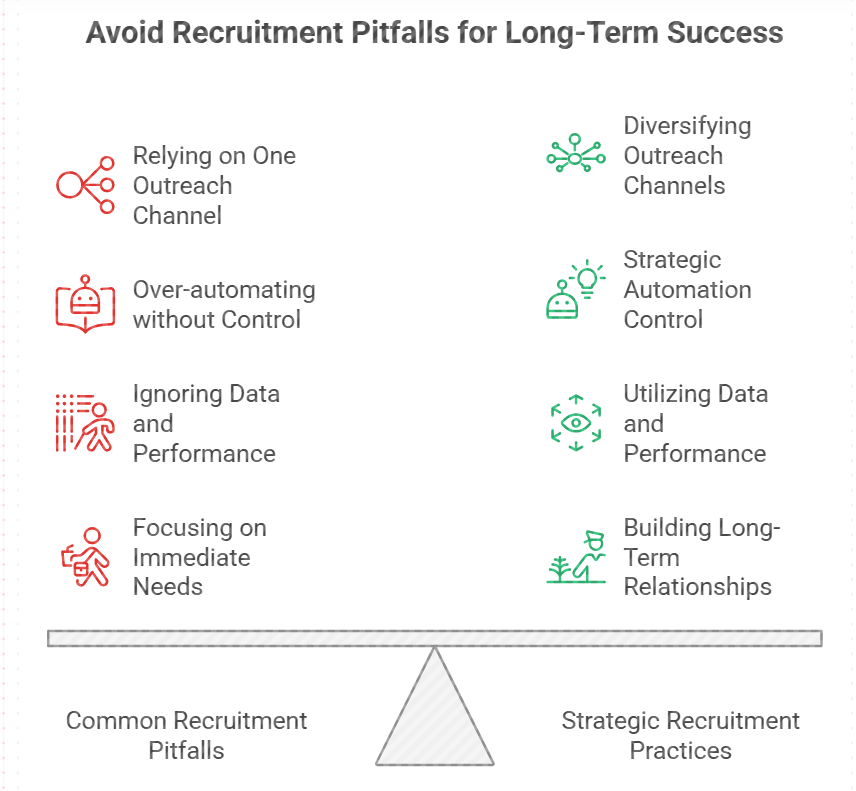
Even with the right tactics in place, small mistakes can quietly reduce your results.
Most outreach doesn’t fail because of effort, it fails because of avoidable gaps in strategy and consistency.
If you fix these, you’ll immediately see better response rates and faster hiring.
1. Relying only on one outreach channel
If you depend on just one channel, you limit your visibility from the start.
Passive candidates might miss your message simply because they’re not active there.
Using a mix of email, LinkedIn, and other platforms helps you stay visible without being intrusive.
2. Over-automating without strategic control
Automation can speed things up, but too much of it can make your outreach feel robotic.
Candidates can easily tell when messages lack context or personalization.
The key is to use automation as support, not as a replacement for thoughtful communication.
3. Ignoring data and performance signals
If you’re not tracking what’s working, you’re repeating the same mistakes.
Recruitment metrics like open rates, replies, and conversions give you clear direction.
Use these insights to continuously refine your messaging, timing, and targeting.
4. Focusing only on immediate hiring needs
When outreach is only driven by urgent roles, you’re always starting from zero.
This slows you down every time a new position opens.
A better approach is to consistently engage candidates, even when you’re not actively hiring.
5. Not building long-term candidate relationships
Passive outreach is not just about filling one role.
It’s about creating a network you can rely on in the future.
Staying in touch with candidates, sharing updates, and nurturing relationships makes hiring much faster over time
Suggested Reading:
Recruitment Automation ToolsKey Takeaways
- Passive candidate outreach helps you access high-quality talent beyond active applicants
- Strong targeting and personalization directly improve response rates and engagement
- Multi-channel outreach increases visibility and reduces missed opportunities
- Consistent follow-ups play a major role in getting replies from passive candidates
- Highlighting role impact makes your message more compelling and relevant
- Data-driven optimization helps you continuously improve outreach performance
- Re-engaging existing talent pools can significantly reduce time-to-hire
- Building long-term relationships makes future hiring faster and more predictable
- AI and automation help you scale outreach without losing personalization
- A structured outreach system turns hiring from reactive to proactive
Frequently Asked Questions
1. How do you identify the right passive candidates to reach out to?
Use a mix of sourcing channels like professional networks, talent databases, and referrals. Focus on skills, experience, and career trajectory rather than just job titles.
2. How many follow-ups are ideal in passive candidate outreach?
Usually 2–4 follow-ups work best. Space them a few days apart and make sure each message adds new value instead of repeating the same pitch.
3. What is the best time to reach out to passive candidates?
Early mornings, evenings, or mid-week (Tuesday–Thursday) often get better responses since candidates are less busy compared to peak work hours.
4. How can small teams scale passive outreach effectively?
By using automation tools, templates, and candidate segmentation. This helps maintain consistency while still allowing personalization at scale.
5. How do you measure the success of passive candidate outreach?
Track metrics like open rates, response rates, conversion to interviews, and time-to-hire. These insights help refine your outreach strategy over time.


