Hiring teams today are expected to move faster, source smarter, and manage larger candidate pipelines without increasing recruiter workload.
That is exactly why many companies are now looking beyond Juicebox to find platforms that can scale candidate discovery more efficiently.
The challenge is not just finding resumes anymore. You need tools that can search across multiple talent sources, identify qualified candidates quickly, automate outreach, and keep your hiring pipeline moving without constant manual effort.
In this guide, you will discover 11 Juicebox alternatives that help you:
- Find candidates faster across multiple platforms
- Automate sourcing and outreach workflows
- Improve candidate matching accuracy at scale
- Reduce manual recruiting effort significantly
- Speed up hiring without compromising quality
Common Issues People Face With Juicebox
As hiring demands grow, many recruiting teams start noticing gaps in their sourcing workflow.
While Juicebox helps simplify candidate discovery, some teams struggle when they need deeper automation, larger-scale outreach, or more flexible integrations.
1. Outdated Candidate Profiles and Inconsistent Data
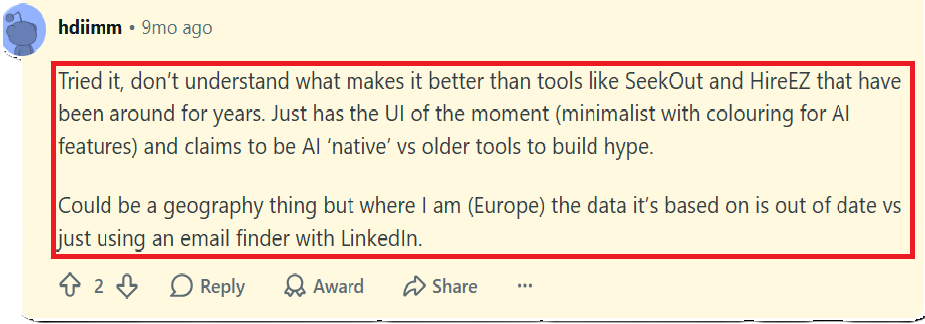
One of the most common complaints revolves around stale candidate information and inaccurate profile matching. Recruiters mentioned that some candidate profiles appeared outdated, with old job titles or irrelevant search results.
Recruiter also mentioned location-based data inconsistencies in Europe:Reddit discussion about outdated recruiting data
2. Search Quality Declines for Niche Hiring
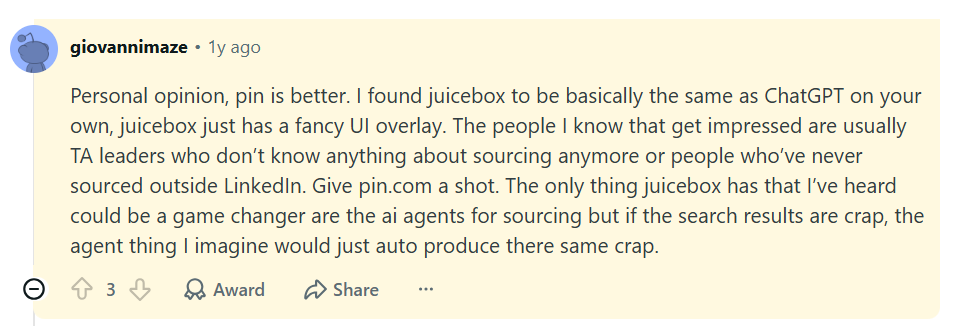
Several recruiters shared concerns about search precision when hiring specialized technical talent. Some users felt the AI search returned loosely related profiles instead of highly relevant niche candidates.
This Reddit thread discusses frustrations around search accuracy and AI matching quality for recruiting workflows:Reddit discussion about Juicebox search quality and recruiting results
3. Outreach Automation Still Feels Generic
Recruiters handling outbound hiring campaigns mentioned that automated outreach sequences often lacked personalization. Some users reported lower candidate response rates after increasing AI-driven outreach volume.
A recruiter discussing sourcing workflows shared concerns about outreach quality and recruiter response fatigue here:Reddit discussion about AI recruiting outreach challenges
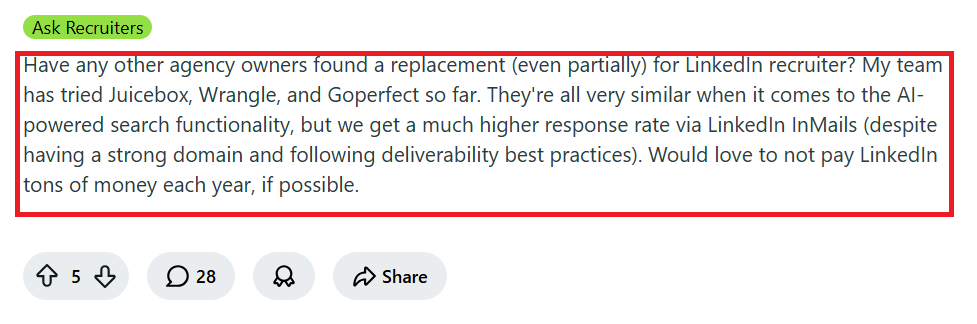
Another thread discussing high-volume sourcing also highlighted declining response rates from automated outreach campaigns:Reddit discussion about AI sourcing and low candidate response rates
4. Pricing Can Become Expensive for Growing Teams
Pricing was another issue mentioned frequently by recruiters managing larger hiring teams. Some users felt seat-based pricing and additional AI agent costs became expensive as recruiting operations scaled.
One recruiter specifically complained about expensive pricing and poor onboarding experience in this Reddit thread:Reddit discussion about Juicebox pricing concerns
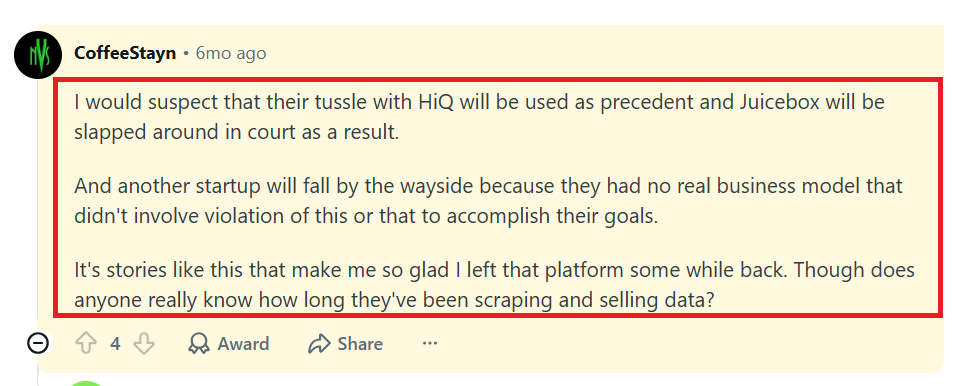
Another discussion also touched on enterprise pricing concerns and scaling costs for agency teams:Reddit discussion about recruiting software costs and licensing
5. Limited End-to-End Recruiting Workflow Support
Some recruiters mentioned that Juicebox works well for sourcing candidates but still requires additional tools for scheduling, evaluation, and complete recruiting workflow management.
This Reddit discussion explains how recruiters still needed multiple systems to manage sourcing, screening, and interview coordination effectively:Reddit discussion about fragmented recruiting workflows
Suggested Reading:
AI Candidate Sourcing Tools: 10 Best Solutions for Recruiters (2026 Guide)11 Best Juicebox Alternatives for Faster Candidate Discovery at Scale
Recruiting teams today need more than basic sourcing tools. They need platforms that can discover candidates faster, automate repetitive hiring tasks, and help recruiters manage hiring at scale without losing quality.
That is why many companies are now exploring alternatives to Juicebox that offer stronger automation, broader candidate coverage, and better workflow efficiency.
Here are some of the best Juicebox alternatives worth considering.
1. Leelu AI
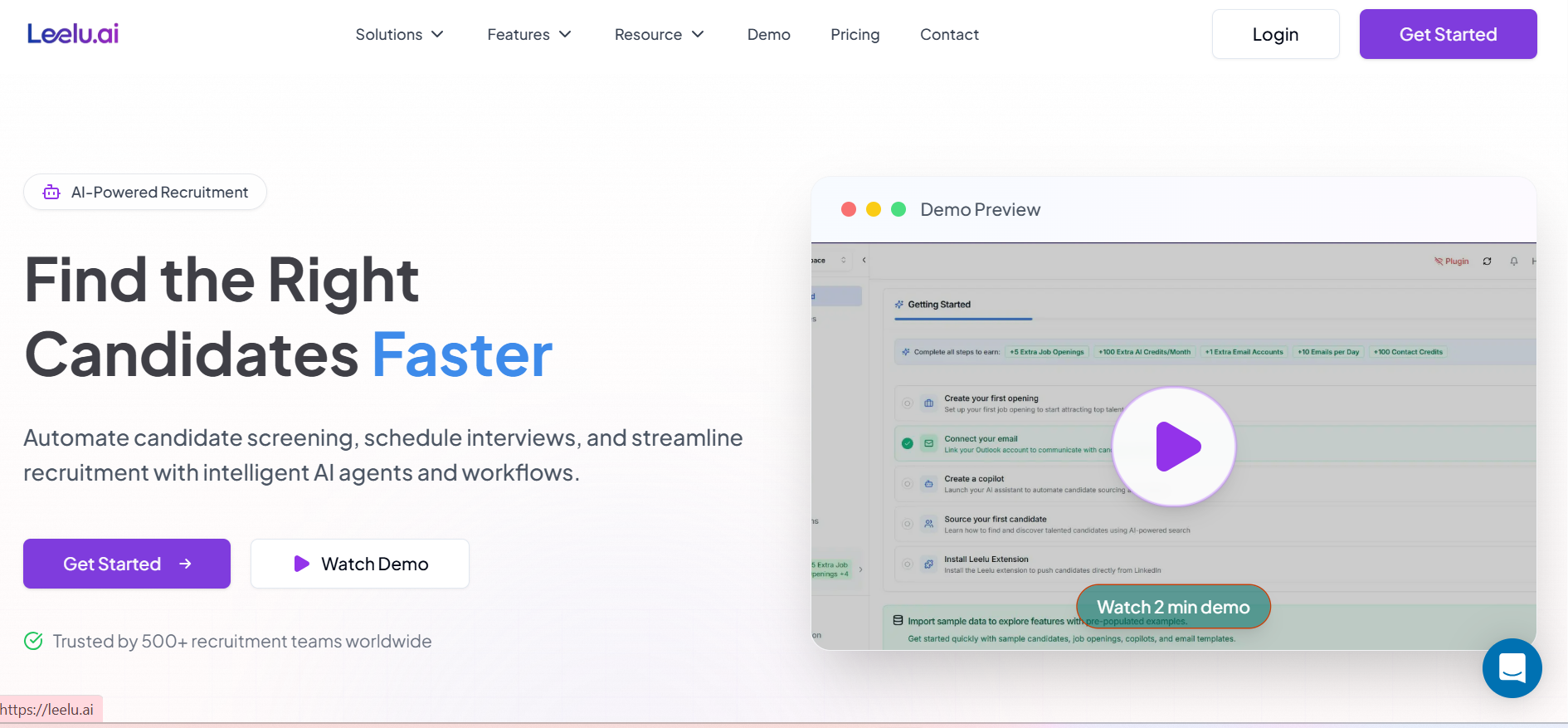
Leelu.AI is designed for companies that want to automate the entire recruiting workflow instead of only improving candidate search.
The platform combines AI sourcing, profile screening, outreach automation, and interview scheduling into one unified recruiting system.
Instead of switching between multiple sourcing tools, recruiters can manage everything from candidate discovery to interview coordination in a single workflow.
One of the biggest advantages of Leelu AI is its ability to help recruiting teams hire faster while reducing manual effort. The platform scans 500M+ candidate profiles across LinkedIn, job boards, and ATS systems to identify qualified talent quickly.
Key features that make Leelu AI stand out include:
- AI-powered sourcing across multiple talent platforms
- Automated candidate screening and resume scoring
- Personalized outreach automation at scale
- AI follow-ups and candidate engagement workflows
- Smart interview scheduling with calendar sync
- Unified candidate profiles across different data sources
- ATS integrations for seamless hiring workflows
- Real-time hiring insights and pipeline analytics
Leelu AI also helps recruiters automate repetitive tasks that usually slow down hiring teams.
Instead of manually screening profiles, sending follow-ups, or coordinating interviews, recruiters can automate large parts of the workflow while still maintaining personalized candidate communication.
This becomes especially valuable for high-volume hiring teams managing multiple open roles simultaneously.
The platform’s AI matching system helps recruiters identify top-fit candidates faster, improving hiring speed and shortlist quality without increasing recruiter workload.
For growing companies that want scalable candidate discovery with end-to-end recruiting automation, Leelu AI offers a much more efficient and centralized hiring approach.
2. hireEZ
hireEZ is a popular sourcing and outbound recruiting platform known for its strong talent search capabilities. It allows recruiters to source candidates across multiple channels and build automated outreach campaigns.
The platform is especially useful for outbound recruiting teams that rely heavily on proactive candidate engagement. Recruiters can use AI-powered search filters, talent rediscovery features, and email automation to streamline sourcing workflows.
hireEZ also provides market insights and talent analytics, which can help recruiters understand hiring trends and optimize sourcing strategies. However, teams looking for deeper end-to-end workflow automation may still require additional tools alongside it.
3. SeekOut
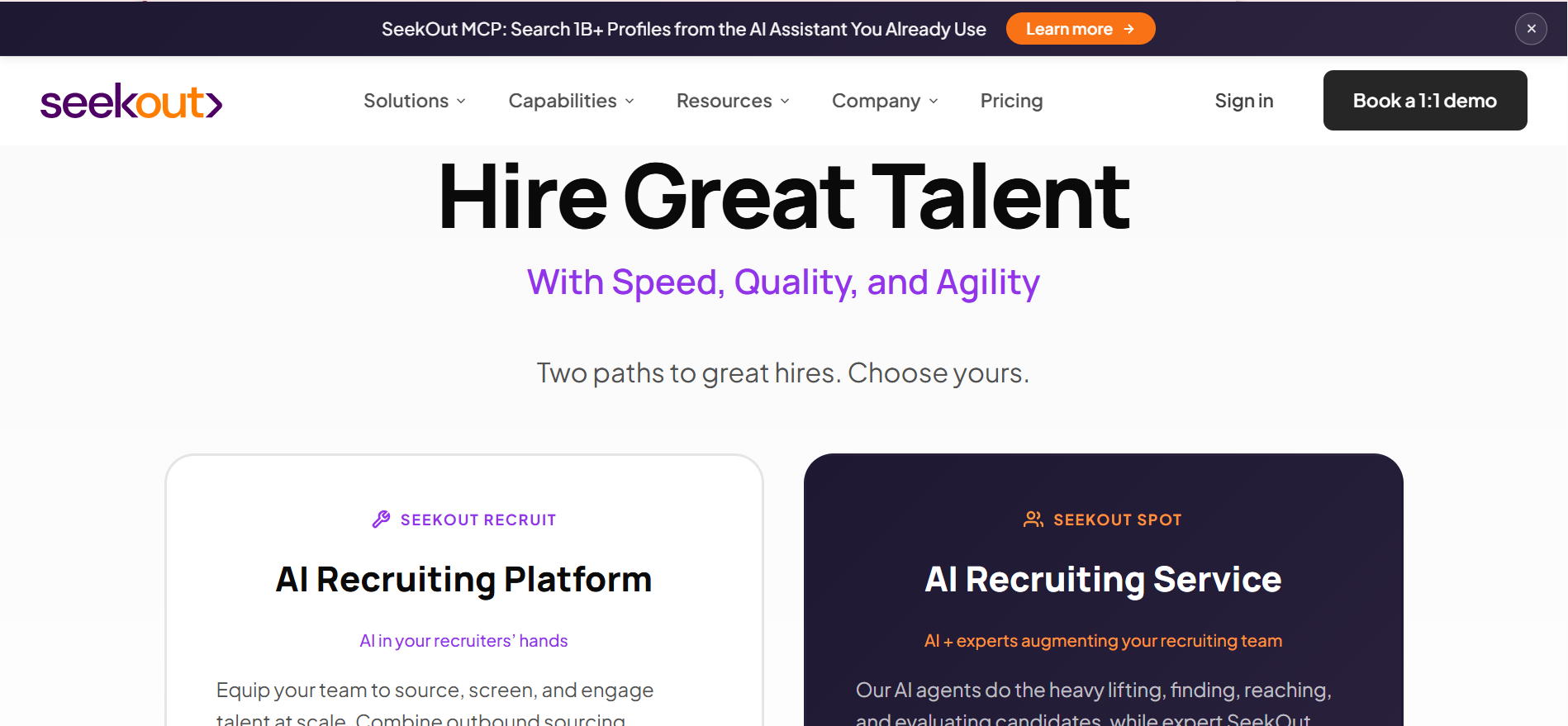
SeekOut is widely used for technical recruiting and diversity hiring initiatives. The platform helps recruiters discover hard-to-find talent using advanced search filters and AI-driven candidate matching.
One of SeekOut’s strengths is its ability to surface specialized candidates from different talent pools. Recruiters hiring for engineering, healthcare, or executive roles often use the platform to improve niche candidate discovery.
SeekOut also offers workforce analytics and diversity insights, making it useful for enterprise recruiting teams focused on strategic hiring goals. While the platform is strong for sourcing, some companies may still need additional automation tools for outreach and interview coordination.
4. Loxo
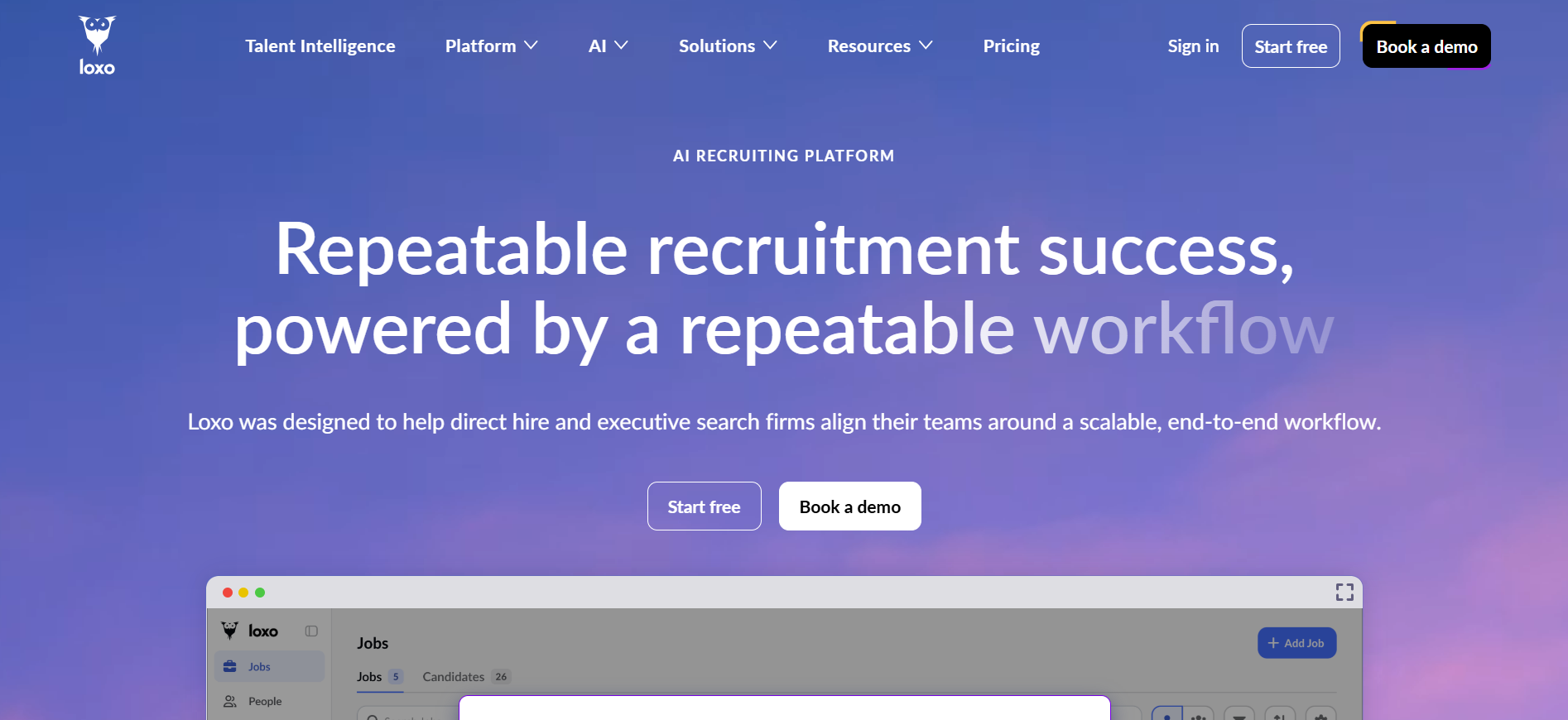
Loxo combines applicant tracking, CRM functionality, sourcing, and outreach tools within one recruiting platform. It is commonly used by staffing agencies and recruiting firms that need an all-in-one hiring solution.
The platform includes AI sourcing features, candidate relationship management, email sequencing, and pipeline tracking. Recruiters can also automate parts of the engagement process while managing candidate interactions from a centralized dashboard.
Loxo is often preferred by teams that want a combination of sourcing and recruiting CRM features without managing multiple disconnected systems.
5. Gem
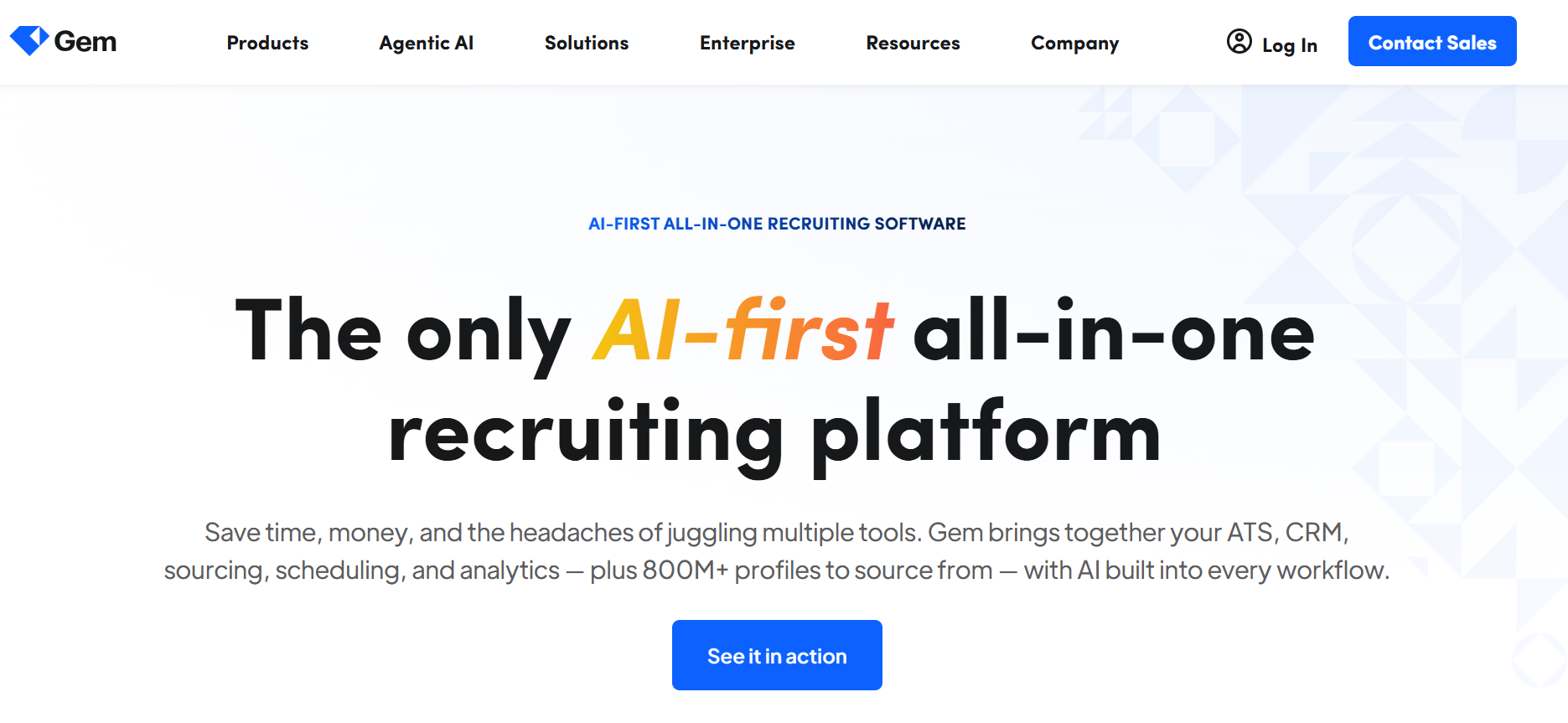
Gem is known for recruitment analytics, sourcing automation, and candidate relationship management. The platform helps recruiting teams build talent pipelines and improve outreach performance through data-driven recruiting workflows.
Gem integrates with several ATS platforms and allows recruiters to track sourcing performance, response rates, and hiring funnel metrics. This visibility helps teams optimize their recruiting strategies over time.
The platform is particularly useful for organizations that prioritize pipeline nurturing and long-term candidate engagement.
However, companies looking for broader end-to-end recruiting automation may compare it with platforms that combine sourcing, screening, outreach, and scheduling more comprehensively.
6. Fetcher
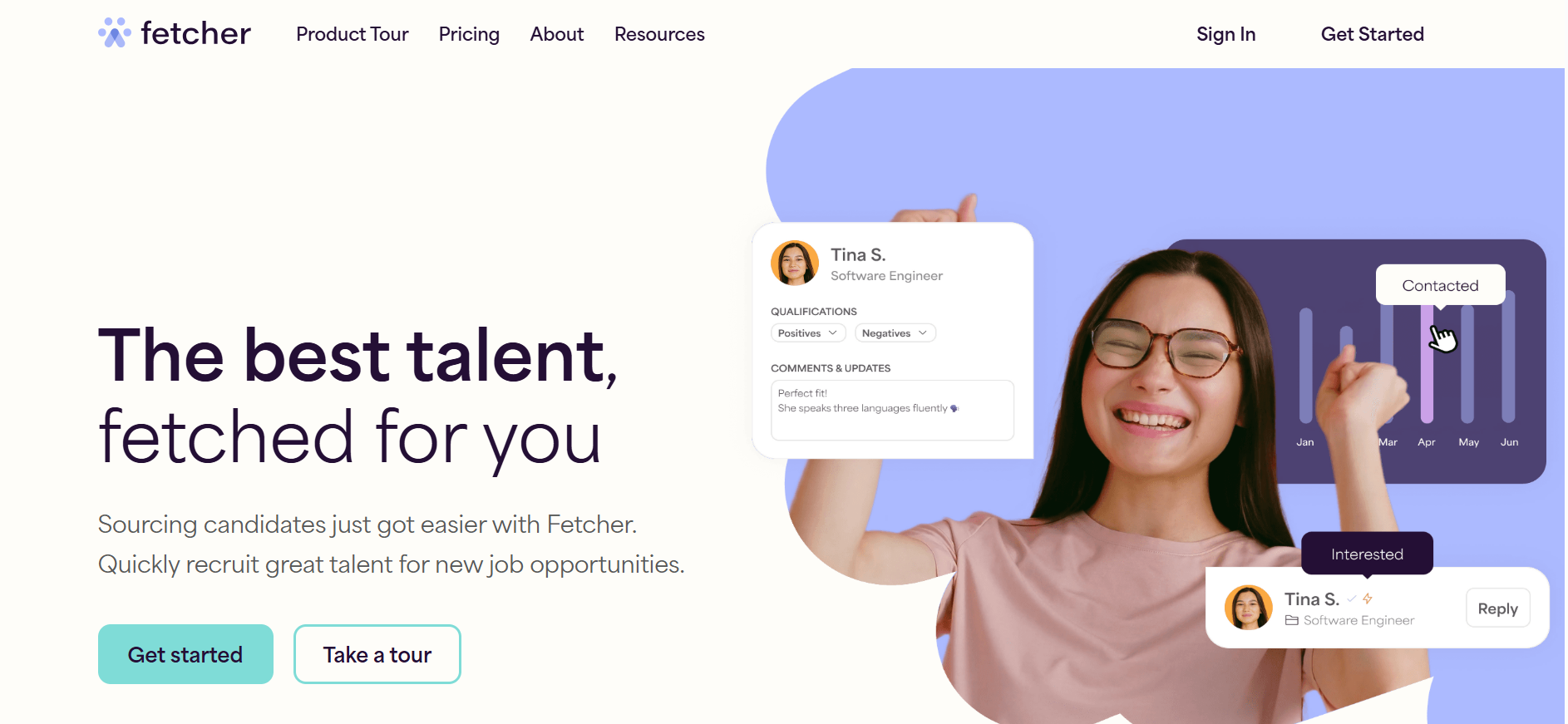
Fetcher is known for combining candidate sourcing with automated outreach workflows. The platform helps recruiting teams discover qualified candidates and engage them through personalized email campaigns.
Fetcher is particularly useful for teams that want to reduce manual sourcing work while improving outbound recruiting consistency. Recruiters can automate candidate recommendations, outreach sequences, and follow-ups from a centralized dashboard.
The platform also provides recruiting analytics that help teams track outreach performance and optimize hiring workflows over time. For companies focused heavily on outbound recruiting, Fetcher can help improve sourcing efficiency and candidate engagement.
7. AmazingHiring
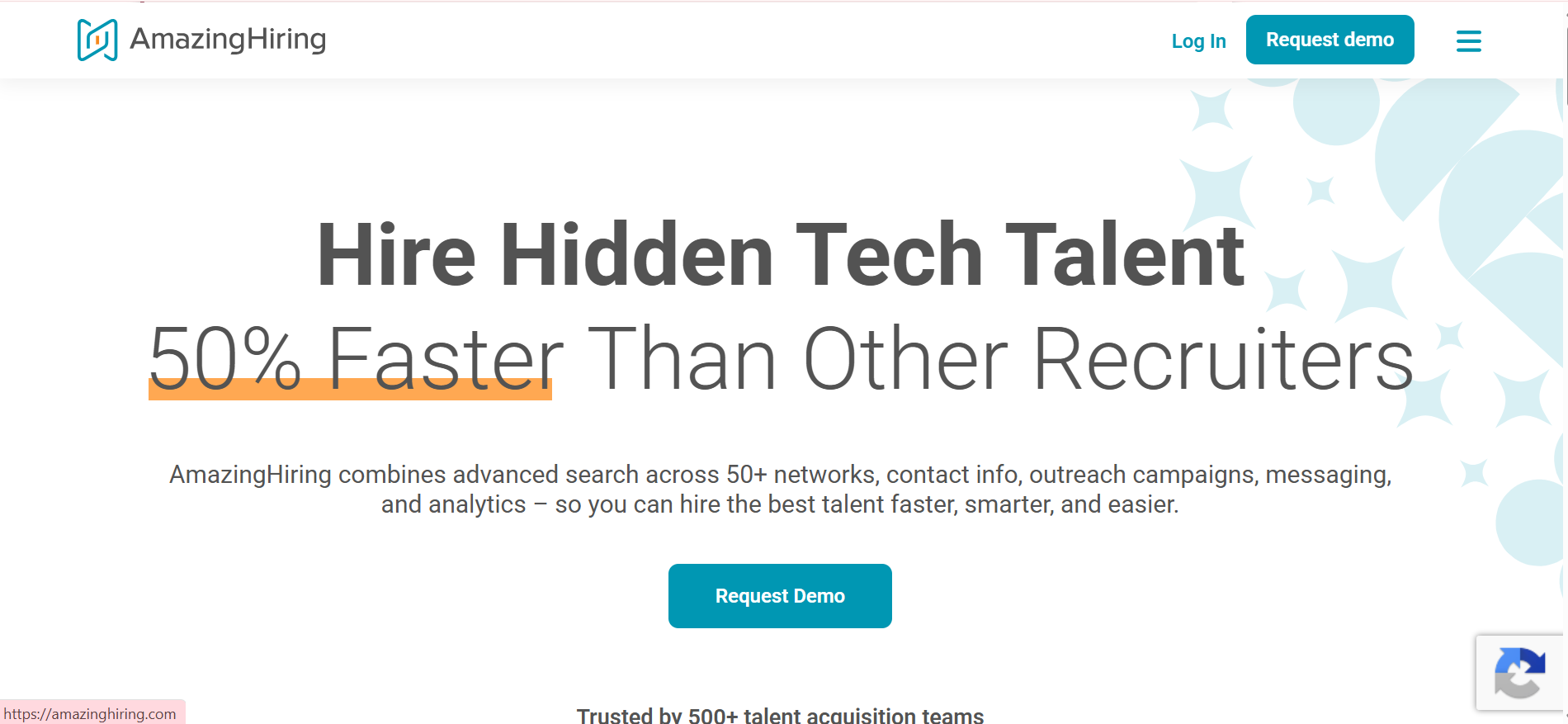
AmazingHiring is built primarily for technical recruiting and developer talent discovery. The platform aggregates candidate profiles from multiple online sources, helping recruiters identify engineering and IT professionals more effectively.
One of its biggest strengths is deep technical talent search. Recruiters can source candidates using coding activity, GitHub profiles, Stack Overflow contributions, and other technical indicators that traditional sourcing tools may overlook.
AmazingHiring is often preferred by companies hiring software engineers, data scientists, cybersecurity professionals, and other specialized technical talent. Its advanced search capabilities make it useful for niche hiring where candidate availability is limited.
8. Entelo
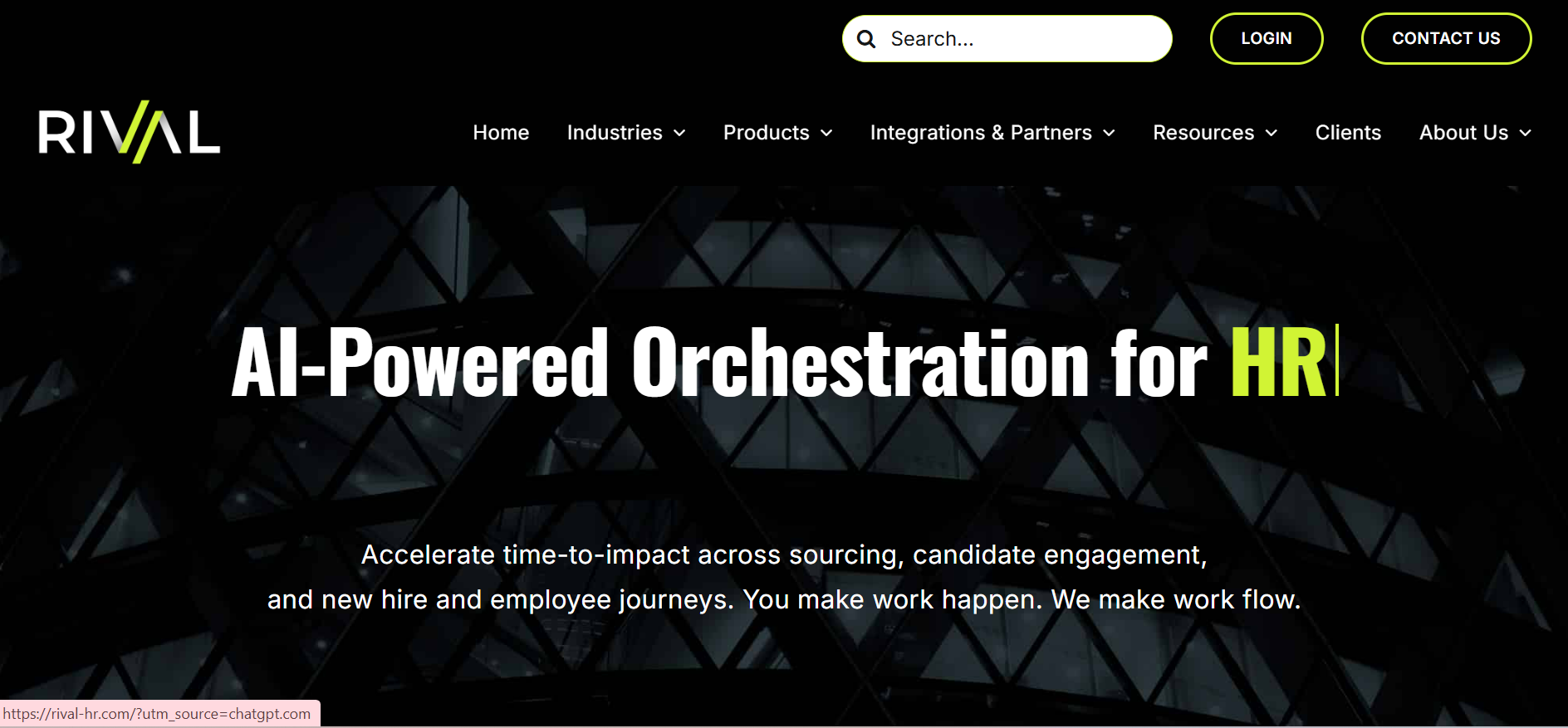
Entelo focuses on AI-powered candidate sourcing, diversity recruiting, and talent pipeline management. The platform helps recruiters identify candidates who are more likely to engage or consider new job opportunities.
Entelo uses predictive analytics and AI matching to improve sourcing efficiency and prioritize qualified talent faster. Recruiters can also automate outreach campaigns and build long-term candidate pipelines for future hiring needs.
The platform is especially useful for enterprise recruiting teams looking to improve diversity hiring initiatives while maintaining scalable sourcing workflows. Its automation capabilities help reduce manual sourcing effort across large recruiting teams.
9. Manatal
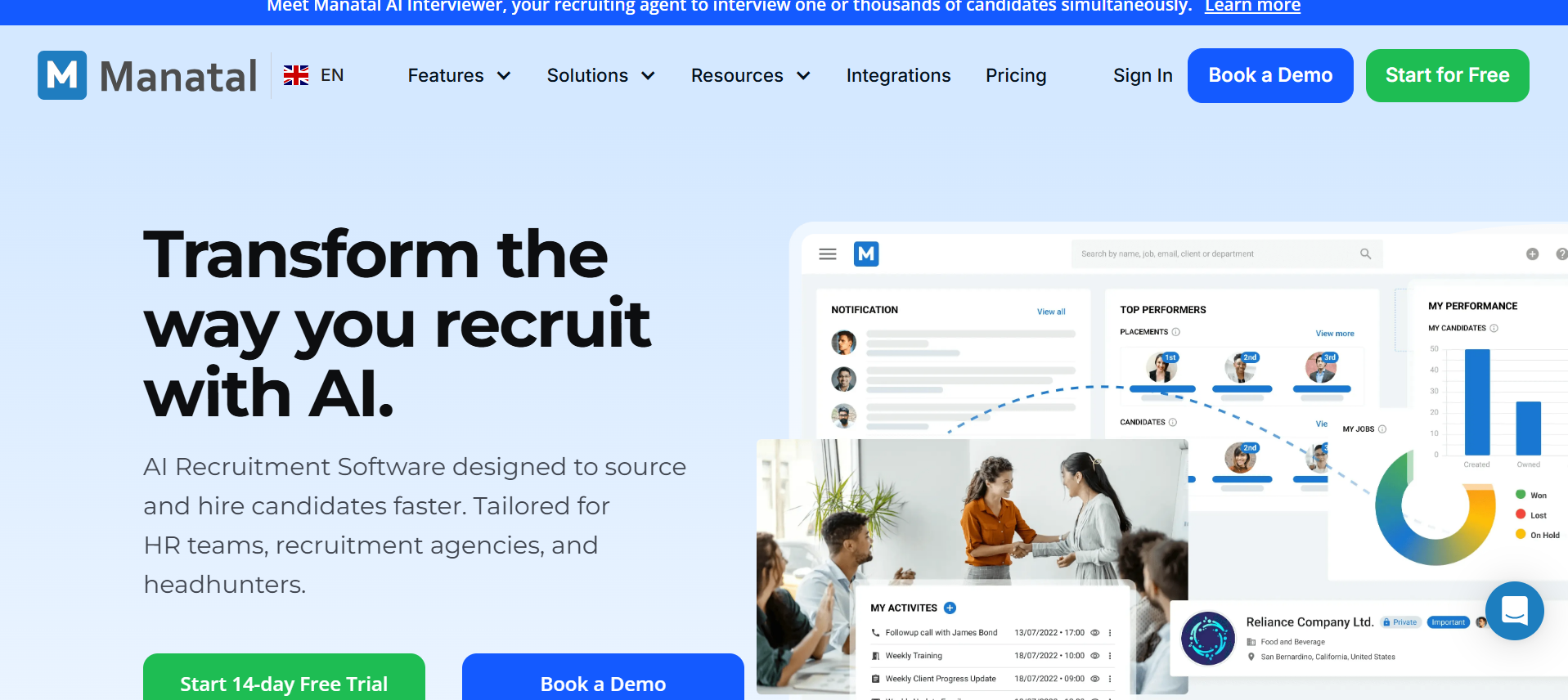
Manatal combines applicant tracking, CRM functionality, and AI recruiting features within one platform. It is widely used by staffing agencies, HR teams, and growing businesses looking for a cost-effective recruiting solution.
The platform includes AI recommendations, social media enrichment, candidate tracking, and recruitment pipeline management. Recruiters can manage sourcing, applications, and candidate communication without relying on multiple disconnected systems.
Manatal is often considered a practical choice for smaller teams and growing companies that want recruiting automation features with a simpler learning curve and more flexible pricing.
10. TurboHire
TurboHire is designed to streamline enterprise hiring through automation and AI-driven recruiting workflows. The platform supports sourcing, screening, interview management, and hiring analytics within one ecosystem.
One of TurboHire’s strengths is high-volume hiring automation. Recruiters can automate candidate screening, interview scheduling, and communication workflows to reduce manual coordination effort significantly.
The platform also offers AI-based candidate ranking and structured hiring workflows that help improve hiring consistency across larger organizations.
Companies handling large-scale recruitment operations often use TurboHire to speed up hiring cycles while maintaining process efficiency.
11. Zoho Recruit
Zoho Recruit is a recruiting and applicant tracking platform that integrates closely with the broader Zoho ecosystem. It is commonly used by staffing agencies and HR teams that want customizable hiring workflows and CRM-style recruiting management.
The platform includes resume parsing, candidate tracking, interview scheduling, workflow automation, and reporting tools. Recruiters can customize pipelines, automate repetitive tasks, and manage candidate communication from a centralized dashboard.
One of Zoho Recruit’s advantages is its flexibility and integration support for businesses already using other Zoho products.
It also offers scalable pricing options, making it suitable for startups, mid-sized businesses, and enterprise recruiting teams looking for adaptable hiring software.
How to Choose the Right Juicebox Alternative
Choosing the right alternative to Juicebox depends on how your recruiting team operates and what problems you are trying to solve. Some platforms are better for outbound sourcing, while others focus more on automation, analytics, or high-volume hiring workflows.
Before selecting a recruiting platform, it is important to evaluate your long-term hiring needs instead of only comparing basic sourcing features.
1. Choose based on hiring volume
The first thing you should consider is your hiring scale.
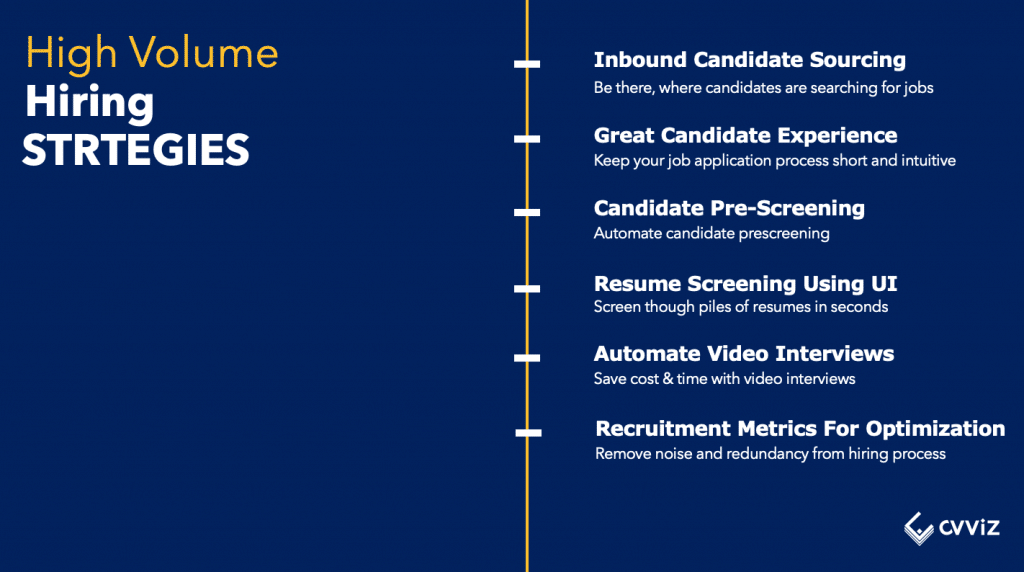
A startup hiring occasionally may need a lightweight sourcing platform, while fast-growing companies usually require automation, bulk outreach, and large candidate databases to manage multiple open roles efficiently.
2. Look for automation that saves recruiter time
Modern recruiting tools should reduce repetitive manual work. Look for platforms that automate sourcing, resume screening, follow-ups, interview scheduling, and candidate communication.
This helps recruiters focus more on relationship building and hiring decisions instead of administrative tasks.
3. Check sourcing database quality
The effectiveness of any recruiting platform depends heavily on the quality and size of its candidate database.
Prioritize tools that provide access to updated candidate profiles across LinkedIn, job boards, internal databases, and ATS systems. Strong search filters and AI matching also improve candidate discovery accuracy.
4. Prioritize integrations with your ATS and CRM
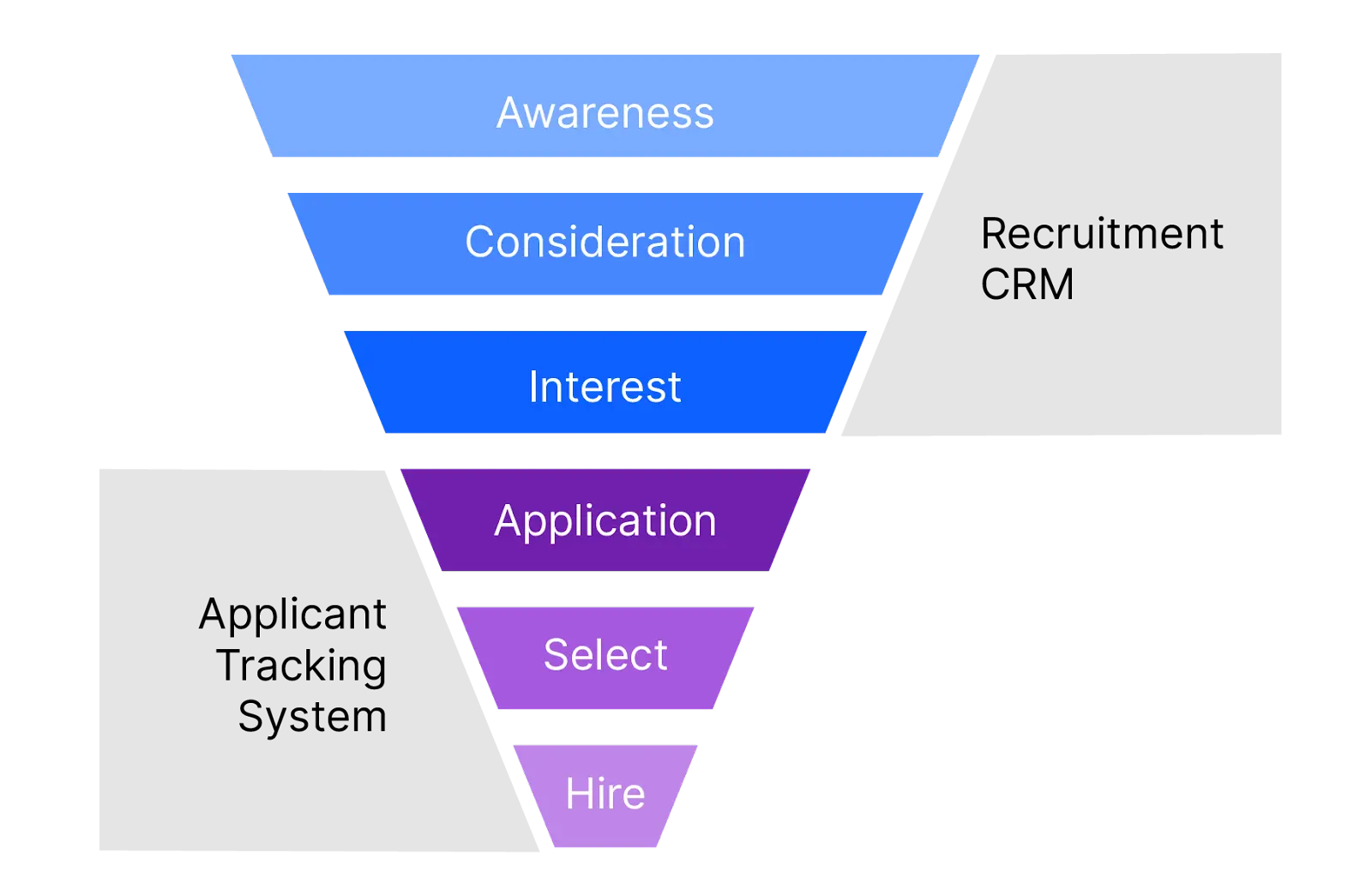
Recruiting workflows become inefficient when systems do not sync properly. Choosing a platform with strong ATS and CRM integrations helps reduce manual data entry and keeps hiring pipelines organized across teams.
5. Compare pricing with long-term recruiting needs
Pricing should be evaluated based on long-term scalability, not just initial cost. Consider whether the platform can support future hiring growth without significantly increasing recruiter workload or operational expenses.
Suggested Reading:
9 Recruitment Automation Tools That Save 70% Hiring TimeCommon Mistakes to Avoid When Switching Candidate Sourcing Tools
Switching to a new recruiting platform can improve hiring speed and sourcing efficiency, but many teams make avoidable mistakes during the transition process.
Instead of focusing only on new features, it is important to evaluate how the platform will actually support your recruiters’ daily workflow.
1. Choosing features you will never use
Many recruiting platforms offer long feature lists, but not every feature adds practical value to your hiring process. Paying for advanced capabilities that your team rarely uses can increase costs without improving productivity.
Focus on tools that solve your actual recruiting challenges.
2. Ignoring recruiter workflow compatibility
A sourcing platform may look powerful, but it should also fit naturally into your existing recruiting workflow. If recruiters constantly switch between systems or struggle to adapt to the interface, productivity can drop instead of improving.
3. Overlooking candidate data accuracy
Candidate discovery becomes ineffective when profile data is outdated or incomplete. Before switching platforms, evaluate the quality of candidate information, sourcing coverage, and profile enrichment capabilities.
Accurate data helps recruiters shortlist and engage candidates much faster.
4. Focusing only on pricing instead of productivity
Lower pricing does not always mean better value. Some low-cost tools may lack automation, integrations, or sourcing depth, which can increase recruiter workload over time. It is better to evaluate how much time and manual effort the platform can actually save.
5. Switching tools without team training
Even the best recruiting software can fail if recruiters are not properly trained. Teams should understand sourcing workflows, automation settings, integrations, and reporting features before fully adopting a new platform.
Proper onboarding helps recruiters use the system more effectively from the beginning.
Conclusion
Finding the right alternative to Juicebox depends on your hiring goals, recruiting volume, and automation needs. While some platforms focus mainly on candidate sourcing, others provide end-to-end recruiting workflows that help teams scale hiring more efficiently.
The best recruiting tools should not only help you discover candidates faster but also reduce manual effort, improve outreach consistency, and streamline interview coordination.
Platforms like Leelu AI stand out by combining sourcing, screening, outreach, and scheduling into one automated workflow.
As hiring becomes more competitive, choosing a scalable recruiting platform can directly impact hiring speed, recruiter productivity, and overall talent quality.
Frequently Asked Questions
1. What is the best alternative to Juicebox?
The best alternative depends on your hiring needs and recruiting workflow. If you want end-to-end recruiting automation with sourcing, screening, outreach, and scheduling in one platform, Leelu AI is a strong option.
Other platforms like hireEZ and SeekOut are also popular for candidate sourcing and talent search.
2. Which Juicebox alternative is best for AI candidate sourcing?
For AI-powered candidate sourcing, platforms like Leelu AI, hireEZ, and SeekOut are widely used. These tools use AI matching, advanced search filters, and automated sourcing workflows to help recruiters discover qualified candidates faster.
3. Are there affordable alternatives to Juicebox for startups?
Yes, several recruiting platforms offer scalable pricing for startups and growing businesses. Manatal and Zoho Recruit are commonly considered cost-effective options for smaller teams.
They provide sourcing, applicant tracking, and workflow automation without requiring enterprise-level budgets.
4. Which sourcing platform is best for technical recruiting?
For technical hiring, AmazingHiring and SeekOut are strong choices. These platforms help recruiters discover engineers, developers, and niche technical talent using advanced search filters, coding activity data, and AI-powered candidate matching.
5. Do Juicebox alternatives integrate with ATS platforms?
Yes, most modern recruiting platforms support ATS integrations. Tools like Leelu AI, Gem, TurboHire, and Zoho Recruit integrate with popular ATS systems to streamline candidate management, reduce manual data entry, and improve recruiting workflow efficiency.


