Hiring the right candidate is not just about checking skills on a resume.
The questions you ask during an interview often reveal how a person thinks, communicates, solves problems, and fits into your team culture.
But coming up with the right interview questions for different job roles can quickly become difficult, especially when you are hiring at scale.
In this guide, you will discover:
- The best interview questions to ask candidates
- How to evaluate answers more effectively
- Questions that work across different job roles
- Ways to improve your hiring process and candidate quality
How to Choose Interview Questions for Different Job Roles
Choosing the right interview questions helps recruiters evaluate candidates more accurately across different job roles and responsibilities.
A balanced interview should assess technical ability, communication style, problem-solving skills, and overall workplace compatibility effectively.
1. Questions that assess technical and role-specific skills
These questions help you understand whether the candidate has the practical knowledge required for the position.
Instead of asking only theoretical questions, focus on real-world situations related to the job.
You can ask candidates to:
- Explain how they handled a previous project
- Walk through a process they regularly use
- Solve a role-related scenario during the interview
- Share tools or systems they are comfortable using
This approach gives you a clearer picture of their actual experience rather than memorized answers.
2. Questions that evaluate communication and teamwork
Strong communication skills matter in almost every role, whether employees work with customers, managers, or internal teams.
Behavioral interview questions can reveal how candidates collaborate under pressure and handle workplace interactions.
Ask questions that uncover how they:
- Deal with disagreements inside a team
- Communicate complex ideas to others
- Handle feedback from managers or clients
- Support team members during difficult situations
These answers often reveal emotional intelligence, adaptability, and professionalism.
3. Questions that measure problem-solving ability
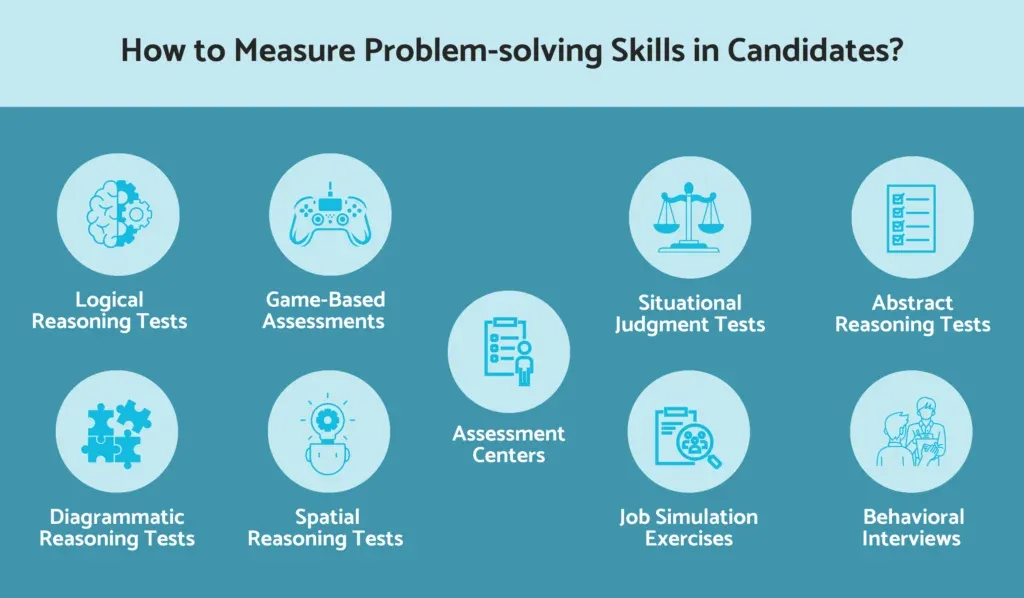
Every job involves unexpected challenges.
Problem-solving questions help you understand how candidates think, prioritize tasks, and make decisions when situations become difficult.
Instead of looking for perfect answers, pay attention to their thought process and how logically they approach problems.
Questions around:
- Handling tight deadlines
- Managing difficult customers or stakeholders
- Fixing workflow inefficiencies
- Responding to sudden changes
can help you identify candidates who stay calm and solution-focused under pressure.
4. Questions that help identify motivation and cultural fit
Skills alone do not guarantee long-term success.
A candidate who aligns with your company values and career expectations is more likely to stay engaged and perform consistently.
Ask questions that explore:
- Why they are interested in the role
- What kind of work environment motivates them
- Their long-term career goals
- What they expect from leadership and company culture
These conversations help you understand whether the candidate will thrive within your organization beyond just meeting technical requirements.
Suggested Reading:
Talent Acquisition Strategy, Process & Best Practices14 Best Interview Questions to Ask Candidates for Any Job Role
These interview questions help recruiters evaluate communication, technical ability, problem-solving skills, teamwork, motivation, and long-term candidate suitability effectively.
1. Can you walk me through your background and experience?
This question helps candidates introduce themselves naturally while giving you a quick overview of their professional journey. It also reveals how well they communicate and organize information.
Strong candidates usually focus on relevant experience, key achievements, and career progression rather than repeating everything from their resume word-for-word.
You can also identify:
- Industry experience
- Career consistency
- Communication style
- Confidence and clarity
2. What attracted you to this role and company?
This question helps you understand whether the candidate has genuine interest in the position or is simply applying everywhere.
Candidates who research your company beforehand often provide more thoughtful and specific answers.
Pay attention to whether they connect their goals, skills, or values with the role itself. This usually indicates stronger long-term motivation and engagement.
Their response can reveal:
- Interest in your company mission
- Career alignment
- Level of preparation
- Enthusiasm for the opportunity
3. What are your biggest strengths in this type of role?
This question allows candidates to highlight the skills they believe make them effective in the position. The most useful answers usually include examples that demonstrate those strengths in action.
Instead of listening for generic responses, look for strengths that directly relate to the responsibilities of the role.
For instance, candidates may discuss:
- Leadership abilities
- Technical expertise
- Problem-solving skills
- Time management or adaptability
This helps you evaluate both self-awareness and job readiness.
4. Tell me about a challenging situation you handled at work.
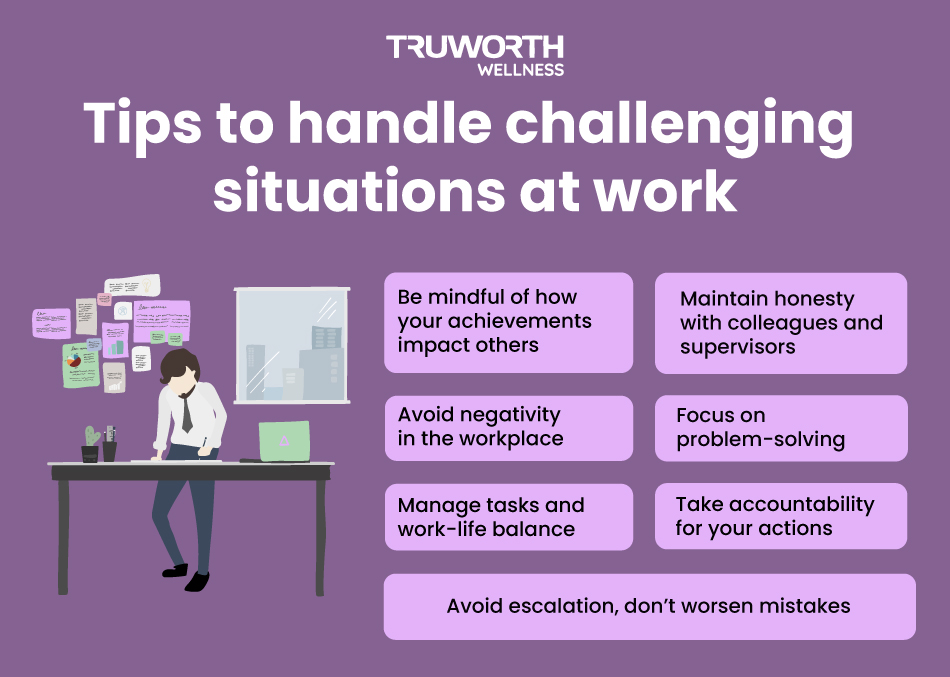
Behavioral interview questions like this often provide the most valuable insights because candidates must explain how they reacted in real situations.
A strong answer usually includes:
- The challenge they faced
- The steps they took
- How they handled pressure
- The final outcome or lesson learned
This question helps you assess emotional intelligence, accountability, and decision-making under stress.
5. How do you prioritize tasks when handling multiple deadlines?
Most roles involve competing priorities, which makes time management an essential skill. This question helps you understand how candidates stay organized and productive under pressure.
Look for answers that include clear systems, prioritization methods, or communication strategies instead of vague statements about “working hard.”
Candidates may mention:
- Task prioritization frameworks
- Calendar or project management tools
- Delegation strategies
- Communication with managers or teams
These responses can reveal how effectively they manage workload and expectations.
6. Describe a time you worked successfully in a team.
Team collaboration affects productivity, workplace culture, and overall performance. This question helps you evaluate how candidates contribute within group environments.
Strong candidates typically explain:
- Their specific role within the team
- How they handled communication
- Ways they supported others
- The outcome achieved together
You can also identify whether they value collaboration or prefer working independently in most situations.
7. How do you handle feedback or criticism?
The ability to accept feedback professionally is critical for growth in any role. Candidates who respond positively to constructive criticism are often easier to coach, manage, and develop long term.
Look for answers that demonstrate maturity, self-awareness, and willingness to improve rather than defensiveness.
This question can help you assess:
- Adaptability
- Growth mindset
- Professionalism
- Coachability within your organization
8. What achievement are you most proud of professionally?
This question helps you understand what the candidate personally values in their career. Their answer often reveals whether they prioritize leadership, teamwork, innovation, revenue growth, customer success, or personal development.
Strong candidates usually explain the impact of their achievement instead of only describing the task itself.
Pay attention to:
- Measurable results they achieved
- Ownership of the project or outcome
- Challenges they overcame
- How they define professional success
This question can also highlight confidence and long-term career motivation.
9. Tell me about a mistake you learned from.
Candidates who can openly discuss mistakes often demonstrate accountability and self-awareness. The goal is not to find perfect employees but people who can learn, adapt, and improve.
A strong answer usually includes:
- What went wrong
- How they responded to the situation
- What they learned afterward
- How they prevented similar issues later
Be cautious of candidates who avoid responsibility or struggle to explain lessons learned from past experiences.
10. How do you approach problem-solving in difficult situations?
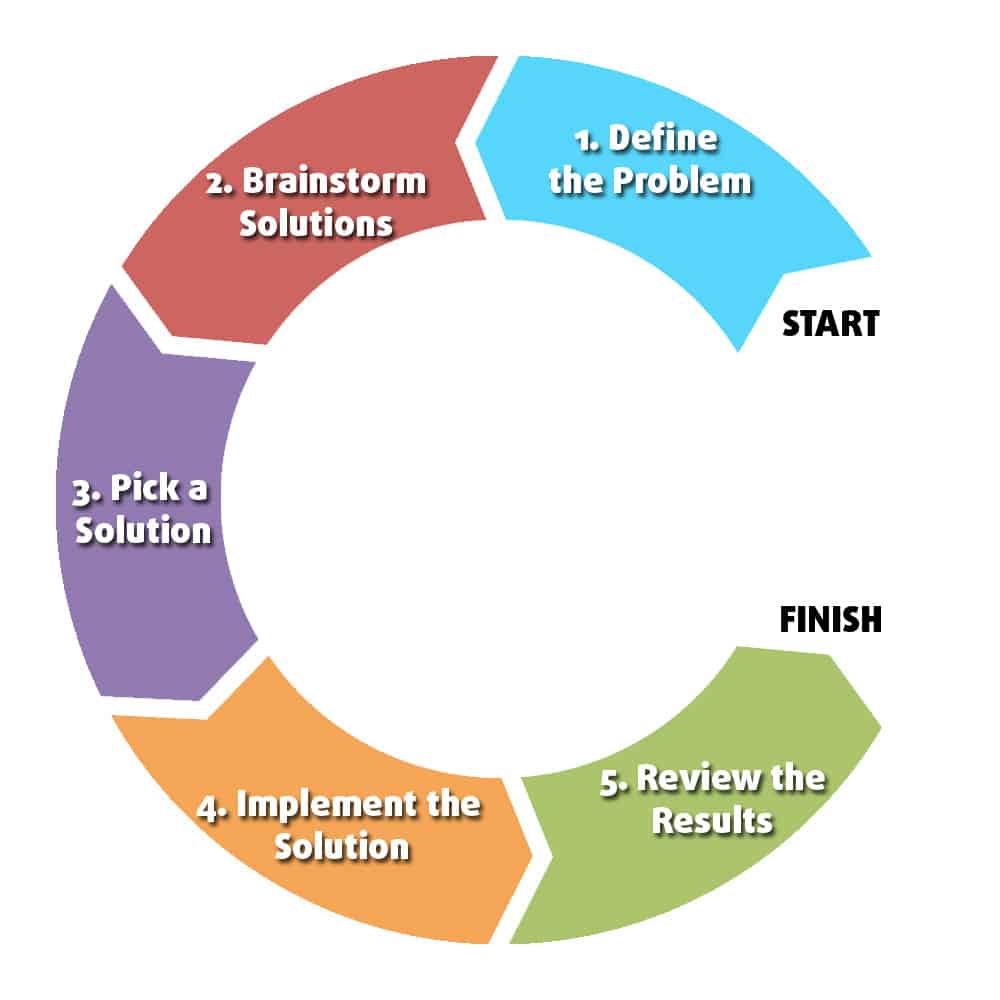
Every role involves uncertainty and pressure at some point. This question helps you evaluate how candidates think critically and make decisions when facing challenges.
Instead of focusing only on the final answer, pay attention to how they break down problems and evaluate possible solutions.
Strong responses often include:
- Analyzing the root cause
- Gathering information before acting
- Collaborating with others when needed
- Staying calm under pressure
This gives you insight into their decision-making process and adaptability.
11. What motivates you in your work?
Understanding motivation helps you identify whether the candidate will stay engaged in the role over time. Different employees are motivated by different factors, including growth opportunities, meaningful work, leadership responsibilities, or financial rewards.
Candidates with clear and realistic motivations often show stronger long-term commitment and alignment with the role.
Their answer may reveal interest in:
- Career growth
- Learning opportunities
- Team collaboration
- Solving meaningful problems
- Performance-driven environments
12. How do you adapt to change or new responsibilities?
Modern workplaces evolve quickly, which makes adaptability one of the most valuable professional skills. This question helps you assess whether candidates can handle changing priorities, new tools, or unexpected responsibilities effectively.
Strong candidates usually provide examples of situations where they successfully adjusted to change instead of speaking in general terms.
Look for signs of:
- Flexibility under pressure
- Willingness to learn
- Positive attitude toward change
- Ability to manage uncertainty
These qualities are especially important in fast-growing companies and dynamic work environments.
13. Where do you see your career going in the next few years?
This question helps you understand a candidate’s long-term goals and whether they align with the opportunities your company can provide.
You are not looking for perfectly planned career paths. Instead, focus on whether their ambitions connect realistically with the role and growth potential available.
Their answer can help you evaluate:
- Long-term interest in the industry
- Leadership aspirations
- Desire for skill development
- Career stability and direction
Candidates with thoughtful goals often demonstrate stronger motivation and professional clarity.
14. Do you have any questions for us about the role or company?
This final interview question is often overlooked, but it can reveal how engaged and prepared a candidate truly is. Candidates who ask thoughtful questions usually show genuine interest in the role and company culture.
Strong candidates may ask about:
- Team structure and expectations
- Growth opportunities
- Company goals or culture
- Success metrics for the role
- Challenges the team is currently facing
This also gives candidates the opportunity to evaluate whether your company is the right fit for their career goals.
How to Conduct More Effective Interviews
Structured interviews help recruiters evaluate candidates fairly, improve hiring consistency, reduce bias, and make stronger hiring decisions faster.
1. Keep interviews structured and consistent across candidates
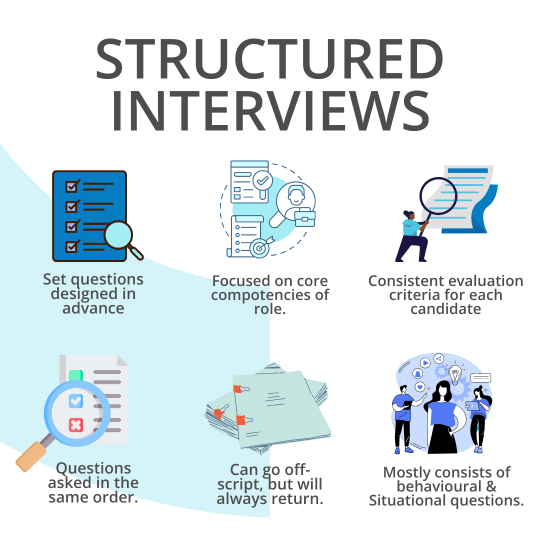
Structured interviews make it easier to compare candidates objectively because everyone is evaluated using similar criteria and questions.
Without consistency, hiring decisions often become influenced by personal impressions rather than actual qualifications.
You can improve consistency by:
- Using a predefined interview format
- Asking core questions to every candidate
- Defining evaluation criteria before interviews begin
- Keeping interview stages standardized across roles
This approach reduces confusion and creates a more reliable hiring process.
2. Focus on behavioral and situational responses
Behavioral interview questions help you understand how candidates handled real situations in the past, while situational questions reveal how they may respond to future challenges.
Both provide deeper insights than simple yes-or-no answers.
Instead of asking purely theoretical questions, encourage candidates to explain actual experiences and decision-making processes.
Questions focused on:
- Conflict resolution
- Leadership challenges
- Project management
- Problem-solving under pressure
- Team collaboration
often reveal stronger indicators of future job performance.
3. Avoid leading or biased interview questions
Biased or leading questions can unintentionally influence candidate responses and create unfair evaluations. They may also affect diversity, consistency, and overall hiring quality.
Try to keep questions neutral, role-related, and focused on skills or experiences rather than assumptions.
For example, avoid questions that:
- Suggest a preferred answer
- Focus on personal background unrelated to the role
- Reinforce stereotypes or unconscious bias
- Pressure candidates into agreement
Objective questioning creates a more professional and inclusive interview experience.
4. Use scorecards and evaluation criteria for better decisions
Interview scorecards help hiring teams evaluate candidates using measurable criteria instead of relying only on memory or gut feeling. This becomes especially useful when multiple interviewers are involved.
A simple scorecard can include areas like:
- Technical skills
- Communication ability
- Problem-solving
- Cultural alignment
- Leadership or collaboration skills
When evaluation criteria are clearly defined beforehand, hiring decisions become faster, more consistent, and easier to justify across the team.
How Leelu.AI Helps Recruiters Conduct Better Interviews
Leelu.ai is an AI-powered hiring assistant designed to streamline and simplify end-to-end recruitment workflows.
It helps teams manage sourcing, screening, scheduling, and candidate evaluation in a more structured and efficient way.
1. Automatically shortlist candidates that match role requirements
Finding qualified candidates is often the most time-consuming part of hiring. Leelu.ai helps recruiters identify relevant candidates faster using AI-powered matching across millions of profiles from LinkedIn, job boards, and ATS platforms.
Instead of manually filtering applications one by one, recruiters can quickly focus on candidates who closely match the required skills, experience, and job criteria.
This helps teams:
- Improve shortlist quality
- Reduce time-to-hire
- Reach more qualified candidates faster
- Prioritize high-fit applicants automatically
2. Reduce manual screening before interviews begin
Manual resume screening can slow down the hiring pipeline, especially when recruiters manage multiple open positions simultaneously. Leelu.ai automates much of this early-stage screening process using AI resume parsing and candidate scoring.
The platform helps recruiters evaluate large candidate pools more efficiently by organizing and ranking profiles based on job fit.
This reduces:
- Time spent reviewing resumes manually
- Repetitive screening tasks
- Delays between sourcing and interviews
- Inconsistent candidate evaluations
As a result, recruiters can spend more time conducting meaningful interviews instead of administrative work.
Suggested Reading:
AI Resume Screening3. Improve candidate evaluation with AI-driven insights
Strong hiring decisions require more than resume keywords alone. Leelu.ai helps recruiters gain deeper insights into candidate fit through AI-powered analysis and structured evaluation workflows.
By centralizing candidate information into unified profiles, hiring teams can review skills, experience, communication history, and evaluation feedback in one place.
This makes it easier to:
- Compare candidates objectively
- Identify top-fit applicants faster
- Reduce hiring bias with structured evaluations
- Improve collaboration between recruiters and hiring managers
These insights help create more informed and data-driven hiring decisions.
4. Streamline interview scheduling and coordination
Interview scheduling often becomes a major bottleneck during hiring. Coordinating calendars between recruiters, hiring managers, and candidates can create delays and unnecessary back-and-forth communication.
Leelu.ai simplifies this process with automated scheduling and calendar synchronization tools that help interviews get booked faster.
Recruiters can:
- Reduce scheduling conflicts
- Automate interview coordination
- Keep candidates informed throughout the process
- Speed up interview turnaround times
This creates a smoother experience for both hiring teams and candidates.
5. Centralize hiring workflows for faster decision-making
Recruitment workflows often become fragmented across spreadsheets, emails, ATS platforms, and sourcing tools. Managing everything separately can slow down collaboration and make hiring decisions less efficient.
Leelu.ai centralizes sourcing, screening, outreach, interview scheduling, and hiring insights into one unified workflow. This allows recruiters and hiring managers to stay aligned throughout the hiring process.
With centralized workflows, teams can:
- Track candidates more efficiently
- Improve visibility across hiring stages
- Reduce manual coordination between tools
- Make faster and more organized hiring decisions
Common Interviewing Mistakes to Avoid
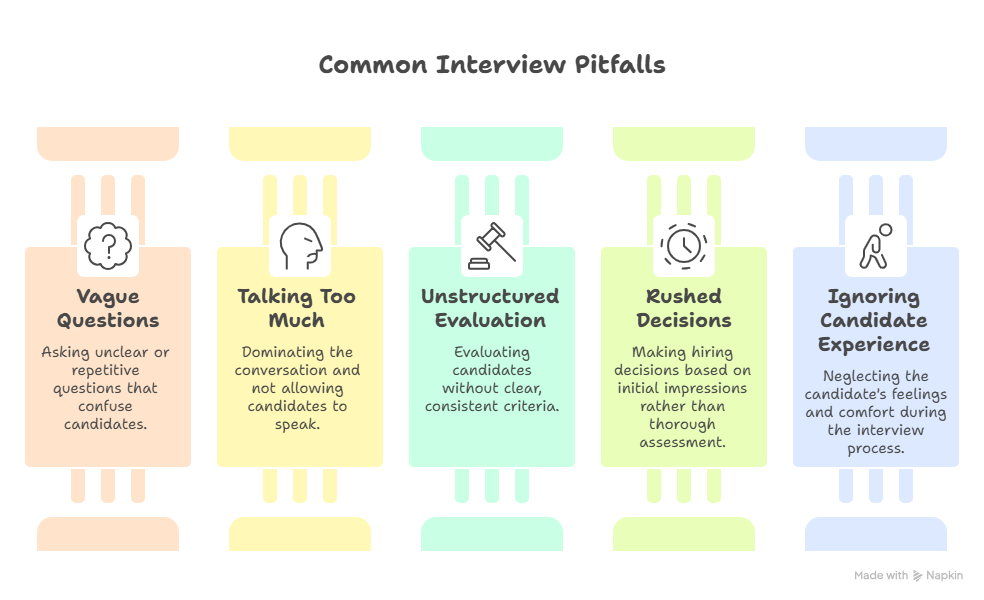
Avoiding common interview mistakes helps recruiters improve candidate experience, reduce bias, and make more accurate hiring decisions consistently.
1. Asking vague or repetitive questions
Generic questions often lead to unclear answers and weak candidate evaluation during interviews.
Instead, ask specific questions related to skills, responsibilities, and workplace situations.
This helps recruiters:
- Gather meaningful candidate insights
- Improve interview quality
- Reduce repetitive conversations
2. Talking more than listening during interviews
Candidates should speak more during interviews so recruiters can evaluate communication and problem-solving abilities effectively.
Interrupting frequently or overexplaining the role limits valuable candidate responses and insights.
Good listening helps recruiters:
- Ask better follow-up questions
- Understand candidate thinking clearly
- Build stronger interview conversations
3. Evaluating candidates without structured criteria
Unstructured evaluations often create inconsistent hiring decisions and increase unconscious bias during recruitment.
Using predefined scorecards and evaluation criteria improves fairness and decision-making consistency across candidates.
Structured evaluations help recruiters:
- Compare candidates objectively
- Reduce personal bias
- Improve hiring accuracy
4. Rushing hiring decisions based on first impressions
First impressions alone do not always reflect a candidate’s actual skills, experience, or long-term potential.
Candidates may need time before confidently sharing meaningful experiences and insights during interviews.
Avoid rushed decisions by:
- Reviewing complete interview responses
- Comparing candidates fairly
- Following structured evaluation methods
5. Ignoring candidate experience during interviews
Poor interview experiences can negatively affect employer branding and candidate engagement during the hiring process.
Clear communication and organized interviews create a more professional and positive candidate experience overall.
A strong candidate experience helps companies:
- Build better employer reputation
- Keep candidates engaged
- Attract stronger talent consistently
Conclusion
Hiring the right candidates starts with asking structured interview questions that reveal real skills, communication ability, and problem-solving approaches.
A consistent interview process also helps recruiters make fair and confident hiring decisions across different job roles and experience levels.
As hiring needs grow, manually managing sourcing, screening, interview coordination, and candidate evaluation can slow down the entire recruitment process.
Platforms like Leelu.ai help recruiters streamline hiring workflows with AI-powered sourcing, screening, scheduling, and candidate management tools that improve hiring speed, efficiency, and overall candidate quality.
FAQs
1. How many interview questions should be asked in one interview?
Ask 8–15 focused questions depending on the role, interview duration, and level of candidate experience.
2. Should interview questions be the same for every candidate?
Core questions should remain consistent, but role-specific and follow-up questions can vary between candidates.
3. What types of interview questions should employers avoid?
Avoid discriminatory, overly personal, or unrelated questions that do not evaluate job performance or skills.
4. How long should candidates take to answer interview questions?
Most answers should stay between one to three minutes while remaining clear, relevant, and structured.
5. Why are structured interviews better than casual interviews?
Structured interviews improve fairness, reduce bias, and make comparing candidates much easier for hiring teams.


