Hiring today can feel unclear.
Do you wait for candidates to come to you, or go out and find them yourself?
Both approaches work, but in very different ways.
In this guide, you will understand:
- What inbound and outbound recruiting really mean
- Their pros and cons
- How their ROI compares
- When to use each approach effectively
What Is Inbound Recruiting?
Inbound recruiting is about attracting candidates instead of chasing them.
You create visibility so the right people discover your company and apply on their own.
This usually happens through employer branding, content, and a strong online presence that builds trust over time.
Instead of starting from zero every time, you build a system that continuously brings candidates into your pipeline.
It is slower at first, but it becomes more efficient as your visibility grows.
How Inbound Recruiting Works
Inbound recruiting works by pulling candidates in through consistent exposure.
You share content, showcase your culture, and make your company visible where candidates already spend time.
Over time, job seekers start recognizing your brand and feel more confident applying.
This creates a steady flow of applicants without constant outreach.
The focus is less on immediate hiring and more on building long-term interest.
Key Channels Used in Inbound Recruiting
Inbound recruiting relies on channels that help candidates find you naturally.
Common channels include your careers page, job posting, LinkedIn posts, employee content, and SEO-optimized job listings.
Talent communities and newsletters also play a role in keeping candidates engaged.
The goal is simple.
Stay visible, stay relevant, and make it easy for candidates to discover and trust your company.
What Is Outbound Recruiting?
Outbound recruiting is about actively finding and reaching out to candidates.
Instead of waiting for applications, you go directly to people who match your requirements.
This approach gives you more control over who enters your hiring pipeline.
It is especially useful when you need to fill roles quickly or hire for niche positions where inbound flow is limited.
Outbound recruiting focuses on speed, precision, and direct engagement with potential candidates.
How Outbound Recruiting Works
Outbound recruiting starts with sourcing candidates based on specific criteria.
You search through databases, platforms, and networks to find profiles that fit the role.
Once identified, you reach out through personalized messages to spark interest.
If candidates respond, you move them through screening and interview stages.
This approach helps you build a pipeline quickly without relying on incoming applications.
Key Channels Used in Outbound Recruiting
Outbound recruiting depends on platforms that allow direct candidate access.
Common channels include LinkedIn outreach, email campaigns, job databases, and sourcing tools.
Recruiters also use internal databases and referrals to find potential candidates.
The goal is simple.
Find the right people, reach out directly, and start conversations that lead to hiring.
Suggested Reading:
10 Candidate Sourcing ChannelsInbound vs Outbound Recruiting: Core Differences
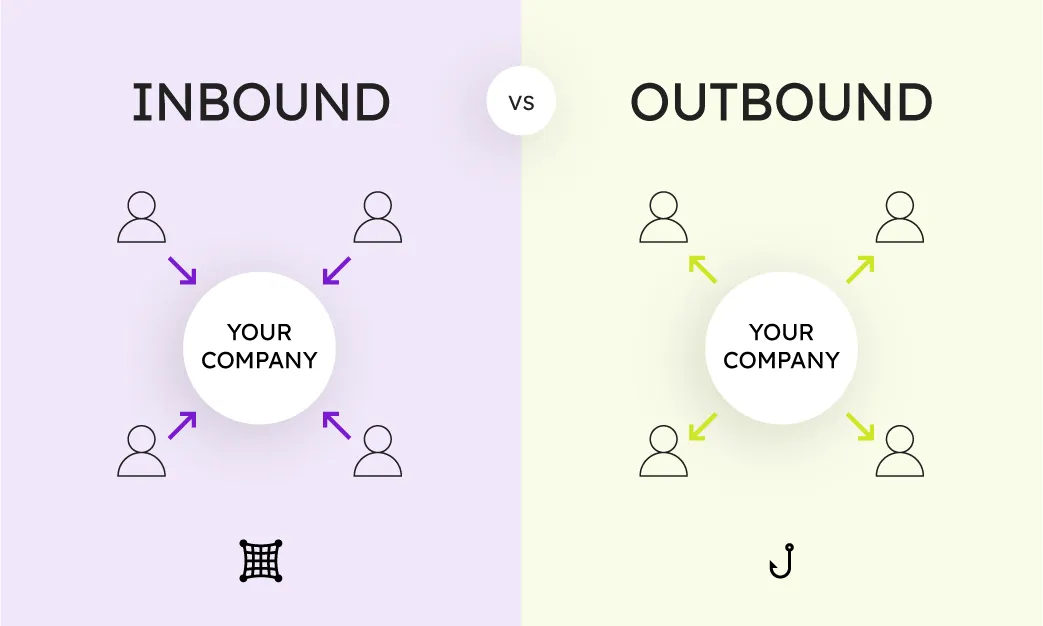
Inbound and outbound recruiting may aim for the same outcome, but they work very differently.
One pulls candidates in over time, while the other pushes outreach to get faster results.
Understanding these differences helps you choose the right approach based on your hiring needs.
Passive vs Active Talent Acquisition
The biggest difference is how candidates enter your pipeline.
Inbound recruiting is passive.Outbound recruiting is active.
- Inbound focuses on attracting candidates through content, branding, and visibility
- Candidates discover your company and apply when they are ready
- It works well for building long-term interest
- Outbound focuses on finding candidates directly
- You search, shortlist, and reach out to specific profiles
- It works better when you cannot rely on incoming applications
Speed and Hiring Urgency
Speed is where outbound recruiting clearly stands out.
Inbound takes time to build momentum.Outbound delivers quicker results.
- Inbound recruiting requires consistent effort before you see results
- It is not ideal when you need to hire immediately
- It works better for ongoing hiring needs
- Outbound recruiting allows you to act instantly
- You can start sourcing and outreach the same day
- It is ideal for urgent roles or time-sensitive hiring
Control Over Candidate Quality
Control is another key difference between the two approaches.
Inbound gives less control.Outbound gives more precision.
- Inbound depends on who chooses to apply
- You may receive a mix of relevant and irrelevant candidates
- Filtering becomes a bigger part of the process
- Outbound lets you define exactly who you want to reach
- You can target based on skills, experience, and role fit
- This improves the chances of finding highly relevant candidates
Pros of Inbound Recruiting
Inbound recruiting focuses on building long-term value instead of chasing short-term results.
It may feel slower at first, but over time it becomes more efficient and predictable.
Instead of repeating the same hiring effort again and again, you create a system that keeps bringing candidates to you.
Builds Strong Employer Brand
One of the biggest advantages of inbound recruiting is brand building.
You are not just hiring, you are creating awareness and trust.
- Candidates start recognizing your company before applying
- Your content and presence shape how people perceive your workplace
- Trust builds even before the first interaction happens
This makes candidates more likely to engage and accept offers.
Lower Cost Over Time
Inbound recruiting reduces dependency on constant spending.
You invest upfront, but the returns grow over time.
- Less reliance on paid sourcing tools and outreach campaigns
- Reduced need for repeated hiring efforts from scratch
- Organic applications increase as your visibility improves
Over time, your cost per hire starts going down.
Consistent Talent Pipeline
Inbound helps you avoid the stop-start hiring cycle.
You are not waiting for hiring needs to begin building a pipeline.
- Candidates keep discovering your company continuously
- You build a pool of interested candidates over time
- Hiring becomes smoother because you already have applicants
This consistency makes long-term hiring much more manageable.
Cons of Inbound Recruiting
Inbound recruiting works well over time, but it is not perfect.
It comes with limitations that can slow down hiring if you rely on it alone.
Understanding these challenges helps you decide when inbound is not enough.
Slow to Show Results
Inbound recruiting takes time to build momentum.
You cannot expect immediate results after starting.
- It requires consistent content and visibility before candidates notice you
- Early stages often bring low application volume
- It is not suitable for urgent or time-sensitive hiring needs
You need patience before it starts delivering consistent outcomes.
Limited Control Over Candidates
Inbound recruiting gives you less control over who applies.
You depend on candidate interest rather than targeting specific profiles.
- You may receive a mix of relevant and irrelevant applications
- Filtering and screening effort can increase
- Hard-to-fill or niche roles may not get enough qualified applicants
This makes it harder to maintain precision in your hiring process.
Pros of Outbound Recruiting
Outbound recruiting focuses on speed and control.
Instead of waiting for candidates, you actively build your pipeline based on your exact needs.
This makes it a strong choice when hiring pressure is high or roles are hard to fill.
Faster Hiring Process
Outbound recruiting helps you move quickly from sourcing to interviews.
You are not dependent on incoming applications.
- You can start sourcing candidates immediately after a role opens
- Outreach can begin the same day without delays
- Shortlists are built faster because you control the process
This reduces the overall time it takes to fill a role.
Better Targeting and Precision
Outbound recruiting gives you full control over who you approach.
You decide the exact criteria before reaching out.
- You can filter candidates based on skills, experience, and location
- Outreach is focused only on relevant profiles
- Screening becomes easier because initial targeting is precise
This improves the quality of your candidate pipeline.
Access to Passive Candidates
Many strong candidates are not actively applying for jobs.
Outbound recruiting helps you reach these hidden opportunities.
- You connect with candidates who are not visible through job applications
- You tap into a larger talent pool beyond active job seekers
- You create opportunities by starting conversations directly
This gives you access to talent that inbound alone may miss.
Cons of Outbound Recruiting
Outbound recruiting gives speed and control, but it comes with effort.
It is not a set-and-forget approach and often requires continuous manual input.
If not managed well, it can slow down teams instead of helping them.
Time-Intensive Process
Outbound recruiting takes time at every step.
You are responsible for building the pipeline from scratch.
- Sourcing candidates across platforms can take hours
- Writing and sending personalized outreach requires effort
- Follow-ups and response tracking add more workload
This makes it difficult to scale without additional support or automation.
Lower Response Rates
Not every outreach leads to a reply.
Even strong candidates may ignore messages.
- Cold outreach often gets limited responses
- Generic messages reduce engagement significantly
- Multiple follow-ups may be needed to get attention
This makes results less predictable compared to inbound applications.
Inbound vs Outbound Recruiting ROI Compared
When you compare inbound and outbound recruiting, ROI depends on what you value more.
Is it speed, cost, effort, or long-term efficiency?
Both approaches deliver returns, but in very different ways.
Suggested Reading:
Recruitment AutomationCost vs Time Trade-Off
Inbound recruiting saves cost, but it takes time to build.Outbound recruiting costs more effort, but it delivers faster results.
- Inbound requires upfront investment in content, branding, and visibility
- It reduces hiring costs over time as organic applications increase
- Cost per hire gradually decreases as your pipeline becomes consistent
- Outbound requires ongoing effort in sourcing and outreach
- Recruiters spend hours manually finding and engaging candidates
- It can increase operational cost due to time and tools involved
There is also an effort difference.
- Inbound reduces manual work once systems are in place
- Outbound can take 70–85% more manual effort if done without automation
The trade-off is simple.Pay with time upfront or pay with effort every time you hire.
Short-Term vs Long-Term ROI
The return you get depends on your hiring timeline.
- Outbound recruiting delivers short-term ROI
- You can move from sourcing to interviews quickly
- It is ideal when roles need to be filled immediately
- Inbound recruiting builds long-term ROI
- Over time, you create a steady pipeline of candidates
- Hiring becomes more predictable and less resource-heavy
When combined with the right tools, outbound can also improve significantly.
- Automated workflows can make hiring 80–95% faster
- Candidate sourcing can become 10x faster with the right systems
- Response rates can improve to 40–60% with personalized outreach
In simple terms, outbound wins in speed, while inbound wins in efficiency over time.
When to Use Inbound Recruiting
Inbound recruiting works best when you are thinking long term.
It is not built for urgency, but for consistency and scalability.
- When you are hiring regularly across similar roles
- When you want to build a strong employer brand over time
- When reducing cost per hire is a priority
- When you want a steady flow of applicants instead of starting from zero
It is also useful when your roles attract a broader talent pool.
Inbound helps you stay visible and relevant without constant effort.
If you have time to invest upfront, inbound can create a system that keeps working for you in the background.
When to Use Outbound Recruiting
Outbound recruiting works best when speed and precision matter.
It is designed for situations where waiting is not an option.
- When you need to fill roles quickly
- When you are hiring for niche or hard-to-fill positions
- When inbound applications are not enough or not relevant
- When you want full control over candidate targeting
It is also effective when you need to reach passive candidates.
Outbound helps you take direct action instead of relying on chance.
If your hiring depends on urgency or specific skill sets, outbound becomes the more reliable approach.
Combining Inbound and Outbound Recruiting for Better Results
Inbound and outbound recruiting are not competing strategies.
They work best when used together.
Inbound builds awareness and brings candidates into your pipeline over time.Outbound helps you fill gaps when you need speed or precision.
- Use inbound to create a steady flow of applicants
- Use outbound to target specific roles or urgent hiring needs
- Let inbound warm up candidates before outbound outreach
- Use outbound insights to improve inbound messaging
This combination reduces hiring pressure and improves consistency.
Instead of choosing one approach, you balance both based on your needs.
That is what makes your hiring process more stable and predictable.
Simplifying Recruiting with Leelu AI
Managing both inbound and outbound recruiting can quickly become overwhelming.
When you are handling sourcing, outreach, and scheduling manually, things slow down.
Leelu AI simplifies this by acting as an AI recruiting copilot that automates the entire process.
Automating the Entire Hiring Workflow
Leelu AI brings your hiring steps into one smooth workflow.
- Access 500M+ candidate profiles across LinkedIn, job boards, and ATS
- Send 100–300 personalized outreaches daily across email and LinkedIn
- Automate 24/7 follow-ups with AI-driven responses
- Schedule interviews in under 1 minute with calendar sync
- Integrate with 10+ platforms, including ATS systems
This reduces hiring effort by 70–85% and helps you move from job post to first interview in ~24 hours.
Improving Candidate Quality with AI Matching
Leelu AI also improves the quality of your hiring decisions.
- Screen and rank 1000+ resumes in minutes using AI scoring
- Improve response rates by 40–60% with personalized outreach
- Manage your entire hiring pipeline in one place
It helps you scale hiring without increasing team size while keeping the process efficient and structured.
Conclusion
Choosing between inbound and outbound recruiting depends on your hiring goals.
Inbound helps you build a steady pipeline over time, while outbound gives you speed and control when it matters most.
Instead of picking one, combining both often works better.
With the right balance and tools, you can improve hiring speed, reduce effort, and maintain consistent candidate quality without starting from scratch every time.
Frequently Asked Questions
What is the main difference between inbound and outbound recruiting?
Inbound attracts candidates over time, while outbound involves actively reaching out to candidates directly for faster hiring.
Which is better for urgent hiring needs?
Outbound recruiting works better when you need to fill roles quickly and cannot wait for applications.
Is inbound recruiting cheaper than outbound?
Inbound usually becomes cheaper over time, while outbound can cost more due to continuous effort and tools.
Can you use both inbound and outbound together?
Yes, combining both helps you build a steady pipeline while also filling urgent or niche roles faster.
How does AI improve recruiting?
AI automates sourcing, screening, and outreach, helping you hire faster with less manual effort and better candidate matching.


