
Hiring slows down when outreach is manual and scattered across different platforms.
You spend hours sourcing candidates, writing messages, and managing follow-ups that often get missed.
This not only delays hiring but also affects candidate experience and response rates.
In this guide, you will explore the best outbound recruiting tools, how they automate candidate outreach, and how to choose the right tool to make your hiring faster, more consistent, and easier to manage.
Key Features to Look for in Outbound Recruiting Tools
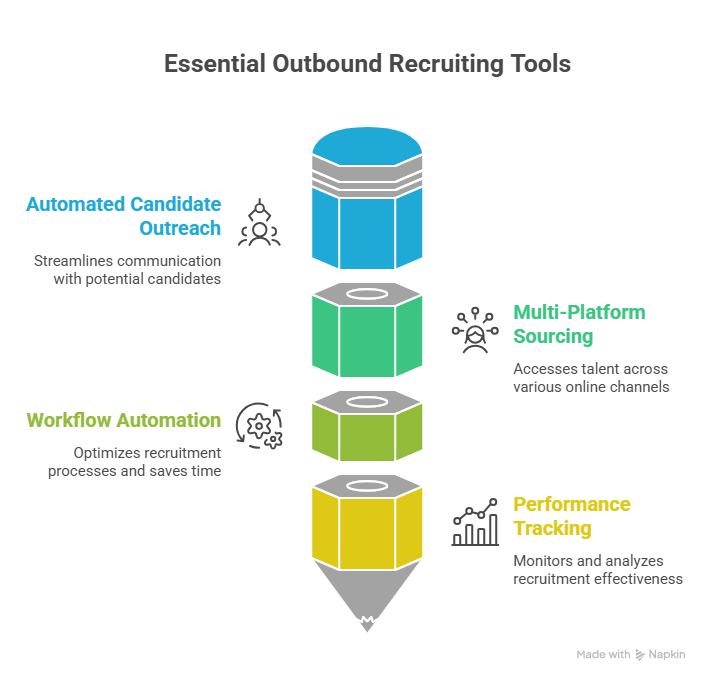
Once you understand why outbound recruiting matters, the next step is knowing what actually makes a tool effective.
Not every platform will help you scale outreach or improve hiring outcomes.
The right features directly impact how fast you hire, how well you engage candidates, and how much manual work you remove from your process.
Automated Candidate Outreach and Personalization
Manual outreach takes time and often leads to inconsistent communication.
You end up sending similar messages again and again, which reduces both efficiency and response rates.
Outbound recruiting tools solve this by automating your outreach while still keeping messages personalized.
You can send messages at scale across email and LinkedIn without losing relevance.
These tools use candidate data to customize outreach based on role, experience, or background.
This makes your communication feel more targeted instead of generic.
They also handle follow-ups automatically, so you do not miss candidates who did not reply the first time.
This consistency improves engagement and increases your chances of getting responses.
Multi-Platform Candidate Sourcing and Talent Access
Strong outbound recruiting starts with access to the right candidates.
If your sourcing is limited to one platform, you miss out on a large portion of talent.
Good tools help you search candidates across multiple platforms from one place.
This includes job boards, professional networks, and existing ATS databases.
Instead of switching between tools, you can view all candidate data in a single interface.
This saves time and makes sourcing more efficient.
It also helps you discover passive candidates who are not actively applying but are open to opportunities.
With broader access, your chances of finding the right fit increase significantly.
Workflow Automation and Interview Scheduling
Recruiting involves many repetitive steps that slow down your process.
From sending follow-ups to coordinating interviews, these tasks take up a lot of time.
Outbound recruiting tools automate these workflows so you can focus on decision-making.
You can set up automated sequences that trigger based on candidate actions.
For example, a follow-up message can be sent if a candidate does not respond within a few days.
Interview scheduling is also handled automatically through calendar integrations.
Candidates can pick available time slots without back-and-forth emails.
This reduces delays and keeps your hiring process moving smoothly.
Outreach Analytics and Recruitment Performance Tracking
Without data, it is hard to know what is working in your outreach.
You may be sending messages, but you cannot improve what you do not measure.
Outbound recruiting tools provide analytics that help you track performance.
You can monitor open rates, reply rates, and overall campaign effectiveness.
This helps you understand which messages perform better and which channels work best.
Over time, you can optimize your outreach strategy based on real insights.
This leads to better engagement, faster hiring, and more predictable results.
10 Best Outbound Recruiting Tools to Automate Candidate Outreach
Choosing the right outbound recruiting tool can completely change how you hire.
Instead of juggling sourcing, messaging, and follow-ups manually, you can automate most of the process and focus on selecting the right candidates.
Below are some of the best tools that help you scale candidate outreach and improve hiring efficiency.
1 Leelu AI for End-to-End Outbound Recruiting Automation
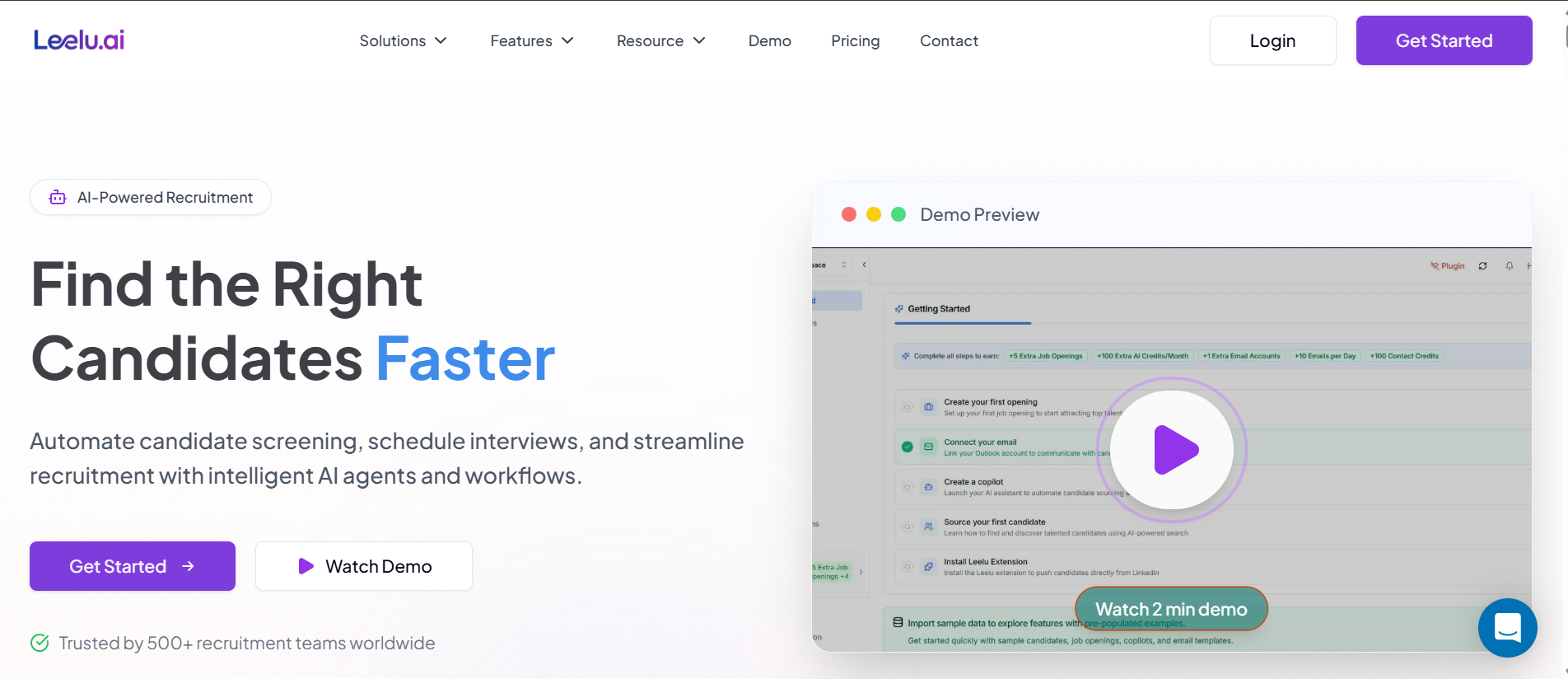
Hiring slows down when you manage sourcing, outreach, screening, and scheduling manually.
You switch between tools, repeat tasks, and still face delays.
Leelu AI acts as an AI recruiting copilot that automates your entire outbound recruiting workflow, helping you move from job post to interview faster while keeping candidate engagement consistent.
How Leelu AI Helps Automate Candidate Outreach
Leelu AI combines multiple steps into one streamlined workflow:
- Source candidates from 500M+ profiles across platforms
- Screen and rank 1000+ resumes in minutes using AI
- Send 100–300 personalized outreach messages daily
- Automate follow-ups and replies 24/7
- Schedule interviews in under a minute
- Integrate with 10+ platforms including ATS systems
This reduces manual work and lets you focus on decision-making.
Best Use Cases and When to Use Leelu AI
Leelu AI works best when you need speed, scale, and consistency in hiring.
It is useful when you want to:
- Reduce recruiting effort by 70–85%
- Move from job post to interview in ~24 hours
- Improve response rates by 40–60%
- Scale hiring without increasing team size
It fits best when you want a structured and predictable recruiting workflow.
2 Gem for CRM-Based Candidate Outreach and Engagement
Gem focuses on helping you manage and nurture candidate relationships over time.
Instead of treating outreach as one-time communication, it helps you build long-term engagement with candidates.
It works best when combined with sourcing tools, acting as a layer that keeps your outreach organized and consistent.
You can use Gem to:
- Track candidate interactions across different stages of the pipeline
- Automate outreach sequences while maintaining personalization
- Build talent pipelines for future hiring needs
It also gives visibility into your outreach performance so you can improve how you engage candidates.
However, Gem works more as a CRM layer rather than a full sourcing platform.
So you may still need additional tools for candidate discovery.
3 HireEZ for AI-Powered Candidate Sourcing and Outreach
HireEZ is designed to help you find and engage candidates using AI-driven sourcing.
It reduces the time you spend manually searching across platforms and helps you focus on qualified profiles.
The platform improves efficiency by combining sourcing and outreach in one place.
With HireEZ, you can:
- Source candidates across multiple platforms using AI-powered search
- Rediscover past candidates from your existing database
- Run outreach campaigns to engage candidates directly
This makes it useful when your main challenge is finding the right talent quickly.
However, it may require integrations with other tools to manage the full recruiting workflow.
Suggested Reading:
What is Full Desk Recruiting?4 Apollo.io for Outreach Automation in Recruiting Campaigns
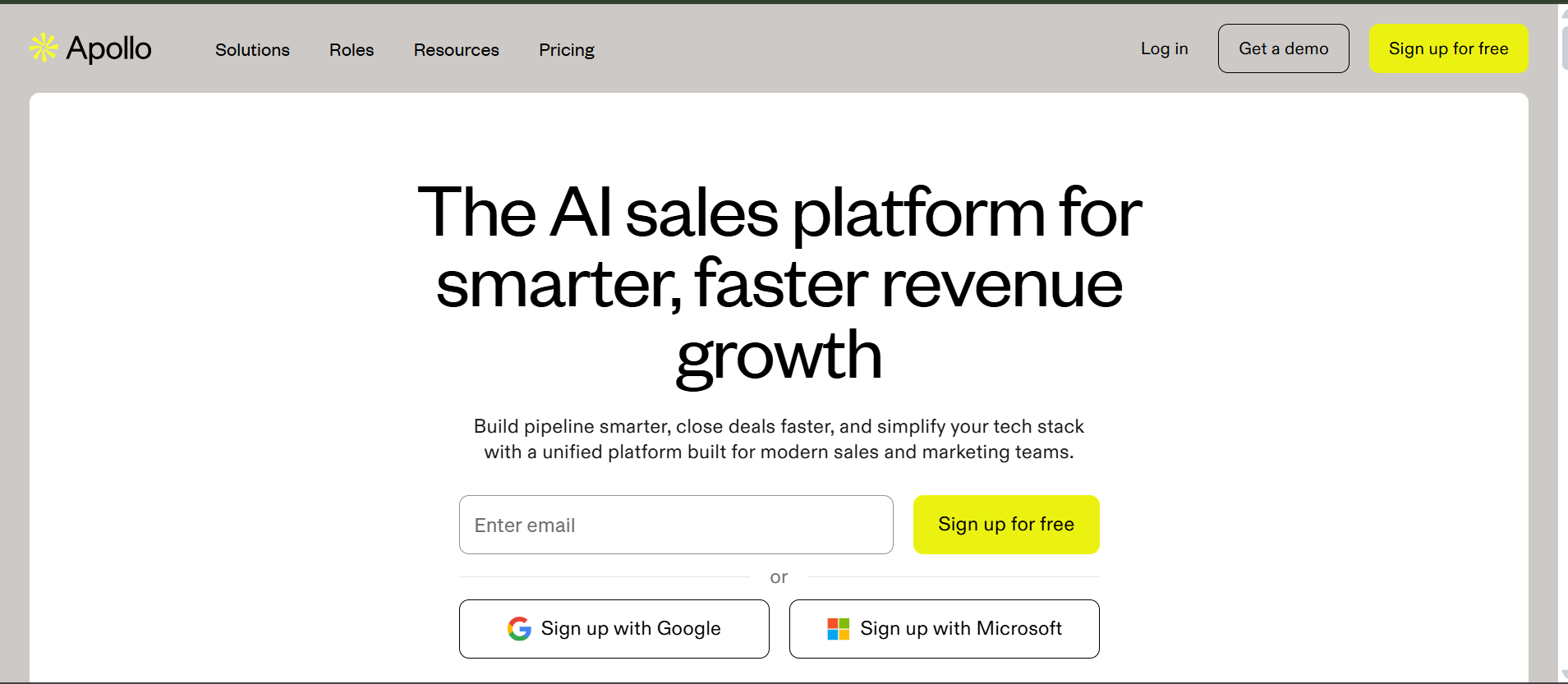
Apollo.io is primarily built for sales outreach but can also be used for recruiting campaigns.
It helps you automate communication and manage outreach at scale.
If your hiring strategy involves high-volume outbound messaging, this approach can work well.
You can use Apollo.io to:
- Create email sequences for candidate outreach
- Access a large contact database
- Track engagement metrics like opens and replies
This helps you run structured outreach campaigns without manual effort.
However, since it is not built specifically for recruiting, it may lack deeper hiring workflow features.
5 Loxo for Recruiting CRM and Outreach Automation
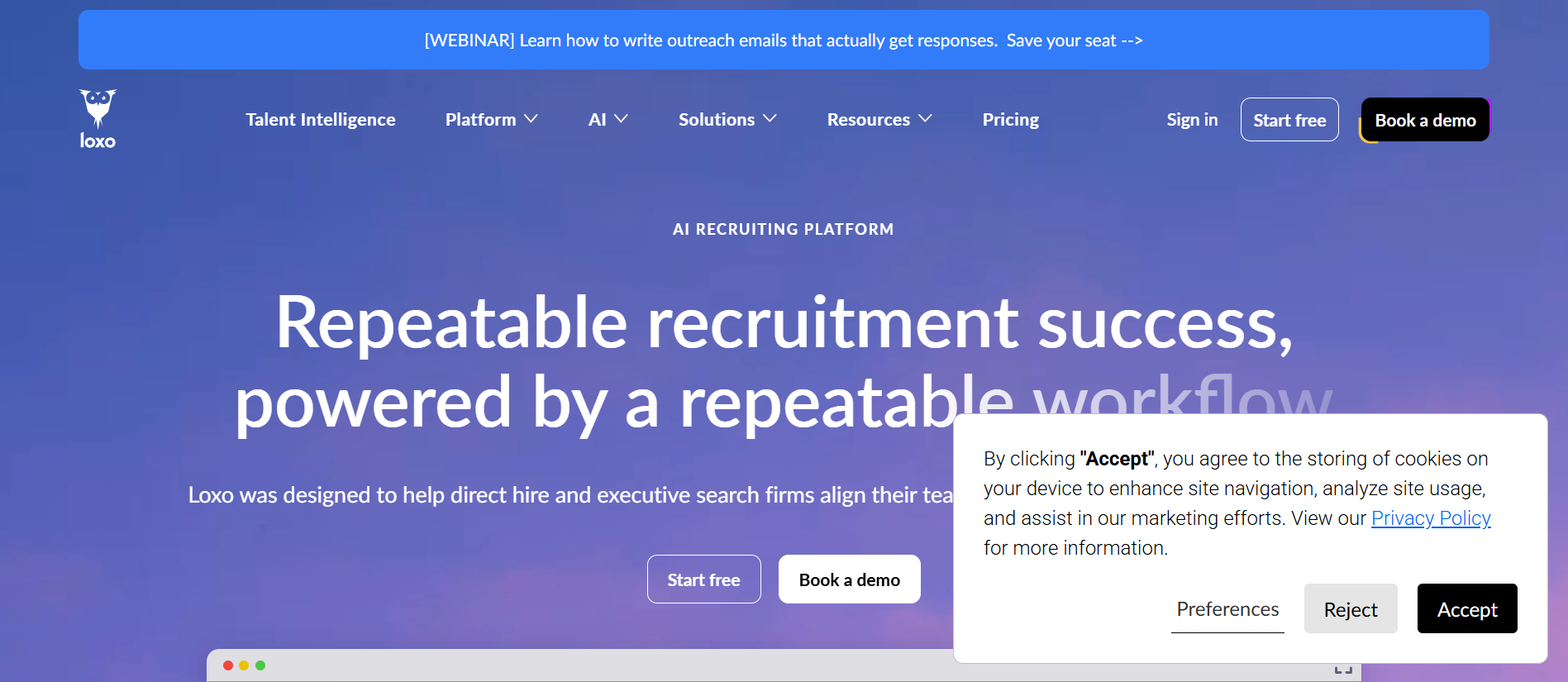
Loxo combines a recruiting CRM with outreach automation to help you manage candidates more effectively.
It is often used by agencies that need both sourcing and engagement in one system.
The platform supports both pipeline management and communication workflows.
With Loxo, you can:
- Manage candidate pipelines through a CRM interface
- Run automated outreach campaigns
- Use AI sourcing features to find candidates
This makes it useful when you want a balance between sourcing and relationship management.
However, it may require some setup time to fully configure workflows.
6 SeekOut for Data-Driven Candidate Outreach
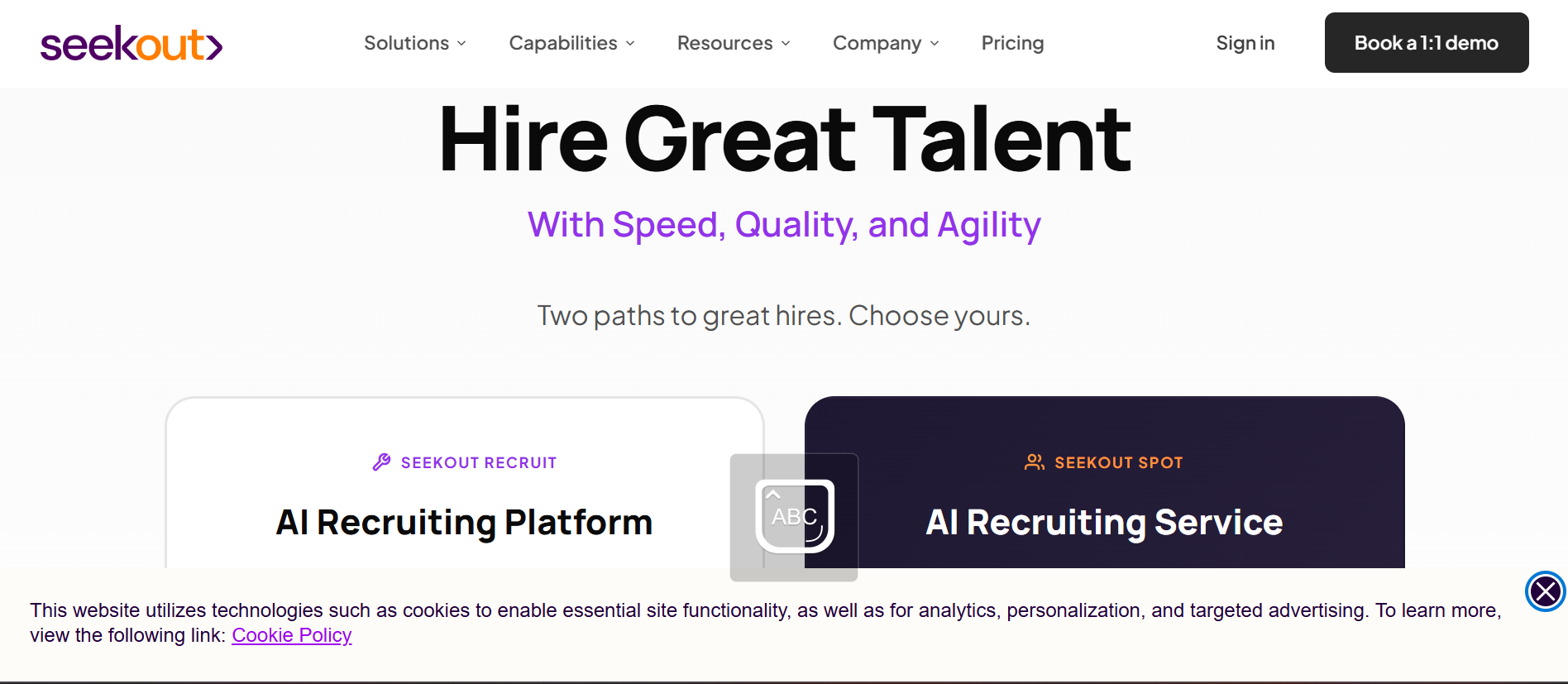
SeekOut is built for teams that rely heavily on data to find and engage candidates.
It offers deep search capabilities that help you identify highly specific talent.
This is especially useful when you are hiring for niche or hard-to-fill roles.
You can use SeekOut to:
- Run advanced searches with detailed filters
- Find diverse and underrepresented talent
- Integrate outreach tools to engage candidates
This allows you to build more targeted and high-quality pipelines.
However, its strength lies more in sourcing and data insights than full outreach automation.
7 Fetcher for Automated Candidate Sourcing and Outreach
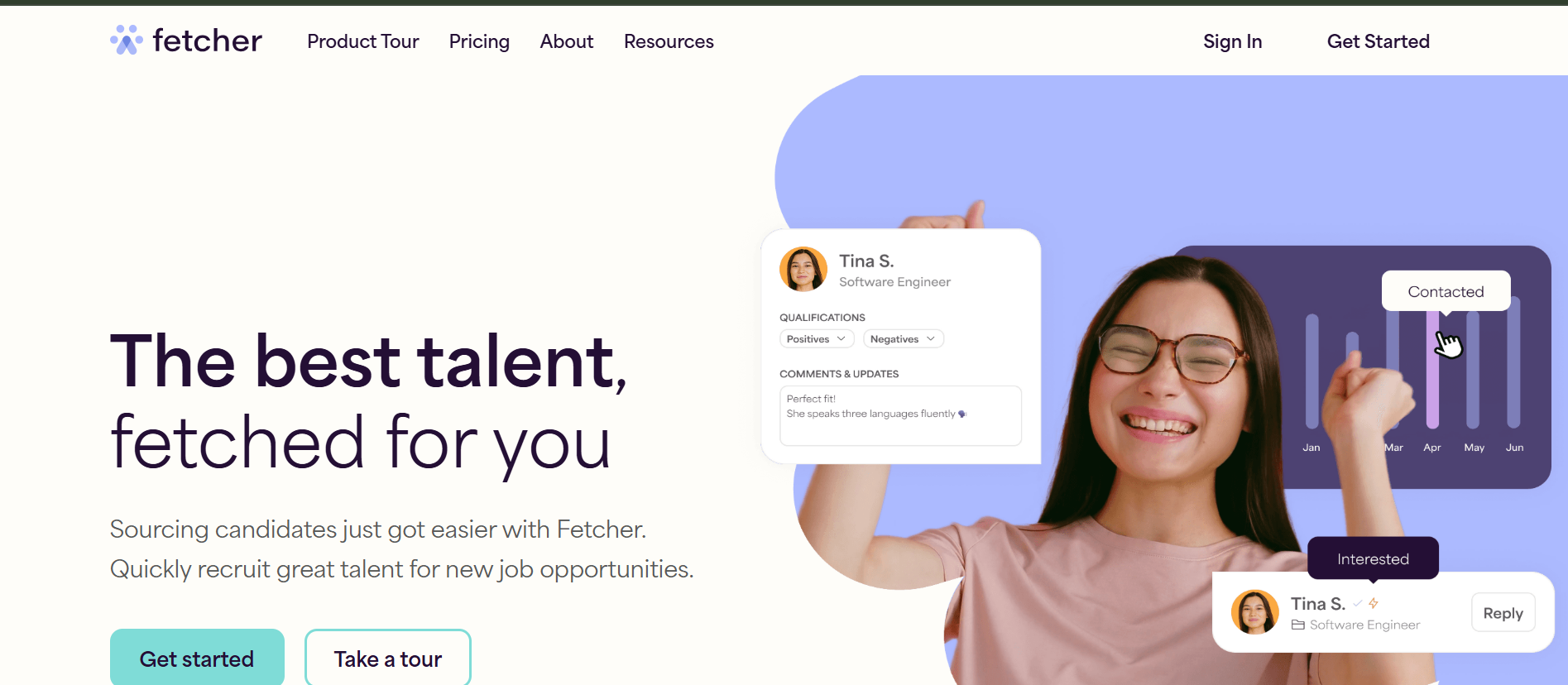
Fetcher focuses on helping you automate the early stages of recruiting, especially sourcing and outreach.
Instead of manually searching for candidates, it delivers pre-qualified profiles directly to you.
This helps you save time while still maintaining a steady flow of candidates.
With Fetcher, you can:
- Automate candidate sourcing based on your job requirements
- Receive curated candidate lists on a regular basis
- Run outreach campaigns to engage candidates quickly
This makes it useful when you want a more hands-off approach to sourcing.
However, you may have less control over how candidates are sourced compared to manual methods.
8 Beamery for Candidate Engagement and Outreach Campaigns
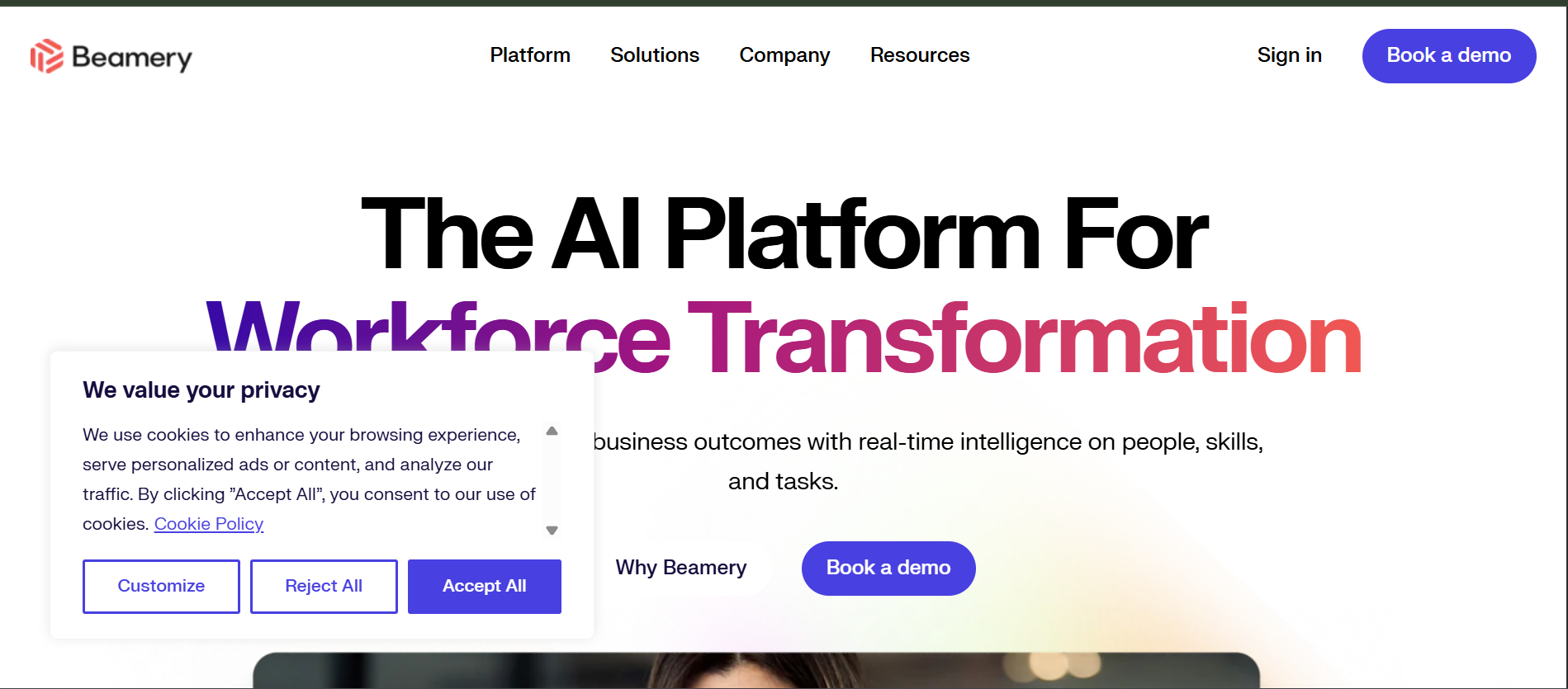
Beamery is designed to help you build and manage long-term relationships with candidates.
It focuses more on engagement and nurturing rather than just sourcing.
This makes it useful when you want to create a strong talent pipeline over time.
You can use Beamery to:
- Create targeted engagement campaigns for different candidate segments
- Track candidate interactions across multiple touchpoints
- Automate communication workflows to keep candidates engaged
This helps you stay connected with candidates even before roles open up.
However, it is more suited for larger teams and may feel complex for smaller setups.
9 SmartRecruiters for ATS with Outreach Features
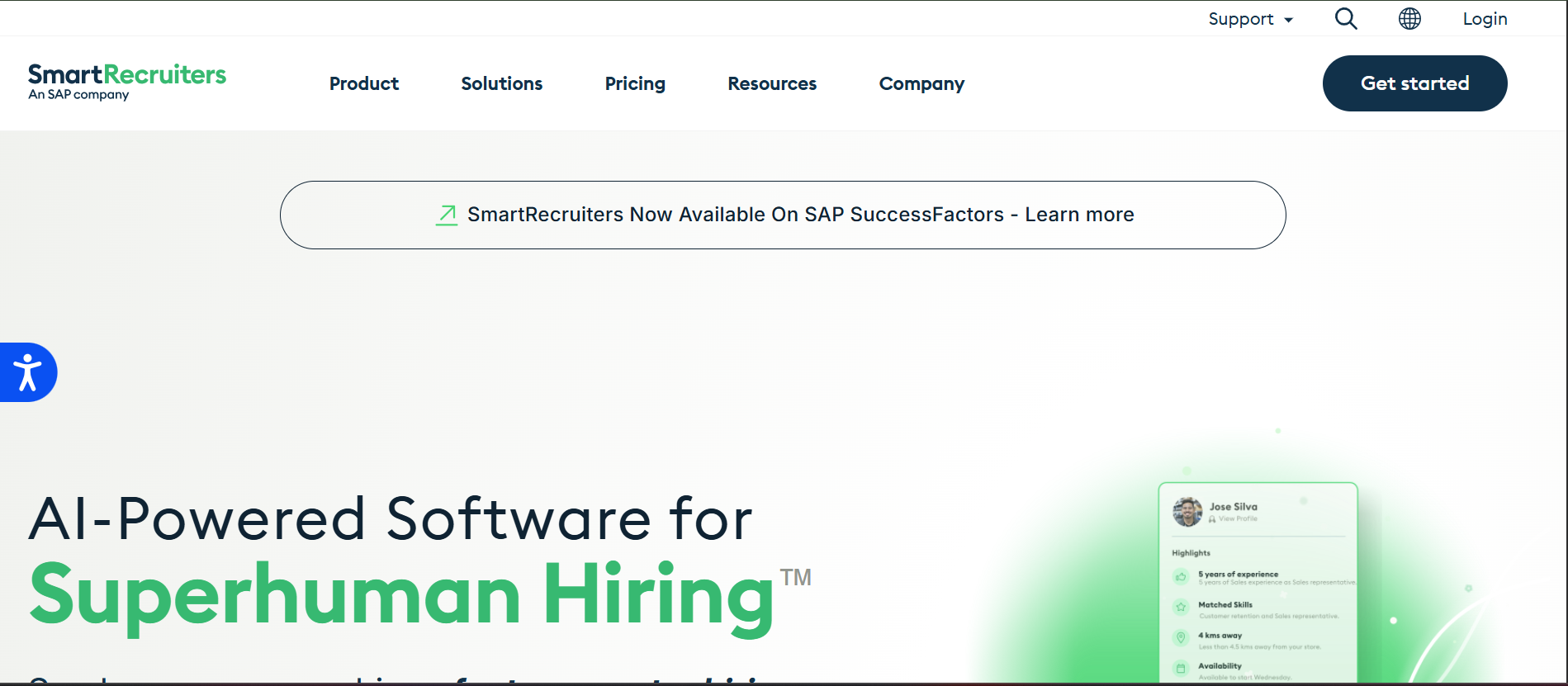
SmartRecruiters combines an applicant tracking system with outreach and communication tools.
It helps you manage the full hiring process while also supporting candidate engagement.
This is useful when you want everything in one system instead of using separate tools.
With SmartRecruiters, you can:
- Manage candidates through an ATS pipeline
- Communicate with candidates directly within the platform
- Automate parts of the hiring workflow
This creates a more structured and centralized hiring process.
However, its outbound recruiting capabilities may not be as advanced as specialized tools.
Suggested Reading:
Top HR Metrics Every HR Professional Should Track10 Recruit CRM for Outreach and Pipeline Management
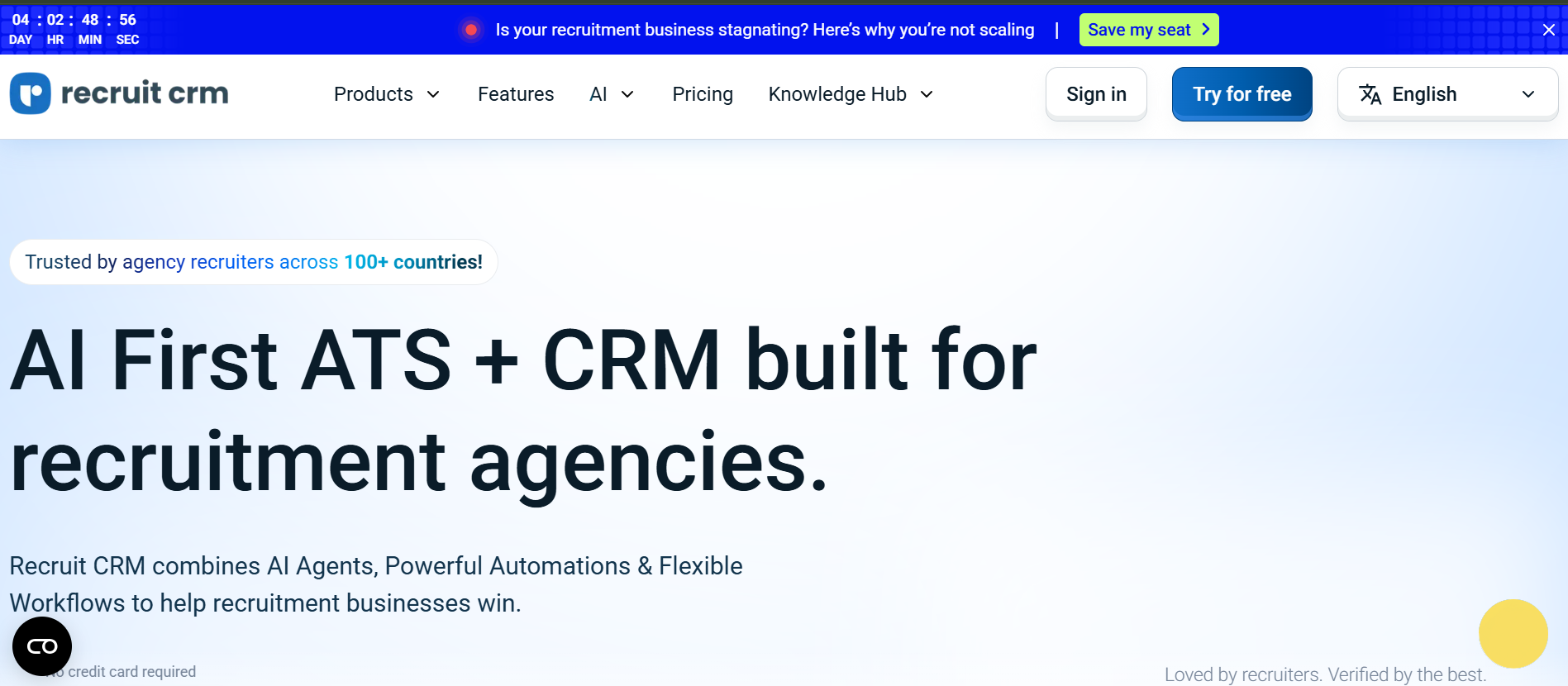
Recruit CRM is a simple and practical tool for managing candidate pipelines and outreach.
It is often used by small to mid-sized teams that want an easy-to-use system.
The platform focuses on keeping your recruiting workflow organized without adding complexity.
You can use Recruit CRM to:
- Send outreach emails directly from the platform
- Track candidates across pipeline stages
- Manage recruiting workflows in one place
This helps you stay organized while handling multiple candidates at once.
However, it may have limited advanced automation compared to more AI-driven tools.
How to Choose the Right Outbound Recruiting Tool
Once you know the available tools, the next step is choosing the one that actually fits your hiring process.
Not every tool will match your workflow, and picking the wrong one can add more complexity instead of reducing it.
The goal is to find a tool that simplifies your outreach, improves efficiency, and scales with your hiring needs.
Define Your Hiring Goals and Outreach Volume
Start by understanding what your hiring process actually looks like.
Are you hiring occasionally, or do you need to reach hundreds of candidates every week?
Your outreach volume will directly impact the type of tool you need.
If your hiring is low-volume, a simple outreach or CRM tool may be enough.
But if you are hiring at scale, you need a platform that can handle:
- High-volume candidate sourcing across multiple platforms
- Consistent outreach without manual effort
- Continuous pipeline building instead of one-time hiring
Being clear on your goals helps you avoid tools that either overcomplicate or limit your process.
Evaluate Workflow Fit and Ease of Use
A tool should fit into your workflow, not force you to change how you work completely.
If your team spends more time learning the tool than using it, it becomes a problem.
You should look for tools that:
- Reduce the number of steps in your recruiting process
- Bring multiple functions into one place instead of using separate tools
- Are easy to set up and use without heavy training
If you are currently switching between sourcing tools, email platforms, and scheduling systems, this is a clear sign your workflow can be simplified.
Choosing a tool that aligns with your existing process will make adoption faster and more effective.
Consider Automation Level and Scalability
Automation is what makes outbound recruiting tools truly valuable.
But not all tools offer the same level of automation.
Some only automate messaging, while others handle larger parts of the workflow.
You should evaluate:
- How much of your process can be automated
- Whether the tool supports end-to-end workflows
- If it can scale as your hiring needs grow
As your hiring volume increases, your tool should handle more candidates without adding manual work.
For example, platforms like Leelu AI are designed to automate sourcing, outreach, and follow-ups together.
This helps you maintain consistent engagement while scaling hiring without increasing team effort.
Choosing the right tool is not just about features.
It is about finding a system that grows with your hiring needs and keeps your outreach efficient over time.
Conclusion
Outbound recruiting tools help you automate candidate outreach and reduce manual effort across your hiring process.
In this guide, you explored key features, top tools, and how to choose the right one based on your needs.
Focus on automation, personalization, and scalability to improve hiring speed, maintain consistent candidate engagement, and build a more efficient recruiting workflow over time.
FAQs
What is outbound recruiting and how is it different from inbound recruiting?
Outbound recruiting focuses on proactively reaching out to candidates instead of waiting for applications.
It helps you engage passive candidates, while inbound recruiting relies on job postings and applicants coming to you.
Which outbound recruiting tool is best for automating candidate outreach?
The best tool depends on your hiring needs and scale.
Some tools focus on outreach, while others handle sourcing and engagement together.
If you want end-to-end automation, platforms that combine sourcing, outreach, and scheduling are more effective.
How do outbound recruiting tools improve response rates?
These tools improve response rates by sending personalized messages at scale and automating follow-ups.
They ensure candidates receive timely communication, which increases engagement and reduces the chances of missed opportunities during outreach.
Can small teams use outbound recruiting tools effectively?
Yes, small teams can benefit by automating repetitive tasks like sourcing and follow-ups.
This allows them to handle more candidates without increasing workload, making their hiring process more efficient and manageable.
What should you look for in an outbound recruiting tool?
You should focus on features like multi-platform sourcing, outreach automation, personalization, and analytics.
The right tool should reduce manual work, fit your workflow, and help you scale hiring without adding complexity.


