Hiring Gen Z isn’t as straightforward as posting a job and waiting for applications to roll in.
You’re dealing with a generation that thinks differently about work, communication, and expectations.
What used to work for hiring millennials or older candidates often falls flat here, leaving many employers confused or frustrated.
In this guide, you’ll understand where these challenges come from and how they show up in your hiring process.
- The key hiring difficulties employers face with Gen Z
- Why traditional hiring methods are struggling
- What you need to rethink to attract and retain Gen Z talent
Who Is Gen Z Talent (And Why Hiring Them Feels Different Today)
Gen Z talent typically refers to people born between 1997 and 2012, but what really matters is how they approach work, not just when they were born.
You’re hiring a generation that grew up with instant access to information, digital-first communication, and a strong sense of individuality.
This naturally shapes how they evaluate jobs, employers, and even your hiring process.
Unlike previous generations, they expect speed, transparency, and purpose from the very first interaction.
That’s why hiring them often feels different.
- They value flexibility over rigid structures
- They expect quick communication and feedback
- They prioritize growth, purpose, and work-life balance
When your hiring approach doesn’t align with these expectations, it quickly creates friction, making it harder to attract and engage the right Gen Z candidates.
Key Shifts in Gen Z Hiring Expectations
Once you understand who Gen Z talent is, the next step is to look at what they actually expect from you during the hiring process.
These expectations are not subtle shifts. They directly impact how candidates perceive your company, how quickly they engage, and whether they stay interested at all.
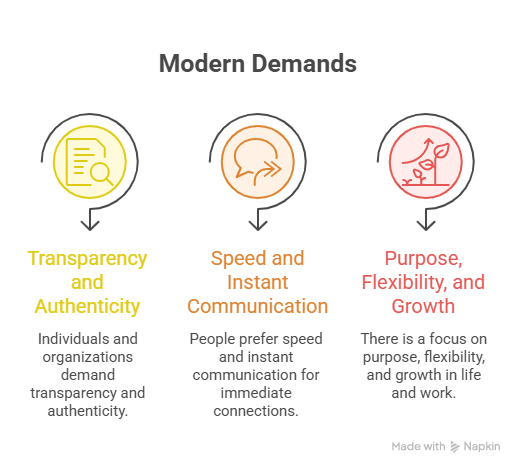
1. Demand for transparency and authenticity
Gen Z candidates don’t respond well to vague job descriptions or overly polished employer branding.
They want clear details about roles, salaries, expectations, and even company culture without the fluff.
If your messaging feels generic or scripted, they quickly lose trust and move on to companies that feel more real and honest.
2. Preference for speed and instant communication
This generation is used to real-time interactions across every platform they use daily.
So when your hiring process takes days to respond or schedule interviews, it feels outdated and frustrating.
Delays in communication often signal disorganization to them, even if that’s not the case internally.
3. Focus on purpose, flexibility, and growth
Gen Z is not just looking for a paycheck.
They want to understand how their work contributes to something meaningful, along with flexibility in how and where they work.
Growth opportunities, learning, and career progression matter just as much as the role itself.
4. Digital-first candidate behavior
Everything about how Gen Z discovers, researches, and applies to jobs is digital-first.
They expect mobile-friendly applications, smooth experiences, and minimal friction throughout the process.
If your hiring journey feels clunky or outdated, you risk losing candidates before you even get a chance to evaluate them.
Suggested Reading:
AI Recruiting Tools12 Gen Z Hiring Challenges & Difficulties Employers Face Today
Now that you’ve seen the broader picture, it helps to break these challenges down individually so you can clearly understand where things go wrong and why they matter.
1. Attracting Gen Z candidates in a competitive market
Getting Gen Z candidates to even notice your job opening is becoming harder than ever.
You’re competing with companies that move faster, communicate better, and present roles in a way that instantly connects.
If your job descriptions feel generic or your employer brand lacks clarity, candidates scroll past without a second thought.
To stand out, you need messaging that is clear, relevant, and aligned with what Gen Z actually values, not what worked before.
2. High expectations for instant communication and feedback
Gen Z is used to real-time communication in almost every part of their daily life.
When your hiring process includes long response gaps or delayed updates, it creates frustration and uncertainty quickly.
They often interpret slow communication as lack of interest or poor organization.
This means even qualified candidates may drop off simply because they feel ignored, making speed and consistency in communication a critical part of your hiring success.
3. Lower loyalty to employers compared to previous generations
Gen Z tends to prioritize personal growth and experience over long-term loyalty to a single employer.
If they feel that a role is not meeting their expectations, they are more willing to explore new opportunities quickly.
This creates pressure on you not just to hire well, but to continuously meet expectations after hiring.
Without a strong employee experience, retaining Gen Z talent becomes an ongoing challenge rather than a one-time effort.
4. Preference for skills-based evaluation over traditional resumes
Traditional resumes and degrees are no longer the strongest indicators of capability for Gen Z candidates.
They prefer being evaluated based on real skills, projects, and practical experience rather than formal credentials alone.
If your hiring process relies heavily on resume screening, you may miss out on highly capable candidates.
Adapting to skills-based evaluation helps you identify better fits while also aligning with how Gen Z wants to be assessed.
5. Tendency to ghost employers mid-process
Candidate ghosting has become a common issue, especially with Gen Z applicants.
This usually happens when the hiring process feels too long, unclear, or disconnected from their expectations.
When candidates don’t receive timely updates or lose interest, they often disengage without notice.
This creates uncertainty and disrupts your hiring pipeline, making it important to maintain consistent communication and momentum throughout the process.
6. Desire for rapid career growth and learning opportunities
Gen Z is highly focused on growth from the very beginning of their careers.
They actively look for roles that offer learning opportunities, mentorship, and clear progression paths.
If your job descriptions or interviews fail to highlight growth potential, candidates may not see long-term value.
You need to clearly communicate how the role helps them grow, not just what responsibilities they will handle.
7. Managing salary vs purpose-driven expectations
Gen Z looks for a balance between financial stability and meaningful work.
They want competitive compensation, but they also care deeply about purpose, impact, and alignment with their values.
If your role only emphasizes salary without explaining the bigger picture, it may not be compelling enough.
Balancing both aspects in your messaging helps you attract candidates who are both motivated and aligned with your organization.
8. Retaining Gen Z after hiring
Hiring Gen Z candidates is only the first step, retention is where many companies struggle.
Without continuous engagement, feedback, and growth opportunities, new hires may quickly lose interest.
They expect regular communication, recognition, and clarity on their progress within the company.
If these elements are missing, retention becomes difficult, leading to higher turnover and repeated hiring efforts.
9. Low tolerance for generic or impersonal outreach
Generic outreach messages rarely work with Gen Z candidates.
They expect communication that feels personalized and relevant to their background or interests.
When outreach feels mass-produced, it signals lack of effort and reduces the chances of a response.
You need to tailor your messaging to show that you understand the candidate, which significantly improves engagement and response rates.
10. Skepticism toward employer branding and corporate messaging
Gen Z is highly skeptical of overly polished employer branding.
They tend to trust real experiences shared by employees more than curated marketing messages.
If your communication feels too scripted or unrealistic, it can create doubt instead of interest.
Being transparent and authentic in how you present your company helps build trust and improves candidate perception.
11. Expectation of Flexibility & Remote Work
Flexibility is no longer seen as an added benefit by Gen Z, it is expected.
They value the ability to choose how and where they work, whether that means remote, hybrid, or flexible schedules.
Rigid work structures can quickly discourage them from applying or accepting offers.
Clearly communicating your flexibility policies can make a significant difference in attracting the right candidates.
12. Adapting to new communication channels (DMs, social, etc.)
Gen Z does not rely solely on email for communication.
They are active across multiple platforms and expect brands to meet them where they already spend their time.
If your hiring communication is limited to traditional channels, you may struggle to reach and engage them effectively.
Expanding to more direct and familiar communication methods helps you connect faster and build stronger candidate relationships.
How to Overcome Gen Z Hiring Challenges
Once you identify the specific challenges in your hiring process, the next step is knowing how to fix them in a practical way.
The goal is not to overhaul everything overnight, but to make focused improvements where Gen Z expectations and your process are misaligned.
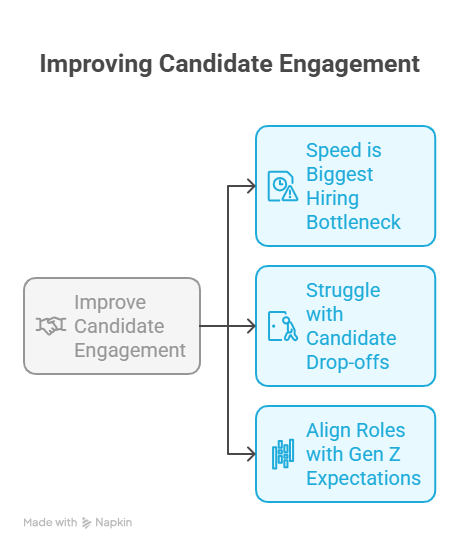
1. If you want to improve candidate engagement
Candidate Engagement starts from the very first touchpoint, not after the application.
You need to make your communication feel personal, relevant, and human instead of templated or transactional.
- Personalize outreach based on candidate interests or projects
- Use clear, conversational messaging instead of formal jargon
- Show what the role actually looks like beyond responsibilities
When candidates feel understood early, they are far more likely to stay engaged.
2. If speed is your biggest hiring bottleneck
Slow hiring processes are one of the fastest ways to lose Gen Z candidates.
You need to reduce delays between sourcing, resume screening, and scheduling without overwhelming your team.
- Shorten feedback loops between interview stages
- Automate repetitive steps like screening and scheduling
- Keep candidates informed at every step to avoid uncertainty
Even small improvements in response time can significantly increase conversion rates.
3. If you struggle with candidate drop-offs
Drop-offs usually happen when the process feels too long, unclear, or disconnected.
Instead of assuming candidates lose interest randomly, look at where friction exists in your funnel.
- Simplify application steps and remove unnecessary barriers
- Clearly communicate timelines and next steps upfront
- Maintain consistent follow-ups to keep candidates engaged
Reducing friction often matters more than adding new steps.
4. If you want to align roles with Gen Z expectations
Gen Z evaluates roles differently, so your job positioning needs to evolve.
You need to clearly connect the role with growth, flexibility, and meaningful outcomes.
- Highlight learning opportunities and career progression paths
- Be transparent about flexibility, work setup, and expectations
- Show how the role contributes to a bigger purpose
When your roles reflect what Gen Z actually values, attracting and converting the right candidates becomes much easier.
How Leelu.AI Helps You Adapt to Modern Gen Z Hiring Needs
After understanding the gap between Gen Z expectations and traditional hiring processes, the next step is making those improvements actually work at scale.
Because managing speed, personalization, and engagement together can quickly become overwhelming without the right system in place.
Leelu.AI helps you simplify this by bringing everything into one streamlined hiring workflow.
- You can source candidates from a large pool instantly, instead of relying on manual searches
- You engage candidates with personalized, strategy-driven outreach that feels relevant instead of templated.
- You keep communication active with automated follow-ups and quick responses
- You screen and match candidates faster based on real fit, not just resumes
- You schedule interviews without back-and-forth coordination delays
When these steps work together, your hiring process becomes faster, more consistent, and naturally aligned with how Gen Z expects to be hired.
Common Mistakes Employers Make When Hiring Gen Z
Even with the best intentions, it’s easy to fall into patterns that simply don’t work for Gen Z anymore.
Most hiring challenges don’t come from a lack of effort, but from relying on outdated assumptions about what candidates want.
1. Using outdated hiring processes
Many hiring workflows are still built for a different generation.
Long application forms, slow interview cycles, and rigid evaluation methods create unnecessary friction for Gen Z candidates.
If your process feels slow or outdated, candidates lose interest before you can even assess them properly.
2. Overlooking candidate experience
You might focus heavily on filling the role, but Gen Z is equally focused on how they’re treated during the process.
Every interaction, from application to final interview, shapes their perception of your company.
A poor experience often leads to drop-offs, even if the role itself is attractive.
3. Ignoring communication preferences
Relying only on formal emails or delayed responses doesn’t align with how Gen Z communicates.
They expect quicker, more direct, and conversational interactions across channels they already use.
When communication feels slow or disconnected, engagement drops quickly.
4. Focusing only on compensation
Salary matters, but it’s not the only deciding factor for Gen Z.
If your offer only highlights pay without addressing growth, flexibility, or purpose, it feels incomplete.
Candidates often choose roles that offer a better overall experience, even if the salary is similar.
5. Not leveraging data and automation
Manual hiring processes make it difficult to keep up with speed and personalization expectations.
Without data-driven insights or automation, it becomes harder to identify bottlenecks and optimize your funnel.
This often results in slower hiring, inconsistent communication, and missed opportunities to engage the right candidates.
Key Takeaways
After going through all the challenges, expectations, and solutions, it becomes clear that Gen Z hiring is not just a small shift.
It requires you to rethink how your entire hiring process works, from first interaction to final offer.
- Gen Z expects speed, transparency, and personalized communication throughout the hiring journey
- Traditional hiring methods often fail because they don’t align with digital-first behavior
- Candidate experience plays a major role in engagement, conversion, and retention
- Delays, generic outreach, and lack of clarity are the biggest reasons for drop-offs
- Skills, growth opportunities, flexibility, and purpose matter as much as compensation
- Leveraging automation and smarter workflows helps you meet expectations without increasing workload
When you start aligning your process with how Gen Z actually thinks and behaves, hiring becomes faster, more predictable, and far more effective.
Suggested Reading:
Automated Hiring WorkflowsConclusion
At the end of the day, Gen Z hiring is less about chasing trends and more about fixing what slows you down.
When your process becomes faster, more transparent, and genuinely candidate-focused, everything from engagement to conversions starts improving naturally.
That’s exactly where tools like leelu.ai can support you, by helping you move faster, communicate better, and manage hiring without added complexity.
If you align your process with how Gen Z actually thinks, hiring stops feeling difficult and starts becoming predictable.
Frequently Asked Questions
1. How is hiring Gen Z different from hiring millennials?
Gen Z expects faster communication, more transparency, and a smoother hiring process. They prefer digital-first interactions and are less patient with delays, unlike millennials who were more adaptable to traditional hiring methods.
2. Why do Gen Z candidates drop off during the hiring process?
Long application forms, slow responses, and lack of updates often lead to drop-offs. Gen Z is used to quick interactions, so any delay or friction can push them to explore other opportunities.
3. What role does employer branding play in attracting Gen Z talent?
Employer branding is critical. Gen Z actively researches companies through social media and reviews. They are more likely to apply to companies that clearly communicate values, culture, and growth opportunities.
4. How can companies reduce candidate ghosting?
Clear communication, faster hiring timelines, and regular updates help reduce ghosting. Keeping candidates engaged throughout the process makes them more likely to stay committed.
5. Do Gen Z candidates prefer AI in hiring processes?
Yes, as long as it improves speed and experience. Gen Z is comfortable with technology and appreciates AI when it reduces delays, simplifies applications, and provides quick responses.


