
You already know exit interviews are important, but most companies treat them like a formality instead of a learning opportunity.
The real value comes from asking the right questions that uncover honest insights, not surface-level answers.
When done well, exit interviews can help you fix retention issues, improve culture, and refine your hiring strategy.
In this guide, you will discover:
- 30 powerful exit interview questions
- How to structure your interviews effectively
- Tips to turn feedback into real HR improvements
Benefits of Using a Structured Exit Interview Template
When you move from random questions to a structured exit interview template, everything becomes more intentional.
You stop guessing and start collecting insights that actually help you improve how you hire, manage, and retain employees.
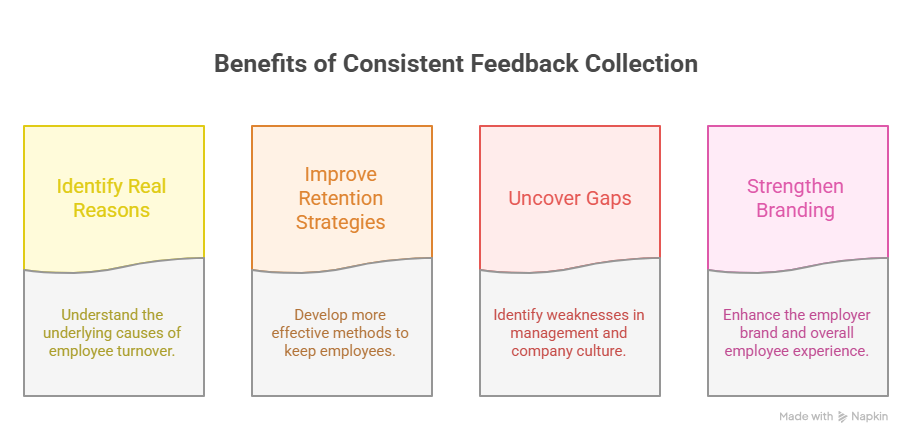
1. Consistency in Feedback Collection
Without a structured approach, every exit interview feels different, and that makes your data unreliable.
A template ensures you ask the same core questions every time, so you can compare responses across teams, roles, and time periods with clarity.
This consistency helps you spot patterns instead of relying on one-off opinions.
2. Identify Real Reasons Behind Employee Turnover
Employees rarely share the full truth unless you ask the right questions in the right way.
A well-designed template guides the conversation deeper, helping you uncover the actual reasons behind exits, whether it is management issues, lack of growth, or misaligned expectations.
This clarity is what turns feedback into meaningful change.
3. Improve Employee Retention Strategies
Once you start seeing patterns in why people leave, retention stops being reactive.
You can proactively fix issues, whether it is career progression, workload balance, or team dynamics, before they push more employees out.
Over time, this directly reduces attrition and strengthens your workforce stability.
4. Uncover Gaps in Management and Culture
Exit interviews often reveal things employees hesitate to say while they are still in the company.
A structured template makes it easier to consistently capture feedback on leadership, communication, and workplace culture.
These insights help you address blind spots that impact morale and performance.
5. Strengthen Employer Branding and Experience
How you handle exits says a lot about your company.
When employees feel heard during their final interaction, it leaves a positive impression that can influence reviews, referrals, and your overall employer brand.
A thoughtful template ensures every departing employee has a respectful and consistent experience.
6. Turn Feedback into Actionable HR Insights
Collecting feedback is only useful if you can actually use it.
A structured format makes it easier to analyze responses, identify trends, and turn insights into clear action plans.
This is where exit interviews shift from being a process to becoming a strategic advantage for your HR team.
How to Conduct an Effective Exit Interview
Now that you understand why structure matters, the next step is knowing how to actually run an exit interview the right way.
Because even the best questions will fall flat if the conversation is rushed, biased, or uncomfortable for the employee.
1. Choose the Right Timing
Timing plays a bigger role than most teams realize during exit interviews.
If you conduct it too early, employees may hold back, and if it is too late, details can feel less relevant or emotionally distant.
The ideal window is usually during the notice period, when experiences are still fresh but emotions are more balanced.
2. Create a Comfortable Environment
People only share honest feedback when they feel safe and respected.
Make sure the setting feels private, relaxed, and free from pressure, whether it is a one-on-one meeting or a virtual conversation.
Even small things like tone, body language, and listening without interruption can change how open someone is with you.
3. Ask Open-Ended Questions
Yes or no questions will only give you surface-level answers that do not help much.
Instead, focus on open-ended questions that encourage employees to explain their experiences, decisions, and suggestions in their own words.
This approach leads to deeper insights that you can actually learn from and act on.
4. Keep It Neutral and Non-Judgmental
The goal of an exit interview is to understand, not to defend or justify.
If employees sense judgment or pushback, they will quickly shut down or filter what they say.
Staying neutral helps you build trust in the moment and gather more honest, unfiltered feedback.
5. Document and Analyze Responses
Collecting feedback is only the first step, what you do next matters more.
Make sure you document responses in a structured way so you can review them later without losing context.
Over time, analyzing this data helps you identify trends, recurring issues, and opportunities to improve your workplace.
Suggested Reading:
Best Employee Retention Strategies for HR Leaders30 Exit Interview Questions Template for Better HR Insights
Now that you know how to conduct an effective exit interview, the next step is asking the right questions.
A well-structured set of questions helps you move beyond generic feedback and uncover insights that actually improve your workplace.
Questions About Role and Responsibilities
These questions help you understand how employees experienced their day-to-day work and whether expectations matched reality.
Question 1
What were your main responsibilities, and did they align with what was communicated during hiring?
Question 2
Which parts of your role did you enjoy the most, and why?
Question 3
Which aspects of your role did you find challenging or frustrating?
Question 4
Did you feel your skills were fully utilized in this role? If not, what was missing?
Question 5
Was there anything you would change about your role to make it more fulfilling?
Questions About Management
Your employees’ relationship with their managers often plays a key role in their decision to stay or leave.
Question 6
How would you describe your relationship with your manager?
Question 7
Did you receive regular and helpful feedback from your manager?
Question 8
How supported did you feel by your manager in achieving your goals?
Question 9
Were there any specific management practices that impacted your experience positively or negatively?
Question 10
What could your manager have done differently to improve your experience?
Questions About Work Environment
Work culture and environment shape how employees feel every day at work.
Question 11
How would you describe the overall work environment and culture?
Question 12
Did you feel comfortable sharing your ideas and concerns within the team?
Question 13
How well did your team collaborate and communicate?
Question 14
Did you feel valued and recognized for your contributions?
Question 15
What changes would you suggest to improve the workplace environment?
Questions About Compensation and Benefits
Compensation is not always the main reason people leave, but it often influences how they feel about their overall value.
These questions help you understand whether your pay structure and benefits meet employee expectations.
Question 16
How satisfied were you with your compensation compared to your responsibilities?
Question 17
Did you feel your salary was competitive within the industry?
Question 18
How would you rate the benefits package offered to you?
Question 19
Were there any specific benefits you felt were missing or could be improved?
Question 20
Did compensation or benefits play a role in your decision to leave?
Questions About Career Growth
Lack of growth is one of the most common reasons employees start looking elsewhere.
These questions help you identify whether your organization is providing clear and meaningful career paths.
Question 21
Did you feel there were enough opportunities for career growth?
Question 22
Were your career goals supported by the company?
Question 23
Did you receive the training and resources needed to grow in your role?
Question 24
How clear was your career progression path within the organization?
Question 25
What could the company have done to better support your professional growth?
Questions About Reason for Leaving
This is the most critical section, where you connect all the insights and understand the real trigger behind the exit.
The goal is to uncover honest reasons without making the employee feel defensive.
Question 26
What is the primary reason you decided to leave the company?
Question 27
Were there any specific events that influenced your decision?
Question 28
Did you consider staying, and if so, what could have changed your decision?
Question 29
Would you consider returning to the company in the future? Why or why not?
Question 30
What advice would you give to improve the employee experience here?
How to Use Exit Interview Data Effectively
Collecting exit interview data is only half the job, what you do with it is where the real impact happens.
If you treat feedback as just documentation, nothing changes, but if you use it intentionally, it can reshape your entire HR strategy.
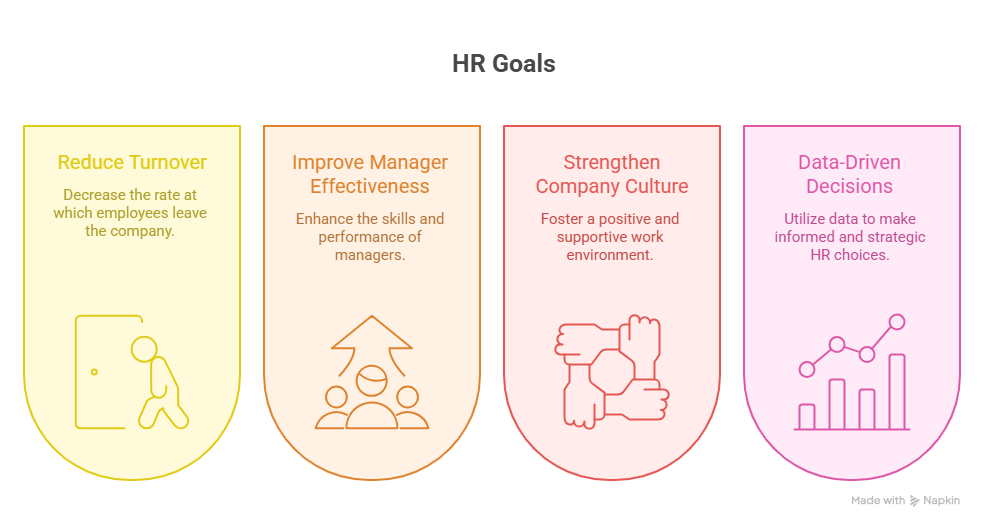
1. If You Want to Reduce Employee Turnover
Start by identifying patterns in why employees are leaving across roles, teams, or time periods.
Look for recurring themes like workload issues, lack of growth, or management concerns, and prioritize fixing the ones that appear most often.
When you act on these insights early, you prevent the same issues from pushing more employees out.
2. If You Want to Improve Manager Effectiveness
Exit interviews often highlight gaps in leadership that are not visible in day-to-day operations.
Use this feedback to identify managers who may need support, training, or clearer expectations around communication and team management.
Over time, this helps you build stronger leaders who directly improve employee experience.
3. If You Want to Strengthen Company Culture
Culture issues rarely show up in dashboards, but they become clear in exit conversations.
Pay attention to feedback around collaboration, recognition, inclusion, and communication to understand what employees truly experience.
These insights help you make targeted changes that shape a healthier and more engaging work environment.
4. If You Want to Make Data-Driven HR Decisions
Instead of relying on assumptions, use exit interview data as a decision-making foundation.
Organize responses, track trends, and connect them with other HR metrics like retention rates or engagement scores.
This approach helps you move from guesswork to clear, data-backed actions that improve hiring, retention, and overall performance.
Suggested Reading:
Performance Improvement Plan in Workplace: HR Best PracticesHow Leelu.AI Helps You Turn Exit Interview Insights Into Action
By now, you already have the questions and the process in place.
But the real challenge starts after the interview, when feedback is scattered across notes, documents, or spreadsheets.
This is where you need a system that helps you actually act on those insights, especially when it comes to fixing hiring gaps.
Leelu.ai helps you take what you learn from exit interviews and apply it directly to how you hire next.
- Use exit insights to refine what the “right candidate” actually looks like
- Adjust skill requirements and filters based on real employee outcomes
- Match candidates more accurately based on role fit and intent
- Screen candidates at scale using AI instead of manual shortlisting
- Set clearer expectations during hiring to avoid future mismatches
Instead of just collecting feedback, you start using it to improve every new hire you make.
This makes it easier to reduce poor-fit hires, lower early attrition, and build a stronger, more aligned workforce over time.
Common Mistakes in Exit Interviews

Even with the right questions and structure, exit interviews can fail to deliver value if they are handled poorly.
Most mistakes happen not because of lack of intent, but because of how the process is executed.
1. Asking Generic or Leading Questions
If your questions are too broad or biased, you will only get surface-level answers.
Generic questions lead to vague responses, while leading questions push employees to answer in a certain way instead of sharing honestly.
This limits the quality of insights you can gather.
2. Not Creating a Safe Space for Honest Feedback
Employees will not open up if they feel judged, rushed, or uncomfortable.
If the environment does not feel safe, most feedback will be filtered or overly polite, which defeats the purpose of the interview.
Creating trust in that moment is what unlocks real insights.
3. Ignoring Patterns in Feedback Data
Collecting feedback without analyzing it is one of the most common gaps.
If you do not look for patterns across interviews, you miss recurring issues that may be affecting multiple teams or roles.
This keeps problems hidden even when the data is right in front of you.
4. Failing to Act on Insights
Insights without action do not create any impact.
When employees see that feedback is collected but never implemented, it reduces trust and makes the process feel pointless.
Taking visible action is what turns feedback into real improvement.
5. Treating Exit Interviews as a Formality
When exit interviews are treated like a checklist task, they lose their strategic value.
Rushed conversations, lack of preparation, or inconsistent processes lead to missed opportunities for learning.
When done right, exit interviews can become one of the most valuable tools for improving your organization.
Conclusion
Exit interviews are more than just a closing conversation, they are one of your best opportunities to learn what truly happens inside your organization.
When you ask the right questions and use the data effectively, you can uncover patterns, fix gaps, and improve retention with confidence.
The key is to move beyond collecting feedback and start acting on it consistently.
This is exactly where tools like Leelu.ai can support you by turning scattered HR data into clear, actionable insights, helping you make smarter decisions and build a stronger, more resilient workplace over time.
Frequently Asked Questions
1. Are exit interviews mandatory for employees?
Exit interviews are not legally required in most cases. They are optional but highly recommended for gathering useful feedback.
2. Who should conduct an exit interview?
Ideally, someone from HR or a neutral third party should conduct it to ensure honest and unbiased responses.
3. Should exit interviews be anonymous?
They can be anonymous if you want more honest feedback, but non-anonymous interviews allow for deeper conversations and follow-ups.
4. What is the best format for an exit interview?
It can be conducted face-to-face, via video call, or through a survey, depending on what makes the employee most comfortable.
5. How long should an exit interview take?
A typical exit interview should take around 20 to 30 minutes to keep it focused while still gathering meaningful insights.