
Employee turnover rarely becomes a problem overnight.
It usually starts with small signs like disengaged employees, frequent resignations, hiring delays, and teams struggling to stay productive.
When employees keep leaving, businesses not only lose talent but also spend more time, money, and effort replacing people instead of growing the company.
The good news is that high employee turnover can be reduced with the right hiring, management, and employee retention strategies.
In this guide, you’ll learn:
- Why employees leave in the first place
- What causes high employee turnover
- 10 practical ways to improve employee retention effectively
- How better hiring decisions can reduce long-term turnover
Understand Why Employees Leave in the First Place
Before you try to reduce employee turnover, you first need to understand why employees are leaving your company.
In many cases, turnover is not caused by a single issue. It usually happens because of multiple workplace problems that slowly affect employee satisfaction and engagement.
Poor leadership, lack of growth opportunities, burnout, and weak hiring decisions are some of the biggest reasons behind high employee turnover.
If businesses fail to identify these problems early, retaining employees becomes more difficult and expensive over time.
Some common reasons employees leave include:
- Poor management
- Limited career growth
- Low employee engagement
- Work-related stress
- Weak company culture
- Poor work-life balance
- Lack of recognition
- Wrong hiring fit
Exit Interviews Can Reveal Patterns
Exit interviews help businesses understand the actual reasons employees decide to leave.
These conversations often reveal recurring workplace issues that may not appear during regular employee feedback sessions.
Over time, businesses can identify patterns that directly impact employee retention.
Exit interviews can uncover:
- Leadership issues
- Team conflicts
- Burnout problems
- Lack of promotions
- Unclear expectations
- Training gaps
Suggested Reading:
30 Exit Interview Questions Template for Better HR InsightsTrack Turnover Data Regularly
Tracking turnover data regularly helps businesses identify retention problems before they grow bigger.
Instead of reacting after employees resign, companies can use data to improve hiring, management, and employee experience proactively.
Important metrics to monitor include:
- Employee turnover rate
- Average employee tenure
- New hire turnover
- Department-wise attrition
- Employee engagement levels
- Retention trends
Regular tracking makes it easier to build stronger and more effective employee retention strategies.
10 Ways to Reduce High Employee Turnover Effectively
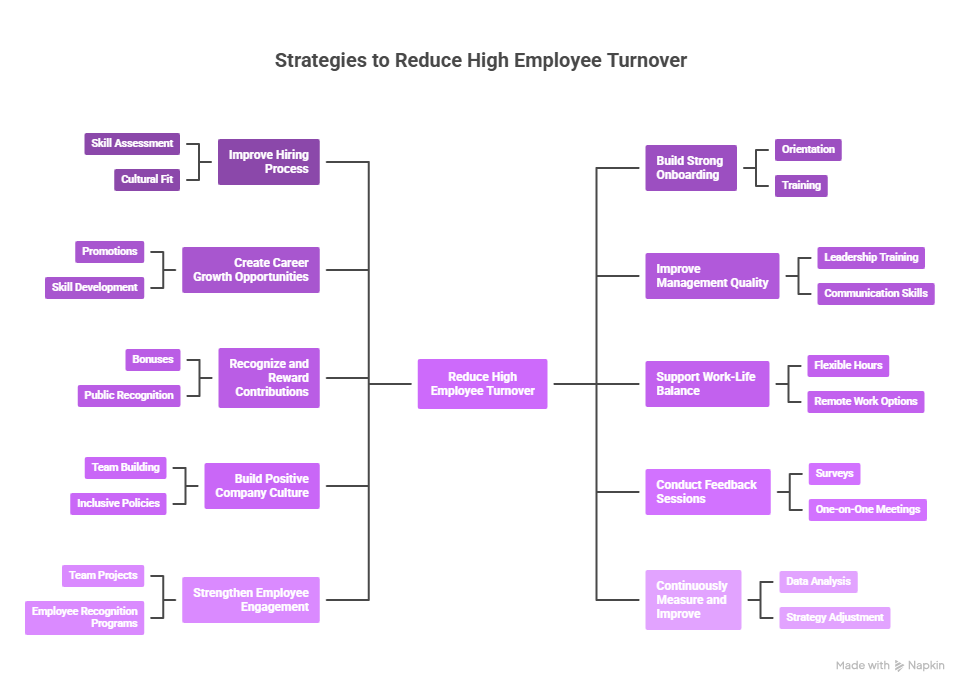
Once you understand why employees leave, the next step is creating a workplace where employees feel supported, valued, and motivated to stay long term.
Reducing employee turnover is not about fixing one problem. It requires improving hiring, management, employee experience, and workplace culture together.
Here are some effective employee retention strategies businesses can implement to reduce high employee turnover.
Improve the Hiring Process to Hire the Right People
Many employee retention problems actually begin during the hiring process.
When businesses hire candidates who are not aligned with the role, company culture, or expectations, employees are more likely to leave within a short period.
That is why hiring the right people from the beginning is one of the most effective ways to reduce employee turnover.
A strong hiring process should focus on both skills and long-term fit.
Important hiring practices include:
- Clear job descriptions
- Structured interviews
- Skills-based screening
- Culture-fit evaluation
- Realistic role expectations
- Better candidate matching
When employees clearly understand their role and feel aligned with the company, retention improves naturally.
Build a Strong Employee Onboarding Experience
The first few weeks after hiring play a major role in employee retention.
If onboarding feels confusing, unorganized, or unsupported, new employees may struggle to feel connected to the company and team.
A strong onboarding experience helps employees feel confident, prepared, and engaged from the beginning.
Effective onboarding should include:
- Clear role expectations
- Team introductions
- Training support
- Company culture guidance
- Regular check-ins
- Easy access to resources
Employees who experience a smooth onboarding process are more likely to stay productive and committed long term.
Create Clear Career Growth Opportunities
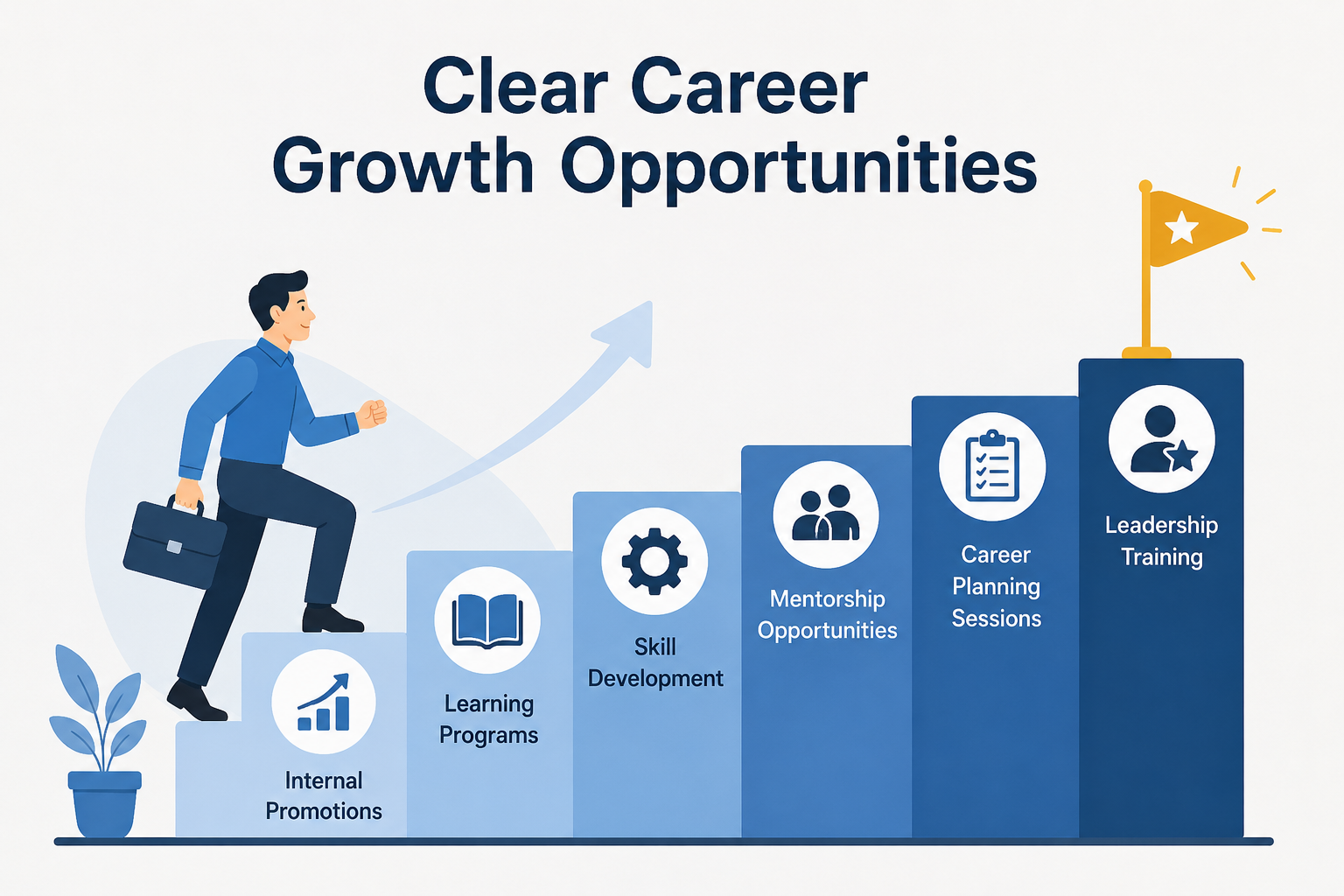
Employees are more likely to leave when they feel stuck in the same position without growth opportunities.
Most professionals want to learn new skills, take on bigger responsibilities, and see a clear future within the organization.
When businesses fail to provide career development, employee engagement and retention often decline over time.
Companies can support employee growth by offering:
- Internal promotions
- Learning programs
- Skill development
- Mentorship opportunities
- Career planning sessions
- Leadership training
Employees who see long-term career potential are usually more motivated to stay with the company.
Improve Management and Leadership Quality
Poor management is one of the biggest reasons employees resign from organizations.
Even highly skilled employees may leave if they feel unsupported, unheard, or poorly managed on a daily basis.
Strong leadership creates trust, improves communication, and helps employees feel more connected to their work.
Good managers should focus on:
- Clear communication
- Team support
- Fair decision-making
- Constructive feedback
- Employee development
- Conflict resolution
When employees trust their managers, workplace satisfaction and employee retention improve significantly.
Recognize and Reward Employee Contributions
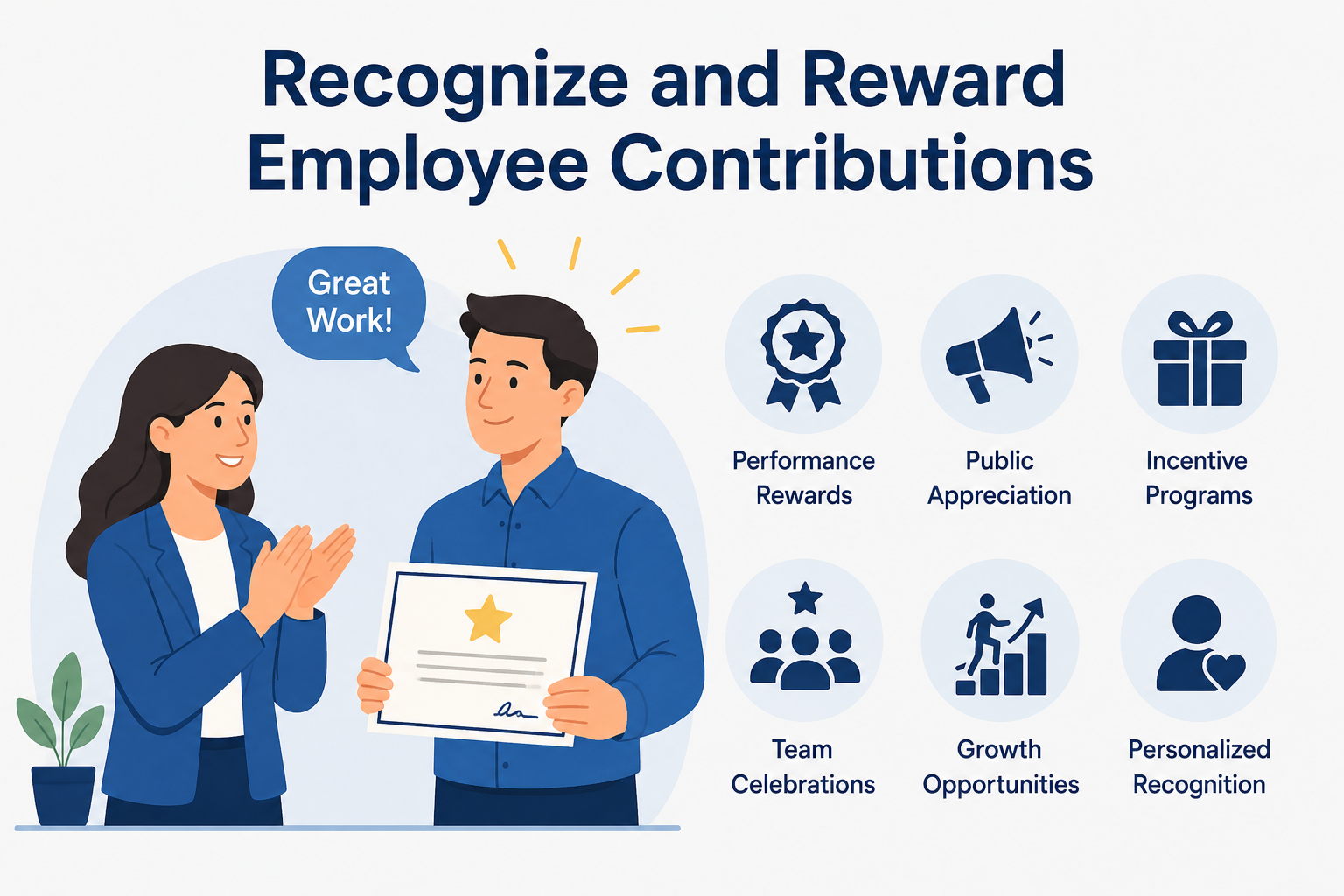
Employees want to feel that their efforts and contributions are noticed by the organization.
When hard work consistently goes unrecognized, employees may slowly become disengaged and less motivated to stay.
Recognition does not always need to be financial. Small appreciation efforts can also improve employee morale and retention.
Businesses can recognize employees through:
- Performance rewards
- Public appreciation
- Incentive programs
- Team celebrations
- Growth opportunities
- Personalized recognition
Employees who feel valued are more likely to stay engaged, productive, and loyal to the company over time.
Suggested Reading:
12 Common Hiring Mistakes to Avoid Before You Lose TalentSupport Work-Life Balance
Employees are more likely to leave when work starts affecting their personal life and mental well-being.
Constant pressure, long working hours, and unrealistic expectations often lead to stress, burnout, and low job satisfaction over time.
That is why companies that support work-life balance usually experience better employee retention and engagement.
Businesses can improve work-life balance by offering:
- Flexible work schedules
- Remote work options
- Paid time off
- Mental health support
- Realistic workloads
- Wellness programs
When employees feel they can manage both work and personal responsibilities comfortably, they are more motivated to stay with the organization.
Build a Positive Company Culture
Company culture directly affects how employees feel about their workplace every day.
A toxic or disconnected work environment can quickly increase employee dissatisfaction and turnover, even when salaries and benefits are competitive.
On the other hand, a positive workplace culture helps employees feel respected, included, and supported.
Strong company culture often includes:
- Open communication
- Team collaboration
- Respectful leadership
- Employee inclusivity
- Transparency
- Shared values
Employees who enjoy the work environment are more likely to stay engaged and committed for the long term.
Conduct Regular Employee Feedback Sessions
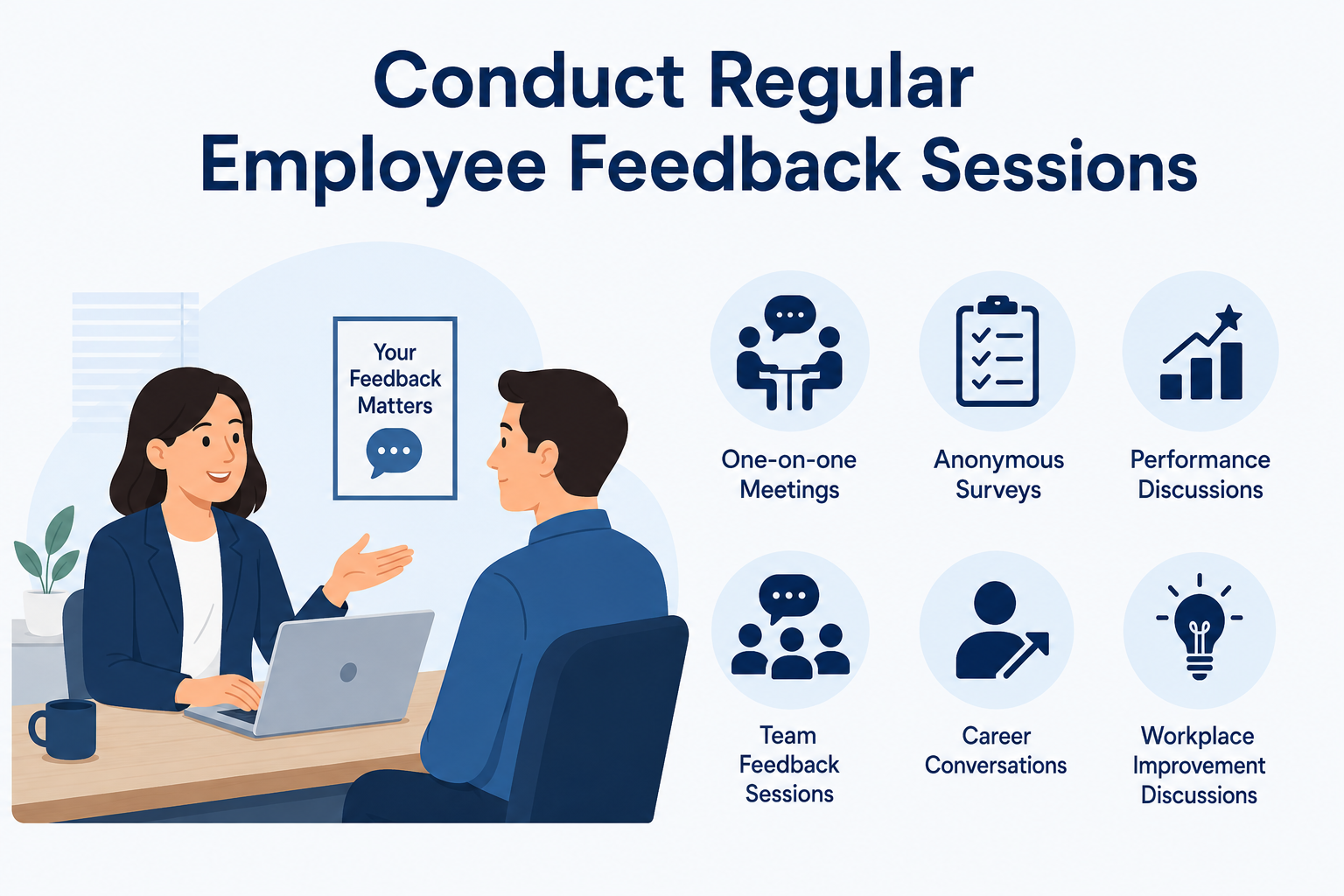
Employees want to know that their opinions, concerns, and ideas actually matter within the organization.
When businesses rarely ask for feedback, employees may feel ignored or disconnected from company decisions and workplace improvements.
Regular feedback sessions help organizations identify problems early and improve employee satisfaction continuously.
Effective feedback practices include:
- One-on-one meetings
- Anonymous surveys
- Performance discussions
- Team feedback sessions
- Career conversations
- Workplace improvement discussions
Consistent communication builds trust and helps employees feel more involved in the company’s growth and direction.
Strengthen Employee Engagement Every Day
Employee engagement is not built through occasional activities or annual events alone.
Employees stay engaged when they feel connected to their work, team, and overall company goals on a daily basis.
Highly engaged employees are usually more productive, motivated, and less likely to leave the organization.
Businesses can improve employee engagement by focusing on:
- Meaningful work
- Team collaboration
- Learning opportunities
- Recognition programs
- Clear communication
- Employee involvement
Small daily efforts often create a stronger long-term impact on employee retention than one-time initiatives.
Continuously Measure and Improve Retention Strategies
Employee retention strategies should never remain static because workplace expectations and employee needs continue to change over time.
What works for retaining employees today may not deliver the same results a year later. That is why businesses should regularly review and improve their retention efforts.
Companies should consistently monitor retention performance and identify areas that need improvement.
Important areas to evaluate include:
- Turnover trends
- Hiring quality
- Employee satisfaction
- Manager performance
- Engagement levels
- Retention rates
Businesses that continuously improve their employee retention strategies are better prepared to build stable, productive, and long-term teams.
How Leelu AI Helps Reduce Employee Turnover by Hiring the Right Candidates
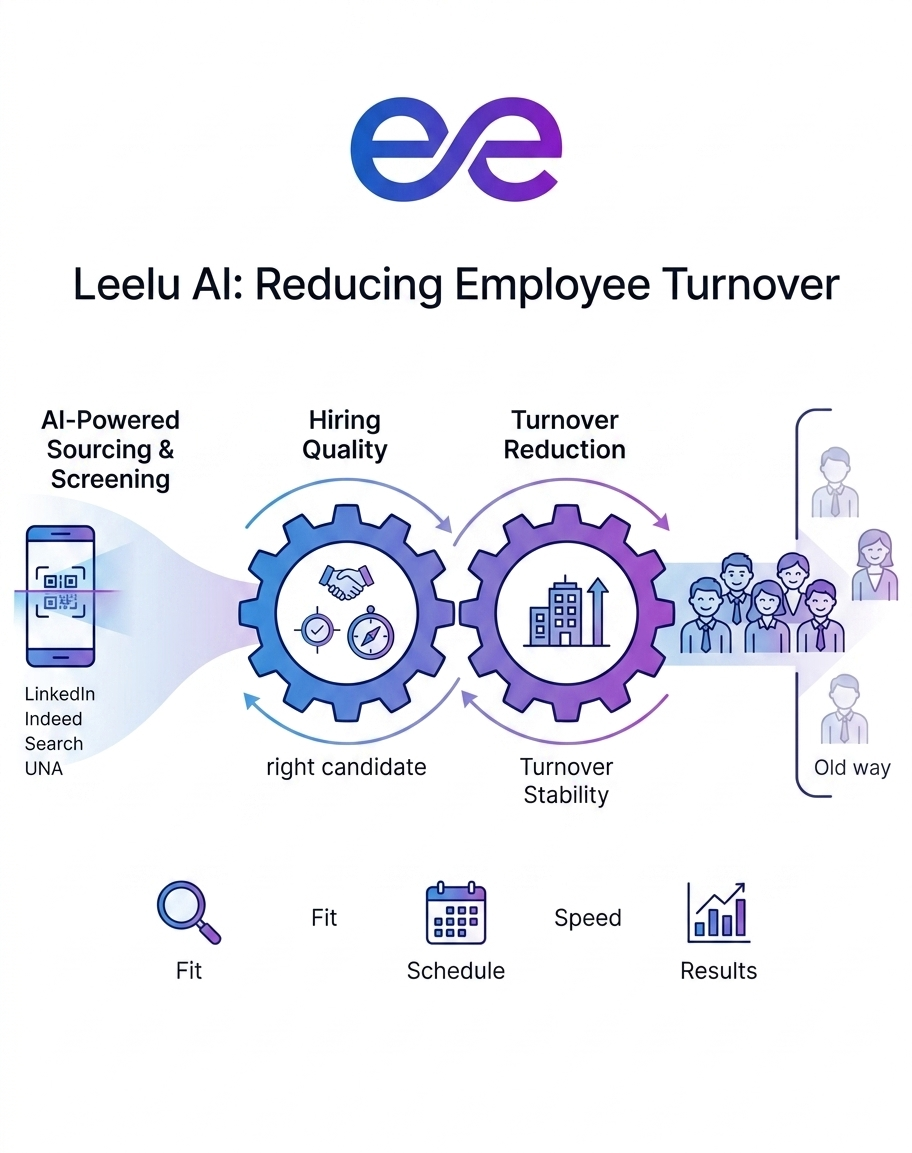
One of the biggest reasons behind high employee turnover is poor hiring fit.
When businesses hire candidates who are not aligned with the role, expectations, or company culture, retention problems usually appear much faster.
This is where Leelu AI helps businesses improve hiring quality and reduce long-term employee turnover.
Leelu AI automates sourcing, screening, outreach, and interview scheduling to help companies identify better-fit candidates faster.
The platform scans candidates across LinkedIn, Indeed, Monster, CareerBuilder, ATS systems, and internal databases simultaneously.
Leelu AI also helps businesses:
- Source candidates 10x faster
- Reduce hiring effort by 70–85%
- Achieve 40–60% response rates
- Automate hiring workflows end-to-end
- Move from job post to interview in 24 hours
The platform is trusted by 500+ recruitment teams and supports hiring teams with AI-powered candidate matching and automated engagement workflows.
Leelu AI pricing starts at approximately $79/month for smaller teams, with advanced plans available for growing hiring needs.
Conclusion
Reducing high employee turnover requires more than just offering better salaries or benefits.
Businesses need to focus on hiring the right people, creating positive employee experiences, supporting career growth, and building strong workplace relationships over time.
Small improvements in leadership, onboarding, engagement, and company culture can make a major difference in long-term employee retention.
When companies consistently invest in their employees and improve hiring quality, they build stronger, more productive teams that stay committed and contribute to long-term business growth.
Frequently Asked Questions
What causes high employee turnover?
Common causes include poor management, burnout, low engagement, limited growth, and wrong hiring decisions.
How can businesses reduce employee turnover?
Businesses can improve hiring, onboarding, leadership, employee engagement, and workplace culture to improve retention.
Why is employee retention important?
Better employee retention reduces hiring costs, improves productivity, and creates more stable teams.
How does onboarding help employee retention?
A strong onboarding process helps employees feel supported, confident, and connected from the beginning.
How does Leelu AI help reduce employee turnover?
Leelu AI helps businesses hire better-fit candidates faster through AI-powered sourcing, screening, and candidate matching.


