
A bad hire doesn’t just slow you down, it quietly drains time, money, and team momentum.
And most of the time, the problem isn’t the candidate, it’s how you evaluate them.
If your candidate selection test isn’t designed right, you end up guessing instead of assessing real skills.
In this guide, you’ll learn:
- How to design tests that reflect real job performance
- What mistakes to avoid while evaluating candidates
- How to reduce mis-hires with structured testing
Why Mis-Hires Happen More Often Than You Think
Before you fix your hiring outcomes, you need to understand where things go wrong.
Most mis-hires don’t happen because of lack of effort.
They happen because the evaluation process is broken in subtle ways.
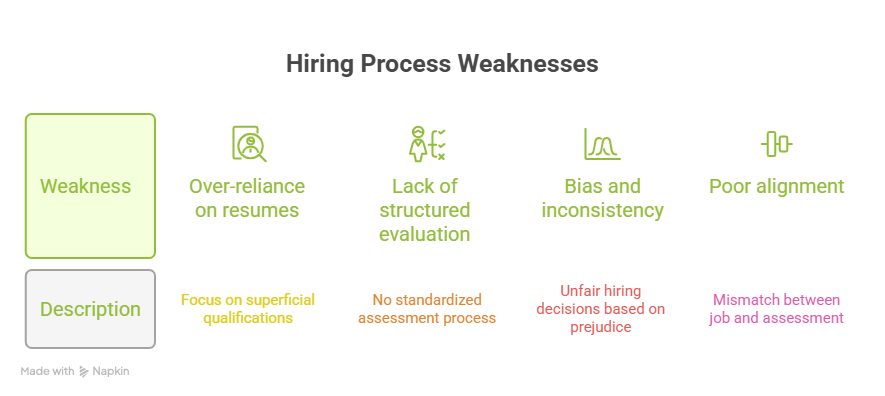
1. Over-reliance on resumes and surface-level screening
You often rely on resumes to judge candidate quality, but resumes only show curated highlights.
They don’t reflect how someone actually performs in real work scenarios.
This leads you to shortlist candidates based on presentation, not capability, increasing the chances of selecting someone who looks right on paper but struggles in execution.
2. Lack of structured evaluation methods
When your hiring process lacks structure, every candidate gets evaluated differently.
You might ask different questions or focus on different skills without realizing it.
This inconsistency makes it hard to compare candidates fairly and leads to decisions based on incomplete information rather than a clear, standardized assessment of their abilities.
3. Bias and inconsistency in hiring decisions
Even with the best intentions, personal bias can influence your decisions.
You may favor candidates who communicate similarly or share familiar backgrounds.
Without a consistent evaluation framework, these biases creep in unnoticed, causing you to overlook stronger candidates and make hiring decisions that are not fully aligned with actual job requirements.
4. Poor alignment between role requirements and assessment
Sometimes your test doesn’t actually measure what the role demands.
You might assess theoretical knowledge while the job requires practical problem-solving skills.
This mismatch means candidates who perform well in tests may still underperform on the job, leading to hires that don’t truly fit the role’s expectations.
What Makes a Candidate Selection Test Effective
Now that you know why mis-hires happen, the next step is fixing how you assess candidates.
An effective test doesn’t just filter applicants, it helps you predict real performance with clarity.
1. Role-specific and skill-focused assessments
You need to design tests that directly reflect the skills required for the role.
Generic assessments often fail to capture what actually matters on the job.
When your test focuses on role-specific tasks, you get a clearer signal of whether the candidate can handle day-to-day responsibilities without relying on assumptions.
2. Clear evaluation criteria and scoring system
A good test is only as strong as how you evaluate it.
You should define clear scoring criteria before candidates take the test.
This ensures every response is measured consistently, helping you compare candidates objectively and avoid decisions based on gut feeling or incomplete judgment during the evaluation process.
3. Real-world task simulation for accurate measurement
The closer your test is to real work, the better your hiring decisions become.
Instead of theoretical questions, give candidates tasks they would actually perform in the role.
This helps you see how they think, solve problems, and execute, giving you a much more accurate picture of their true capabilities.
4. Balance between speed and assessment depth
You want a test that is thorough but not time-consuming for both you and the candidate.
If it’s too long, you risk drop-offs, and if it’s too short, you miss important signals.
Finding the right balance helps you evaluate candidates effectively without slowing down your hiring process unnecessarily.
Suggested Reading:
Skills Based HiringStep-by-Step Guide to Designing a Candidate Selection Test
Now that you know what makes a test effective, the next step is building it with clarity and intent.
Each step should move you closer to evaluating real performance, not just theoretical ability.
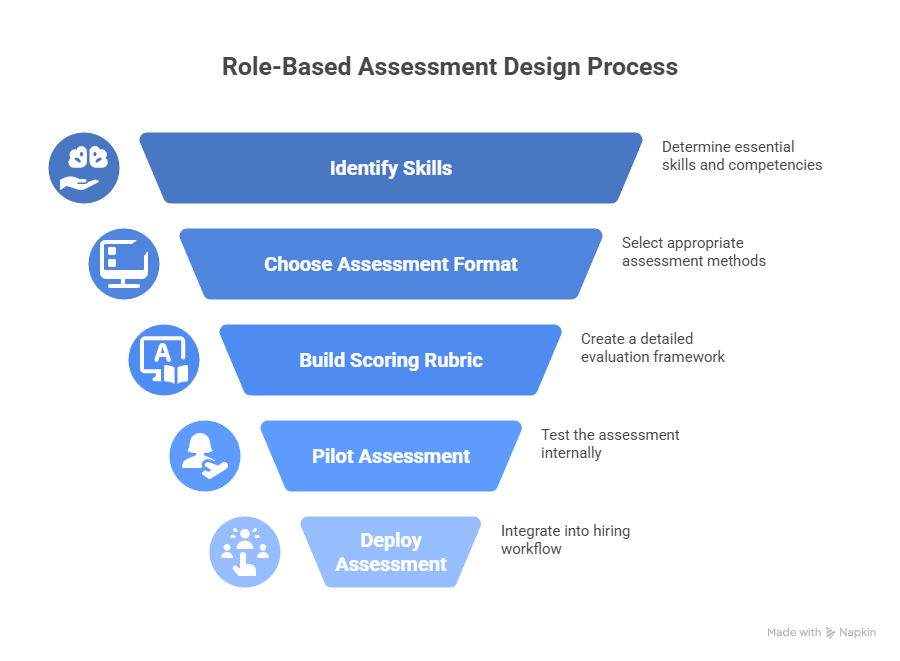
1. Define the key skills and competencies required for the role
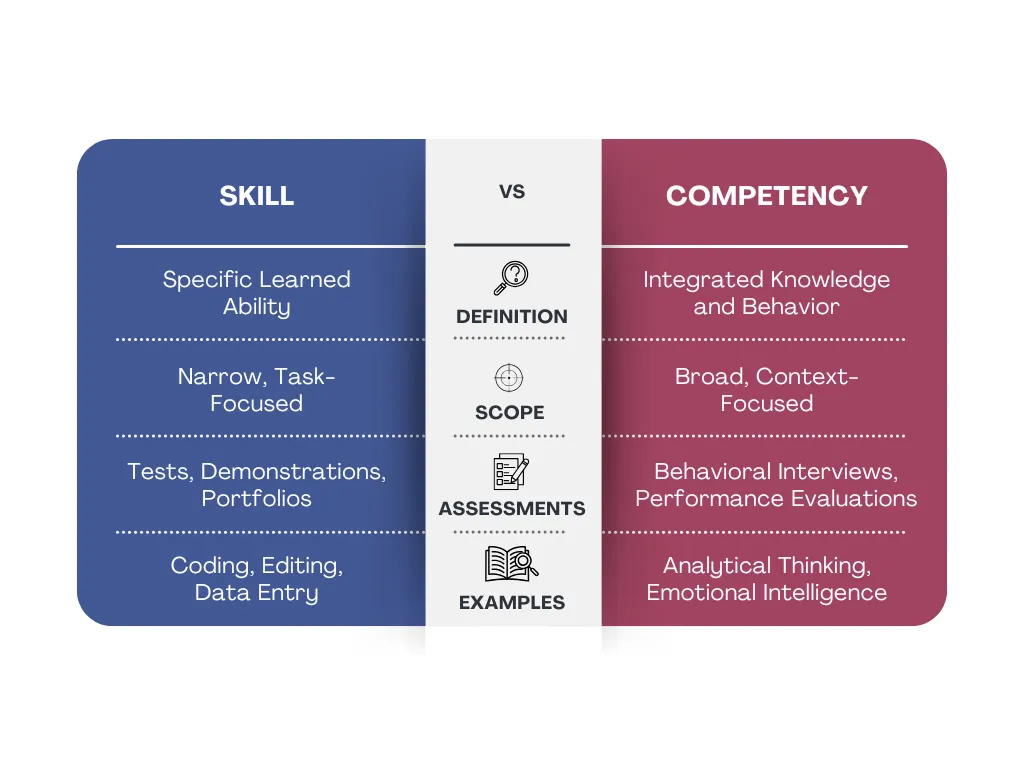
Start by clearly identifying what success in the role looks like on a day-to-day basis.
Focus on both technical skills and behavioral traits that directly impact performance.
When you define these competencies in advance, your test becomes more focused and purposeful, helping you evaluate candidates based on what actually matters instead of relying on assumptions or generic benchmarks.
2. Choose the right type of assessment format
Once you know what to assess, you need to decide how to assess it effectively.
Different roles require different formats such as case studies, assignments, or practical tasks.
Choosing the right format ensures candidates are evaluated in a way that mirrors real work, making your assessment more relevant and giving you deeper insight into their actual capabilities.
3. Create realistic and relevant test scenarios
Your test should closely reflect the challenges candidates will face in the role.
Avoid abstract or overly academic questions that don’t translate into real work situations.
When candidates solve practical, job-related problems, you gain a clearer understanding of how they think, prioritize tasks, and execute under realistic conditions.
4. Standardize scoring and evaluation criteria
A well-designed test needs a consistent way to measure performance.
Define clear scoring criteria and benchmarks before candidates take the test.
This ensures every response is evaluated fairly and objectively, helping you compare candidates accurately and make decisions based on structured data rather than subjective judgment.
5. Test and refine the assessment before rollout
Before using your test widely, validate it with a small group or internal team.
Observe how candidates interact with it and identify areas that may cause confusion or drop-offs.
Refining your test based on real feedback ensures it measures the right skills effectively and delivers reliable insights when used in your hiring process.
Types of Candidate Selection Tests You Can Use
Once you understand how to design a test, the next step is choosing the right type.
Different roles require different evaluation approaches, and using the right mix helps you assess candidates more accurately.
1. Technical and role-specific skill assessments
These tests focus on the exact skills required for the role.
You can ask candidates to complete coding tasks, writing samples, or job-related assignments.
This approach helps you directly measure whether the candidate can perform the core responsibilities instead of relying on assumptions or past experience alone.
2. Cognitive and aptitude tests
Sometimes, you need to evaluate how candidates think, not just what they know.
Cognitive tests measure problem-solving ability, logical reasoning, and learning speed.
These insights help you identify candidates who can adapt quickly, handle complex tasks, and grow into the role over time.
3. Situational judgment tests
These tests present candidates with real-life work scenarios and ask how they would respond.
You get a clear view of their decision-making process and priorities.
This helps you understand how candidates handle challenges, communicate, and make choices in situations they are likely to face on the job.
4. Behavioral and personality assessments
Skills matter, but how someone works with others also plays a big role.
Behavioral tests help you understand traits like communication style, teamwork, and adaptability.
This allows you to assess whether the candidate will fit into your team and align with your company’s working environment.
Suggested Reading:
Candidate Selection ProcessHow Leelu.AI Helps You Improve Candidate Selection Accuracy
Designing the right test is only half the job, executing it consistently at scale is where most teams struggle.
This is where the right system can make your process faster, sharper, and far more reliable.
1. Automatically screen and rank candidates based on job fit
Instead of manually reviewing every profile, you can let AI handle initial resume screening.
Leelu.ai automatically analyzes resumes and ranks candidates based on how well they match your job requirements.
This helps you focus only on the most relevant profiles without spending hours filtering through unqualified applicants.
2. Identify top candidates faster with AI matching
Finding the right candidate quickly is often the biggest challenge.
Leelu.ai uses AI matching to instantly highlight top-fit candidates from a large talent pool.
This reduces the time it takes to move from sourcing to shortlist, helping you act faster before top candidates lose interest.
3. Reduce manual evaluation effort with AI-driven scoring
Evaluating candidates manually can be slow and inconsistent.
With AI-driven scoring, Leelu.ai assesses candidates based on predefined criteria and ranks them accordingly.
This removes repetitive work and ensures every candidate is evaluated using the same standards without extra effort.
4. Ensure consistent and bias-free shortlisting
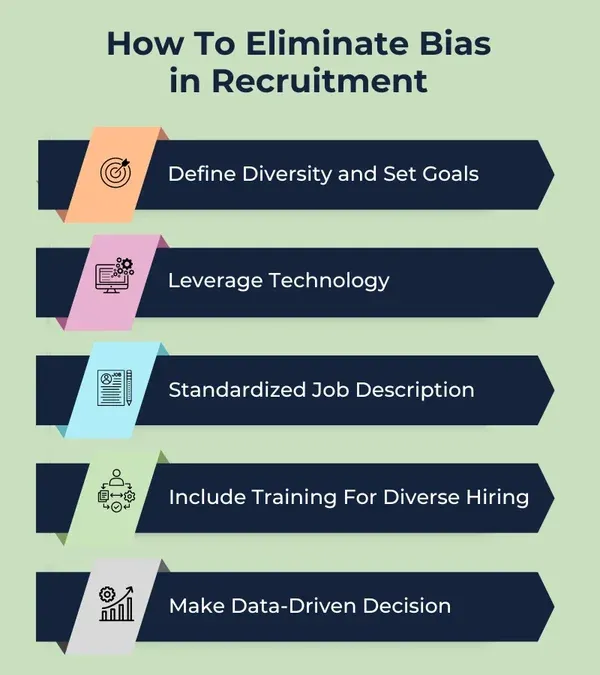
Bias often enters when evaluations are subjective or unstructured.
Leelu.ai standardizes the screening and shortlisting process using data-driven criteria.
This helps you make fairer decisions and ensures candidates are selected based on skills and fit rather than personal bias.
5. Streamline the journey from screening to interview
Managing multiple steps in hiring can slow everything down.
Leelu.ai connects screening, evaluation, and interview scheduling into one smooth workflow.
This reduces delays, improves coordination, and helps you move qualified candidates through the hiring process without unnecessary friction.
Common Mistakes to Avoid When Designing Selection Tests
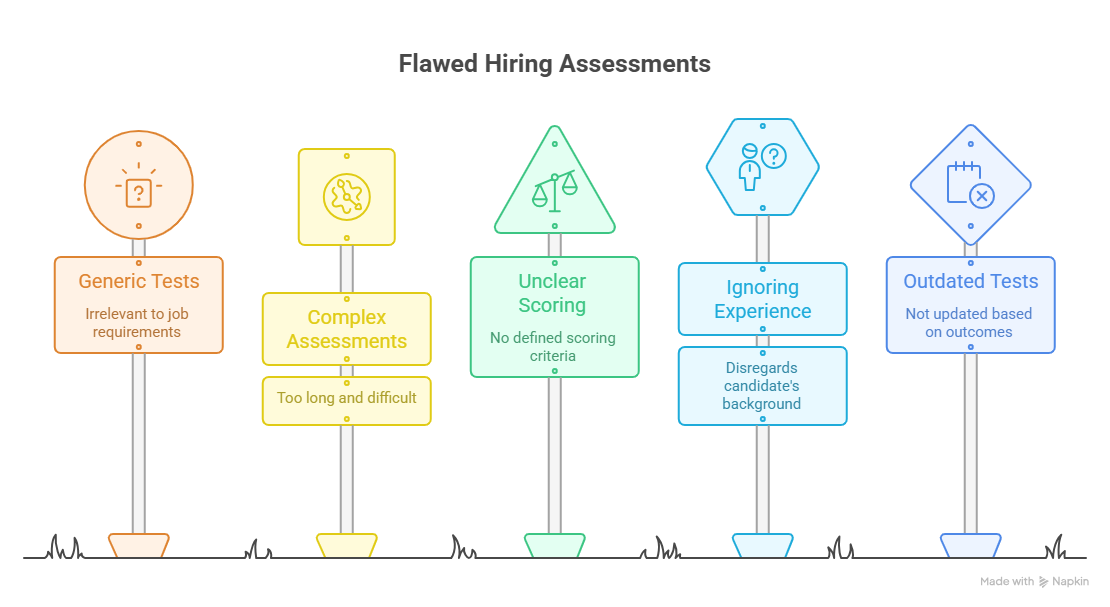
Even with the right intent, small mistakes in test design can quietly reduce your hiring accuracy.
If you’re not careful, your test can end up filtering the wrong candidates instead of the right ones.
1. Creating tests that are too generic or irrelevant
When your test is not tailored to the role, it fails to measure what actually matters.
Generic questions might seem easier to create, but they don’t reflect real job expectations.
This leads to candidates performing well in tests but struggling in actual work, making your hiring decisions less reliable.
2. Making assessments too long or complex
It’s tempting to cover everything in one test, but that often backfires.
Long or overly complex assessments can overwhelm candidates and lead to drop-offs.
You end up losing strong candidates simply because the process feels exhausting, not because they lack the required skills.
3. Not defining clear scoring criteria
Without clear evaluation standards, your test becomes subjective.
Different evaluators may interpret answers differently, leading to inconsistent results.
This lack of structure makes it difficult to compare candidates fairly and increases the chances of making decisions based on incomplete or biased judgment.
4. Ignoring candidate experience during testing
A poor testing experience can impact how candidates perceive your company.
If the test feels confusing, irrelevant, or time-consuming, candidates may disengage.
This not only affects completion rates but can also damage your employer brand, especially among high-quality candidates who have multiple opportunities.
5. Failing to update tests based on hiring outcomes
Your hiring process should evolve based on results.
If you don’t review how selected candidates perform on the job, your test may become outdated.
Regularly refining your assessments ensures they stay aligned with real performance and continue to improve your hiring accuracy over time.
Conclusion
Designing a candidate selection test isn’t about adding more steps, it’s about adding the right ones.
When your assessments reflect real job requirements and follow a structured evaluation process, your hiring decisions become more predictable and reliable.
Instead of guessing based on resumes or interviews alone, you start identifying candidates who can actually perform.
Over time, this reduces mis-hires, improves team performance, and builds a hiring process that consistently brings in the right talent for your business.
Frequently Asked Questions
1. How early should you introduce a selection test in the hiring process?
It’s best to introduce a selection test after an initial screening stage. This helps filter out unqualified candidates first and ensures only relevant applicants spend time on the test.
2. Can candidate selection tests replace interviews completely?
No, tests should not replace interviews. They work best as a complement. Tests evaluate skills objectively, while interviews help assess communication, culture fit, and intent.
3. How do you ensure candidates don’t cheat during online tests?
You can reduce cheating by using timed assessments, randomizing questions, and including practical tasks. Platforms like Leelu.ai also offer monitoring and tracking features.
4. Should the same test be used for all roles in a company?
No, each role requires a different skill set. Tests should be customized based on job requirements to ensure accurate evaluation and better hiring outcomes.
5. How often should you update your candidate selection tests?
Tests should be reviewed regularly, ideally every few months or after major hiring cycles. Updating them ensures they stay relevant to changing job roles and industry needs.


