Hiring gets harder when you do not know whether your compensation is competitive or completely out of sync with the market.
That is exactly why salary benchmarking tools have become essential for modern HR teams trying to attract and retain top talent faster.
The right platform helps you compare salaries, analyze market trends, improve offer acceptance rates, and make better hiring decisions with confidence.
In this guide, you will discover:
- The 10 best salary benchmarking tools for HR teams
- Key features, pros, and limitations of each platform
- How to choose the right compensation benchmarking software
- What HR teams should look for beyond salary data alone
What Are Salary Benchmarking Tools
When you are hiring for competitive roles, inaccurate salary estimates can quickly cost you top candidates.
Salary benchmarking tools help HR teams compare compensation packages against current market data across industries, locations, and job levels.
Instead of relying on outdated spreadsheets, companies get updated salary insights that support better hiring and compensation decisions.
Most platforms offer features like:
- Market salary comparisons
- Pay equity analysis
- Geographic salary adjustments
- Compensation planning dashboards
- Hiring trend insights
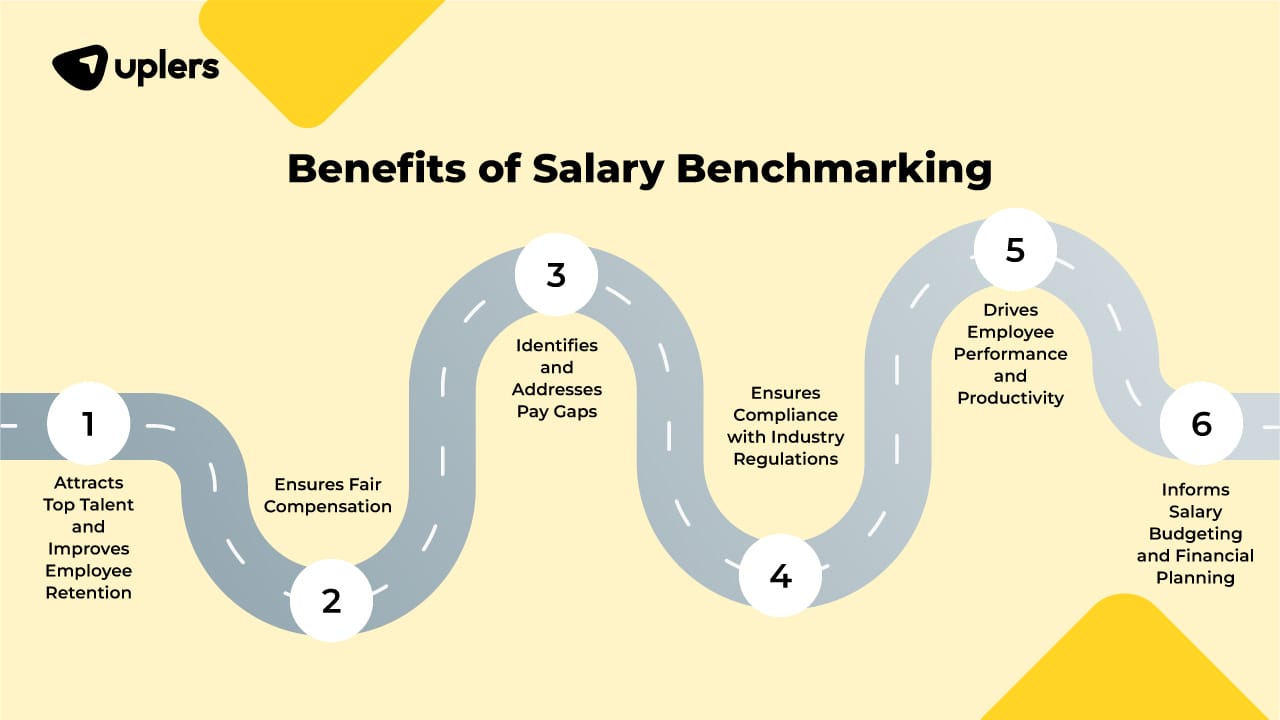
For HR teams, salary benchmarking improves hiring competitiveness, reduces offer rejections, and supports employee retention.
When combined with AI-driven recruiting platforms like Leelu AI, teams can also streamline sourcing, screening, outreach, and hiring workflows more efficiently.
How to Choose the Right Salary Benchmarking Tool
Not every salary benchmarking platform works the same way.
Some tools focus only on compensation data, while others help you connect salary insights with hiring strategy, workforce planning, and recruiting operations.
The right choice depends on how your HR team hires, scales, and manages compensation decisions across roles and locations.
Here are the key factors you should evaluate before choosing a salary benchmarking tool.
Look for accurate and updated salary data
The quality of salary benchmarking depends entirely on the quality of the data behind it.
If the platform uses outdated or limited datasets, your compensation decisions can quickly become inaccurate.
Look for tools that regularly update salary information using multiple reliable sources such as employer data, job market trends, industry surveys, and real-time hiring insights.
Accurate compensation data helps you stay competitive and reduce the chances of losing candidates due to unrealistic salary offers.
Evaluate role and industry coverage
Different industries have different compensation structures, hiring trends, and demand levels.
A good salary benchmarking tool should cover a wide range of roles, seniority levels, locations, and industries relevant to your hiring needs.
This becomes especially important when you are hiring for niche technical roles, leadership positions, or remote teams across multiple regions.
Broader coverage gives HR teams more confidence when creating compensation strategies for diverse hiring pipelines.
Check ease of use and reporting features
Compensation analysis should not feel complicated or time-consuming.
The best salary benchmarking software makes it easy to search roles, compare salary ranges, generate reports, and visualize compensation trends without heavy manual work.
Clear dashboards and reporting features also help HR teams communicate salary decisions more effectively with leadership and hiring managers.
Consider integrations with HR and ATS systems
Salary benchmarking becomes far more useful when it fits naturally into your existing hiring workflow.
Look for tools that integrate with ATS platforms, HR systems, and recruiting software so your team can move faster without switching between disconnected tools.
Platforms like Leelu AI support end-to-end recruiting workflows by helping teams streamline sourcing, screening, outreach, and hiring operations alongside smarter hiring decisions.
10 Best Salary Benchmarking Tools for HR Teams
Once you understand what to look for in compensation software, the next step is finding the right platform for your hiring and workforce goals.
Some salary benchmarking tools are built for large enterprises managing global compensation structures, while others are better suited for growing companies that need fast and accessible market insights.
Here are some of the best salary benchmarking tools HR teams use to make smarter compensation decisions.
1. Mercer
Mercer is one of the most established names in compensation and workforce consulting.
Its salary benchmarking platform gives HR teams access to extensive global compensation data across industries, job functions, and geographic markets.
Mercer is especially useful for enterprises that need highly detailed compensation planning and workforce analytics.
Key strengths include:
- Global compensation benchmarking
- Industry-specific salary surveys
- Workforce planning insights
- Pay equity analysis
- Executive compensation data
The platform works well for organizations with complex compensation structures and international hiring needs. However, smaller businesses may find it more enterprise-focused than lightweight.
2. Radford (Aon)
Radford by Aon is widely used by technology companies and fast-growing startups.
It specializes in compensation benchmarking for industries where hiring competition moves quickly, especially in software, product, engineering, and technology roles.
HR teams often use Radford to benchmark salaries, equity packages, and executive compensation against similar-stage companies.
Notable features include:
- Technology-focused salary datasets
- Equity compensation benchmarking
- Real-time market intelligence
- Global compensation analytics
- Startup and growth-stage benchmarking
For companies hiring aggressively in competitive tech markets, Radford provides highly relevant compensation insights.
3. Payscale
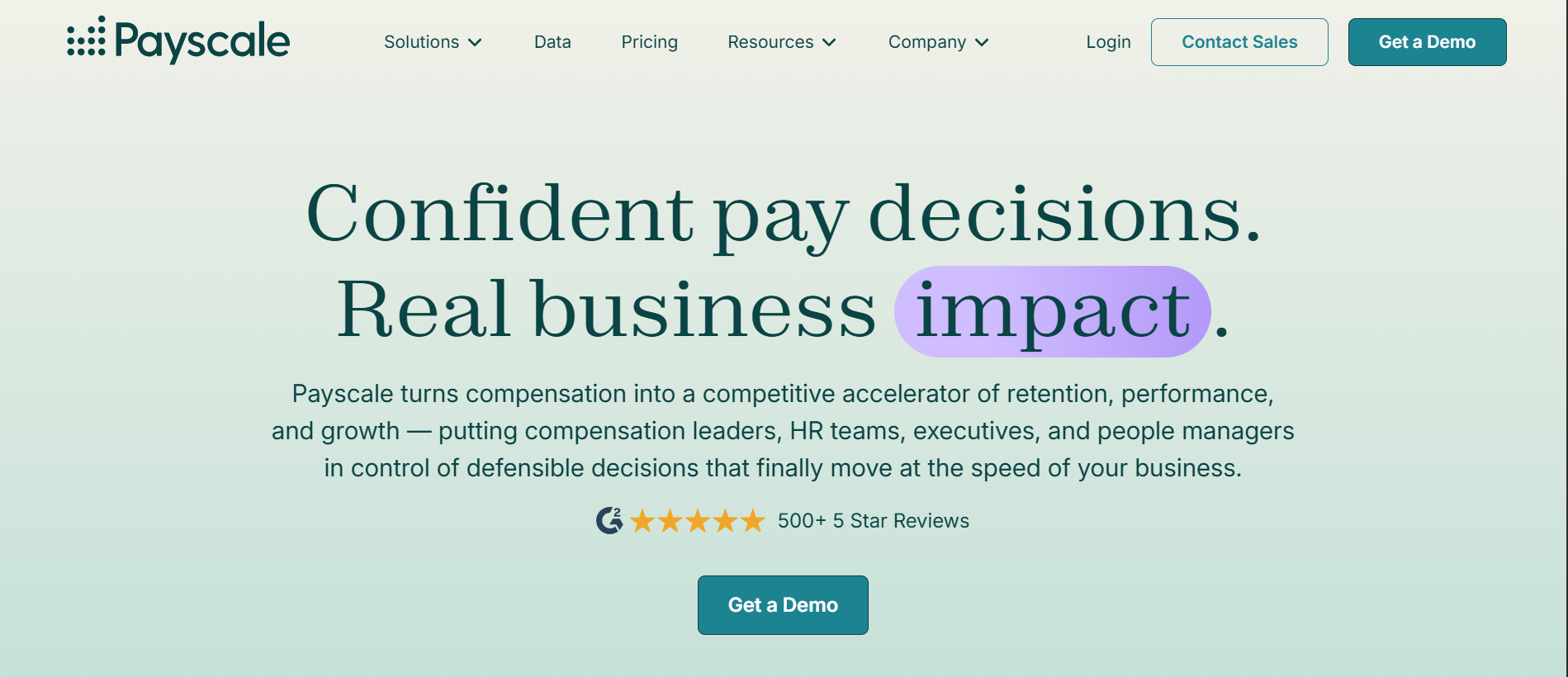
Payscale is one of the most popular salary benchmarking platforms for businesses of different sizes.
The platform combines compensation data, analytics, and pay management tools in a user-friendly interface that HR teams can use without heavy technical expertise.
Payscale is known for making compensation planning easier and more accessible for mid-sized organizations.
Its core features include:
- Market salary benchmarking
- Compensation management tools
- Pay equity reporting
- Salary structure planning
- Employee compensation insights
The platform is particularly helpful for HR teams that want a balance between usability and detailed compensation analysis.
4. Salary.com
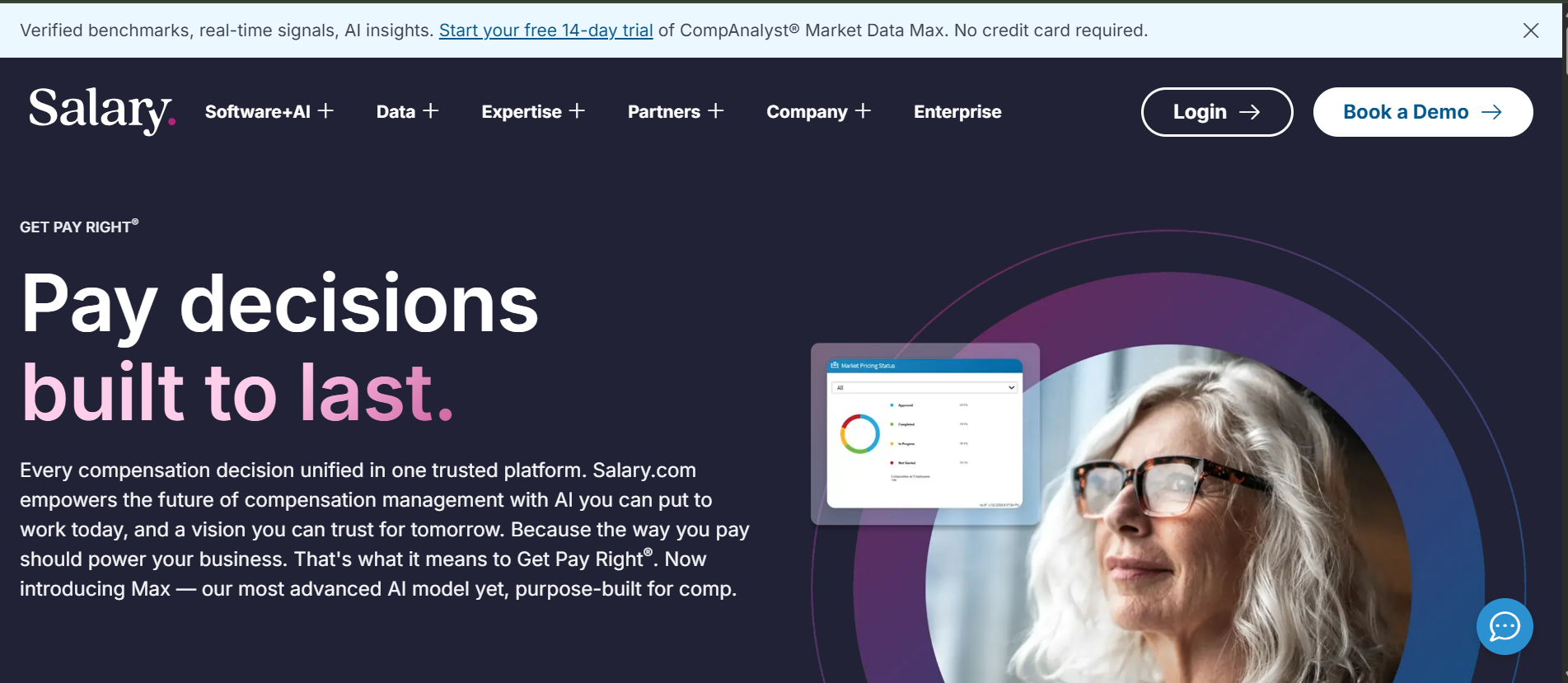
Salary.com offers compensation benchmarking, pay analytics, and workforce planning tools designed for both HR leaders and compensation specialists.
The platform provides access to large salary datasets along with reporting and compensation modeling capabilities.
Many organizations use Salary.com to create competitive compensation structures and improve salary transparency.
Popular features include:
- Salary benchmarking reports
- Compensation planning dashboards
- Job description management
- Pay equity analysis
- Market pricing tools
Its broad feature set makes it suitable for companies that want both benchmarking and compensation management capabilities in one platform.
5. Willis Towers Watson

Willis Towers Watson provides enterprise-grade compensation benchmarking and workforce analytics solutions.
The platform is often used by large organizations that require advanced compensation planning across multiple countries, departments, and job levels.
It combines salary data with broader workforce strategy insights.
Key capabilities include:
- Global compensation surveys
- Workforce analytics
- Executive compensation planning
- Pay equity insights
- Rewards strategy tools
The platform is highly detailed and data-driven, making it better suited for larger HR operations with complex compensation requirements.
6. Korn Ferry

Korn Ferry is known for combining compensation benchmarking with talent management and organizational consulting.
Its salary benchmarking solutions help HR teams align compensation with broader workforce and hiring strategies.
The platform is commonly used for leadership hiring, workforce planning, and organizational design.
Key features include:
- Compensation benchmarking
- Leadership compensation analysis
- Talent strategy insights
- Workforce planning tools
- Organizational benchmarking
For companies focused on long-term talent strategy, Korn Ferry offers more than just salary data alone.
7. ERI Economic Research Institute
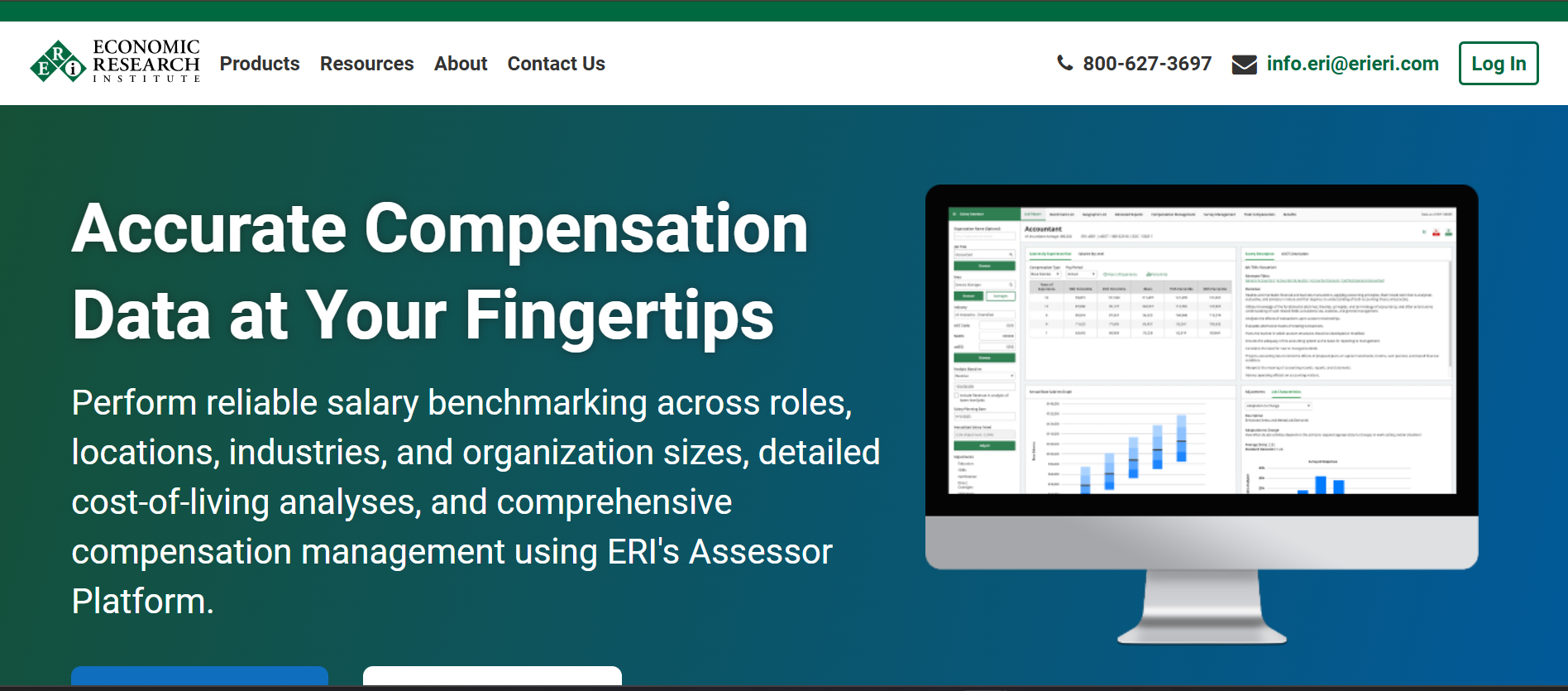
ERI Economic Research Institute provides detailed salary, cost-of-living, and compensation analytics data.
The platform is often used by compensation analysts who need highly specific salary comparisons across locations and industries.
ERI is particularly strong when geographic salary adjustments and cost-of-living calculations matter heavily in compensation planning.
Its main features include:
- Geographic salary comparisons
- Cost-of-living analysis
- Executive compensation data
- Compensation planning tools
- Labor market analytics
The depth of its datasets makes it valuable for organizations managing compensation across multiple regions.
8. Glassdoor for Employers
Glassdoor for Employers gives HR teams access to employee-reported salary insights and compensation trends.
While it is not as enterprise-focused as some benchmarking platforms, Glassdoor helps companies understand how candidates and employees perceive compensation in the market.
This can be useful for improving offer competitiveness and employer branding.
Key benefits include:
- Employee-reported salary data
- Compensation trend insights
- Employer brand visibility
- Candidate market expectations
- Hiring market intelligence
Glassdoor works best when combined with broader compensation planning tools rather than as a standalone enterprise benchmarking solution.
9. LinkedIn Salary Insights
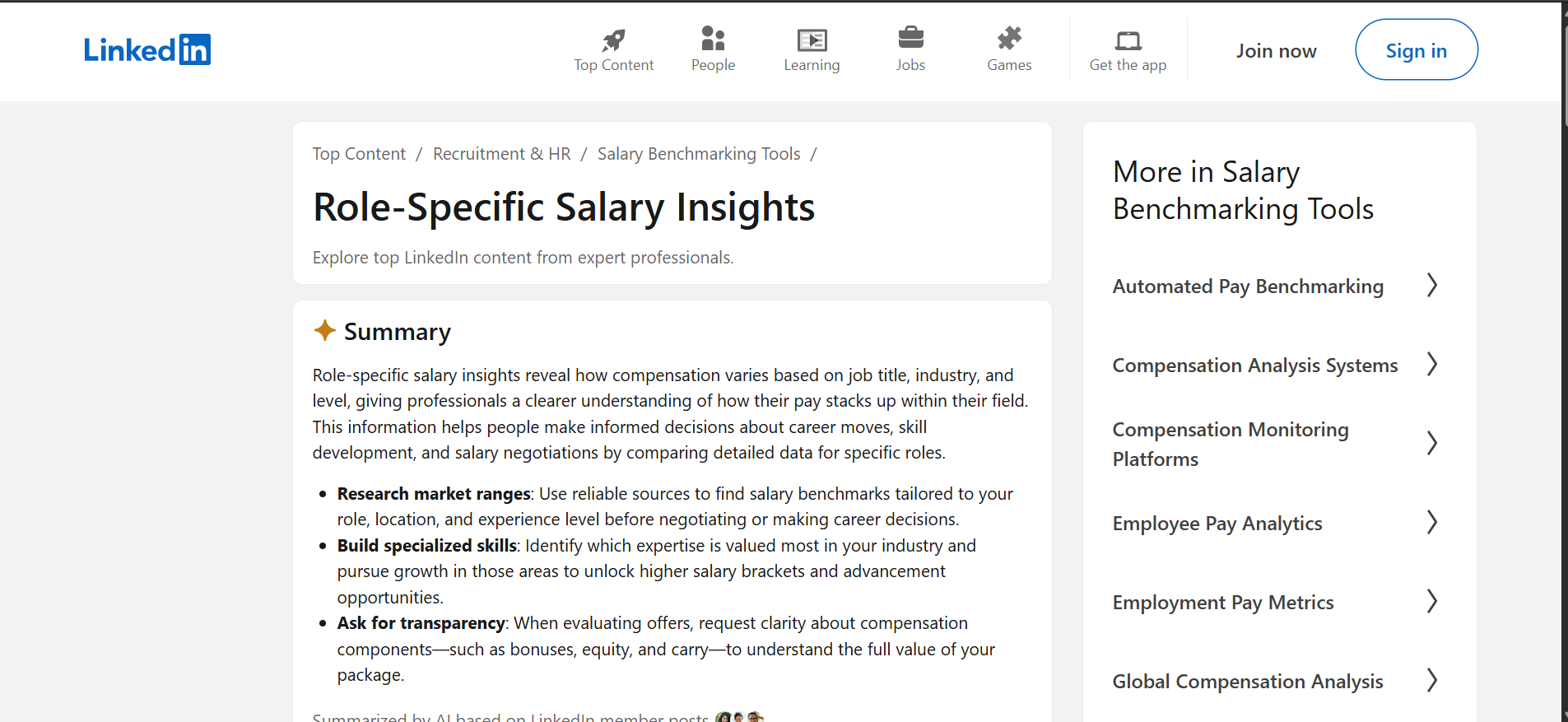
LinkedIn Talent Solutions offers salary insights through its recruiting and talent intelligence ecosystem.
The platform helps HR teams understand salary trends, hiring competition, and talent availability across industries and locations.
Because LinkedIn already plays a major role in recruiting workflows, many teams use its salary insights alongside sourcing and talent acquisition efforts.
Key capabilities include:
- Salary trend analysis
- Talent market insights
- Location-based compensation data
- Recruiting analytics
- Hiring demand visibility
When paired with AI-driven recruiting platforms like Leelu AI, HR teams can connect compensation strategy with sourcing, outreach, screening, and faster hiring execution in one streamlined workflow.
10. Indeed Salary Tools
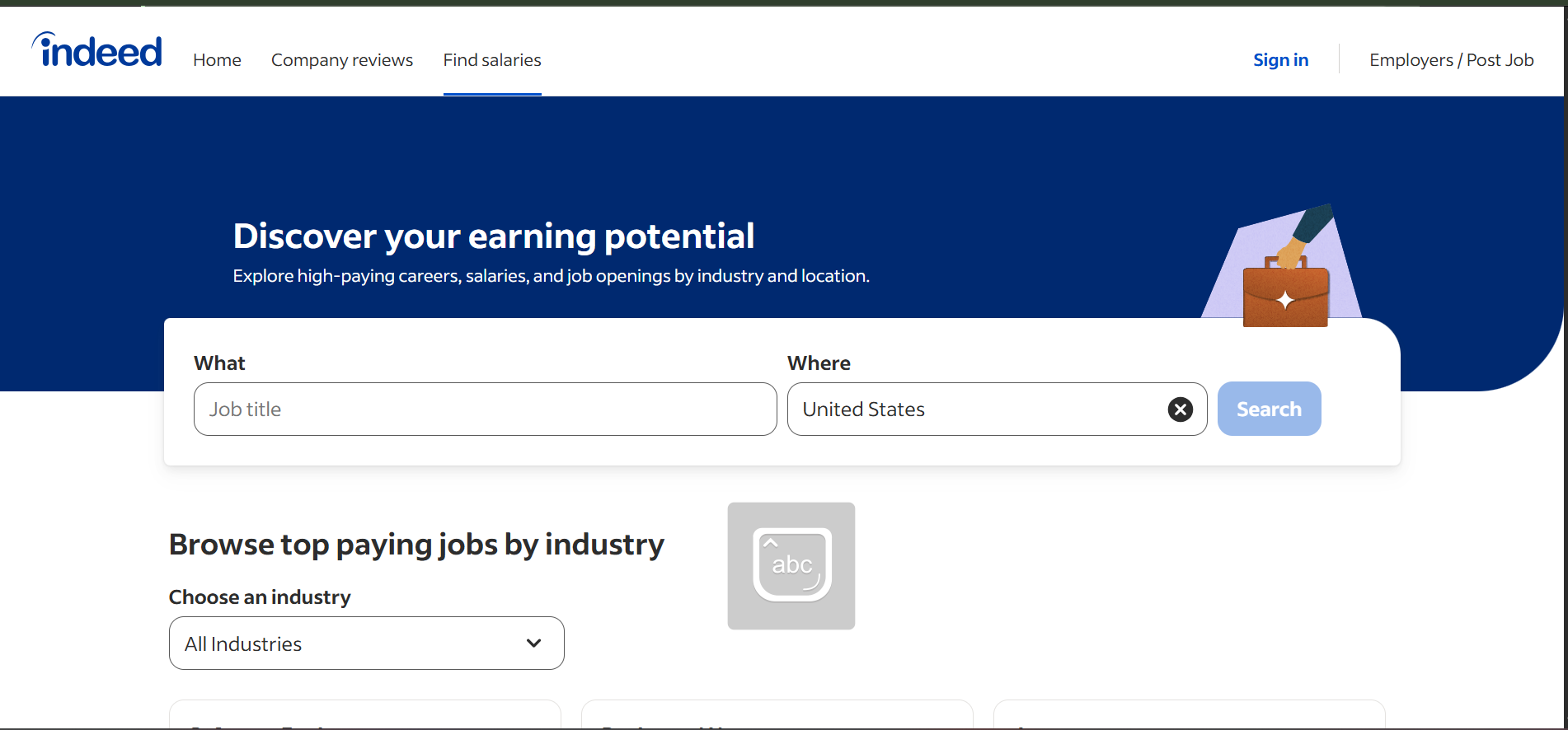
Indeed Salaries provides salary comparison data based on job postings, employer activity, and employee submissions.
It is one of the easiest tools for HR teams to access quick compensation benchmarks across common job roles and industries.
Indeed’s salary tools are especially useful for small and mid-sized businesses that want fast market insights without enterprise-level complexity.
Key features include:
- Role-based salary comparisons
- Location-specific salary insights
- Hiring trend visibility
- Job market salary estimates
- Accessible compensation research
While it may not replace advanced compensation platforms, it offers useful benchmarking support for everyday hiring decisions.
Suggested Reading:
Recruitment Challenges Slowing HiringCommon Challenges in Salary Benchmarking
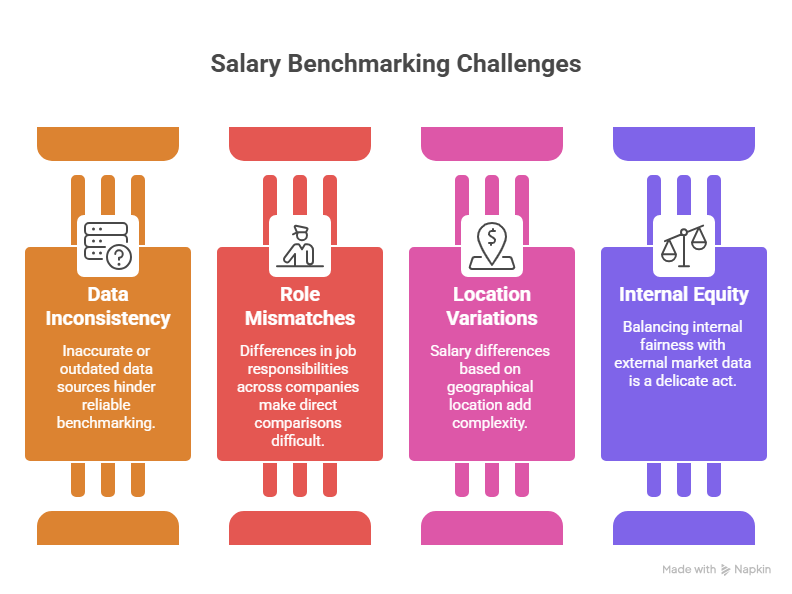
Salary benchmarking helps HR teams make smarter compensation decisions, but the process is not always as straightforward as it looks.
Compensation data can vary widely depending on the source, industry, location, and job structure.
Without the right approach, benchmarking can lead to inaccurate salary ranges and inconsistent hiring decisions.
Here are some of the most common salary benchmarking challenges HR teams face.
Inconsistent or outdated data sources
Salary benchmarking is only as reliable as the data behind it.
Many companies still rely on outdated salary surveys or limited datasets that no longer reflect current hiring markets.
This becomes a major problem in industries where compensation changes quickly due to talent shortages or rapid business growth.
Using inaccurate data can lead to underpaying candidates, slower hiring, and higher offer rejection rates.
That is why HR teams should prioritize platforms that provide updated, multi-source compensation insights instead of static annual reports alone.
Role mismatches across companies
Job titles are rarely standardized across organizations.
A “Product Manager” at one company may have completely different responsibilities, seniority levels, or expectations at another.
This creates benchmarking challenges because salary comparisons may not accurately reflect the actual scope of the role.
HR teams need to evaluate job responsibilities, experience requirements, and skill expectations carefully instead of relying only on titles during compensation analysis.
Location-based salary variations
Compensation expectations can differ significantly between cities, countries, and remote work markets.
A salary that feels competitive in one location may be far below market expectations somewhere else.
Remote hiring has made this even more complicated because companies now compete for talent across multiple geographic regions simultaneously.
Modern salary benchmarking tools help address this by offering location-adjusted compensation insights and cost-of-living comparisons.
Balancing internal equity with market data
Matching market salaries is important, but compensation decisions also need to remain fair internally.
If new hires receive significantly higher compensation than existing employees in similar roles, it can create dissatisfaction and retention issues.
HR teams must balance external market competitiveness with internal pay equity to build compensation structures that feel both competitive and consistent.
How Salary Benchmarking Impacts Hiring and Retention
Salary benchmarking is not just a compensation exercise anymore.
It directly influences how quickly you hire, the quality of candidates you attract, and how long employees stay with your company.
When compensation decisions are backed by accurate market data, HR teams can build stronger hiring strategies and create a better employee experience from the very beginning.
Suggested Reading:
Talent Acquisition StrategyAttracting better candidates with competitive pay
Candidates today have more access to salary information than ever before.
If your compensation packages are significantly below market expectations, qualified candidates often lose interest before the hiring process even moves forward.
Salary benchmarking helps HR teams create competitive offers based on real market insights instead of assumptions.
This improves your ability to attract stronger candidates, especially in highly competitive industries where top talent evaluates multiple offers at the same time.
Competitive compensation also strengthens employer branding and increases candidate trust during recruitment conversations.
Reducing offer drop-offs and negotiation delays
One of the biggest hiring frustrations for recruiters is losing candidates late in the process because of compensation mismatches.
When salary expectations are not aligned early, negotiations become longer, offer acceptance rates decline, and hiring timelines increase.
Using salary benchmarking tools allows HR teams to set realistic compensation ranges from the start, reducing unnecessary back-and-forth during offer discussions.
When combined with streamlined recruiting workflows through platforms like Leelu AI, teams can move candidates through sourcing, screening, outreach, and hiring faster while improving overall hiring efficiency.
Improving employee satisfaction and retention
Employees pay close attention to compensation fairness, especially when market salary information is widely accessible online.
If employees feel underpaid compared to industry standards or peers, retention problems can grow quickly.
Regular salary benchmarking helps organizations maintain fair and competitive pay structures that improve employee confidence, satisfaction, and long-term retention.
Using Leelu to Act on Salary Insights Faster
Salary benchmarking only matters when your team can quickly turn compensation insights into actual hiring decisions.
Many companies know the market salary range they should offer, but delays in sourcing, outreach, and interview coordination still slow hiring down.
Leelu AI helps HR teams bridge that gap by automating sourcing, screening, outreach, and scheduling in one workflow.
Turning compensation benchmarks into faster hiring decisions
Once salary ranges are finalized, recruiters need to engage qualified candidates before competitors do.
Leelu speeds up this process with AI-powered sourcing and matching across LinkedIn, Indeed, Monster, and ATS platforms.
Key features include:
- Access to 500M+ candidate profiles
- AI resume parsing and candidate scoring
- Unified candidate profiles
- AI-powered talent matching
- Multi-platform sourcing automation
This helps recruiters identify top-fit candidates faster while reducing manual sourcing effort by 70–85%.
Automating sourcing and outreach once salary ranges are defined
Defining compensation is only one part of hiring. Reaching candidates consistently at scale is equally important.
Leelu automates personalized outreach and candidate engagement workflows, helping recruiters maintain faster communication without repetitive manual work.
Core capabilities include:
- Personalized email and LinkedIn outreach
- Automated follow-ups and replies
- 24/7 candidate engagement
- AI-driven recruiting workflows
- High-volume outreach automation
This allows HR teams to move candidates through the funnel faster while improving response rates.
Reducing time between approval, outreach, and interview scheduling
Recruitment delays often happen after approvals because of scheduling and coordination bottlenecks.
Leelu simplifies this with automated interview scheduling and ATS integrations.
Additional features include:
- Smart interview scheduling
- Calendar syncing
- ATS integrations
- Hiring pipeline tracking
- End-to-end recruiting automation
Leelu is designed to help companies move from job posting to first interview within 24 hours.
Pricing
Leelu AI Pricing starts at $79/month for small teams.
Growth plans range from $149–$499/month, while enterprise pricing starts at ₹50,000+/month ($600+) based on hiring scale and automation needs.
A 14-day free trial is also available.
Best Practices for Effective Salary Benchmarking
Salary benchmarking works best when it becomes an ongoing part of your hiring and compensation strategy instead of a one-time exercise.
The more accurate and consistent your benchmarking process is, the better your hiring decisions and retention outcomes become.
Benchmark regularly, not once a year
Compensation trends change quickly, especially in competitive industries.
Reviewing salary data only once a year can leave your offers outdated and less competitive. Regular benchmarking helps HR teams respond faster to market changes and hiring demand shifts.
Combine multiple data sources for accuracy
Relying on a single salary database can create inaccurate compensation benchmarks.
Using multiple sources such as compensation surveys, job market data, recruiting platforms, and industry reports gives a more balanced view of current salary expectations.
Align compensation with business goals
Salary decisions should support your broader hiring and growth strategy.
Whether your goal is rapid hiring, improving retention, or attracting niche talent, compensation planning should align with those priorities instead of following market averages blindly.
Communicate salary decisions clearly to employees
Employees value transparency around compensation decisions.
Clear communication about salary structures, benchmarking methods, and growth opportunities helps build trust, improve employee satisfaction, and reduce compensation-related concerns internally.
Conclusion
Choosing the right salary benchmarking tool can help your HR team make faster, smarter, and more competitive compensation decisions.
From improving offer acceptance rates to strengthening employee retention, accurate salary data plays a major role in modern hiring success.
The best results come when compensation insights are combined with efficient recruiting workflows.
Platforms like Leelu AI help teams move from salary planning to sourcing, outreach, screening, and interview scheduling faster, making the entire hiring process more efficient and data-driven.
Frequently Asked Questions
1. What is a salary benchmarking tool?
A salary benchmarking tool helps HR teams compare compensation packages against current market salary data across industries, locations, and job roles. It helps companies create competitive and fair pay structures.
2. Why is salary benchmarking important for HR teams?
Salary benchmarking helps HR teams attract better candidates, reduce offer rejections, improve employee retention, and maintain competitive compensation strategies in changing job markets.
3. How often should companies benchmark salaries?
Companies should ideally review salary benchmarks every few months or at least quarterly instead of relying only on annual compensation reviews.
This helps keep compensation aligned with current market trends.
4. What features should you look for in salary benchmarking software?
Important features include updated salary data, geographic compensation insights, reporting dashboards, pay equity analysis, ATS integrations, and industry-specific salary comparisons.
5. Can salary benchmarking improve hiring speed?
Yes. Accurate compensation benchmarks help recruiters create competitive offers faster, reduce negotiation delays, and improve offer acceptance rates during hiring.
6. How does Leelu help HR teams after salary benchmarking?
Leelu AI helps HR teams act on compensation insights faster by automating sourcing, screening, outreach, follow-ups, and interview scheduling in one AI-driven recruiting workflow.


