If you are setting up payroll for the first time, one question usually comes up very quickly: should you pay employees bi-weekly or semi-monthly?
At first glance, both schedules can look almost identical. But once you start processing payroll, calculating overtime, managing cash flow, and handling employee expectations, the differences become much more noticeable.
The right payroll schedule can make payroll easier to manage while improving the employee experience at the same time.
In this guide, you’ll learn:
- What bi-weekly and semi-monthly payroll actually mean
- The key differences between both payroll schedules
- The pros and cons of each option
- How to choose the best payroll schedule for your business
What Is Bi-Weekly Payroll?
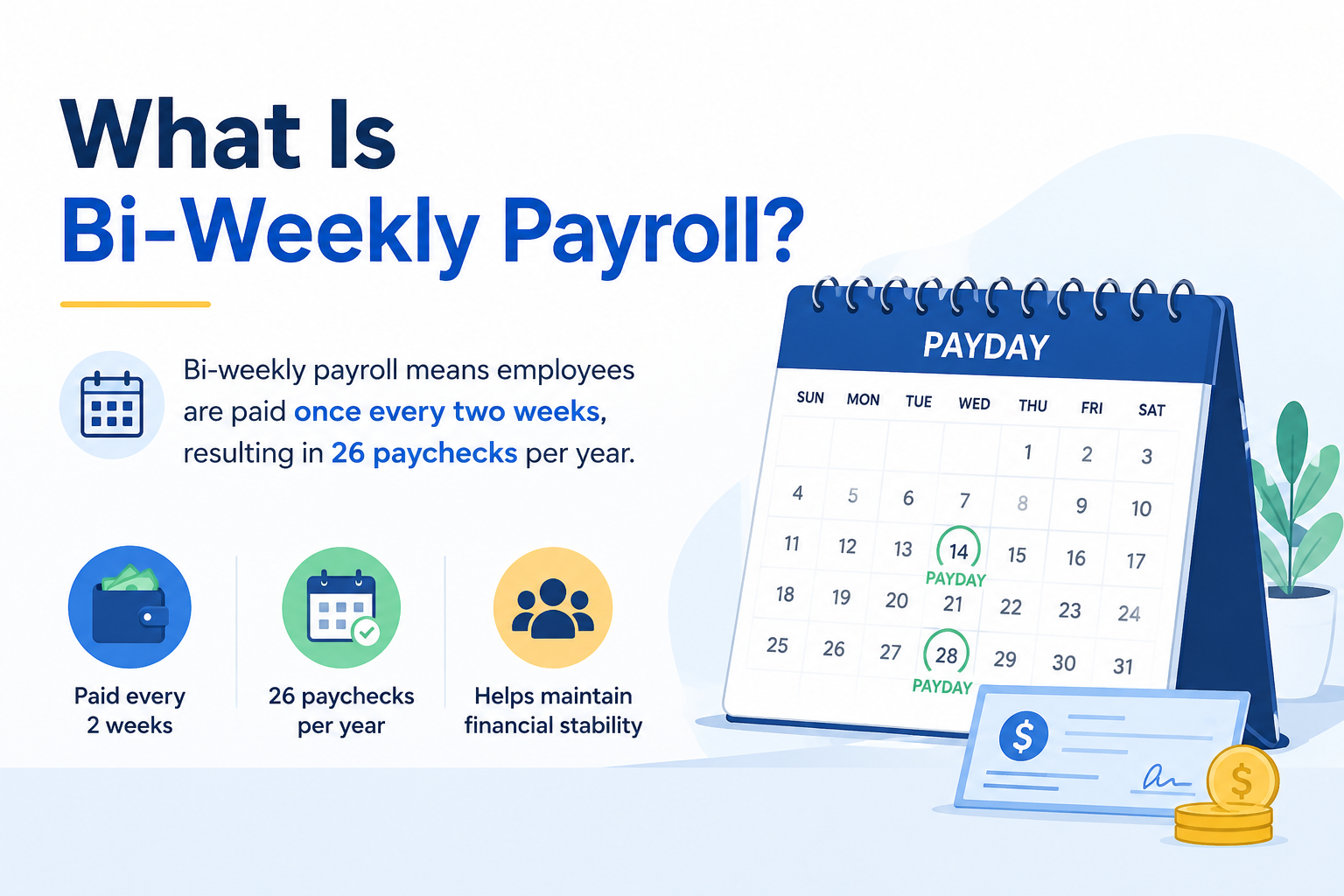
Bi-weekly payroll is a payment schedule where employees get paid once every two weeks.
This usually means employees receive their salary on the same day every other week, such as every Friday. Over the course of a year, this results in 26 pay periods.
Because the schedule follows a fixed 14-day cycle, some months may include three paychecks instead of two. Many employees prefer this setup because paydays feel more frequent and easier to track.
For businesses, bi-weekly payroll is often considered simpler for hourly wage calculations and overtime management since each pay period covers a consistent number of days.
How Bi-Weekly Payroll Works
Under a bi-weekly payroll system, employees are paid every 14 days regardless of the month length.
For example, if payday falls on a Friday, the next paycheck will arrive exactly two weeks later on another Friday. This creates a predictable payroll cycle for both employers and employees.
Businesses That Commonly Use Bi-Weekly Payroll
Bi-weekly payroll is commonly used by businesses with hourly employees or shift-based workforces.
Industries like retail, healthcare, hospitality, manufacturing, and customer support often prefer this schedule because it simplifies overtime calculations and time tracking.
Suggested Reading:
12 Types of Work Schedules: Examples, Benefits & How to Choose the Right OneWhat Is Semi-Monthly Payroll?
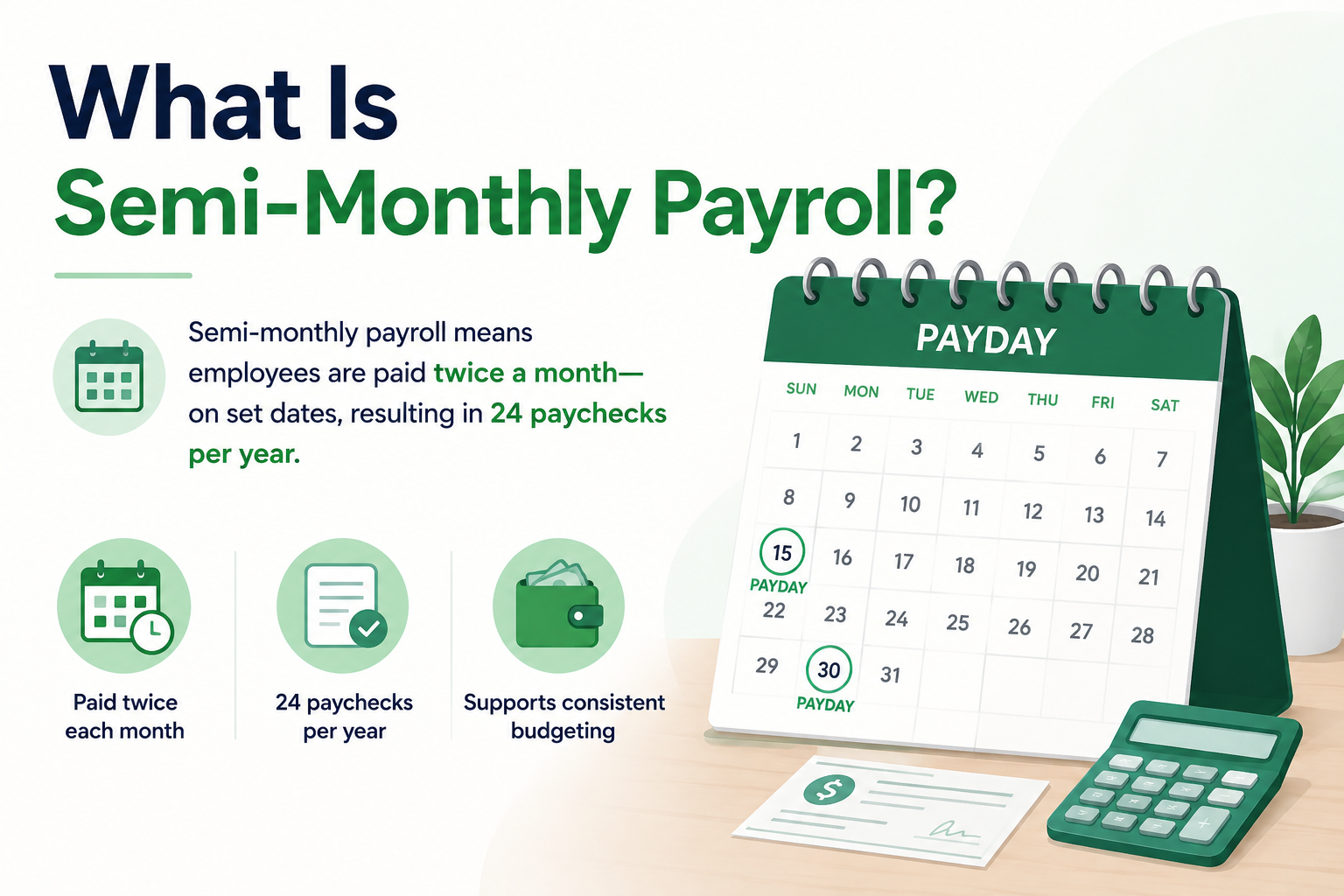
Semi-monthly payroll is a payment schedule where employees are paid twice every month.
In most cases, businesses process payroll on fixed dates such as the 15th and the last working day of the month. This creates 24 pay periods in a year instead of 26.
Unlike bi-weekly payroll, the number of days in each pay period can vary depending on the month. Because of this, paycheck dates may sometimes fall on different weekdays.
Many salaried employees are familiar with this payroll structure because it aligns more closely with monthly budgeting, benefits deductions, and accounting cycles.
For employers, semi-monthly payroll can reduce payroll processing frequency, but overtime calculations may become slightly more complex.
How Semi-Monthly Payroll Works
Under a semi-monthly payroll system, employees are paid two times per month on fixed calendar dates.
For example, a company may process payroll on the 15th and 30th of every month. If a payday falls on a weekend or holiday, payment is usually processed on the nearest working day.
Businesses That Commonly Use Semi-Monthly Payroll
Semi-monthly payroll is commonly used by companies with salaried employees and structured office operations.
Industries like finance, consulting, technology, legal services, and corporate businesses often prefer this payroll schedule because it aligns well with monthly financial planning and benefit calculations.
Semi Monthly vs Bi Weekly Payroll: Key Differences
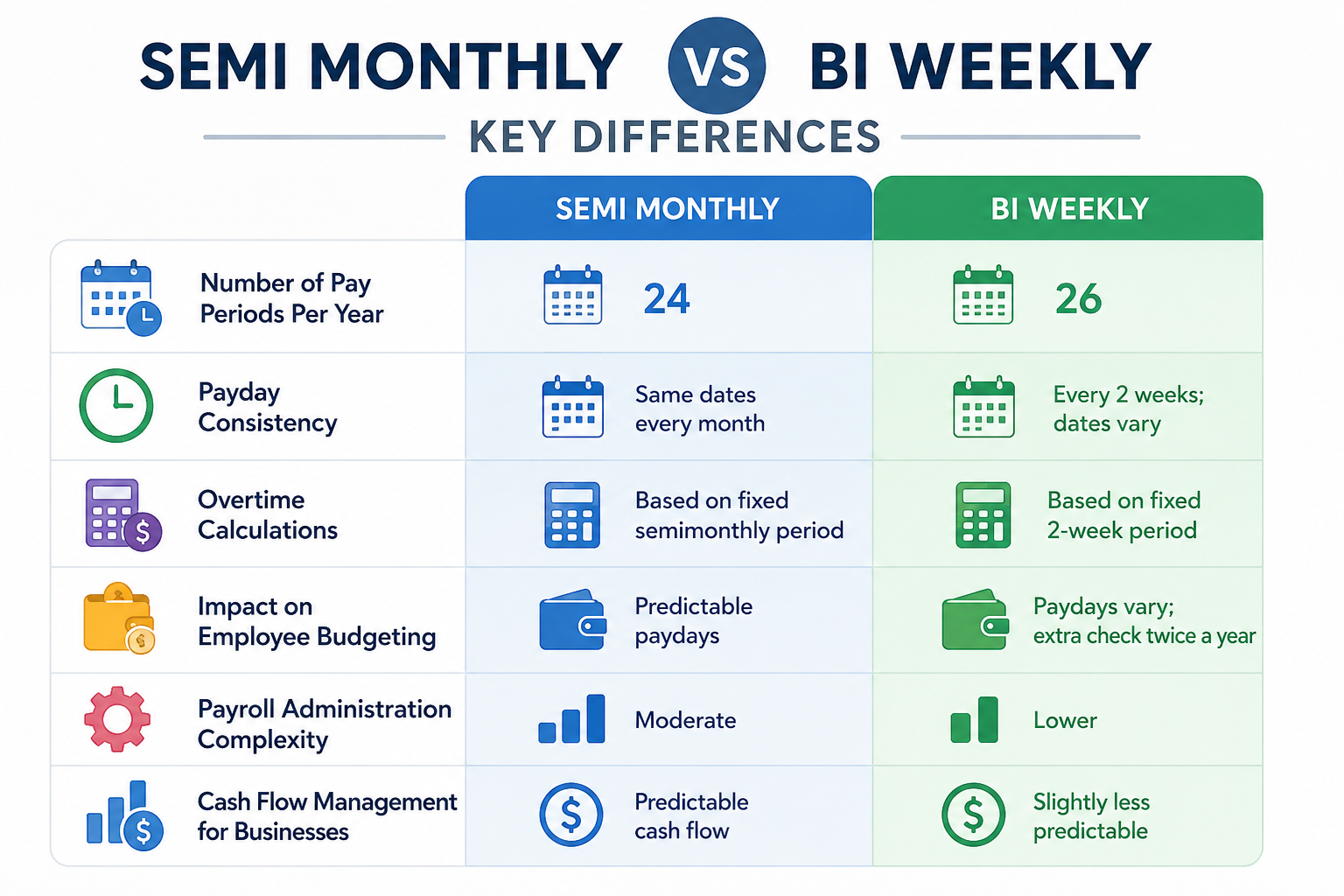
At a glance, bi-weekly and semi-monthly payroll can seem very similar because employees receive two paychecks in most months.
But when you look closer, the differences affect payroll processing, overtime calculations, employee budgeting, and overall business operations.
Number of Pay Periods Per Year
Bi-weekly payroll creates 26 pay periods every year because employees are paid every two weeks.
Semi-monthly payroll creates only 24 pay periods since employees are paid twice per month on fixed dates. This difference can slightly impact payroll planning, benefit deductions, and salary calculations.
Payday Consistency
Bi-weekly payroll follows a fixed weekday schedule.
For example, employees may always get paid on Friday every other week. This creates a very predictable payment rhythm for employees.
Semi-monthly payroll follows fixed calendar dates instead.
Paydays may fall on different weekdays every month depending on the calendar, which can sometimes create processing adjustments around weekends and holidays.
Overtime Calculations
Overtime tracking is usually simpler with bi-weekly payroll because each pay cycle covers the same 14-day period.
This makes it easier for businesses with hourly employees to calculate work hours, overtime eligibility, and shift schedules accurately.
Semi-monthly payroll can make overtime calculations more complicated because pay periods do not always contain the same number of days.
Impact on Employee Budgeting
Some employees prefer bi-weekly payroll because they occasionally receive a third paycheck in certain months.
Others prefer semi-monthly payroll because payments align more closely with recurring monthly expenses like rent, loans, and utility bills.
The better option often depends on how employees manage their personal finances.
Payroll Administration Complexity
Bi-weekly payroll usually requires more payroll processing cycles during the year.
That means payroll teams may spend more time managing approvals, calculations, and payments.
Semi-monthly payroll reduces the number of payroll runs, which can simplify administrative work for accounting and finance teams.
Cash Flow Management for Businesses
Semi-monthly payroll can provide slightly better cash flow predictability because payroll dates remain tied to the monthly calendar.
Bi-weekly payroll may create occasional three-paycheck months, which businesses need to prepare for in advance to avoid short-term cash flow pressure.
Bi Weekly vs Semi Monthly Payroll: Pros and Cons
Both payroll schedules have advantages and drawbacks.
The right option usually depends on your workforce structure, payroll complexity, and cash flow preferences.
Advantages of Bi-Weekly Payroll
Bi-weekly payroll is often preferred by businesses with hourly employees and overtime-heavy schedules.
Easier Overtime Tracking
Since every pay cycle covers a fixed 14-day period, overtime calculations are usually simpler and more accurate.
More Predictable Payday Schedule
Employees receive paychecks on the same weekday every other week, making payday expectations easier to follow.
Disadvantages of Bi-Weekly Payroll
Despite its flexibility, bi-weekly payroll can increase payroll administration work.
More Payroll Processing Cycles
Businesses must process payroll 26 times per year instead of 24, which increases administrative workload.
Three-Paycheck Months Can Affect Budgeting
Some months include three payroll cycles, which may temporarily impact business cash flow planning.
Advantages of Semi-Monthly Payroll
Semi-monthly payroll aligns closely with monthly accounting and expense planning.
Easier Monthly Budgeting
Employees can manage recurring monthly expenses more easily because pay dates stay tied to the calendar month.
Reduced Payroll Processing Frequency
With only 24 payroll cycles annually, payroll management becomes slightly more streamlined.
Disadvantages of Semi-Monthly Payroll
This structure can become more difficult for hourly payroll management.
Complex Overtime Calculations
Uneven pay periods can make overtime tracking more complicated for payroll teams.
Inconsistent Payday Timing
Paydays may fall on different weekdays each month, creating occasional confusion for employees.
Which Is Better: Bi Weekly Payroll vs Semi Monthly?
There is no single payroll schedule that works best for every business.
The better option depends on your employee structure, payroll complexity, cash flow needs, and administrative preferences.
Suggested Reading:
13 Types of Compensation Every HR Team Should KnowChoose Bi-Weekly Payroll If…
Bi-weekly payroll is usually the better choice if you manage hourly employees, overtime-heavy schedules, or shift-based teams.
It creates more predictable work periods, simplifies overtime tracking, and gives employees a consistent weekday payday schedule.
Many growing businesses also prefer bi-weekly payroll because employees often appreciate receiving paychecks more frequently.
Choose Semi-Monthly Payroll If…
Semi-monthly payroll works well for companies with salaried employees and stable monthly operations.
It aligns more naturally with monthly accounting cycles, benefits deductions, and financial reporting. Businesses that want fewer payroll processing runs may also find this structure easier to manage.
Questions to Ask Before Choosing a Payroll Schedule
Before deciding on a payroll schedule, ask yourself:
- Do you have hourly or salaried employees?
- How often do employees work overtime?
- Can your cash flow handle three-paycheck months?
- Which payroll schedule will employees prefer?
- How much payroll administration can your team manage?
Answering these questions can make the decision much clearer for your business.
Conclusion
Choosing between bi-weekly and semi-monthly payroll ultimately comes down to how your business operates and what works best for your employees.
Bi-weekly payroll is often better for hourly teams and overtime tracking, while semi-monthly payroll fits businesses that prefer simpler monthly accounting and fewer payroll cycles.
Instead of focusing only on payroll frequency, think about long-term payroll management, employee experience, and operational efficiency.
The right payroll schedule should make payroll easier to manage, not harder to maintain as your business grows.
Frequently Asked Questions
Is bi-weekly payroll the same as getting paid twice a month?
No, bi-weekly and semi-monthly payroll are different.
Bi-weekly payroll pays employees every two weeks, resulting in 26 pay periods annually, while semi-monthly payroll pays employees twice a month for a total of 24 pay periods.
Which payroll schedule is better for hourly employees?
Bi-weekly payroll is usually better for hourly employees.
It simplifies overtime calculations and creates more consistent pay periods for shift-based work schedules.
Why do some months have three paychecks in bi-weekly payroll?
Because bi-weekly payroll follows a 14-day cycle, certain months naturally include three paydays instead of two.
This typically happens two times per year.
Is semi-monthly payroll easier for accounting?
Yes, many businesses find semi-monthly payroll easier for accounting and monthly budgeting.
The fixed monthly pay dates align more closely with financial reporting, benefit deductions, and recurring business expenses.
Can employees prefer one payroll schedule over another?
Yes, employee preference often varies based on personal budgeting habits.
Some employees prefer bi-weekly payroll because they receive paychecks more frequently, while others prefer semi-monthly payroll because it aligns better with monthly bills and expenses.


