
Finding great talent is harder than it used to be.
Candidates have more choices, hiring competition is higher, and slow recruiting processes often cause companies to lose top talent before they can even make an offer.
That is why modern recruiting requires a different approach.
In this guide, you'll learn:
- Why recruiting has changed dramatically
- The fundamentals every recruiter should master
- Modern recruiting strategies that improve hiring outcomes
- How AI helps recruiters work faster and smarter
- Common recruiting mistakes that cost companies great hires
Why Recruiting Has Changed (And Why the Old Playbook Stopped Working)
Recruiting used to be much simpler.
Post a job, collect applications, review resumes, and move candidates through the hiring process.
Today, that approach is no longer enough.
The hiring market has become more competitive, candidates have more control over their choices, and expectations have changed dramatically.
To attract and hire great talent, recruiters need to adapt to a completely different environment.
1. Candidates Have More Options and Shorter Attention Spans
Top candidates are no longer limited to opportunities in their local market.
They can discover jobs through professional networks, job boards, social platforms, referrals, and recruiter outreach happening across multiple channels every day.
As a result, candidates are constantly evaluating new opportunities.
This also means their attention is divided.
If a job posting feels unclear, an application process is too long, or communication is slow, many candidates simply move on to another opportunity.
The companies that win talent today are often the ones that make it easiest for candidates to engage and take the next step.
2. Speed Now Decides Who Lands the Best Talent
Hiring speed has become a competitive advantage.
The strongest candidates rarely stay available for long, especially in high-demand industries.
While one company is still reviewing applications, another may already be conducting interviews and preparing an offer.
Every delay creates risk.
Slow resume reviews, delayed interview scheduling, and long approval cycles can cause qualified candidates to lose interest or accept competing offers before your process is complete.
Modern recruiting teams understand that responsiveness matters.
The faster you identify, engage, and move candidates forward, the greater your chances of securing top talent before competitors do.
3. Generic Outreach Gets Ignored Faster Than Ever
Candidates receive recruiting messages every day.
Many of those messages look almost identical.
Generic introductions, copied templates, and mass outreach campaigns rarely stand out in a crowded inbox.
Candidates want to know why the opportunity is relevant to them.
They expect recruiters to understand their background, skills, and career goals before reaching out.
A personalized message does not need to be lengthy.
It simply needs to demonstrate that you took the time to understand who the candidate is and why the role may be a good fit.
That small effort often makes the difference between getting ignored and starting a meaningful conversation.
What Modern Recruiting Actually Looks Like Today
Understanding why recruiting changed is important.
The next step is understanding how successful recruiting teams operate in today's environment.
Modern recruiting is no longer about filling open roles as quickly as possible.
It is about building efficient systems that help you find, engage, evaluate, and hire the right people consistently.
1. Sourcing Happens Across Many Platforms, Not Just One
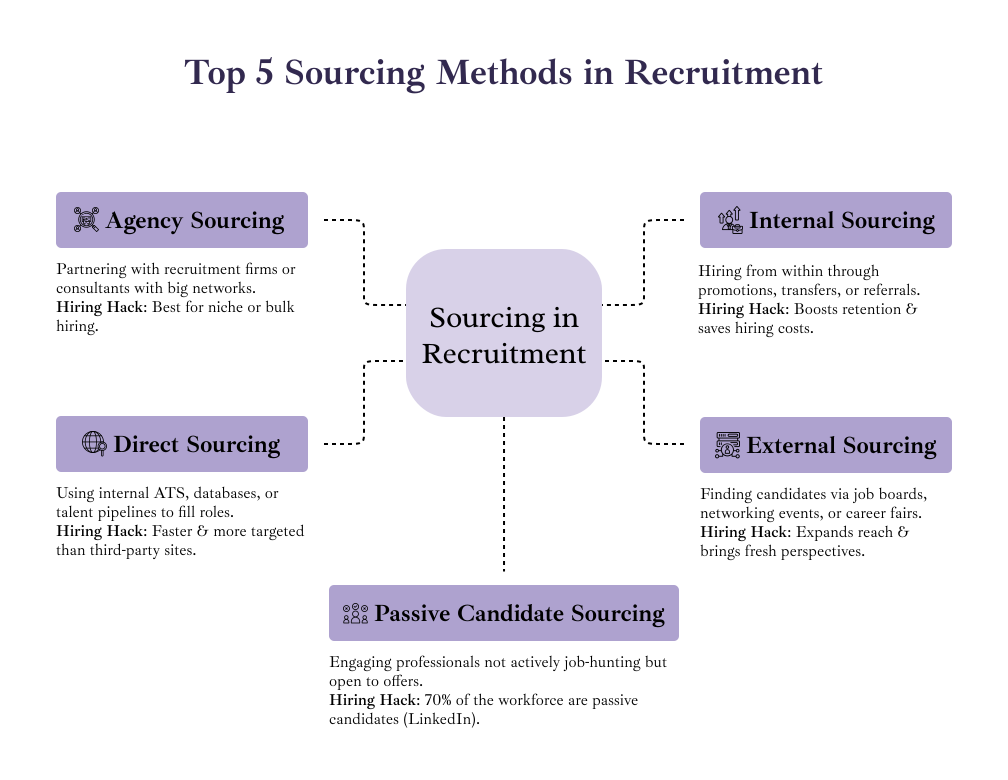
Relying on a single source of candidates limits your hiring potential.
Great talent can be found on professional networks, job boards, internal databases, referral programs, online communities, and industry-specific platforms.
Modern recruiters cast a wider net.
Instead of waiting for applications to arrive, they proactively search across multiple channels to identify qualified candidates wherever they spend their time.
This broader approach creates stronger talent pipelines and reduces dependence on any single sourcing channel.
Suggested Reading:
10 Candidate Sourcing Channels That Deliver Better Hires Fast2. Personalization Is Expected, Not Optional
Personalization has become a standard expectation throughout the hiring process.
Candidates want communication that feels relevant to their experience and interests.
That applies to outreach messages, interview communication, follow-ups, and even job descriptions.
When candidates feel understood, they are more likely to respond, stay engaged, and develop a positive perception of your company.
Personalization helps transform recruiting from a transactional process into a relationship-building process.
3. Data Guides Decisions Instead of Gut Feeling
Recruiting decisions are increasingly driven by data rather than assumptions.
Modern hiring teams track metrics such as response rates, sourcing effectiveness, interview conversion rates, and offer acceptance rates.
These insights help identify bottlenecks and opportunities for improvement.
Instead of guessing what works, recruiters can make informed decisions based on measurable outcomes.
Over time, data-driven recruiting leads to more efficient hiring processes and better hiring results.
4. The Candidate Experience Is Part of the Hire
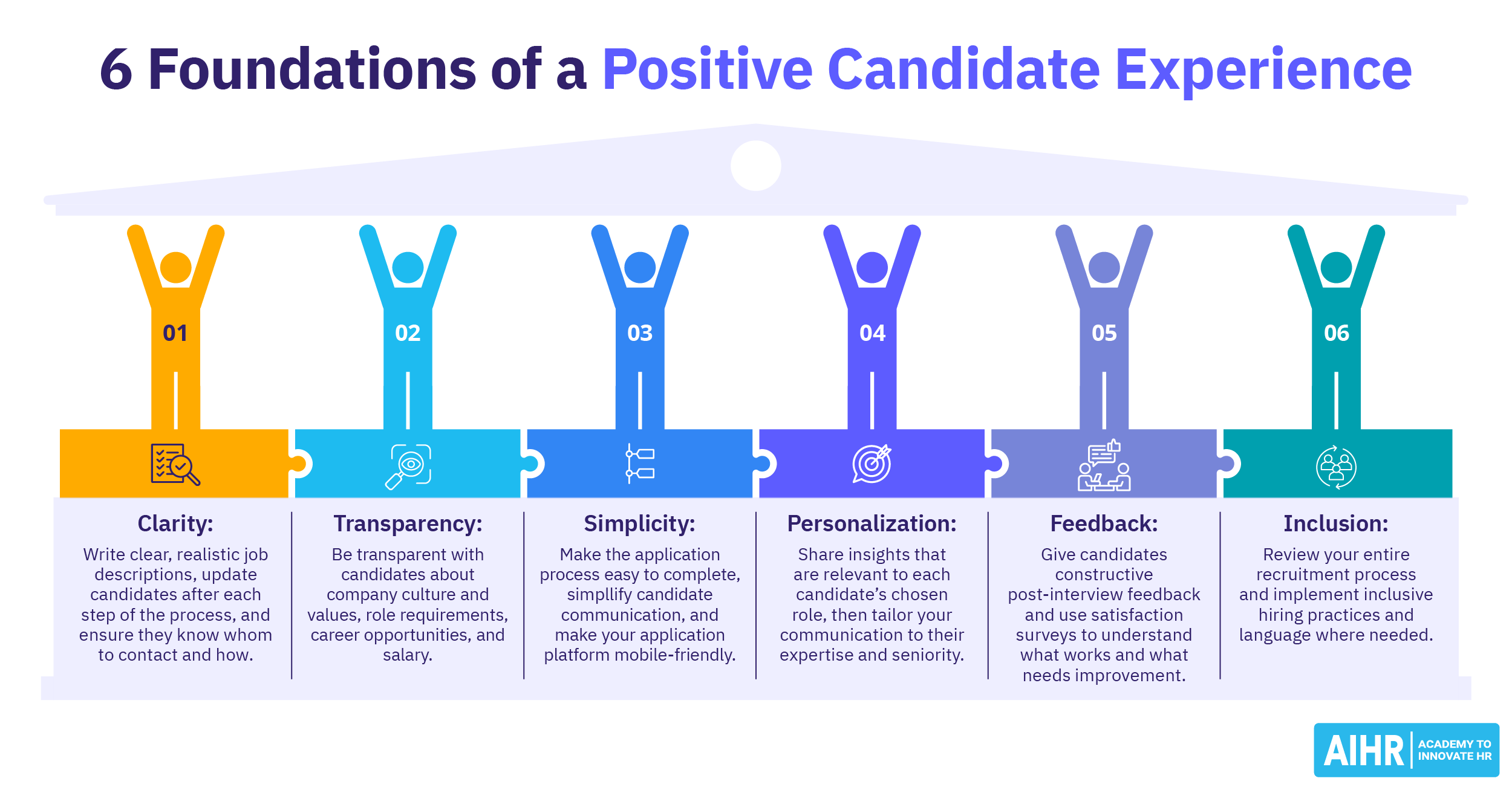
Hiring does not start when an offer is accepted.
It starts with the candidate's very first interaction with your company.
Every touchpoint contributes to the overall experience.
Job applications, recruiter conversations, interview scheduling, follow-ups, and feedback all shape how candidates perceive your organization.
A positive candidate experience keeps people engaged and increases the likelihood of successful hires.
Even candidates who are not selected can become future applicants, referrals, customers, or advocates when they have a positive experience throughout the process.
That is why modern recruiting teams view candidate experience as a critical part of every hiring strategy.
The Recruiting Fundamentals You Should Get Right First
Before experimenting with new tools, automation, or advanced recruiting tactics, it is important to build a strong foundation.
Many hiring challenges are not caused by a lack of candidates.
They happen because the basics are not working as effectively as they should.
Getting these fundamentals right makes every recruiting effort more successful.
1. A Clear, Honest Job Description That Filters the Right People In
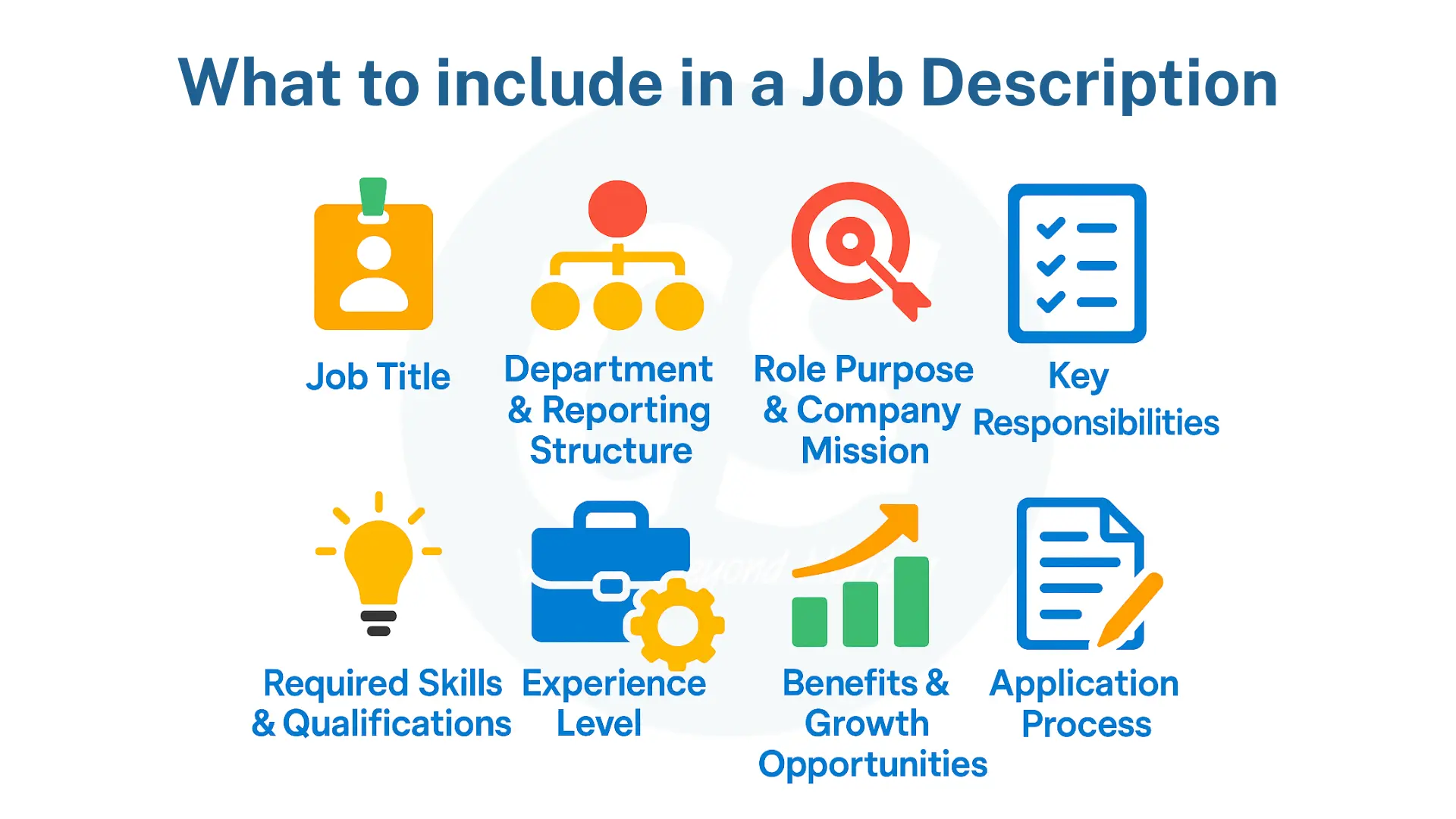
A job description should do more than list responsibilities.
It should help candidates quickly understand the role, expectations, and impact they can make within the organization.
Many job descriptions become long lists of requirements that discourage qualified people from applying.
Instead, focus on clarity.
Explain what success looks like, what the candidate will work on, and how the role contributes to business goals.
The more transparent your job description is, the more likely you are to attract candidates who genuinely fit the role.
2. A Defined Ideal Candidate Profile
Recruiting becomes much easier when you know exactly who you are looking for.
Without a clear candidate profile, sourcing efforts become inconsistent and hiring decisions become subjective.
An ideal candidate profile should outline the skills, experience, qualifications, and traits that matter most for success in the role.
This creates alignment between recruiters, hiring managers, and interviewers.
It also helps you evaluate candidates against consistent criteria instead of relying on assumptions during the hiring process.
3. A Simple, Repeatable Hiring Process
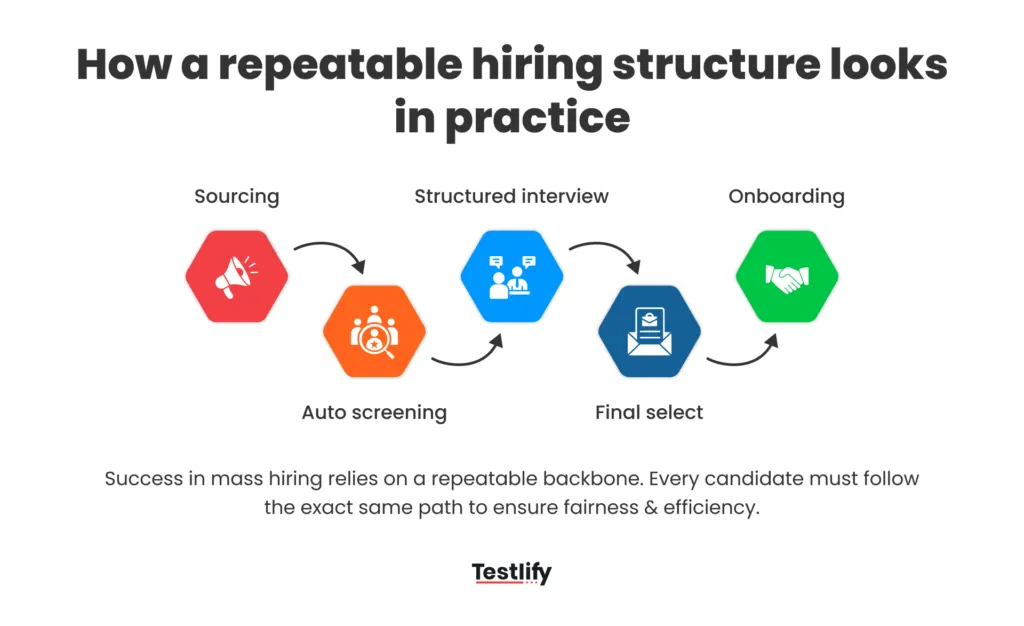
Complex hiring processes often create delays and frustration for both recruiters and candidates.
A strong hiring process should be easy to follow and repeat across different roles.
Every stage should have a clear purpose, timeline, and decision-making framework.
When everyone understands the process, communication improves and candidates move through the funnel more efficiently.
Consistency also makes it easier to identify areas that need improvement over time.
4. Response Speed That Respects the Candidate's Time
Candidates notice how quickly companies respond.
Fast communication signals professionalism and genuine interest.
Long delays often create uncertainty and cause candidates to explore other opportunities.
Even if there is no major update, keeping candidates informed helps maintain engagement.
A simple acknowledgment, status update, or next-step message can significantly improve the candidate experience.
Respecting a candidate's time often leads to stronger relationships and better hiring outcomes.
Modern Recruiting Strategies That Actually Work
Once the fundamentals are in place, the next step is improving how you attract, engage, and convert talent.
The most successful recruiting teams combine proven hiring principles with modern strategies that help them move faster and make better decisions.
1. Source From Multiple Platforms Instead of Relying on One
The best candidates are rarely concentrated in a single location.
Some are active on professional networks, while others engage in niche communities, industry forums, or referral networks.
Limiting sourcing efforts to one platform reduces your chances of finding top talent.
Expanding your search across multiple channels increases candidate quality and creates a more resilient hiring pipeline.
2. Write Job Descriptions That Speak to Outcomes, Not Requirements Lists
Candidates want to understand what they will accomplish in the role.
A long list of qualifications often feels overwhelming and impersonal.
Instead of focusing solely on requirements, explain the outcomes the candidate will help achieve.
When candidates can visualize the impact they will make, they are more likely to see themselves succeeding in the position.
3. Screen and Rank Candidates by Fit, Not Just Keywords
Keyword matching only tells part of the story.
A candidate may have the right skills listed on a resume but still be a poor fit for the role.
Effective screening evaluates experience, achievements, role alignment, and potential contribution.
Looking beyond keywords helps identify candidates who are genuinely capable of succeeding in the position.
4. Personalize Outreach at Scale Instead of Mass-Blasting
Candidates can immediately recognize generic recruiting messages.
Personalized outreach demonstrates effort and relevance.
Mentioning a candidate's background, accomplishments, or career interests makes conversations feel more authentic.
Even small levels of personalization can significantly improve response rates and engagement.
5. Keep Candidates Engaged With Timely, Consistent Follow-Up
Many qualified candidates are lost because communication stops after the initial outreach.
Regular follow-ups help maintain momentum throughout the hiring process.
Consistent communication keeps candidates informed and reduces uncertainty.
It also demonstrates that your organization values their time and interest.
6. Use Scheduling That Removes Back-and-Forth Friction
Scheduling interviews should not become a lengthy process.
Multiple emails and calendar conflicts often slow down hiring unnecessarily.
Modern recruiting teams simplify scheduling through automated availability sharing and calendar coordination.
Reducing friction helps candidates move through the process faster and creates a smoother experience.
7. Track Your Funnel So You Know Where Candidates Drop Off
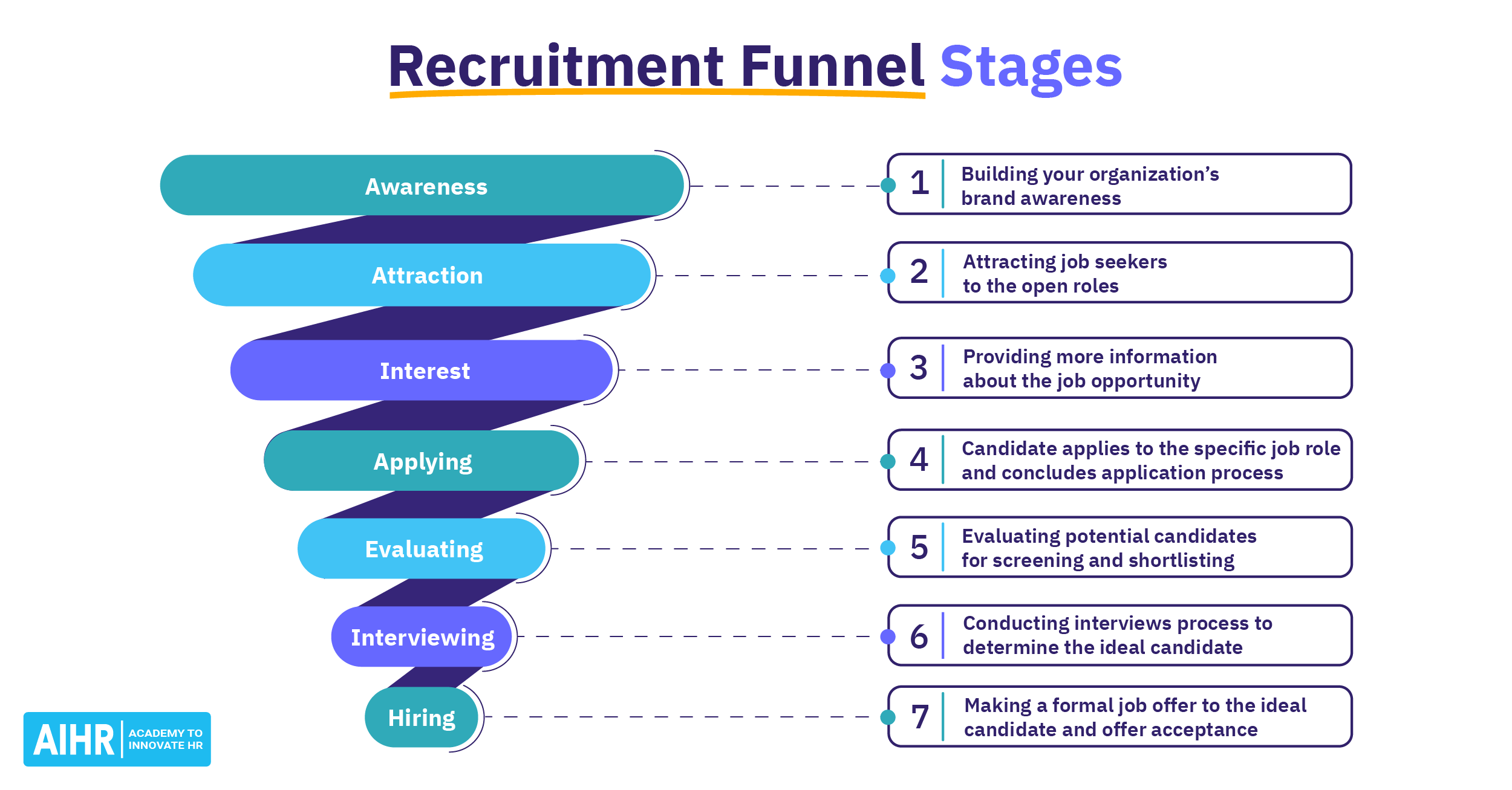
Recruiting performance becomes easier to improve when you can measure it.
Tracking each stage of the hiring funnel reveals where candidates disengage or experience delays.
These insights help identify bottlenecks that may be limiting hiring success.
Small improvements at critical stages can have a significant impact on overall hiring outcomes.
8. Build a Talent Pipeline Before You Have the Open Role
One of the biggest recruiting mistakes is waiting until a position opens before searching for candidates.
The strongest recruiting teams build relationships long before they need to hire.
By maintaining an active talent pipeline, you already have qualified candidates to engage when opportunities become available.
This reduces time-to-hire and gives you a significant advantage in competitive hiring markets.
How AI Fits Into a Modern Recruiting Workflow
Modern recruiting involves dozens of repetitive tasks that consume valuable time.
Sourcing candidates, screening resumes, sending follow-ups, coordinating interviews, and tracking hiring progress can quickly overwhelm even experienced recruiting teams.
This is where AI has started to play an important role.
Rather than replacing recruiters, AI helps eliminate manual work so recruiters can focus more on building relationships and making better hiring decisions.
1. Automating Sourcing So You Reach More Candidates in Less Time
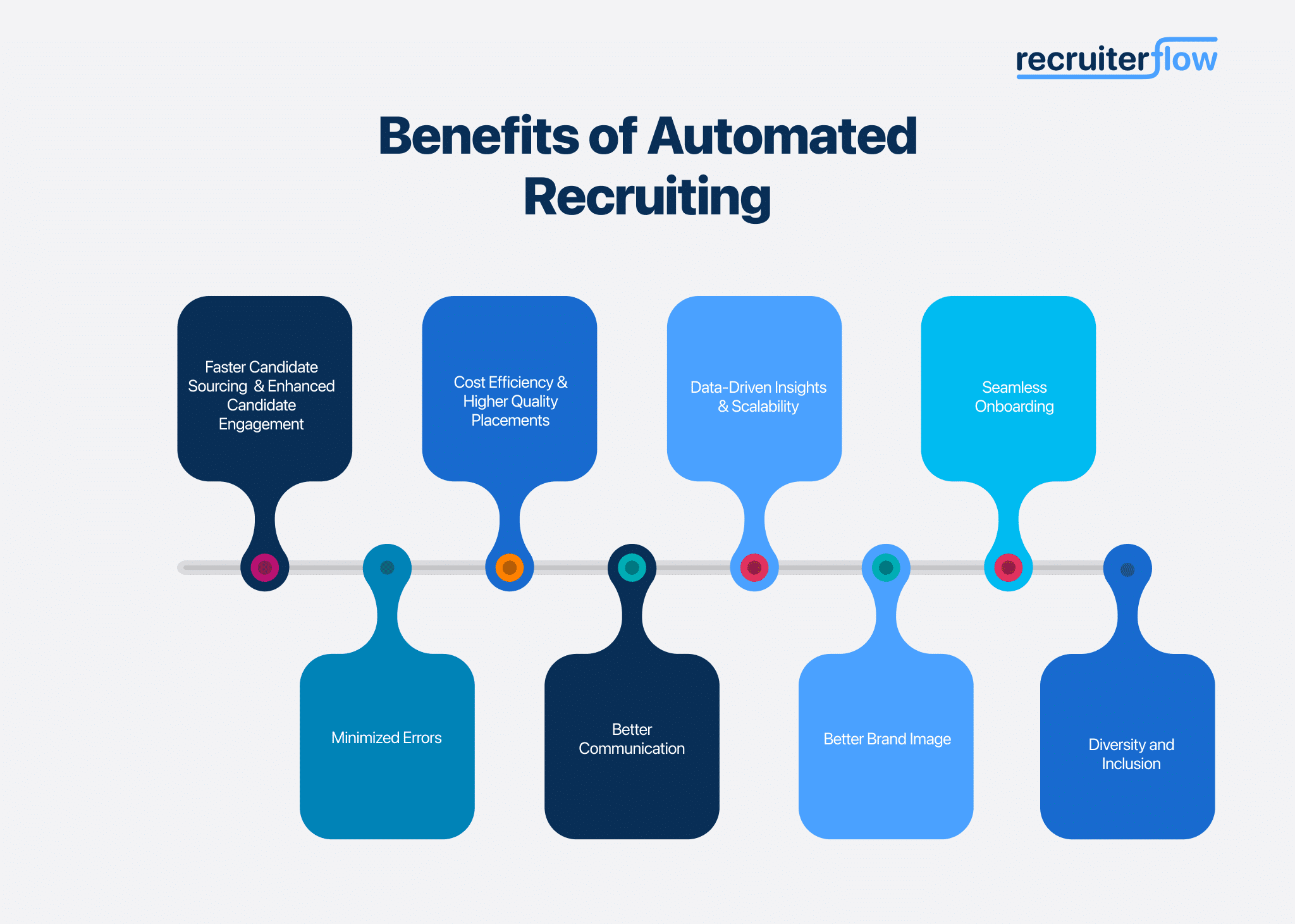
Finding qualified candidates has traditionally required hours of searching across different platforms.
AI-powered sourcing tools can scan multiple talent sources simultaneously and identify candidates that match specific job requirements.
Instead of manually reviewing hundreds of profiles, recruiters can focus their attention on a curated list of qualified prospects.
This allows hiring teams to expand their reach while significantly reducing sourcing time.
2. Screening and Matching That Surfaces the Best-Fit People Fast
Resume screening is often one of the most time-consuming stages of recruiting.
AI helps accelerate this process by analyzing candidate profiles, experience, skills, and qualifications against the role's requirements.
Rather than relying solely on keyword matching, modern AI systems evaluate overall fit and prioritize candidates who are most likely to succeed.
This helps recruiters spend less time reviewing resumes and more time engaging with strong candidates.
3. Personalized Outreach and 24/7 Follow-Up Without the Manual Grind
Personalization improves response rates, but creating individualized messages for every candidate can be difficult at scale.
AI can generate tailored outreach messages based on candidate backgrounds, skills, and career interests.
It can also automate follow-ups and candidate engagement throughout the hiring process.
Platforms like Leelu AI use automation to help recruiters maintain ongoing candidate conversations while reducing the manual effort typically required to keep pipelines active.
As a result, candidates stay engaged without recruiters needing to manage every interaction manually.
Suggested Reading:
How Recruitment Automation Is Transforming Hiring in USA4. Smart Scheduling and ATS Sync That Cut Coordination Time
Scheduling interviews often creates unnecessary delays.
Coordinating calendars, sending invitations, and updating hiring systems can consume more time than most teams realize.
AI-powered scheduling tools automate these administrative tasks by identifying available time slots, booking interviews, and synchronizing information with ATS platforms.
This removes scheduling bottlenecks and helps candidates move through the hiring process faster.
5. Pipeline Insights That Help You Hire Smarter, Not Just Faster
Speed matters in recruiting, but speed alone is not enough.
The best hiring teams also understand what is happening inside their recruiting funnel.
AI-driven analytics provide visibility into sourcing performance, response rates, interview conversion rates, and candidate drop-off points.
These insights help recruiters identify bottlenecks, improve hiring strategies, and make more informed decisions over time.
The result is a recruiting process that becomes increasingly efficient and effective with every hire.
Common Recruiting Mistakes That Quietly Cost You Hires
Even strong recruiting teams can lose great candidates because of small process issues.
Many hiring problems are not obvious until opportunities have already been missed.
Avoiding these common mistakes can dramatically improve hiring outcomes.
1. Moving Too Slowly on Strong Candidates
Top candidates rarely stay available for long.
Delays in resume reviews, interview scheduling, or hiring decisions create opportunities for competitors to move first.
A candidate who seems interested today may accept another offer tomorrow.
Maintaining momentum throughout the hiring process is often the difference between securing top talent and losing them.
2. Relying on a Single Sourcing Channel
Every sourcing channel has limitations.
Candidates who are active on LinkedIn may not be active on job boards, and referral networks may uncover talent that never applies through traditional channels.
Depending on a single source narrows your talent pool and increases hiring risk.
Diversified sourcing consistently produces stronger candidate pipelines.
3. Sending Outreach That Reads Like a Template
Candidates can quickly identify generic recruiting messages.
Mass outreach often feels impersonal and fails to communicate why the opportunity is relevant.
Even minor personalization can make outreach more effective.
Referencing a candidate's experience, skills, or accomplishments demonstrates genuine interest and increases the likelihood of a response.
4. Ignoring Candidates Who Didn't Make the Final Round
Not every candidate becomes a hire.
That does not mean the relationship should end.
Candidates who narrowly missed selection may be excellent fits for future opportunities.
Maintaining communication and keeping these individuals in your talent network creates valuable hiring opportunities down the road.
A strong talent community often becomes a competitive recruiting advantage.
5. Measuring Activity Instead of Outcomes
Recruiters often track metrics such as messages sent, resumes reviewed, or calls completed.
While activity matters, it does not always reflect hiring success.
The metrics that truly matter are outcomes.
Quality candidates sourced, interview conversion rates, offer acceptance rates, and time-to-hire provide a much clearer picture of recruiting performance.
Focusing on outcomes helps teams optimize the activities that actually contribute to successful hires.
Conclusion
Recruiting has evolved far beyond posting jobs and waiting for applications.
Today's hiring success depends on speed, personalization, candidate experience, and the ability to make data-driven decisions throughout the recruiting process.
The organizations that consistently attract top talent are the ones that adapt to these changing expectations and build systems that scale efficiently.
By combining strong recruiting fundamentals with modern strategies and AI-powered tools, you can reduce hiring friction, improve candidate engagement, and make better hiring decisions.
The future of recruiting belongs to teams that work smarter, move faster, and put candidates first.
Frequently Asked Questions
1. What is modern recruiting?
Modern recruiting combines technology, data, personalization, and efficient hiring processes to attract, engage, and hire better candidates.
2. Why is recruiting more challenging today?
Candidates have more opportunities, higher expectations, and faster decision-making timelines, making competition for top talent much stronger.
3. How important is candidate experience in recruiting?
Candidate experience directly influences engagement, employer brand perception, offer acceptance rates, and future referral opportunities.
4. What role does AI play in recruiting?
AI automates sourcing, screening, outreach, scheduling, and reporting, helping recruiters save time and improve hiring efficiency.
5. How can recruiters improve response rates?
Personalized outreach, relevant messaging, and timely follow-ups help increase candidate engagement and improve response rates significantly.


