
Hiring a project manager is not the same as hiring for a role with a narrowly defined set of technical responsibilities.
Project managers are responsible for turning plans into outcomes while keeping people, budgets, timelines, risks, and stakeholders aligned.
A candidate may have years of project management experience but still struggle in an environment where priorities change quickly or multiple stakeholders compete for attention.
That is why a strong project management recruitment process needs to evaluate more than job titles and certifications.
Recruiters and hiring managers need to understand what the role actually requires, identify candidates with relevant experience, and use structured assessments to determine whether someone can handle real project challenges.
This guide explains how to build a practical recruitment process for project management roles, from defining the position and sourcing candidates to interviewing, assessing, and measuring hiring results.
What Is Project Management Recruitment?
Project management recruitment is the process of identifying, attracting, evaluating, and hiring professionals who can plan and deliver projects successfully.
Depending on the organization, the role may involve managing software implementations, construction projects, marketing campaigns, product launches, business transformations, or internal operations.
The recruitment process typically involves:
- Defining the project's requirements and the manager's responsibilities
- Creating a job description based on actual business needs
- Sourcing candidates through relevant channels
- Screening candidates for experience and capabilities
- Evaluating technical and interpersonal skills
- Assessing how candidates handle realistic project situations
- Conducting interviews with relevant stakeholders
- Checking references and making the final hiring decision
The important part is that these stages should connect with one another.
If the job description emphasizes strategic leadership but the interview only tests software knowledge, the hiring process is not evaluating what the business actually needs.
Start With a Clear Project Manager Job Description
A strong recruitment process starts before you search for candidates.
The job description should explain what the project manager will actually be responsible for rather than relying on generic phrases such as "manage projects" or "work with cross-functional teams."
Start by defining the projects the person will manage.
For example, a project manager responsible for a $2 million technology implementation will require a different level of experience from someone coordinating small internal marketing projects.
Your job description should cover:
- Core responsibilities: What will the project manager own from planning through completion?
- Project complexity: How many teams, stakeholders, locations, or workstreams are involved?
- Experience requirements: What type and level of project experience is genuinely necessary?
- Methodologies: Does the organization use Agile, Scrum, Waterfall, Kanban, or a hybrid approach?
- Tools: Which project management or collaboration platforms will the candidate use?
- Team responsibilities: Will they directly manage people or coordinate cross-functional teams?
- Budget ownership: Will they be responsible for project budgets and financial reporting?
- Stakeholder management: Which internal and external stakeholders will they work with?
- Expected outcomes: What should the person accomplish during their first six or twelve months?
This approach gives recruiters a clearer profile to source against and gives candidates a better understanding of the opportunity.
Separate Must-Have and Nice-to-Have Skills
Not every requirement should carry the same weight.
For example, experience managing complex projects may be essential, while familiarity with a specific project management platform may be something the new hire can learn.
Divide requirements into two groups:
Must-have requirements
- Relevant project management experience
- Experience with the required project methodology
- Stakeholder management ability
- Strong communication skills
- Experience managing project risks and timelines
Nice-to-have requirements
- Specific software certifications
- Experience in an adjacent industry
- Additional project management certifications
- Familiarity with a particular software platform
This distinction prevents recruiters from eliminating capable candidates simply because they do not match every preference listed in the job description.
Identify the Skills You Need in a Project Manager
Project managers need a combination of technical knowledge, leadership ability, communication skills, and practical judgment.
A candidate who is highly organized but cannot manage stakeholder conflict may struggle just as much as someone with strong leadership skills but poor planning discipline.
Technical Project Management Skills
Depending on the role, recruiters may need to assess experience with:
- Project planning and scheduling
- Resource allocation
- Budget management
- Risk and issue management
- Scope management
- Project reporting
- Quality management
- Agile or Waterfall methodologies
- Project management software
- Documentation and project governance
However, do not treat familiarity with a particular tool as proof of project management ability.
Knowing how to use a project management platform is different from knowing how to recover a project that is six weeks behind schedule.
Leadership and Communication Skills
Project managers often have to influence people they do not directly manage.
They may coordinate developers, designers, finance teams, executives, vendors, clients, and other stakeholders. As a result, communication and leadership can have a major impact on project outcomes.
Look for evidence of:
- Team leadership
- Stakeholder communication
- Conflict resolution
- Negotiation
- Delegation
- Expectation management
- Decision-making
- Cross-functional collaboration
During interviews, ask candidates to describe situations where they had to influence people without having direct authority over them.
Problem-Solving and Adaptability
Projects rarely follow the original plan perfectly.
Budgets change. Deadlines move. Requirements expand. Team members leave. Customers change their expectations.
A capable project manager should be able to recognize problems early, understand their impact, and determine what needs to change.
Instead of simply asking whether a candidate is "good at problem-solving," ask for a specific example of a project that went off track and what they did next.
Build a Practical Project Management Recruitment Process
Once the role is defined, create a consistent hiring workflow.
A practical process can look like this:
Define role → Create job description → Source candidates → Screen applications → Initial interview → Skills assessment → Practical exercise → Stakeholder interview → Reference check → Hiring decision
Each stage should have a clear purpose.
1. Define the Role
Start by agreeing on what success looks like.
The recruiter and hiring manager should align on the project's scope, required experience, key competencies, salary range, reporting structure, and expected outcomes.
2. Create the Job Description
Turn those requirements into a candidate-friendly job description.
Avoid filling the posting with every possible qualification. Prioritize requirements that are directly connected to the work.
3. Source Relevant Candidates
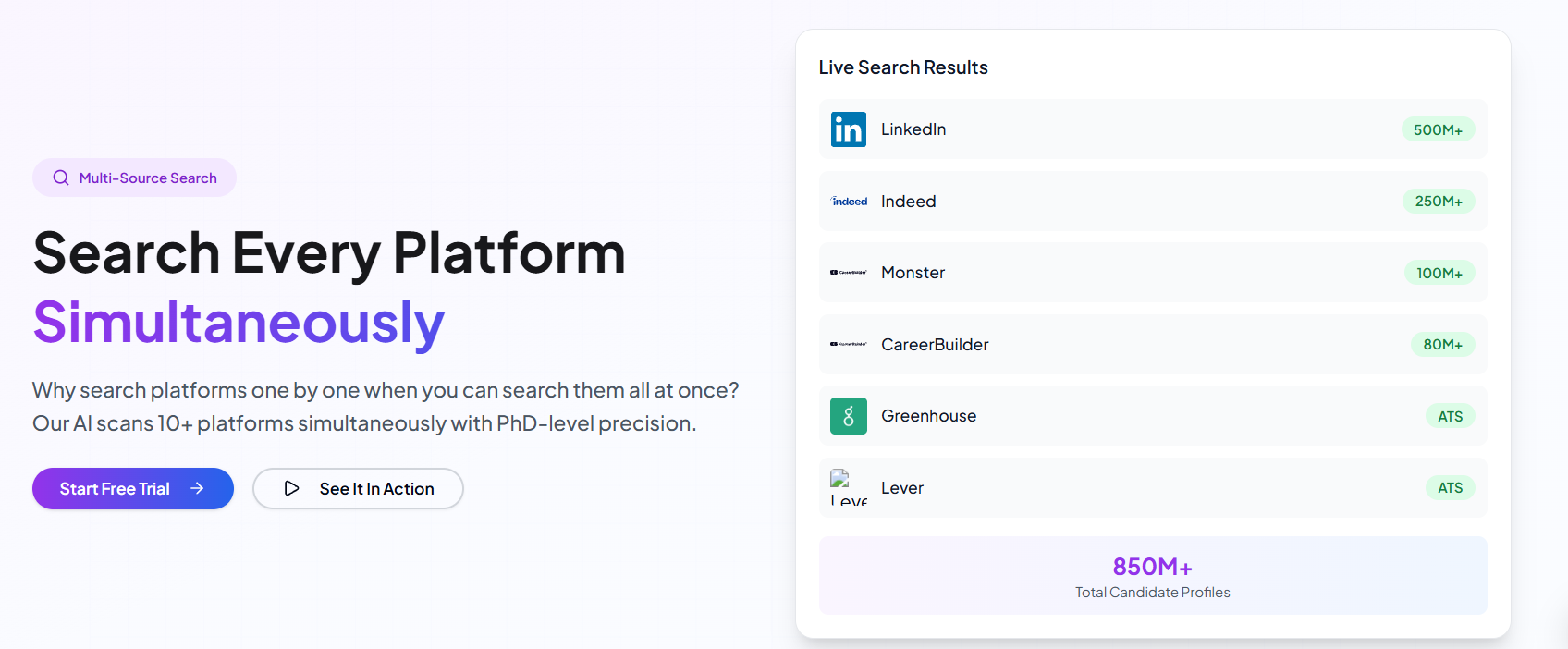
Use several sourcing channels rather than relying exclusively on job applications.
Depending on the role, this may include LinkedIn, job boards, employee referrals, professional communities, talent databases, recruitment agencies, and existing candidate pools.
4. Screen Applications
Review candidates against predefined criteria.
Look for relevant project scope, measurable achievements, industry experience where necessary, team responsibilities, and evidence of increasing responsibility.
5. Conduct an Initial Interview
Use the first interview to confirm basic requirements and understand the candidate's career history, communication style, motivations, and relevant experience.
6. Assess Project Management Capabilities
Use structured questions or assessments to determine how candidates approach planning, prioritization, risk, communication, and problem-solving.
7. Run a Practical Exercise
Give shortlisted candidates a realistic project scenario and evaluate how they approach it.
8. Conduct Stakeholder or Panel Interviews
Bring in people who will work closely with the new hire. Their perspective can reveal whether the candidate is likely to work effectively across teams.
9. Check References
References can help validate a candidate's previous responsibilities, leadership style, reliability, and project outcomes.
10. Make the Hiring Decision
Use the same evaluation criteria across candidates and document why the selected candidate is the strongest fit.
How to Source Strong Project Management Candidates
Finding qualified project managers often requires more than publishing a job advertisement.
Experienced project managers may already be employed and may not be actively searching for another position. A recruitment strategy that depends entirely on inbound applications can therefore miss part of the available talent pool.
Consider combining:
Job Boards
Job boards can generate a large number of applications and work particularly well when the role has clear requirements.
The downside is volume. Recruiters may need to spend significant time separating relevant candidates from applicants who do not meet the basic criteria.
LinkedIn can be useful for identifying project managers based on job title, industry, location, experience, and career history.
It is particularly valuable when recruiters need to approach passive candidates rather than wait for applications.
Employee Referrals
Employees can often identify project managers within their professional networks who would be a strong cultural or technical fit.
A structured referral program can make this channel more consistent.
Professional Communities
Industry associations, project management communities, conferences, and specialist groups can help recruiters reach candidates with specific experience.
Recruitment Agencies
Agencies can be useful when the role is highly specialized, difficult to fill, or requires access to a particular talent market.
Talent Databases and AI-Powered Sourcing
Recruiters can also use talent databases and AI-powered sourcing tools to identify candidates based on multiple criteria rather than relying only on exact job titles.
This can help uncover candidates whose previous titles differ from the wording used in the job description but whose experience closely matches the role.
How to Screen Project Manager Candidates
Resume screening should answer one basic question:
Does this candidate have enough relevant evidence to justify a deeper evaluation?
Look beyond the job title.
For example, a resume saying "Managed multiple projects" provides limited information.
A stronger description might explain that the candidate managed a cross-functional implementation involving several teams, delivered it within a defined budget, and reduced project delays.
During screening, look for:
- Types of projects managed
- Project size and complexity
- Team size
- Budget responsibility
- Stakeholder exposure
- Industry or domain experience
- Methodologies used
- Tools and platforms
- Measurable project outcomes
- Career progression
Screen for Evidence, Not Just Keywords
A candidate may list "Agile," "risk management," and "stakeholder management" on their resume without explaining how they applied those skills.
Recruiters should therefore distinguish between skill mentions and demonstrated experience.
For example:
"Experienced in stakeholder management"
is less useful than:
"Coordinated weekly executive reviews across product, engineering, finance, and customer teams to resolve delivery risks."
The second example provides evidence of how the candidate actually used the skill.
Use Interviews to Test Real-World Project Management Skills
A project manager interview should reveal how a candidate thinks when faced with uncertainty.
Generic questions such as "What are your strengths?" can be useful for understanding the candidate, but they should not make up most of the interview.
Scenario-based questions provide more useful evidence.
Consider questions such as:
- "What would you do if a project was falling behind schedule?"
- "How would you respond if a senior stakeholder repeatedly changed the requirements?"
- "Tell me about a project that did not go according to plan."
- "How do you prioritize competing project requirements?"
- "How have you handled conflict between members of a project team?"
- "What do you do when a project risk becomes an active issue?"
- "How do you communicate bad news to senior stakeholders?"
What Strong Answers Should Reveal
Strong candidates should be able to explain their reasoning rather than simply describe the final outcome.
Look for:
Structured thinking: Can they break a complicated problem into manageable parts?
Ownership: Do they take responsibility for decisions and outcomes?
Prioritization: Can they distinguish urgent problems from important ones?
Risk awareness: Do they identify potential problems before they become major issues?
Communication: Can they adapt their communication to executives, technical teams, customers, and other stakeholders?
Adaptability: Can they change the plan without losing sight of the project's objectives?
Results: Can they explain what changed because of their actions?
Add a Practical Project Management Assessment
Interviews tell you how candidates describe their experience. Practical assessments show how they approach a project problem.
For example, give a candidate a fictional project that is behind schedule, over budget, and facing stakeholder pressure.
Ask them to explain:
- What they would investigate first
- Which risks they would prioritize
- How they would communicate with stakeholders
- What changes they would make to the project plan
- How they would measure recovery
Other assessment options include:
- Project planning exercises
- Risk identification scenarios
- Stakeholder communication tasks
- Resource allocation exercises
- Budget management cases
- Project recovery scenarios
- Project status report exercises
Use a consistent scoring framework so that candidates are evaluated against the same criteria.
For example, you could score:
Common Project Management Recruitment Mistakes
Even well-designed hiring processes can fail when recruiters focus on the wrong signals.
1. Writing an Overly Broad Job Description
A job description that asks for every possible skill can discourage qualified candidates and create an unrealistic candidate profile.
2. Focusing Too Much on Certifications
Certifications can demonstrate formal training, but they do not automatically prove that someone can lead a difficult project.
Look at actual project experience alongside certifications.
3. Ignoring Soft Skills
Project management involves constant communication and coordination. Technical knowledge alone is rarely enough.
4. Screening Only for Industry Experience
Industry experience can matter, but it should not automatically eliminate candidates who have successfully managed similar projects in another sector.
5. Asking Generic Interview Questions
Generic questions make it difficult to distinguish candidates who have genuinely managed complex projects from those who simply know project management terminology.
6. Not Testing Practical Skills
A candidate may interview well but struggle when asked to create a project plan or resolve a realistic delivery problem.
7. Using Inconsistent Evaluation Criteria
If every interviewer evaluates different qualities, hiring decisions can become subjective.
Use a shared scorecard and predefined criteria.
8. Taking Too Long to Make a Decision
Strong project managers often have multiple opportunities available. An unnecessarily long process can cause qualified candidates to drop out before an offer is made.
9. Relying Entirely on Manual Screening
When recruiters receive large numbers of applications or source candidates across multiple platforms, manually reviewing every profile can consume significant time.
Automation can help recruiters handle repetitive tasks while leaving final candidate decisions to humans.
How AI Can Support Project Management Recruitment
AI can help recruiters reduce repetitive work throughout the hiring process.
Instead of manually searching profiles, reviewing every resume, writing individual outreach messages, and following up with candidates, recruiters can automate parts of the workflow.
Depending on the recruiting technology being used, AI can support:
- Candidate sourcing
- Resume parsing
- Candidate screening
- Candidate-to-role matching
- Personalized outreach
- Automated follow-ups
- Candidate conversations
- Interview scheduling
- Recruitment workflow management
- ATS updates and synchronization
The goal is not to let AI make every hiring decision.
Recruiters still need to evaluate experience, interview candidates, assess cultural and team fit, and make the final decision. AI is most useful when it reduces repetitive work and helps recruiters spend more time on high-value conversations.
How Leelu AI Supports Project Management Recruitment
An AI recruiting platform such as Leelu AI can support recruiters across multiple stages of the candidate journey.
Instead of treating sourcing, screening, outreach, and scheduling as separate manual tasks, recruiters can connect them into a single workflow:
Define → Source → Screen → Engage → Schedule → Optimize
Define
Start with the project manager requirements, including experience, skills, location, industry, and other relevant criteria.
Source
Use AI-powered candidate sourcing to identify potential candidates from a large talent pool, including professionals who may not be actively applying to jobs.
Screen
AI-powered screening and matching can help recruiters compare candidate profiles against the requirements of the position and prioritize profiles that appear most relevant.
Engage
Recruiters can use personalized outreach to contact qualified candidates instead of sending the same generic message to everyone.
Schedule
Once candidates respond positively, automated workflows can help move them toward the next stage, including interview scheduling.
Optimize
Recruiters can review response rates, candidate engagement, and workflow performance to identify where the recruitment process can be improved.
This approach allows recruiters to automate repetitive steps without removing human judgment from the hiring process.
How to Measure Your Project Management Recruitment Process
A recruitment process should be measured just like any other business process.
Tracking a few key metrics can show where candidates are being lost and which sourcing channels produce the strongest results.
Time to Hire
Measures how long it takes to move from opening a role to accepting an offer.
A long hiring cycle can indicate bottlenecks in sourcing, screening, interviewing, approvals, or scheduling.
Qualified Candidates per Role
Measure how many candidates meet the minimum requirements for each open position.
If the number is consistently low, your sourcing strategy or job description may need adjustment.
Interview-to-Offer Ratio
This helps you understand how many interviewed candidates ultimately reach the offer stage.
A very low ratio may indicate that your initial screening criteria are not identifying the right candidates.
Offer Acceptance Rate
A low acceptance rate may point to issues with compensation, expectations, communication, employer positioning, or hiring speed.
Source of Hire
Track where successful hires come from.
This can help you determine whether job boards, referrals, LinkedIn, agencies, talent databases, or other channels are producing the best candidates.
Candidate Response Rate
For outbound recruitment, response rate shows whether your outreach is reaching candidates effectively and whether the messaging is relevant.
Cost per Hire
Calculate the total recruitment cost associated with filling a position.
This can help organizations compare the efficiency of different sourcing channels and recruitment strategies.
Quality of Hire
Ultimately, hiring speed is not enough.
Evaluate whether new project managers actually perform well after joining. Depending on the organization, this can include performance reviews, project delivery outcomes, retention, stakeholder feedback, and time to productivity.
Project Management Recruitment Checklist
Before starting your next hiring campaign, use this checklist:
- Define the project manager's responsibilities
- Identify the type and complexity of projects they will manage
- Separate must-have and nice-to-have requirements
- Create a clear and realistic job description
- Choose multiple candidate sourcing channels
- Screen for relevant project experience
- Look for measurable achievements
- Evaluate technical and soft skills
- Use scenario-based interview questions
- Include a practical project assessment
- Use a consistent candidate scorecard
- Keep the hiring process moving
- Track recruitment metrics
- Review quality of hire after the person joins
Conclusion
Effective project management recruitment is about more than finding someone with the right job title or certification.
The strongest hiring processes start by clearly defining what the project manager will be expected to deliver. From there, recruiters can source candidates based on relevant experience, screen for evidence of real-world results, evaluate leadership and communication skills, and use practical assessments to understand how candidates approach difficult situations.
Technology can make this process more efficient by reducing repetitive sourcing, screening, outreach, and scheduling work. But the final hiring decision should still be based on a combination of experience, demonstrated capability, practical judgment, and organizational fit.
When every stage of the recruitment process is connected to the actual demands of the role, companies have a better chance of hiring project managers who can do more than manage a project plan—they can keep people aligned and move complex projects toward successful outcomes.
Frequently Asked Questions
Is PMP certification necessary to become a project manager?
No. PMP certification can demonstrate formal project management knowledge, but it is not universally required. Some employers prioritize hands-on experience, leadership ability, industry knowledge, and a history of successfully delivering projects.
What is the difference between recruiting a project manager and a program manager?
A project manager typically oversees a defined project with specific objectives, timelines, and deliverables. A program manager generally coordinates multiple related projects and focuses on broader business outcomes, dependencies, and strategic alignment.
Should companies hire project managers with industry-specific experience?
Industry experience can be valuable when the role involves specialized regulations, terminology, processes, or technical knowledge. However, it should not always be treated as mandatory if a candidate has strong transferable project management experience.
Can a project manager work across different industries?
Yes. Many project management skills are transferable between industries, including planning, budgeting, risk management, stakeholder communication, and resource coordination. The level of industry-specific knowledge required depends on the position.


