The Performance Improvement Plan is a simple, convenient method of enabling employees to be better in their work. The term is commonly heard and makes most people fearful of its contents, yet a Performance Improvement Plan is not a punishment. It is a support tool. It makes the employees aware of the step-by-step process of what is going wrong and how to correct it.
Many workplace leaders will inquire about what a PIP is and why it is important. A Performance Improvement Plan provides specific objectives, schedules and resources. It assists managers in fairly steering employees. It also provides the employees with the knowledge of what is expected. The correct manner of utilizing a Performance Improvement Plan is to establish trust, clarity, and growth.
The question of the meaning of PIP is often raised by HR teams. and" What does PIP stand for?" PIP is an abbreviation of Performance Improvement Plan. It is a written strategy that demonstrates how performance can be enhanced over time. It also protects the company by documenting feedback and progress.
This blog explains the PIP process in simple words.
What Is a Performance Improvement Plan and Why Does It Matter
A Performance Improvement Plan is a written document that assists an employee to better work outcomes. It highlights what is not being done well by the employee and what actions they will take to correct it. The question of what a PIP is is a puzzling concept to many people.
What Does PIP Mean at Work
What PIP means at work is simple. PIP means a clear improvement plan. It is not a warning letter. It is a chance to grow. A Performance Improvement Plan sets fair goals and gives time to improve.
What Does PIP Stand For
The question many people would ask is, " What is the meaning of PIP? PIP is the abbreviation of Performance Improvement Plan. HR teams and managers use it to provide clear, fair direction for performance.
The importance of a good Performance Improvement Plan lies in its clarity. It ensures that everyone knows about the problem and the solution. It also helps managers be consistent and kind.
When HR Should Use a Performance Improvement Plan
A Performance Improvement Plan is supposed to be used by HR teams where performance issues are evident and persistent. It should not be used for small mistakes or one bad day. A PIP process works best when there is time and support to improve.
Signs That a PIP Is Needed
- Missed deadlines again and again
- Poor work quality over time
- Lack of focus or effort
- Trouble following rules or steps
HR must be careful and fair. Before starting a Performance Improvement Plan, managers should talk with the employee. Many issues can be fixed with coaching alone.
A Performance Improvement Plan must always be supported. The employee is assisted through training, feedback, and frequent check-ins.
How to Write a Performance Improvement Plan That Works
A good Performance Improvement Plan will be a way of making employees understand what they should work on and how they can be successful. The query that most HR heads pose is how to draft an effective Performance Improvement Plan.
The trick is to make the plan straightforward, understandable, and enabling. The plan must be good enough to direct the employee step by step and eliminate confusion. It should not be directed towards punishment, but improvement.
A clear, well-written Performance Improvement Plan will encourage trust, clarity, and better results within the workplace structure.
Key Parts of a Good Performance Improvement Plan:
- Clear problem areas
Give clear explanations in simple words and real examples of what is not working.
- Simple goals
Set small and realistic goals that the employee can achieve.
- Real timelines
Add clear dates so progress can be tracked easily.
- Support plans
Include training, coaching, or regular check-ins to help with improvement.
- Review dates
Schedule meetings to discuss progress and give feedback.
Every Performance Improvement Plan should be simple to read and comprehend. Use no hard words and long sentences. Show a clear understanding of what success will look like and the consequences of failure to achieve goals. This makes the process just, truthful, and beneficial to all.
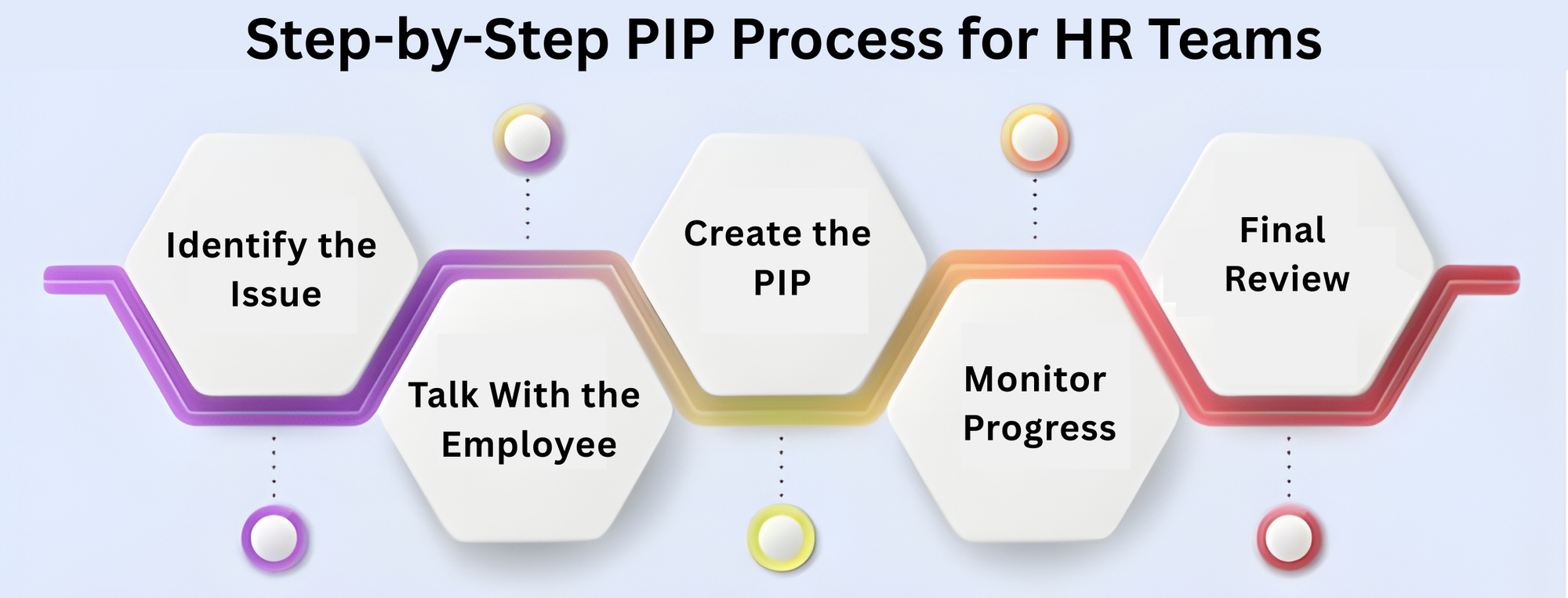
Step-by-Step PIP Process for HR Teams
The PIP process should be simple and kind. HR teams should follow clear steps to avoid stress and confusion.
Simple PIP Process Steps
Step 1: Identify the Issue
HR reviews work results and facts.
Step 2: Talk With the Employee
A calm meeting explains concerns and listens to the employee.
Step 3: Create the Performance Improvement Plan
Goals, timelines, and support are written clearly.
Step 4: Monitor Progress
Weekly or biweekly check-ins track improvement.
Step 5: Final Review
HR decides next steps based on results.
A fair PIP process protects both the employee and the company.
Common Mistakes HR Should Avoid in Performance Improvement Plans
Most Performance Improvement Plans fail due to minor yet critical errors committed in the process. A Performance Improvement Plan ought to be useful to the employees as opposed to scaring them. In the cases where the plan is not managed by HR, the employees will tend to be confused, stressed, or treated unfairly.
To streamline the PIP process, HR teams can be in a position to prevent the most frequent errors that undermine trust and delay progress. It should be successful and have clear goals, open communication, and frequent support.
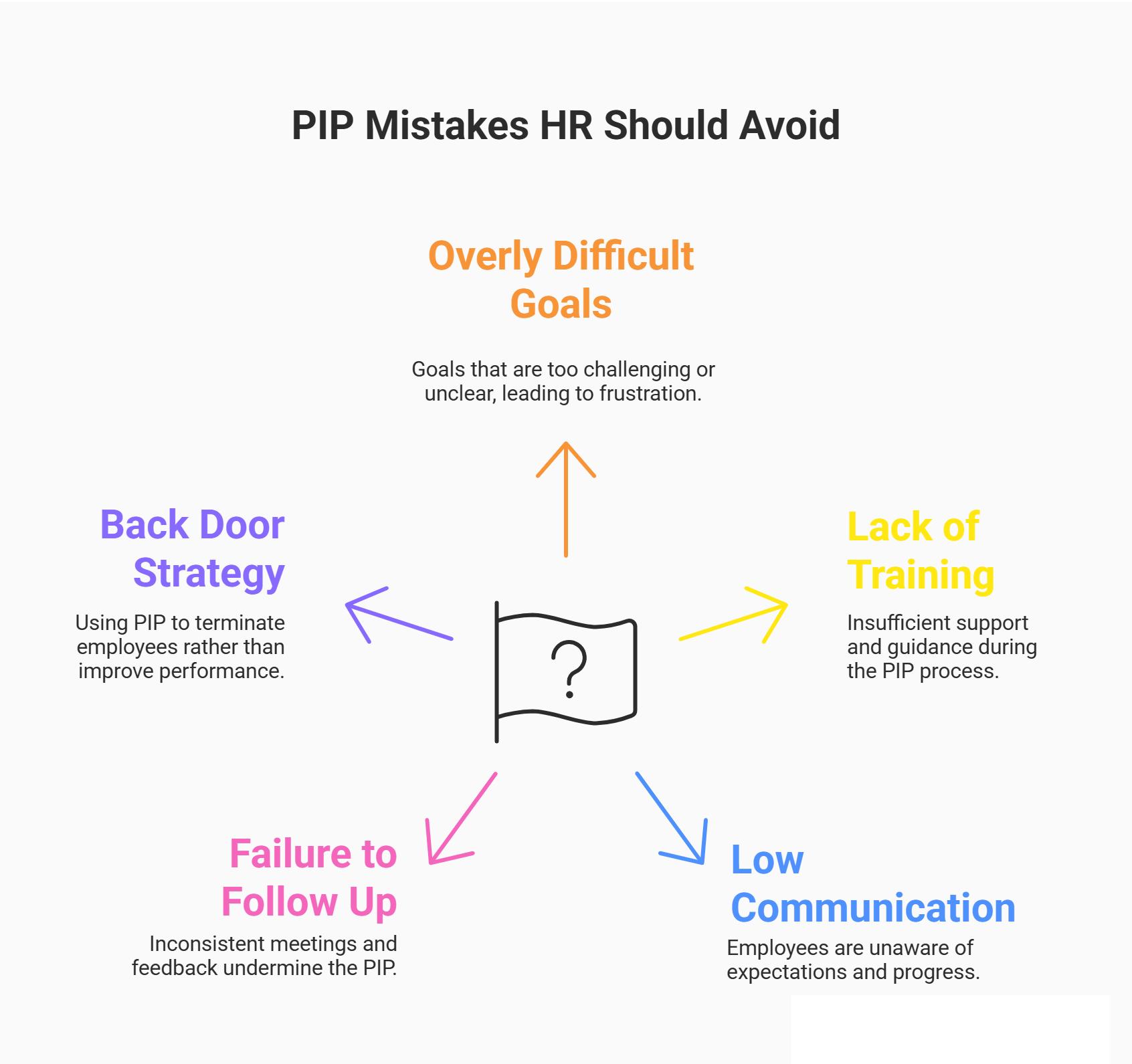
Common PIP Mistakes HR Should Avoid
- Making goals that are overly difficult or vague, and thus impossible to improve.
- Offering no training and support within the Performance Improvement Plan period.
- Low communication, with employees unsure of expectations.
- Failure to follow up on meetings dilutes the PIP process.
- Turning the Performance Improvement Plan into a back door strategy.
After avoiding such mistakes the HR can use the Performance Improvement Plan as a tool. It allows learning, generates confidence and improves performance instead of fearing or getting confused.
How Performance Improvement Plans Help Company Culture
An effective performance improvement plan contributes to a positive company culture. It promotes equity in the workplace and makes everyone feel honored. Trust is built when employees know that performance-related issues will be addressed carefully. With a Performance Improvement Plan, the company demonstrates that improvement is desired rather than failure.
Fear is reduced when the employees know what PIP means. Clarity and transparency eliminate misunderstanding. Expectations about what people should do are known, as are how they can improve. Such transparency enhances integrity and collaboration. Employees are comfortable asking questions and raising issues.
A performance improvement plan also makes leaders better managers. Managers are taught to lead employees in a peaceful, gentle manner. They are taught the skill of listening, providing feedback, and fostering development. This strengthens relationships between managers and team members.
Performance Improvement Plans establish a learning culture over time. Errors are regarded as opportunities to do better, not blameworthy. There is increased confidence and respect among teams when working together. When a workplace has healthy, clear Performance Improvement Plans, it becomes healthier, stronger, and more successful for everyone.
HR Best Practices for Long-Term Performance Improvement Plan Success
HR teams need to make a Performance Improvement Plan a learning resource and not a threat. A good Performance Improvement Plan can guide employees to recognize their areas of performance weaknesses and how to correct them one at a time.
With this in mind, where HR follows the best practices, the process of PIP will be equitable, transparent and conducive. This builds trust, improves performance, and helps the long-term development of employees and the company.
Best Practices for HR
- Use easy language to make employees comprehend the Performance Improvement Plan without difficulty.
- Record written notes of goals, meetings, and progress in the PIP process.
- Provide training and support to help employees succeed on the Performance Improvement Plan.
- Be a good and just giver of feedback and advice.
- Stick to schedules to ensure that employees are aware of review dates and the way forward.
Performance Improvement Plans, when used respectfully and carefully, will help employees develop skills, confidence, and loyalty over time.
Build Strong Teams Faster With Leelu Ai
Strong teams begin with the right people. While Performance Improvement Plans help fix issues after hiring, smart hiring helps prevent many problems from happening in the first place. When companies hire the right talent early, performance improves naturally.
Leelu Ai is an AI recruiting copilot that assists firms with their transition from job posting to first interview within 24 hours. It saves time, minimizes stress, and makes the hiring process easy for HR teams. Leelu.ai enables HR leaders to spend more time working with people, culture, and long-term development by automating sourcing, outreach, and interview scheduling.
Firms that utilize Leelu Ai can hire faster without compromising on quality. The platform searches multiple platforms simultaneously and engages candidates automatically. This means better talent, quicker decisions, and stronger teams.
Why HR Teams Choose Leelu Ai
- 10x faster candidate sourcing
- 95 percent reduction in time to hire
- 85 percent time savings for HR teams
- Trusted by over 2,000 companies worldwide
When hiring improves, performance improves. With Leelu Ai, companies build strong teams that need fewer Performance Improvement Plans and perform better from day one.
Start your free trial today with Leelu Ai and build teams that grow and succeed faster.
FAQs
What is a PIP?
A PIP is a Performance Improvement Plan that helps employees improve work results with clear goals.
What does PIP mean?
What PIP means is simple. It means a plan to help improve performance.
What does PIP stand for?
PIP stands for Performance Improvement Plan.
How long does a PIP last?
A PIP process usually lasts 30 to 90 days.
Is a PIP bad?
No. A Performance Improvement Plan helps people grow at work.


