
Hiring the right person is never just about finding a qualified candidate. It's also about how efficiently your hiring process moves from one stage to the next.
Yet, many recruiters and HR teams use time to fill and time to hire interchangeably, assuming they measure the same thing.
While they sound similar, they answer two completely different hiring questions.
Understanding the difference is important because each metric highlights a different part of your recruitment process.
One tells you how long it takes to fill an open position, while the other reveals how quickly candidates move through your hiring pipeline.
Knowing both helps you identify bottlenecks, improve recruiter productivity, create a better candidate experience, and make data-driven hiring decisions.
In this guide, you'll learn:
- What time to fill means
- What time to hire measures
- Time to fill vs time to hire explained with examples
- Why both metrics matter for recruiters
- How to improve each metric without compromising hiring quality
- How AI-powered recruiting can reduce both hiring timelines
Let's start with the first metric.
What Is Time to Fill?
Time to fill measures the total number of days it takes to fill an open position.
The clock starts when a job requisition is officially approved or posted and ends when the selected candidate accepts the job offer.
Some organizations may calculate it from the day the hiring request is submitted, but the principle remains the same—it measures the complete hiring duration.
Simply put, it answers one question:
"How long does it take your organization to fill a vacancy?"
Unlike candidate-focused metrics, time to fill reflects the efficiency of your overall recruitment process.
It includes every stage involved in hiring, from planning and sourcing to interviews, approvals, and offer acceptance.
Time to Fill Formula
Time to Fill = Date Candidate Accepts Offer − Date Job Requisition Opens
For example:
- Job approved: March 1
- Job posted: March 2
- Candidate accepts offer: April 5
Time to Fill = 34 days
This means your organization needed just over one month to fill the position.
What Does Time to Fill Include?
Since it measures the entire recruitment lifecycle, it often includes:
- Job approval and internal requisition process
- Writing and publishing the job description
- Candidate sourcing
- Resume screening
- Recruiter interviews
- Hiring manager interviews
- Assessments
- Offer approvals
- Offer negotiation
- Candidate acceptance
Every delay during these stages increases your overall time to fill.
Why Time to Fill Matters
A long hiring timeline can affect much more than recruitment metrics.
Open roles often increase workloads for existing employees, delay projects, reduce productivity, and create additional hiring costs.
In competitive markets, slower hiring also means losing top candidates to faster-moving employers.
Tracking time to fill helps recruiters identify where delays occur so they can optimize the process before it affects business performance.
Some of the biggest benefits include:
- Better workforce planning
- Lower recruitment costs
- Faster business growth
- Improved hiring efficiency
- Reduced vacancy-related productivity losses
However, it's important to remember that a shorter time to fill doesn't always mean better hiring.
If recruiters rush the process just to close positions quickly, they risk making poor hiring decisions that lead to higher turnover later.
That's why time to fill should always be evaluated alongside hiring quality and other recruitment metrics.
What Is Time to Hire?
Now that you understand time to fill, let's look at another metric that often gets confused with it.
Although both measure hiring speed, time to hire focuses on a much smaller part of the recruitment process.
Instead of measuring how long it takes to fill a position, it measures how quickly you move a candidate from first contact to accepting your job offer.
This makes it a valuable metric for evaluating recruiter responsiveness and the efficiency of your hiring pipeline.
Simply put, it answers this question:
"How quickly can you hire a candidate once they enter your recruitment process?"
Time to Hire Formula
Time to Hire = Date Candidate Enters the Hiring Process − Date Candidate Accepts the Offer
The starting point can vary depending on your recruitment process. It is usually one of the following:
- The day a candidate submits an application
- The day a recruiter first contacts the candidate
- The day the candidate is sourced and agrees to proceed
The clock stops when the candidate formally accepts the offer.
For example:
- Candidate applies: March 10
- Initial screening: March 12
- Interviews completed: March 18
- Offer accepted: March 22
Time to Hire = 12 days
In this case, although the position may have taken over a month to fill, the candidate only spent 12 days in the hiring process.
What Does Time to Hire Include?
Unlike time to fill, this metric excludes the period before candidates enter your recruitment funnel.
It generally includes:
- Application review
- Recruiter screening
- Hiring manager interviews
- Technical or skill assessments
- Final interviews
- Offer preparation
- Offer approval
- Candidate acceptance
Since it focuses only on the active recruitment stage, recruiters have much greater control over improving this metric.
Why Time to Hire Matters
Today's candidates often apply to multiple companies at the same time.
If your hiring process takes too long after a candidate enters the pipeline, there's a good chance they'll accept another offer before you reach a decision.
A shorter time to hire helps recruiters:
- Reduce candidate drop-offs
- Improve the candidate experience
- Secure top talent before competitors
- Increase offer acceptance rates
- Keep hiring managers satisfied with faster recruitment
It also reflects how efficiently your recruiting team collaborates with hiring managers throughout the interview process.
What Causes a High Time to Hire?
Several bottlenecks can increase your hiring timeline after candidates enter the pipeline.
Some of the most common reasons include:
- Slow resume screening
- Delayed interview scheduling
- Too many interview rounds
- Slow hiring manager feedback
- Manual candidate communication
- Lengthy offer approval processes
Identifying these delays allows recruiters to streamline workflows and significantly reduce hiring time.
Time to Fill vs Time to Hire: What's the Difference?
At this point, the difference between the two metrics starts becoming clear.
Both measure hiring speed, but they focus on different stages of recruitment. Understanding time to fill vs time to hire helps recruiters identify exactly where inefficiencies exist and which part of the hiring process needs improvement.
Think of it this way.
If you're tracking the entire journey from opening a job to hiring someone, you're measuring time to fill.
If you're only tracking how long a candidate spends in your hiring pipeline, you're measuring time to hire.
Here's a quick comparison.
A Simple Example
Imagine your company approves a new software engineer role on May 1.
The recruiter spends two weeks sourcing candidates before finding a strong applicant.
That candidate applies on May 15, completes interviews within a week, and accepts the offer on May 25.
Here's how the metrics look:
- Time to Fill: 24 days (May 1–May 25)
- Time to Hire: 10 days (May 15–May 25)
This example clearly shows why time to hire vs time to fill are not interchangeable.
Your overall hiring process took 24 days, but the candidate only spent 10 days in your recruitment pipeline.
Both numbers are valuable because they reveal different insights.
- A high time to fill often points to sourcing challenges, approval delays, or workforce planning issues.
- A high time to hire usually indicates slow interviews, delayed feedback, or inefficient recruiter workflows.
Looking at only one metric gives you an incomplete picture.
Tracking both allows you to identify exactly where hiring delays occur and prioritize improvements that have the biggest impact.
How to Improve Time to Fill
Reducing time to fill isn't about rushing to hire the first qualified candidate. It's about removing unnecessary delays that prevent positions from being filled efficiently.
Since this metric covers the entire recruitment lifecycle, even small improvements at multiple stages can significantly reduce your overall hiring timeline.
Here are some practical ways to improve it.
1. Plan Your Hiring Needs in Advance
Many hiring delays begin before recruiters even start sourcing candidates.
Waiting for approvals, creating job descriptions from scratch, or deciding on hiring requirements after a vacancy opens can add days—or even weeks—to the process.
Work with hiring managers to:
- Forecast hiring needs
- Prepare job descriptions early
- Define candidate requirements in advance
- Build hiring plans before positions become urgent
Better planning helps recruiters start hiring immediately when a role opens.
2. Build a Strong Talent Pipeline
Starting every search from zero is one of the biggest reasons organizations experience long hiring cycles.
Instead of sourcing candidates only after a vacancy appears, maintain an active pipeline of qualified professionals.
You can do this by:
- Nurturing past applicants
- Keeping in touch with silver-medalist candidates
- Building talent communities
- Engaging passive candidates regularly
When positions open, you'll already have qualified candidates ready to contact.
3. Write Clear and Accurate Job Descriptions
A vague or overly detailed job description can slow hiring from the very beginning.
If candidates don't understand the role or don't meet the requirements, recruiters spend more time screening unsuitable applications.
An effective job description should clearly communicate:
- Key responsibilities
- Required qualifications
- Preferred skills
- Location and work model
- Salary range, when appropriate
The more targeted your job description, the higher the quality of applicants you'll receive.
4. Diversify Your Sourcing Channels
Relying on a single job board limits your access to qualified candidates.
Today's recruiters often source talent across multiple platforms, including professional networks, niche job boards, employee referrals, and internal databases.
Expanding your sourcing strategy helps you reach suitable candidates faster instead of waiting for applications to arrive.
5. Reduce Administrative Delays
Recruiters often spend a surprising amount of time on repetitive administrative tasks.
Scheduling interviews, manually reviewing resumes, sending follow-up emails, and updating applicant tracking systems all consume valuable hiring time.
Automating repetitive work allows recruiters to spend more time evaluating candidates instead of managing administrative processes.
6. Monitor Your Recruitment Metrics Regularly
Improvement starts with visibility.
Reviewing your time to fill across different departments, locations, and job roles helps identify recurring delays.
Look for patterns such as:
- Roles that consistently take longer to fill
- Approval stages causing delays
- Sourcing channels with slower results
- Departments requiring excessive interview rounds
Tracking these trends allows your team to make informed improvements instead of reacting to individual hiring challenges.
How to Improve Time to Hire
While time to fill focuses on the overall recruitment process, time to hire is largely influenced by how efficiently candidates move through your hiring pipeline.
Even highly qualified candidates may lose interest if interviews, feedback, or offer decisions take too long.
Fortunately, many of these delays are within a recruiter's control.
1. Respond to Candidates Quickly
First impressions matter.
Candidates who don't hear back within a reasonable timeframe are more likely to assume the company isn't interested and continue exploring other opportunities.
Acknowledging applications quickly and scheduling initial conversations early keeps candidates engaged throughout the hiring process.
2. Streamline Resume Screening
Manual resume reviews can become overwhelming, especially when recruiters receive hundreds of applications for a single role.
Using structured screening criteria or AI-powered candidate matching can significantly reduce the time required to identify qualified applicants.
This allows recruiters to focus their attention on high-potential candidates sooner.
3. Limit Unnecessary Interview Rounds
Every additional interview extends your hiring timeline.
While multiple evaluations may be necessary for senior positions, many organizations conduct more interview rounds than required.
Review your interview process regularly to ensure that every stage adds genuine value to the hiring decision.
Reducing unnecessary interviews benefits both recruiters and candidates.
4. Improve Collaboration with Hiring Managers
Delayed hiring decisions often happen because recruiters and hiring managers aren't aligned.
Setting clear expectations around interview feedback and decision-making timelines helps keep the process moving.
Some organizations establish service-level agreements (SLAs) that define how quickly interview feedback should be submitted after each round.
This prevents candidates from waiting days—or even weeks—for updates.
5. Automate Candidate Communication
Recruiters spend a significant amount of time sending interview invitations, reminders, follow-up emails, and status updates.
Automating these communications ensures candidates stay informed while reducing manual work for recruiters.
It also creates a more consistent and professional candidate experience.
6. Simplify Interview Scheduling
Coordinating calendars between recruiters, hiring managers, and candidates is often one of the most time-consuming parts of recruitment.
Using scheduling tools that allow candidates to select available interview slots eliminates back-and-forth emails and speeds up the process.
This simple change can reduce scheduling delays from several days to just a few minutes.
How AI Can Improve Both Time to Fill and Time to Hire
As hiring volumes grow, improving recruitment speed manually becomes increasingly difficult.
Recruiters often juggle sourcing, resume screening, outreach, interview coordination, and follow-ups simultaneously.
While each task is essential, together they can significantly increase both time to fill and time to hire.
This is where AI-powered recruiting platforms make a meaningful difference.
Instead of automating just one part of recruitment, modern AI solutions streamline the entire hiring workflow, helping recruiters move candidates through the process faster while maintaining hiring quality.
For example, an AI recruiting platform like Leelu AI automates many of the repetitive tasks that typically slow recruitment teams down.
It helps recruiters:
- AI Job Description Generator: Creates optimized JDs in under two minutes to reduce early time to fill.
- Multi-Platform Sourcing: Searches 500M+ profiles across multiple platforms to speed up candidate sourcing.
- AI Resume Screening: Ranks thousands of resumes with 90% matching accuracy, reducing time to hire.
- Automated Candidate Engagement: Sends personalized outreach and AI follow-ups to keep candidates engaged.
- One-Minute Scheduling: Automatically books interviews through calendar sync, eliminating scheduling delays.
- Unified Data Sync: Syncs candidate data across systems, removing manual updates.
- Real-Time Hiring Analytics: Identifies hiring bottlenecks to improve both time to fill and time to hire.
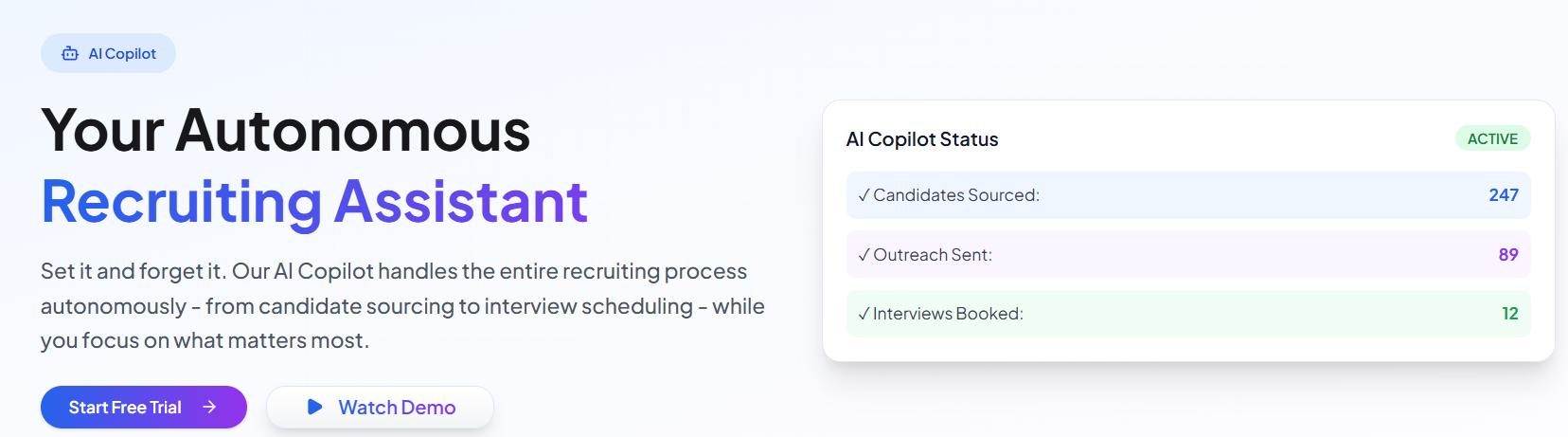
- AI Recruiting Copilot: Automates the hiring workflow end to end, helping teams hire 80–95% faster.
By reducing manual effort across every stage of recruitment, recruiters can spend more time building relationships with qualified candidates and less time managing administrative tasks.
The result is a faster hiring process, improved recruiter productivity, and a better candidate experience—without sacrificing hiring quality.
Rather than replacing recruiters, AI acts as a recruiting copilot that supports faster, more informed hiring decisions.
Conclusion
Choosing between time to fill vs time to hire isn't the right question because both metrics reveal different aspects of your recruitment performance.
Think of time to fill as a measure of your overall hiring efficiency. It tells you how long a vacancy remains open and highlights delays across the entire recruitment lifecycle.
Time to hire, on the other hand, focuses on the candidate's experience after they enter your hiring funnel. It shows how quickly your team evaluates candidates, conducts interviews, and makes hiring decisions.
When you monitor these metrics together, you gain a much clearer understanding of where your hiring process slows down.
That visibility allows you to eliminate bottlenecks, improve collaboration between recruiters and hiring managers, and create a faster, more consistent recruitment process.
Ultimately, success isn't measured by hiring quickly for the sake of speed. It's about building a recruitment process that consistently delivers qualified candidates in less time while maintaining a positive experience for everyone involved.
Frequently Asked Questions
How often should recruiters review time to fill and time to hire?
Most organizations review these metrics monthly or quarterly. However, companies with high hiring volumes often monitor them in real time through recruitment dashboards. Frequent tracking helps teams identify bottlenecks early and make continuous improvements.
Why should recruiters track both metrics instead of just one?
Each metric answers a different question. Time to fill measures the efficiency of the overall recruitment process, while time to hire evaluates how quickly candidates move through the hiring pipeline.
Tracking both provides a complete picture of recruitment performance and helps identify exactly where improvements are needed.
Does the size of a company affect time to fill?
Yes. Larger organizations often have longer time to fill because hiring typically involves multiple approval stages, cross-functional interviews, and structured recruitment processes. Smaller companies, with fewer decision-makers, can usually fill roles more quickly.
How do remote hiring processes affect time to fill?
Remote hiring can either shorten or extend recruitment timelines. Virtual interviews and digital assessments often speed up the process, while hiring across multiple locations or time zones may introduce scheduling challenges.
The overall impact depends on how well the recruitment process is organized.


