
When a new role opens up in your company, one of the first decisions you need to make is where to find the right candidate.
Should you promote someone who already understands your business, or should you bring in fresh talent from outside?
This is where the debate around internal vs external recruitment becomes important.
Both approaches can help you fill vacancies, but they offer very different advantages, challenges, and outcomes. Choosing the right method can impact hiring speed, employee morale, recruitment costs, and long-term business growth.
In this guide, you'll learn:
- What internal recruitment is
- What external recruitment is
- The key differences between both approaches
- Pros and cons of each method
- When to use internal recruitment vs external recruitment
- How modern recruiting teams manage both effectively
What Is Internal Recruitment?
Internal recruitment is the process of filling a job position using existing employees within your organization.
Instead of searching for candidates outside the company, you identify current employees who have the skills, experience, and potential needed for the role.
This can happen through:
- Promotions
- Internal job postings
- Transfers between departments
- Employee referrals within the organization
- Succession planning programs
Since these employees already understand your company culture, workflows, and expectations, they typically require less onboarding time.
For many organizations, internal hiring is also a great way to reward performance and create clear career growth opportunities.
What Is External Recruitment?
While internal recruitment focuses on existing employees, external recruitment involves hiring candidates from outside the organization.
Companies use external recruitment when they need new skills, fresh perspectives, or a larger talent pool.
Common external recruitment channels include:
- Job boards
- Company career pages
- Recruitment agencies
- Social media platforms
- Professional networks
- Campus hiring programs
External hiring often gives businesses access to specialized expertise that may not exist internally.
However, finding and evaluating external candidates usually requires more time and resources compared to internal hiring.
Internal Recruitment vs External Recruitment: Key Differences
Now that you understand both recruitment methods, let's look at the major differences between internal recruitment vs external recruitment and how each approach impacts your hiring process.
1. Source of Candidates
The most obvious difference lies in where candidates come from.
With internal recruitment, candidates are selected from within the organization. They may be existing employees seeking promotions, transfers, or new responsibilities.
External recruitment focuses on candidates outside the company. These individuals are sourced through job boards, recruitment agencies, social media platforms, professional networks, or career websites.
Because of this, internal recruitment vs external recruitment often starts with a question: do you already have the talent you need, or do you need to find it elsewhere?
2. Size of the Talent Pool
Internal recruitment limits your search to current employees.
While this makes candidate evaluation easier, it also means you have fewer options to choose from.
External recruitment gives access to a much larger talent pool. You can reach candidates from different industries, locations, and professional backgrounds.
If you're hiring for a highly specialized role, external recruitment typically provides more opportunities to find the right fit.
3. Hiring Speed
Internal hiring is usually faster.
Employees already work within the organization, so recruiters and hiring managers are familiar with their skills, performance history, and cultural fit.
Most of the screening process has effectively already happened through their existing employment.
External recruitment generally takes longer because recruiters must:
- Source candidates
- Review applications
- Conduct screenings
- Schedule interviews
- Verify qualifications
- Complete onboarding
As a result, organizations often choose internal recruitment when they need to fill a position quickly.
Suggested Reading:
Staffing vs Recruiting: Which Hiring Approach Is Right for Your Business?4. Recruitment Costs
Cost is another major difference between external recruitment vs internal recruitment.
Internal recruitment typically involves lower costs because:
- Job advertising is limited
- Agency fees are avoided
- Screening efforts are reduced
- Onboarding costs are lower
External recruitment often requires additional investment in:
- Job board postings
- Recruitment agencies
- Employer branding campaigns
- Assessment tools
- Background checks
For organizations looking to control hiring expenses, internal recruitment can be a more cost-effective option.
5. Training and Onboarding Requirements
Employees hired internally already understand company processes, tools, culture, and expectations.
Although they may require role-specific training, they usually become productive much faster.
External hires often need comprehensive onboarding to learn:
- Company policies
- Internal systems
- Team structures
- Workflows
- Organizational culture
This means external recruitment generally involves a longer adjustment period.
6. Cultural Fit and Organizational Knowledge
One of the biggest advantages of internal recruitment is cultural familiarity.
Internal candidates already know how the organization operates and understand its values and goals.
This reduces the risk of hiring someone who struggles to fit into the company culture.
External candidates may bring impressive qualifications but still require time to adapt to the organization's environment.
Because of this, the hiring risk is often lower with internal recruitment.
7. Innovation and Fresh Perspectives
While internal recruitment offers stability, it may not always introduce new ways of thinking.
Employees who have worked within the same environment for years often share similar experiences and perspectives.
External recruitment brings fresh ideas, different problem-solving approaches, and knowledge gained from other organizations.
For businesses focused on innovation, transformation, or market expansion, external hiring can provide valuable new insights.
8. Employee Motivation and Career Growth
Internal recruitment can have a positive impact on employee morale.
When employees see colleagues being promoted or moved into new roles, they gain confidence that career advancement is possible within the organization.
This often leads to:
- Higher engagement
- Better retention
- Increased productivity
- Stronger loyalty
External recruitment may sometimes create frustration if employees feel qualified internal candidates are being overlooked.
For this reason, many companies prioritize internal opportunities before opening positions externally.
9. Risk of Hiring Mistakes
Every hiring decision carries some level of risk.
With internal recruitment, managers already have access to performance reviews, work history, and behavioral observations.
This makes candidate assessment more accurate.
External recruitment relies heavily on resumes, interviews, references, and assessments.
Even after a thorough hiring process, there is still uncertainty about how a candidate will perform once they join the organization.
As a result, external hiring generally carries a higher risk of poor hiring decisions.
Suggested Reading:
Talent Pool vs Talent Pipeline: What's the Difference?10. Long-Term Workforce Development
Internal recruitment supports succession planning and talent development.
Organizations can identify high-potential employees and prepare them for future leadership positions.
This creates a stronger internal talent pipeline.
External recruitment focuses more on bringing immediate skills and expertise into the organization.
Both approaches play an important role, but internal recruitment contributes more directly to long-term employee development strategies.
Internal Recruitment vs External Recruitment: Quick Comparison
This detailed comparison helps readers clearly understand the practical differences between internal recruitment vs external recruitment and when each approach makes the most sense.
Advantages of Internal Recruitment
Many organizations prefer internal hiring because it offers several operational and cultural benefits.
1. Faster Hiring Process: Internal candidates are already known to managers and HR teams.
Their performance history, strengths, and development areas are easier to assess, reducing evaluation time.
2. Lower Recruitment Costs: There is less spending on advertising, agency fees, sourcing tools, and lengthy screening processes.
The hiring process becomes significantly more cost-effective.
3. Better Employee Retention: Employees are more likely to stay when they see clear opportunities for advancement.
Internal promotions demonstrate that the organization values career growth.
4. Reduced Onboarding Time: Current employees already understand company policies, systems, and culture.
This allows them to become productive in their new roles much faster.
Advantages of External Recruitment
Despite the benefits of internal hiring, external recruitment remains essential for many growing businesses.
1. Access to a Larger Talent Pool: External recruitment opens the door to thousands of potential candidates.
This increases the chances of finding specialized skills and experience.
2. Fresh Ideas and Innovation: New employees often bring different perspectives, industry knowledge, and problem-solving approaches.
These insights can help organizations improve processes and drive innovation.
3. Fill Skill Gaps Quickly: Sometimes the expertise needed simply doesn't exist within the company.
External hiring allows businesses to acquire those skills without waiting for internal development programs.
4. Support Business Expansion: Rapidly growing organizations often need more talent than internal pipelines can provide.
External recruitment helps meet large-scale hiring demands.
Challenges of Internal Recruitment
Although internal hiring offers many advantages, it is not without drawbacks.
1. Limited Candidate Pool: You can only choose from the employees currently available within your organization.
This may restrict your options for highly specialized positions.
2. Potential Workplace Conflicts: Employees who are not selected for promotions may feel disappointed or overlooked.
Without transparent communication, this can affect team morale.
3. Reduced Diversity of Ideas: Relying heavily on internal hiring can create similar ways of thinking across teams.
Over time, innovation may slow down.
Challenges of External Recruitment
External hiring introduces opportunities, but it also creates additional challenges.
1. Higher Recruitment Costs: Advertising roles, engaging recruiters, and conducting extensive assessments can increase hiring expenses.
2. Longer Time-to-Hire: Finding, screening, interviewing, and onboarding external candidates takes time.
This can delay productivity for critical roles.
3. Cultural Fit Risks: Even highly qualified candidates may struggle to adapt to company culture.
This creates uncertainty compared to promoting an existing employee.
When Should You Choose Internal Recruitment?
Internal hiring often works best when:
- Leadership positions become available
- Career progression is a company priority
- Existing employees have the required skills
- You need to fill a role quickly
- Organizational knowledge is critical
Many organizations use internal recruitment as part of their long-term employee retention strategy.
When Should You Choose External Recruitment?
External hiring is usually the better option when:
- New skills are needed immediately
- The company is expanding rapidly
- Innovation and fresh thinking are priorities
- Internal talent pipelines are limited
- Specialized expertise is required
In these situations, external recruitment can help businesses stay competitive and adapt to changing market demands.
How Leelu AI Supports Modern Recruitment Teams
As hiring becomes more competitive, recruiters need faster ways to evaluate both internal and external talent pipelines.
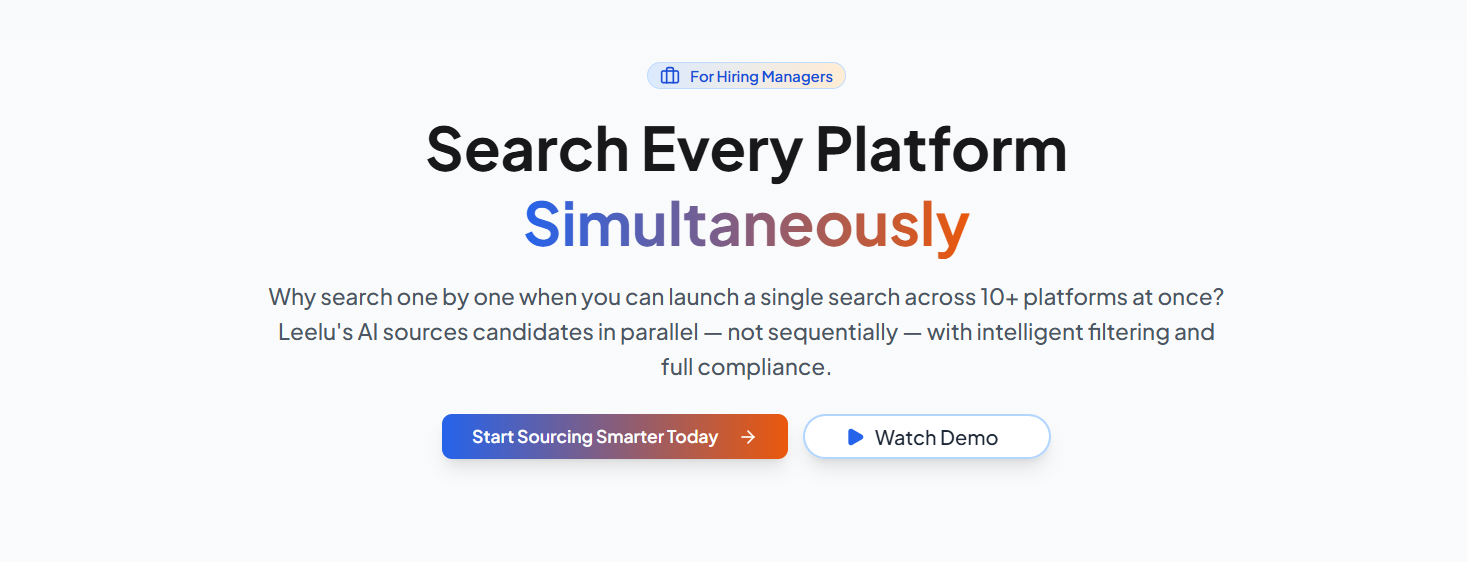
Leelu AI helps recruiting teams automate sourcing, candidate screening, outreach, and interview scheduling from a single platform.
With access to over 500 million candidate profiles across multiple sources, Leelu AI enables recruiters to:
- Source candidates from multiple platforms simultaneously
- Screen and rank applicants automatically
- Send personalized outreach at scale
- Automate candidate follow-ups
- Schedule interviews with minimal manual effort
- Track hiring performance through real-time analytics
Whether you're balancing external recruitment vs internal recruitment strategies or scaling high-volume hiring, automation can significantly reduce recruiter workload while improving hiring efficiency.
Conclusion
The decision between internal recruitment vs external recruitment depends on your hiring objectives, talent availability, and business priorities.
Internal recruitment offers speed, lower costs, and stronger employee engagement.
External recruitment provides access to larger talent pools, specialized expertise, and fresh perspectives.
Rather than viewing it as a choice between one or the other, the most successful organizations combine both approaches to build stronger teams.
By understanding the strengths and limitations of each method, you can create a recruitment strategy that supports both immediate hiring needs and long-term business growth.
Frequently Asked Questions
Why do companies prefer internal recruitment?
Companies often prefer internal recruitment because it speeds up hiring, boosts employee morale, improves retention, and lowers hiring risks. Existing employees already understand the company's culture, systems, and expectations.
When should a company use external recruitment?
External recruitment is usually the best option when internal candidates lack the required skills, the organization is expanding rapidly, or the business needs fresh expertise and perspectives to achieve its goals.
Does internal recruitment improve employee retention?
Yes. Internal recruitment creates clear career growth opportunities, which can increase employee engagement, job satisfaction, and long-term retention. Employees are more likely to stay when they see opportunities for advancement within the organization.
Is external recruitment slower than internal recruitment?
Generally, yes. External recruitment involves sourcing candidates, screening applications, conducting interviews, and onboarding new hires. Internal recruitment is often faster because candidate information and performance records are already available.
Can companies use both internal and external recruitment strategies?
Absolutely. Many organizations use a combination of both methods. They promote and develop existing employees while also hiring externally to fill skill gaps, support growth initiatives, and bring in new perspectives. This balanced approach often leads to stronger long-term hiring outcomes.