
AI recruiting tools can dramatically speed up hiring, but without proper ATS integration, they often create disconnected workflows, duplicate data, and extra manual work.
To get the full value of AI in recruitment, your hiring systems need to work together seamlessly.
In this guide, you'll learn:
- Why ATS integration is critical for AI recruiting success
- How to prepare your hiring process before implementation
- Best practices for integrating AI across the recruiting lifecycle
- How to measure and optimize long-term recruiting performance
Why ATS Integration Is Essential for AI Recruiting
AI is helping recruiting teams move faster than ever before.
From sourcing candidates to scheduling interviews, AI recruiting tools can automate many of the repetitive tasks that slow down hiring. But AI alone is not enough.
If your AI tools operate separately from your Applicant Tracking System (ATS), the process can quickly become fragmented.
That's why integration is the foundation of successful AI-powered hiring.
1. The Growing Role of AI in Talent Acquisition
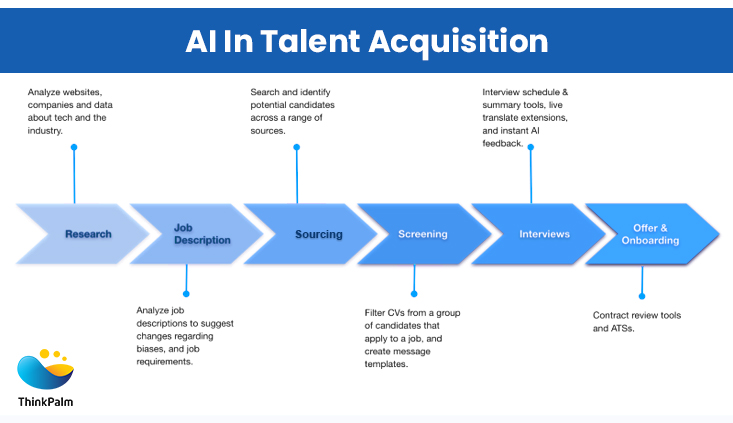
Recruiters today are expected to hire faster while managing larger candidate pipelines.
AI helps by handling time-consuming activities such as sourcing, resume screening, candidate outreach, and interview coordination.
Instead of spending hours on administrative work, recruiters can focus more on building relationships and making better hiring decisions.
As AI adoption continues to grow, seamless integration with existing recruiting systems becomes even more important.
2. The Risks of Using AI Recruiting Tools Without ATS Integration
Many companies adopt AI tools before thinking about how they fit into existing workflows.
This often creates disconnected systems where candidate data lives in multiple places.
Recruiters may need to manually update records, transfer information, or verify candidate status across different platforms.
Over time, this leads to duplicate profiles, inconsistent data, and unnecessary administrative work.
Rather than improving efficiency, poorly integrated AI can create new recruiting challenges.
3. The Benefits of a Connected Recruiting Ecosystem
When AI and your ATS work together, information flows automatically across the hiring process.
Candidate records stay updated without manual intervention.
Recruiters can source, screen, engage, and move candidates through hiring stages without switching between multiple systems.
The result is a smoother workflow, better collaboration, improved candidate experiences, and more efficient hiring outcomes.
Suggested Reading:
How Recruitment Automation Is Transforming Hiring in USAPrepare Your Recruiting Process Before Implementing AI
Once you understand why integration matters, the next step is preparing your recruiting process.
Even the best AI recruiting tools cannot fix an inefficient workflow.
Before implementation begins, you need a clear understanding of how hiring currently works inside your organization.
1. Map Your Current Hiring Workflow
Start by documenting every stage of your hiring process.
Track how candidates move from job application to final offer and identify the tools, teams, and approvals involved at each step.
This exercise helps you understand where AI can create the most value.
2. Identify Recruiting Bottlenecks
Every hiring process contains friction points.
You may experience delays during candidate sourcing, resume screening, interview scheduling, or hiring manager feedback collection.
Identifying these bottlenecks allows you to focus automation efforts where they can have the greatest impact.
3. Determine Which Tasks Should Be Automated
Not every recruiting activity should be handled by AI.
The best candidates for automation are repetitive and process-driven tasks that consume recruiter time.
These often include sourcing, candidate screening, outreach campaigns, follow-up communication, and interview scheduling.
Human recruiters should remain focused on relationship building, assessment, and final hiring decisions.
4. Set Clear Recruiting Goals and Success Metrics
Before implementing any AI solution, define what success looks like.
Your goals may include reducing time-to-hire, improving recruiter productivity, increasing candidate engagement, or enhancing hiring quality.
Clear metrics give you a reliable way to measure performance after integration.
They also help ensure your AI investment delivers meaningful recruiting outcomes over time.
Choose AI Recruiting Tools That Work Seamlessly With Your ATS
Seamless ATS integration ensures your AI recruiting tools enhance existing workflows instead of adding complexity to the hiring process.
1. Prioritize Native ATS Integrations
The easiest integrations are often the ones that already exist.
Many AI recruiting platforms offer native integrations with popular ATS solutions, allowing data to flow automatically between systems.
Instead of relying on custom development or third-party connectors, native integrations typically provide faster implementation and fewer maintenance challenges.
When evaluating vendors, look for proven ATS integrations that support your current recruiting workflows.
This reduces deployment risk and helps your team start seeing value sooner.
2. Evaluate Data Synchronization and API Capabilities
Integration is about much more than simply connecting two platforms.
You need to understand how information moves between systems and whether updates happen in real time.
Ask questions such as:
- Which candidate data fields are synchronized?
- How frequently does data update?
- Can recruiters make changes from either platform?
- Are workflow actions automatically reflected in both systems?
Strong API capabilities provide greater flexibility as your recruiting needs evolve.
They also make it easier to connect future tools without rebuilding your entire technology stack.
3. Verify Security, Privacy, and Compliance Standards
Recruiting teams handle large volumes of sensitive candidate information.
Before integrating any AI solution, make sure it meets your organization's security and compliance requirements.
Look for safeguards such as:
- Role-based access controls
- Data encryption
- Secure data storage
- Audit logs and activity tracking
- Compliance with relevant privacy regulations
A secure integration protects both your candidates and your organization while reducing compliance risks.
4. Plan for Future Hiring Growth
Your hiring needs today may look very different a year from now.
An AI recruiting solution should be able to scale as your company grows.
Consider factors such as hiring volume, geographic expansion, additional recruiting teams, and future workflow requirements.
Choosing a scalable platform now can prevent costly system changes later.
Build a Strong Integration Strategy
Selecting the right technology is only part of the equation.
To maximize the value of your AI-ATS integration, you also need a clear strategy for how systems, data, and workflows will operate together.
A well-planned integration creates consistency and prevents operational issues before they occur.
1. Define Data Sharing Requirements
Start by determining what information needs to move between systems.
This may include candidate profiles, application status updates, interview feedback, communication history, and hiring decisions.
Clearly defining these requirements helps ensure both platforms remain aligned throughout the recruiting lifecycle.
It also prevents unnecessary data transfers that can complicate workflows.
2. Establish Data Ownership and Governance
When multiple systems share recruiting information, ownership can quickly become unclear.
Define which platform serves as the primary source of truth for different types of data.
For example, your ATS may own candidate records while your AI recruiting tool manages sourcing and engagement activities.
Clear governance reduces confusion and improves data accuracy across teams.
3. Create Standardized Recruiting Workflows
AI performs best when it operates within structured and repeatable processes.
Take time to standardize how candidates move through each hiring stage.
This includes defining:
- Screening criteria
- Candidate status updates
- Interview processes
- Communication workflows
- Approval requirements
Standardization helps recruiters work consistently while enabling automation to function more effectively.
4. Prevent Duplicate Records and Data Conflicts
One of the most common integration challenges is duplicate candidate information.
When systems are not properly configured, recruiters may encounter multiple versions of the same candidate profile.
Establish clear rules for record matching, data updates, and synchronization priorities.
This ensures candidate information remains accurate across platforms and prevents recruiters from making decisions based on outdated data.
A strong integration strategy creates the foundation for successful AI adoption and helps your recruiting team operate with greater efficiency as hiring demands continue to grow.
Integrate AI Across the Recruiting Lifecycle
Once your integration strategy is in place, the next step is putting AI to work across your recruiting process.
The goal is not to automate a single task but to create a connected hiring workflow where AI supports recruiters at every stage.
When AI and your ATS work together, information moves seamlessly from sourcing to hiring, reducing manual effort and improving efficiency throughout the recruiting lifecycle.
1. AI-Powered Candidate Sourcing
Finding qualified candidates is often one of the most time-consuming parts of recruitment.
AI sourcing tools can scan multiple talent pools, identify matching candidates, and surface high-potential prospects much faster than manual searches.
Instead of spending hours searching across different platforms, recruiters can focus on engaging the most relevant candidates.
This helps teams build stronger pipelines while significantly reducing sourcing time.
2. Automated Candidate Screening and Evaluation
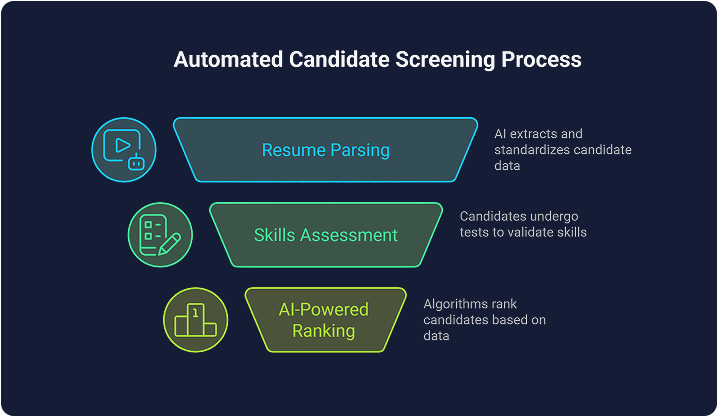
After candidates enter your pipeline, screening becomes the next major challenge.
AI can analyze resumes, assess candidate qualifications, and rank applicants based on predefined job requirements.
This allows recruiters to quickly identify strong matches without reviewing every application manually.
Some AI recruiting platforms can also evaluate factors such as skills, experience, and job fit to help prioritize candidates more effectively.
3. Candidate Engagement and Communication Automation
Keeping candidates engaged throughout the hiring process requires consistent communication.
Unfortunately, busy recruiting teams often struggle to maintain timely follow-ups.
AI can automate many communication tasks, including:
- Initial outreach messages
- Candidate follow-ups
- Application status updates
- Interview reminders
By automating routine communication, recruiters can deliver a better candidate experience while ensuring no opportunities slip through the cracks.
4. Interview Scheduling and Workflow Automation
Interview coordination often creates unnecessary delays in the hiring process.
Scheduling conflicts, calendar management, and back-and-forth emails can slow hiring momentum.
AI-powered scheduling tools simplify this process by automatically identifying available time slots and coordinating interviews across stakeholders.
As a result, recruiters spend less time managing logistics and more time focusing on hiring decisions.
Test and Optimize Before Full Deployment
Even with a well-planned integration, it's important to validate performance before rolling out AI across the entire organization.
A controlled testing phase helps uncover potential issues early and gives teams confidence in the new workflow.
1. Run a Pilot Program
Start with a small pilot involving a limited number of recruiters, hiring managers, or open positions.
This allows your team to test the integration in a real-world environment without disrupting broader recruiting operations.
A pilot program also provides valuable insights into how users interact with the new system.
2. Validate Data Accuracy and Workflow Performance
During testing, closely monitor how information moves between your AI recruiting tool and ATS.
Pay attention to:
- Candidate record accuracy
- Status updates
- Workflow automation triggers
- Data synchronization performance
Even minor inconsistencies can create larger problems once hiring volume increases.
3. Gather Recruiter and Hiring Manager Feedback
Technology success depends heavily on user adoption.
Recruiters and hiring managers interact with the system daily, making their feedback extremely valuable.
Ask them about workflow efficiency, usability, automation effectiveness, and any challenges they encounter during the pilot phase.
Their insights often reveal improvement opportunities that technical testing may miss.
4. Resolve Workflow Gaps Before Scaling
Before expanding deployment, address any issues identified during testing.
This may include adjusting automation rules, refining workflows, improving integrations, or updating training materials.
Taking the time to resolve these gaps early helps ensure a smoother rollout and creates a stronger foundation for long-term recruiting success.
Drive Recruiter Adoption and Change Management
Consistent recruiter adoption is what turns AI-ATS integration from a technical upgrade into a meaningful hiring advantage.
1. Position AI as a Recruiting Assistant, Not a Replacement
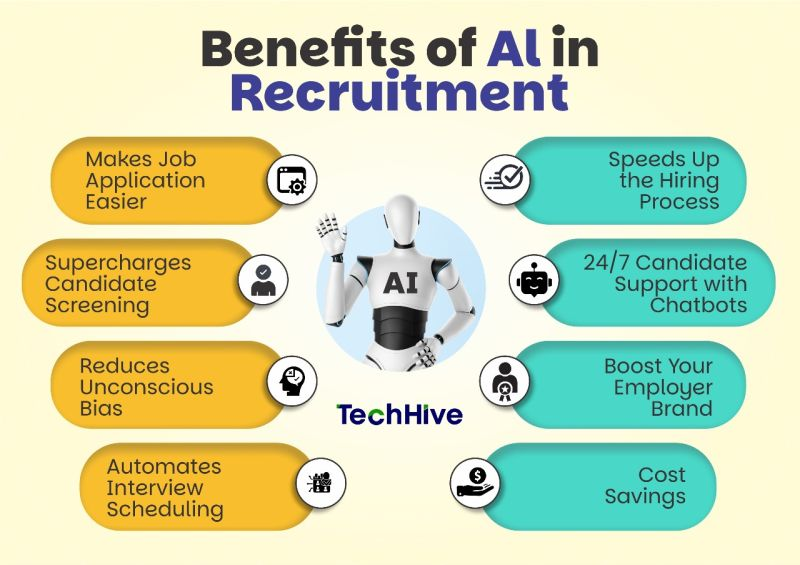
One of the biggest concerns recruiters have when AI is introduced is the fear of being replaced.
To encourage adoption, it's important to position AI as a tool that supports recruiters rather than replaces them.
AI is best suited for repetitive and administrative tasks that consume valuable time.
Recruiters still play an essential role in areas such as:
- Building candidate relationships
- Assessing cultural fit
- Conducting interviews
- Making final hiring decisions
When teams understand that AI helps them work more efficiently, they are far more likely to embrace the technology.
2. Train Teams on New Processes
Even if a platform is intuitive, recruiters need proper training to use it effectively.
Provide clear guidance on how AI fits into existing recruiting workflows and demonstrate how different tasks will be performed moving forward.
Training should focus on both the technology and the process changes that accompany it.
This helps recruiters feel confident and reduces resistance during implementation.
3. Establish Clear Usage Guidelines
Consistency is critical when multiple users interact with AI-powered recruiting tools.
Create clear guidelines that define how recruiters should use automation, manage candidate data, and handle AI-generated recommendations.
These standards help ensure everyone follows the same process while maintaining data quality across the organization.
Clear expectations also reduce confusion and improve accountability.
4. Encourage Consistent Adoption
Adoption rarely happens overnight.
Continue supporting recruiters after implementation by sharing success stories, providing ongoing training, and addressing concerns as they arise.
When teams see measurable improvements in efficiency and hiring outcomes, they become more likely to incorporate AI into their daily workflows.
Over time, consistent usage helps maximize the value of your integration investment.
Measure the Success of Your AI-ATS Integration
After deployment, the focus shifts from implementation to optimization.
Tracking the right metrics helps you measure impact, identify optimization opportunities, and ensure your AI-ATS integration continues delivering value.
1. Track Time-to-Hire and Time-to-Fill
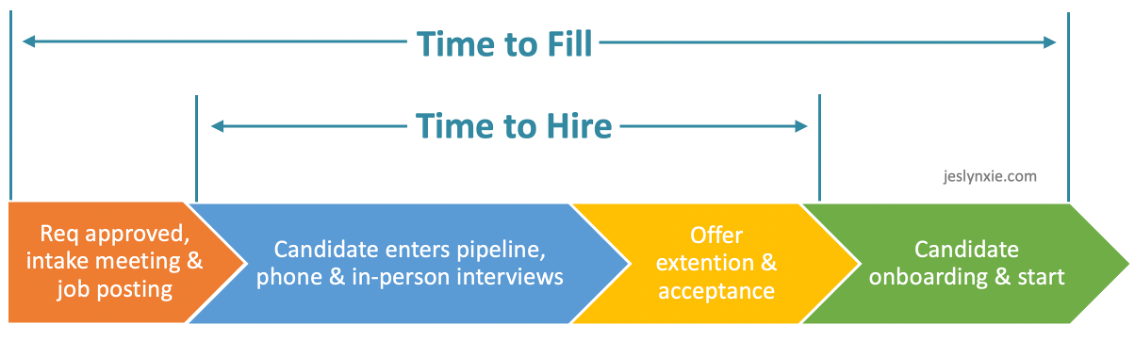
One of the clearest indicators of recruiting efficiency is how quickly positions are filled.
Monitor whether AI-powered workflows reduce the time required to source, screen, and move candidates through the hiring process.
Faster hiring often translates into lower recruiting costs and reduced productivity gaps across the business.
2. Measure Recruiter Productivity
AI should help recruiters spend less time on manual work and more time on strategic activities.
Track metrics such as:
- Number of candidates sourced
- Applications reviewed
- Interviews coordinated
- Requisitions managed per recruiter
Comparing these metrics before and after implementation can reveal the true productivity impact of AI.
3. Monitor Candidate Engagement
Candidate experience plays a major role in recruiting success.
Measure engagement indicators such as response rates, interview attendance, communication effectiveness, and candidate satisfaction.
Improved engagement often signals that automation is helping recruiters maintain stronger communication throughout the hiring journey.
4. Evaluate Quality-of-Hire
Hiring faster is valuable, but hiring the right people matters even more.
Review post-hire performance data, retention rates, and hiring manager satisfaction to assess whether AI is helping identify stronger candidates.
Quality-of-hire metrics provide a more complete picture of recruiting effectiveness.
5. Calculate Recruiting ROI
Ultimately, every technology investment should generate measurable business value.
Calculate ROI by comparing the costs of implementation against the benefits achieved through improved efficiency, reduced manual work, faster hiring, and better hiring outcomes.
When measured consistently, ROI helps demonstrate the long-term impact of your AI recruiting strategy and provides direction for future optimization efforts.
Suggested Reading:
Top HR Metrics Every HR Professional Should TrackCommon AI Recruiting Integration Mistakes to Avoid
Even with the right technology and planning, certain mistakes can limit the success of your AI-ATS integration.
Understanding these challenges early can help you avoid costly setbacks and achieve better long-term results.
1. Implementing AI Without Process Alignment
Many organizations introduce AI before optimizing their existing recruiting workflows.
When inefficient processes remain unchanged, AI often automates problems rather than solving them.
Always align technology with well-defined recruiting processes first.
2. Ignoring Data Quality Issues
AI relies on accurate and consistent data to make effective recommendations.
If your ATS contains duplicate records, outdated candidate information, or incomplete profiles, AI performance can suffer.
Regular data audits help maintain reliable recruiting outcomes.
3. Over-Automating the Recruiting Process
Automation can improve efficiency, but not every hiring activity should be automated.
Recruitment is still a people-focused function that depends on relationship building and human judgment.
Use AI to support recruiters, not replace meaningful candidate interactions.
4. Neglecting Compliance and Privacy Requirements
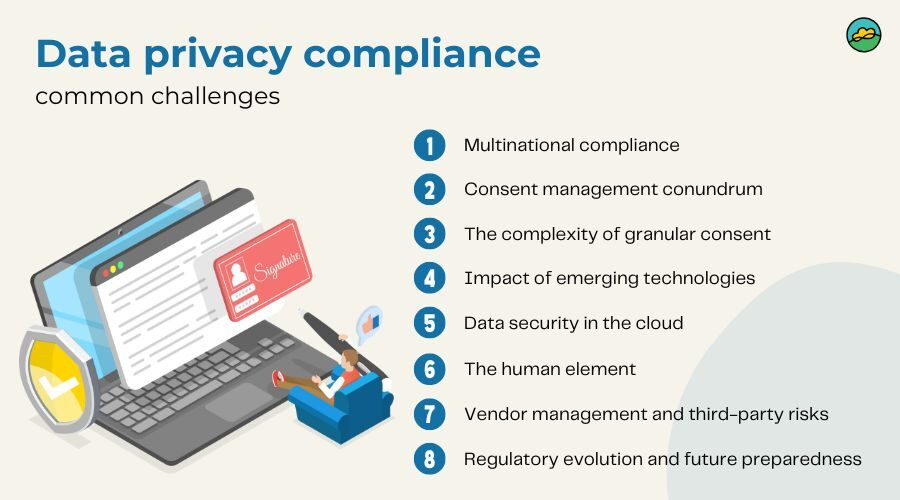
Candidate data must be handled responsibly throughout the recruiting process.
Failing to address privacy regulations, security standards, or internal compliance policies can create significant risks.
Make compliance a priority from the beginning of your integration strategy.
5. Failing to Continuously Improve Workflows
AI recruiting is not a one-time implementation project.
Hiring needs, candidate expectations, and business goals continue to evolve over time.
Regularly review performance metrics, gather user feedback, and refine workflows to ensure your AI-ATS integration continues delivering value as your organization grows.
Conclusion
Successfully integrating AI recruiting tools with your ATS requires more than connecting software.
It starts with clear processes, the right integration strategy, and strong team adoption.
When implemented effectively, AI can automate repetitive tasks, improve recruiter productivity, and create a smoother candidate experience.
Most importantly, it allows your recruiting team to focus on building relationships and making better hiring decisions.
By continuously measuring performance and refining workflows, you can maximize the long-term value of your AI-powered recruiting ecosystem.
Frequently Asked Questions
1. Why is ATS integration important for AI recruiting tools?
ATS integration keeps candidate data, communication, and workflows synchronized, reducing manual work and improving recruiting efficiency and visibility.
2. What recruiting tasks can be automated through an AI-ATS integration?
Candidate sourcing, resume screening, outreach, interview scheduling, status updates, and reporting can be automated through integrated recruiting workflows.
3. How can companies prevent duplicate candidate records during integration?
Use data mapping rules, automated deduplication processes, and consistent candidate identifiers to maintain accurate and unified records.
4. Will AI recruiting tools replace recruiters after integration?
No. AI supports recruiters by automating repetitive tasks, while recruiters handle relationship-building, decision-making, and candidate evaluation.
5. How do you measure the success of an AI recruiting and ATS integration?
Track time-to-hire, recruiter productivity, candidate engagement, hiring quality, workflow efficiency, and overall recruiting performance improvements.


