Hiring and managing employees is becoming more complex every year.
From recruitment and onboarding to payroll, compliance, and employee engagement, HR teams are expected to handle multiple responsibilities while helping the business grow.
This often leads companies to an important decision: should you build an internal HR team or outsource HR functions to an external provider?
The answer depends on your company size, hiring volume, budget, and long-term goals.
In this guide, you'll learn:
- What in-house HR means
- What outsourced HR means
- Key differences between both approaches
- Pros and cons of each model
- Which option works best for different business types
- How AI is changing modern HR operations
What Is In-House HR?
In-house HR refers to an internal team that manages all human resource activities within your organization.
These employees work directly for your company and are responsible for handling HR operations, policies, employee relations, hiring, compliance, and workforce management.
An in-house HR team typically has a deep understanding of your company culture, goals, and internal processes.
Common Responsibilities of an In-House HR Team
- Talent acquisition and recruiting
- Employee onboarding
- Payroll management
- Benefits administration
- Performance management
- Employee engagement initiatives
- Compliance and labor law management
- Learning and development programs
For companies that prioritize strong cultural alignment and direct employee support, an internal HR team often feels like a natural choice.
Advantages of In-House HR
Keeping HR operations in-house offers greater control and stronger alignment with your business goals.
1. Better Cultural Understanding
Internal HR teams understand your company culture, values, and employee expectations better than external providers.
2. Greater Control
You have direct oversight of hiring, policies, compliance, and employee management processes.
3. Stronger Employee Relationships
Employees can build trust more easily with HR professionals who work within the organization.
4. Faster Decision-Making
Internal teams can respond quickly to workplace issues, policy changes, and hiring needs.
5. Strategic Alignment
HR initiatives can be closely aligned with long-term business objectives and workforce planning.
This is concise, easy to skim, and keeps the blog moving without overwhelming readers. The same style works perfectly for Pros/Cons sections.
Disadvantages of In-House HR
1. Higher Costs
Maintaining an internal HR team involves expenses such as salaries, benefits, training, and HR software.
2. Limited Expertise
Small HR teams may lack specialized knowledge in areas like compliance, executive hiring, and workforce planning.
3. Scaling Difficulties
As the business grows, HR workloads increase, often requiring additional staff and resources.
What Is Outsourced HR?
Outsourced HR involves partnering with an external service provider to handle some or all HR functions.
Instead of hiring full-time HR professionals, businesses pay a third-party company to manage specific responsibilities.
Depending on business needs, outsourcing can cover a few tasks or entire HR operations.
Commonly Outsourced HR Functions
- Recruitment and staffing
- Payroll processing
- Benefits administration
- Compliance management
- Background verification
- HR documentation
- Employee training programs
- Workforce planning
This model allows businesses to access HR expertise without building a large internal department.
Advantages of Outsourced HR
1. Lower Costs
Reduces the need for a large in-house HR team and related overhead expenses.
2. Access to HR Experts
Gain specialized expertise in areas like recruitment, payroll, compliance, and benefits.
3. Easier Scalability
HR support can quickly adapt as your workforce grows or changes.
4. Advanced Technology
Many providers offer HR software and tools as part of their services.
Disadvantages of Outsourced HR
1. Less Control
Businesses may have less direct oversight of HR processes and decisions.
2. Communication Delays
Response times can vary since providers manage multiple clients.
3. Cultural Misalignment
External teams may take time to fully understand your company culture and employee needs.
In-House vs Outsourcing HR: Key Differences
Now that you understand what in-house and outsourced HR involve, the next step is comparing how they perform in real business situations.
While both approaches aim to support your workforce and HR operations, they differ significantly in terms of control, cost, scalability, expertise, and overall flexibility. Understanding these differences can help you choose the model that aligns best with your business goals.
1. Control Over HR Processes
One of the biggest differences between in-house and outsourced HR is the level of control you maintain.
With an in-house HR team, every process stays within your organization.
From hiring decisions and employee relations to policy creation and performance management, your team has complete oversight.
This allows you to make quick decisions and tailor HR strategies to your company culture.
In contrast, outsourced HR providers manage certain functions on your behalf.
While you still set overall objectives, some day-to-day execution happens externally. This can reduce administrative burden but may limit direct involvement in every HR activity.
2. Cost Structure
Cost is often a major factor in the in house vs outsourcing HR decision.
Building an internal HR department requires ongoing investments in salaries, benefits, training, software, and compliance resources.
As your company grows, these expenses typically increase as additional HR personnel become necessary.
Outsourced HR usually operates on a service-based pricing model. Instead of maintaining a full internal team, you pay for the services you need.
This can make outsourcing a more cost-effective option for startups and small businesses that want professional HR support without significant overhead costs.
3. Access to Expertise
The quality and breadth of HR expertise can vary between both models.
An in-house team develops deep knowledge of your organization, employees, and business objectives.
However, smaller HR departments may have limited expertise in specialized areas such as employment law, compensation planning, or large-scale recruitment.
Outsourced HR providers typically work with multiple clients across industries.
As a result, they often have specialists who focus on compliance, payroll, benefits administration, recruiting, and workforce planning.
This broader expertise can be valuable when navigating complex HR challenges.
Suggested Reading:
HR Checklist for Startups: 10 Must-Do HR Tasks4. Scalability and Growth Support
As businesses grow, HR demands increase as well.
With an in-house model, scaling often means hiring additional HR professionals, investing in new systems, and expanding internal processes.
While this provides long-term control, it can take time and resources to implement.
Outsourced HR offers greater flexibility when scaling operations. Service providers can quickly adjust support levels based on hiring needs, seasonal demands, or organizational growth.
This makes outsourcing particularly attractive for businesses experiencing rapid expansion.
5. Cultural Alignment and Employee Experience
HR plays a critical role in shaping employee experience and workplace culture.
In-house HR teams interact with employees daily and have a deeper understanding of company values, leadership expectations, and team dynamics.
This close connection often helps create stronger relationships and a more personalized employee experience.
Outsourced HR providers can support culture initiatives, but they may require time to fully understand the nuances of your organization.
Without proper collaboration, maintaining the same level of cultural alignment can be challenging.
6. Technology and Process Efficiency
Modern HR operations rely heavily on technology.
Organizations with in-house HR teams are responsible for selecting, implementing, and managing HR software platforms.
While this offers flexibility, it can also require significant investment and ongoing maintenance.
Many outsourced HR providers include technology solutions as part of their service offerings.
Businesses gain access to established systems without managing the infrastructure themselves, which can improve efficiency and reduce operational complexity.
7. Recruitment and Hiring Capabilities
Recruitment is another area where the differences become apparent.
Internal HR teams typically handle hiring based on available resources and recruiter capacity.
This works well when hiring volumes are manageable but can become difficult during periods of rapid growth.
Outsourced HR providers often have dedicated recruiting resources, established talent networks, and streamlined processes that can accelerate hiring.
Many organizations also combine internal HR teams with AI-powered recruiting tools to improve sourcing, screening, and candidate engagement without fully outsourcing recruitment.
Quick Comparison
Ultimately, the right choice depends on your organization's priorities. If maintaining control and building a strong internal culture are your primary goals, in-house HR may be the better fit.
If reducing costs, accessing specialized expertise, and scaling efficiently are more important, outsourcing can provide significant advantages.
When In-House HR Makes More Sense
An internal HR team is often the better option when:
- You have a large workforce
- Company culture is a major competitive advantage
- HR processes are highly customized
- Frequent employee interaction is required
- You need full operational control
Large enterprises often benefit most from maintaining strong internal HR departments.
When Outsourced HR Is the Better Choice
Outsourcing may be ideal when:
- You're a startup or growing business
- HR budgets are limited
- Hiring needs fluctuate frequently
- Specialized expertise is required
- Internal HR resources are stretched
For many small and mid-sized businesses, outsourcing provides a practical way to access enterprise-level HR support without enterprise-level costs.
How AI Is Changing the In-House vs Outsourcing Debate
The traditional in house vs outsourcing decision is evolving.
AI-powered HR technology now allows businesses to automate many time-consuming tasks that previously required either larger internal teams or external providers.
Recruiting is one area where this shift is especially visible.
Organizations can now automate candidate sourcing, screening, outreach, and scheduling while maintaining control over their hiring process.
This creates a middle ground between fully in-house and fully outsourced HR operations.
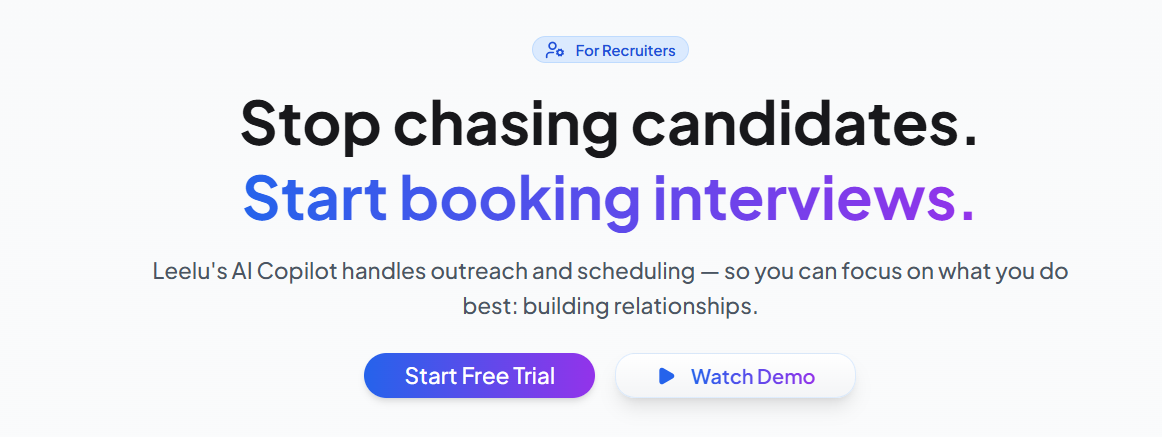
How Leelu AI Helps HR Teams Hire Faster
As hiring demands increase, many HR teams struggle with repetitive recruiting tasks that consume valuable time.
This is where AI-powered recruiting platforms can help.
Automate Candidate Sourcing
Leelu AI searches across 500M+ candidate profiles from multiple sources, helping you identify qualified talent significantly faster.
Screen Candidates Automatically
Instead of manually reviewing hundreds of resumes, AI can parse and rank candidates based on job requirements within minutes.
Personalize Candidate Outreach
Recruiters can engage candidates through personalized messaging at scale while maintaining a more consistent candidate experience.
Simplify Interview Scheduling
AI-driven scheduling helps eliminate back-and-forth coordination and accelerates the hiring process.
For companies evaluating in house vs outsourcing hr, AI recruiting solutions offer a way to improve hiring efficiency without dramatically increasing headcount or outsourcing critical recruiting functions.
Conclusion
The choice between in-house and outsourced HR depends on what your business values most.
If control, culture, and direct employee relationships are top priorities, an internal HR team may be the right fit.
If flexibility, cost savings, and specialized expertise matter more, outsourcing can provide significant advantages.
As AI continues to transform HR operations, businesses no longer have to choose between doing everything internally or outsourcing every process.
Modern tools can automate repetitive work, improve efficiency, and help HR teams focus on higher-value initiatives that drive business growth.
Whether you choose an internal team, an external provider, or a hybrid approach, the best solution is the one that supports your people and scales with your business goals.
Frequently Asked Questions
What HR functions can be outsourced?
Businesses commonly outsource recruitment, payroll processing, benefits administration, compliance management, employee onboarding, and HR documentation.
When should a company choose in-house HR?
In-house HR is often the better choice for larger organizations that require direct oversight, frequent employee interaction, and strong alignment with company culture.
Can a business use both in-house and outsourced HR?
Yes. Many companies adopt a hybrid approach, keeping strategic HR functions in-house while outsourcing tasks such as payroll, compliance, or recruitment.
How can AI support in-house and outsourced HR teams?
AI can automate tasks like candidate sourcing, resume screening, outreach, and interview scheduling, helping HR teams improve efficiency and reduce manual workload regardless of their HR model.
Is outsourced HR suitable for startups?
Yes. Outsourced HR allows startups to access professional HR expertise without the cost of building a full internal HR department, making it a practical option during early growth stages.