
Finding great candidates is no longer the biggest hiring challenge.
The real challenge is reaching talented professionals who are not actively applying for jobs but are open to the right opportunity.
That is where LinkedIn Recruiter becomes a powerful sourcing tool. When used strategically, it helps you identify, engage, and build relationships with high-quality passive candidates.
In this guide, you will learn:
- Why passive candidates matter in modern hiring
- How to use LinkedIn Recruiter effectively
- Advanced sourcing and outreach strategies
- Common mistakes recruiters should avoid
Understanding LinkedIn Recruiter Before You Start Sourcing
Now that you understand why passive candidates matter, the next step is learning how LinkedIn Recruiter helps you find them.
Before jumping into searches, it is important to understand the platform's core capabilities.
1. Key Features Available in LinkedIn Recruiter
LinkedIn Recruiter is designed specifically for talent acquisition teams.
It includes advanced search filters, candidate spotlights, InMail messaging, talent projects, saved searches, hiring insights, and pipeline management tools.
Together, these features help recruiters move beyond basic searches and create a structured sourcing process.
2. Difference Between LinkedIn Recruiter and Standard LinkedIn Search
At first glance, both tools may look similar.
However, LinkedIn Recruiter offers significantly deeper sourcing functionality than a standard LinkedIn account.
You gain access to more filters, larger candidate pools, advanced search capabilities, candidate organization tools, and direct outreach features that are not available through regular search.
3. How LinkedIn Recruiter Helps Identify Passive Talent
Finding passive candidates requires more than searching for job titles.
LinkedIn Recruiter helps you uncover professionals based on experience, skills, career history, engagement signals, and hiring preferences.
These insights make it easier to identify candidates who closely match your requirements, even if they are not actively applying for jobs.
4. Setting Up Your Recruiter Account for Better Sourcing Results
The quality of your sourcing often depends on how well your recruiter account is organized.
Start by creating projects for different hiring needs, setting up saved searches, and defining clear candidate criteria.
This allows LinkedIn Recruiter to surface relevant talent faster and helps you maintain a more efficient sourcing workflow as hiring demands grow.
How to Use LinkedIn Recruiter to Source Passive Candidates
Now that you understand why passive candidates are valuable, the next step is learning how to find and engage them effectively.
LinkedIn Recruiter offers powerful sourcing capabilities, but the best results come from using those features strategically rather than relying on basic searches alone.
1. Define Your Ideal Candidate Profile Before Searching
Successful sourcing starts before you type anything into the search bar.
Without a clear picture of your ideal candidate, you can easily end up reviewing hundreds of irrelevant profiles.
Start by identifying the key attributes your ideal hire should have.
This may include:
- Current or previous job titles
- Required skills and certifications
- Industry experience
- Location preferences
- Seniority level
- Educational background
- Technical expertise
The more specific your criteria are, the easier it becomes to build focused searches and identify candidates who genuinely fit the role.
2. Use Advanced Search Filters to Narrow Candidate Lists
Once your ideal profile is defined, LinkedIn Recruiter's advanced filters help you refine your search.
Rather than searching with a single keyword, combine multiple filters to improve accuracy.
Some of the most valuable filters include:
- Job title
- Industry
- Skills
- Years of experience
- Location
- Company size
- Current company
- Seniority level
Using several filters together allows you to remove irrelevant profiles and focus on qualified candidates faster.
A targeted search almost always produces better results than a broad one.
3. Leverage Boolean Search for More Precise Talent Discovery
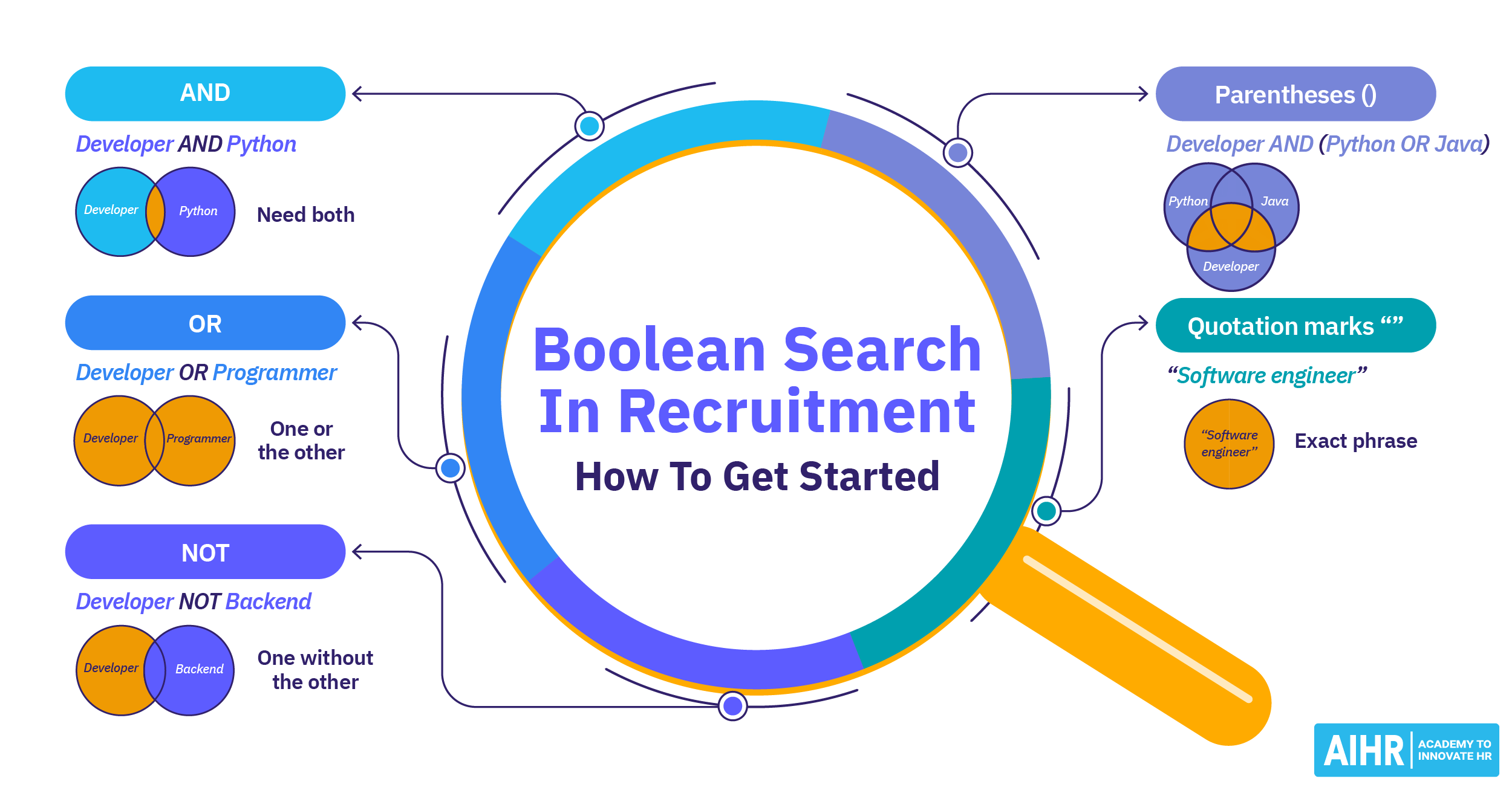
Even advanced filters have limitations.
This is where Boolean search becomes an important sourcing skill.
Boolean operators help you create highly specific searches that uncover candidates who might otherwise be missed.
Common operators include:
- AND
- OR
- NOT
- Quotation marks (" ")
- Parentheses ( )
For example:
("Product Manager" OR "Technical Product Manager") AND SaaS NOT Intern
This search broadens your reach while still maintaining relevance.
Boolean search is especially useful when sourcing specialized talent with varying job titles and skill combinations.
Suggested Reading:
Boolean Search in Recruitment4. Identify Candidates Using Open to Work and Activity Signals Strategically
Not every passive candidate has the same level of interest in new opportunities.
LinkedIn Recruiter provides signals that help you identify professionals who may be more receptive to outreach.
Look for indicators such as:
- Open to Work preferences
- Recent profile updates
- New certifications
- Added skills
- Increased LinkedIn activity
- Recent promotions
These signals often suggest that a candidate is thinking about career progression or evaluating future opportunities.
While they may not be actively applying, they can be more open to conversations than completely inactive prospects.
5. Use Spotlights to Prioritize High-Potential Candidates
As candidate lists grow, deciding who to contact first becomes increasingly difficult.
This is where LinkedIn Recruiter Spotlights can save time.
Spotlights automatically highlight candidates based on engagement and hiring-related signals.
Depending on your subscription, Spotlights may identify candidates who:
- Are open to new opportunities
- Have engaged with your company
- Previously applied to your organization
- Have shared connections with your team
- Match important hiring criteria
Instead of manually reviewing every profile, Spotlights help you focus on candidates with the highest potential value.
6. Explore Similar Profiles to Uncover Hidden Talent Pools
Many recruiters stop searching once they find a few promising candidates.
Top recruiters do the opposite.
They use strong candidate profiles as a gateway to uncover additional talent.
LinkedIn Recruiter can recommend professionals with similar backgrounds, experiences, and skills.
This feature often reveals candidates who would never appear in your original search.
It is particularly valuable when:
- Hiring for niche positions
- Expanding talent pipelines
- Building diverse candidate pools
- Discovering non-traditional candidates
Sometimes your best hire is hidden just beyond your initial search results.
7. Save Searches and Automate Candidate Discovery Workflows
Passive candidate sourcing is an ongoing process.
The talent market changes every day as professionals switch jobs, gain new skills, and update their profiles.
Instead of repeating the same searches manually, save your most valuable searches.
Saved searches allow LinkedIn Recruiter to continuously monitor the market for new matching candidates.
This offers several advantages:
- Reduced manual effort
- Faster access to new talent
- Continuous pipeline growth
- More consistent sourcing results
Over time, this creates a steady flow of qualified candidates without requiring constant search activity.
8. Personalize InMail Messages for Higher Response Rates
Finding great candidates is only part of the process.
You also need them to respond.
Unfortunately, passive candidates receive countless generic recruiting messages every week.
Messages that immediately focus on job openings often get ignored because they sound identical to every other outreach attempt.
Instead, make your InMail personal and relevant.
Reference specific details from the candidate's profile such as:
- Recent achievements
- Career progression
- Industry expertise
- Shared interests
- Professional accomplishments
When candidates feel that your message was written specifically for them, engagement rates improve significantly.
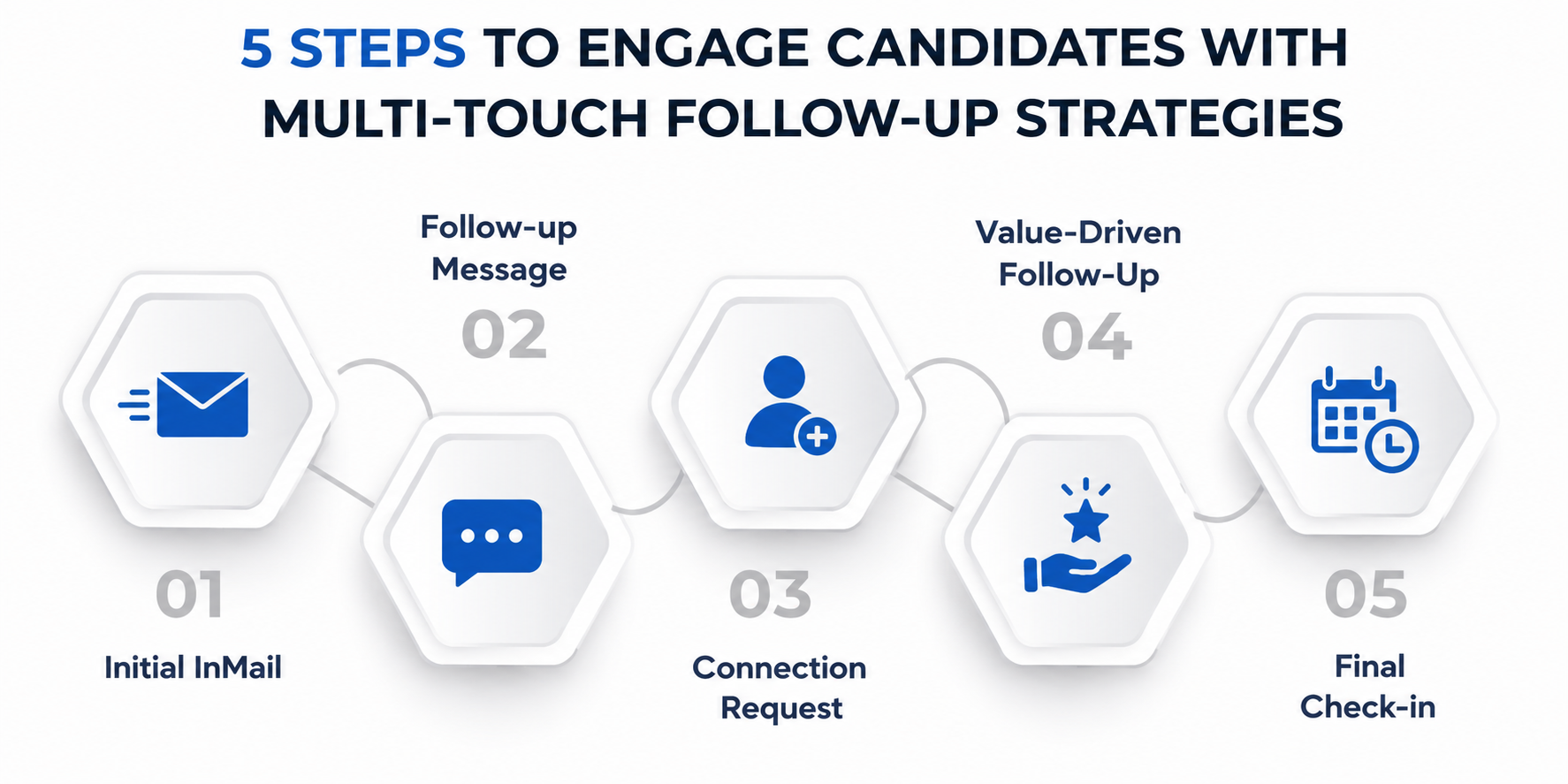
9. Engage Candidates with Multi-Touch Follow-Up Strategies
Many recruiters send one message and move on.
However, passive candidates often need multiple touchpoints before responding.
A lack of response does not always indicate a lack of interest.
Candidates may be busy, traveling, focused on projects, or simply overwhelmed by notifications.
A structured follow-up strategy helps keep the conversation alive.
A simple outreach sequence may include:
- Initial InMail
- Follow-up message
- Connection request
- Value-driven follow-up
- Final check-in
Each interaction should add context rather than repeat the same message.
Consistent follow-ups often generate responses that a single message never could.
10. Build Talent Pools and Projects for Future Hiring Needs
Not every candidate you discover will be ready to change jobs immediately.
That does not mean they should be forgotten.
LinkedIn Recruiter allows you to organize candidates into projects and talent pools for future opportunities.
You can create talent communities based on:
- Job function
- Industry
- Location
- Experience level
- Skill specialization
Over time, these organized talent pools become one of your most valuable recruiting assets.
When new roles open, you already have access to qualified prospects rather than starting another search from scratch.
11. Track Sourcing Performance and Optimize Outreach Efforts
The best recruiters treat sourcing as an ongoing process of improvement.
To improve results, you need to understand what is working and what is not.
LinkedIn Recruiter provides valuable performance insights that help measure sourcing effectiveness.
Monitor metrics such as:
- InMail response rates
- Candidate engagement rates
- Qualified candidate volume
- Pipeline conversion rates
- Time-to-engagement
- Source performance
These insights help you identify successful sourcing patterns and optimize future outreach efforts.
Over time, small improvements in search strategy, messaging, and follow-up processes can create a significant impact on overall hiring success.
The recruiters who consistently attract top passive talent are not necessarily sending more messages.
They are continuously refining their sourcing strategy to make every search, conversation, and candidate interaction more effective.
Suggested Reading:
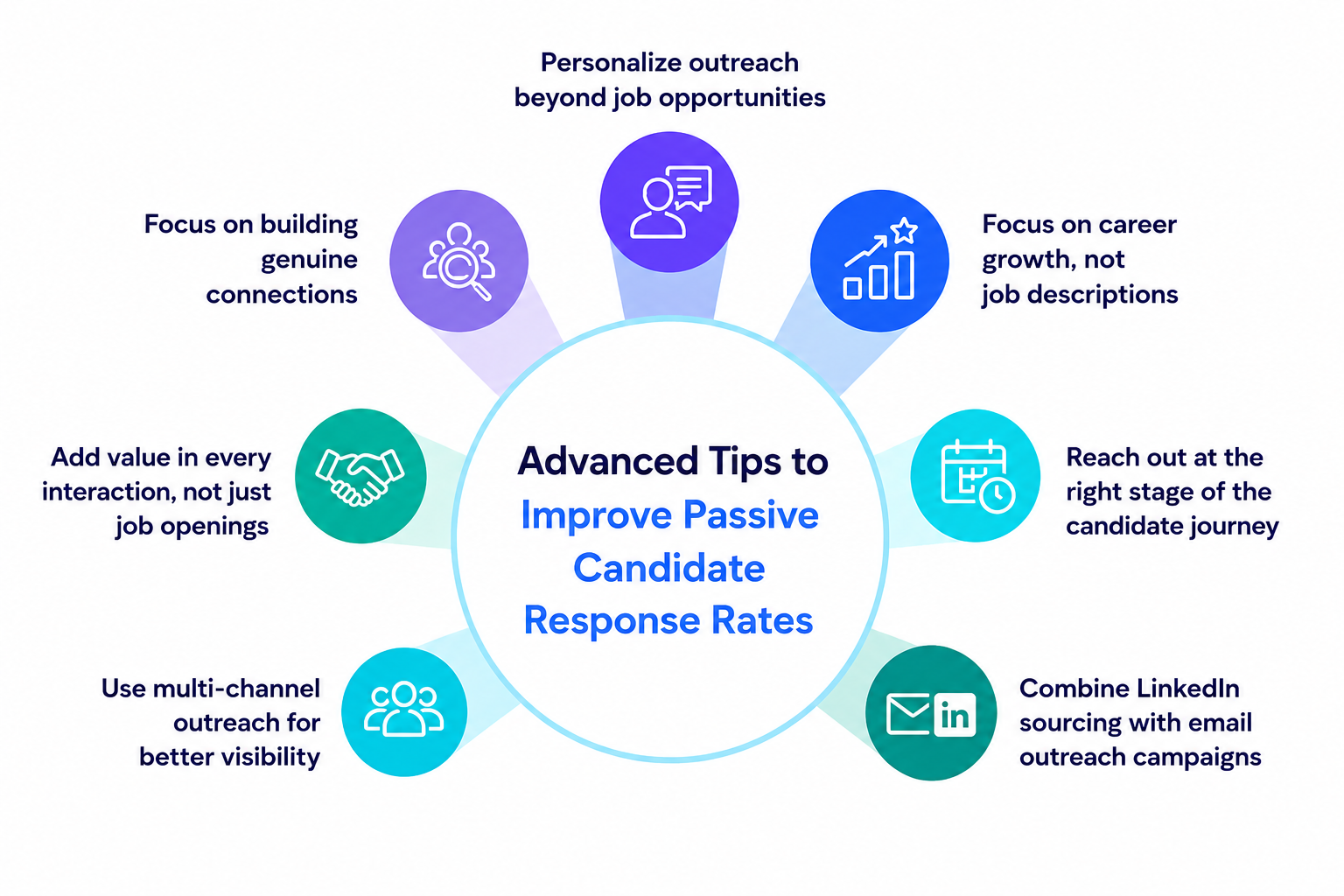
Candidate Sourcing ChannelsAdvanced Tips to Improve Passive Candidate Response Rates
Finding passive candidates is important.
Getting them to respond is where the real challenge begins.
Even highly targeted sourcing efforts can fall short if your outreach strategy does not resonate with candidates. Small adjustments in your approach can significantly improve engagement and response rates.
1. Personalize Outreach Beyond Job Opportunities
Most passive candidates are not actively looking for a new role.
That means leading with a job opening is not always the best way to start a conversation.
Instead, focus on building a genuine connection first.
Reference something meaningful from their profile, such as a recent promotion, industry contribution, certification, or project achievement.
You can also acknowledge their expertise in a specific area.
When candidates feel that your message is tailored to them, they are far more likely to engage.
2. Focus on Career Growth Instead of Job Descriptions
Passive candidates are rarely motivated by responsibilities listed in a job description.
What often captures their attention is the potential for career growth.
Rather than discussing the role immediately, highlight opportunities that may help them move forward professionally.
This could include:
- Leadership opportunities
- Career advancement
- Exposure to new technologies
- Larger business impact
- Professional development
When your outreach focuses on future possibilities instead of open positions, conversations tend to feel more relevant and valuable.
3. Reach Out at the Right Stage of the Candidate Journey
Timing can play a major role in candidate engagement.
A professional who ignored your message six months ago may be much more receptive today.
Pay attention to signals that indicate potential career movement.
These may include:
- Profile updates
- New certifications
- Work anniversaries
- Promotions
- Increased LinkedIn activity
These moments often suggest that candidates are reflecting on their career progression and may be more open to discussions about future opportunities.
4. Combine LinkedIn Sourcing with Email Outreach Campaigns
Not every candidate actively checks LinkedIn messages.
Some professionals respond faster through email, while others prefer LinkedIn conversations.
This is why multi-channel outreach often performs better than relying on a single platform.
Combining LinkedIn sourcing with personalized email campaigns allows you to increase visibility without overwhelming candidates.
A thoughtful approach across channels can help you reach candidates who might otherwise never see your message.
How Leelu.Ai Helps Recruiters Source Passive Candidates More Efficiently
As sourcing becomes more competitive, recruiters need tools that help them identify, engage, and manage passive candidates at scale.
This is where Leelu.ai can help streamline the entire sourcing process.
1. Find Candidates Across LinkedIn and Multiple Sourcing Platforms
Searching on a single platform can limit your talent reach.
Leelu.ai helps recruiters source candidates from LinkedIn and multiple talent sources through one unified workflow.
Instead of switching between different tools, you can access a broader talent pool from a single platform.
2. Use AI-Powered Matching to Identify Top-Fit Talent Faster
Reviewing hundreds of profiles manually can slow down the hiring process.
Leelu uses AI-powered matching to analyze candidate profiles and identify the strongest matches based on your hiring requirements.
This helps recruiters spend less time screening and more time engaging qualified candidates.
3. Automate Personalized Outreach and Follow-Up Sequences
Consistent communication is critical when engaging passive talent.
Leelu.ai helps automate personalized outreach and follow-up sequences while maintaining relevance for each candidate.
This ensures that promising candidates remain engaged without requiring constant manual effort from recruiters.
4. Reduce Manual Sourcing Effort with AI Automation
Many sourcing tasks are repetitive and time-consuming.
Leelu.ai automates activities such as candidate discovery, profile screening, outreach workflows, and follow-ups, helping recruiters reduce manual workload and focus on higher-value recruiting activities.
5. Manage Sourcing, Engagement, and Scheduling in One Workflow
Recruiting often involves multiple disconnected tools.
Leelu.ai brings sourcing, candidate engagement, interview scheduling, and workflow management into one platform.
By centralizing these activities, recruiters can move candidates through the hiring process more efficiently while maintaining a better overall candidate experience.
Common LinkedIn Recruiter Mistakes to Avoid
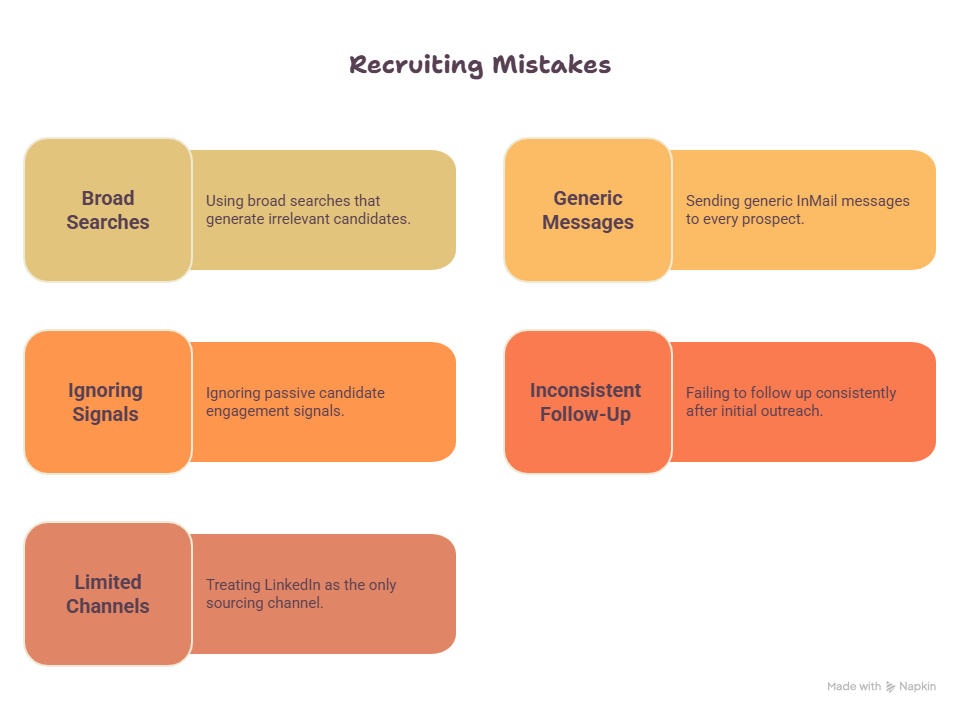
Even with access to advanced sourcing tools, small mistakes can limit your ability to attract qualified passive candidates.
Avoiding these common issues can help you improve both sourcing efficiency and candidate engagement.
1. Using Broad Searches That Generate Irrelevant Candidates
Many recruiters rely on generic keywords and minimal filters.
This often results in large candidate lists filled with profiles that do not match the role.
Instead, combine advanced filters and Boolean search techniques to create more targeted searches.
2. Sending Generic InMail Messages to Every Prospect
Passive candidates receive recruiting messages regularly.
If your outreach sounds like a template, it is likely to be ignored.
Personalizing messages with relevant details from a candidate's background helps create stronger engagement and improves response rates.
3. Ignoring Passive Candidate Engagement Signals
Candidate activity can reveal valuable sourcing opportunities.
Overlooking signals such as profile updates, new certifications, or Open to Work preferences can cause recruiters to miss highly receptive candidates.
4. Failing to Follow Up Consistently After Initial Outreach
A single message is rarely enough when engaging passive talent.
Many candidates need multiple touchpoints before responding.
Consistent and thoughtful follow-ups can significantly increase the chances of starting a conversation.
5. Treating LinkedIn as the Only Sourcing Channel
LinkedIn is powerful, but it should not be your only source of talent.
Combining LinkedIn sourcing with email outreach, referrals, talent communities, and recruiting platforms helps you reach a wider and more diverse candidate pool.
Conclusion
Finding passive candidates requires more than simple LinkedIn searches.
You need a structured approach that combines targeted sourcing, personalized outreach, consistent follow-ups, and long-term relationship building.
LinkedIn Recruiter makes this process easier by helping you discover and engage high-quality talent that may not be actively applying for jobs.
When paired with the right sourcing strategy and tools like Leelu, you can streamline candidate discovery, improve response rates, and build stronger talent pipelines that support future hiring success.
Frequently Asked Questions
1. What is LinkedIn Recruiter and how does it help source passive candidates?
LinkedIn Recruiter helps recruiters discover, filter, engage, and nurture passive candidates using advanced sourcing and outreach tools.
2. How can recruiters find passive candidates on LinkedIn more effectively?
Recruiters can use advanced filters, Boolean search, spotlights, and personalized outreach to identify and engage passive talent.
3. What are the best practices for improving LinkedIn InMail response rates?
Personalized messaging, career-focused conversations, relevant opportunities, and consistent follow-ups significantly improve candidate response rates.
4. Why is passive candidate sourcing important in modern recruitment?
Passive candidates often possess stronger experience, specialized skills, and higher-quality backgrounds than actively searching job seekers.
5. Can AI tools improve passive candidate sourcing beyond LinkedIn Recruiter?
AI-powered sourcing platforms help recruiters automate candidate discovery, matching, outreach, and engagement across multiple channels.