
Finding quality candidates globally sounds like a huge opportunity until you actually start hiring across different regions, platforms, and time zones.
A strategy that works in one country may fail completely in another, making global hiring slower, harder, and far more fragmented than expected.
That is why companies now focus on building smarter global talent acquisition strategies that help them source, engage, and hire the right candidates faster.
In this guide, you will learn:
- How to build a strong global hiring foundation
- 9 effective global talent acquisition strategies to find quality candidates
- Common mistakes that slow down international hiring
- How AI-powered recruiting helps you scale global hiring efficiently
Start with Building the Basics of Global Talent Acquisition Strategy First
Before you invest in global recruiting, you need a hiring strategy that can support long-term growth across regions.
Without the right foundation, global hiring often becomes inconsistent, difficult to manage, and slower than expected.
1. Defining global hiring goals and workforce needs
Start by identifying the roles you need to fill, the skills required, and the regions you want to hire from.
Clear hiring goals help your recruiting team focus on finding candidates that actually match business needs instead of sourcing randomly across markets.
2. Understanding regional hiring trends and candidate expectations
Global candidates do not all respond the same way.
Salary expectations, preferred communication styles, hiring timelines, and remote work preferences vary across countries.
Understanding these differences helps you create a better candidate experience and improve response rates.
3. Building a scalable and standardized hiring process
As hiring expands internationally, your process should remain structured and easy to repeat.
A strong global hiring workflow usually includes:
- Standardized screening and interview stages
- Clear communication processes across teams
- Consistent evaluation criteria for candidates
4. Using technology to manage global recruiting efficiently
Managing global recruitment manually can quickly overwhelm recruiters.
Using AI-powered recruiting tools helps you streamline sourcing, outreach, scheduling, and candidate management while keeping the entire hiring process organized at scale.
9 Global Talent Acquisition Strategies to Find Quality Candidates
Once your hiring foundation is in place, the next challenge is finding quality candidates consistently across global markets.
That becomes much easier when you use talent acquisition strategies designed specifically for international hiring instead of relying only on traditional local recruiting methods.
1. Using AI-powered sourcing to identify global talent faster
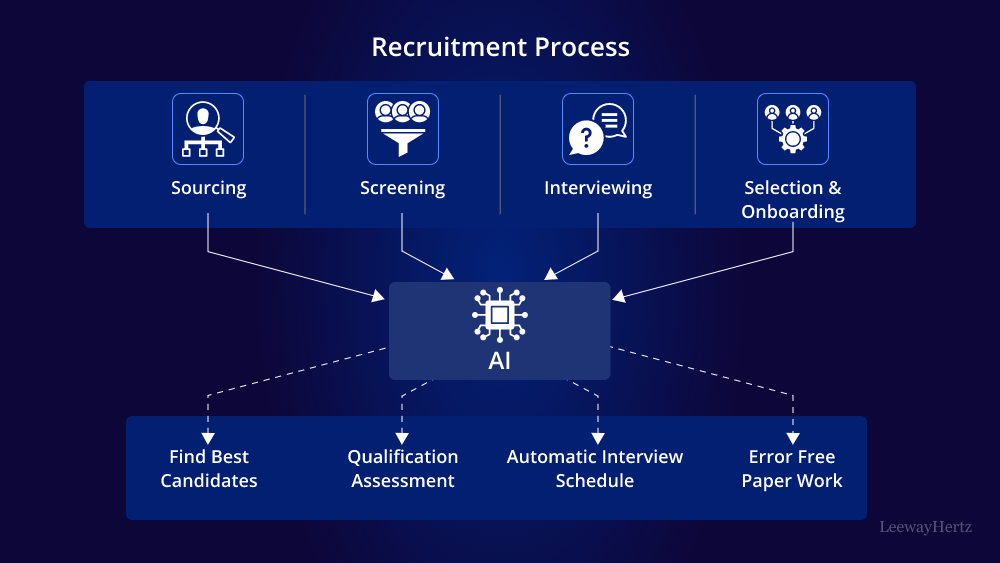
Manually searching across multiple countries and platforms consumes significant time, making global hiring slow and difficult for recruitment teams today.
AI-powered sourcing tools quickly scan vast talent databases, analyze profiles, and match candidates based on skills, experience, and job requirements accurately in real time.
Instead of manually reviewing hundreds of profiles, recruiters can focus on engaging qualified candidates and accelerating every stage of hiring process efficiently.
Overall, AI sourcing improves global recruitment speed, quality, and consistency across distributed hiring teams worldwide with tools like Leelu.ai platform.
2. Expanding sourcing across multiple international job platforms
Relying on a single hiring platform limits your access to quality global talent.
Different regions often prefer different job boards, communities, and professional platforms. A candidate active in Europe may not use the same platform as someone in Southeast Asia or Latin America.
Strong global recruiting strategies usually involve sourcing candidates through multiple channels such as:
- International job boards
- Regional hiring platforms
- Professional communities
- Industry-specific talent networks
This approach helps you reach a much wider and more diverse talent pool.
3. Building global talent pipelines before hiring needs arise

One of the biggest hiring mistakes companies make is starting sourcing only when an open role appears.
Global hiring becomes much faster when you build talent pipelines in advance and continuously engage potential candidates before immediate hiring needs arise.
This allows recruiters to:
- Reduce time-to-hire significantly
- Maintain relationships with qualified talent
- Fill urgent positions faster across regions
Proactive talent pipeline building also improves long-term hiring consistency, especially for hard-to-fill roles.
Suggested Reading:
Passive Candidates: How to Source & Hire Top Talent4. Leveraging LinkedIn and professional networks worldwide
LinkedIn remains one of the most effective platforms for global talent acquisition because it gives recruiters access to professionals across industries and locations.
But simply sending connection requests is rarely enough anymore.
Recruiters need to actively participate in professional communities, industry groups, and networking conversations to attract stronger candidates organically.
Global hiring teams often use LinkedIn to:
- Search for passive candidates
- Build long-term professional relationships
- Engage with industry-specific talent communities
- Share employer branding content internationally
When used strategically, professional networks become powerful sourcing channels instead of just resume databases.
5. Partnering with global recruitment agencies and communities
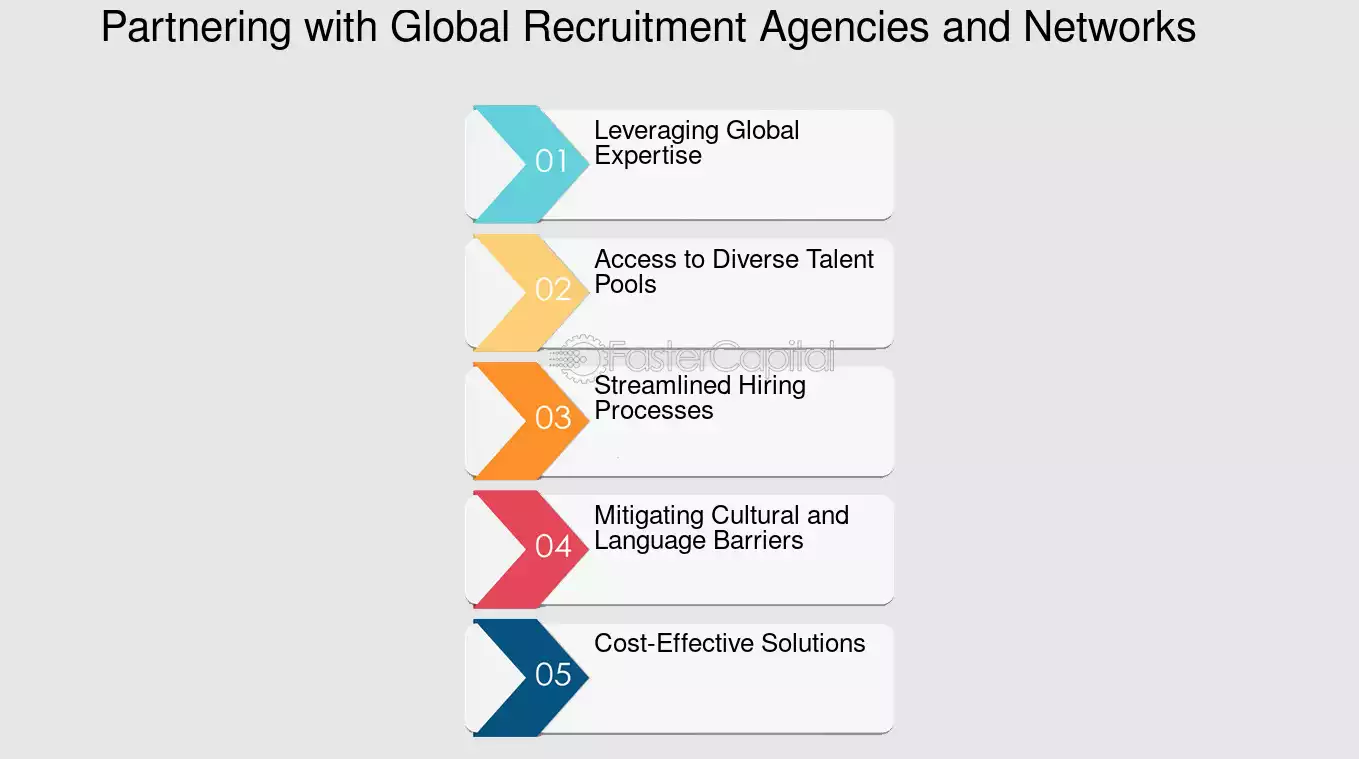
In some regions, local expertise plays a major role in hiring success.
Global recruitment agencies and local hiring communities often understand regional hiring trends, salary expectations, and candidate behavior better than internal teams hiring remotely.
Partnering with local recruiting networks can help you:
- Access region-specific talent pools
- Improve hiring speed in unfamiliar markets
- Navigate local hiring challenges more effectively
This becomes especially useful when hiring for niche, technical, or highly competitive roles where local market knowledge matters.
6. Using localized outreach and personalized candidate engagement
Candidates are far more likely to respond when communication feels personalized and regionally relevant.
Using the same outreach message for every country often leads to lower engagement and poor response rates.
Localized candidate engagement may include adjusting:
- Messaging tone and communication style
- Time zone scheduling preferences
- Role descriptions based on regional expectations
- Benefits and compensation discussions
Personalized outreach helps candidates feel understood, which improves overall recruiting performance globally.
7. Using localized outreach and personalized candidate engagement
Global candidates are more likely to respond when communication feels relevant to their region, role, and expectations.
Sending the same outreach message to every candidate across different countries usually results in lower engagement and poor response rates.
Localized outreach helps recruiters create stronger candidate relationships by adapting communication based on factors such as:
- Regional work culture and communication style
- Preferred hiring timelines and interview processes
- Local salary expectations and benefits discussions
- Language tone and messaging preferences
Personalized engagement also makes candidates feel valued instead of treated like part of a mass recruiting campaign. This becomes especially important when competing for highly skilled global talent.
8. Hiring remote talent to expand candidate availability
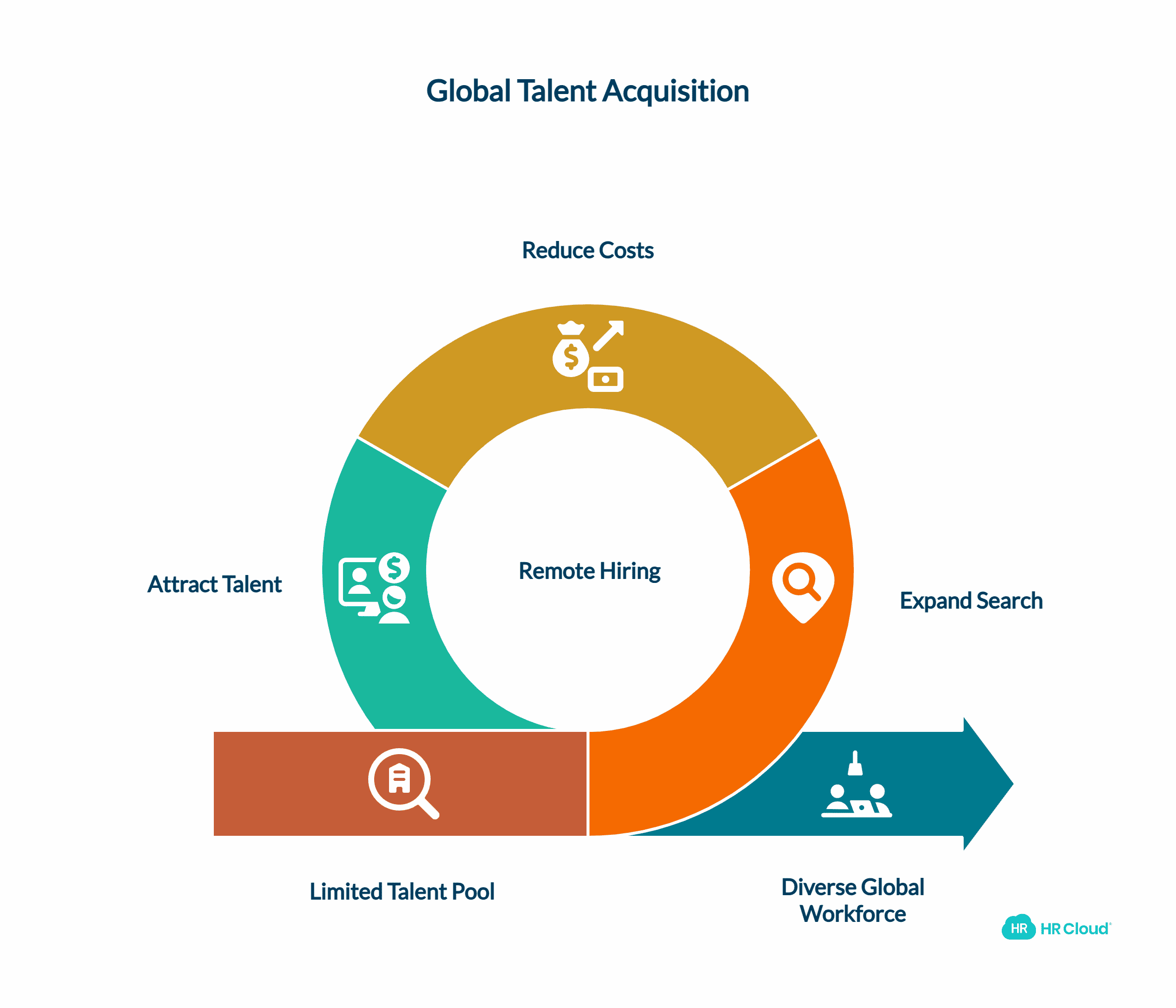
Limiting hiring to specific office locations reduces access to qualified candidates.
Remote hiring allows companies to reach talent globally and significantly expand the available candidate pool.
Instead of competing only within local markets, businesses can hire professionals from regions where the required skills are more accessible and cost-effective.
Remote hiring also helps companies:
- Fill positions faster
- Access specialized or niche talent
- Improve workforce diversity
- Scale teams across multiple time zones
As remote work becomes more widely accepted, companies with flexible hiring models often gain a major advantage in attracting global candidates.
9. Leveraging employee referrals across global teams
Employee referrals remain one of the most effective ways to find quality candidates globally.
Team members often have strong professional networks across industries, countries, and previous workplaces that recruiters may not easily access through traditional sourcing methods.
A strong global referral strategy can help businesses:
- Find trusted and pre-qualified candidates
- Reduce sourcing and screening time
- Improve hiring quality and retention rates
Encouraging referrals across international teams also helps companies discover candidates in regional markets where they may have limited hiring visibility.
10. Using recruitment analytics to optimize global hiring decisions
Global hiring becomes difficult to scale without clear visibility into recruiting performance.
Recruitment analytics help hiring teams understand which sourcing channels, regions, and engagement strategies are producing the best results.
Tracking hiring data allows recruiters to improve decisions based on actual performance instead of assumptions.
Key hiring metrics often include:
- Candidate response rates
- Time-to-hire across regions
- Source effectiveness
- Interview-to-hire conversion rates
- Cost per hire
Using recruitment analytics consistently helps businesses optimize their global talent acquisition strategy while improving hiring speed, efficiency, and candidate quality over time.
Suggested Reading:
Recruiting Funnel MetricsHow Leelu.AI Helps You Find and Engage Global Talent Faster
Managing global hiring manually often slows down recruiting teams.
Searching across multiple platforms, screening profiles, sending outreach messages, and coordinating interviews can quickly become overwhelming as hiring volume increases.
Leelu helps simplify and automate the entire global recruiting workflow so your team can focus more on hiring the right candidates faster.
1. Source candidates from 500M+ profiles across global platforms
Finding quality candidates becomes easier when you are not limited to a single sourcing platform.
Leelu helps you source candidates from 500M+ profiles across LinkedIn, job boards, and ATS platforms, giving recruiters access to a much wider global talent pool from one place.
2. Identify best-fit candidates using AI-powered matching
Reviewing thousands of resumes manually takes significant recruiter time.
Leelu uses AI-powered matching to identify candidates that closely align with your job requirements, skills, and experience preferences.
This helps recruiters prioritize high-fit candidates faster while improving hiring accuracy.
3. Automate personalized outreach across channels at scale
Candidate engagement becomes difficult when recruiters manage outreach manually across multiple regions and time zones.
Leelu.ai helps automate personalized outreach through channels like email and LinkedIn while still keeping communication relevant and candidate-focused.
This allows teams to engage more candidates consistently without increasing manual effort.
4. Reduce manual sourcing and screening effort significantly
A large portion of recruiting time is often spent on repetitive sourcing and screening tasks.
Leelu.ai automates key recruiting workflows to reduce manual work involved in candidate discovery, profile review, follow-ups, and interview coordination.
This helps recruiting teams improve hiring speed while handling larger hiring volumes more efficiently.
5. Manage sourcing, engagement, and scheduling in one workflow
Using disconnected recruiting tools often creates delays and workflow inefficiencies.
Leelu.ai brings sourcing, candidate engagement, screening, and interview scheduling into one centralized workflow, making global hiring more organized, scalable, and easier to manage across teams.
How to Choose the Right Global Talent Acquisition Strategy
Not every global hiring strategy works for every business.
The right approach depends on your hiring goals, recruitment challenges, and the type of talent you need to attract across different regions.
1. If you are hiring for hard-to-fill or niche roles
Finding candidates for specialized positions often requires a more targeted sourcing strategy.
In these cases, relying only on traditional job boards may not be enough. Recruiters usually need to combine AI-powered sourcing, professional networking platforms, talent communities, and referral programs to identify qualified candidates faster.
Building long-term talent pipelines also becomes important because niche candidates are rarely available immediately when hiring demand appears.
2. If you need to scale hiring across multiple regions
Scaling hiring globally requires a process that stays organized even as recruitment volume increases.
Businesses expanding across countries often benefit from strategies that include:
- Multi-platform candidate sourcing
- Automated outreach and follow-ups
- Standardized hiring workflows across teams
- Recruitment analytics for tracking performance
This helps maintain consistency while managing hiring across different regions and time zones.
3. If candidate engagement and response rates are low
Low response rates usually indicate that outreach efforts are either too generic or poorly timed.
Candidates are more likely to engage when communication feels personalized and relevant to their region, role, and career goals.
Improving candidate engagement often involves:
- Using localized outreach messaging
- Personalizing communication at scale
- Engaging candidates through multiple channels
- Following up consistently without delays
A stronger engagement strategy helps improve both response rates and overall hiring success.
4. If recruiter workload is slowing down global hiring
As hiring demand grows, recruiters often spend too much time on repetitive manual tasks.
Screening resumes, scheduling interviews, and managing follow-ups manually can reduce hiring speed significantly.
In these situations, AI-powered recruiting automation helps reduce recruiter workload while improving sourcing efficiency, candidate engagement, and hiring scalability.
Common Mistakes to Avoid in Global Talent Acquisition
Even strong hiring strategies can fail when businesses overlook the challenges that come with international recruitment.
Avoiding common mistakes helps improve hiring consistency, candidate experience, and long-term recruiting performance.
1. Relying only on local hiring channels
Limiting sourcing efforts to local platforms reduces access to global talent.
Strong global recruitment strategies use multiple international sourcing channels to reach candidates across different regions and industries.
2. Ignoring regional candidate expectations and communication styles
Candidate expectations vary significantly between markets.
Factors such as communication preferences, hiring timelines, compensation discussions, and work flexibility often differ from one region to another. Ignoring these differences can negatively impact candidate engagement.
3. Using the same recruiting approach for every market
A hiring strategy that works well in one country may not perform effectively elsewhere.
Global recruiting requires flexibility in sourcing methods, outreach messaging, and hiring workflows based on regional hiring behavior.
4. Delaying candidate communication across time zones
Slow communication is one of the biggest reasons companies lose quality candidates globally.
Delays in follow-ups, interview scheduling, or hiring updates can quickly reduce candidate interest, especially in competitive markets.
5. Managing global hiring with disconnected recruiting tools
Using separate tools for sourcing, outreach, scheduling, and candidate tracking often creates workflow inefficiencies.
Disconnected systems make it harder for recruiting teams to collaborate, maintain visibility, and scale hiring efficiently across regions.
Conclusion
Finding quality candidates globally requires more than simply posting jobs across multiple countries.
You need a strong global talent acquisition strategy that helps you source candidates efficiently, engage them personally, and manage hiring consistently across regions.
By combining AI-powered sourcing, localized engagement, global talent pipelines, and data-driven hiring decisions, you can improve both hiring speed and candidate quality.
As global hiring becomes more competitive, businesses that use scalable recruiting strategies and automation tools will be better positioned to attract and hire top talent faster across international markets.
Frequently Asked Questions
1. What is a global talent acquisition strategy?
Global talent acquisition strategy is a structured approach to hiring across countries, aligning sourcing, technology, and processes to attract quality international candidates.
2. How does AI improve global hiring?
AI improves global hiring by automating sourcing, screening, and matching candidates, reducing manual effort while increasing speed, accuracy, and reach significantly improving recruiter productivity.
3. How can companies overcome time zone challenges in global hiring?
Companies overcome time zone challenges using asynchronous communication, scheduling flexible interviews, and leveraging tools that automate coordination across global teams efficiently.
4. Why is localized outreach important in global recruitment?
Localized outreach is important because it helps recruiters connect better with candidates by aligning messaging, culture, and expectations in specific regions effectively and appropriately.
5. How do recruitment analytics help global hiring decisions?
Recruitment analytics help global hiring by providing data-driven insights into sourcing performance, candidate quality, and hiring process efficiency improvement opportunities identified.


