
Performance reviews are important, but most teams still treat them like a time-consuming admin task.
Managers scramble to write feedback, employees receive inconsistent evaluations, and HR teams spend weeks coordinating the entire process.
That is exactly why modern employee performance review templates matter. They help you standardize feedback, speed up evaluations, and make reviews more useful for everyone involved.
In this guide, you will discover:
- 10 modern employee performance review templates
- When to use each template
- Tips to make reviews faster and more effective
- How AI-powered workflows can simplify the review process
Modern Employee Performance Review Templates You Can Use Right Away
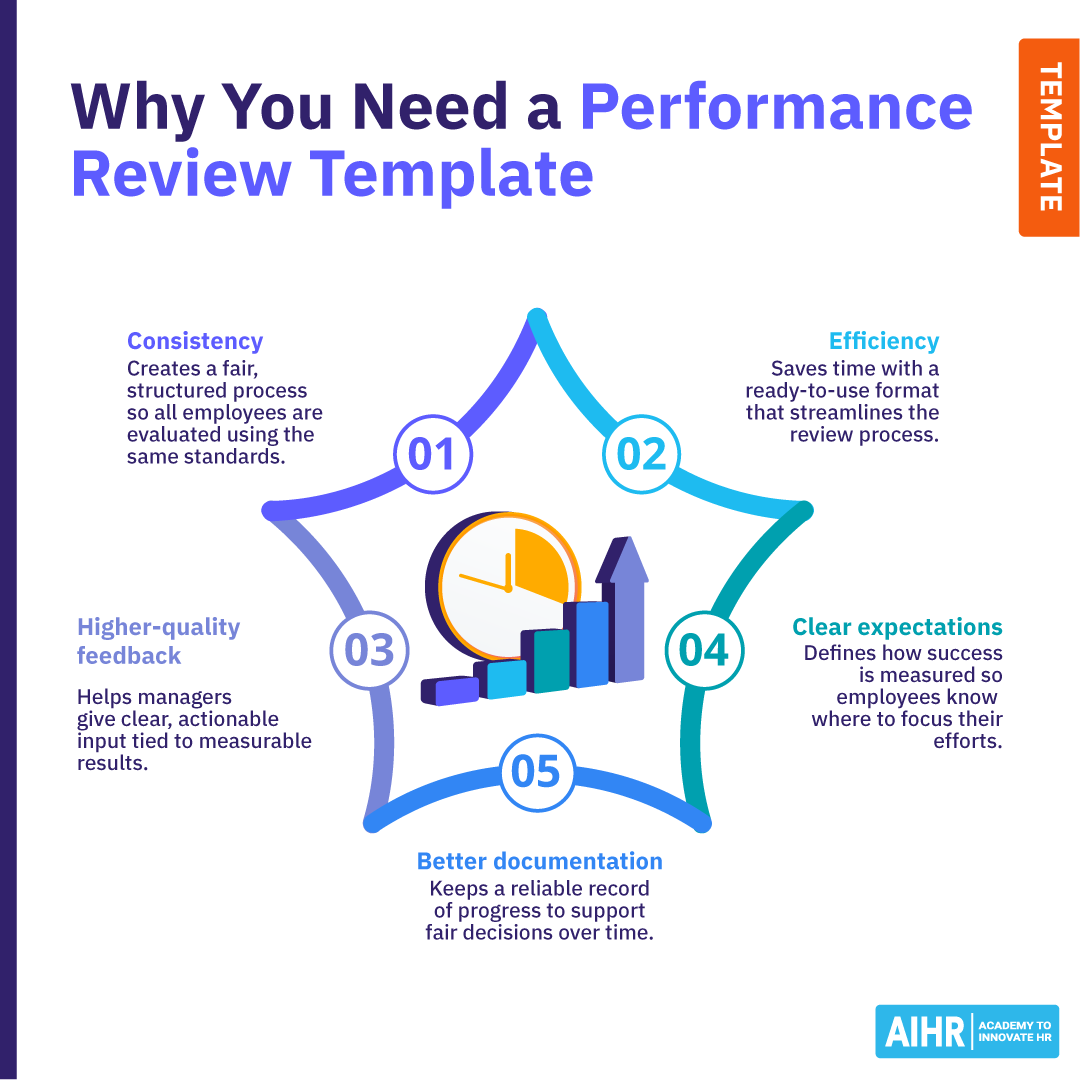
Most employee reviews fail because the format is either too generic or too complicated.
Managers end up writing vague feedback, employees feel confused, and HR teams spend weeks chasing incomplete evaluations.
Modern employee performance review templates solve this by giving managers a structured format they can actually use consistently.
The right template makes reviews faster, clearer, and far more useful for employee growth.
1. New Hire Employee Performance Review Templates
New hire reviews should focus on adaptation, learning speed, and role clarity instead of long-term performance metrics.
This template works best for 30, 60, or 90-day reviews.
Template Structure:
Overall Rating:
- Exceeds Expectations
- Meets Expectations
- Needs Improvement
2. Ongoing Employee Performance Review Templates
Continuous feedback works better than yearly reviews because managers can address issues earlier and recognize progress more consistently.
These templates are ideal for monthly or quarterly evaluations.
Template Structure:
3. Self and Peer-Based Performance Review Templates
Self and peer reviews provide a more balanced understanding of employee performance. They help uncover collaboration strengths and communication gaps managers may not always notice.
Self-Review Questions:
- What accomplishments are you most proud of?
- What challenges affected your performance?
- Which skills improved recently?
- What support would help you perform better?
Peer Review Questions:
- What does this employee do well consistently?
- How effectively do they collaborate with others?
- What improvements would strengthen team performance?
- How reliable are they during projects?
4. Goal-Oriented Employee Performance Review Templates
Goal-focused reviews work best when performance is tied to measurable business outcomes.
These templates are commonly used for sales, marketing, operations, and customer success teams.
Template Structure:
Manager Summary:
- Key wins
- Missed goals
- Improvement priorities
- Next review objectives
5. Project and Role-Based Performance Review Templates
Different roles require different evaluation criteria. A recruiter should not be reviewed using the same structure as a developer or designer.
Role-based templates make feedback more accurate and useful.
Template Structure:
6. Leadership and Manager Performance Review Templates
Leadership reviews should focus on team impact, decision-making, and management effectiveness rather than individual output alone.
Many organizations now include upward feedback from employees for leadership evaluations.
Template Structure:
7. Simple and Fast Performance Review Templates
Some teams need lightweight reviews that managers can complete quickly without sacrificing clarity.
This format is especially useful for startups and fast-growing companies. Reddit discussions around HR workflows also show that shorter reviews usually increase participation and consistency.
Quick Review Template:
Overall Performance Score: ___ / 5
8. Improvement and Development-Focused Templates
Not every review should feel evaluative. Development-focused templates help employees grow without making the conversation feel overly critical.
Template Structure:
9. Culture and Engagement Performance Review Templates
Employee engagement directly affects productivity, retention, and collaboration. Culture-focused reviews help companies measure workplace behavior and alignment with company values.
Template Structure:
10. Exit and Transition Performance Review Templates
Performance reviews during exits or internal transitions help organizations improve future processes and document valuable insights.
These templates are useful during resignations, promotions, department transfers, or role changes.
Template Structure:
A well-designed employee performance review template should simplify conversations, not complicate them.
The best templates are the ones managers can complete consistently while still giving employees meaningful and actionable feedback.
How to Choose the Right Employee Performance Review Template
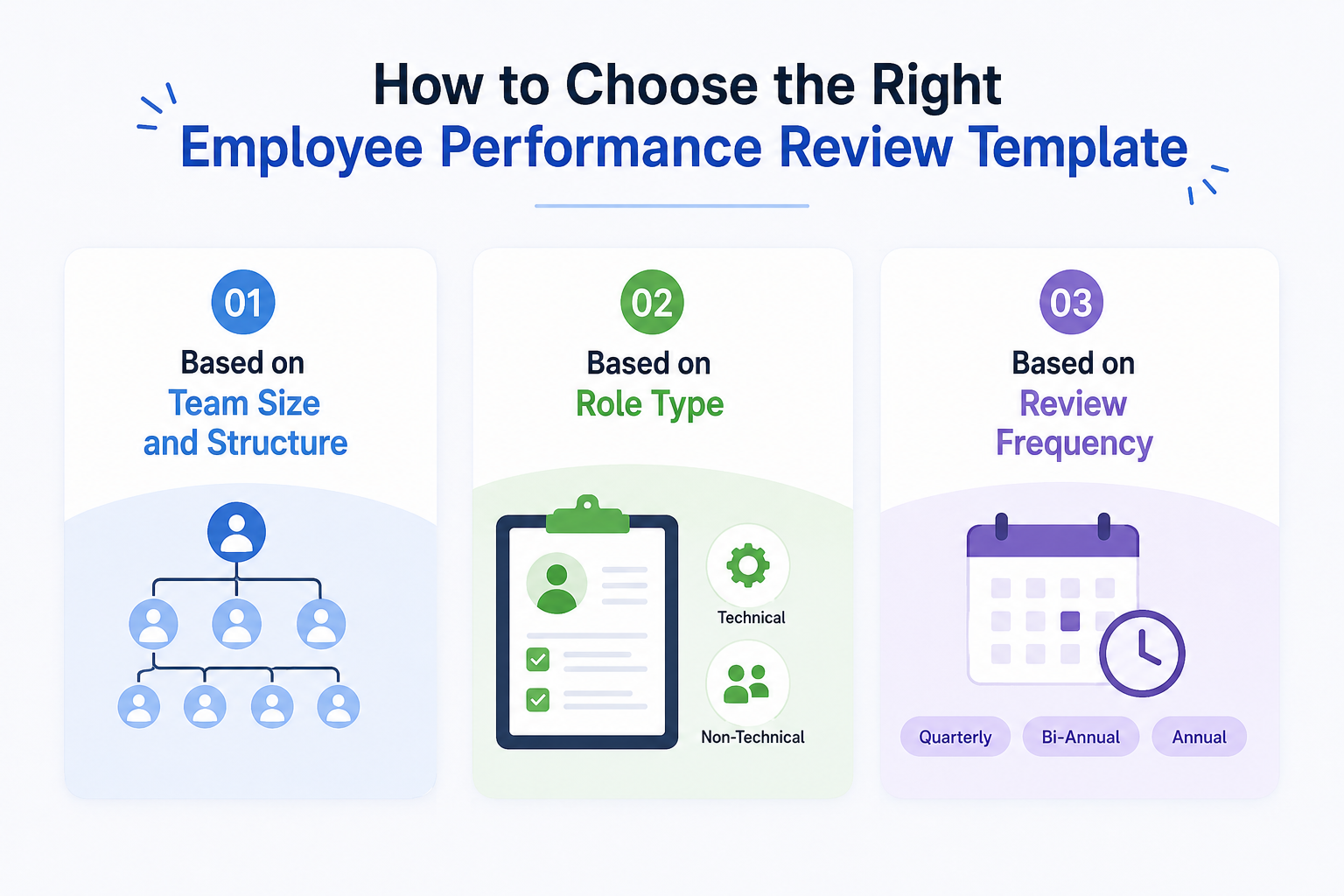
Not every performance review template will fit your team structure, work style, or evaluation process.
A template that works well for a small startup may create unnecessary complexity for a larger organization.
The best employee performance review template is the one that matches how your teams actually operate.
When the format aligns with your workflow, reviews become faster, more consistent, and easier for managers to complete.
Based on Team Size and Structure
Team size plays a major role in deciding how detailed your review process should be.
Smaller teams usually benefit from lightweight employee performance review templates because managers already work closely with employees daily. In these cases, shorter reviews with quick feedback sections are often enough.
Larger organizations typically need more structured templates to maintain consistency across departments. These reviews usually include:
- Standardized rating systems
- Department-specific evaluation criteria
- Goal tracking sections
- Approval workflows
- Documentation fields for HR compliance
Cross-functional or remote teams may also require templates that place more focus on collaboration, communication, and project visibility.
Based on Role Type
Different roles contribute differently to business performance.Using the same review structure for every position often leads to vague and unhelpful feedback.
For example:
- Sales teams usually need KPI and target-focused reviews
- Creative teams benefit from project and collaboration evaluations
- Leadership roles require management and decision-making assessments
- Technical teams often need skill-based performance tracking
- Customer-facing teams may focus more on communication and service quality
Choosing role-specific employee performance review templates makes feedback more relevant and easier for employees to act on.
Based on Review Frequency
The frequency of your reviews should also influence the template you choose.
Annual reviews generally require more detailed documentation because they summarize performance across an entire year. These templates often include:
- Long-term goal tracking
- Major achievements
- Career development discussions
- Overall performance ratings
Quarterly or monthly reviews work better with shorter formats that managers can complete quickly without creating unnecessary administrative work.
For continuous feedback systems, many companies now prefer:
- Quick check-in templates
- Pulse review formats
- Goal progress trackers
- Simple manager feedback forms
The easier the template is to complete consistently, the more effective your employee performance review process becomes over time.
How to Make Employee Performance Reviews Faster and More Consistent
Many employee performance reviews become frustrating because the process is too complicated, inconsistent, or heavily manual.
Managers delay feedback, HR teams spend time fixing incomplete evaluations, and employees receive reviews that vary from one department to another.
A faster review process does not mean reducing quality.It means removing unnecessary steps while making feedback more structured and easier to manage.
Standardize Your Review Process
One of the biggest reasons performance reviews become inconsistent is that every manager follows a different format.
Standardizing your employee performance review process helps create fairness across teams while making reviews easier to compare and manage.
A standardized process usually includes:
- Fixed review timelines
- Shared evaluation criteria
- Consistent rating systems
- Role-specific review templates
- Clear review guidelines for managers
This reduces confusion and ensures employees are evaluated using the same expectations across departments.
Reduce Manual Work With Better Systems
Manual review processes slow everything down.Managers spend hours writing repetitive feedback, tracking documents, scheduling review meetings, and updating spreadsheets manually.
Modern HR teams now use centralized systems to simplify:
- Review tracking
- Feedback collection
- Goal management
- Employee documentation
- Approval workflows
Using better systems also helps HR teams maintain accurate records without chasing managers repeatedly for incomplete evaluations.
As companies grow, reducing manual administrative work becomes essential for keeping employee performance reviews efficient and scalable.
Suggested Reading:
Recruitment Automation Tools That Save 70% Hiring TimeFocus Only on What Matters
Many review forms become unnecessarily long because they try to evaluate everything at once. This often leads to generic feedback that employees rarely find useful.
Instead of overloading reviews, focus on areas that directly impact performance, growth, and team contribution.
Prioritize:
- Goal achievement
- Communication quality
- Collaboration
- Role-specific performance
- Development opportunities
When managers focus only on meaningful evaluation points, reviews become easier to complete and more valuable for employees.
Keep Feedback Clear and Actionable
Vague feedback is one of the most common problems in employee performance reviews.
Comments like “good work” or “needs improvement” do not help employees understand what they should continue doing or change moving forward.
Clear and actionable feedback should:
- Explain specific observations
- Reference actual work examples
- Highlight measurable impact
- Suggest realistic improvements
- Define next steps clearly
When feedback becomes more specific and structured, employees can act on it faster and managers spend less time repeating the same conversations later.
How Leelu Helps You Build Better Teams From the Start
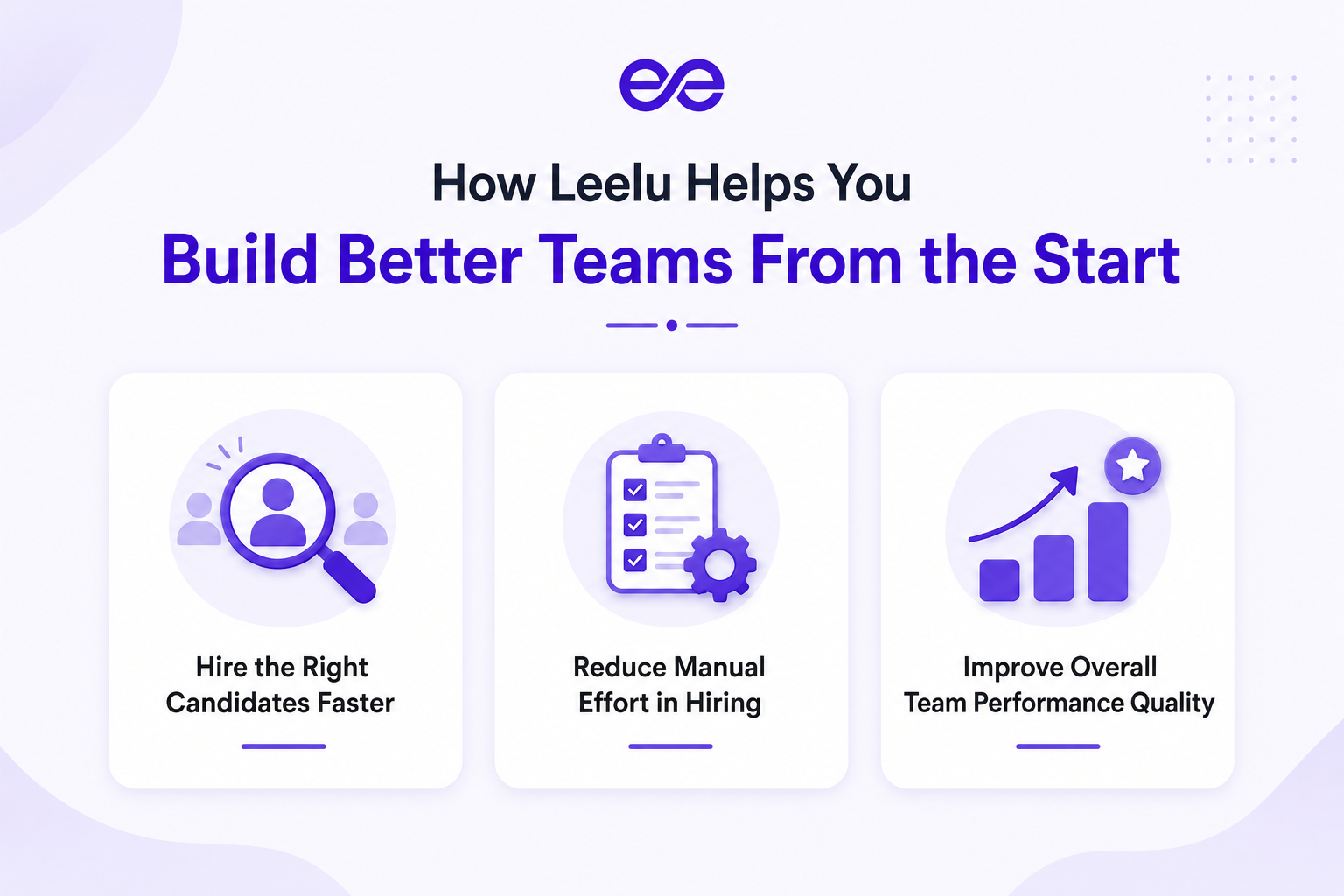
Employee performance reviews become much easier when the hiring process is already bringing in the right candidates.
Many performance issues actually begin much earlier — during sourcing, screening, or role matching.
That is why companies are now focusing more on improving hiring quality from the beginning instead of only fixing performance problems later.
Hire the Right Candidates Faster
Strong teams usually start with better candidate matching.When hiring teams spend too much time manually filtering resumes, the chances of missing qualified candidates increase significantly.
Leelu helps recruiters streamline hiring by:
- Sourcing candidates across multiple platforms
- Matching profiles based on job requirements
- Screening resumes faster using AI
- Prioritizing high-fit candidates automatically
This allows hiring teams to move from job posting to interview scheduling much faster while improving candidate quality at the same time.
Reduce Manual Effort in Hiring
Recruiters often lose hours managing repetitive tasks like resume screening, follow-ups, scheduling interviews, and updating hiring systems manually.
Leelu reduces this workload by automating:
- Candidate sourcing
- Outreach workflows
- Follow-up communication
- Interview scheduling
- Candidate data organization
By removing repetitive administrative work, hiring teams can spend more time focusing on candidate evaluation and team building instead of operational tasks.
Suggested Reading:
Skills Based HiringImprove Overall Team Performance Quality
Better hiring decisions usually lead to stronger long-term employee performance. When candidates are matched more accurately to role requirements, teams often experience:
- Faster onboarding
- Better productivity
- Improved collaboration
- Lower turnover
- More consistent performance outcomes
Leelu supports this by helping companies identify better-fit candidates early using AI-driven matching and structured hiring workflows.
This creates a stronger foundation for long-term employee growth and performance management.
Common Employee Performance Review Mistakes to Avoid
Even well-designed employee performance review systems can fail when the process becomes inconsistent or overly complicated.
Small mistakes in how reviews are conducted often lead to poor feedback quality, employee frustration, and lower engagement.
Avoiding a few common review problems can make the entire evaluation process more effective and easier to manage across teams.
Using Unstructured Review Formats
When managers use different formats for every review, performance evaluations quickly become inconsistent.
Employees may receive unclear feedback, ratings may vary unfairly, and HR teams struggle to compare performance across departments.
Unstructured employee performance reviews often create problems like:
- Vague feedback
- Missing evaluation criteria
- Inconsistent scoring
- Unclear employee expectations
- Difficult performance tracking
Using standardized review templates helps create a more organized and fair evaluation process for everyone involved.
Giving Delayed or Infrequent Feedback
Waiting until the end of the year to discuss performance usually reduces the impact of feedback.
Employees may forget important situations, improvement opportunities get delayed, and small issues can grow into larger performance problems.
Regular feedback helps teams:
- Address challenges earlier
- Recognize achievements consistently
- Improve communication
- Support employee development faster
- Build stronger manager-employee alignment
That is why many companies now prefer quarterly reviews, monthly check-ins, or continuous feedback systems instead of relying only on annual evaluations.
Overcomplicating the Review Process
Long review forms and overly detailed evaluation systems often slow everything down. Managers may rush through reviews just to complete them, while employees receive feedback that feels generic or difficult to understand.
An effective employee performance review process should stay:
- Simple enough to complete consistently
- Clear enough to guide meaningful feedback
- Structured enough for accurate evaluations
- Flexible enough for different roles and teams
The easier the process is to follow, the more likely managers and employees will actively participate in it.
Conclusion
Employee performance reviews do not have to feel slow, repetitive, or difficult to manage.
With the right employee performance review templates, companies can create a process that is faster, more consistent, and far more valuable for both managers and employees.
The key is choosing review formats that match your team structure, role requirements, and feedback style.
When combined with better systems and structured hiring processes, organizations can improve both employee performance and long-term team growth more effectively.
Frequently Asked Questions
1. What is a performance review template?
A performance review template is a structured format used to evaluate employee performance and provide feedback.
2. How often should performance reviews happen?
Most companies conduct reviews quarterly, biannually, or annually based on team needs.
3. What should a performance review include?
It should include goals, achievements, improvement areas, feedback, and future expectations.
4. How can companies speed up performance reviews?
Using standardized templates and automated systems helps reduce manual work and saves time.
5. Why are modern review templates important?
They make employee evaluations faster, more consistent, and easier to manage across teams.


