Hiring the right candidate often feels harder than it should.
You spend hours reviewing resumes, only to realize many don’t fit your role.
That’s where a structured candidate selection process makes all the difference.
It helps you filter faster, choose smarter, and avoid costly hiring mistakes.
In this guide, you’ll learn:
- 7 proven steps to improve your selection process
- A practical checklist to streamline decisions
- How to identify the best-fit candidates confidently
Key Elements of an Effective Candidate Selection Process
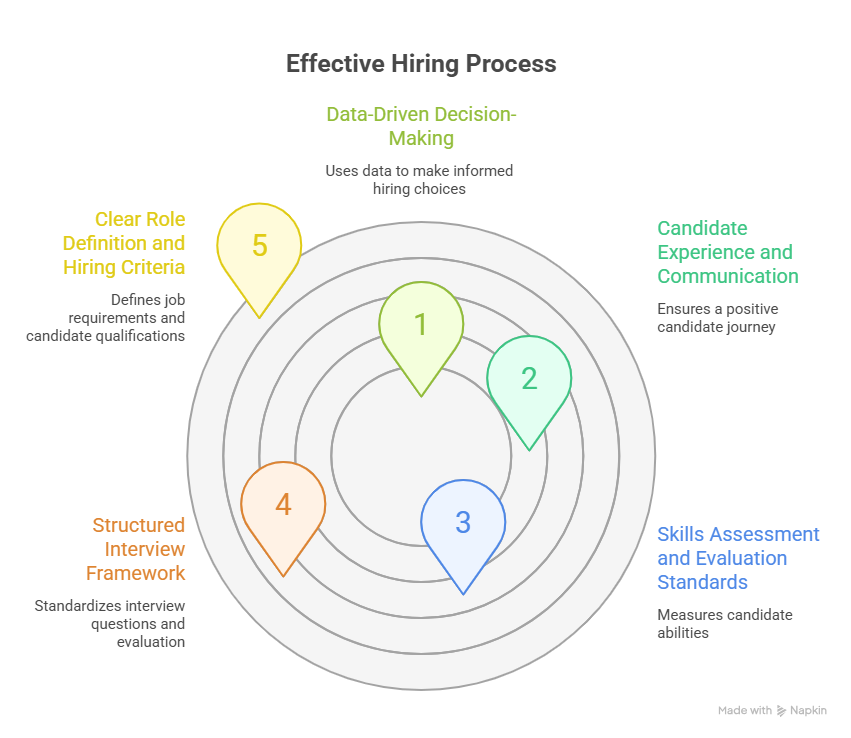
Once you understand the overall process, the next step is knowing what actually makes it effective.
Without the right elements in place, even a structured process can lead to poor hiring decisions.
1. Clear Role Definition and Hiring Criteria
Everything starts with clarity.
If you’re not clear about what the role needs, your entire selection process becomes guesswork.
Define responsibilities, required skills, and success metrics early so you evaluate candidates against something concrete instead of intuition.
2. Consistent Screening and Shortlisting Methods
Resume Screening should never feel random.
When every candidate is evaluated differently, bias and inconsistency creep in.
Use standardized criteria, scorecards, or checklists so every profile is judged on the same parameters, making shortlisting faster and more reliable.
3. Structured Interview Framework
Interviews often become unstructured conversations, which leads to unclear decisions.
A structured approach ensures every candidate is assessed fairly and thoroughly.
Prepare role-specific questions, define evaluation criteria, and keep interviews aligned with job requirements instead of going off-track.
4. Skills Assessment and Evaluation Standards
Resumes don’t always reflect real capability.
That’s why skills assessment plays a critical role in validating what candidates can actually do.
Use practical tests, assignments, or simulations that mirror real job scenarios to evaluate performance objectively.
5. Data-Driven Decision-Making
Relying only on gut feeling can lead to costly hiring mistakes.
Data adds clarity and confidence to your decisions.
Track metrics like candidate scores, interview feedback, and success rates to make more informed and consistent hiring choices over time.
6. Candidate Experience and Communication
A strong process isn’t just about evaluating candidates.
It’s also about how candidates experience your hiring journey.
Clear communication, timely updates, and respectful interactions help you build a positive impression and reduce drop-offs during the process.
Impact of a Structured Selection Process on Hiring Success
Now that you know what makes a selection process effective, it’s important to understand what changes when you actually implement it.
A structured approach doesn’t just organize hiring, it directly improves outcomes across every stage.
1. Reduces Hiring Bias
Bias often slips in when decisions are based on instinct rather than criteria.
When you use standardized evaluations, every candidate is judged on the same parameters.
This reduces subjectivity and ensures your hiring decisions are fair, consistent, and based on actual merit.
2. Speeds Up Decision-Making
Unstructured hiring slows everything down.
Too many back-and-forth discussions and unclear feedback can delay decisions.
A clear framework with predefined criteria helps you move faster, shortlist confidently, and reduce time-to-hire without compromising quality.
3. Improves Candidate Experience
Candidates notice how organized your process is.
Delays, unclear communication, or inconsistent interviews can create a poor impression.
A structured process ensures timely updates, smoother interactions, and a more professional experience that keeps candidates engaged.
4. Helps You Hire the Right Fit
At the end of the day, hiring success comes down to fit.
Without a structured process, it’s easy to overlook key skills or cultural alignment.
By combining clear criteria, assessments, and data-backed decisions, you increase your chances of selecting candidates who truly match the role and your organization.
Suggested Reading:
AI Hiring AssistantProven Steps for Candidate Selection Process
Now that you understand the importance of structure, let’s walk through the exact steps you can follow.
These steps will help you move from confusion to clarity while selecting the right candidates consistently.
Step 1: Define the Role Clearly
Everything in your candidate selection process starts with clarity.
If the role is not well-defined, you’ll attract irrelevant applications and struggle to evaluate candidates properly.
Start by outlining key responsibilities, required skills, and expected outcomes for the role.
Also define what success looks like in the first 3–6 months so you have a clear benchmark.
When your hiring criteria is specific and aligned with business goals, your entire selection process becomes faster, more focused, and significantly more effective.
Step 2: Screen Applications Efficiently
Once applications start coming in, your ability to filter quickly becomes critical.
Reviewing every resume manually can slow you down and increase the chances of missing strong candidates.
Instead, use predefined screening criteria such as skills, experience, and keywords to narrow down the pool.
This helps you focus only on relevant profiles while maintaining consistency.
An efficient screening process ensures that you spend less time sorting applications and more time engaging with candidates who actually match your requirements.
Step 3: Conduct Initial Screening Interviews
After shortlisting candidates, the next step is to validate their basic fit.
Initial screening interviews help you assess communication skills, interest in the role, and overall alignment.
Keep these conversations short and focused, typically 15–30 minutes.
Ask consistent questions to compare candidates fairly and identify any red flags early.
This stage acts as a filter before deeper evaluations, helping you avoid investing time in candidates who may not meet your expectations.
Step 4: Run Structured Interviews
At this stage, you need deeper insights into each candidate’s capabilities.
Unstructured interviews often lead to inconsistent evaluations and unclear decisions.
Use a structured interview format with predefined questions and scoring criteria.
Ensure every interviewer follows the same framework to maintain fairness.
This approach allows you to compare candidates objectively and reduces bias in decision-making.
Structured interviews not only improve hiring accuracy but also make your selection process more reliable and scalable.
Step 5: Assess Skills and Fit (Using Tools Like Leelu.ai)
Interviews alone don’t always reveal a candidate’s true ability.
That’s why assessing real skills is a crucial part of the selection process.
Use practical assignments, simulations, or tools like Leelu.ai to evaluate candidates based on actual performance.
Leelu.ai can help screen, rank, and match candidates using AI, making it easier to identify top talent quickly.
By combining skill assessments with data-driven insights, you reduce guesswork and ensure that your final shortlist includes candidates who can truly perform in the role.
Step 6: Check References and Background
Before making a final decision, verification is essential.
Skipping reference checks can lead to unexpected issues after hiring.
Speak with previous employers or managers to validate the candidate’s experience, work ethic, and reliability.
Also verify key details such as employment history and qualifications.
This step helps you confirm that what you’ve learned during the process is accurate.
A thorough background check reduces hiring risks and gives you more confidence in your final decision.
Step 7: Make the Final Decision and Offer
By now, you have all the information needed to make a confident choice.
The focus at this stage is clarity and speed.
Review candidate scores, interview feedback, and assessment results to compare options objectively.
Align with your team and finalize the best-fit candidate based on both skills and cultural fit.
Once decided, move quickly to extend the offer.
Delays at this stage can result in losing top candidates, so a fast and clear decision ensures you secure the right talent.
Candidate Selection Process Checklist
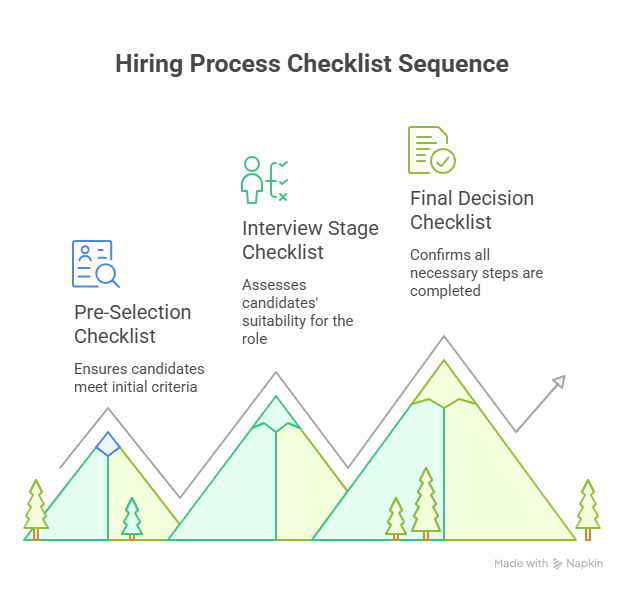
Now that you’ve seen the full process, the easiest way to apply it is through a checklist.
This helps you stay consistent, avoid missed steps, and make better hiring decisions every time.
1. Pre-Selection Checklist
Before you start evaluating candidates, you need a strong foundation.
Skipping this stage often leads to confusion later in the process.
- Clearly define the job role, responsibilities, and expectations
- Identify must-have and good-to-have skills
- Set evaluation criteria and scoring guidelines
- Align with stakeholders on hiring goals and priorities
- Prepare job descriptions and sourcing strategy
2. Interview Stage Checklist
Once candidates enter the pipeline, consistency becomes critical.
This stage is where most hiring decisions start taking shape.
- Use structured interview questions aligned with the role
- Evaluate candidates using predefined scorecards
- Assess both technical skills and cultural fit
- Take clear notes during each interview
- Communicate timelines and next steps to candidates
3. Final Decision Checklist
At the final stage, clarity and speed matter the most.
Delays or unclear decisions can cost you top candidates.
- Review interview feedback and candidate scores
- Compare shortlisted candidates objectively
- Conduct reference and background checks
- Align internally before making the final call
- Roll out the offer quickly and communicate clearly
How Leelu.ai Improves the Candidate Selection Process
Now that you have a clear checklist and process, the next challenge is execution.
Managing everything manually can slow you down and create inconsistencies across stages.
This is where tools like Leelu.ai help you bring speed, structure, and clarity into your hiring workflow.
Basically, it is a recruiting agent that automates candidate sourcing from various job boards based on your role requirement, filters candidate, outreach and book interviews with them And here are some key details:
1. Automates Resume Screening and Shortlisting
Screening hundreds of resumes manually takes time and often leads to missed talent.
Leelu.ai automates this by scanning and ranking candidates based on job fit.
You can quickly identify top candidates without spending hours reviewing applications, making your shortlisting faster and more accurate.
2. Streamlines Interview Scheduling and Coordination
Coordinating interviews across teams can become chaotic.
Back-and-forth emails and scheduling conflicts often delay the process.
Leelu.ai simplifies this by automatically scheduling interviews with calendar sync, helping you reduce coordination effort and move candidates forward quickly.
3. Enables Structured and Consistent Evaluations
Consistency is one of the biggest challenges in hiring.
Different interviewers often evaluate candidates in different ways.
Leelu.ai helps standardize evaluations with structured workflows and scoring, so every candidate is assessed fairly using the same criteria.
4. Provides Data-Driven Hiring Insights
Without data, it’s hard to improve your hiring process.
You may not know what’s working and what’s slowing you down.
Leelu.ai gives you real-time insights into your hiring funnel, helping you track performance, identify bottlenecks, and make better decisions with confidence.
Suggested Reading:
AI Candidate Sourcing ToolsCommon Challenges in Candidate Selection (and Fixes)
Even with a well-defined process, hiring doesn’t always go as planned.
You might still face bottlenecks that slow you down or affect hiring quality.
The key is identifying these challenges early and fixing them with the right approach.
1. Too Many Unqualified Applicants
A high volume of applications sounds good, but it often creates more noise than value.
You end up spending time filtering instead of focusing on the right candidates.
The fix is to refine your job descriptions, use clear screening criteria, and apply automated filtering tools so only relevant candidates enter your pipeline.
2. Slow Hiring Process
Delays in hiring can cost you top talent.
Long review cycles, manual coordination, and unclear decision-making often slow things down.
To fix this, standardize your workflow, set clear timelines, and automate repetitive tasks like screening and scheduling to keep the process moving.
3. Poor Candidate Experience
Candidates drop off when communication is unclear or the process feels disorganized.
This not only affects hiring but also your employer brand.
Improve this by maintaining clear communication, setting expectations early, and ensuring timely updates at every stage of the selection process.
Conclusion
By now, you’ve probably realized that a strong candidate selection process is not just about hiring faster.
It’s about making confident decisions, reducing errors, and finding people who truly fit your team.
When your process is clear and structured, everything becomes easier to manage and scale.
And if execution feels overwhelming, tools like Leelu.ai can quietly take care of screening, coordination, and evaluation, so you can focus on choosing the right candidate instead of managing the chaos.
Frequently Asked Questions
1. How long should a candidate selection process take?
A typical process takes 2 to 4 weeks, depending on the role and company size. Faster timelines work better for keeping candidates engaged, but rushing can lead to poor decisions.
2. How many candidates should you shortlist for interviews?
Most teams shortlist 3 to 5 candidates per role. This gives enough variety to compare without making the process too long or complex.
3. Should every role follow the same selection process?
No. The core steps can stay the same, but the depth of interviews, assessments, and checks should match the role’s complexity and seniority.
4. How do you handle multiple strong candidates for one role?
Compare them using structured scorecards, revisit key criteria, and involve multiple stakeholders. Focus on skills, long-term fit, and team needs instead of gut feeling.
5. What should you do if a selected candidate declines the offer?
Keep backup candidates warm during the process. If the top choice declines, quickly move to the next best candidate or restart the search with updated criteria if needed.