
Hiring remote talent sounds simple until you're three job boards deep and still can't find the right person.
You post on LinkedIn. Then Indeed. Then maybe a niche board for good measure.
Somewhere between screening resumes and chasing candidates across time zones, recruitment stops feeling efficient.
That's usually the moment teams start looking for a better tool. Not just another job board, but something built to handle sourcing, screening, and outreach without the manual grind.
This guide breaks down the 16 best tools for remote recruitment, so you can find one that actually fits how you hire.
Here's what we'll cover:
- What features actually matter in a remote recruitment tool
- How we evaluated each platform
- A detailed comparison of all 16 tools
- Which tool fits your specific hiring needs
Key Features to Look for in Remote Recruitment Tools
Before comparing tools, it helps to know what actually separates a good one from the rest.
Not every platform solves the same problem, so here's what to look for before you commit to one.
AI-powered candidate sourcing
Manually searching LinkedIn and job boards eats up hours you don't have.
The best tools scan multiple platforms at once and surface candidates who actually match your role.
Look for sourcing that pulls from:
- LinkedIn and job boards
- ATS databases
- Passive candidate pools
Suggested Reading:
AI Candidate Sourcing Tools: 10 Best Solutions for Recruiters (2026 Guide)Resume screening and candidate matching
Sorting through hundreds of resumes by hand slows everything down.
A strong tool parses resumes automatically and ranks candidates based on how well they fit the job.
This is where AI scoring makes the biggest difference. It turns a pile of applications into a shortlist you can actually act on.
Automated outreach and interview scheduling
Reaching out to candidates one by one doesn't scale, especially across time zones.
Good remote recruitment tools handle outreach and follow-ups automatically, so no candidate slips through the cracks.
Scheduling should sync directly with your calendar too. That removes the back-and-forth emails that usually stall the process.
ATS and HR software integrations
Your recruitment tool shouldn't operate in isolation.
It needs to connect with the systems you already use, like:
- Greenhouse, Lever, or Workday
- Slack for team notifications
- HRIS platforms for onboarding
Without integrations, you end up manually copying data between systems. That defeats the purpose of automation.
Suggested Reading:
How to Successfully Integrate AI Recruiting Tools with Your ATSTeam collaboration and hiring workflows
Remote hiring usually involves more than one decision-maker.
Hiring managers, recruiters, and interviewers need visibility into the same pipeline without messy email threads.
Look for shared dashboards, comment features, and clear approval steps built into the workflow.
Suggested Reading:
Automated Hiring Workflows: 8 Types + How to Build Them FastAnalytics and recruitment reporting
You can't improve what you're not tracking.
Reporting tools show you where candidates drop off and which sourcing channels actually perform.
Useful metrics to track include:
- Time-to-hire
- Response rates
- Source-of-hire breakdown
This data helps you spot bottlenecks before they slow down your next hire, not after.
How We Evaluated the Best Tools for Remote Recruitment
Knowing what to look for is only half the picture.
The other half is understanding how we actually tested and ranked these tools.
Here's the criteria we used to build this list.
Global talent sourcing capabilities
Remote hiring means your candidate pool isn't limited by geography.
So we looked at how far each tool's reach actually goes.
We checked:
- Coverage across major platforms like LinkedIn, Indeed, and Monster
- Access to international candidate databases
- Ability to source passive talent, not just active job seekers
A tool that only searches one region isn't built for remote hiring.
Recruitment automation efficiency
Sourcing candidates is one thing. Moving them through your pipeline is another.
We evaluated how much manual work each tool actually removes.
That means looking at automated outreach, follow-ups, and scheduling, not just fancy dashboards that still need constant babysitting.
The tools that ranked higher were the ones that kept candidates moving without someone chasing every step.
Integration ecosystem and compatibility
A recruitment tool rarely works alone.
It needs to fit into the systems your team already relies on.
We tested integration depth with:
- Popular ATS platforms like Greenhouse and Lever
- Communication tools like Slack
- HRIS systems for onboarding handoffs
Weak integrations usually mean double data entry later. We factored that into every score.
Support for distributed hiring teams
Remote hiring isn't just about remote candidates. Your hiring team is often spread out too.
We looked at how well each platform supports collaboration across time zones.
This includes shared visibility into candidate pipelines, async feedback options, and clear role-based permissions.
A tool built for a single in-office recruiter often breaks down once you add five people across three continents.
Pricing, scalability, and long-term value
Price matters, but it's not the only thing that matters.
We looked at whether pricing scales sensibly as your hiring volume grows.
Some tools look affordable early on, then get expensive fast once you add more seats or job postings.
We weighed:
- Starting price versus feature access
- How pricing changes at scale
- Whether the tool grows with your hiring needs, or forces you to switch later
Tools that balanced affordability with room to grow ranked higher on this list.
16 Best Tools for Remote Recruitment Compared
You know what to look for now, and how we tested each option.
So let's get into the tools themselves.
Below, you'll find a breakdown of 16 platforms built for remote recruitment.
Each one comes with its standout features and pricing, so you can compare them side by side.
Some are built for speed and automation. Others focus on collaboration or enterprise-scale hiring.
Here's how they stack up.
1. Leelu AI
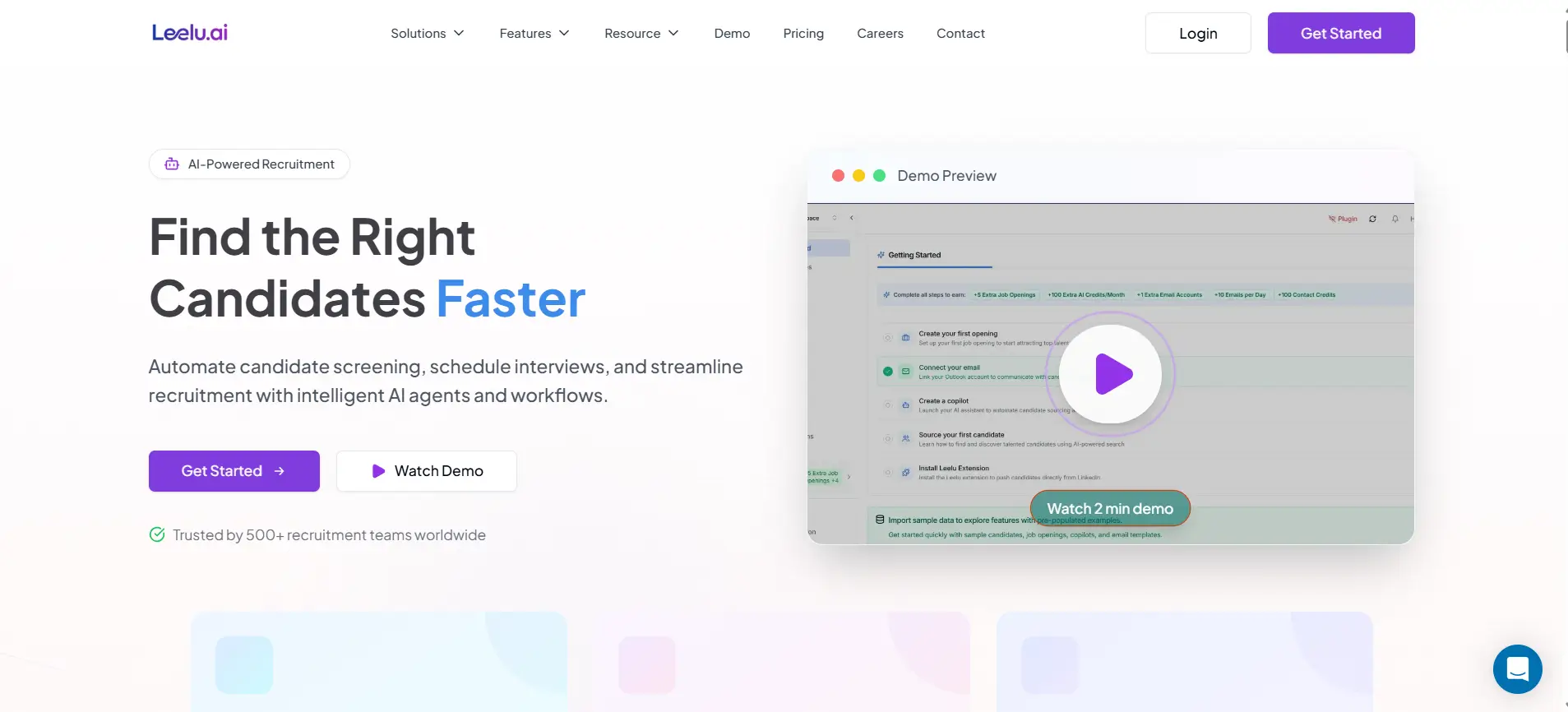
Leelu AI is one of the best remote recruitment tools built to help you source global talent without the manual grind.
It works as your AI recruiting copilot, handling sourcing, screening, outreach, and scheduling from one place.
Instead of jumping between LinkedIn, job boards, and your ATS, Leelu pulls candidates from over 500 million profiles automatically.
It then ranks them based on how well they match your job requirements.
Key Features
- Searches 10+ candidate platforms at the same time — not one by one
- AI analyzes candidate profiles and crafts personalized outreach for each one
- AI-powered sourcing across LinkedIn, Indeed, Monster, and ATS systems
- Resume parsing and scoring to shortlist candidates in minutes
- AI matching algorithm with around 90% accuracy
- Personalized outreach across email and LinkedIn at scale
- Automated follow-ups and candidate replies, available 24/7
- Smart interview scheduling with calendar sync
- Native integrations with Greenhouse, Lever, and Workday
- Real-time hiring analytics dashboard for pipeline visibility
Pricing
- Starter – $79/month — Designed for solo recruiters and founders, includes 2 users, 400 contact credits, 10 job openings, and a 14-day free trial.
- Growth – $149/month — Built for growing recruitment agencies, includes 10 users, 2,000 contact credits, and 30 active job openings.
- Scale – $249/month — Ideal for high-volume hiring teams, includes 100 users, 4,000 contact credits, and 100 active job openings.
- Agency Pro – $499/month — Designed for staffing agencies and enterprise recruiting teams, includes unlimited users, 10,000 contact credits, unlimited job openings, and advanced agency-focused features
2. Greenhouse
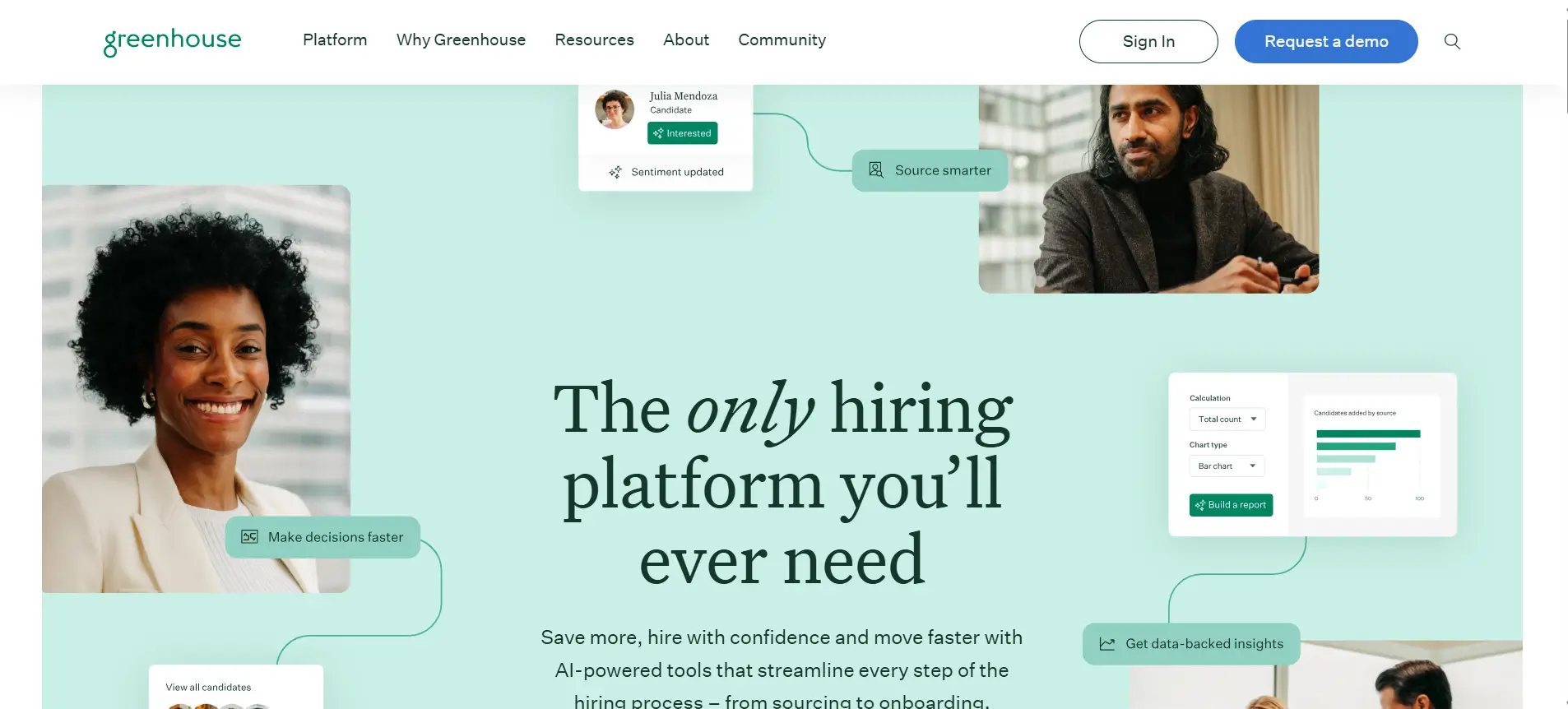
Greenhouse is one of the most established names in structured hiring.
It's built for teams that want a consistent, repeatable interview process.
You get strong collaboration tools, but sourcing isn't the platform's biggest strength.
Most teams pair Greenhouse with separate sourcing tools to fill that gap.
Key Features
- Structured interview kits and scorecards
- Custom hiring pipelines for different roles
- Strong reporting on diversity and hiring metrics
- Integrations with hundreds of HR and sourcing tools
- Collaborative feedback tools for hiring teams
Pricing
Greenhouse doesn't list public pricing on its website.
You'll need to request a quote based on your company size and hiring volume.
Most reviews suggest it sits in the mid-to-high range compared to other ATS platforms.
That makes it a better fit for mid-size to enterprise teams than early-stage startups.
If you already have a sourcing tool in place, Greenhouse works well as your structured hiring layer.
3. Workable
Greenhouse works best when you already have a hiring process figured out.
Workable takes a different approach.
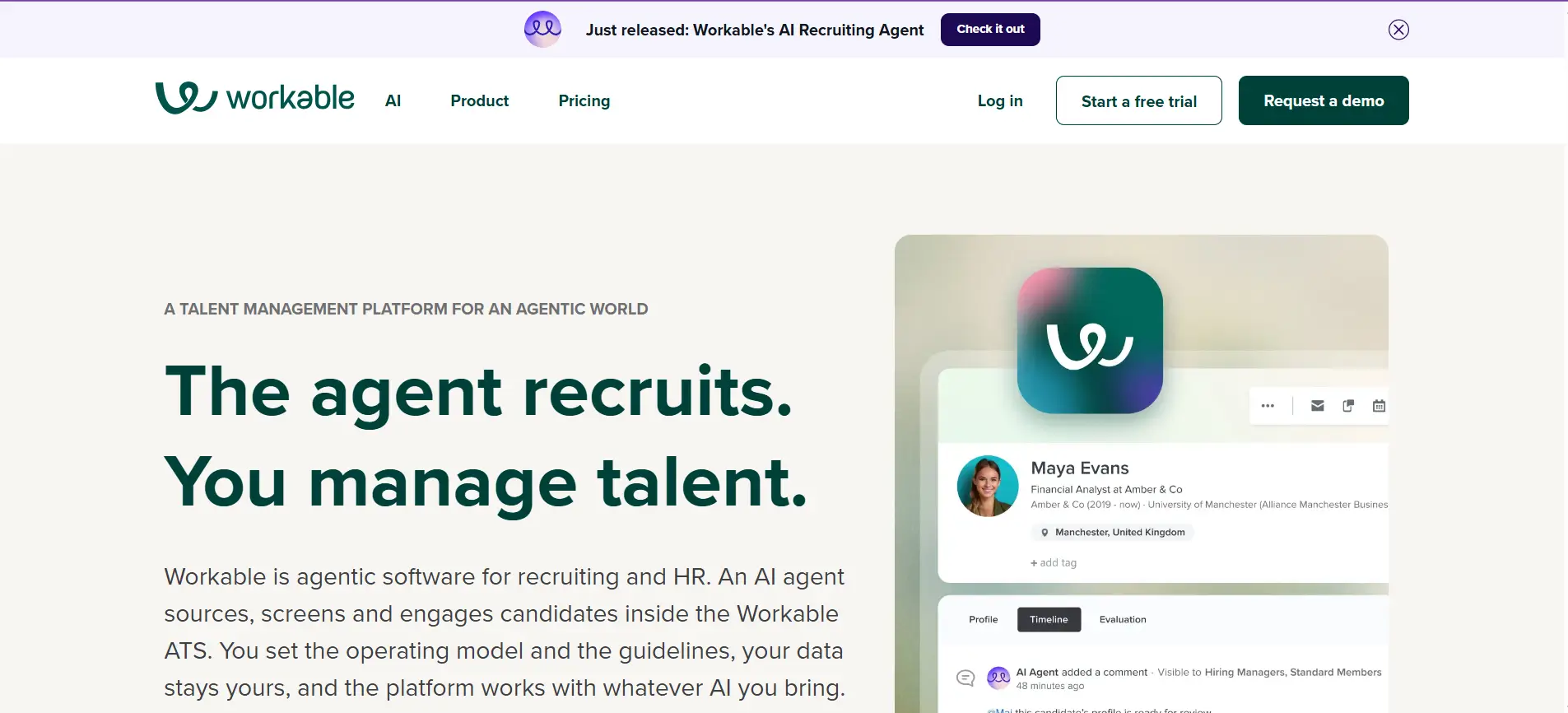
It's built for teams that want sourcing and hiring in one place, without stitching together separate tools.
That makes it a popular pick for small and mid-size companies just setting up their recruitment stack.
Key Features
- AI-powered candidate sourcing built into the platform
- One-click job posting to 200+ job boards
- Built-in candidate database with search filters
- Automated interview scheduling
- Mobile app for hiring on the go
Pricing
Workable offers tiered pricing based on team size and hiring volume.
Plans typically start in the low hundreds per month for smaller teams.
Larger teams with higher hiring needs move into custom enterprise pricing.
Compared to Greenhouse, Workable tends to be more affordable for companies just getting started with structured hiring.
4. Ashby
Workable keeps things simple for smaller teams still figuring out their process.
Ashby takes a different approach.
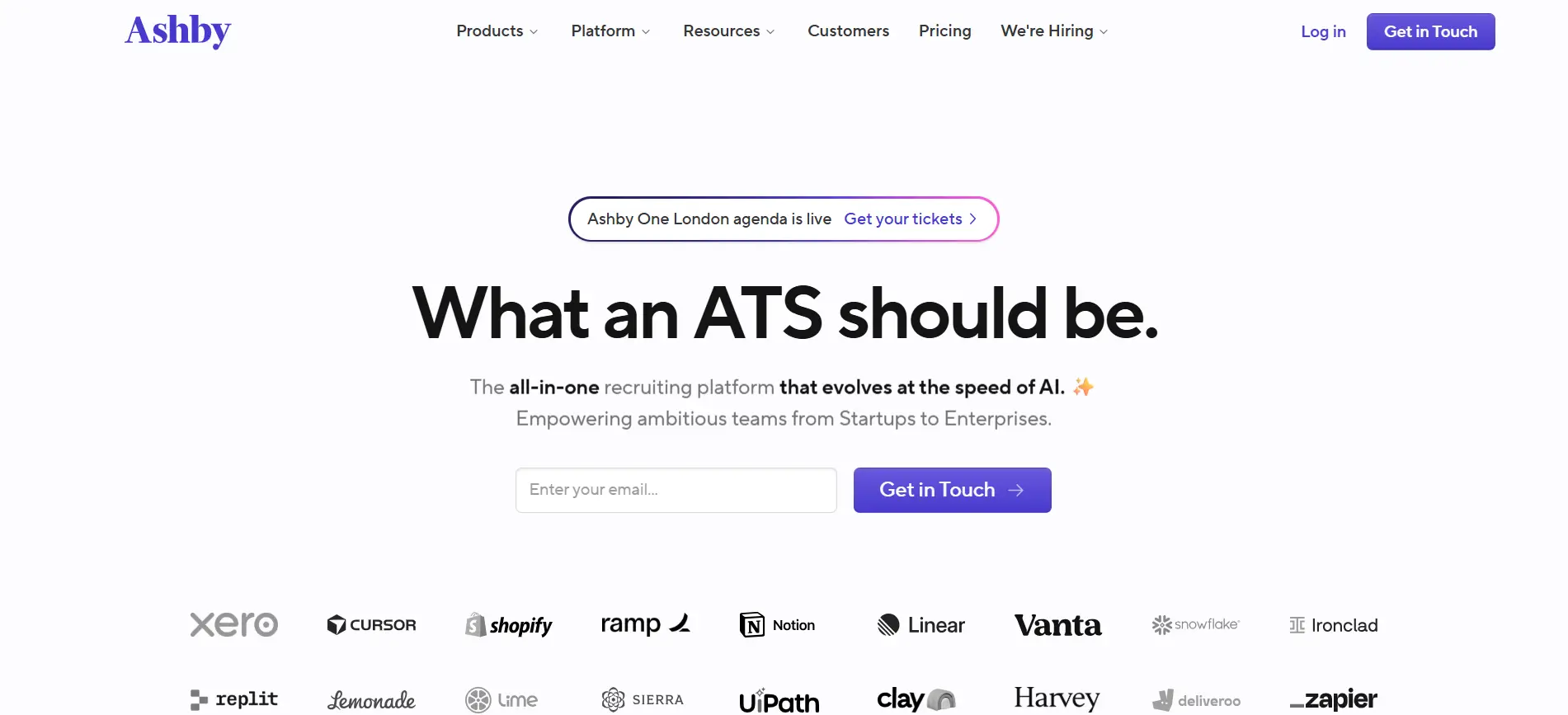
It's built for fast-growing startups that want data behind every hiring decision.
Recruiting teams that like dashboards and forecasts tend to gravitate here.
Key Features
- All-in-one ATS with a built-in sourcing extension
- Custom hiring pipeline automation
- Advanced analytics and hiring forecasts
- Scorecards for structured interviews
- Native scheduling with calendar sync
Pricing
Ashby doesn't publish pricing publicly.
You'll need to book a demo to get a quote.
Based on user reviews, it tends to sit in the mid-to-high range.
That pricing usually makes more sense once you're hiring at a steady pace.
Occasional, one-off roles won't get much value here.
Startups with a dedicated recruiting function tend to see the biggest return.
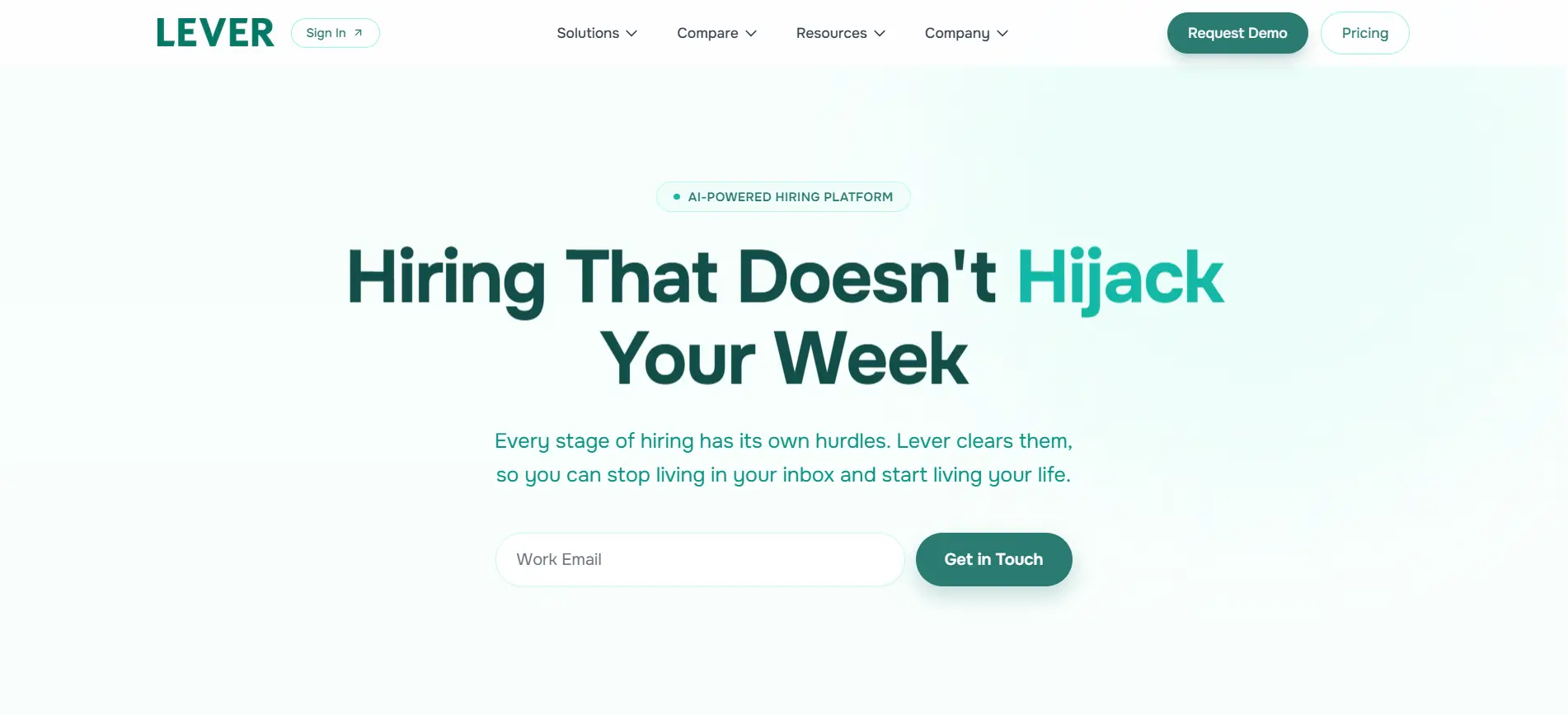
5. Lever
Ashby works well if you want forecasting built into every hiring decision.
Lever takes a slightly different angle.
It's built around relationship-based hiring, where nurturing candidates over time matters as much as sourcing them.
That makes it a solid pick for companies that hire the same roles repeatedly.
Key Features
- CRM-style candidate nurturing and relationship tracking
- Visual hiring pipelines with drag-and-drop stages
- Built-in analytics for diversity and hiring trends
- Collaborative feedback tools for interview panels
- Integrations with major job boards and HR tools
Pricing
Lever doesn't publish pricing publicly on its site.
You'll need to request a quote based on your team size.
Most reviews place it in the mid-to-high range, closer to Greenhouse than Workable.
It tends to make more sense for companies with recurring hiring needs, not one-off roles.
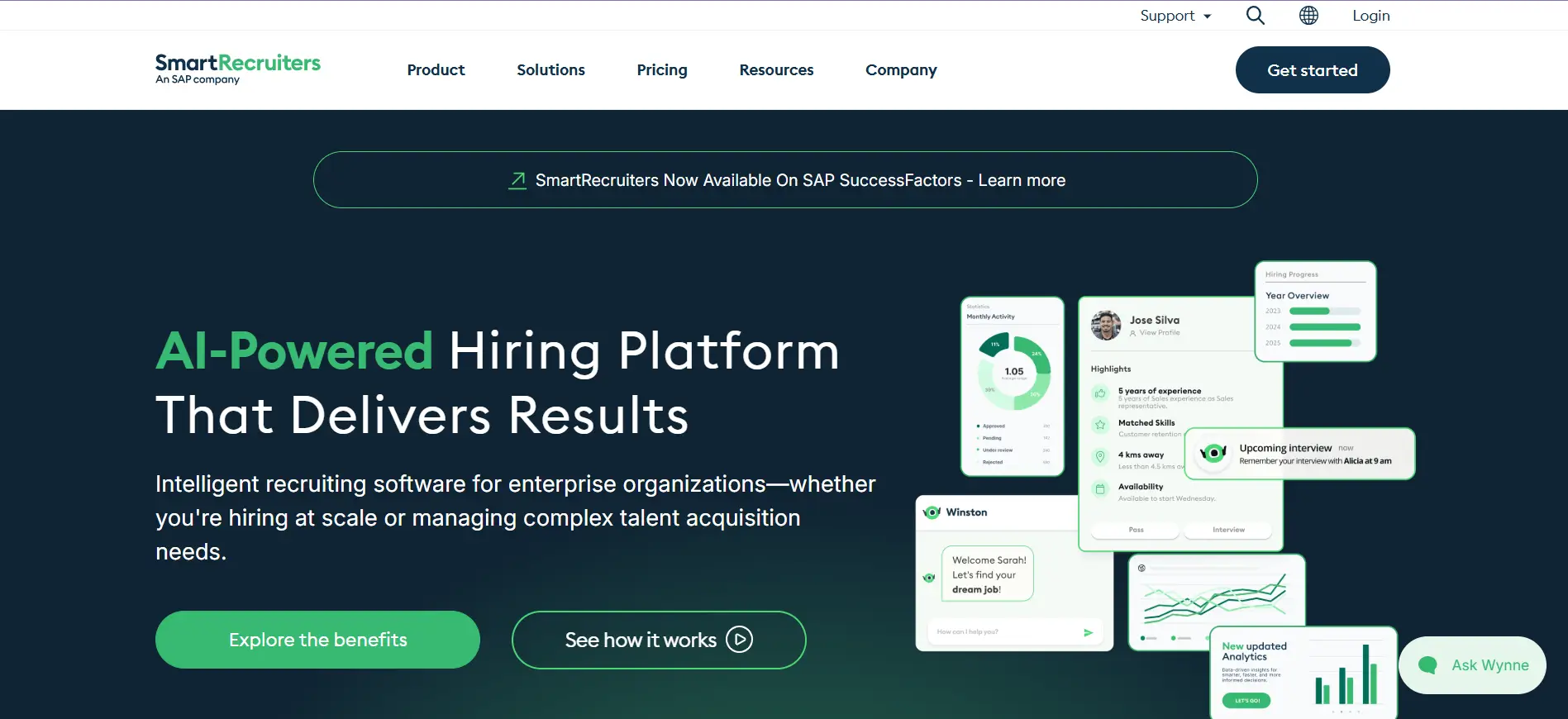
6. SmartRecruiters
Lever works well for relationship-driven hiring.
SmartRecruiters takes a broader approach.
It's built for enterprise teams managing high-volume hiring across multiple regions.
Recruiters juggling dozens of open roles at once tend to lean on it the most.
Key Features
- AI-powered candidate matching and recommendations
- Marketplace with hundreds of pre-built integrations
- Multi-region compliance and localization support
- Collaborative hiring workflows for large teams
- Career site builder for employer branding
Pricing
SmartRecruiters doesn't list pricing publicly.
You'll need to talk to sales for a custom quote.
It's generally positioned as an enterprise-grade tool.
That makes it a stretch for early-stage startups.
But for companies hiring at scale across countries, the investment usually pays off.
7. Teamtailor
SmartRecruiters is built for scale.
Teamtailor takes things in a different direction.
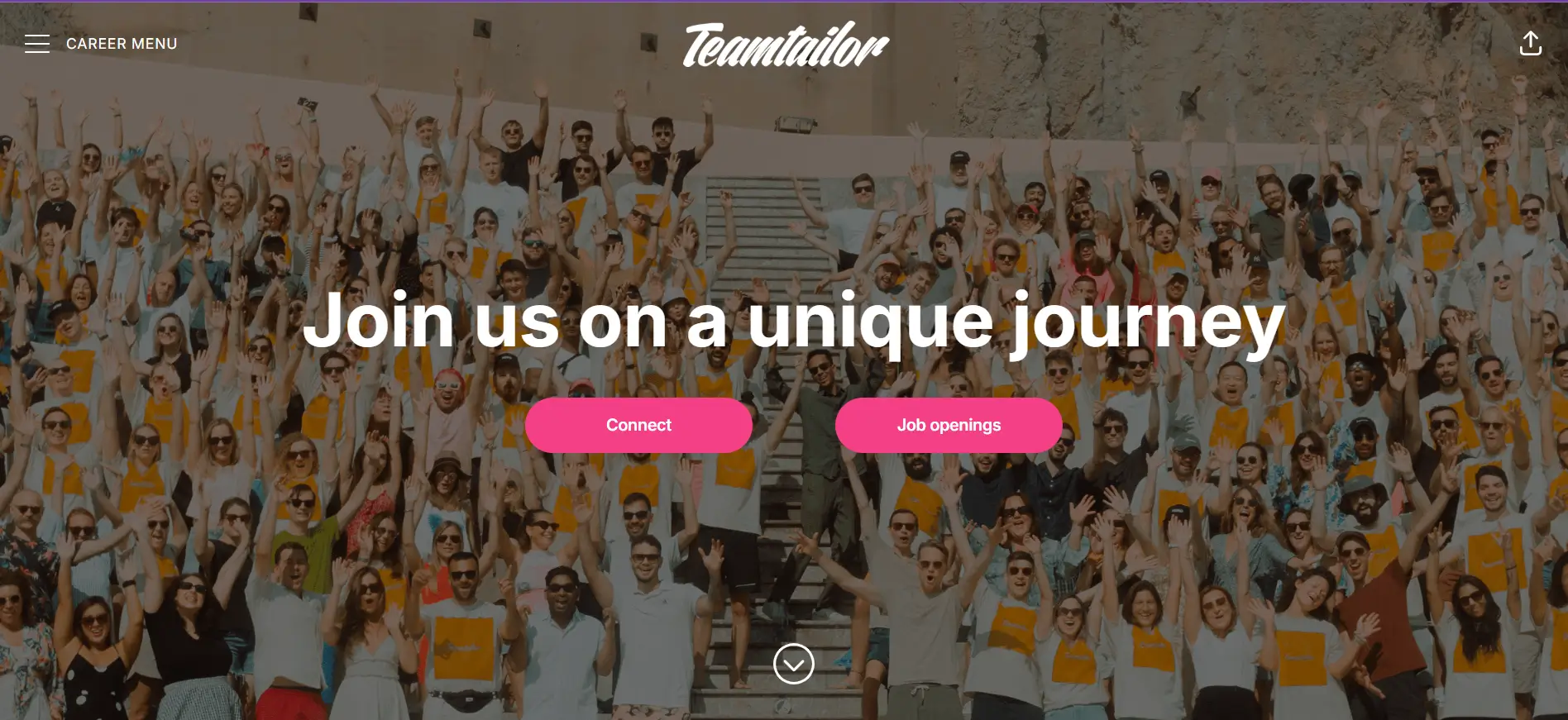
It puts employer branding front and center, not just filling roles.
You get a career site that actually looks like your company, not a generic job board template.
Teams that care about candidate experience tend to notice the difference fast.
Key Features
- Customizable career site builder
- Employer branding and content tools
- Automated candidate nurturing emails
- Video interviews and skills assessments
- Analytics on employer brand performance
Pricing
Teamtailor uses tiered pricing based on your company size.
Smaller teams can start on lower-cost plans.
As you grow, you move into custom pricing with more features unlocked.
It sits in a reasonable range compared to fully enterprise platforms.
If branding matters as much as hiring speed, the cost tends to feel worth it.
You're not just buying an ATS here.
You're investing in how candidates experience your company before they even apply.
8. Pinpoint
Teamtailor focuses on branding.
Pinpoint takes a more balanced approach.
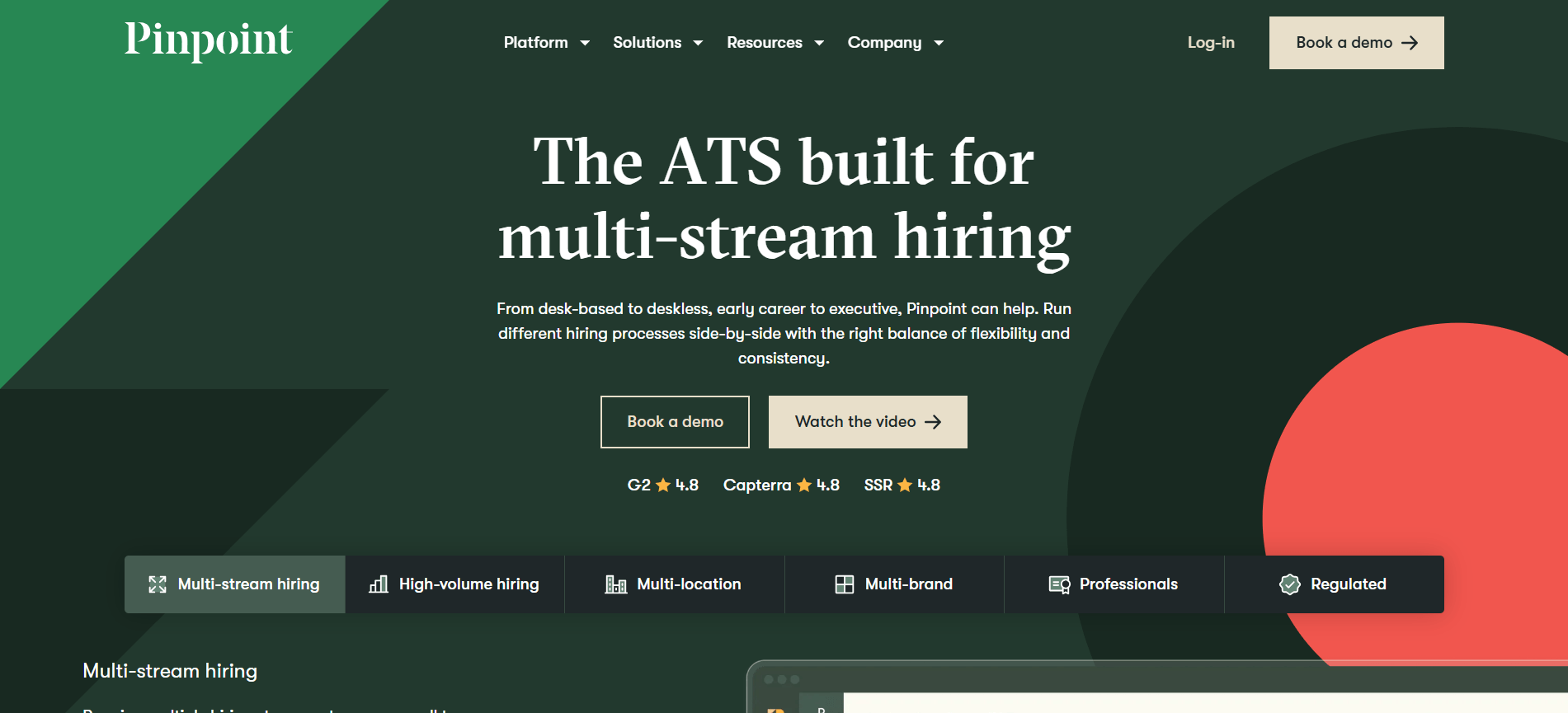
It's built for in-house talent teams who want strong sourcing without sacrificing candidate experience.
That combination makes it a solid middle ground for growing companies.
Key Features
- Multi-channel job advertising and sourcing
- Built-in DEI and compliance tools
- Customizable careers page
- Automated candidate communication workflows
- GDPR-friendly data handling
Pricing
Pinpoint doesn't publish pricing publicly.
You'll need to request a demo for a quote.
Reviews suggest it sits in the mid-range compared to full enterprise platforms.
It works best for in-house teams hiring steadily throughout the year.
One-off or seasonal hiring won't get as much value from it.
If you want sourcing and branding without going full enterprise, Pinpoint hits a reasonable middle spot.
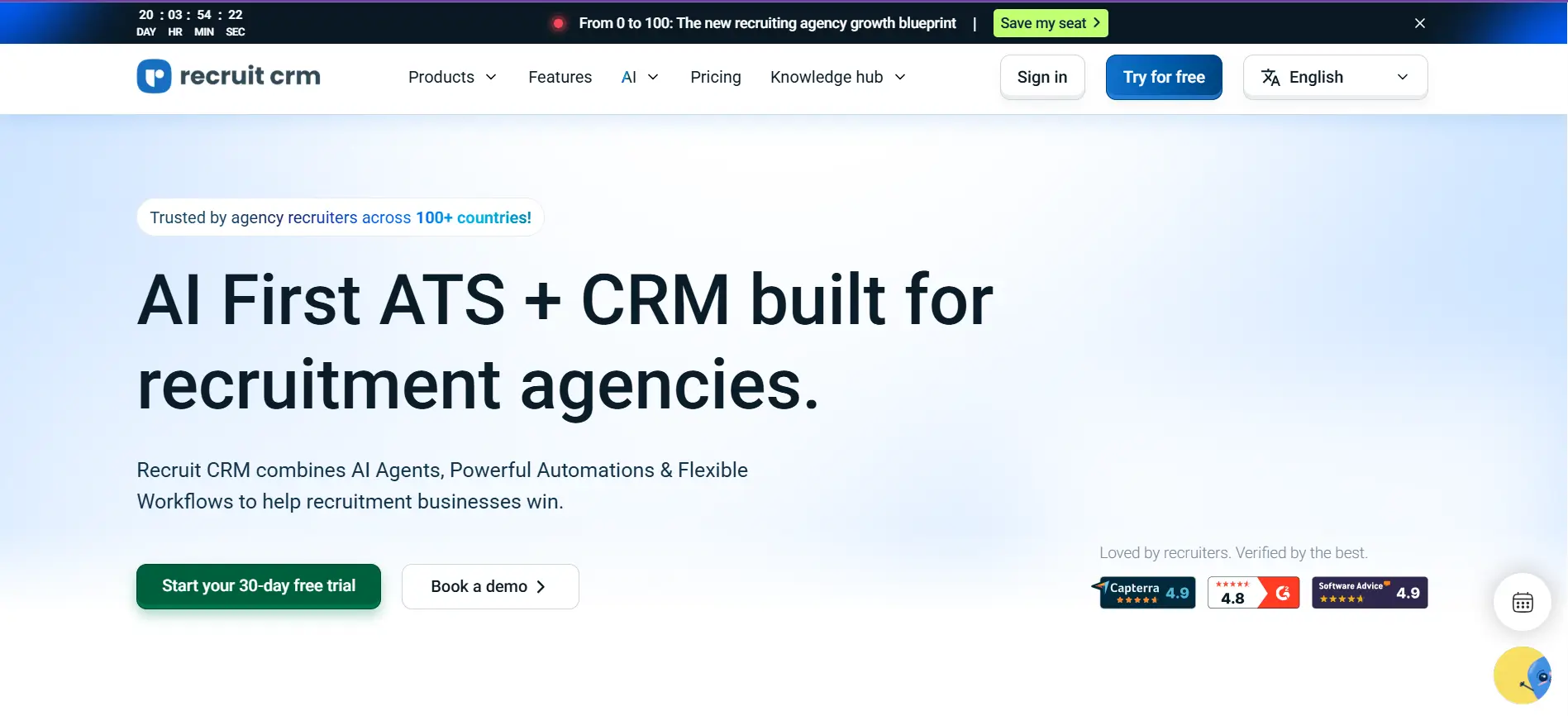
9. Recruit CRM
Pinpoint works well for in-house teams.
Recruit CRM is built for a different crowd entirely.
It's made for staffing and recruiting agencies managing multiple clients at once.
If you place candidates for other companies, this one's worth a closer look.
Key Features
- Built-in CRM for managing client relationships
- Candidate and client pipeline tracking in one view
- Resume parsing with Boolean search
- Automated email sequences for candidates and clients
- Chrome extension for sourcing directly from LinkedIn
Pricing
Recruit CRM offers tiered pricing based on the number of users.
Plans start on the lower end for small agencies.
Costs scale up as you add more recruiters to your team.
Compared to enterprise ATS platforms, it stays fairly accessible.
That makes it a practical pick if you're running a lean agency.
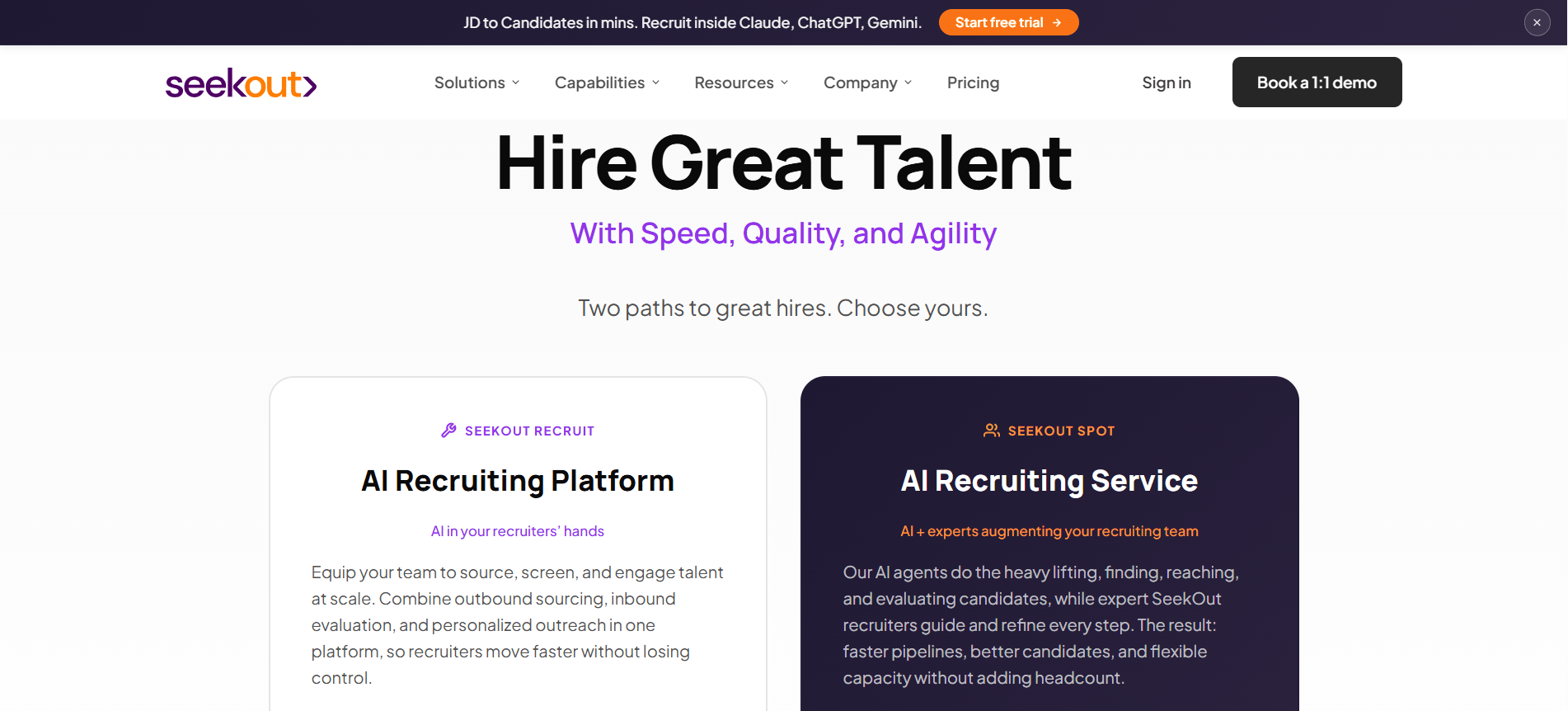
10. SeekOut
Recruit CRM is built for agencies.
SeekOut takes a different path entirely.
It's known for deep talent search, especially for hard-to-find technical and diversity candidates.
Recruiters hunting for niche skill sets tend to reach for this one first.
Key Features
- Advanced Boolean and AI-powered search
- Deep candidate insights, including diversity data
- Talent pool analytics and market benchmarking
- Chrome extension for sourcing outside the platform
- Integrations with major ATS systems
Pricing
SeekOut doesn't list pricing publicly.
You'll need to request a quote based on your team's needs.
It's generally positioned as a premium sourcing tool, not a full ATS replacement.
That makes it a strong add-on for teams that already have hiring workflows in place.
If sourcing hard-to-find talent is your biggest bottleneck, the investment tends to make sense.
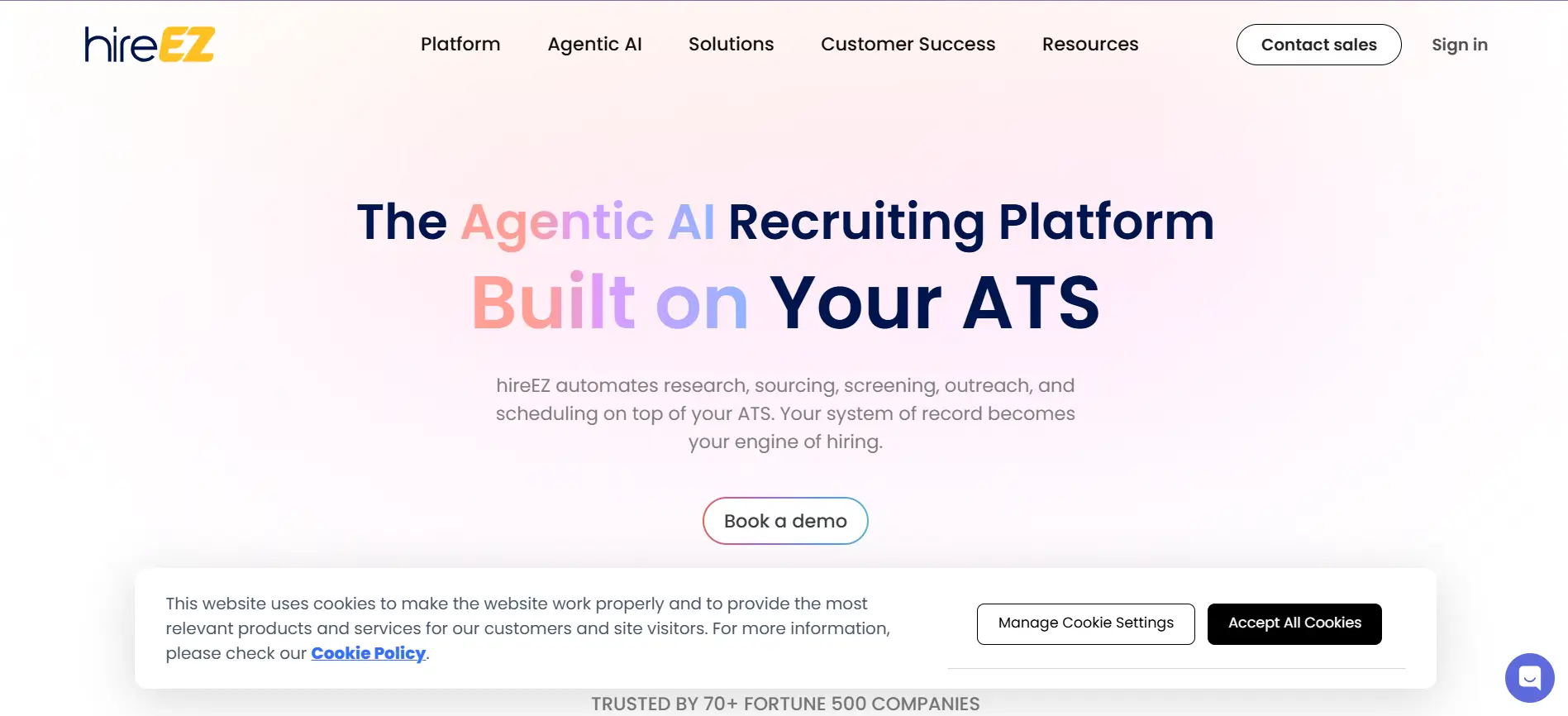
11. hireEZ
SeekOut goes deep on hard-to-find talent.
hireEZ takes a similar sourcing focus, but adds outreach automation on top.
You're not just finding candidates here.
You're reaching out to them too, without switching tools.
Key Features
- AI-powered sourcing across 45+ platforms
- Automated, multi-channel outreach sequences
- Talent pool rediscovery from your existing database
- Diversity sourcing filters
- Integrations with major ATS platforms
Pricing
hireEZ doesn't publish pricing on its website.
You'll need to book a demo to get a custom quote.
It's positioned as a mid-to-premium sourcing tool.
That price tends to make sense once outreach becomes as big a bottleneck as sourcing itself.
If your team is stuck finding candidates and then losing them in follow-up, this combination is worth the look.
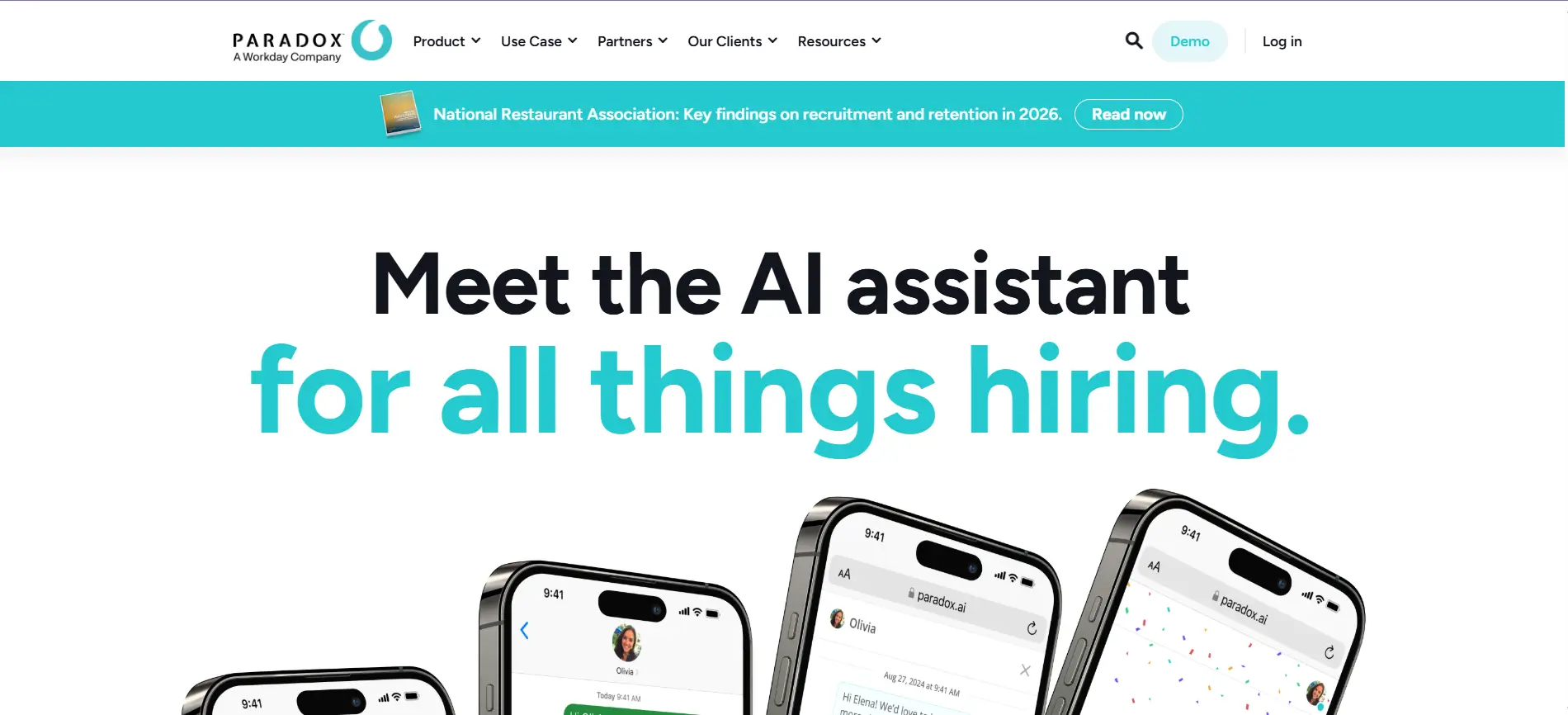
12. Paradox
hireEZ blends sourcing with outreach.
Paradox takes a completely different approach to the funnel.
It's built around conversational AI, using a chatbot-style assistant to screen and schedule candidates automatically.
High-volume hiring teams, especially in retail and hourly roles, tend to love this one.
Key Features
- Conversational AI assistant for candidate screening
- Automated interview scheduling through chat
- Mobile-first candidate experience
- Text-based application process
- Integrations with major ATS and HR systems
Pricing
Paradox doesn't publish pricing publicly.
You'll need to talk to sales for a custom quote.
It's positioned as an enterprise tool, built for high-volume hiring.
That makes it less practical for smaller teams hiring a handful of roles a year.
But if you're filling hundreds of positions, the automation pays for itself fast.
13. HireVue
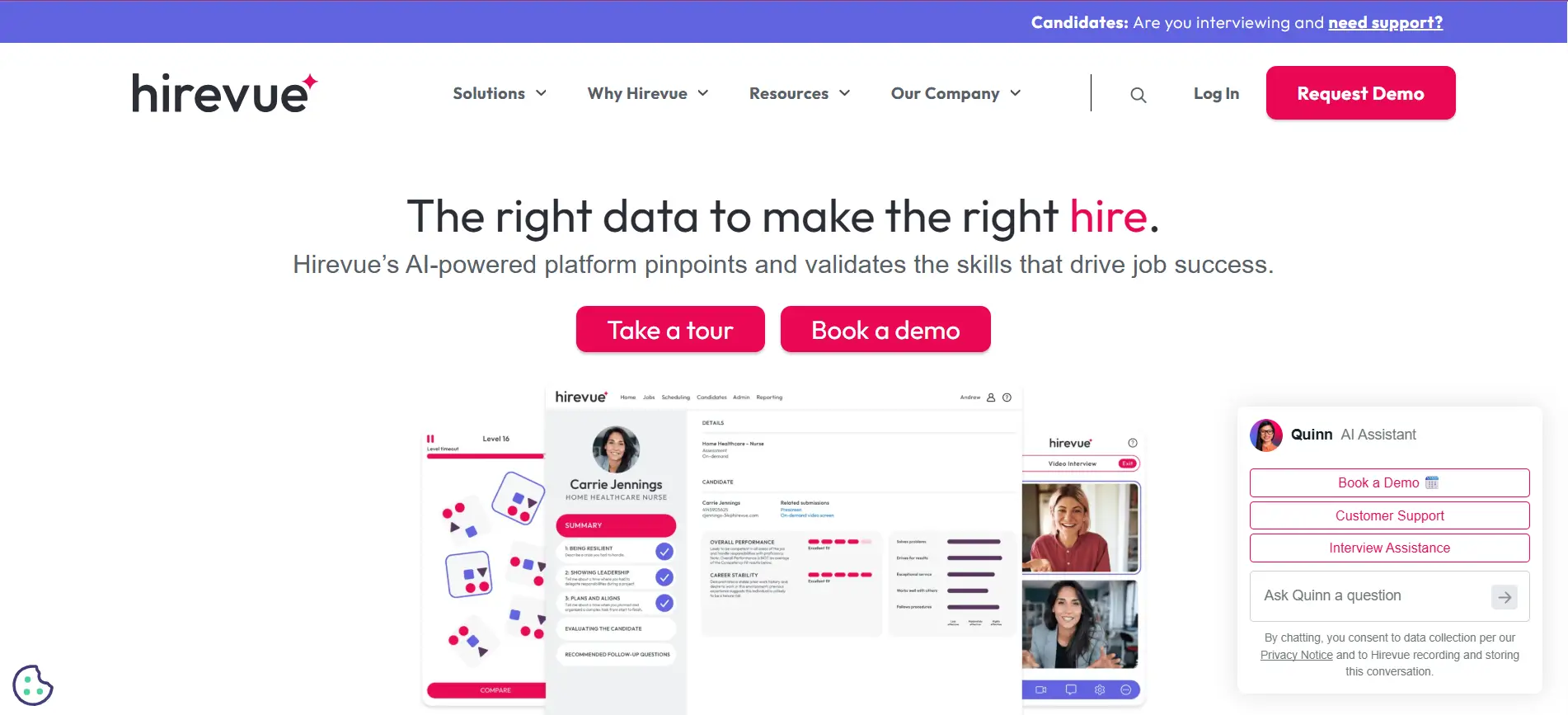
HireVue is built around video interviewing and AI-assisted assessments.
It's a common pick for companies hiring at scale, especially for early-stage screening.
Instead of scheduling dozens of live calls, hiring teams use HireVue to review recorded responses on their own time.
That alone saves significant coordination effort during high-volume hiring pushes.
Key Features
- On-demand video interviewing
- AI-powered candidate assessments
- Structured interview scoring
- Scheduling automation for live interviews
- Integrations with major ATS platforms
Pricing
HireVue doesn't publish pricing publicly.
You'll need to request a quote based on your hiring volume.
It's generally positioned as an enterprise tool.
That makes sense given its focus on high-volume, structured screening.
Smaller teams hiring occasionally may find it more than they actually need.
14. iCIMS Talent Cloud
iCIMS is built for large enterprises managing hiring across multiple departments.
It's less about speed and more about control.
You get deep customization, strong compliance tools, and reporting built for complex hiring structures.
That makes it a common pick for enterprise HR teams juggling thousands of applicants a year.
Key Features
- Enterprise-grade applicant tracking
- Advanced workflow automation
- Compliance and EEO reporting
- Talent CRM for candidate relationships
- Integrations with major HRIS platforms
Pricing
iCIMS doesn't list pricing publicly.
You'll need to go through their sales team for a custom quote.
Given its enterprise focus, pricing usually reflects that scale.
Smaller teams will likely find it more infrastructure than they actually need.
15. Zoho Recruit
Zoho Recruit fits well if you're already using other Zoho products.
It works for both in-house teams and staffing agencies, which is rare for one tool.
You get solid ATS functionality without a steep price tag.
That combination makes it popular with budget-conscious teams still building out their hiring stack.
Key Features
- Resume parsing and candidate matching
- Dual functionality for agencies and in-house hiring
- Customizable career pages
- Built-in interview scheduling
- Integrations across the Zoho ecosystem
Pricing
Zoho Recruit offers transparent, published pricing.
Plans start on the lower end, making it accessible for small teams.
Higher tiers unlock more automation and advanced reporting.
If you're already in the Zoho ecosystem, the value here is hard to beat.
16. BambooHR Hiring
BambooHR isn't a pure recruiting tool.
It's an HR platform with hiring built in.
That makes it a natural fit if you already use BambooHR for onboarding or people management.
Adding hiring on top means one less system to manage.
Key Features
- Applicant tracking built into the HR suite
- Customizable hiring pipelines
- Offer letter and e-signature tools
- Candidate self-scheduling for interviews
- Direct handoff into onboarding workflows
Pricing
BambooHR doesn't publish exact pricing publicly.
You'll need a quote based on employee count and modules selected.
Hiring features usually come as an add-on, not a standalone product.
So the real value shows up if you're already using BambooHR for HR, not just recruiting.
Which Remote Recruitment Tool Is Best for Your Use Case?
By now you've seen how these tools stack up feature by feature.
But the "best" tool really depends on what kind of hiring you're doing.
Here's how to match the right platform to your specific situation.
Best for startups
Startups usually need speed over structure.
You're hiring fast, often without a big recruiting team behind you.
Leelu AI fits well here since it automates sourcing and outreach without needing a dedicated recruiter to run it.
Workable is another solid option if you want an all-in-one tool without enterprise complexity.
Both keep things simple while you build out your hiring process.
Best for staffing agencies
Agencies juggle multiple clients and candidate pipelines at once.
That means the tool needs to handle relationships, not just job postings.
Recruit CRM is built specifically for this, with client tracking baked in.
Leelu AI also works well here, especially for agencies that need to source candidates quickly across multiple open roles at once.
Together, they cover both sides of the agency workflow: sourcing and client management.
Best for enterprise hiring
Enterprise hiring comes with different demands entirely.
You're dealing with compliance, multiple departments, and high applicant volume.
- iCIMS Talent Cloud handles complex workflows across large HR teams
- SmartRecruiters supports hiring across multiple regions and countries
- HireVue speeds up early-stage screening at scale
These platforms are built for structure and control first, automation second.
Best for high-volume recruiting
High-volume hiring is a different challenge altogether.
You're not filling one role carefully. You're filling dozens, sometimes hundreds, fast.
Paradox handles this well with its chatbot-driven screening and scheduling.
Leelu AI also fits naturally here, since its AI sourcing and outreach can run across large candidate pools without manual follow-up.
If your bottleneck is speed at scale, both are worth a serious look.
Best AI-first Recruitment Platform (Leelu AI)
If you're looking for a tool built entirely around AI from the ground up, Leelu AI stands out.
It's not an ATS with AI features bolted on.
Sourcing, screening, outreach, and scheduling all run through one AI-driven system.
That means less switching between tools and less manual follow-up.
For teams that want automation to be the core of their hiring process, not just an add-on, Leelu AI is worth prioritizing.
Common Mistakes When Choosing Remote Recruitment Tools
You've seen what good tools look like.
Now let's talk about how teams end up picking the wrong ones.
Most of these mistakes aren't about bad tools.
They're about mismatched expectations.
Choosing features you don't need
It's easy to get pulled in by a long feature list.
Video interviewing, AI scoring, career site builders, the works.
But if you're a five-person team hiring twice a year, you probably don't need enterprise-grade compliance tools.
Start with what your actual hiring process looks like.
Then match features to that, not the other way around.
Ignoring integrations with existing HR systems
This one shows up months later, not on day one.
You pick a great sourcing tool.
Then realize it doesn't talk to your ATS or your HRIS.
Now someone's manually copying candidate data between systems.
Before you commit, check what the tool connects with:
- Your existing ATS
- Slack or your team communication tool
- Your HRIS or onboarding software
- Calendar tools your team already uses
If those connections aren't there, you're signing up for extra work later.
Focusing only on price instead of value
Cheaper isn't always better.
A low-cost tool that saves you zero recruiter hours isn't actually saving you money.
Think about what the tool replaces.
If it cuts down 10 hours of manual sourcing a week, that's worth more than a slightly lower subscription fee.
Value comes from time saved, not just the number on the invoice.
Overlooking candidate experience
This mistake is easy to miss because it doesn't show up in your dashboard.
It shows up in your response rates.
If your application process feels clunky or slow, good candidates drop off before you even see them.
Things like scheduling friction, delayed replies, and confusing career pages all quietly hurt your pipeline.
Candidate experience isn't a nice-to-have.
It directly affects who accepts your offer.
Selecting software that won't scale
A tool that works fine at 10 hires a year might fall apart at 100.
This usually shows up in two places.
Pricing jumps sharply once you add more users or job postings.
Or the platform simply can't handle higher candidate volume without slowing down.
This is actually where a tool like Leelu AI holds up well.
Since sourcing and outreach run through AI, the workload doesn't scale linearly with your hiring volume.
Before you commit, ask how the tool performs at double or triple your current hiring pace.
That answer tells you more than the price tag does.
Conclusion
Picking a remote recruitment tool isn't really about finding the "best" one on paper.
It's about finding the one that fits how your team actually hires.
A startup moving fast needs something different than an enterprise team managing compliance across regions.
That's why this list leans into use cases instead of one-size-fits-all rankings.
If your biggest challenge right now is sourcing and engaging candidates without adding more manual work, that's exactly where Leelu AI fits in.
It's worth trying if you want your sourcing, screening, and outreach running on autopilot, not spread across five different tabs.
Frequently Asked Questions (FAQs)
How long does it usually take to set up a remote recruitment tool?
Most platforms take a few days to a couple weeks to fully set up.
That includes connecting your ATS, importing job templates, and training your team.
AI-driven tools like Leelu AI tend to move faster since sourcing and outreach are automated from day one.
Enterprise platforms with custom workflows usually take longer to configure properly.
Can you use more than one recruitment tool at the same time?
Yes, and many teams do exactly this.
A common setup pairs a sourcing tool with a separate ATS for tracking candidates.
Just make sure the tools integrate well together.
Otherwise, you end up manually moving data between systems, which defeats the purpose of automating your workflow in the first place.
Are AI recruiting tools accurate enough to trust for candidate matching?
Modern AI matching has improved significantly over the past few years.
Most tools now score candidates based on skills, experience, and job requirements, not just keywords.
That said, AI should support your decision-making, not replace it entirely.
Always review shortlisted candidates yourself before moving them forward in your hiring process.
Do remote recruitment tools work well for hiring across different countries?
It depends heavily on the platform.
Tools with global sourcing databases and compliance features handle international hiring better.
Look for support around local labor laws, currency handling, and regional job board access.
Not every tool is built for cross-border hiring, so this is worth confirming before you commit.
What's the difference between an ATS and a full recruitment platform?
An ATS mainly tracks candidates as they move through your hiring pipeline.
A full recruitment platform usually adds sourcing, outreach, and scheduling on top of that.
If you're only tracking applicants, an ATS might be enough.
If you want the entire process automated, you'll likely need something broader.


