Finding qualified candidates is becoming harder every year.
Job applications continue to rise, but identifying the right talent still requires significant time and effort.
Recruiters often spend hours searching multiple platforms, screening profiles, and trying to keep candidate information organized.
That is why having access to the right candidate database for recruiters has become a competitive advantage in 2026.
The best recruiting databases do much more than store resumes. They help you source candidates faster, rediscover previous applicants, engage passive talent, and build long-term talent pipelines.
In this guide, you'll learn:
- What makes a great candidate database
- The best candidate databases for recruiters in 2026
- How AI is changing candidate sourcing
- What to look for before choosing a recruiting database
What Is a Candidate Database for Recruiters?
A candidate database for recruiters is a centralized platform used to collect, organize, search, and manage candidate information throughout the hiring process.
Instead of sourcing talent from scratch every time a role opens, recruiters can build a database of candidates for recruitment and revisit qualified professionals whenever new opportunities arise.
Modern candidate databases typically include:
- Candidate profiles
- Resume storage
- Search filters
- Skill tagging
- Outreach capabilities
- Candidate engagement history
- ATS integrations
- AI-powered matching
The larger and more organized your talent database becomes, the faster your hiring process can be.
What Makes a Great Candidate Database in 2026?
Recruiting technology has evolved significantly over the last few years.
Today, recruiters need databases that help them find quality talent quickly while reducing manual sourcing efforts.
Some essential capabilities include:
Advanced Search Filters
Boolean search alone is no longer enough.
Recruiters need semantic search, AI recommendations, skill matching, and location-based filtering to identify top candidates efficiently.
Large Talent Pool
The value of a recruiting database increases with the size and quality of its candidate network.
Access to millions of profiles improves hiring flexibility and supports niche recruitment efforts.
Candidate Enrichment
Enriched profiles provide additional insights such as skills, social links, work history, certifications, and contact details.
This helps recruiters make informed decisions faster.
Automation Features
Recruiters increasingly rely on automation to save time.
Features like automated outreach, follow-ups, screening, and interview scheduling improve productivity and candidate experience.
ATS Connectivity
A database should work seamlessly with existing recruiting tools.
Integrations prevent duplicate work and ensure candidate data stays updated across systems.
10 Best Candidate Databases for Recruiters in 2026
Not every database serves the same purpose.
Some focus on active job seekers, while others excel at identifying passive candidates.
Here are the top platforms recruiters should consider.
1. Leelu AI
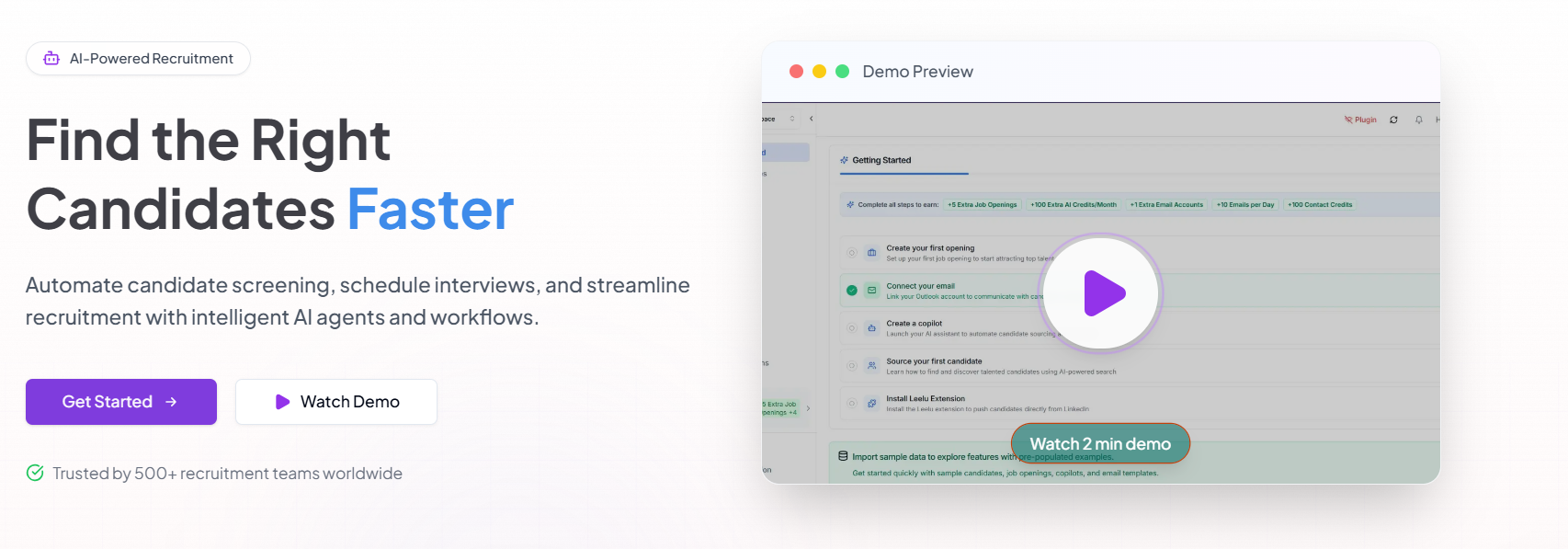
Recruiters today need more than a simple resume repository.
They need a platform that can source, screen, engage, and schedule candidates without switching between multiple tools. That is where Leelu AI stands out.
Leelu AI is an AI recruiting copilot designed to automate the entire hiring workflow. It allows recruiters to access and engage talent from over 500M+ candidate profiles across LinkedIn, Indeed, Monster, ATS platforms, and other sourcing channels.
Key Features
- Access to 500M+ candidate profiles database
- Multi-platform sourcing capabilities
- AI-powered candidate matching
- Automated resume parsing and scoring
- Personalized outreach campaigns
- Automated follow-ups and candidate engagement
- Smart interview scheduling
- ATS integrations
- Hiring analytics and insights dashboard
Best For
Recruiting agencies, staffing firms, enterprise hiring teams, and organizations looking to build an AI-powered candidate database for recruiters.
2. LinkedIn Talent Solutions
LinkedIn Talent Solutions remains one of the most widely used platforms for recruiters in 2026. With access to a massive professional network, it helps hiring teams source both active and passive candidates across industries.
What makes LinkedIn valuable is the depth of candidate profiles. Recruiters can evaluate work history, skills, certifications, recommendations, and recent activity before initiating outreach. The platform also offers advanced search filters that simplify finding candidates with niche expertise.
Key Features
- Access to a global professional talent pool
- Advanced search and filtering capabilities
- InMail messaging for direct outreach
- AI-powered candidate recommendations
- Talent Insights and employer branding tools
Best For
Enterprise organizations, executive recruiters, and companies focused on passive talent sourcing.
3. Indeed Resume Database
Indeed has grown into one of the largest databases of candidates for recruitment, especially for companies hiring active job seekers.
Recruiters can search millions of resumes and engage candidates who are already looking for new opportunities.
The platform offers a straightforward sourcing experience with filters for skills, location, experience, education, and job titles.
Its large candidate pool makes it particularly useful for businesses with frequent hiring needs or high-volume recruitment.
Key Features
- Millions of searchable resumes
- Resume alerts and saved searches
- Candidate filtering options
- Direct messaging capabilities
- ATS integrations
Best For
SMBs, staffing firms, and organizations managing high-volume hiring campaigns.
4. Monster Resume Database
Monster continues to be a reliable sourcing platform for recruiters seeking experienced professionals.
While newer recruiting tools have entered the market, Monster still offers access to a broad talent network across multiple industries.
Recruiters can search resumes, build talent pipelines, and receive recommendations based on hiring requirements.
The platform also supports diversity initiatives and candidate rediscovery, helping teams maximize the value of existing talent pools.
Key Features
- Extensive resume database
- Advanced candidate search
- Talent recommendations
- Diversity hiring support
- Candidate alerts and engagement tools
Best For
Recruitment agencies, mid-sized businesses, and teams looking for a well-established sourcing platform.
5. CareerBuilder Talent Discovery
CareerBuilder Talent Discovery combines a large resume database with recruitment analytics, helping recruiters identify qualified candidates faster. The platform is designed to support sourcing, engagement, and pipeline management from a single interface.
Recruiters can search candidate profiles using advanced filters, receive AI-powered recommendations, and gain insights into talent availability in specific markets. Its analytics capabilities also help teams make more informed hiring decisions.
Key Features
- Resume database access
- AI-powered candidate recommendations
- Advanced search filters
- Recruitment analytics
- Candidate engagement tools
Best For
Enterprise hiring teams and recruiters looking for talent intelligence alongside sourcing capabilities.
Suggested Reading:
9 Best Recruitment Software for Startups to Scale Hiring Fast6. Dice
Dice is one of the leading databases for technology recruitment. It specializes in connecting recruiters with highly skilled professionals in software engineering, cybersecurity, data science, cloud computing, and IT.
Because the platform focuses exclusively on tech talent, recruiters can find candidates with niche expertise more efficiently than on general job boards. Dice also provides insights into skills trends and salary benchmarks.
Key Features
- Dedicated database for technology professionals
- Skill-based candidate searches
- Market insights and salary data
- Resume search capabilities
- Tech-focused talent pool
Best For
Technical recruiters, staffing agencies, and companies hiring developers, engineers, and IT specialists.
7. Hired
Hired takes a curated approach to recruiting by connecting employers with pre-screened candidates. Instead of searching through thousands of resumes, recruiters gain access to professionals who have already indicated their interest in new opportunities.
The platform is especially popular among startups and fast-growing businesses looking to reduce screening time and improve hiring efficiency.
Key Features
- Access to pre-vetted candidates
- Candidate availability status
- Salary expectations visibility
- Streamlined hiring workflows
- Faster candidate engagement
Best For
Startups, technology companies, and organizations focused on reducing time-to-hire.
8. GitHub Talent Search
GitHub Talent Search offers recruiters a unique way to discover developers based on their actual work rather than traditional resumes.
Recruiters can evaluate coding activity, repositories, open-source contributions, and project experience before reaching out.
This makes GitHub particularly useful for assessing technical skills and identifying passive candidates who may not be active on job boards.
Key Features
- Access to developer portfolios
- Open-source contribution insights
- Repository and coding activity analysis
- Technical skill evaluation
- Passive candidate discovery
Best For
Engineering recruiters and companies hiring software developers and technical specialists.
9. SeekOut
SeekOut has become a popular choice for organizations focused on talent intelligence and diversity hiring. The platform helps recruiters uncover hidden talent pools and discover candidates who may not be actively applying for jobs.
Its advanced search capabilities allow teams to identify professionals based on skills, experience, certifications, and career progression, making sourcing more strategic.
Key Features
- AI-powered talent discovery
- Diversity sourcing capabilities
- Advanced candidate search filters
- Talent intelligence insights
- Candidate rediscovery features
Best For
Talent acquisition teams, diversity hiring initiatives, and enterprise organizations seeking deeper candidate insights.
10. Wellfound
Wellfound, formerly known as AngelList Talent, is a popular recruiting platform for startups and high-growth companies. It connects recruiters with professionals who are actively interested in startup opportunities, making it easier to find candidates aligned with fast-paced environments.
The platform provides visibility into candidate preferences, including salary expectations, remote work interests, and role availability. This helps recruiters identify suitable talent faster while improving candidate engagement.
Wellfound is particularly effective for sourcing professionals in engineering, product, marketing, and operations roles within the startup ecosystem.
Key Features
- Access to startup-focused talent pools
- Candidate salary and availability insights
- Direct messaging capabilities
- Remote hiring support
- Employer branding opportunities
Best For
Startups, venture-backed companies, and organizations looking to hire candidates interested in high-growth environments.
How AI Is Transforming Candidate Databases
Candidate databases are no longer passive storage systems.
Artificial intelligence is changing how recruiters discover and engage talent.
AI-driven recruiting databases can now:
- Predict candidate-job fit
- Automatically rank applicants
- Recommend passive talent
- Personalize outreach messages
- Schedule interviews automatically
- Re-engage existing candidates
These capabilities allow recruiters to spend less time searching and more time building relationships with candidates.
As hiring competition intensifies, AI-powered recruiting platforms are becoming essential rather than optional.
How to Choose the Right Candidate Database
The right candidate database depends on your hiring needs, budget, and recruitment strategy. Some platforms are built for high-volume hiring, while others are better suited for sourcing niche or passive talent.
Before making a decision, ask yourself these questions:
- How many hires do you make annually? Organizations with frequent hiring needs often benefit from larger databases and automation capabilities.
- Do you recruit for niche skills? Specialized roles may require industry-specific databases with targeted talent pools.
- Is passive talent sourcing important? Platforms with strong professional networks can help you engage candidates who are not actively looking for jobs.
- Do you need automation features? AI-powered sourcing, outreach, screening, and scheduling can significantly reduce manual recruiting efforts.
- Does the platform integrate with your ATS? Seamless integrations help maintain accurate candidate records and eliminate duplicate work.
- Can recruiters collaborate easily? Shared pipelines, notes, and candidate tracking features improve team efficiency and visibility.
Ultimately, a candidate database should simplify hiring rather than add more administrative work. Choosing the right solution can help recruiters source talent faster, improve collaboration, and build stronger hiring pipelines.
Final Thoughts
The best candidate database for recruiters in 2026 is not necessarily the one with the most resumes.
It is the platform that helps your team identify, engage, and hire qualified talent faster.
LinkedIn, Indeed, Monster, and other established databases continue to play an important role in recruiting strategies.
At the same time, AI-driven platforms are reshaping how talent acquisition teams operate.
As hiring becomes increasingly competitive, investing in a modern database of candidates for recruitment can help recruiters stay ahead, build stronger pipelines, and deliver better hiring results.
Frequently Asked Questions
What is the difference between a candidate database and an ATS?
A candidate database is designed to store, organize, and search talent profiles, while an Applicant Tracking System (ATS) manages the hiring workflow, including applications, interviews, and offer stages. Many modern recruiting platforms combine both capabilities.
How often should recruiters update their candidate database?
Recruiters should review and refresh their database regularly, ideally every three to six months. Updating candidate information helps maintain accurate records, improve outreach efforts, and identify candidates who may now be open to new opportunities.
Can a candidate database help with passive candidate sourcing?
Yes. Many recruiting databases allow recruiters to discover professionals who are not actively applying for jobs. Features like AI matching, advanced search filters, and talent rediscovery make it easier to engage passive candidates.
Are AI-powered candidate databases better than traditional databases?
AI-powered databases can significantly improve sourcing efficiency by automating candidate matching, screening, outreach, and follow-ups. Traditional databases primarily serve as storage systems, whereas AI-driven platforms actively assist recruiters throughout the hiring process.
What metrics should recruiters track when evaluating a candidate database?
Recruiters should monitor metrics such as time-to-fill, candidate response rates, sourcing efficiency, quality of hires, database growth, and recruiter productivity to determine whether a platform is delivering value.
What industries benefit the most from specialized candidate databases?
Industries with highly competitive talent markets, such as technology, healthcare, finance, engineering, and cybersecurity, often benefit the most from specialized databases because they provide access to targeted talent pools and niche skill sets.


