Hiring the right people is harder than it looks.
A resume can say one thing, but reality can be very different. That is where background checks for employment come in.
In this guide, you will learn:
- Why employment background checks matter
- The most important checks every HR team should run
- How each check helps reduce hiring risks
Why Background Checks for Employment Matter
By now, you already know that resumes don’t always tell the full story.
Candidates naturally present themselves in the best possible way, but that does not always reflect their actual experience, behavior, or reliability in a real work environment.
That is exactly why background checks for employment are not just a formality, but a critical step in making confident hiring decisions.
They act as a validation layer between what is claimed and what is real, helping you avoid decisions based purely on assumptions.
When done right, they help you:
- Verify candidate information before making an offer and avoid relying only on resumes or interviews
- Reduce hiring risks and costly mistakes that can impact productivity and team morale
- Build a team you can truly rely on without constantly questioning your hiring decisions
Over time, this consistency improves not just hiring quality, but also overall business performance.
The Risk of Hiring Without Verification
Skipping employment background checks might save time upfront, but it can cost you much more later.
When you hire without proper verification, you are essentially making decisions with incomplete information, which increases uncertainty at every stage.
Without proper verification, you risk:
- Hiring candidates with false credentials or exaggerated experience that does not match actual performance
- Missing red flags like criminal history, employment gaps, or frequent job changes
- Facing compliance issues or workplace safety concerns, especially in regulated industries
These problems don’t just stay isolated to one hire.
They often create a ripple effect where one wrong hire impacts team productivity, increases workload for others, and slows down overall progress, especially when replacements are needed quickly.
Building a Safe and Reliable Workforce
When you consistently run background checks for employment, you create a stronger and more predictable hiring foundation.
Instead of reacting to problems after hiring, you start preventing them before they happen.
It helps you:
- Build trust within teams because every hire is properly verified and meets basic standards
- Improve overall workplace safety and accountability across roles and departments
- Attract serious, credible candidates who value structured and transparent hiring processes
This also sends a strong signal about your company’s standards.
Over time, this approach leads to a workforce that is not just skilled, but dependable, consistent, and aligned with your company’s expectations and long-term goals.
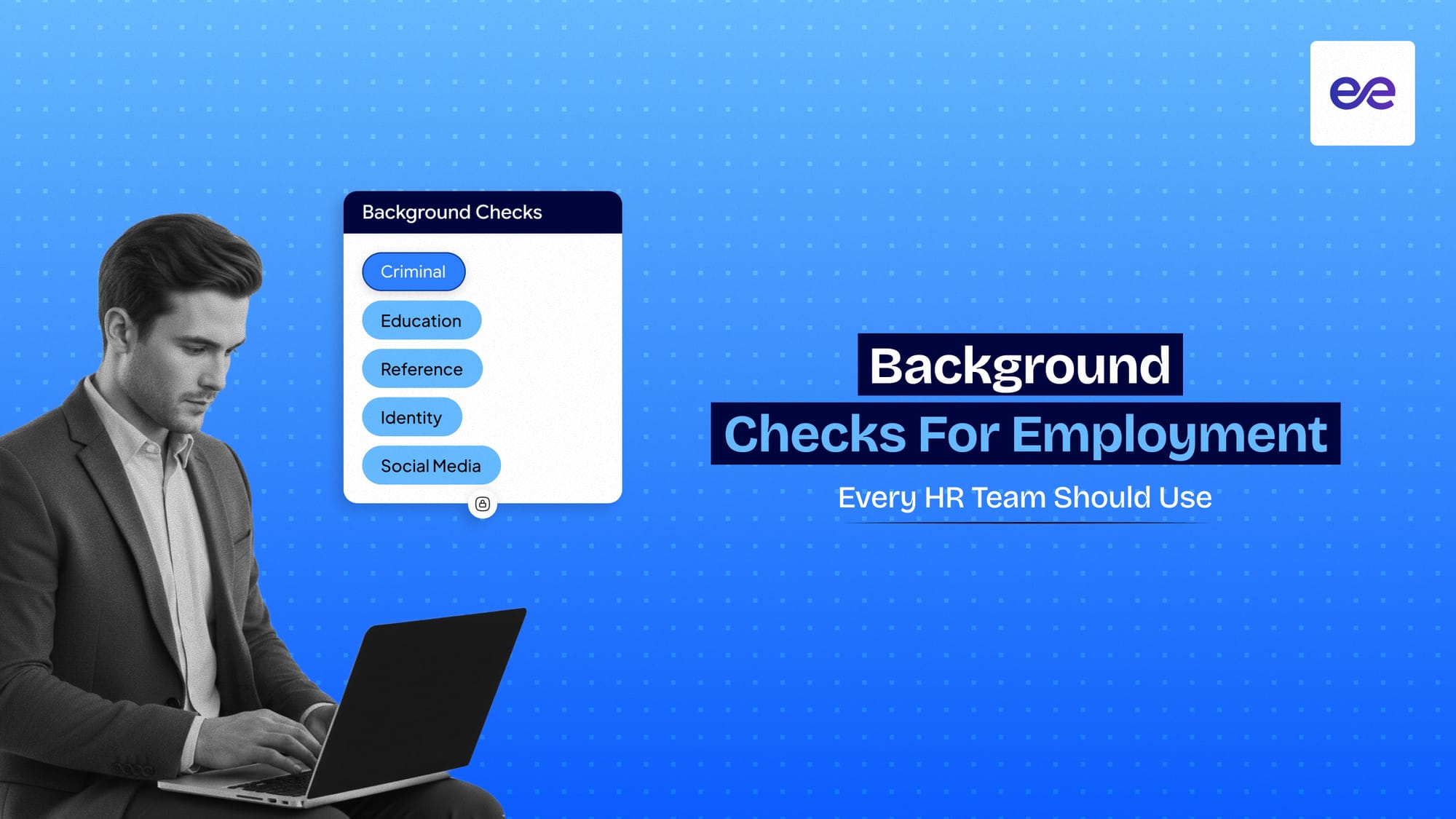
9 Background Checks for Employment Every HR Team Should Use
Now that you understand why background checks matter, the next step is knowing which ones actually make a difference.
Not every check is required for every role, but certain background checks for employment are essential if you want to hire with confidence and avoid costly mistakes.
Let’s start with the most important ones every HR team should use.
1. Criminal Background Checks
A criminal background check helps you understand if a candidate has any past records that could impact workplace safety or trust.
This is especially important for roles that involve handling money, sensitive data, or direct interaction with customers.
Instead of treating this as a pass-or-fail filter, think of it as a risk evaluation step where context matters.
Running this check helps you:
- Identify any legal risks associated with a candidate
- Ensure a safe working environment for your team
- Make role-based decisions instead of assumptions
It also protects your company from negligent hiring issues, especially if something goes wrong after onboarding.
2. Employment Verification Checks
Candidates often present their experience in the best possible light, which is why verification becomes important.
Employment verification checks confirm whether a candidate has actually worked at the companies they mention and held the roles they claim.
But beyond just validating facts, this step helps you understand consistency and career progression.
This usually includes:
- Job titles and responsibilities
- Duration of employment
- Basic performance or exit details when available
Even small inconsistencies can indicate larger credibility concerns.
By verifying this early, you avoid hiring someone who may not truly meet the expectations of the role.
Suggested Reading:
How Recruitment Automation Is Transforming Hiring3. Education Verification Checks
Degrees and certifications can directly impact how a candidate performs in a role.
Education verification checks help you confirm whether those qualifications are genuine and completed as claimed.
This is particularly important in roles where technical knowledge or certifications are non-negotiable.
This typically involves verifying:
- Degree or certification authenticity
- Institution details
- Year of completion
It also helps you avoid situations where candidates overstate their qualifications to appear more competitive.
In the long run, this ensures your hiring decisions are based on actual capability, not assumptions.
4. Reference Checks
Resumes and interviews show one side of a candidate, but references give you real-world insights.
Reference checks allow you to understand how a candidate actually performs in a work environment through feedback from previous managers or colleagues.
The key here is asking the right questions instead of generic ones.
You can gather insights around:
- Work ethic and reliability
- Team collaboration and communication
- Strengths and areas of improvement
These conversations often reveal patterns, like how a candidate handles pressure or feedback.
This step helps you move beyond surface-level evaluation and make more confident hiring decisions.
5. Identity Verification Checks
Before you verify anything else, you need to confirm one basic thing — the candidate is who they claim to be.
Identity verification checks ensure that personal details like name, address, and government-issued IDs are accurate and valid.
This step becomes even more important when hiring remotely or across multiple locations.
It helps you:
- Prevent identity fraud during hiring
- Ensure all further checks are done on the right person
- Maintain compliance with hiring regulations
Without this step, even the most detailed background checks can become unreliable.
6. Credit Background Checks
For roles that involve financial responsibility, a credit background check can provide useful context.
It helps you understand how a candidate manages financial obligations and whether there are any major red flags.
This is not about judging personal situations, but about identifying potential risks in sensitive roles.
This check is usually relevant for roles in:
- Finance and accounting
- Banking or fintech
- Positions handling company funds
Credit checks help you:
- Assess financial responsibility in high-risk roles
- Protect company assets and sensitive data
- Make more informed, role-specific decisions
Used correctly, it adds an extra layer of security without being intrusive.
Suggested Reading:
Top HR Metrics Every HR Professional Should Track7. Social Media Background Checks
A candidate’s online presence can sometimes reveal things that resumes and interviews do not.
Social media background checks involve reviewing publicly available profiles to identify any potential concerns.
This adds context to how a candidate behaves outside a formal interview setting.
This may include:
- Inappropriate or offensive content
- Unprofessional behavior
- Actions that could impact your company’s reputation
At the same time, it is important to stay objective and avoid personal bias.
The goal is not to judge personality, but to identify clear risks that could affect workplace culture or brand image.
8. Drug Testing
In certain industries, safety and compliance go hand in hand with hiring decisions.
Drug testing helps ensure that candidates can perform their roles responsibly, especially in environments where safety is critical.
This becomes essential in roles where a single mistake can lead to serious consequences.
This is commonly important for roles in:
- Manufacturing and construction
- Transportation and logistics
- Healthcare and emergency services
Drug testing helps you:
- Maintain a safe working environment
- Reduce workplace accidents and risks
- Meet regulatory and industry requirements
It should be used thoughtfully, based on role-specific needs rather than applied universally.
9. Global Background Checks
If you are hiring across borders or working in regulated industries, global background checks become important.
These checks screen candidates against international databases for sanctions, fraud, or legal issues.
As companies expand globally, this step becomes less optional and more necessary.
They are especially relevant for roles involving:
- International operations
- Financial transactions
- Compliance-heavy industries
Global checks help you:
- Stay compliant with international regulations
- Avoid legal and financial risks
- Ensure ethical hiring practices across regions
This ensures your hiring process remains strong, consistent, and trustworthy no matter where you are hiring from.
Conclusion
Making the right hire is not just about what you see on a resume.
It is about verifying the details that truly matter before making a decision.
When you consistently use the right background checks for employment, you reduce uncertainty and avoid costly hiring mistakes.
Start by applying the checks that align with your roles, and build a process you can repeat with confidence.
Because strong hiring decisions always begin with better verification.
Frequently Asked Questions
What are background checks for employment?
Background checks for employment are verification processes used to confirm a candidate’s identity, experience, education, and history before hiring.
They help you ensure that the information provided by the candidate is accurate and reliable.
Are background checks mandatory for every hire?
No, not every role requires the same level of screening.
You should choose background checks based on the role, industry, and level of risk involved in the position.
How long do employment background checks usually take?
The timeline can vary depending on the type of checks you run.
Some checks like identity or employment verification can be quick, while others like global checks may take longer due to multiple data sources.
Can a candidate be rejected based on a background check?
Yes, but the decision should always be based on relevance to the role.
For example, a financial issue may matter for a finance role but not for a creative position.
What is the most important background check to run?
There is no single most important check.
However, employment verification, criminal checks, and identity verification are considered essential for most roles to reduce hiring risks.