Hiring today doesn’t feel simple anymore, does it?
You’re juggling sourcing, screening, engagement, and coordination—often across multiple tools that don’t really talk to each other.
That’s exactly why AI tools for HR are becoming essential, not optional. They help you move faster, reduce manual work, and make better hiring decisions without burning out your team.
In this guide, you’ll discover:
- 30 AI tools for HR across different use cases
- How each tool fits into your HR workflow
- Which tools work best for specific tasks like sourcing, screening, and engagement
Benefits of Using AI Tools in HR
Once you start exploring different AI tools, the real question becomes—what actually changes for you?
The impact isn’t just about saving time. It’s about how your entire HR workflow starts to feel smoother, faster, and more predictable.
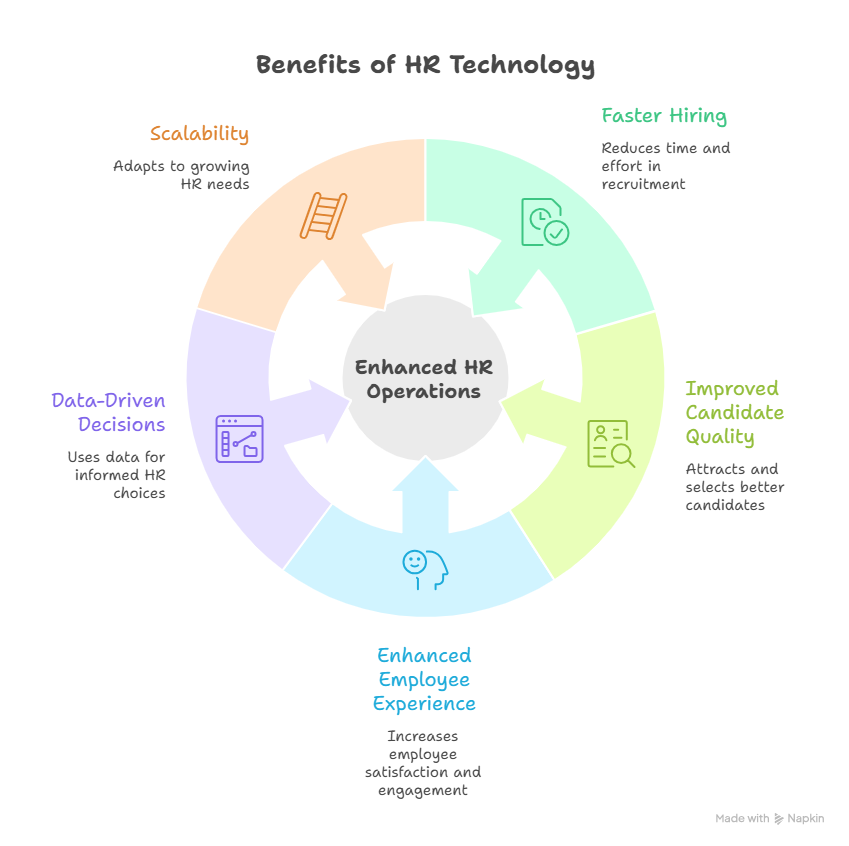
1. Faster hiring and reduced manual workload
AI tools take over repetitive tasks like sourcing, screening, and scheduling, which usually eat up most of your day.
Instead of manually reviewing hundreds of resumes or coordinating interview slots, you can automate these steps and focus on high-value decisions.
This means you move candidates through the pipeline much faster without increasing your workload.
2. Improved candidate quality and better matching
Finding the right candidate is often harder than finding more candidates.
AI helps you match profiles based on skills, experience, and intent, not just keywords, so your shortlist actually makes sense.
You spend less time filtering and more time engaging with candidates who are genuinely a good fit.
3. Enhanced employee experience and engagement
From the first touchpoint to onboarding, AI helps you stay responsive and consistent.
Automated follow-ups, personalized communication, and quick updates create a smoother experience for candidates and employees alike.
This reduces drop-offs and builds a stronger employer brand over time.
4. Data-driven decision-making across HR functions
AI tools give you visibility into what’s working and what’s not.
You can track funnel performance, identify bottlenecks, and make decisions based on real data instead of assumptions.
Over time, this leads to more predictable and optimized hiring outcomes.
5. Scalability across multiple roles and teams
As your hiring needs grow, manual processes start to break down quickly.
AI tools allow you to handle multiple roles, teams, and locations without needing to proportionally increase your HR team size.
You can scale your efforts efficiently while maintaining consistency in your hiring process.
Types of AI Tools for HR
Now that you understand the benefits, the next step is knowing where exactly these AI tools fit into your HR workflow.
Not every tool does everything, and that’s actually a good thing because each category solves a specific problem.
1. Recruitment & candidate screening tools
These tools help you find and evaluate candidates quickly without manually going through hundreds of profiles.
They use AI to source candidates, parse resumes, and rank applicants based on how well they match your job requirements.
This is where you save the most time early in the hiring process.
2. HR chatbots and virtual assistants
HR chatbots handle repetitive communication so you don’t have to.
They can answer candidate queries, follow up automatically, and even assist employees with common HR questions.
This keeps communication consistent and available 24/7 without adding more workload.
3. Human resource information systems
HRIS platforms act as your central system for managing employee data.
With AI added, these tools help you automate record management, track employee information, and generate useful insights.
Everything stays organized in one place, reducing manual errors.
4. Applicant tracking systems
ATS tools help you manage your hiring pipeline from application to offer.
AI enhances this by organizing candidates, tracking progress, and improving collaboration across your hiring team.
You get better visibility into every stage of recruitment.
5. Performance management tools
These tools help you track employee performance and growth over time.
AI can analyze performance data, highlight trends, and suggest areas for improvement.
This makes feedback more structured and actionable.
6. Payroll and benefits management tools
Managing payroll manually can quickly become complex and error-prone.
AI tools automate salary processing, benefits management, and compliance tracking.
This ensures accuracy while saving significant administrative effort.
7. AI interview scheduling tools
Coordinating interviews across calendars is often frustrating and time-consuming.
AI scheduling tools automate this by syncing calendars and booking slots instantly.
This removes back-and-forth emails and speeds up the hiring process significantly.
Suggested Reading:
Modern Onboarding Process Steps for HR Professionals30 AI Tools for HR Across Every Use Case
Now that you understand where AI fits into your HR workflow, let’s look at the actual tools you can start using.
We’ll break them down by use case so you can clearly see which tool solves which problem and where it fits in your hiring process.
1. Leelu AI
Type: Recruitment & Candidate Screening Platform (End-to-End AI Recruiting Copilot)
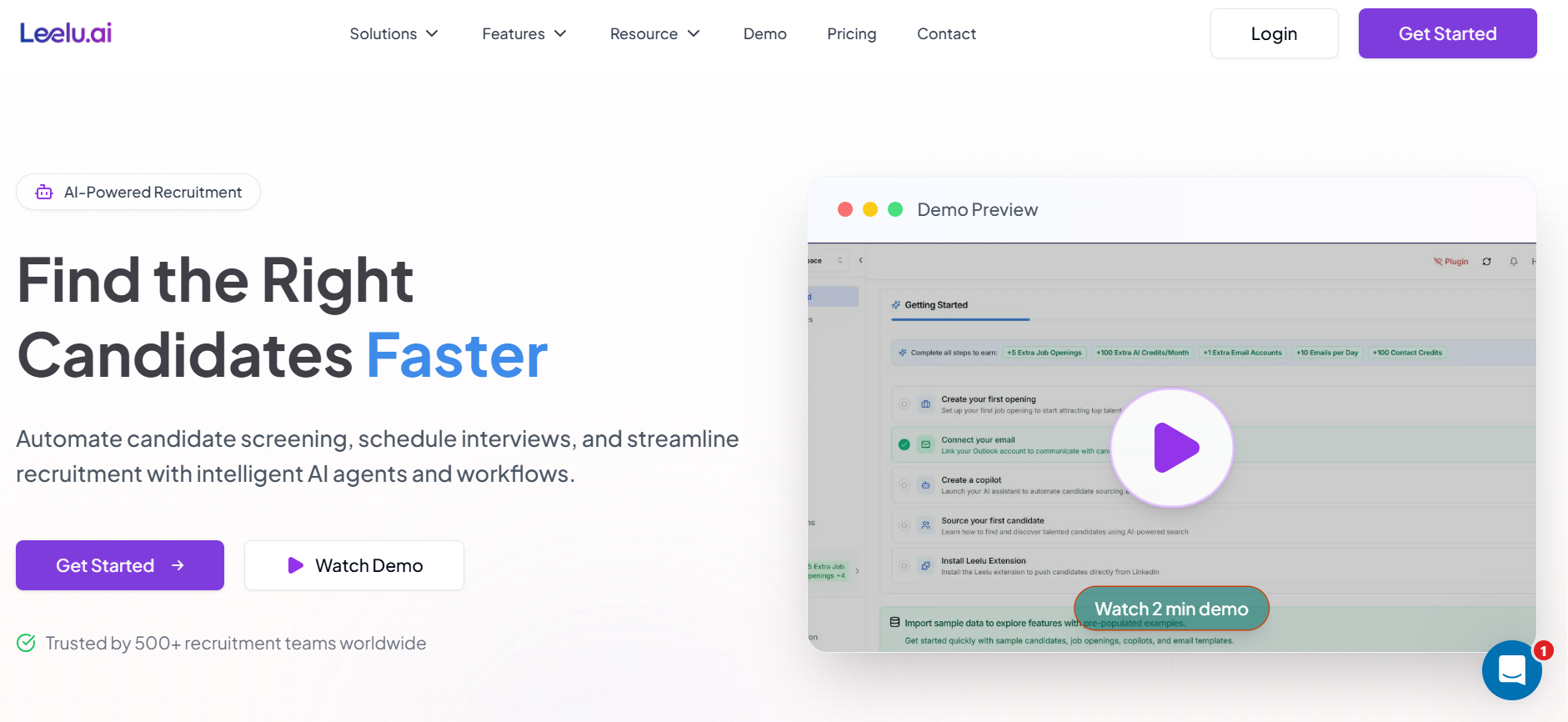
If your biggest challenge is managing sourcing, screening, outreach, and scheduling across multiple tools, this is where an end-to-end AI approach makes a difference.
Leelu AI acts as a recruiting copilot that handles the entire hiring workflow from start to finish, so you don’t have to switch between tools or do repetitive manual work.
Key Features:
- AI-powered cadidate sourcing from 500M+ profiles across platforms
- Resume parsing and AI-based candidate scoring for better matching
- Personalized outreach and automated follow-ups across channels
- Smart interview scheduling with calendar sync
- Unified candidate profiles and ATS integrations
Pricing:
- Starts from $79/month for small teams with basic AI features
- Growth plans range between $149–$499/month for advanced automation and integrations
- Enterprise pricing is custom (₹50,000+/month or $600+) based on hiring scale
- Free trial available for 14 days to test full features before committing
2. HireVue
Type: AI Interviewing & Candidate Screening Platform
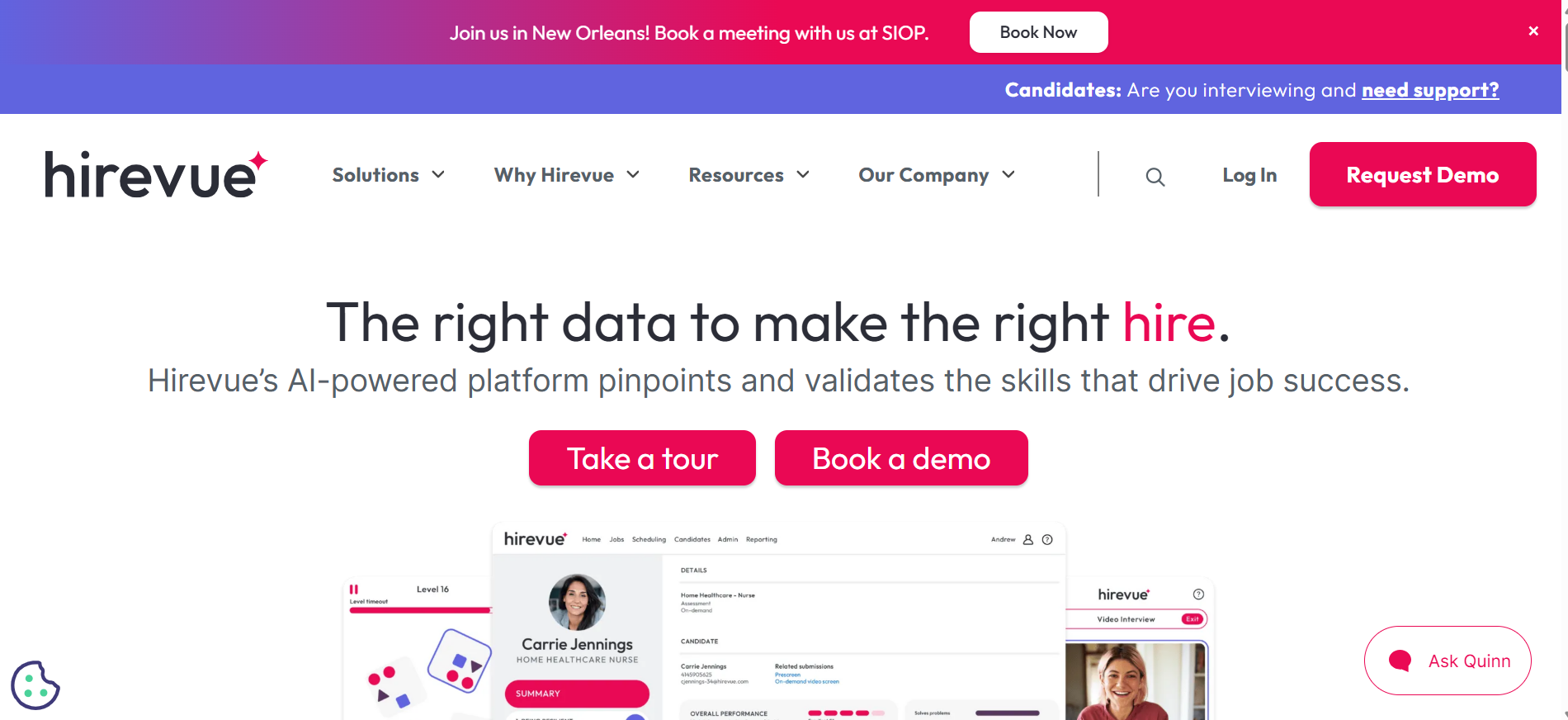
When screening candidates at scale becomes difficult, structured video interviews can help you evaluate candidates faster without scheduling every conversation manually.
HireVue focuses on automating early-stage interviews while maintaining consistency in candidate evaluation.
Key Features:
- On-demand video interviews for asynchronous screening
- AI-driven candidate evaluation and insights
- Structured interview workflows for consistency
- Integration with ATS and hiring platforms
Pricing:
- Custom enterprise pricing (based on usage and hiring volume)
3. Pymetrics
Type: AI Candidate Assessment & Matching Platform
If you want to go beyond resumes and understand how candidates think and behave, Pymetrics offers a different approach to screening.
It uses neuroscience-based games and AI to assess cognitive and emotional traits, helping you match candidates more accurately.
Key Features:
- Gamified assessments to evaluate cognitive and emotional traits
- AI-based matching between candidates and roles
- Bias-reduction algorithms for fair hiring
- Behavioral insights for better decision-making
Pricing:
- Custom pricing depending on company size and usage
4. Eightfold AI
Type: Talent Intelligence & AI Recruitment Platform
When your focus is on long-term talent strategy rather than just filling roles, you need deeper insights into your talent pool.
Eightfold AI helps you understand, source, and retain talent using AI-driven intelligence across the entire employee lifecycle.
Key Features:
- AI-powered talent sourcing and matching
- Deep talent insights and workforce planning
- Internal mobility and career path recommendations
- Diversity hiring and bias mitigation features
Pricing:
- Custom pricing based on enterprise requirements
5. Paradox (Olivia)
Type: HR Chatbot & Conversational AI Assistant
When candidate communication starts taking too much time, automation becomes essential to stay responsive.
Paradox, through its AI assistant Olivia, helps you handle conversations at scale without losing the human touch.
Key Features:
- AI chatbot for candidate conversations and FAQs
- Automated interview scheduling and reminders
- Career site and messaging integrations
- High-volume hiring support
Pricing:
- Custom pricing based on hiring needs
6. SeekOut
Type: Talent Sourcing & Recruitment Intelligence Platform
If finding niche or hard-to-reach talent is your biggest challenge, you need deeper sourcing capabilities.
SeekOut helps you discover candidates across multiple platforms with advanced filtering and insights.
Key Features:
- Advanced talent search across diverse data sources
- Diversity hiring filters and insights
- Talent pool analytics and reporting
- CRM features for candidate engagement
Pricing:
- Custom pricing
7. Fetcher
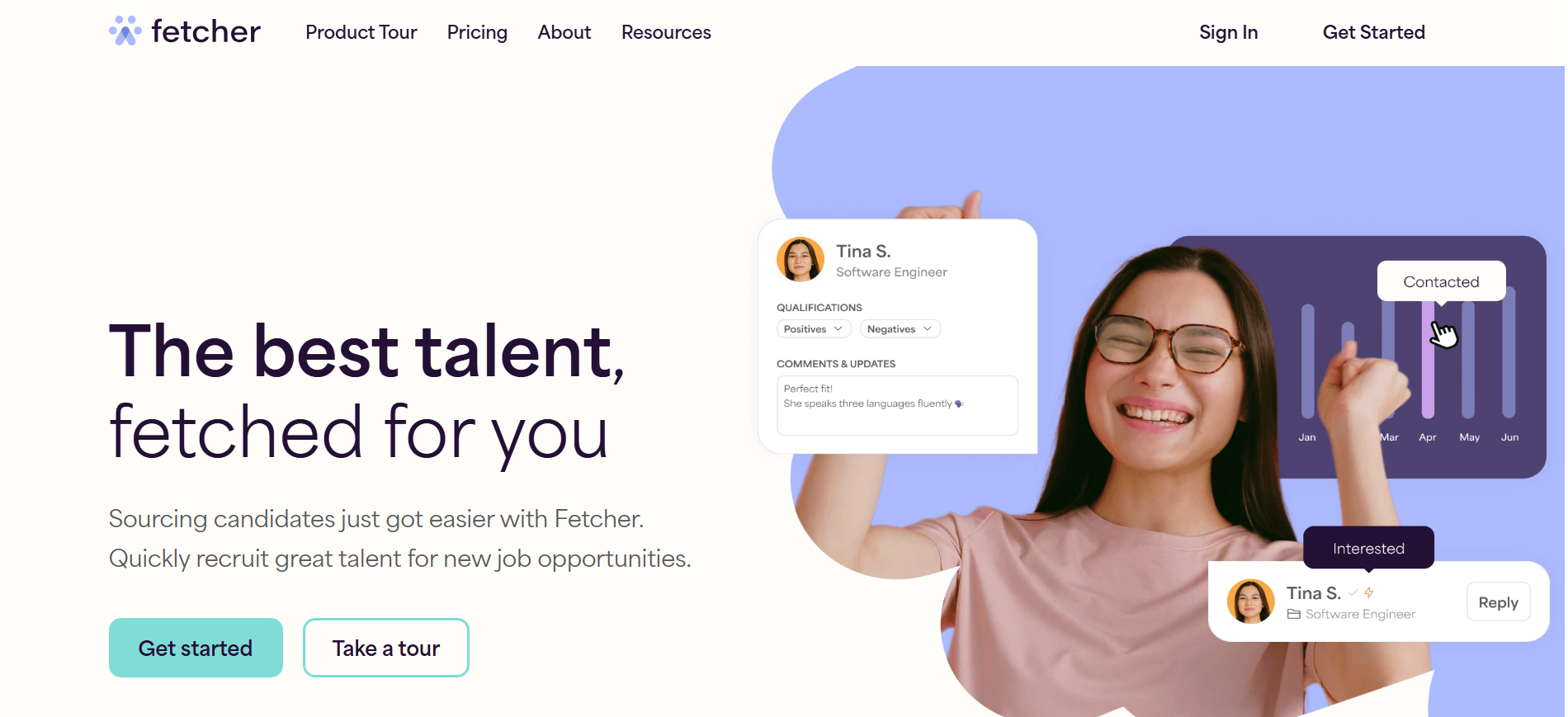
Type: AI Sourcing & Outreach Platform
Sourcing and outreach often feel like two separate tasks, but combining them saves time.
Fetcher automates both by finding candidates and initiating outreach campaigns.
Key Features:
- Automated candidate sourcing
- Email outreach campaigns with personalization
- Pipeline tracking and analytics
- Integration with ATS systems
Pricing:
- Starts around $149–$399/month (estimated entry tiers)
- Custom pricing for advanced plans
- Based on outreach volume + seats
8. hireEZ
Type: Recruitment Sourcing & Automation Platform
As hiring scales, managing sourcing workflows manually becomes inefficient.
hireEZ helps automate sourcing while giving you visibility into your talent pipeline.
Key Features:
- AI-powered candidate sourcing across platforms
- Market insights and talent analytics
- Outreach automation tools
- CRM and ATS integrations
Pricing:
- Custom pricing
9. Humanly
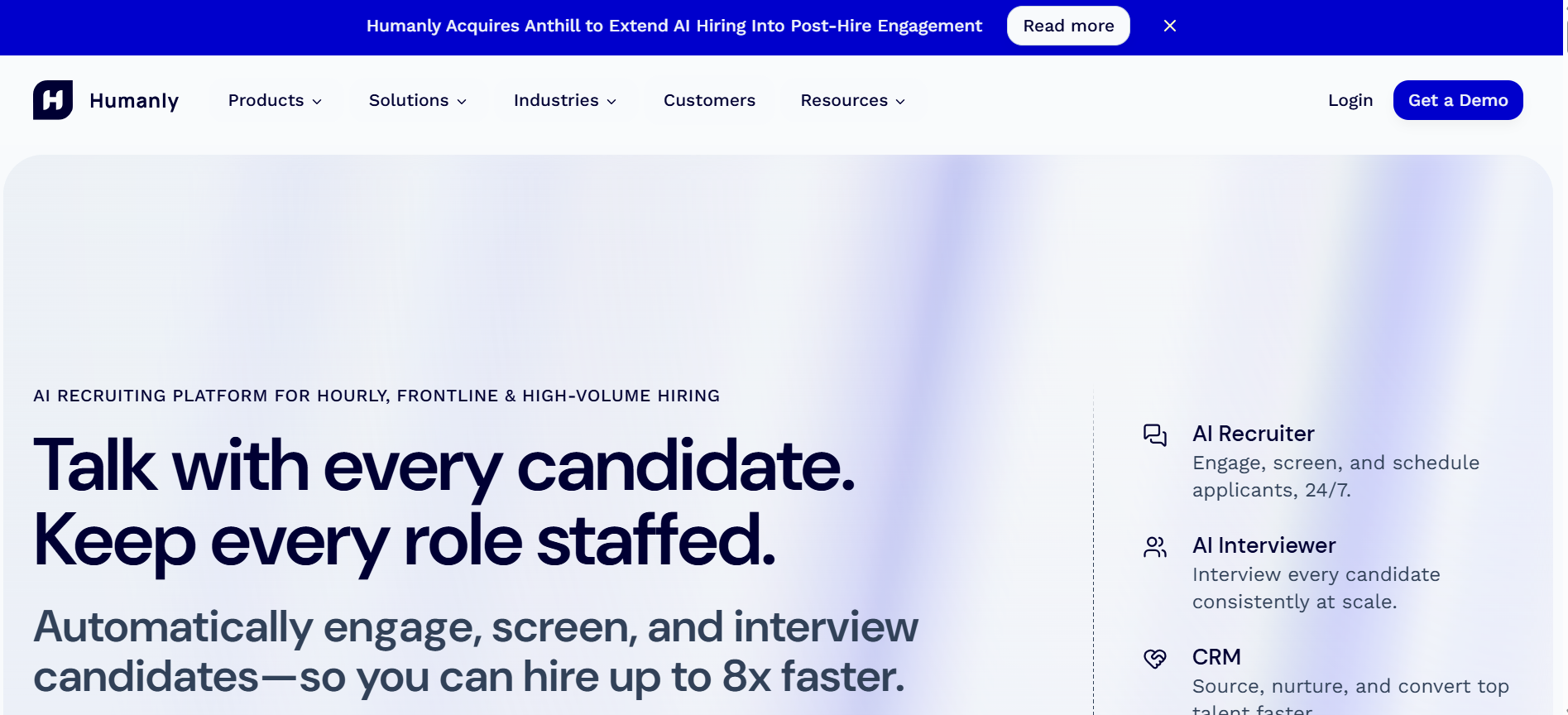
Type: AI Interviewing & Scheduling Platform
Screening and scheduling can slow down your hiring process if handled manually.
Humanly focuses on automating early conversations and interview coordination.
Key Features:
- AI-driven candidate screening conversations
- Automated interview scheduling
- Structured screening workflows
- Integration with existing HR tools
Pricing:
- Custom pricing
10. XOR AI
Type: HR Chatbot & Recruitment Automation Platform
For high-volume hiring, consistent communication is critical but difficult to maintain manually.
XOR AI helps automate candidate interactions across channels.
Key Features:
- AI chatbot for candidate engagement
- Multi-channel communication (SMS, chat, email)
- Automated screening and follow-ups
- Analytics and reporting
Pricing:
- Custom pricing
11. Arya by Leoforce
Type: AI Recruitment Platform
When you want a more holistic recruitment platform, combining sourcing and engagement is key.
Arya uses AI to simplify talent discovery and candidate engagement.
Key Features:
- AI-based candidate sourcing and matching
- Talent rediscovery from existing databases
- Automated engagement workflows
- Diversity hiring support
Pricing:
- Custom pricing
12. TurboHire
Type: Recruitment Automation & ATS Platform
Managing recruitment workflows across stages can become fragmented without the right system.
TurboHire combines automation with ATS functionality to streamline hiring.
Key Features:
- End-to-end recruitment automation
- Resume parsing and candidate ranking
- Interview scheduling and collaboration tools
- Analytics dashboard
Pricing:
- Custom pricing
13. Zoho Recruit
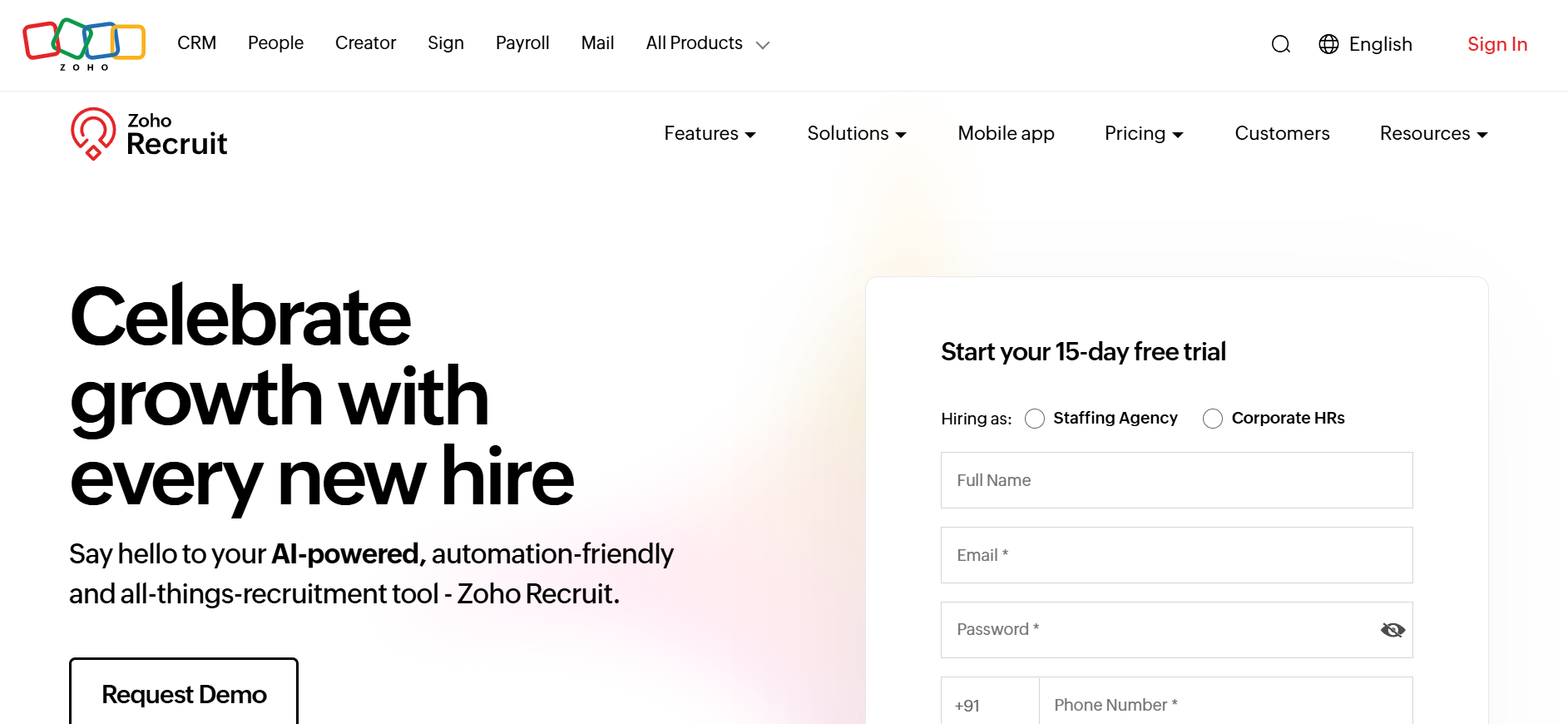
Type: Applicant Tracking System (ATS)
If you need a flexible and cost-effective ATS, Zoho Recruit is a popular choice.
It helps you manage candidates, jobs, and workflows in one place.
Key Features:
- Candidate tracking and pipeline management
- Resume parsing and automation workflows
- Customizable hiring pipelines
- Integration with other Zoho tools
Pricing:
- Free plan available
- Standard: ~₹1,500/user/month (~$18)
- Professional: ~₹2,500/user/month (~$30)
- Enterprise: ~₹3,000+/user/month (~$36)
14. Greenhouse
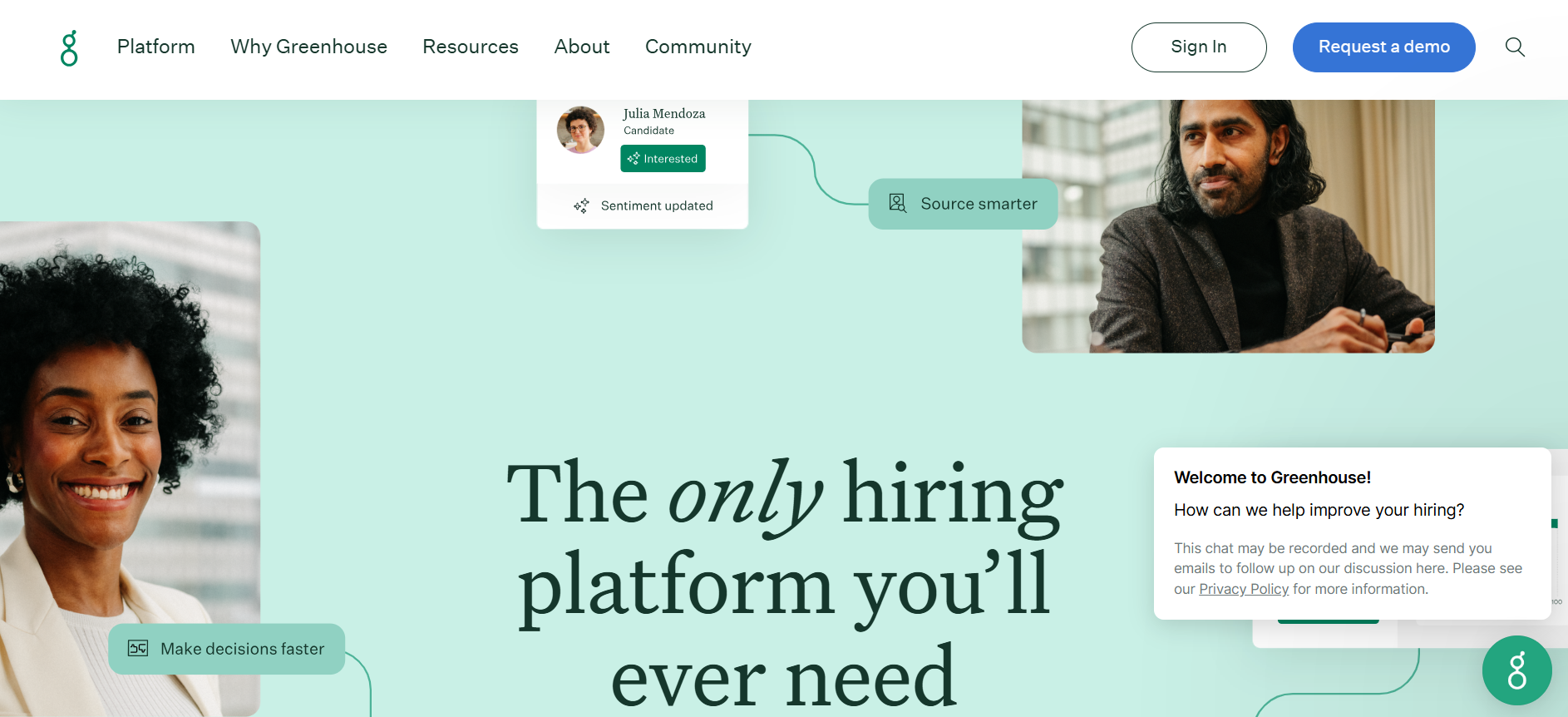
Type: Applicant Tracking System (ATS)
As your hiring process matures, structured workflows become more important.
Greenhouse helps you standardize hiring with strong collaboration features.
Key Features:
- Structured hiring workflows
- Interview scorecards and feedback tools
- Reporting and analytics
- Integration with HR tools
Pricing:
- Custom pricing
15. Lever
Type: ATS + Candidate Relationship Management (CRM)
When you want both candidate tracking and relationship management, a hybrid approach works best.
Lever combines ATS and CRM capabilities to help you nurture candidates over time.
Key Features:
- ATS + CRM functionality
- Candidate relationship tracking
- Pipeline analytics
- Automation workflows
Pricing:
- Custom pricing
16. Workable
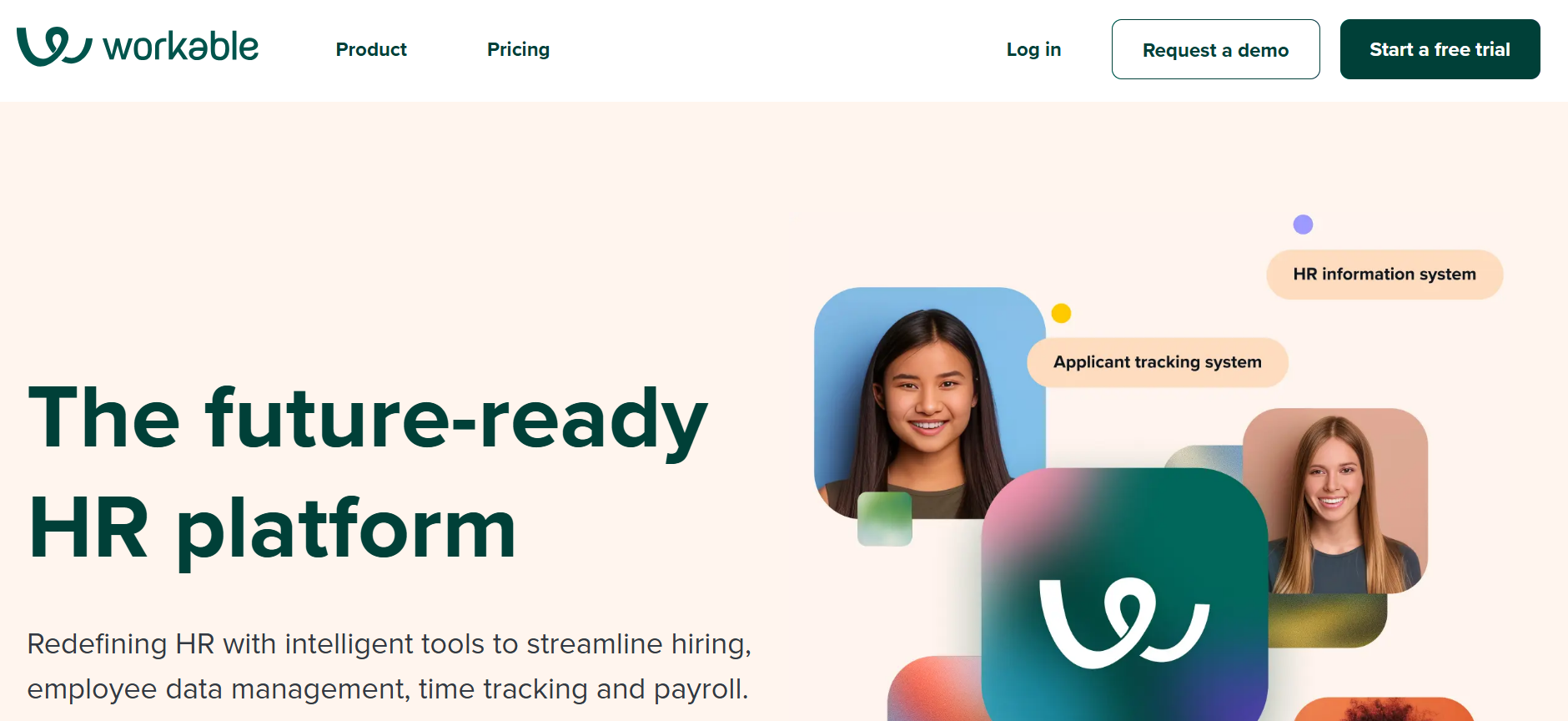
Type: Applicant Tracking System (ATS)
For growing teams, simplicity and usability matter as much as features.
Workable provides an easy-to-use ATS with built-in sourcing tools.
Key Features:
- Job posting and candidate tracking
- AI-powered candidate recommendations
- Interview scheduling tools
- Reporting dashboard
Pricing:
- Starter: ~$149/month
- Standard: ~$299/month
- Premier: ~$599/month
- Pricing varies by active jobs
17. SmartRecruiters
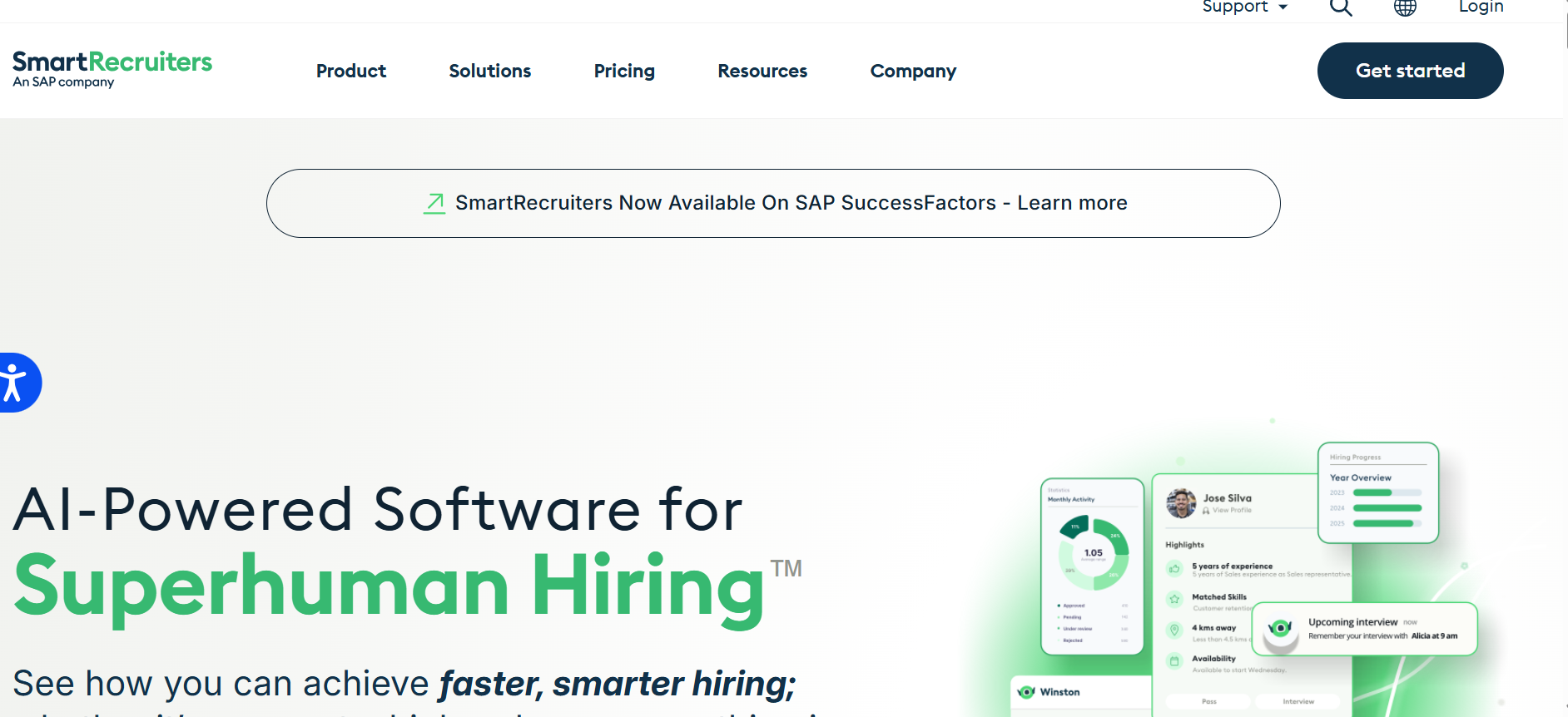
Type: ATS & Recruitment Suite
If you’re looking for a full recruitment suite, not just an ATS, this is where SmartRecruiters fits in.
It offers a comprehensive platform covering multiple hiring stages.
Key Features:
- End-to-end recruitment platform
- Candidate experience tools
- Marketplace integrations
- Analytics and reporting
Pricing:
- Custom pricing
18. BambooHR
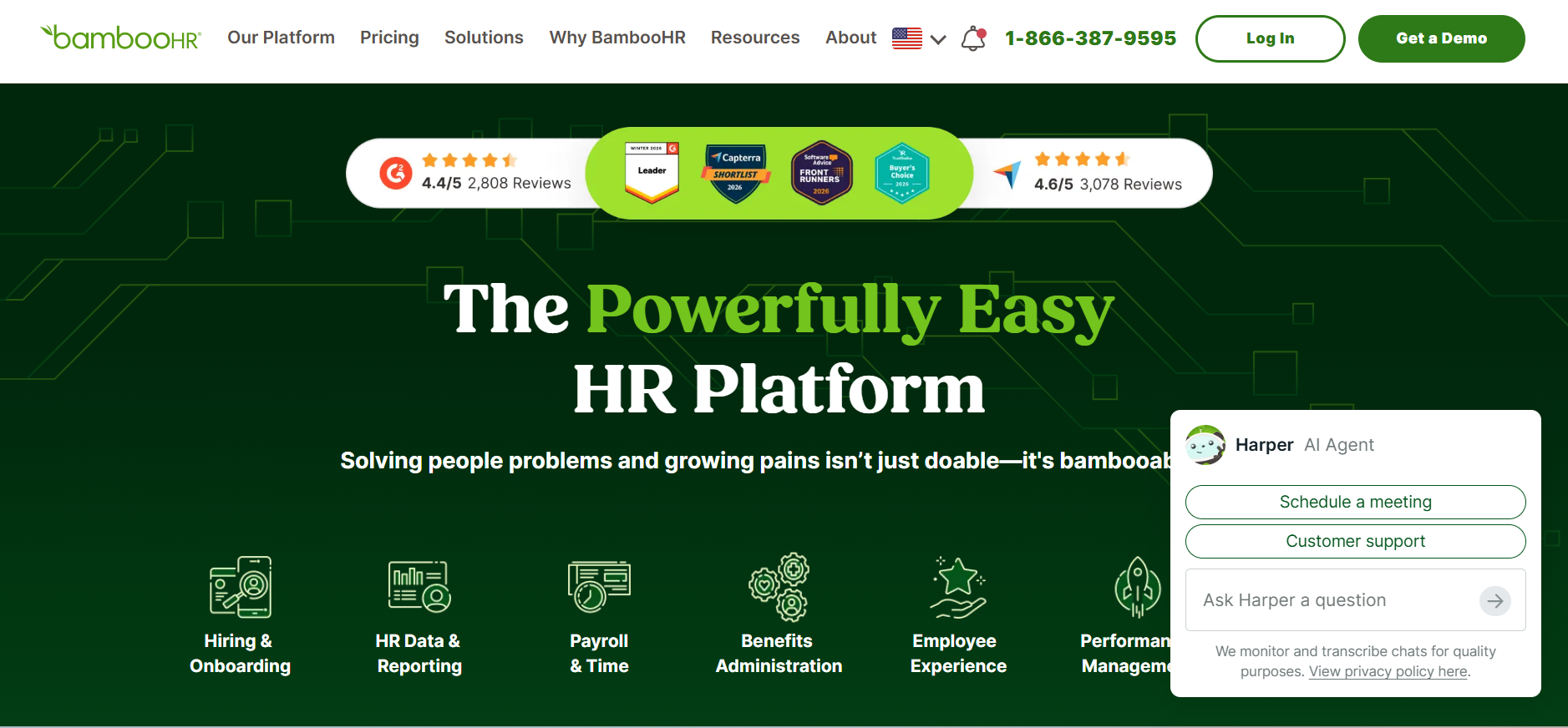
Type: Human Resource Information System (HRIS)
Once hiring is done, managing employee data becomes the next priority.
BambooHR helps you centralize and manage employee information efficiently.
Key Features:
- Employee data management
- Onboarding workflows
- Time-off tracking
- Reporting and analytics
Pricing:
- Custom pricing
19. Gusto
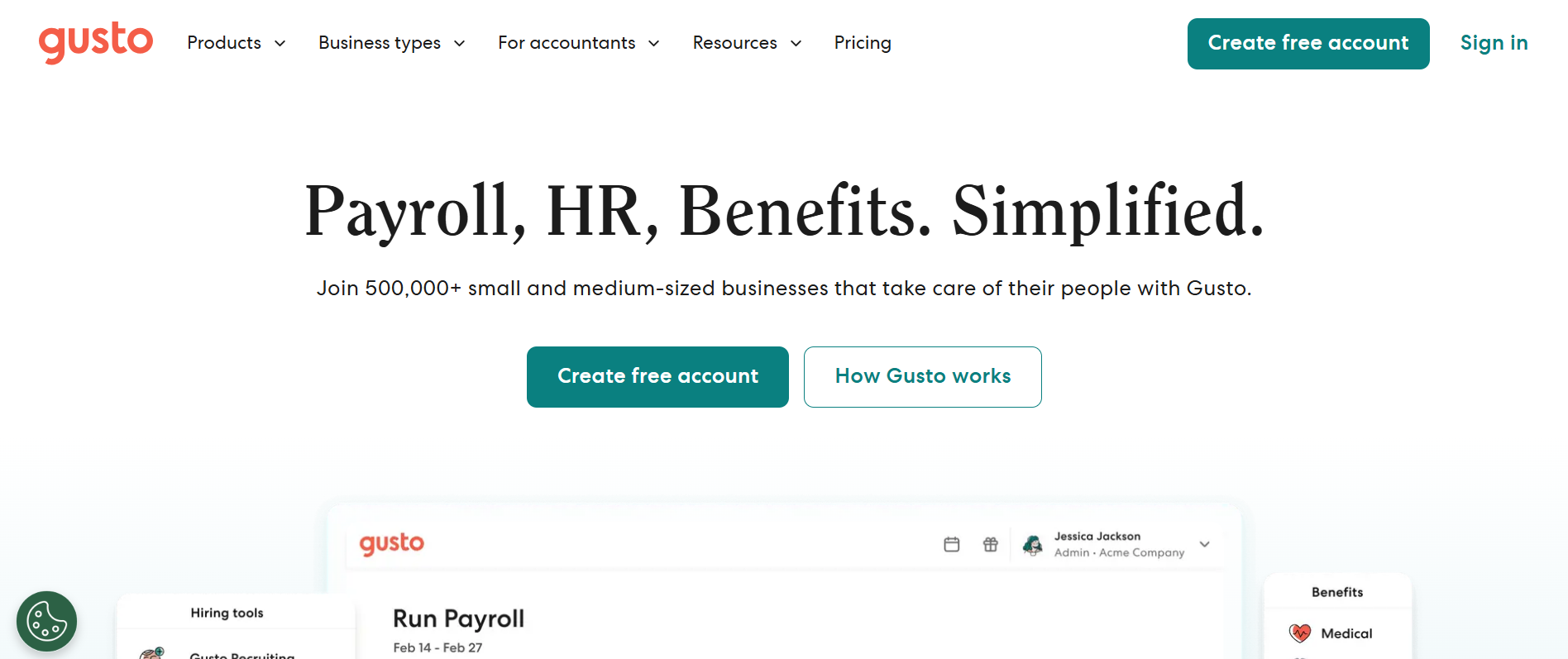
Type: Payroll & HR Platform
Payroll and compliance can quickly become complex without automation.
Gusto simplifies payroll while also supporting broader HR functions.
Key Features:
- Automated payroll processing
- Benefits and compliance management
- Employee onboarding tools
- Tax filing automation
Pricing:
- Simple: $40/month + $6/user
- Plus: $80/month + $12/user
- Premium: Custom pricing
20. ADP Workforce Now
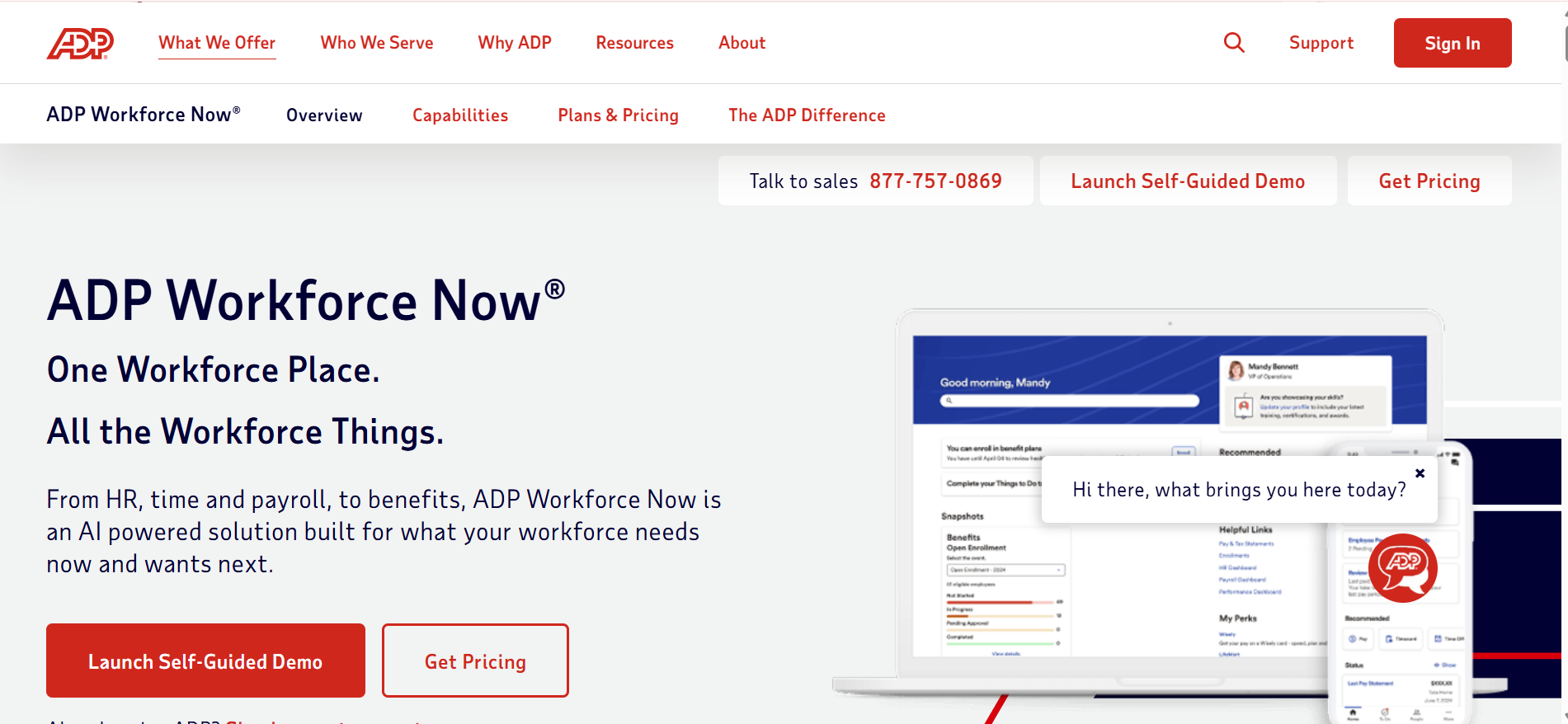
Type: Payroll & HRIS Platform
For larger organizations, scalability and compliance are critical.
ADP Workforce Now offers enterprise-level payroll and HR management capabilities.
Key Features:
- Payroll and tax management
- Benefits administration
- Workforce analytics
- Compliance support
Pricing:
- Custom pricing
21. Lattice
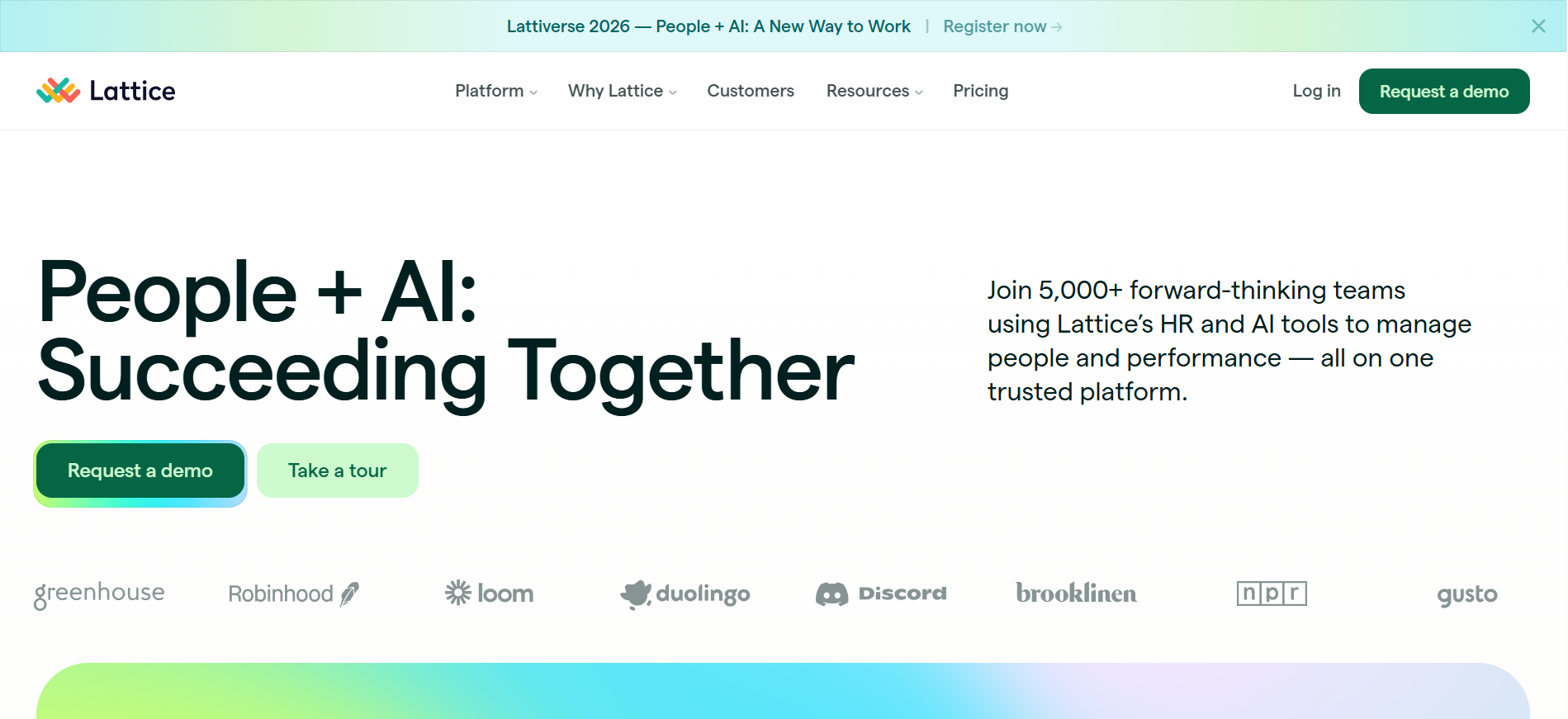
Type: Performance Management Platform
Performance management becomes more effective when it’s continuous, not occasional.
Lattice helps you track and improve employee performance over time.
Key Features:
- Performance reviews and goal tracking
- Employee engagement insights
- Feedback and recognition tools
- Analytics dashboard
Pricing:
- Performance Mgmt: ~$11/user/month
- Engagement: ~$4/user/month
- Bundles available
22. 15Five
Type: Performance & Employee Engagement Platform
Employee engagement and performance often go hand in hand.
15Five focuses on continuous feedback and employee development.
Key Features:
- Weekly check-ins and feedback tools
- Performance reviews
- Engagement surveys
- Goal tracking
Pricing:
- Engage: ~$4/user/month
- Perform: ~$10/user/month
- Total Platform: ~$16/user/month
23. Culture Amp
Type: Employee Engagement & People Analytics Platform
Understanding employee sentiment is key to retention and growth.
Culture Amp provides deep insights into engagement and workplace culture.
Key Features:
- Employee engagement surveys
- Performance and feedback tools
- People analytics
- Benchmarking insights
Pricing:
- Custom pricing
24. Glint
Type: Employee Engagement & Feedback Platform
Continuous feedback helps you identify issues before they grow.
Glint focuses on real-time engagement insights and actionable feedback.
Key Features:
- Pulse surveys and feedback tools
- Real-time analytics
- Manager insights and recommendations
- Integration with HR systems
Pricing:
- Custom pricing
25. Docebo
Type: Learning Management System (LMS)
Upskilling employees is essential for long-term growth.
Docebo helps you deliver and manage learning programs effectively.
Key Features:
- Learning management system (LMS)
- AI-powered content recommendations
- Course creation and tracking
- Reporting and analytics
Pricing:
- Custom pricing
26. Degreed
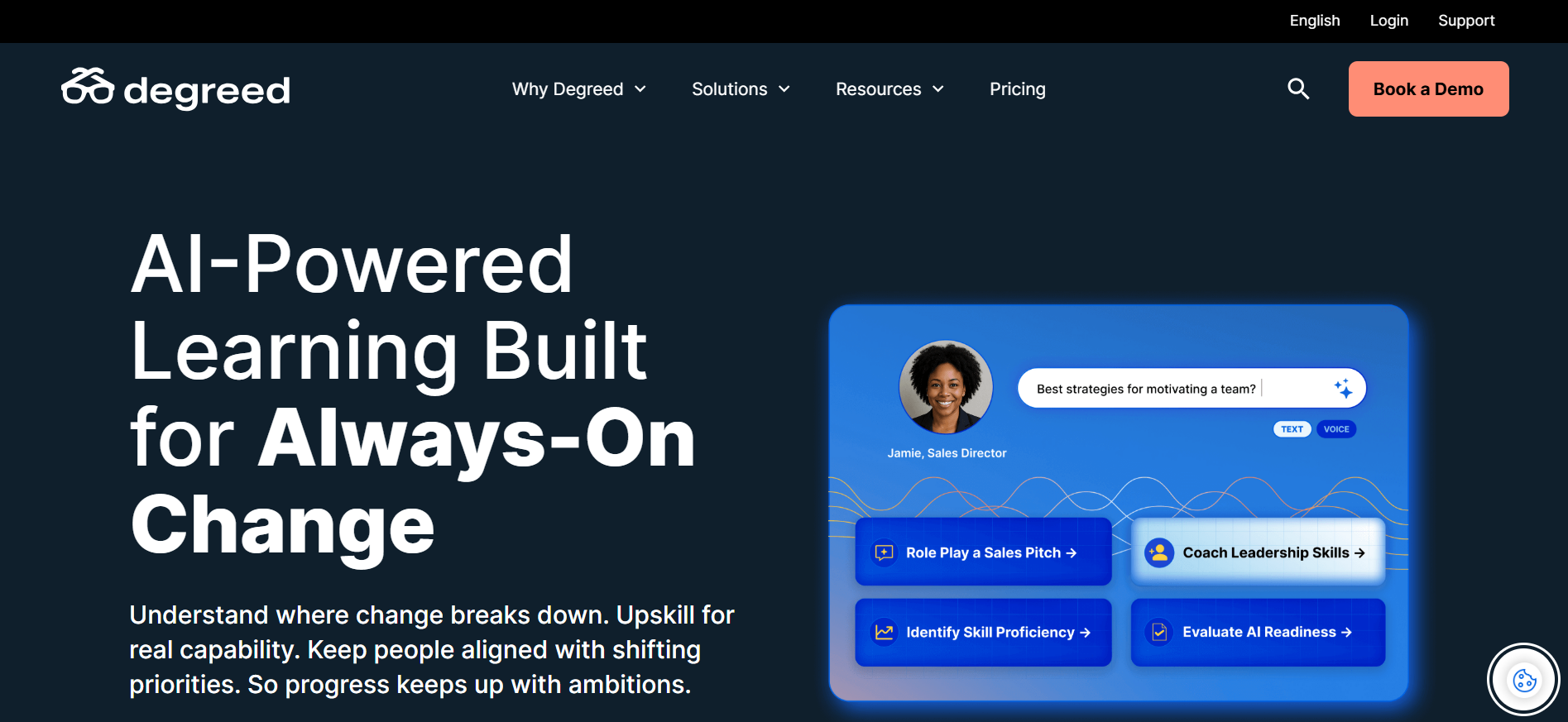
Type: Learning Experience Platform (LXP)
Modern learning goes beyond courses—it’s about continuous skill development.
Degreed helps you build personalized learning paths for employees.
Key Features:
- Skill tracking and development
- Learning path creation
- Content aggregation
- Analytics and insights
Pricing:
- Custom pricing
27. EdCast
Type: Learning & Upskilling Platform
If your focus is workforce transformation through learning, EdCast provides strong capabilities.
It helps you deliver personalized and scalable learning experiences.
Key Features:
- AI-driven learning recommendations
- Knowledge management tools
- Skill development tracking
- Integration with enterprise systems
Pricing:
- Custom pricing
28. Visier
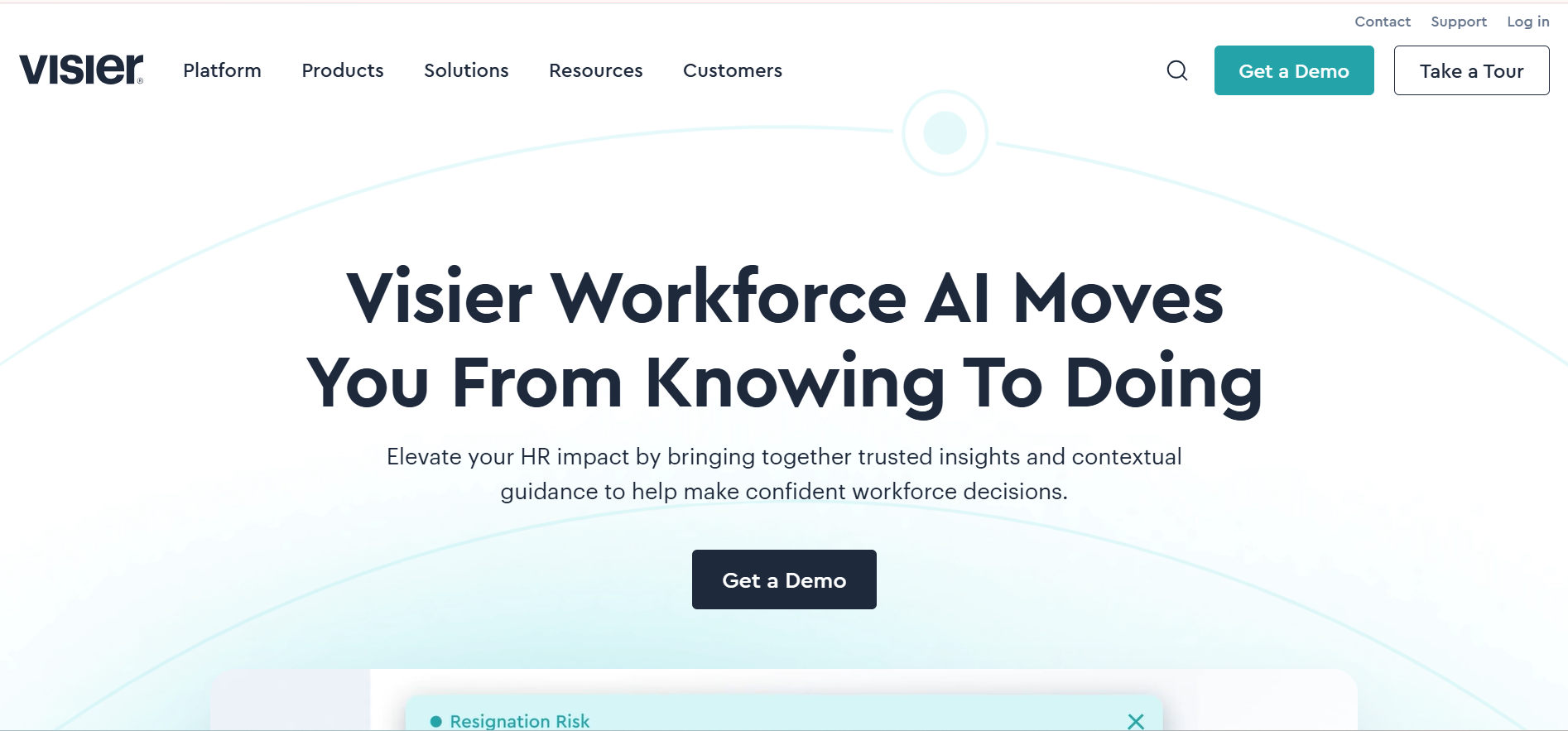
Type: HR Analytics & Workforce Planning Platform
Making strategic HR decisions requires deep data insights.
Visier helps you analyze workforce data and plan ahead effectively.
Key Features:
- Workforce analytics and dashboards
- Predictive insights
- Scenario planning tools
- Data integration capabilities
Pricing:
- Custom pricing
29. ChartHop
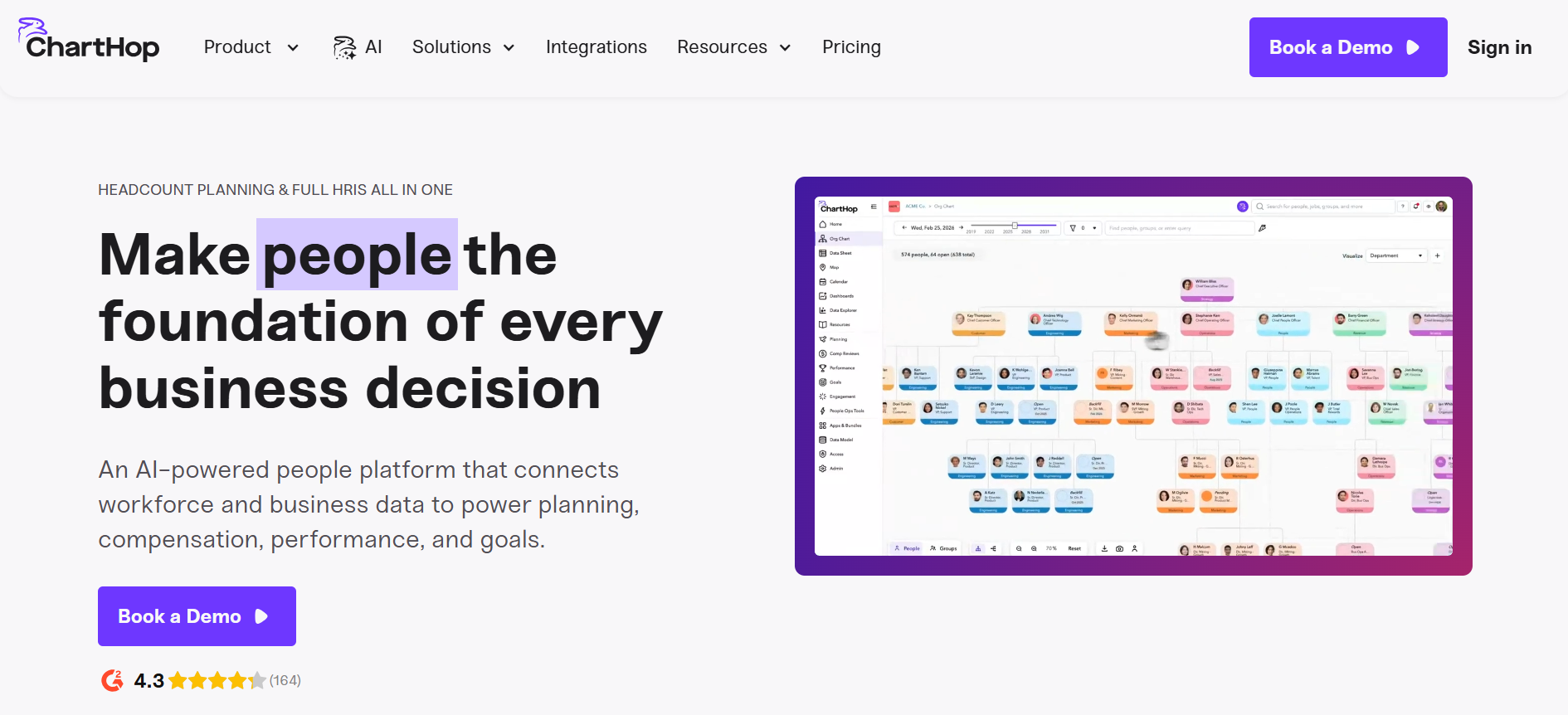
Type: People Analytics & Workforce Planning Platform
Visualizing your workforce data makes planning easier and clearer.
ChartHop helps you map and analyze your organization structure.
Key Features:
- Org chart visualization
- Workforce planning tools
- Compensation and headcount tracking
- Analytics dashboards
Pricing:
- Starts around ~$6–$12/user/month
- Custom enterprise plans available
30. People.ai
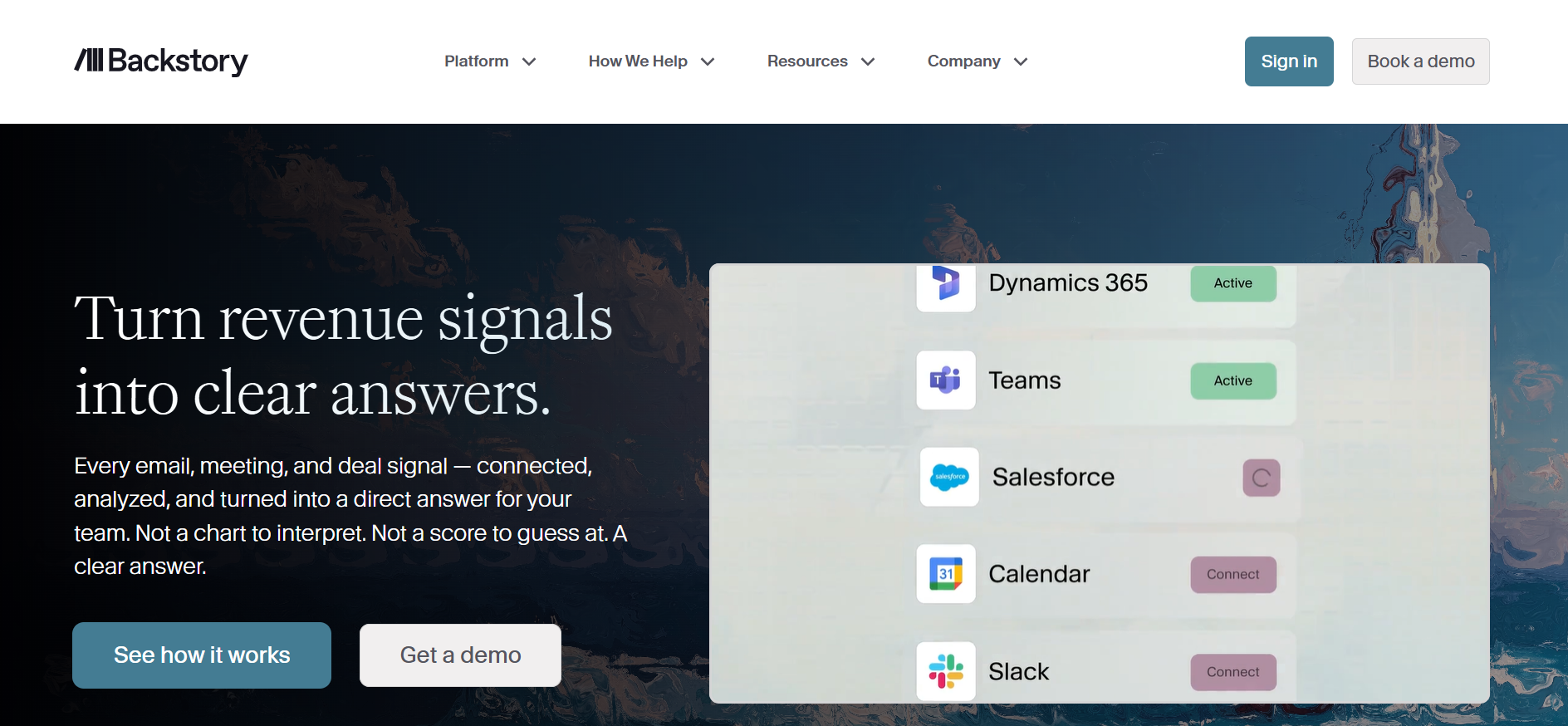
Type: Workforce Analytics & Productivity Platform
Understanding how your teams spend time can unlock productivity improvements.
People.ai focuses on activity tracking and performance insights.
Key Features:
- Workforce activity tracking
- Productivity insights
- Data integration across tools
- Performance analytics
Pricing:
- Custom pricing
How to Choose the Right AI Tools for Your HR Needs
With so many options available, choosing the right AI tools for HR can feel overwhelming.
The key is to align your choice with your biggest bottleneck instead of trying to adopt everything at once.
1. If you need end-to-end recruitment automation
If your hiring process feels fragmented across multiple tools, you should look for platforms that handle everything in one place.
End-to-end tools help you manage sourcing, screening, outreach, and scheduling without switching systems, which saves time and reduces complexity.
2. If your focus is improving employee experience
If retention and engagement are your priorities, focus on tools designed for communication, feedback, and support.
HR chatbots, engagement platforms, and performance tools help you stay connected with employees and create a more responsive work environment.
3. If you want better HR analytics and insights
When decisions are based on guesswork, it becomes harder to improve outcomes.
Analytics-focused tools give you visibility into hiring funnels, employee performance, and workforce trends so you can make more informed decisions.
4. If you are scaling HR operations across teams
As your organization grows, manual processes quickly become inefficient.
You need tools that can handle multiple roles, teams, and locations while maintaining consistency, helping you scale without increasing workload proportionally.
Suggested Reading:
Employee Onboarding Checklist: Ultimate Guide for HRCommon Mistakes When Using AI Tools in HR
AI tools can significantly improve your HR workflows, but only if they’re used the right way.
In many cases, the problem isn’t the tool itself, but how it’s implemented and managed.
1. Using too many disconnected tools
It’s easy to adopt multiple tools for different tasks, but without integration, this creates more complexity than efficiency.
You end up switching between platforms, duplicating data, and losing visibility across your hiring process.
A more connected approach always works better than stacking tools.
2. Over-automating without human oversight
Automation can speed things up, but relying on it completely can backfire.
AI should support your decisions, not replace them entirely, especially in areas like candidate evaluation and communication.
You still need human judgment to ensure quality and fairness.
3. Ignoring data quality and integration
AI tools are only as good as the data they rely on.
If your data is outdated, inconsistent, or scattered across systems, the results will be unreliable.
Clean, well-integrated data is essential for accurate insights and better outcomes.
4. Not aligning tools with HR goals
Sometimes tools are adopted because they seem useful, not because they solve a specific problem.
Without clear goals, it becomes difficult to measure whether the tool is actually adding value.
Every tool you use should directly support a defined HR objective.
5. Failing to measure impact and ROI
If you’re not tracking results, you won’t know what’s working.
Metrics like time-to-hire, candidate quality, and process efficiency help you evaluate performance.
Measuring impact ensures your investment in AI tools actually delivers meaningful results.
Key Takeaways
AI tools are no longer optional if you want to keep your HR processes efficient and scalable.
The real value comes from choosing tools that solve specific problems rather than trying to adopt everything at once.
- Focus on tools that align with your biggest HR bottlenecks
- Prioritize integration over using multiple disconnected platforms
- Use AI to support decisions, not replace human judgment
- Track key metrics to measure impact and improve continuously
When used correctly, AI helps you hire faster, improve quality, and manage HR workflows with far less manual effort.
Frequently Asked Questions
1. What are the best AI tools for HR?
The best AI tools for HR depend on your specific needs and use cases. Tools like Leelu AI, HireVue, and Lattice are widely used across hiring and performance management.
2. How do AI tools for HR improve hiring?
AI tools for HR automate sourcing, screening, and scheduling tasks. This reduces manual effort and helps you move candidates through the pipeline faster.
3. Is there an AI tool for HR for small businesses?
Yes, many AI tools are built specifically for smaller teams and growing companies. Tools like Leelu AI, Gusto, and BambooHR offer simple, scalable solutions for managing HR tasks.


