Hiring today doesn’t look the way it used to.
You’re no longer just posting jobs and waiting—you’re competing for attention, speed, and the right talent at the right time. That’s exactly why more companies are turning to AI recruiting software.
These tools help you automate repetitive tasks, move faster, and make better hiring decisions without burning out your team.
In this guide, you’ll discover:
- The best AI recruiting software tools available today
- What makes each tool stand out
- How to choose the right one for your hiring needs
Why Businesses Are Adopting AI Recruitment Software
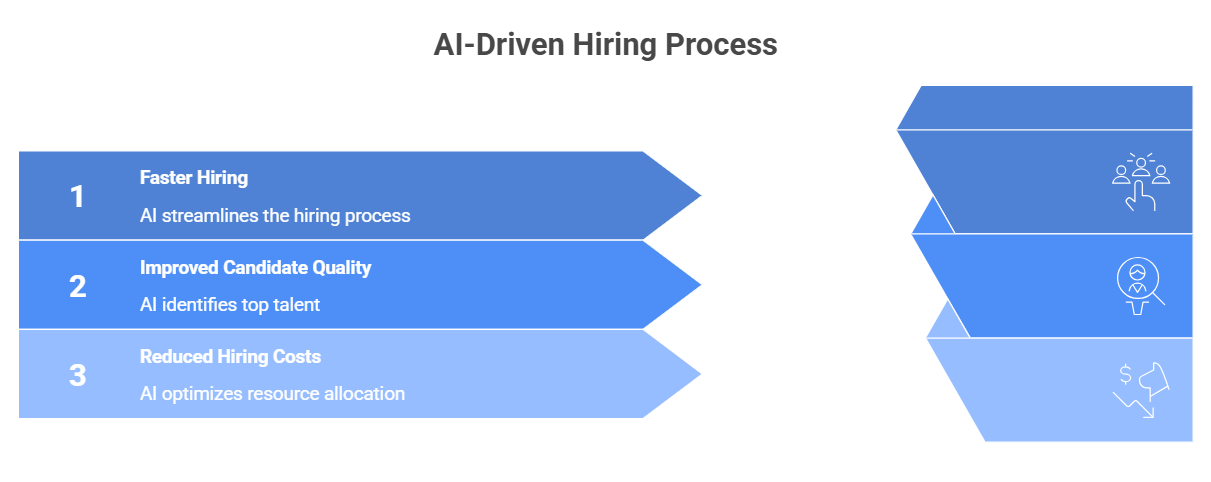
Businesses adopt AI recruitment software to hire faster, handle volume efficiently, and improve hiring decisions using data-driven insights.
1.Faster Hiring with Recruiting AI Software
When hiring slows down, you lose top candidates to faster competitors.
Recruiting AI software speeds up the process by automating resume screening and shortlisting, helping you reduce time-to-hire while focusing only on the most relevant candidates without getting stuck in manual review cycles.
2.Improved Candidate Quality with AI Recruiting Tools
Finding the right candidate often feels like searching for a needle in a haystack.
AI recruiting tools use data-driven matching and algorithms to identify the best-fit candidates, helping you shortlist more relevant profiles and make confident hiring decisions based on skills, experience, and job alignment.
3.Reduced Hiring Costs with AI Recruiting Software
Hiring can quickly become expensive when processes rely heavily on manual effort.
With AI recruiting software, you reduce repetitive tasks, minimize dependency on large recruiting teams, and improve efficiency, allowing you to lower overall hiring costs while still maintaining consistent and high-quality hiring outcomes.
4.Better Candidate Experience with AI-Based Recruitment Software
Candidates expect quick responses and smooth communication throughout the hiring process.
AI-based recruitment software enables faster updates, automated follow-ups, and personalized interactions, helping you create a seamless candidate experience that keeps applicants engaged and improves your employer brand.
Suggested Reading:
Passive Candidates: How to Source & Hire Top TalentKey Features to Look for in the Best AI Recruiting Software
The best AI recruiting software includes automation, data insights, and integrations that streamline workflows and help you make smarter hiring decisions.
1.AI Resume Screening and Matching
Manually reviewing resumes takes time and often leads to inconsistent shortlisting decisions.
With AI recruiting software, resumes are automatically filtered and ranked based on skills, experience, and job fit, helping you quickly identify the most relevant candidates while improving shortlisting accuracy and reducing the time spent on manual screening.
2.Candidate Engagement and Automation
Keeping candidates engaged throughout the hiring process can be challenging when handled manually.
AI recruitment software automates emails, follow-ups, and communication, ensuring timely responses and continuous engagement, so you can maintain a strong candidate experience without needing constant manual effort from your recruiting team.
3.Analytics and Hiring Insights
Without clear data, it’s difficult to understand what’s working in your hiring process.
AI software for recruitment provides real-time analytics and insights, helping you track hiring performance, identify bottlenecks, and refine your strategies, so you can make smarter, data-driven decisions that improve overall hiring outcomes.
4.Integration with ATS and HR Tools
Switching between multiple tools can slow down your hiring workflow and create data silos.
AI recruiting software integrates seamlessly with ATS and HR systems, centralizing candidate data and streamlining processes, so you can manage everything in one place while improving efficiency and reducing manual data handling.
Suggested Reading:
12 Benefits of Using an Applicant Tracking System to Hire Faster10 Best AI Recruiting Software Tools for Smarter Hiring
Here are the best AI recruiting software tools, selected based on features, usability, and impact, helping you compare strengths and limitations quickly.
1. Leelu.ai — AI-Powered Recruiting Automation
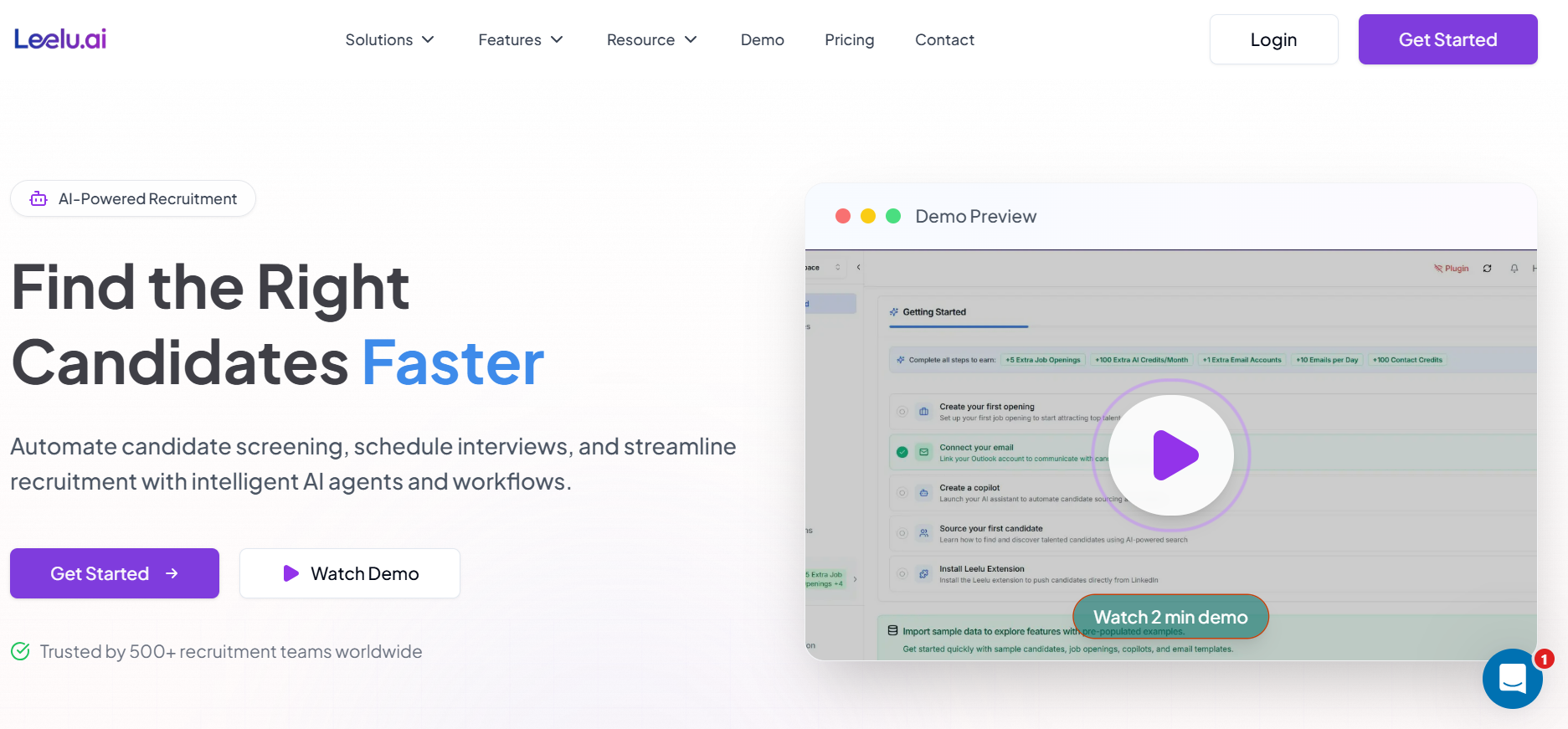
Hiring can slow down when you’re juggling sourcing, outreach, and scheduling manually.
Leelu.ai simplifies this by acting as an AI recruiting copilot that automates the entire process, helping you move from job posting to interviews faster while improving candidate engagement across multiple platforms.
Key Features
- Access 500M+ candidate profiles across LinkedIn, job boards, and ATS
- Screen and rank 1000+ resumes in minutes with AI scoring
- Send 100–300 personalized outreaches/day across email and LinkedIn
- Automate 24/7 follow-ups with AI-driven responses
- Schedule interviews in <1 minute with calendar sync
- Integrate with 10+ platforms including ATS systems
Pros
- Reduce hiring effort by 70–85% with end-to-end automation
- Move from job post to first interview in ~24 hours
- Improve response rates by 40–60% with personalized outreach
- Scale hiring without increasing team size or tools
- Manage entire hiring pipeline in 1 platform
Cons
- Initial setup requires time to configure workflows properly
- Advanced features may feel overwhelming for new users
- Requires optimization to fully unlock automation benefits
Pricing
- Starts from $79/month for small teams with basic AI features
- Growth plans range between $149–$499/month for advanced automation and integrations
- Enterprise pricing is custom (₹50,000+/month or $600+) based on hiring scale
- Free trial available for 14 days to test full features before committing
2. HireVue — AI Video Interviewing Platform
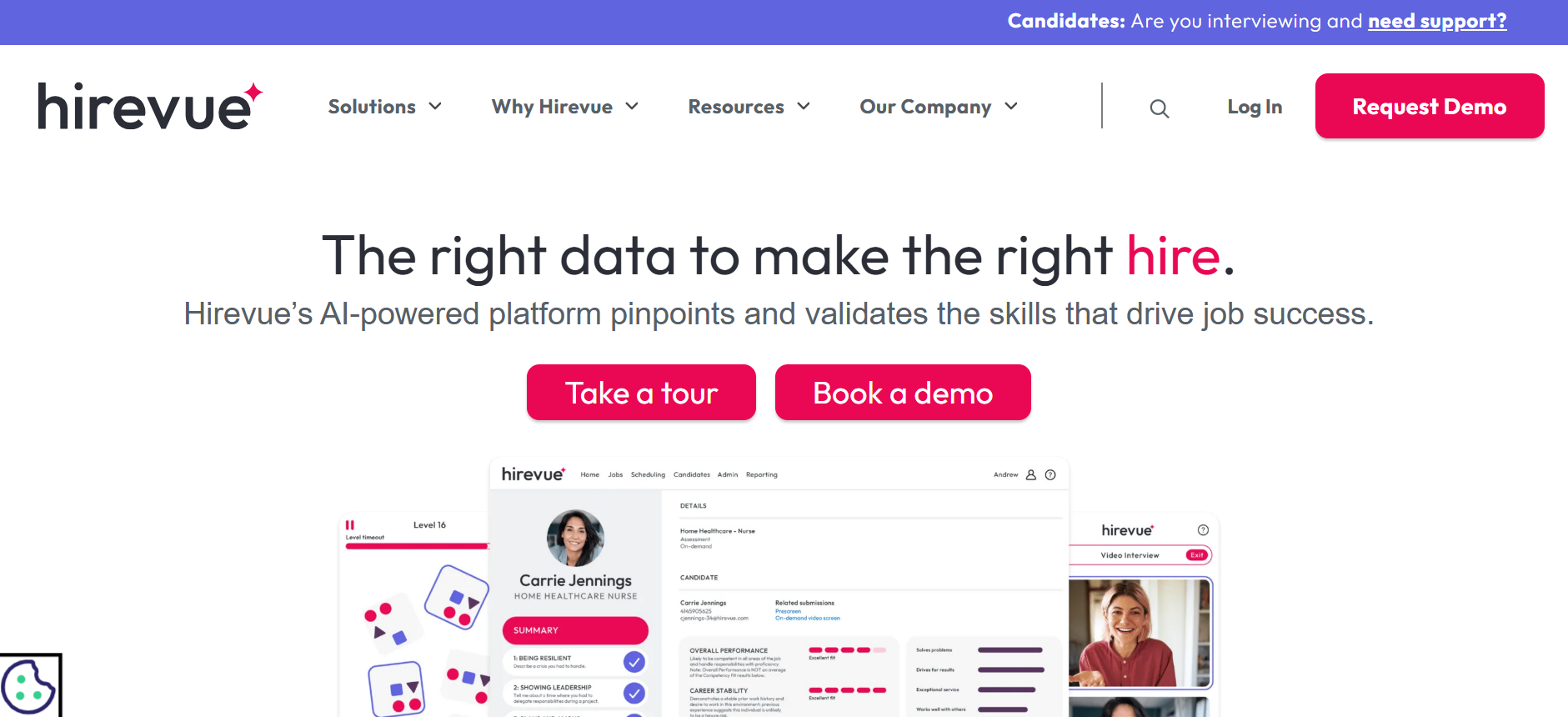
Screening candidates manually becomes difficult when you’re hiring at scale.
HireVue focuses on AI-powered video interviews and assessments, helping you evaluate candidates faster, reduce manual screening time, and make more consistent hiring decisions using structured insights.
Key Features
- AI-powered on-demand video interviews for faster screening
- Built-in candidate assessments and skill evaluations
- Automated interview scheduling and coordination
- Structured interview workflows for consistent evaluation
- Interview analytics for better hiring insights
Pros
- Ideal for high-volume hiring (1000+ candidates)
- Saves hours with automated video interviews
- Provides structured and consistent candidate evaluations
- Reduces dependency on manual screening rounds
Cons
- Can feel less personal compared to human interaction
- Requires candidates to adapt to video-based interviews
- Not ideal for roles needing deep human interaction early
Pricing
- Custom pricing based on company size and hiring volume
- Typically starts around $35,000–$100,000/year for enterprises
- No free plan; demos available for evaluation
- Best suited for mid to large-sized organizations
3.Tezi — AI Recruiting Automation Platform
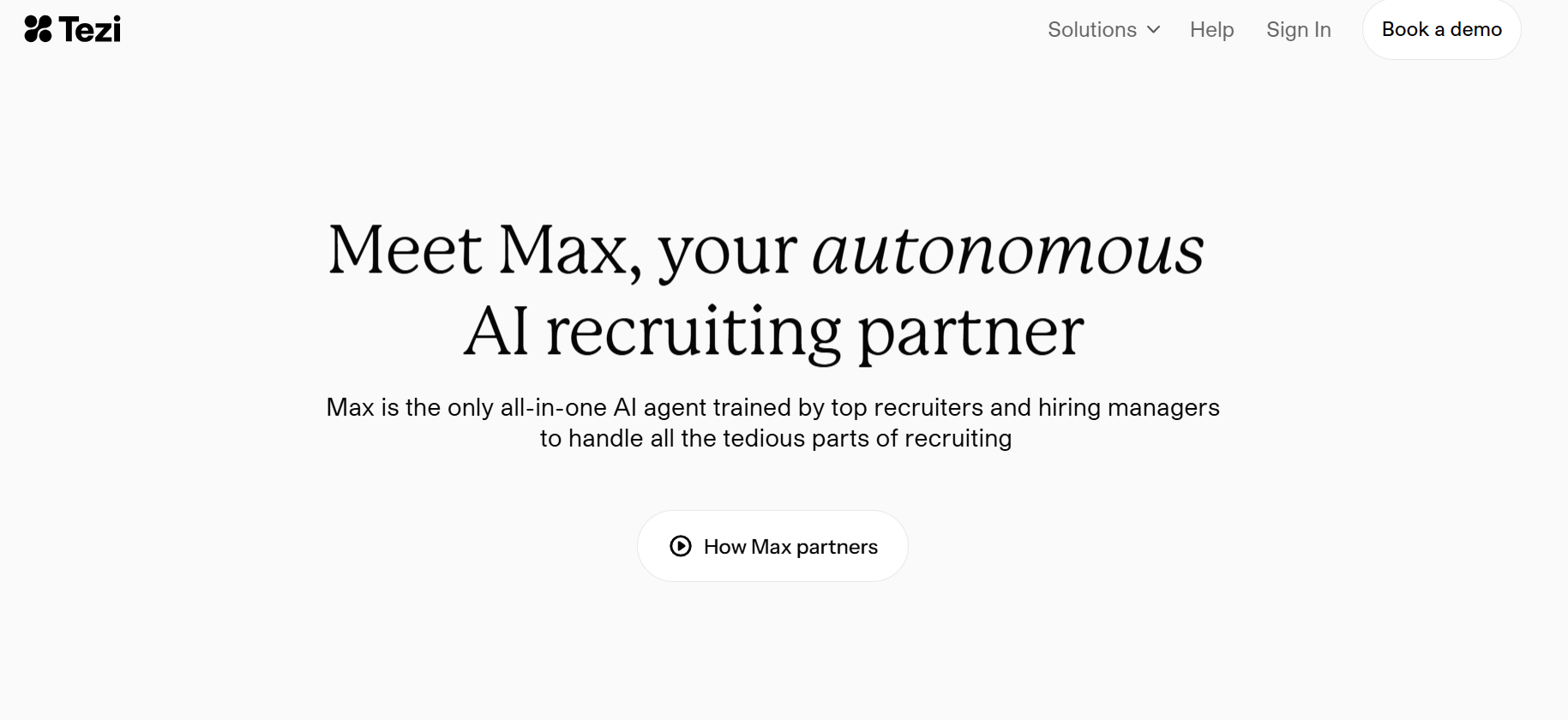
Managing sourcing, screening, and scheduling manually slows down your hiring process.
Tezi works like a virtual recruiter, automating repetitive tasks and helping you move faster while improving candidate engagement and overall hiring efficiency.
Key Features
- Source candidates from multiple platforms simultaneously
- Screen and shortlist 100s of candidates in minutes
- Automate interview scheduling in <1–2 minutes
- Chatbot-driven engagement with 24/7 candidate responses
- Integrates with ATS + job platforms (5–10+ tools)
Pros
- Reduces manual workload by 60–80% through automation
- Speeds up hiring cycles by 2–3x faster screening
- Handles sourcing, screening, and scheduling in 1 workflow
- Easy to use for teams scaling hiring without adding recruiters
Cons
- Initial setup may take 1–2 days for workflow customization
- Advanced features require time to fully understand
- Needs optimization to achieve maximum efficiency gains
Pricing
- Custom pricing based on team size and hiring volume
- Typically ranges from $99–$499/month for growing teams
- Enterprise plans available at $1,000+/month
- Demo required for exact pricing and feature access
Suggested Reading:
What is Full Desk Recruiting4. Eightfold AI — Talent Intelligence Platform
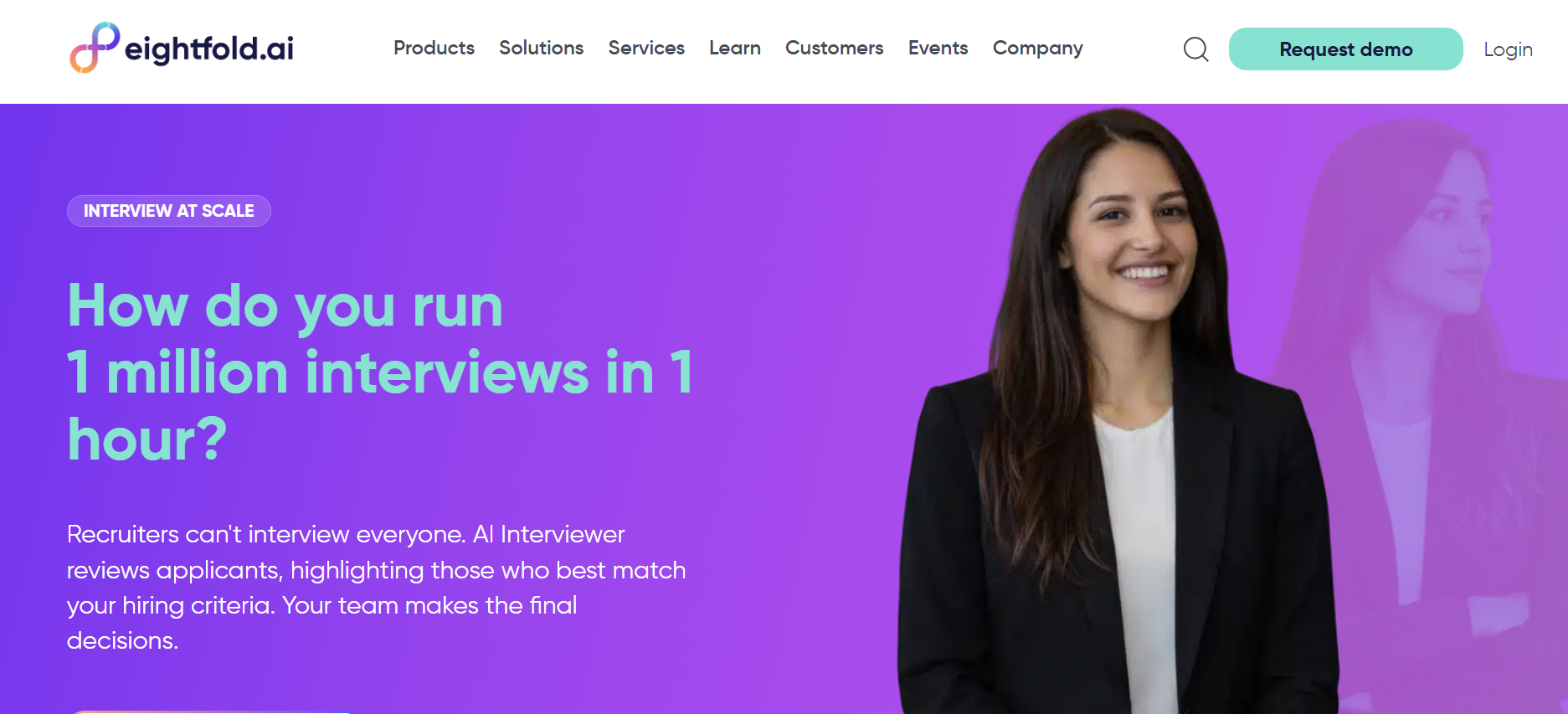
Hiring at scale requires more than just sourcing and screening candidates.
Eightfold AI uses deep learning to match talent with roles while supporting sourcing, screening, and workforce planning, helping large organizations make smarter, long-term hiring decisions.
Key Features
- AI-powered talent matching across large candidate datasets
- Workforce planning and talent intelligence insights
- Diversity hiring tools to reduce bias
- Predictive analytics for future hiring needs
- Centralized platform for end-to-end talent management
Pros
- Delivers deep data insights for strategic hiring decisions
- Strong candidate matching with AI-driven accuracy
- Supports enterprise-level hiring and workforce planning
- Helps improve diversity and long-term talent strategy
Cons
- Complex setup that may take weeks to implement fully
- Can feel overwhelming for smaller teams
- Requires training to use advanced features effectively
Pricing
- Enterprise pricing with custom quotes based on requirements
- Typically ranges from $50,000–$200,000+/year
- No free plan; demos available for large organizations
- Best suited for large enterprises with high hiring scale
5. SeekOut — AI Candidate Sourcing Tool
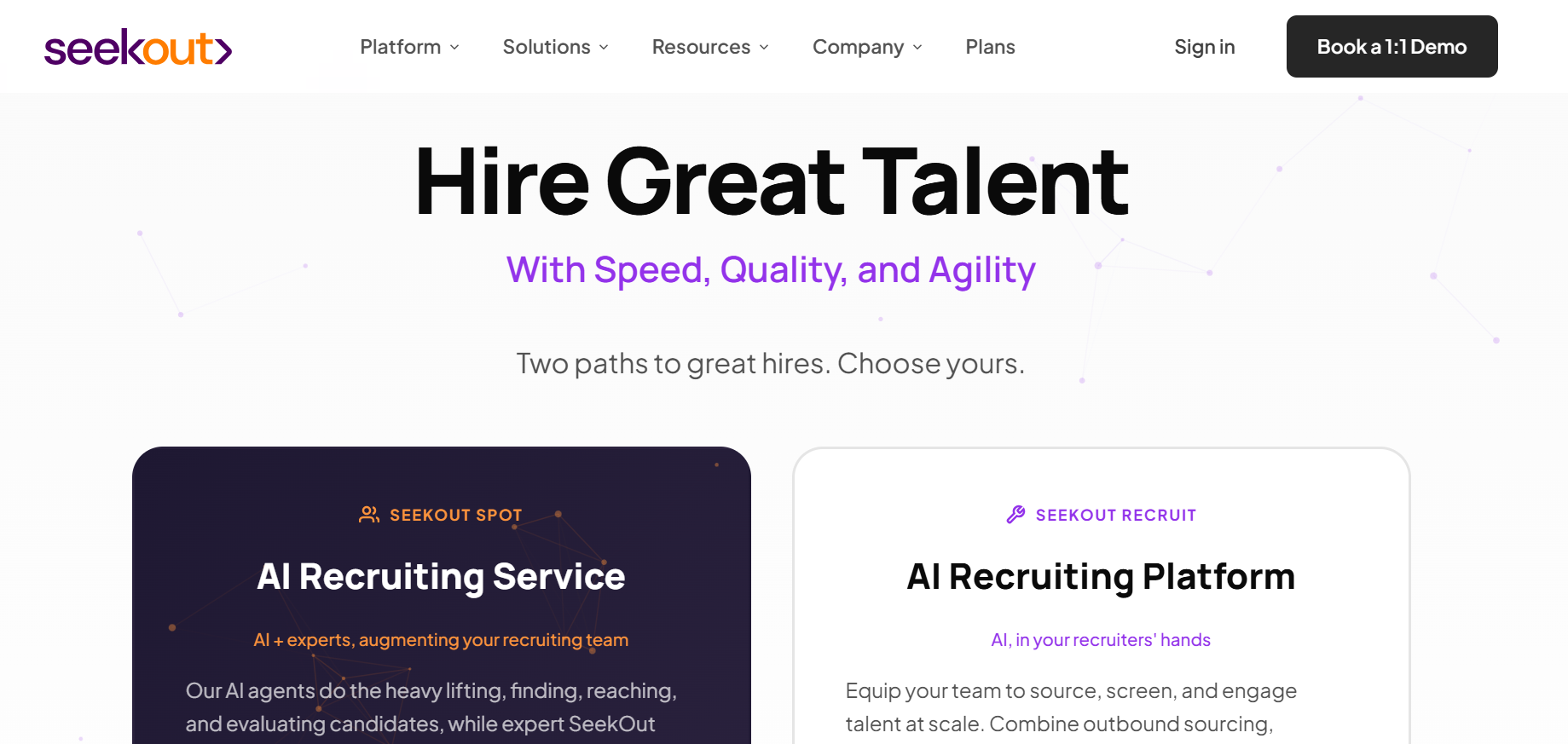
Finding niche or hard-to-reach talent can slow down your hiring process significantly.
SeekOut focuses on AI-powered sourcing, helping you discover high-quality candidates from large datasets using advanced filters, making it ideal for specialized and technical hiring needs.
Key Features
- Advanced search filters across millions of candidate profiles
- AI-powered candidate recommendations for better matches
- Diversity insights to support inclusive hiring
- Talent pool insights for niche and technical roles
- Easy export and integration with ATS tools
Pros
- Excellent for niche and technical roles (IT, engineering, etc.)
- Strong sourcing capabilities with deep filtering options
- Helps uncover passive candidates not easily found elsewhere
- Improves diversity hiring with built-in insights
Cons
- Limited automation beyond sourcing workflows
- Requires integration with other tools for end-to-end hiring
- Not ideal as a complete AI recruitment solution
Pricing
- Custom pricing based on team size and feature access
- Typically ranges from $499–$1,500/month
- No free plan; demos available
- Best suited for sourcing-focused recruiting teams
6. HireEZ — AI Recruiting Platform
Outbound recruiting becomes challenging when you’re managing sourcing and engagement separately.
HireEZ combines both into one platform, helping you discover, connect, and engage candidates across multiple channels, making your outbound recruiting faster and more streamlined.
Key Features
- Multi-channel sourcing across LinkedIn, job boards, and databases
- AI-powered candidate matching for better targeting
- Outreach automation with personalized messaging
- Centralized platform for sourcing and engagement
- Chrome extension for quick candidate discovery
Pros
- Strong outbound recruiting capabilities for proactive hiring
- Makes candidate engagement simple and scalable
- Helps reach passive candidates effectively
- Easy-to-use interface for sourcing and outreach
Cons
- Limited focus on full hiring pipeline automation
- Requires additional tools for screening and scheduling
- Not ideal for end-to-end recruitment workflows
Pricing
- Custom pricing based on usage, features, and team size
- Typically ranges from $169–$499/month per user
- No free plan; demos available
- Best suited for outbound-focused recruiting teams
7. Manatal — AI Recruitment CRM
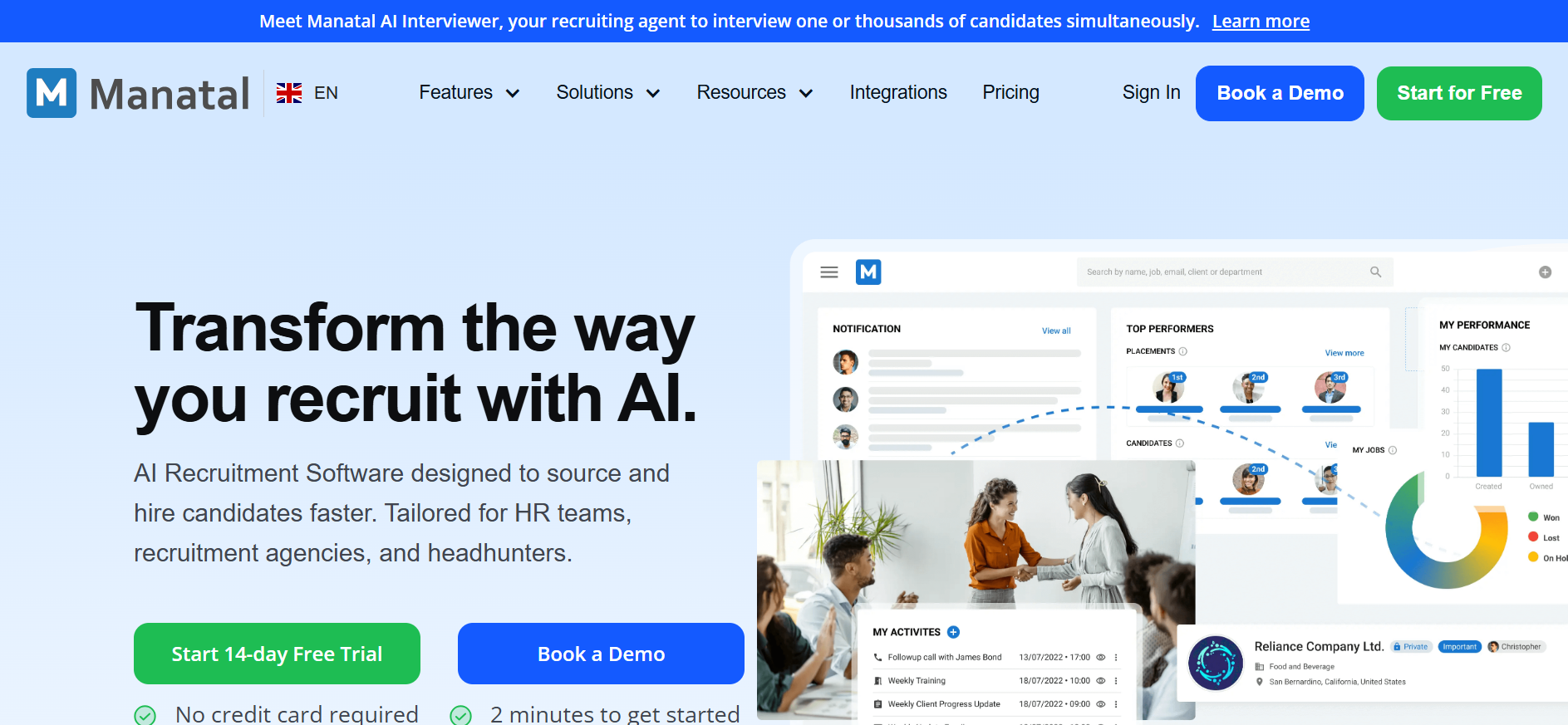
Managing candidates and tracking hiring progress can get messy without the right system.
Manatal combines ATS and CRM capabilities into one simple platform, helping you manage candidates, track pipelines, and automate workflows, making it ideal for small to mid-sized teams.
Key Features
- Candidate tracking across the entire hiring pipeline
- AI-powered recommendations for better candidate matching
- Visual pipeline management for easy tracking
- Resume parsing and profile enrichment
- Integration with job boards and HR tools
Pros
- Easy-to-use interface with minimal learning curve
- Affordable pricing for small and growing teams
- Combines ATS and CRM in one platform
- Quick setup compared to enterprise tools
Cons
- Limited advanced AI capabilities compared to larger platforms
- Fewer automation features for complex hiring workflows
- Not ideal for large-scale or enterprise hiring needs
Pricing
- Starts from $15–$35/user/month
- Affordable monthly plans for small businesses
- Free trial available for 14 days
- Best suited for startups and mid-sized teams
8. Zoho Recruit — AI Recruitment Software
If you’re looking for a flexible hiring solution without high costs, customization becomes important.
Zoho Recruit offers a mix of ATS, automation, and analytics, helping you manage hiring workflows efficiently while giving you the flexibility to adapt the system based on your business needs.
Key Features
- Resume parsing to extract and organize candidate data
- Workflow automation for repetitive hiring tasks
- Customizable pipelines and hiring stages
- Reporting and analytics for performance tracking
- Seamless integration with the Zoho ecosystem
Pros
- Affordable pricing for small to mid-sized businesses
- Highly customizable workflows and pipelines
- Strong integration with Zoho apps (CRM, HR, etc.)
- Easy to scale as your hiring needs grow
Cons
- AI features are relatively basic compared to advanced tools
- Limited deep automation and predictive analytics
- May require customization for complex hiring workflows
Pricing
- Free plan available with limited features
- Paid plans start from $25–$75/user/month
- Enterprise plans available for advanced needs
- Best suited for budget-conscious and growing teams
9. TurboHire — AI-Based Recruitment Software
When your hiring process lacks structure, it becomes harder to scale efficiently.
TurboHire focuses on automation and analytics, helping you streamline workflows, improve candidate matching, and make better hiring decisions using data-driven insights.
Key Features
- AI-powered candidate matching for better shortlisting
- Workflow automation across hiring stages
- Hiring analytics and performance tracking
- Resume parsing and candidate ranking
- Interview scheduling and pipeline management
Pros
- Strong analytics for data-driven hiring decisions
- Good workflow automation for structured hiring
- Helps improve overall hiring efficiency
- Suitable for scaling recruitment processes
Cons
- Requires setup and training to use effectively
- Interface may feel complex for new users
- Needs time to fully optimize workflows
Pricing
- Custom pricing based on organization size and hiring needs
- Typically ranges from $5,000–$25,000/year
- No free plan; demos available
- Best suited for mid to large-sized companies
10. Fetcher — AI Recruiting Automation Tool
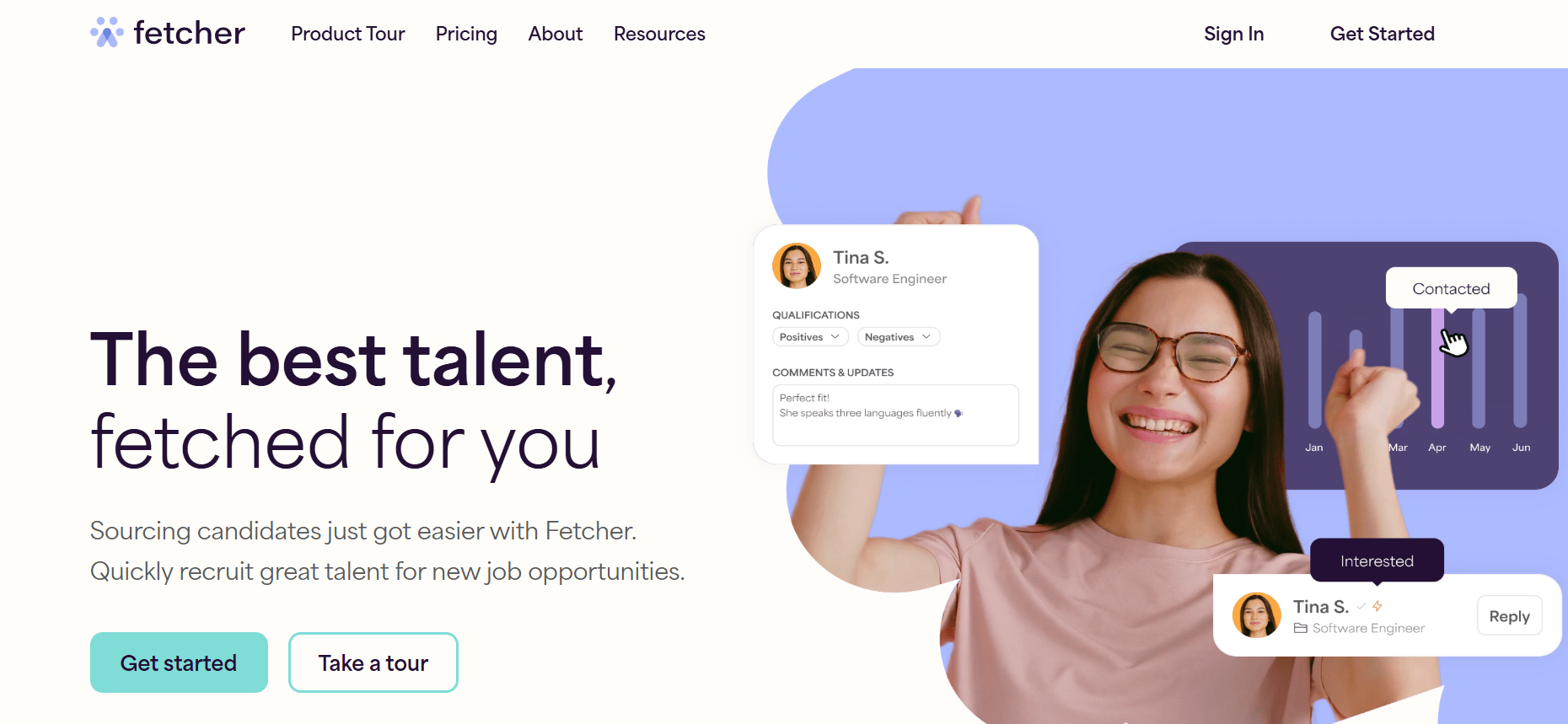
Building a strong talent pipeline takes time, especially when sourcing and outreach are manual.
Fetcher focuses on automating candidate discovery and engagement, helping you consistently build and nurture pipelines without spending hours on sourcing and initial communication.
Key Features
- Automated sourcing from millions of candidate profiles
- Email outreach with personalized messaging at scale
- Candidate tracking and pipeline management
- AI-assisted talent recommendations
- Analytics for outreach performance
Pros
- Great for pipeline building and proactive hiring
- Saves hours on manual sourcing and outreach
- Improves consistency in candidate engagement
- Easy to use for sourcing-focused teams
Cons
- Limited full-cycle recruitment features
- Requires additional tools for screening and scheduling
- Not ideal as a complete hiring solution
Pricing
- Subscription-based pricing based on hiring needs and team size
- Typically ranges from $149–$499/month
- No free plan; demos available
- Best suited for sourcing and outreach-focused teams
How to Choose the Best AI Recruiting Software
Choose the best AI recruiting software by evaluating your hiring needs, budget, scalability, and key features to ensure it aligns with your workflow and long-term growth.
1.Define Your Hiring Needs
Before choosing any tool, you need clarity on what your hiring process actually requires.
Define whether you need help with sourcing, screening, outreach, or full-cycle automation, as this helps you select AI recruitment software that aligns with your goals, team size, and hiring volume without overpaying for unnecessary features.
2.Compare Features and Pricing
Not all tools offer the same value, so comparing them carefully is essential.
Look at features like automation, integrations, and analytics alongside pricing plans, so you can identify the best AI recruiting software that fits your budget while still delivering the capabilities needed to improve your hiring workflow.
3.Test Before You Decide
Choosing without testing can lead to poor adoption and wasted investment.
Use free trials or demos to evaluate performance, usability, and results in real scenarios, helping you understand whether the AI-based recruitment software truly fits your workflow before making a long-term commitment.
Common Mistakes to Avoid When Using AI Recruitment Software
Avoid mistakes like over-automation, ignoring candidate experience, and not defining goals, as fixing these improves efficiency, accuracy, and overall hiring outcomes.
1.Ignoring Human Oversight
Relying completely on automation can lead to poor hiring decisions.
While AI recruiting software improves efficiency, human judgment is still essential to evaluate cultural fit, context, and soft skills, ensuring you make balanced and accurate hiring decisions beyond algorithm-based recommendations.
2.Poor Data Quality
AI is only as good as the data it learns from.
If your data is outdated or inaccurate, AI recruiting software will produce poor matches, making it important to maintain clean, structured, and updated data for better hiring accuracy and reliable decision-making.
Conclusion
Hiring is no longer just about filling roles quickly, but about making smarter and more accurate decisions at scale.
The right AI recruiting software helps you automate workflows, improve candidate quality, and reduce hiring time without compromising experience.
As you explore different tools, focus on what fits your hiring goals, team size, and growth plans.
If you’re looking for a complete, end-to-end solution, Leelu.ai stands out by helping you go from job post to interview in ~24 hours, making your hiring faster, smarter, and more efficient.
Frequently Asked Questions
1. Is AI recruiting software suitable for small businesses?
Yes, many ai recruiting software tools are built for small teams. They offer simple automation, affordable pricing, and easy setup. Even small businesses can use ai recruitment software to save time and improve hiring without needing a large HR team.
2. Can AI recruitment software replace human recruiters?
No, AI recruitment software cannot fully replace human recruiters. It helps automate repetitive tasks like screening and sourcing. Final decisions, relationship building, and interviews still require human judgment and interaction.
3. How accurate is AI-based recruitment software in candidate matching?
AI based recruitment software is highly accurate when trained with quality data. It matches candidates based on skills, experience, and patterns. However, results depend on data quality and should always be reviewed by recruiters.
4. Is AI recruiting software difficult to implement?
Most modern ai recruiting software is easy to set up with guided onboarding and integrations. Some advanced tools may take time to configure, but many platforms are designed for quick adoption without technical expertise.
5. How does AI software for recruitment handle data privacy?
AI software for recruitment follows strict data protection standards. Most tools comply with regulations and use secure systems to protect candidate data. It’s important to choose vendors that prioritize privacy and transparency.


