If you’ve been relying on LinkedIn Recruiter, you’ve probably noticed it’s not as effective as it used to be.
You spend hours sourcing, yet end up reaching the same candidates everyone else is already messaging.
As competition increases, response rates drop and hiring slows down, making it harder to scale your efforts efficiently.
That’s why recruiters are now looking beyond LinkedIn to find smarter, faster ways to source talent.
In this guide, you’ll explore:
- Key problems with LinkedIn Recruiter
- What to look for in better alternatives
- 13 tools that can improve your sourcing
- Practical ways to scale hiring beyond LinkedIn
Problems People Face with LinkedIn Recruiter
Before you look at alternatives, it helps to understand where LinkedIn Recruiter starts falling short.
Because once you see these limitations clearly, it becomes easier to evaluate what you actually need in a better tool.
1. Expensive Pricing with Limited ROI
LinkedIn Recruiter comes with a high price tag, especially for growing teams.
But the bigger issue is that most of the work still depends on you, not the platform.
You’re paying a premium, yet spending hours sourcing, filtering, and managing outreach manually, which makes the return on investment feel limited over time.
2. Candidate Saturation (Everyone Is Messaging the Same Talent)
The same pool of candidates is visible to every recruiter using LinkedIn.
This means top talent is constantly receiving messages from multiple companies at the same time.
Even with strong outreach, your message often gets lost in a crowded inbox, leading to lower response rates and slower hiring cycles.
3. Manual & Time-Consuming Sourcing Process
Sourcing on LinkedIn is still a very manual process.
You search, apply filters, review profiles, send messages, and track follow-ups separately.
This repetitive workflow takes up a significant part of your day and becomes a major bottleneck when you’re trying to scale hiring.
4. Limited Reach Beyond LinkedIn
LinkedIn only gives you access to candidates within its own platform.
But a large portion of qualified talent exists across job boards, databases, and internal ATS systems.
By relying only on LinkedIn, you’re missing out on a much wider talent pool that could be a better fit for your roles.
What to Look for in the Best LinkedIn Recruiter Alternatives
Now that you’ve seen where LinkedIn Recruiter falls short, the next step is knowing what actually makes an alternative better.
Because not every sourcing tool solves these problems, and choosing the wrong one can leave you in the same situation again.
Here’s what you should pay close attention to when evaluating your options.
1. Multi-Platform Sourcing Capability
A strong alternative should go beyond LinkedIn and give you access to multiple talent sources.
This includes job boards, internal databases, and other platforms where passive candidates exist but are often overlooked.
The wider your reach, the better your chances of finding high-quality candidates faster.
2. Automation Across the Hiring Workflow
Manual sourcing slows you down, especially when hiring volume increases.
The right tool should automate repetitive tasks like sourcing, screening, outreach, and follow-ups so you can focus on decision-making instead of execution.
3. AI-Powered Candidate Matching
Not all candidates are equal, and filtering them manually takes time.
Look for platforms that use AI to rank and match candidates based on job fit, helping you identify the best profiles quickly without going through hundreds manually.
4. Scalable Outreach and Engagement
Sending a few messages is easy, but doing it consistently at scale is where most recruiters struggle.
An ideal alternative should allow you to run personalized outreach campaigns across channels while maintaining strong response rates.
5. Unified Candidate Data and Workflow
Switching between tools for sourcing, tracking, and communication creates friction.
A better solution should bring everything into one place so you can manage candidates, conversations, and pipeline stages without losing context.
6. Speed and Efficiency Gains
Ultimately, the tool should help you move faster.
Whether it’s sourcing candidates in minutes or scheduling interviews automatically, every feature should reduce time-to-hire and improve overall efficiency.
13 Best LinkedIn Recruiter Alternatives for Recruiters in 2026
Now that you know what to look for, let’s break down the tools that are actually helping recruiters scale beyond LinkedIn.
Each of these platforms solves a specific gap, whether it’s sourcing reach, automation, or candidate engagement.
- Leelu.ai (Best for AI-Powered Scalable Talent Sourcing)
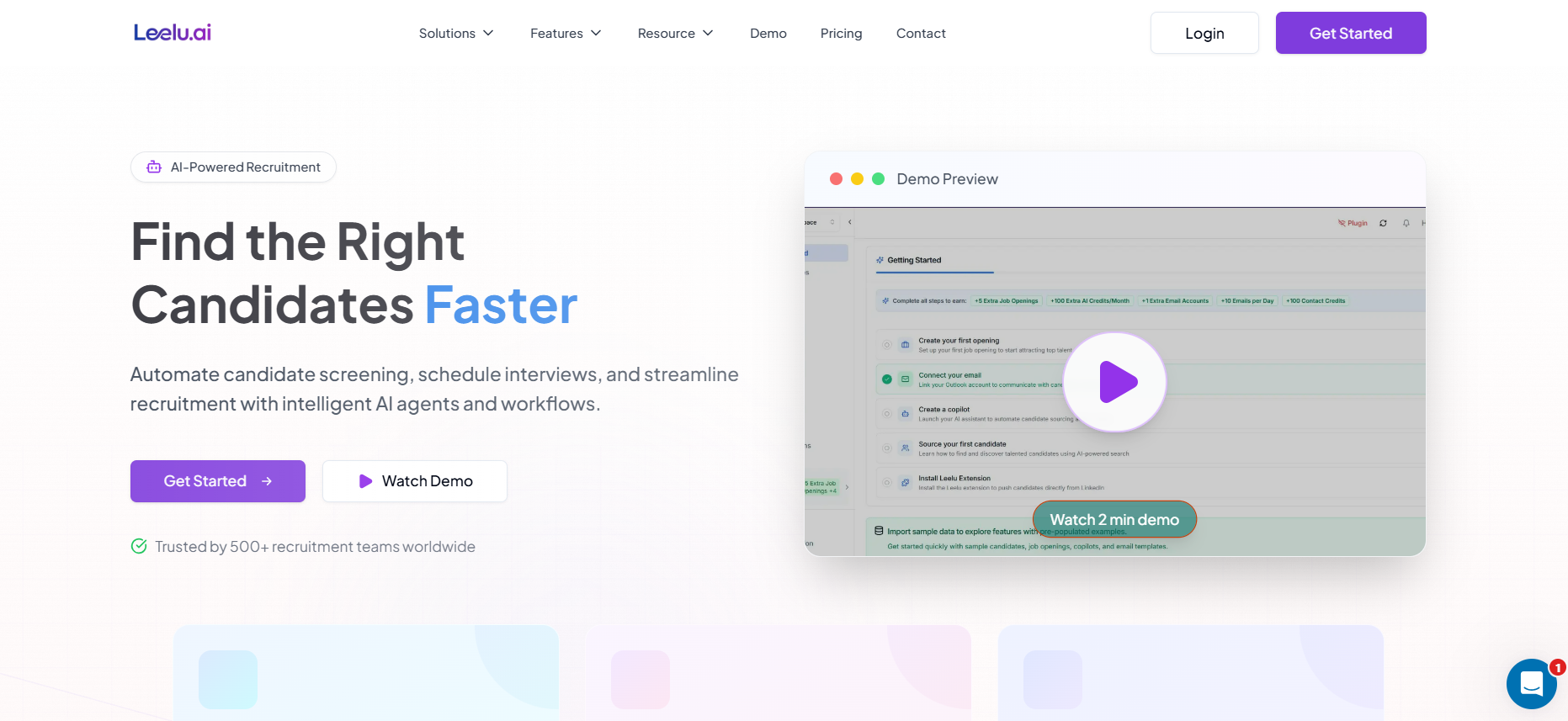
If your goal is to move faster while reducing manual effort, Leelu.ai focuses on automating the entire sourcing workflow.
Instead of switching between tools, you get a single platform that handles sourcing, screening, outreach, and scheduling together.
This makes it especially useful for teams looking to scale hiring without increasing recruiter workload.
Features:
- Source candidates from 500M+ profiles across LinkedIn, job boards, and ATS systems
- AI-powered matching that ranks candidates based on job fit in seconds
- Automated outreach with personalized messaging across email and LinkedIn
- 24/7 follow-ups and candidate engagement without manual intervention
- Smart interview scheduling with calendar sync
- Unified candidate profiles to reduce manual data handling
- Real-time hiring insights and pipeline tracking
Pricing:
Custom pricing based on hiring volume and team requirements.
2. SeekOut
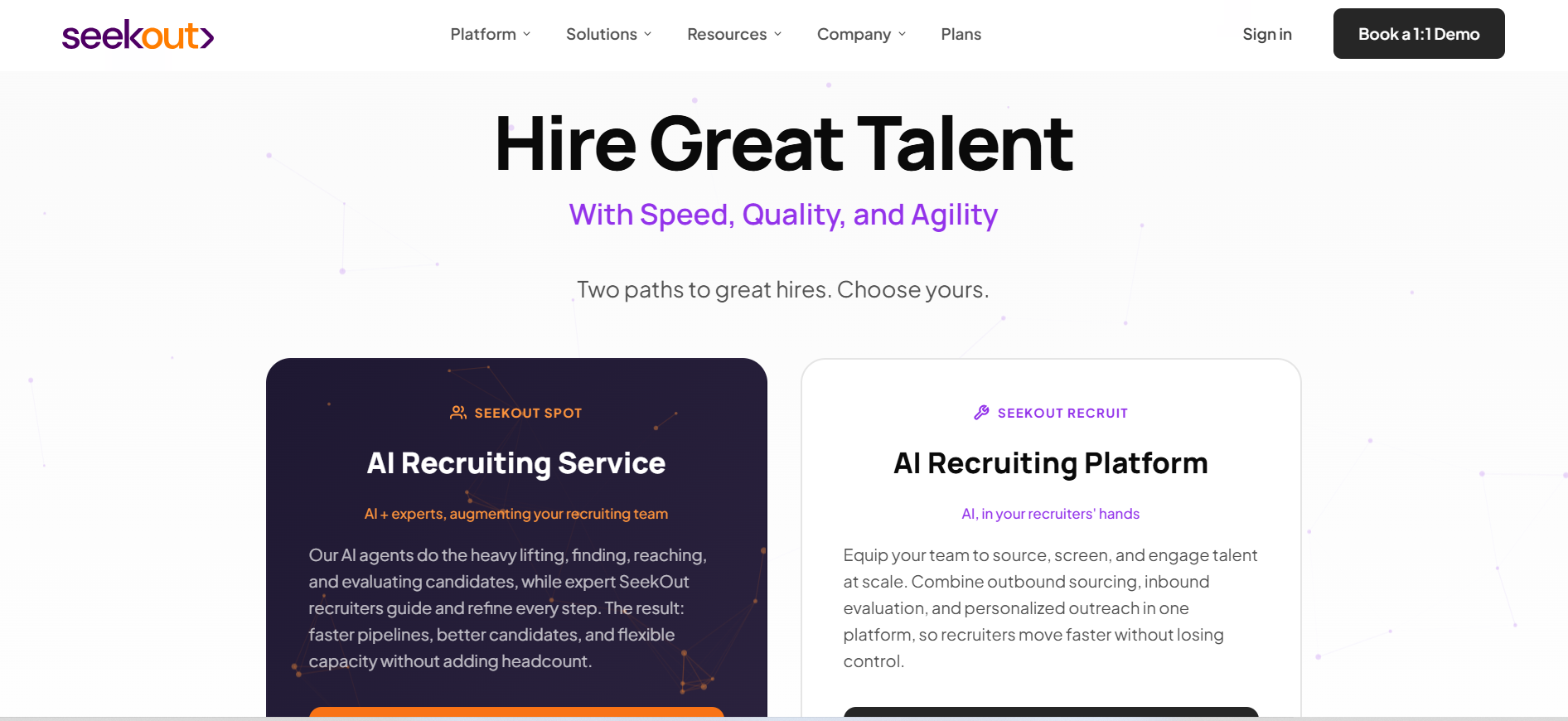
SeekOut is known for its deep talent search capabilities, especially for hard-to-fill and technical roles.
It gives you access to a wide dataset and strong filtering options to identify niche candidates quickly.
Features:
- Advanced talent search with detailed filters
- Strong diversity hiring insights
- Access to public profiles beyond LinkedIn
- AI-powered candidate recommendations
Pricing:
Custom pricing based on features and team size.
3. HireEZ (formerly Hiretual)
HireEZ focuses on outbound recruiting by combining sourcing with engagement tools.
It helps you discover and connect with candidates across multiple platforms from one place.
Features:
- AI sourcing across multiple platforms
- Built-in email and outreach automation
- Candidate enrichment with contact details
- Pipeline and campaign management
Pricing:
Subscription-based pricing with tiered plans.
4. AmazingHiring
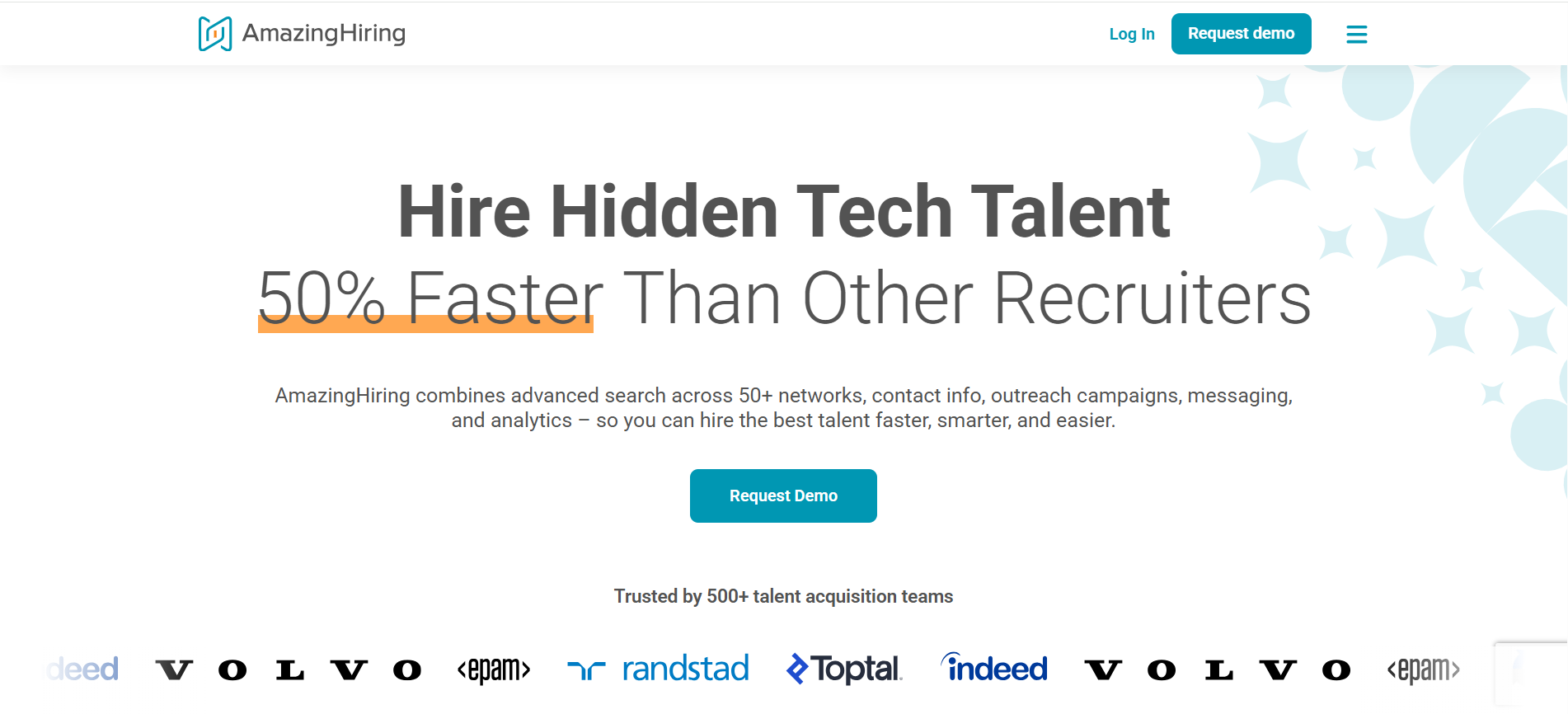
AmazingHiring is designed specifically for technical recruiting and developer hiring.
It aggregates candidate data from multiple platforms to give you a more complete profile view.
Features:
- Aggregates developer profiles from 50+ platforms
- Strong GitHub and tech talent insights
- AI-powered ranking for technical skills
- Chrome extension for easy sourcing
Pricing:
Custom pricing depending on usage and hiring needs.
5. Entelo
Entelo combines sourcing with diversity insights and predictive analytics.
It helps recruiters prioritize candidates who are more likely to respond or be open to opportunities.
Features:
- Predictive analytics for candidate engagement
- Diversity-focused sourcing tools
- Automated candidate recommendations
- CRM integration for pipeline tracking
Pricing:
Custom pricing based on company size and features.
6. Fetcher
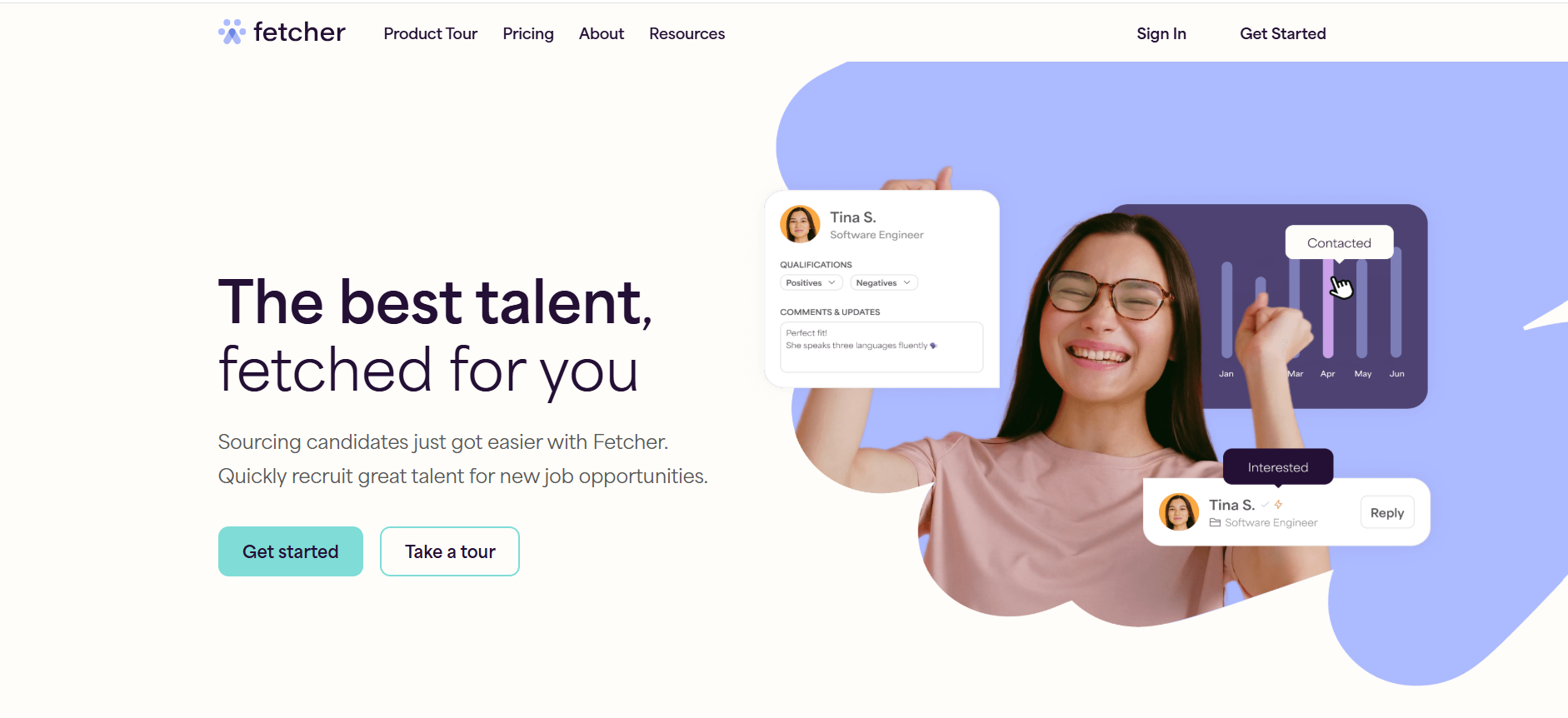
Fetcher blends automation with human-assisted sourcing to deliver curated candidate lists.
It’s useful if you want to reduce sourcing time while still maintaining quality control.
Features:
- AI + human-assisted candidate sourcing
- Automated outreach campaigns
- Candidate pipeline tracking
- Analytics for sourcing performance
Pricing:
Subscription-based pricing with different tiers.
7. Gem
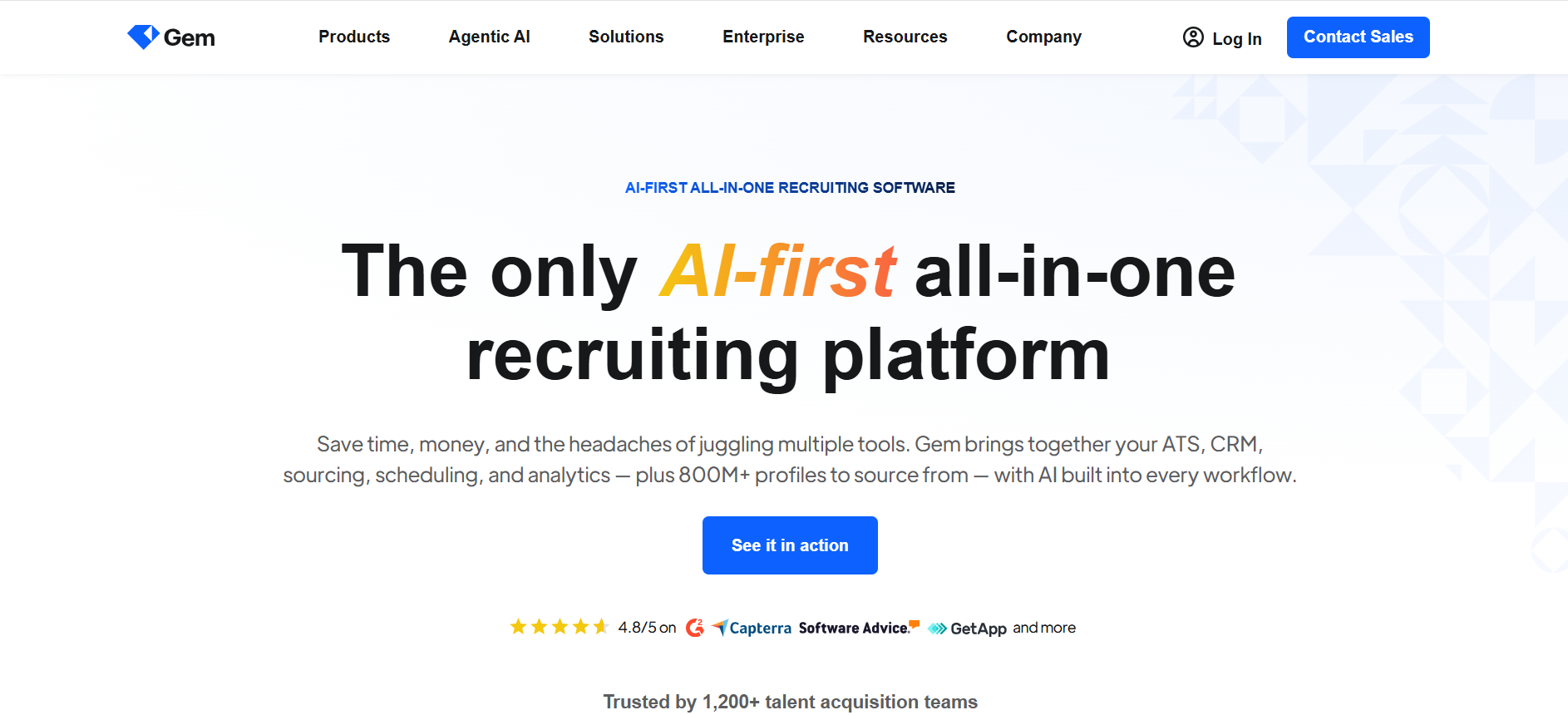
Gem is more focused on talent engagement and CRM rather than just sourcing.
It helps you build and nurture relationships with candidates over time.
Features:
- Talent CRM and pipeline management
- Email sequencing and outreach tracking
- Analytics on recruiting performance
- Integration with ATS and LinkedIn
Pricing:
Custom pricing based on team size and usage.
8. LHH Recruitment Solutions platform

LHH offers a broader recruitment solution that combines technology with consulting services.
It’s suitable for enterprises looking for a mix of tools and managed hiring support.
Features:
- End-to-end recruitment solutions
- Talent assessment and advisory services
- Workforce planning tools
- Global hiring support
Pricing:
Custom pricing based on services and scale.
9. Wellfound (formerly AngelList Talent)
Wellfound is popular among startups and tech companies looking for startup-ready talent.
It connects you directly with candidates interested in startup roles.
Features:
- Access to startup-focused talent pool
- Direct candidate applications
- Employer branding for startups
- Simple job posting and candidate search
Pricing:
Free and paid plans available depending on hiring needs.
10. Cutshort
Cutshort is designed for hiring tech talent with a focus on skill-based matching.
It reduces dependency on resumes by focusing on candidate capabilities and fit.
Features:
- AI-driven candidate matching
- Skill-based hiring approach
- Automated screening workflows
- Strong presence in tech hiring markets
Pricing:
Subscription-based pricing with multiple plans.
11. hireEZ Open Web
Intro:
hireEZ Open Web expands sourcing beyond traditional platforms by tapping into open web data.
It helps recruiters find candidates who may not be active on LinkedIn.
Features:
- Open web sourcing capabilities
- Access to diverse candidate profiles
- AI-powered recommendations
- Integration with hiring workflows
Pricing:
Custom pricing based on features and usage.
12. Zoho Recruit
Zoho Recruit is a full ATS with built-in sourcing and recruitment automation features.
It works well for teams looking for an all-in-one recruitment management system.
Features:
- Applicant tracking system (ATS)
- Job posting across multiple platforms
- Resume parsing and candidate tracking
- Workflow automation and integrations
Pricing:
Free plan available with paid tiers for advanced features.
13. Indeed Resume
Indeed Resume gives you access to one of the largest candidate databases globally.
It’s a simple and effective option for sourcing candidates across industries.
Features:
- Large resume database
- Basic search and filtering options
- Direct candidate contact
- Integration with job postings
Pricing:
Pay-per-contact or subscription-based pricing.
LinkedIn Recruiter vs Alternatives: Key Differences
When you compare LinkedIn Recruiter with modern recruiting tools, the shift is not just about features, it is about how hiring actually gets done.
Here is a clear side-by-side view to help you understand the difference:
The key takeaway is simple.
LinkedIn Recruiter helps you access candidates, while alternatives help you build a faster, more automated, and scalable hiring system.
How to Choose a LinkedIn Recruiter Alternative
With so many tools available, choosing the right alternative can feel overwhelming.
But the decision becomes much simpler when you evaluate tools based on your specific hiring needs instead of chasing features.
Here’s how you can break it down.
1. Based on Hiring Volume
If you’re hiring occasionally, you don’t need heavy automation or complex workflows.
Simple sourcing tools or platforms with basic outreach capabilities can get the job done.
But if you’re hiring at scale, you’ll need a solution that automates sourcing, screening, and follow-ups so your team doesn’t get overwhelmed.
2. Based on Role Type
Different roles require different sourcing approaches.
For example, technical hiring often needs deeper search capabilities and access to niche talent pools, while non-technical roles may benefit from broader databases.
Choosing a tool that aligns with the type of roles you hire will significantly improve your results.
3. Based on Budget
Budget plays a major role, especially for startups and growing teams.
Some tools come with enterprise-level pricing, while others offer flexible or usage-based plans.
The key is to balance cost with value, making sure the tool actually saves time or improves hiring outcomes rather than just adding another expense.
4. Based on Sourcing Strategy
Your sourcing strategy should guide your tool selection.
If you rely heavily on outbound recruiting, look for tools with strong outreach and automation features.
If your focus is inbound or database-driven hiring, then platforms with large candidate pools and search capabilities will be more effective.
How to Scale Talent Sourcing Beyond LinkedIn
Relying only on LinkedIn Recruiter works in the beginning, but it quickly becomes limiting as your hiring needs grow.
To truly scale, you need to move from single-platform sourcing to a multi-channel and automated approach.
Start by expanding your talent pool across job boards, open web sources, and internal databases instead of depending on one network.
Then, reduce manual work by using tools that automate sourcing, outreach, and follow-ups so your team can focus on decision-making instead of repetitive tasks.
It also helps to build structured workflows where candidates move smoothly from sourcing to screening and scheduling without delays.
The shift is simple but powerful — stop thinking in terms of finding candidates, and start building a system that continuously brings them to you.
Final Thoughts
Choosing an alternative to LinkedIn Recruiter is not just about replacing a tool, it is about upgrading how you hire.
The best recruiters today are not working harder, they are building smarter systems that scale with their needs.
Whether you focus on better sourcing, improved outreach, or full automation, the goal is the same — faster hiring with less manual effort.
Once you start thinking beyond LinkedIn, you open the door to a much larger talent pool and a more efficient hiring process.
Frequently Asked Questions
Do LinkedIn alternatives work for both tech and non-tech hiring?
Most modern tools support both, but some are more specialized for technical roles, so your choice should align with your hiring focus.
Can small teams benefit from LinkedIn Recruiter alternatives?
Yes, especially tools that reduce manual work, allowing smaller teams to compete with larger recruiting teams.
Can these tools help improve candidate experience?
Yes, especially those with automated and personalized communication, which keeps candidates engaged throughout the process.


