
Hard-to-fill roles are difficult because qualified candidates are limited, highly competitive, and often not actively searching for jobs.
Traditional hiring methods usually slow the process down and make it harder to attract top talent before competitors do.
To recruit successfully for specialized positions, you need smarter sourcing strategies, faster hiring workflows, personalized outreach, and better candidate engagement.
In this guide, you’ll learn 10 expert tactics to recruit for hard-to-fill roles, improve hiring efficiency, reduce candidate drop-offs, and build stronger talent pipelines using modern recruiting approaches and AI-driven workflows.
Core Fundamentals That Improve Hiring for Hard-to-Fill Roles
Hiring for hard-to-fill roles becomes much easier when your recruiting process is built on strong fundamentals instead of rushed sourcing efforts.
Without a clear hiring strategy, even experienced recruiters struggle to attract qualified candidates consistently.
Defining role requirements and must-have skills clearly
Many difficult hiring situations start with unclear job expectations. When role requirements are too broad or unrealistic, recruiters spend time targeting the wrong candidates.
Before sourcing begins, clearly define:
- Core technical and soft skills
- Required experience level
- Non-negotiable qualifications
- Skills that can be trained later
This helps improve sourcing accuracy and reduces screening effort.
Aligning recruiters and hiring managers before sourcing begins
Recruiters and hiring managers should stay aligned on:
- Candidate expectations
- Compensation range
- Interview process
- Hiring timelines
Early alignment reduces confusion, speeds up approvals, and prevents delays later in the hiring process.
Building a faster and more candidate-friendly hiring process
Top candidates rarely stay available for long. A slow hiring process often leads to drop-offs and lost opportunities.
Simplifying interviews, improving communication, and reducing unnecessary steps helps keep candidates engaged throughout the recruitment journey.
Using data and market insights to guide recruiting efforts
Recruiting becomes more effective when decisions are backed by hiring data and talent insights. Tracking metrics like:
- Candidate response rates
- Talent availability
- Salary benchmarks
- Source performance
helps recruiters adjust strategies faster and improve hiring outcomes.
10 Expert Tactics to Recruit for Hard-to-Fill Roles
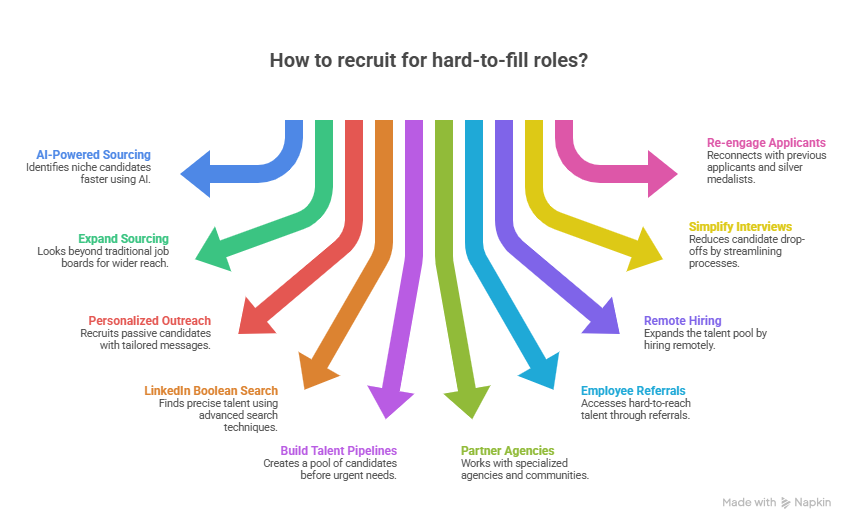
Once your hiring fundamentals are in place, the next step is improving how you source, engage, and convert qualified candidates.
Hard-to-fill roles usually require a more proactive recruiting strategy because relying only on inbound applications rarely produces consistent results.
Here are some of the most effective tactics recruiters use to hire specialized talent faster.
1. Using AI-Powered Sourcing to Identify Niche Candidates Faster
Manually searching for qualified candidates across multiple platforms takes significant time, especially when hiring for niche or highly technical roles.
AI-powered sourcing tools help recruiters identify relevant candidates faster by automatically scanning large talent databases and matching profiles based on skills, experience, and hiring requirements.
This helps recruiters:
- Reduce manual sourcing effort
- Discover hidden talent pools
- Prioritize best-fit candidates faster
- Improve shortlist quality
AI sourcing is especially useful when hiring for roles with limited candidate availability or highly specific skill requirements.
Platforms like Leelu AI help recruiters automate candidate discovery and quickly identify best-fit talent across large candidate databases, reducing manual sourcing effort significantly.
2. Expanding Sourcing Beyond Traditional Job Boards
Traditional job boards alone are often not enough for difficult hiring needs because many qualified candidates are not actively applying to jobs.
Recruiters should expand sourcing efforts across:
- Professional communities
- Industry-specific forums
- Talent marketplaces
- Networking groups
- Internal ATS databases
Using multiple sourcing channels increases candidate visibility and improves the chances of reaching specialized talent before competitors do.
It also helps recruiters access candidates who may never apply through traditional job postings.
3. Recruiting Passive Candidates With Personalized Outreach
Passive candidates usually make up a large portion of the talent pool for hard-to-fill roles. These candidates are already employed and often receive frequent recruiter messages, which means generic outreach rarely works.
Personalized communication improves response rates because candidates feel the recruiter understands their background and career interests.
Strong outreach messages typically include:
- Why the candidate was selected
- Specific skills or achievements that stood out
- A clear explanation of the opportunity
- Personalized career value instead of generic job pitches
Even small personalization changes can significantly improve engagement and candidate conversations.
Suggested Reading:
Passive Candidates: How to Source & Hire Top Talent4. Leveraging LinkedIn Boolean Search for Precise Talent Discovery
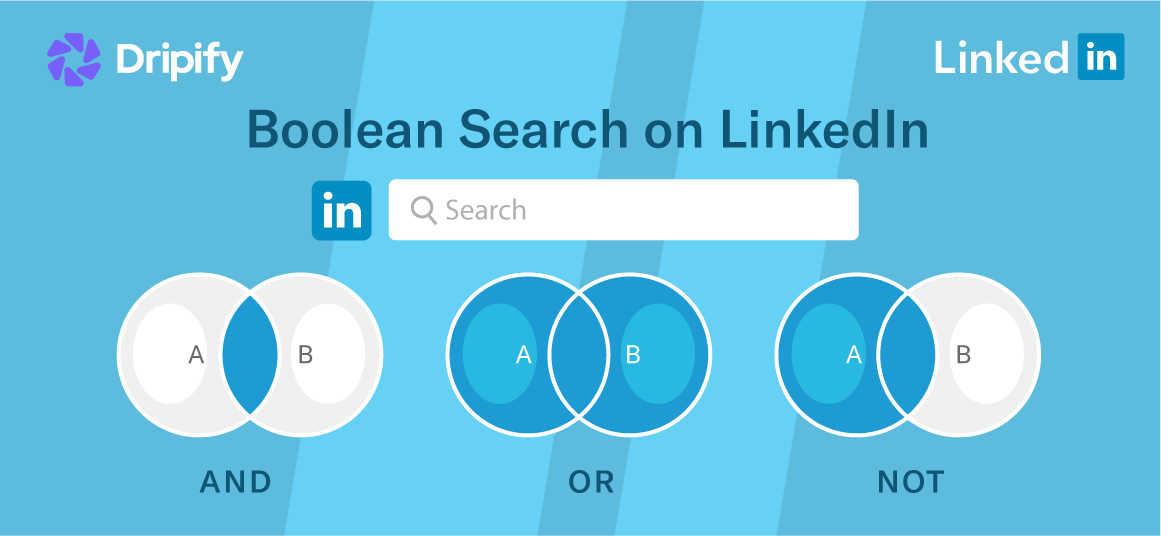
When recruiting for niche roles, broad keyword searches often produce irrelevant candidate results. LinkedIn Boolean search helps recruiters narrow searches and find more accurate matches.
Using Boolean operators like:
- AND
- OR
- NOT
- Quotation marks
- Parentheses
allows recruiters to combine skills, job titles, certifications, and experience filters more precisely.
For example, recruiters can search for candidates with:
- Specific technologies
- Alternative job titles
- Industry experience
- Location preferences
- Seniority levels
Boolean search becomes especially valuable when hiring for highly specialized technical or leadership positions where candidate quality matters more than candidate volume.
5. Building Long-Term Talent Pipelines Before Urgent Hiring Needs
One of the biggest recruiting mistakes is starting candidate sourcing only after an urgent hiring request appears.
Hard-to-fill roles become easier to manage when recruiters continuously build relationships with potential candidates before positions open.
Long-term talent pipelines help recruiters:
- Reduce time-to-hire
- Improve candidate availability
- Maintain ongoing engagement
- Create faster hiring workflows
Effective pipeline building often includes:
- Regular candidate nurturing
- Networking events and communities
- CRM-based engagement
- Periodic follow-ups with previous candidates
- Maintaining relationships with passive talent
This approach gives recruiters access to pre-qualified candidates instead of starting every search from zero.
Over time, strong talent pipelines create a major competitive advantage, especially for companies hiring repeatedly for difficult or high-demand roles.
Suggested Reading:
Talent Pipeline Management Strategies to Improve Hiring6. Partnering With Specialized Recruitment Agencies and Communities
Some hard-to-fill roles require deeper industry access than internal recruiting teams may already have.
In these situations, partnering with specialized recruitment agencies and professional communities can help recruiters reach highly targeted talent faster.
Specialized agencies usually have:
- Pre-built candidate networks
- Industry-specific expertise
- Access to passive candidates
- Faster outreach capabilities
At the same time, niche communities and professional groups often contain candidates who are difficult to find through traditional sourcing channels.
This strategy works especially well for:
- Technical hiring
- Executive recruiting
- Healthcare staffing
- Cybersecurity roles
- AI and data-related positions
Using external recruiting partnerships can significantly reduce sourcing time when internal talent pipelines are limited.
7. Using Employee Referrals to Access Hard-to-Reach Talent
Employee referrals remain one of the most effective recruiting channels for difficult hiring needs.
Employees often know qualified professionals within their industry network, making referrals a strong source of trusted candidates.
Referral-based hiring helps recruiters:
- Reach passive candidates faster
- Improve candidate quality
- Increase hiring speed
- Reduce sourcing costs
To improve referral participation:
- Simplify referral submission processes
- Clearly communicate open roles internally
- Offer referral incentives
- Share detailed role requirements with employees
Strong referral programs also improve cultural alignment because employees typically recommend candidates they believe will succeed within the organization.
8. Hiring Remotely to Expand the Available Talent Pool
Limiting hiring to a single location can make difficult roles even harder to fill. In many cases, the right candidate may simply not exist within the local market.
Remote hiring allows recruiters to:
- Access wider talent pools
- Reach specialized candidates globally
- Reduce geographic hiring limitations
- Improve hiring flexibility
This becomes especially important for roles where skill availability is already limited.
Remote hiring also helps companies compete for talent in highly competitive industries because candidates increasingly value flexibility and remote work opportunities.
However, successful remote hiring requires:
- Clear communication processes
- Structured onboarding
- Remote collaboration tools
- Strong candidate experience management
When implemented correctly, remote recruiting can dramatically improve candidate availability for hard-to-fill positions.
9. Simplifying Interview Processes to Reduce Candidate Drop-Offs
Many companies lose strong candidates because their interview process is too slow or overly complicated.
Top candidates often manage multiple opportunities simultaneously, and long hiring cycles increase the chances of losing them to competitors.
Recruiters should focus on reducing unnecessary friction throughout the hiring process.
This can include:
- Reducing the number of interview rounds
- Improving interview scheduling speed
- Providing faster feedback
- Eliminating repetitive assessments
- Keeping communication consistent
A faster and more transparent hiring process improves candidate experience and increases offer acceptance rates.
It also helps recruiters maintain momentum with passive candidates who may lose interest during lengthy evaluations.
10. Re-Engaging Previous Applicants and Silver Medal Candidates
Recruiters often overlook previous applicants who were strong candidates but not selected for earlier roles. These “silver medal candidates” can become valuable hiring opportunities for future openings.
Re-engaging past candidates helps recruiters:
- Reduce sourcing time
- Access already-qualified talent
- Improve hiring efficiency
- Fill roles faster with warm candidates
Candidates who previously interacted with your company already understand:
- Your hiring process
- Company culture
- Role expectations
This often leads to faster conversations and smoother hiring workflows.
Recruiters should maintain organized candidate databases and periodically reconnect with:
- Previous finalists
- Past interviewees
- Former applicants
- Candidates who declined earlier offers
- Previously sourced passive talent
Over time, this creates a reusable talent network that supports long-term recruiting success for hard-to-fill roles.
How Leelu Helps Recruiters Fill Hard-to-Hire Roles Faster
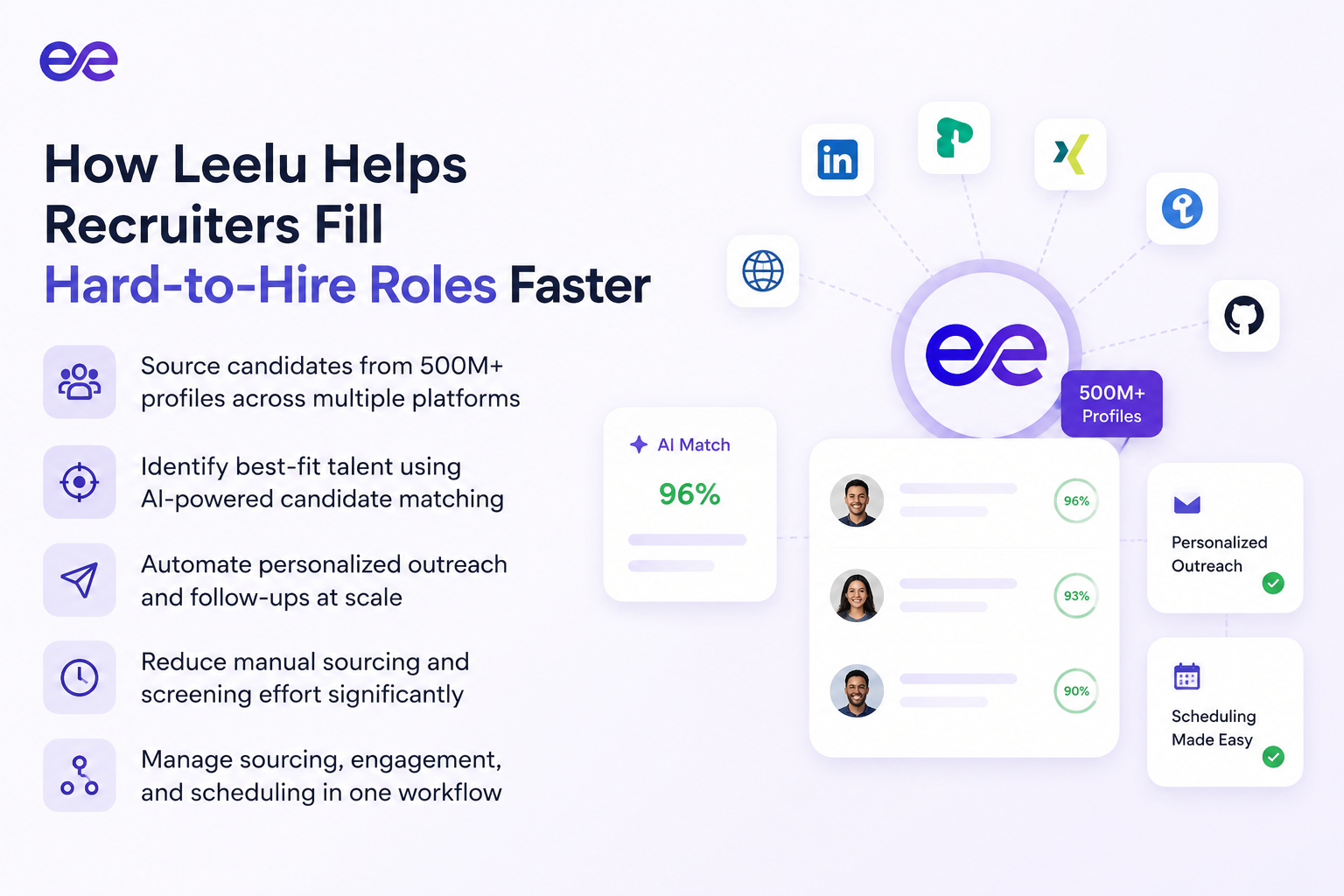
Recruiting for hard-to-fill roles often becomes difficult when recruiters are manually managing sourcing, screening, outreach, follow-ups, and scheduling across multiple platforms.
This not only slows hiring timelines but also increases recruiter workload significantly.
Leelu.ai helps simplify this process by acting as an AI recruiting copilot that automates large parts of the hiring workflow while improving candidate engagement and hiring efficiency.
Source candidates from 500M+ profiles across multiple platforms
Leelu helps recruiters source candidates from a database of 500M+ profiles across:
- Job boards
- ATS systems
- Multiple sourcing platforms
This helps recruiters expand talent reach and identify niche candidates faster without switching between different tools.
Identify best-fit talent using AI-powered candidate matching
Instead of manually reviewing hundreds of resumes, Leelu uses AI-powered matching and scoring to identify candidates that closely align with role requirements.
Recruiters can:
- Screen and rank 1000+ resumes in minutes
- Prioritize top-fit candidates faster
- Improve shortlist quality
- Reduce manual screening effort significantly
Automate personalized outreach and follow-ups at scale
Leelu helps recruiters automate candidate engagement through:
- Personalized email outreach
- LinkedIn messaging
- AI-driven follow-ups
- Automated candidate conversations
Recruiters can send 100–300 personalized outreaches daily while maintaining better response rates and consistent engagement.
Reduce manual sourcing and screening effort significantly
By automating sourcing, resume parsing, candidate ranking, and follow-up workflows, Leelu helps reduce recruiter effort by nearly 70–85%.
This allows hiring teams to:
- Spend less time on repetitive tasks
- Focus more on qualified candidates
- Improve hiring speed
- Scale recruiting operations efficiently
Manage sourcing, engagement, and scheduling in one workflow
Leelu combines multiple recruiting activities into one unified workflow, including:
- Candidate sourcing
- Outreach management
- Engagement tracking
- Interview scheduling
- ATS synchronization
This helps recruiters move from job posting to first interviews in nearly 24 hours while reducing operational complexity across the hiring process.
Common Mistakes to Avoid When Hiring for Hard-to-Fill Roles
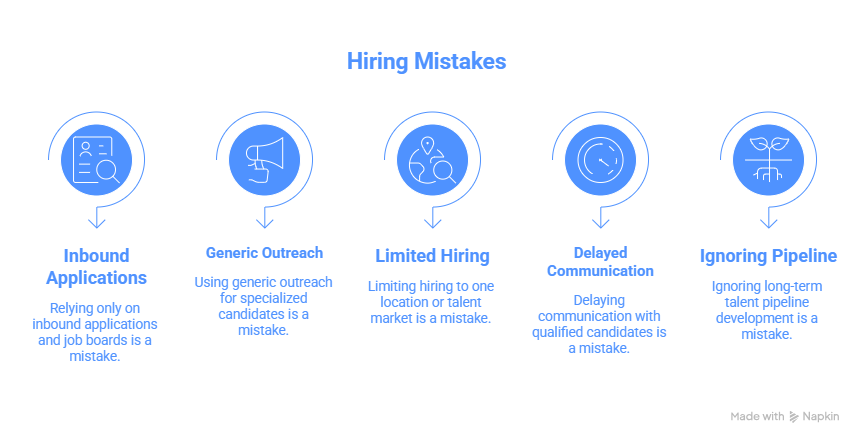
Even strong recruiting strategies can fail when common hiring mistakes slow down sourcing, candidate engagement, and decision-making. Avoiding these issues can significantly improve hiring outcomes for difficult roles.
Relying only on inbound applications and job boards
Many recruiters depend too heavily on job boards and inbound applications. For hard-to-fill roles, most qualified candidates are passive and rarely apply directly.
Recruiters should expand sourcing across:
- Professional communities
- Referral networks
- Talent databases
- Industry-specific platforms
This increases access to specialized candidates beyond traditional channels.
Using generic outreach for specialized candidates
Highly skilled candidates receive multiple recruiter messages regularly. Generic outreach often gets ignored because it lacks personalization and relevance.
Effective outreach should include:
- Personalized messaging
- Relevant skill references
- Clear role value
- Specific reasons for reaching out
Small personalization improvements can significantly improve candidate response rates.
Limiting hiring to one location or talent market
Restricting hiring to a single geographic area reduces candidate availability, especially for niche roles.
Expanding remote hiring strategies helps recruiters access wider talent pools and improve hiring flexibility.
Delaying communication with qualified candidates
Slow follow-ups and delayed interview feedback often lead to candidate drop-offs.
Top candidates usually move quickly through multiple opportunities, making fast communication critical.
Ignoring long-term talent pipeline development
Recruiters who only source candidates during urgent hiring needs often struggle with repeated difficult roles.
Building long-term talent pipelines helps maintain ongoing candidate relationships and reduces future hiring delays.
Conclusion
Recruiting for hard-to-fill roles requires more than posting jobs and waiting for applications.
Success comes from combining smarter sourcing strategies, personalized outreach, faster hiring workflows, and long-term talent pipeline building.
By using AI-powered recruiting tools, expanding sourcing channels, and improving candidate engagement, recruiters can reduce hiring delays and attract better-fit talent more consistently.
The right recruiting approach not only helps fill difficult roles faster but also improves hiring quality, recruiter efficiency, and overall candidate experience in competitive talent markets.
Frequently Asked Questions
1. What are hard-to-fill roles?
These are roles that are difficult to fill due to limited qualified candidates, niche skills, or high market demand.
2. How can recruiters fill difficult roles faster?
Using AI sourcing, personalized outreach, referrals, and faster hiring workflows can improve hiring speed.
3. Why do candidates drop off during hiring?
Long interview processes, delayed communication, and poor candidate experience often cause drop-offs.
4. How does AI help in recruiting?
AI helps automate sourcing, screening, outreach, and scheduling while improving hiring efficiency.
5. What is the best sourcing strategy for hard-to-fill roles?
A mix of LinkedIn sourcing, referrals, passive candidate outreach, and talent pipeline building works best.


