Hiring an AI developer sounds straightforward until you realize how competitive the market has become.
Between talent shortages, lengthy screening processes, and increasing demand for AI expertise, many companies struggle to fill roles quickly without compromising quality.
The good news is that a structured hiring process can significantly reduce delays and help you connect with qualified candidates faster.
In this guide, you'll learn:
- The biggest challenges in AI developer hiring
- How to source and evaluate candidates efficiently
- Ways to reduce hiring time by up to 50%
The Challenges of Hiring AI Developers Today
Before you can improve your hiring process, it's important to understand why finding AI talent has become so difficult in the first place.
The AI industry is growing rapidly, but the supply of experienced professionals is not keeping pace. As a result, companies often spend weeks or even months trying to fill critical positions.
1. The Growing Demand for AI Talent
Businesses across industries are investing heavily in artificial intelligence to automate processes, improve customer experiences, and gain competitive advantages.
This surge in adoption has created a massive demand for AI developers, machine learning engineers, and AI specialists.
From startups building AI-powered products to enterprises implementing automation initiatives, nearly every company is competing for the same talent pool.
2. AI Skills Are in Short Supply
While interest in AI continues to grow, experienced professionals remain limited.
Many candidates understand AI concepts at a theoretical level, but far fewer have experience building, deploying, and maintaining production-ready AI systems.
Companies often need developers who can work with machine learning frameworks, large language models, cloud infrastructure, and data pipelines simultaneously.
Finding professionals with this combination of skills can significantly extend hiring timelines.
3. Competition for Top AI Candidates
Highly qualified AI developers rarely stay available for long.
The strongest candidates often receive multiple interview requests and job offers within days.
If your hiring process involves lengthy reviews, multiple approval stages, or delayed communication, you may lose top talent before reaching the final interview.
This makes hiring speed just as important as candidate quality.
Define What Type of AI Developer You Actually Need
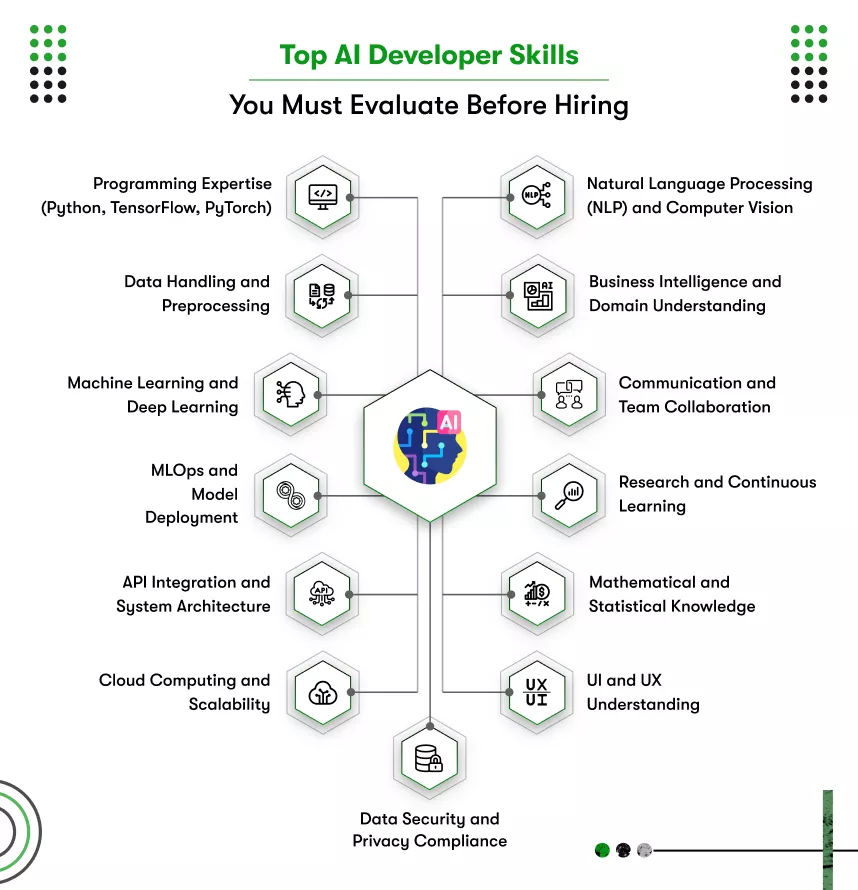
One of the biggest hiring mistakes is searching for a generic "AI developer" without clearly defining the role.
Different AI projects require different expertise, and understanding these distinctions can save significant time during sourcing and screening.
1. AI Engineer vs Machine Learning Engineer
AI engineers typically focus on building and integrating AI-powered applications into products and business systems.
Machine learning engineers spend more time designing, training, optimizing, and deploying predictive models.
If your goal is product implementation, an AI engineer may be the better fit. If your focus is model development and performance optimization, a machine learning engineer is often the stronger choice.
2. Generative AI Developer vs Data Scientist
Generative AI developers specialize in building applications powered by large language models, AI agents, and content generation systems.
Data scientists focus more on analyzing datasets, uncovering patterns, and generating business insights.
Although their skills may overlap, their day-to-day responsibilities are very different.
3. NLP, Computer Vision, and LLM Specialists
Some projects require highly specialized expertise.
Natural Language Processing (NLP) specialists work with text-based AI systems such as chatbots and search applications.
Computer vision experts focus on image and video analysis, while LLM specialists work extensively with large language models, prompt engineering, fine-tuning, and AI workflows.
4. Choosing Skills Based on Your Business Goals
The fastest hiring process starts with clear business objectives.
Instead of listing every possible AI skill, identify the specific outcomes you want the developer to achieve.
Whether you need to build an AI chatbot, automate document processing, create recommendation systems, or deploy custom machine learning models, the required skill set should directly support that goal.
This clarity helps you attract more relevant candidates and eliminates unnecessary screening effort later in the hiring process.
Create a Clear AI Developer Job Description
Once you know what type of AI developer you need, the next step is attracting the right candidates.
A poorly written job description can increase application volume while reducing candidate quality. The goal is to help qualified professionals quickly understand whether the role aligns with their skills and experience.
1. Identify Core Technical Requirements
Start by defining the technical skills that are directly connected to the role.
Instead of creating a long list of technologies, focus on the capabilities required to deliver results.
This may include:
- Python and software development experience
- Machine learning frameworks such as TensorFlow or PyTorch
- LLM application development
- Data processing and pipeline management
- Cloud platforms and model deployment
The more specific your requirements are, the easier it becomes to attract relevant candidates.
2. Separate Must-Have Skills from Nice-to-Have Skills
One common hiring mistake is treating every skill as mandatory.
This often discourages qualified candidates from applying, especially in competitive AI hiring markets.
A simple approach is to divide requirements into two categories:
Must-have skills
- Experience with AI model development
- Strong programming abilities
- Production deployment experience
Nice-to-have skills
- Industry-specific expertise
- Experience with niche AI tools
- Advanced research backgrounds
This creates a more realistic candidate pool without lowering hiring standards.
3. Focus on Real Outcomes Instead of Buzzwords
Many AI job descriptions are filled with buzzwords that provide little practical context.
Candidates want to understand what they will actually build, improve, or manage.
Instead of writing:
"Looking for an AI expert with extensive experience in cutting-edge technologies."
Write something more outcome-focused:
"Build and deploy AI-powered customer support automation that reduces response times and improves user experience."
Clear outcomes attract candidates who can solve the problems you need solved.
4. Include Project Expectations and Success Metrics
Strong candidates evaluate opportunities the same way companies evaluate applicants.
They want clarity around expectations, responsibilities, and success measures.
Consider including:
- Key projects they will work on
- Expected deliverables
- Team structure and collaboration requirements
- Performance goals for the first 90 days
This helps candidates self-qualify before applying and reduces mismatched interviews.
How to Source AI Developers Faster
Even the best job description cannot reduce hiring time if the sourcing strategy is limited.
To hire AI developers faster, you need to proactively find talent instead of waiting for applications.
1. Build Candidate Lists Across Multiple Platforms
Relying on a single job board significantly limits your talent pipeline.
The strongest AI candidates are often spread across multiple channels.
Consider sourcing through:
- Professional networking platforms
- Developer communities
- Industry forums
- Employee referrals
- Specialized AI talent networks
Expanding your search increases the chances of finding qualified candidates early.
2. Use AI-Powered Candidate Search Tools
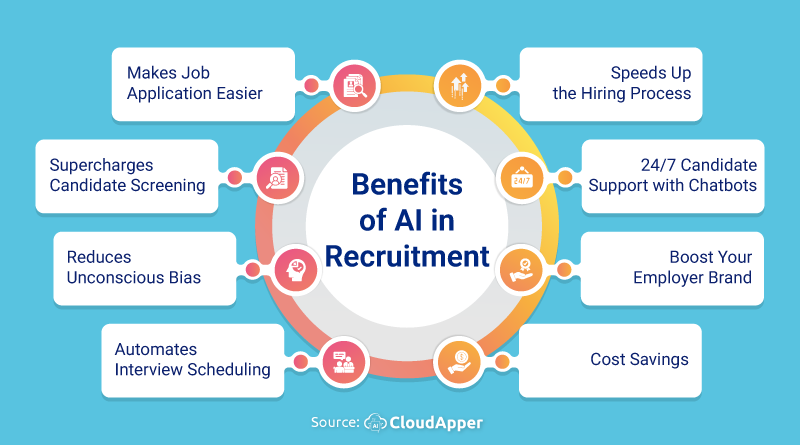
Manual sourcing can consume dozens of hours every week.
AI-powered recruiting platforms help automate candidate discovery by identifying professionals who match your hiring criteria across multiple talent sources.
This allows recruiters to spend less time searching and more time engaging qualified candidates.
3. Expand Beyond Traditional Job Applications
Many experienced AI developers are not actively applying for jobs.
If your hiring strategy only targets active applicants, you may miss a significant portion of available talent.
Look for candidates who:
- Contribute to open-source projects
- Participate in AI communities
- Share technical content online
- Build public AI applications and portfolios
These signals often reveal highly capable professionals before they enter the job market.
4. Reach Passive Candidates Before Competitors Do
The best AI developers are frequently approached by multiple employers.
Waiting for them to apply can put your company at a disadvantage.
Proactive outreach helps you start conversations earlier and build relationships before competitors reach them.
Companies that consistently engage passive candidates often create stronger talent pipelines and fill AI roles much faster than those relying solely on inbound applications.
Screen AI Developers Efficiently
Finding AI candidates is only half the challenge.
The real goal is identifying qualified developers quickly without spending weeks reviewing resumes and conducting unnecessary interviews.
A structured screening process helps you focus on candidates who have both the technical expertise and practical experience required for the role.
1. Review Technical Experience and Project Work
Resumes can tell you what technologies a candidate has used, but projects reveal how they apply those skills.
When reviewing applications, look beyond certifications and course completions.
Pay close attention to:
- AI products they have built
- Production deployments they have contributed to
- Business problems they have solved
- Measurable outcomes from previous projects
Candidates who can demonstrate real-world impact often provide stronger hiring signals than those with extensive theoretical knowledge alone.
2. Evaluate AI Models, Frameworks, and Tools Used
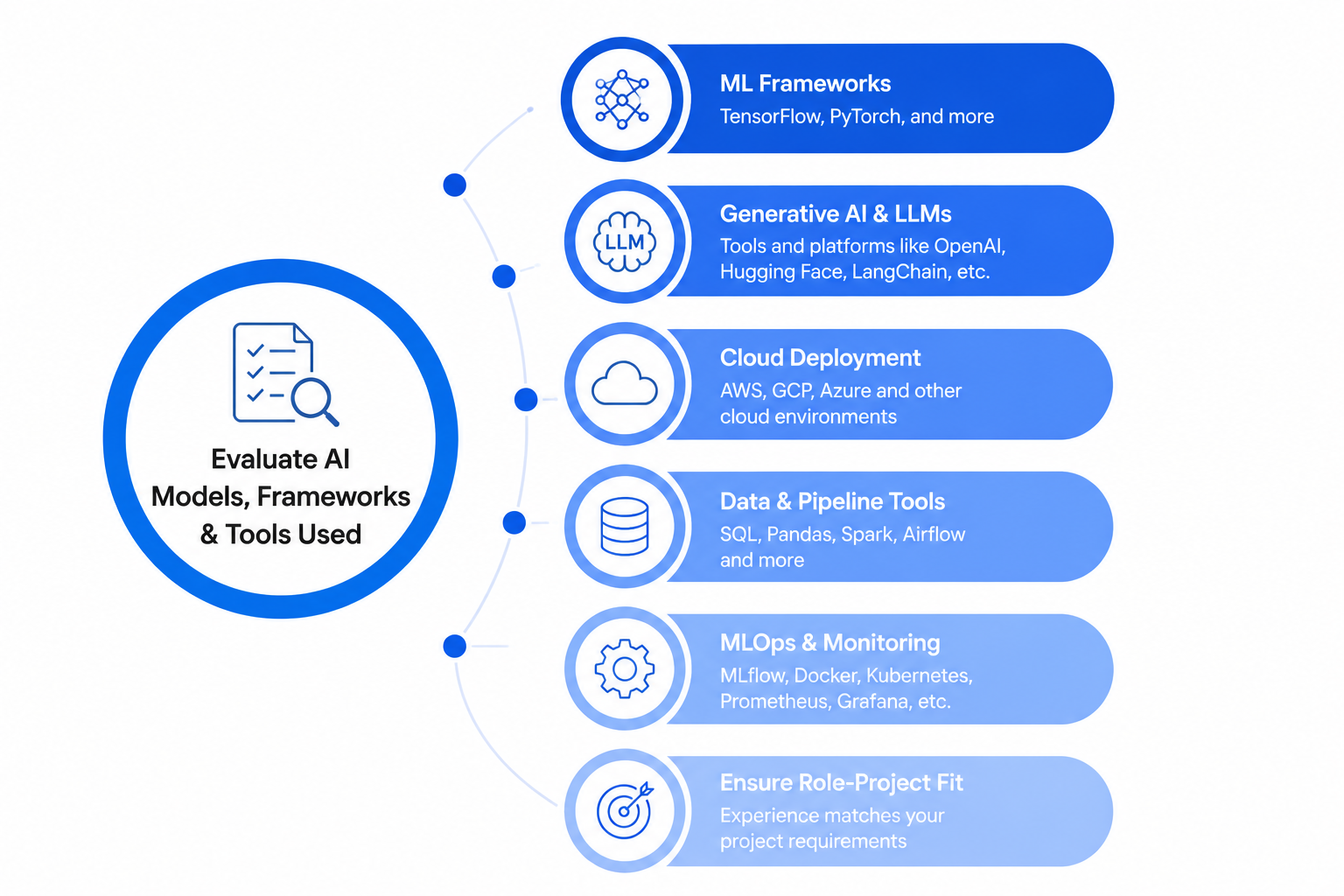
Not all AI experience is equally relevant.
A developer who has worked extensively with recommendation systems may not be the right fit for an LLM-based application.
Review the specific technologies candidates have used and how they applied them.
Some areas worth evaluating include:
- Machine learning frameworks such as TensorFlow and PyTorch
- Generative AI tools and LLM platforms
- Cloud deployment environments
- Data processing and pipeline tools
- MLOps and monitoring solutions
This helps ensure their experience aligns with your project requirements.
3. Assess Real-World Problem-Solving Ability
AI development is rarely about building models in isolation.
Most projects involve solving business challenges while working within technical and operational constraints.
During screening, look for evidence that candidates can:
- Handle incomplete or messy data
- Improve model performance over time
- Balance accuracy with scalability
- Troubleshoot deployment issues
Strong problem-solvers usually explain both their successes and the challenges they encountered during implementation.
4. Use Automated Resume Screening Techniques
As application volume increases, manual resume reviews become difficult to scale.
Automated screening tools can help identify candidates who match your technical requirements and experience criteria.
This reduces administrative work and allows recruiters to focus on high-potential applicants instead of reviewing every resume manually.
Suggested Reading:
AI Resume ScreeningConduct Better AI Developer Interviews
After narrowing your shortlist, the interview process becomes the deciding factor.
The objective is not simply to test technical knowledge but to understand how candidates think, communicate, and solve complex problems.
1. Technical Assessment Best Practices
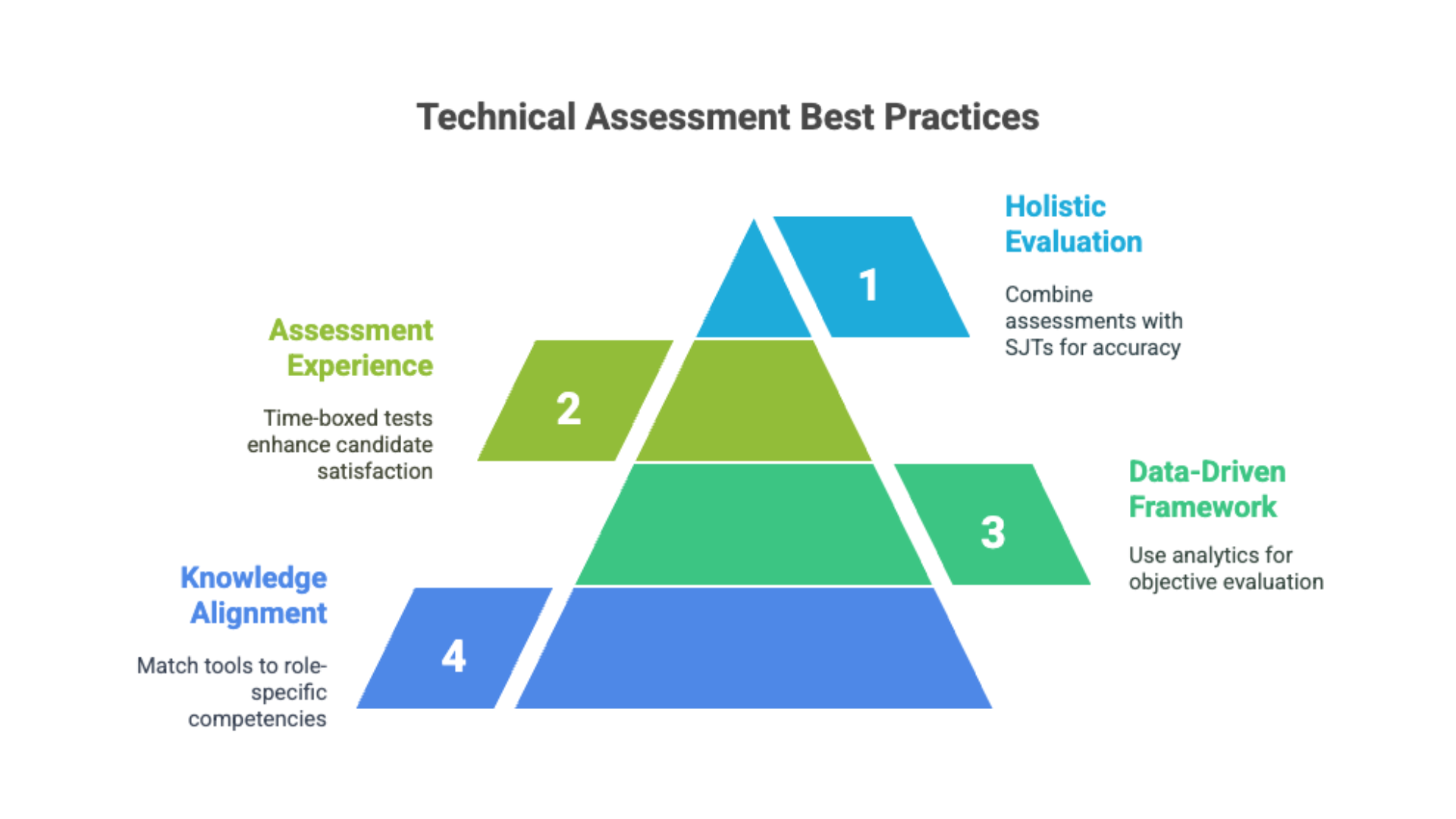
A good technical assessment should reflect the actual responsibilities of the role.
Rather than relying on generic tests, create exercises that mirror real workplace scenarios.
For example, you may ask candidates to:
- Improve an existing AI workflow
- Design a model deployment strategy
- Analyze a practical business problem
- Review and optimize AI-generated outputs
This provides a more accurate picture of their capabilities.
2. Questions That Reveal Practical AI Experience
The most valuable interview questions focus on previous work rather than hypothetical situations.
Ask candidates to explain:
- Their most successful AI project
- A deployment challenge they faced
- How they improved model performance
- Decisions they made during implementation
Detailed answers often reveal both technical depth and problem-solving ability.
3. Evaluating System Design and Model Deployment Skills
Many AI projects fail during deployment rather than development.
That is why it is important to assess whether candidates understand the full lifecycle of an AI system.
Look for knowledge around:
- Infrastructure planning
- Scalability considerations
- Monitoring and maintenance
- Security and compliance requirements
These skills become increasingly important as AI applications move into production environments.
4. Avoiding Overreliance on Coding Tests
Coding assessments can be useful, but they should not be the only evaluation method.
Many experienced AI developers spend significant time designing systems, optimizing models, collaborating with stakeholders, and solving business problems.
A hiring process that focuses solely on coding exercises may overlook highly qualified candidates.
Combining technical assessments, project discussions, and system design evaluations creates a more balanced and accurate hiring process.
Suggested Reading:
Structured Interview ProcessRed Flags to Watch for During Evaluation
A strong resume and confident interview performance do not always translate into real-world AI expertise.
As you evaluate candidates, it is important to identify warning signs that could lead to poor hiring decisions later.
Spotting these red flags early can save valuable time, reduce hiring risks, and improve the quality of your final shortlist.
1. Experience Without Production Deployments
Many candidates have experience building AI models in learning environments or personal projects.
However, deploying those models into production is an entirely different challenge.
If a candidate has never worked on live AI systems, they may lack experience with:
- Scalability and performance optimization
- Model monitoring and maintenance
- Infrastructure and deployment workflows
- Security and compliance considerations
Production experience often separates theoretical knowledge from practical expertise.
2. Heavy Dependence on Tutorials and Templates
Learning through tutorials is normal, especially when entering the AI field.
The concern arises when candidates cannot move beyond pre-built examples.
Ask candidates to explain how they adapted solutions for unique business requirements.
If every project closely follows publicly available tutorials, it may indicate limited independent problem-solving ability.
Strong AI developers understand the reasoning behind their decisions rather than simply following predefined steps.
3. Limited Understanding of AI Fundamentals
AI tools and frameworks continue to evolve, but core concepts remain essential.
Candidates should demonstrate a clear understanding of topics such as:
- Machine learning fundamentals
- Model evaluation metrics
- Data preprocessing techniques
- Bias and model limitations
- Training and inference workflows
A lack of foundational knowledge can create challenges when projects become more complex.
4. Inability to Explain Previous Projects Clearly
Experienced professionals can usually explain their work in a structured and understandable way.
When candidates struggle to describe project goals, technical decisions, or outcomes, it may indicate limited ownership or involvement.
Pay attention to whether they can clearly communicate:
- The business problem
- Their specific contribution
- Technical challenges encountered
- Results achieved
Clear explanations often reflect genuine hands-on experience.
Common Mistakes Companies Make When Hiring AI Developers
While candidate evaluation is important, hiring challenges are not always caused by the candidates themselves.
Many organizations unintentionally slow down the process through avoidable mistakes.
Understanding these common issues can help you build a more efficient hiring strategy.
1. Hiring Too Broadly
One of the biggest mistakes is creating overly broad job requirements.
Companies often search for a single candidate who can handle machine learning, software engineering, cloud infrastructure, data science, MLOps, and product strategy.
This "unicorn candidate" rarely exists.
Instead, focus on the specific skills required to achieve your business objectives.
2. Moving Too Slowly
Top AI candidates rarely stay available for long.
Extended approval processes, multiple interview rounds, and delayed feedback can quickly result in losing strong applicants.
To improve hiring outcomes:
- Reduce unnecessary interview stages
- Provide feedback quickly
- Schedule interviews efficiently
- Maintain consistent communication
Speed often becomes a competitive advantage in AI recruiting.
3. Prioritizing Degrees Over Skills
While academic credentials can be valuable, they should not outweigh practical experience.
Some of the strongest AI professionals have built impressive projects, contributed to open-source communities, or gained expertise through hands-on work.
Evaluating skills and results often provides a more accurate measure of candidate potential than educational background alone.
4. Ignoring Candidate Experience
Companies often focus entirely on evaluating candidates while overlooking the candidate's experience during the hiring process.
Slow communication, unclear expectations, and poor interview coordination can create negative impressions.
A positive candidate experience helps keep top talent engaged and increases the likelihood of successful offers.
In competitive AI hiring markets, how you hire can be just as important as who you hire.
How Leelu.AI Helps Reduce AI Developer Hiring Time by 50%
Even with a well-structured hiring process, sourcing, screening, and coordinating candidates can consume a significant amount of time.
This is where automation can make a measurable difference.
Leelu.AI helps companies streamline the entire hiring workflow, allowing recruiters to focus on engaging the right AI talent instead of managing repetitive tasks.
1. Automating AI Developer Sourcing with Leelu.AI
Finding qualified AI developers often requires searching across multiple platforms.
Leelu.AI automates this process by sourcing candidates from 500M+ profiles across LinkedIn, job boards, and ATS systems.
Instead of manually building candidate lists, recruiters can identify relevant talent much faster and expand their reach simultaneously.
2. Accelerating AI Resume Screening and Candidate Evaluation
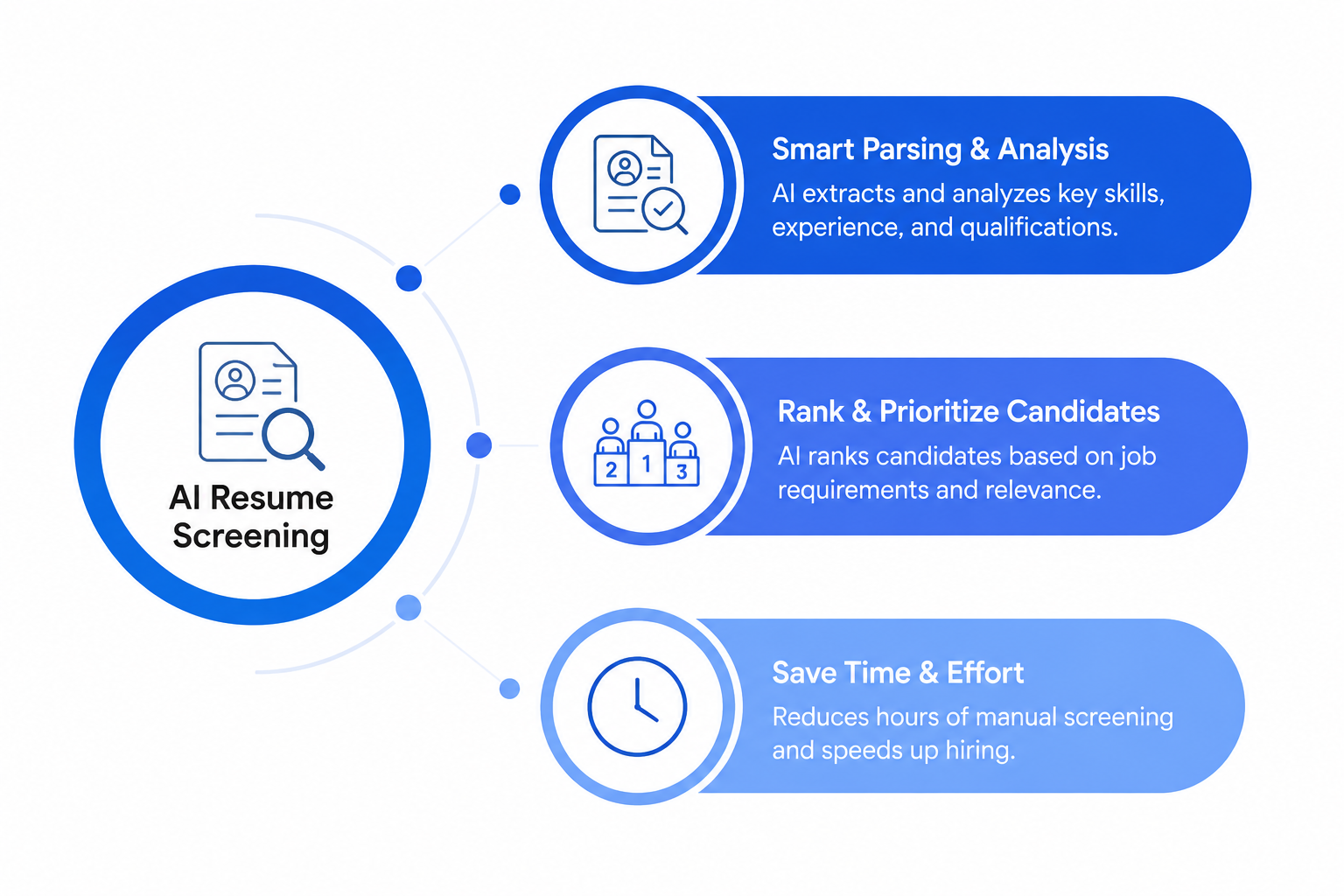
Reviewing hundreds of resumes can quickly become a bottleneck.
Leelu.AI automatically parses, analyzes, and ranks candidate profiles based on job requirements.
This helps recruiters prioritize the most relevant AI developers while reducing hours of manual screening work.
3. Personalizing Candidate Outreach at Scale
Top AI candidates expect personalized communication.
However, creating customized outreach for every prospect is difficult when hiring at scale.
Leelu.AI helps automate personalized outreach across channels, making it easier to engage qualified candidates while maintaining a tailored experience.
4. Automating Interview Scheduling and Coordination
Interview coordination often creates unnecessary delays in the hiring process.
Leelu.AI automates scheduling by syncing calendars and managing interview logistics automatically.
This reduces back-and-forth communication and helps move candidates through the hiring funnel faster.
5. Keeping AI Developer Candidates Engaged Throughout the Hiring Process
Many companies lose strong candidates because communication slows after the initial outreach.
Leelu.AI keeps candidates engaged through automated follow-ups, reminders, and ongoing communication.
By maintaining consistent engagement throughout the hiring journey, companies can reduce candidate drop-off and improve overall hiring efficiency.
When sourcing, screening, outreach, and scheduling are automated within a single workflow, recruiters can significantly reduce hiring time while delivering a better candidate experience.
Conclusion
Hiring AI developers can be challenging, but the right process can make a significant difference.
When you clearly define your requirements, streamline sourcing, improve candidate evaluation, and move quickly through interviews, you can reduce hiring time while improving hiring quality.
As competition for AI talent continues to grow, efficiency becomes a major advantage.
With platforms like Leelu.AI automating sourcing, screening, outreach, and scheduling, you can spend less time on manual hiring tasks and focus on building a stronger AI team faster.
Frequently Asked Questions
1. What skills should an AI developer have?
AI developers should understand Python, machine learning, data processing, AI frameworks, model deployment, and problem-solving for real-world applications.
2. How long does it take to hire an AI developer?
Hiring timelines vary, but sourcing, screening, and scheduling automation can significantly reduce the time required to fill roles.
3. Where can companies find qualified AI developers?
Companies can source AI developers through professional networks, referrals, developer communities, job boards, and AI-powered sourcing platforms.
4. How do you assess an AI developer's experience?
Review past projects, technical skills, deployment experience, problem-solving ability, and their understanding of AI concepts and tools.
5. How can AI help speed up hiring?
AI automates sourcing, screening, outreach, scheduling, and follow-ups, helping recruiters identify and engage candidates more efficiently.