Finding the right recruiting platform is no longer just about sourcing candidates.
Hiring teams now need automation, faster outreach, better candidate matching, and workflows that actually scale with growing hiring demands.
That is why many recruiters are actively searching for Fetcher alternatives that can reduce manual work and improve hiring efficiency without adding more complexity.
In this guide, you will discover:
- The best Fetcher alternatives for scalable hiring automation
- Key features and limitations to compare before choosing a tool
- Common mistakes recruiters make while selecting hiring software
- How platforms like Leelu.AI help automate sourcing, outreach, and scheduling
Why Companies Are Looking for Fetcher Alternatives
As hiring demands continue to grow, recruiters are no longer satisfied with tools that only assist with candidate sourcing. Modern hiring teams now expect automation, workflow flexibility, and better hiring visibility across the entire recruitment process.
This shift is one of the main reasons companies are actively exploring Fetcher alternatives that can support scalable recruiting operations more efficiently.
1. Limited Workflow Customization for Complex Hiring
Many Reddit recruiters mention that Fetcher works well for basic sourcing workflows. However, teams with complex hiring processes often struggle with flexibility.
Recruiters managing multiple departments, approval layers, or regional hiring pipelines say the platform can feel restrictive as hiring scales.
Reddit discussion: AI recruiting tools comparison discussion
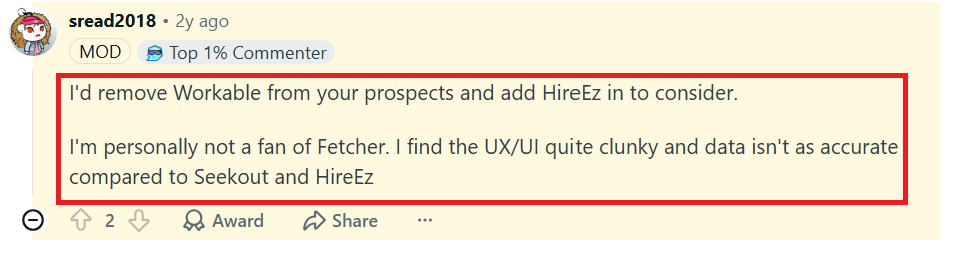
Users specifically mention difficulties customizing outreach sequences, automation rules, and recruiter workflows to match their internal hiring process.
As a result, recruiters still rely on manual workarounds or additional tools outside Fetcher to manage more advanced recruiting operations.
2. Inaccurate AI Candidate Recommendations
One of the most common Reddit concerns about AI sourcing platforms like Fetcher is candidate relevance.
Recruiters report that AI-generated candidate recommendations sometimes include loosely matched or irrelevant profiles.
Reddit discussion: AI recruiting skepticism thread
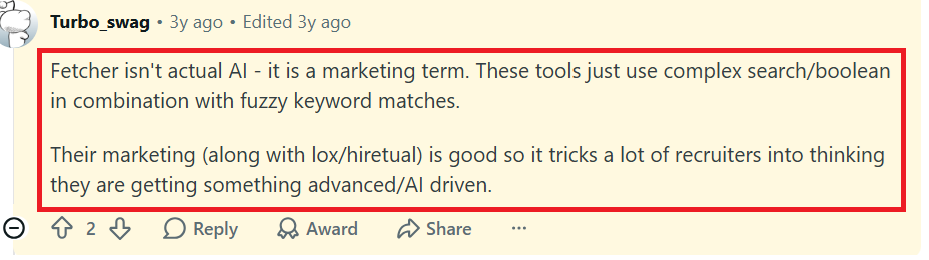
Instead of fully trusting the sourcing automation, recruiters often spend additional time manually reviewing and filtering recommendations.
Several discussions mention that this reduces the expected efficiency gains from AI recruiting tools.
For hiring teams handling large applicant volumes, inaccurate matching can slow down sourcing rather than streamline it.
Suggested Reading:
How Recruitment Automation Is Transforming Hiring in USABest Fetcher Alternatives for Scalable Hiring Automation
As recruiting challenges continue to evolve, companies are now prioritizing platforms that combine sourcing, automation, communication, and workflow management in one system.
Instead of relying on disconnected recruiting tools, hiring teams want solutions that simplify the complete recruitment lifecycle while helping recruiters scale efficiently.
Here are some of the best Fetcher alternatives for scalable hiring automation.
1. Leelu.AI
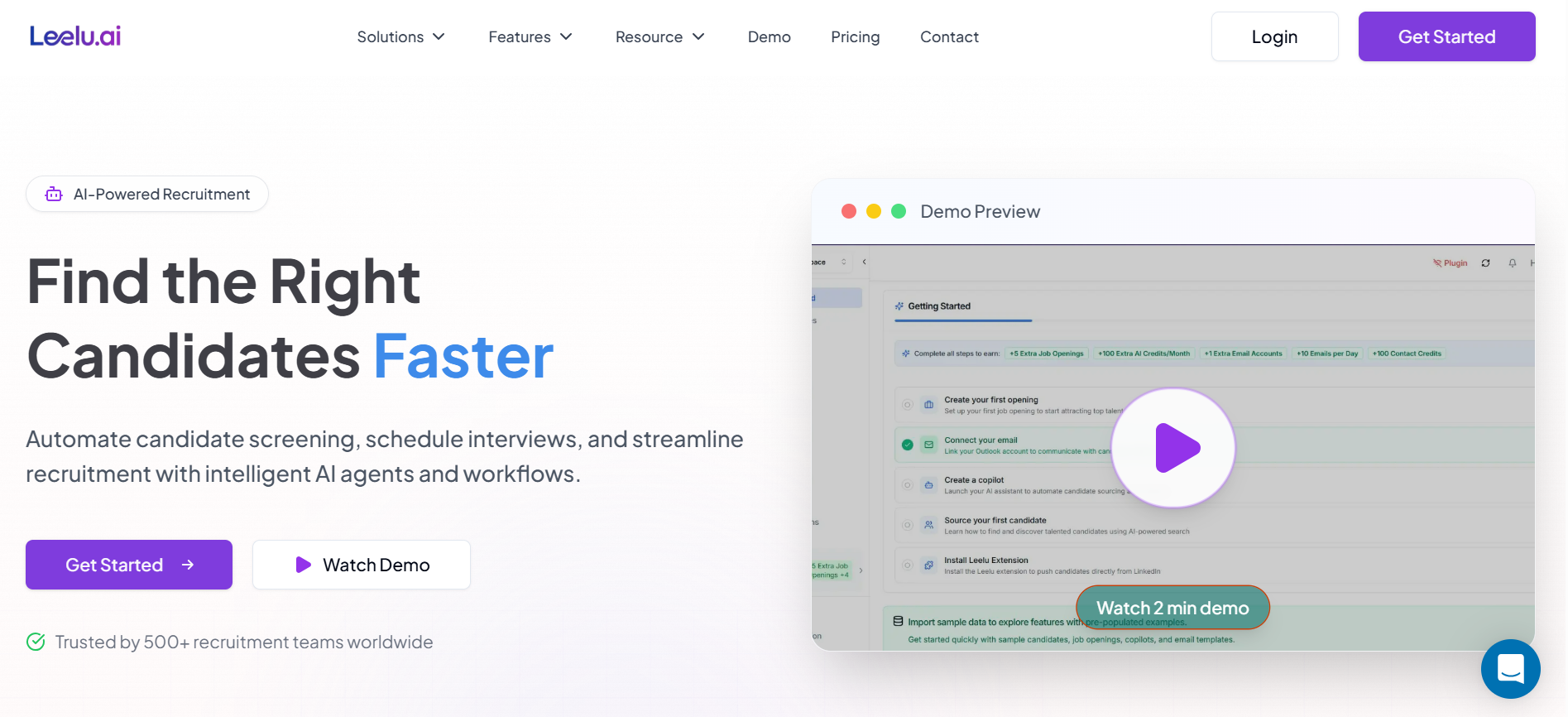
Leelu.AI is designed for companies that want end-to-end hiring automation instead of relying on multiple disconnected recruiting tools.
The platform automates sourcing, screening, outreach, follow-ups, and interview scheduling from a single workflow.
Unlike traditional sourcing tools, Leelu.AI focuses on reducing recruiter workload while helping hiring teams move faster.
Recruiters can source candidates from LinkedIn, job boards, and ATS systems while managing everything from one dashboard.
Key features include:
- AI-powered candidate sourcing across 500M+ profiles
- Automated outreach and personalized follow-ups
- AI resume parsing and candidate scoring
- Smart interview scheduling with calendar sync
- ATS integrations for centralized hiring workflows
- Real-time hiring analytics and pipeline tracking
Leelu.AI is especially useful for startups, staffing agencies, and growing businesses that need scalable recruiting automation without increasing recruiter workload.
2. hireEZ
hireEZ is another popular Fetcher alternative focused on outbound recruiting and candidate sourcing automation.
The platform helps recruiters discover candidates from multiple databases while managing outreach campaigns and engagement workflows.
One reason recruiters choose hireEZ is its sourcing reach combined with built-in recruitment marketing tools.
The platform also supports CRM functionality, allowing recruiters to nurture candidates over longer hiring cycles.
Some notable features include:
- AI-powered talent sourcing
- Automated email outreach campaigns
- Candidate rediscovery from ATS databases
- Recruitment analytics and reporting
- CRM and pipeline management tools
hireEZ works well for recruiting teams that rely heavily on outbound hiring and talent engagement strategies.
3. SeekOut
SeekOut is widely known for its advanced talent search capabilities and diversity hiring features.
The platform is designed to help recruiters identify specialized talent across technical and hard-to-fill roles.
Many enterprise hiring teams prefer SeekOut because of its deep search filters and talent intelligence capabilities.
Recruiters can search candidates based on skills, certifications, experience, and diversity-focused hiring criteria.
Core features include:
- Advanced AI candidate search filters
- Diversity sourcing tools
- Talent market insights and analytics
- Internal talent mobility features
- CRM and candidate engagement tools
SeekOut is often a strong option for enterprise companies focused on technical recruitment and diversity hiring initiatives.
4. Gem
Gem combines sourcing, candidate engagement, and recruiting analytics into a single recruiting platform.
The platform is particularly popular among talent acquisition teams that want better visibility into recruiting performance and outreach effectiveness.
Gem allows recruiters to automate outreach sequences while tracking candidate engagement across different hiring stages.
It also provides reporting dashboards that help recruiters measure sourcing performance and pipeline conversion rates.
Key capabilities include:
- Multi-channel candidate outreach
- Recruiting funnel analytics
- ATS synchronization
- Candidate relationship management
- Automated follow-up workflows
Gem is a good choice for data-driven recruiting teams that want stronger visibility into hiring performance metrics.
5. Findem
Findem focuses on AI-powered talent discovery and candidate matching using enriched talent data.
Instead of relying only on resumes or keywords, Findem uses broader talent attributes to identify qualified candidates.
This helps recruiters discover candidates who may not appear through traditional sourcing searches.
The platform also supports automation workflows for outreach and talent pipeline management.
Some important features include:
- AI-powered talent matching
- Enriched candidate profiles
- Automated sourcing workflows
- Diversity hiring support
- Talent rediscovery capabilities
Findem is often preferred by companies looking for more intelligent candidate discovery and long-term talent pipeline building.
6. Paradox
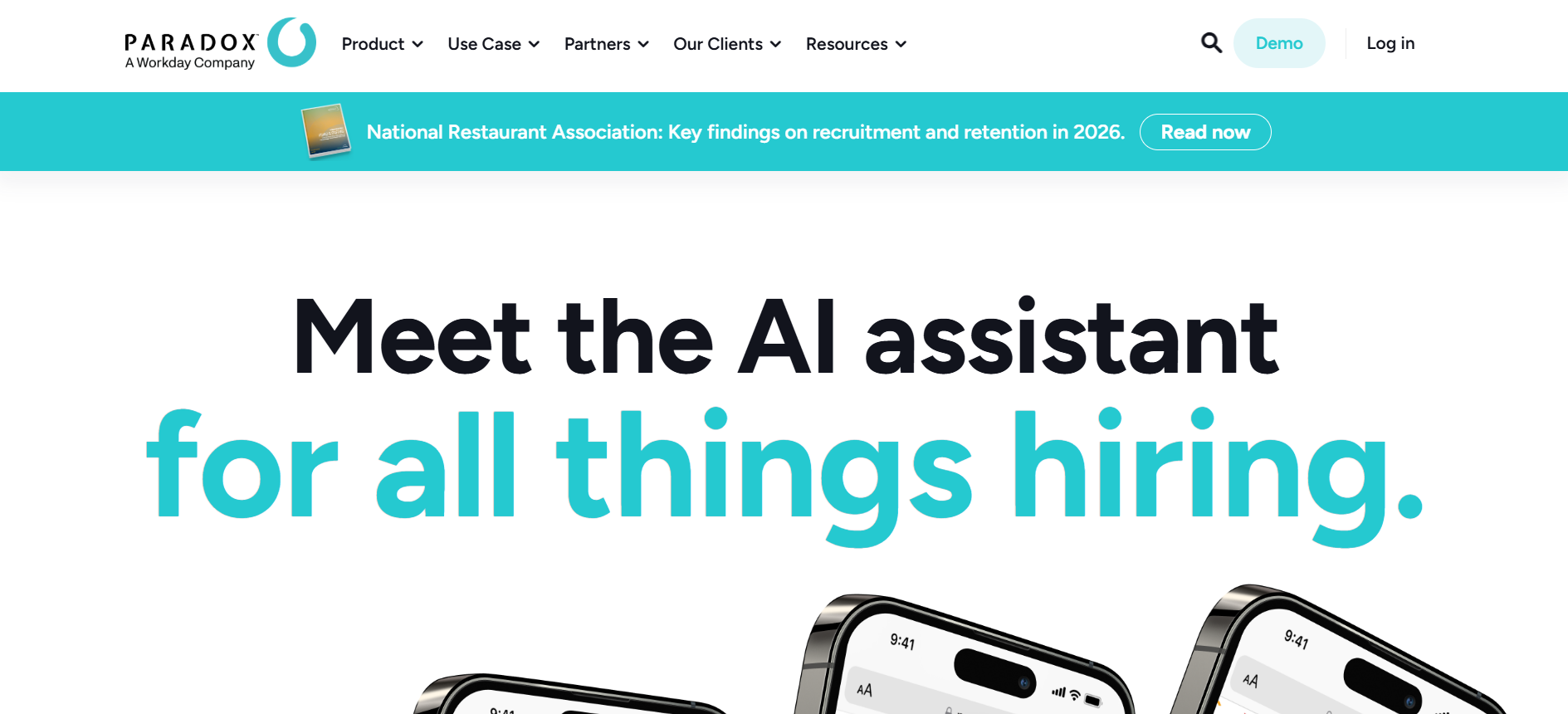
Paradox is known for its conversational AI recruiting assistant designed to automate candidate communication and interview scheduling.
The platform uses AI chatbots to engage candidates through text, web chat, and mobile conversations.
This helps recruiters reduce repetitive communication tasks while improving candidate response times.
Paradox is especially popular among companies managing high-volume hiring where fast engagement is critical.
Key features include:
- AI recruiting assistant for candidate conversations
- Automated interview scheduling
- Mobile-first candidate engagement
- Conversational hiring workflows
- ATS integrations and automation support
Paradox works well for organizations that want to automate frontline recruiting communication and improve hiring speed at scale.
7. Humanly
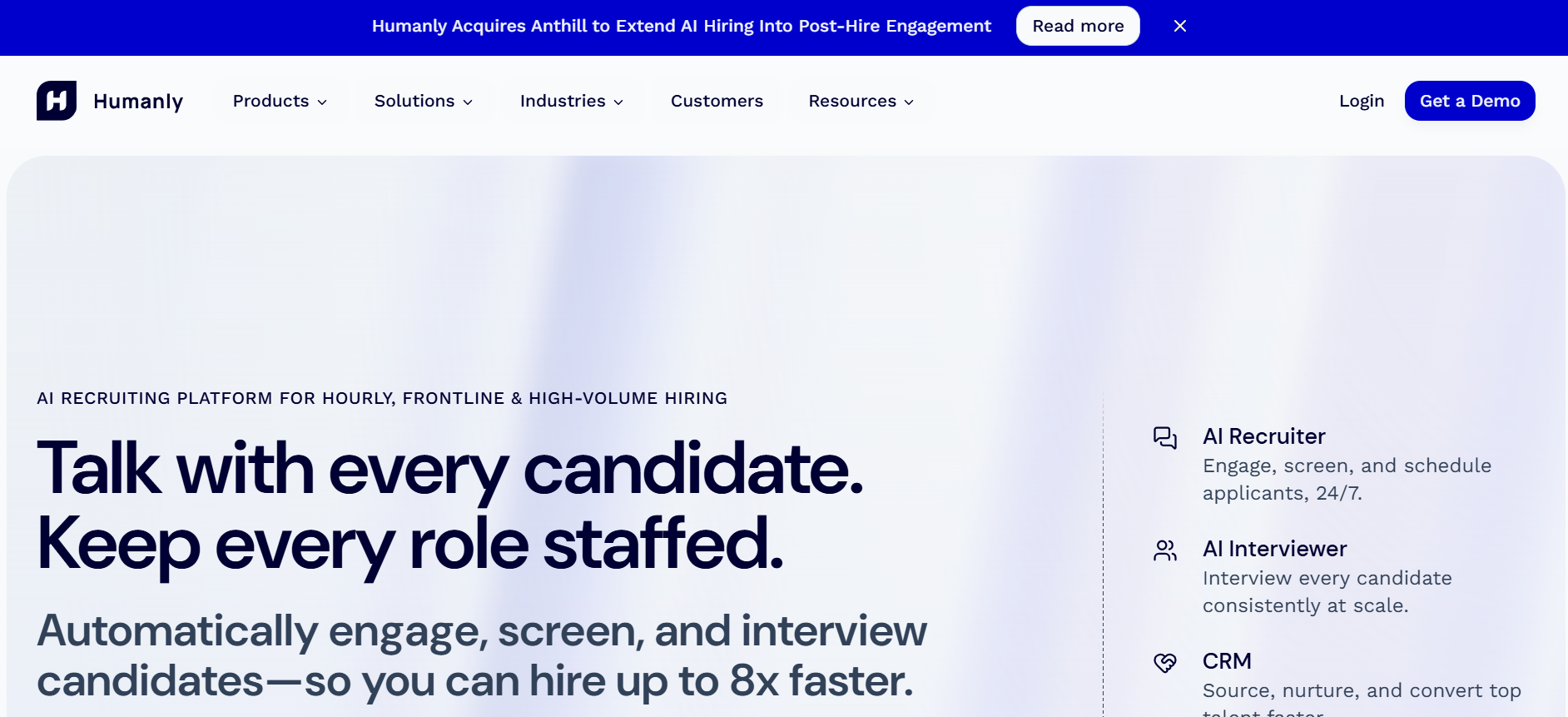
Humanly focuses on AI-powered recruiting automation with an emphasis on screening and candidate communication.
The platform helps recruiters automate interview coordination, candidate qualification, and engagement workflows without creating a complicated hiring process.
Many hiring teams use Humanly to reduce manual screening work and improve recruiter productivity.
The platform also supports conversational AI interactions that help candidates move through the hiring funnel faster.
Core capabilities include:
- AI candidate screening and qualification
- Automated interview scheduling
- Conversational recruiting workflows
- Candidate engagement automation
- Recruiting analytics and insights
Humanly is often a strong fit for recruiting teams looking to simplify candidate communication while reducing time-to-hire.
8. Eightfold AI
Eightfold AI is an AI talent intelligence platform designed for enterprise-level recruiting and workforce planning.
The platform goes beyond sourcing by helping companies manage external hiring, internal mobility, and workforce development from a centralized system.
Eightfold AI uses deep-learning models to match candidates with roles based on skills, experience, and career potential rather than only keywords.
This helps organizations improve long-term hiring accuracy and talent retention.
Some notable features include:
- AI-driven talent intelligence
- Skills-based candidate matching
- Internal mobility and workforce planning
- Diversity and inclusion hiring support
- Advanced recruiting analytics
Eightfold AI is commonly used by larger organizations that need scalable talent intelligence and workforce management capabilities.
9. AmazingHiring
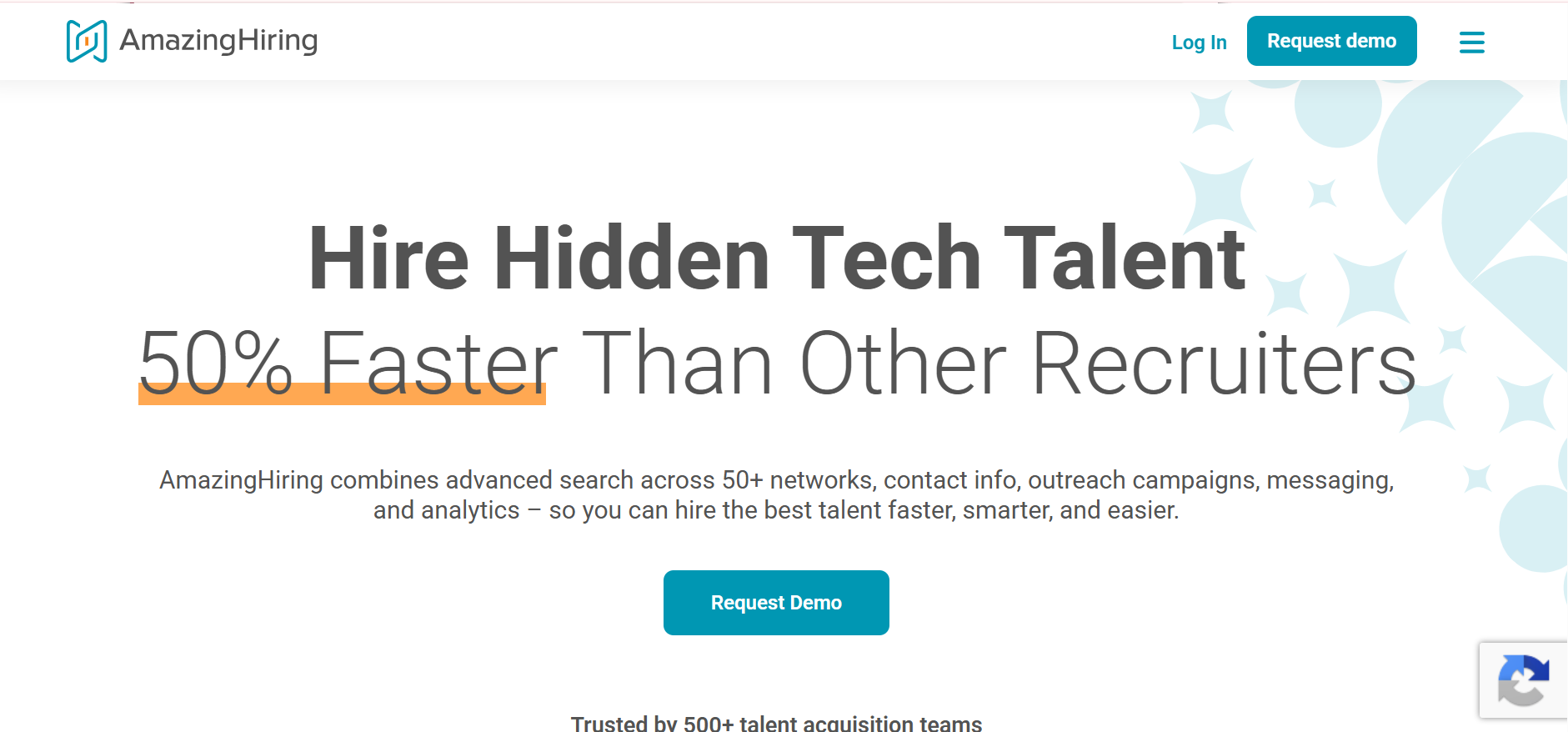
AmazingHiring is a technical sourcing platform built mainly for recruiters hiring engineering and IT talent.
The platform aggregates candidate information from multiple online sources, helping recruiters discover technical professionals more efficiently.
It is particularly useful for sourcing passive candidates with strong developer or engineering backgrounds.
Recruiters can also use the platform to identify technical skills, coding activity, and professional experience across different platforms.
Key features include:
- Technical candidate sourcing
- Aggregated developer profiles
- AI-powered talent search
- Candidate contact discovery
- Integration with recruiting workflows
AmazingHiring is best suited for companies focused heavily on technical recruitment and hard-to-fill engineering roles.
How to Choose the Right Fetcher Alternative
After comparing different recruiting platforms, the next step is choosing a solution that fits your hiring workflow and automation needs.
Instead of focusing only on features, companies should look for tools that reduce recruiter workload, support scalable hiring, and improve overall recruitment efficiency.
1. Based on Candidate Sourcing Capabilities
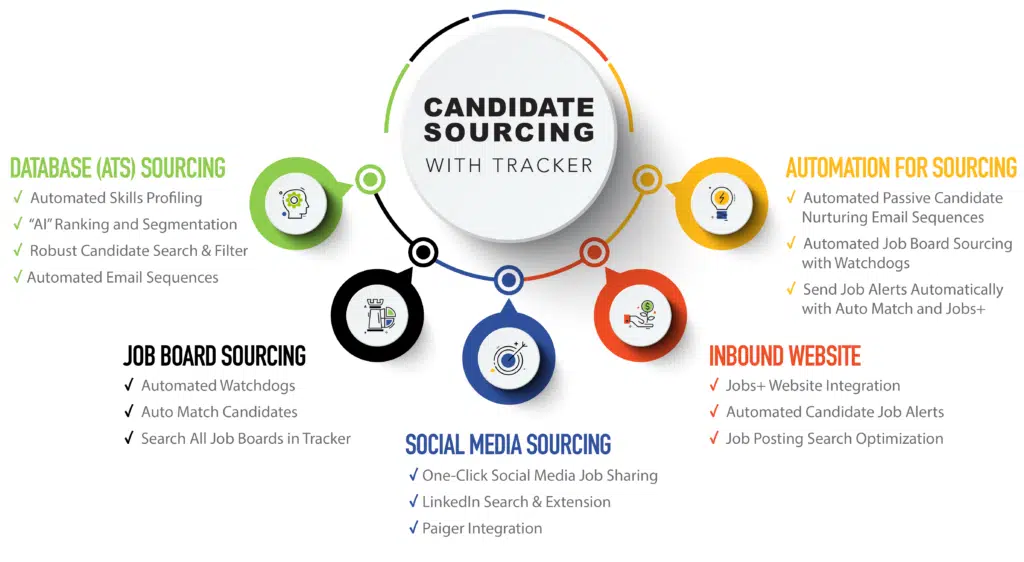
Candidate sourcing is one of the first things recruiters should evaluate when comparing Fetcher alternatives.
Some platforms only search limited databases, while others provide access to multiple sourcing channels, job boards, social platforms, and ATS systems simultaneously.
The best recruiting platforms help recruiters discover qualified candidates faster without spending hours manually searching profiles.
When evaluating sourcing capabilities, look for features like:
- AI-powered candidate matching
- Access to large talent databases
- Multi-platform sourcing support
- Candidate enrichment and profile aggregation
- Technical and diversity hiring filters
Strong sourcing capabilities can significantly improve hiring speed and candidate quality.
2. Based on Recruitment Workflow Automation
Modern hiring teams need more than sourcing tools.
Recruiters now want platforms that automate repetitive hiring tasks such as outreach, follow-ups, interview scheduling, and pipeline management.
Without automation, recruiters often lose time managing administrative work instead of focusing on candidate relationships.
Look for recruiting software that supports:
- Automated outreach campaigns
- AI-driven follow-up sequences
- Interview scheduling automation
- Candidate status tracking
- Workflow customization for different hiring processes
The more manual work a platform eliminates, the easier it becomes to scale hiring operations.
3. Based on Ease of Use for Recruiters
Even powerful recruiting software can become ineffective if recruiters struggle to use it daily.
Complex dashboards, confusing workflows, and difficult onboarding processes often reduce recruiter adoption across teams.
A good recruiting platform should simplify hiring instead of creating additional operational challenges.
Recruiters should be able to source candidates, manage pipelines, and track communication without switching between multiple systems constantly.
User-friendly platforms also reduce training time for new recruiters and hiring managers.
4. Based on Scalability for Growing Teams
Hiring needs can change quickly as companies grow.
A recruiting tool that supports a team of five recruiters today may not handle larger hiring volumes in the future.
That is why scalability should always be part of the evaluation process.
Look for platforms that can support:
- High-volume hiring workflows
- Multiple recruiter collaboration
- Global hiring operations
- ATS and HR system integrations
- Expanding candidate databases and outreach campaigns
Scalable recruiting platforms help businesses avoid switching tools repeatedly as hiring demands increase.
5. Based on Reporting and Hiring Analytics
Data-driven hiring has become a major priority for modern recruitment teams.
Recruiters and hiring leaders now want visibility into sourcing performance, outreach effectiveness, pipeline conversion, and hiring bottlenecks.
Strong reporting features help companies optimize hiring strategies and improve recruitment efficiency over time.
Useful analytics features may include:
- Pipeline conversion tracking
- Recruiter productivity insights
- Candidate engagement metrics
- Time-to-hire reporting
- Hiring funnel performance dashboards
The right hiring analytics can help teams make smarter recruiting decisions faster.
Suggested Reading:
Top HR Metrics Every HR Professional Should TrackCommon Mistakes to Avoid When Choosing a Recruiting Tool
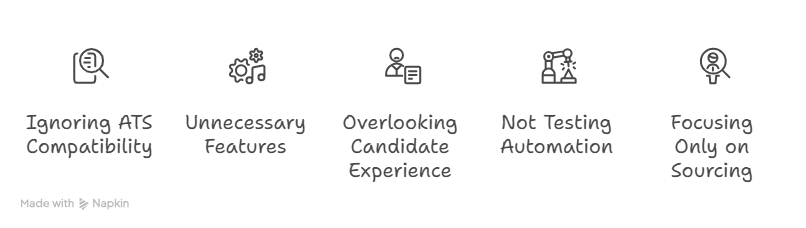
While evaluating different recruiting platforms, companies should also understand the common mistakes that often lead to poor hiring software decisions.
Avoiding these issues early can save recruiting teams significant time, budget, and operational effort in the long run.
1. Ignoring ATS Compatibility
One of the biggest mistakes recruiters make is choosing software that does not integrate properly with their existing ATS.
Poor integration often creates duplicate data entry, fragmented candidate records, and workflow delays.
Before selecting a recruiting platform, companies should verify whether it integrates smoothly with their current hiring systems.
2. Choosing Tools With Unnecessary Features
More features do not always mean a better recruiting platform.
Some tools include overly complex capabilities that recruiters rarely use in daily hiring workflows.
This can increase software costs while making the platform harder to manage.
Instead of chasing feature-heavy platforms, companies should focus on tools that solve their most important recruiting challenges efficiently.
3. Overlooking Candidate Experience
Candidate experience plays a major role in successful hiring.
Slow communication, confusing application processes, and delayed follow-ups can negatively impact employer branding and candidate engagement.
Recruiting platforms should help companies create smoother and faster candidate interactions across every hiring stage.
4. Not Testing Automation Workflows
Many recruiting tools advertise automation capabilities, but not all workflows perform effectively in real hiring situations.
Before fully adopting a platform, recruiters should test outreach automation, scheduling workflows, and candidate engagement processes carefully.
This helps teams identify workflow gaps before scaling hiring operations.
5. Focusing Only on Sourcing
Sourcing is important, but recruiting does not end after finding candidates.
Hiring teams also need tools for communication, screening, scheduling, analytics, and pipeline management.
Platforms that focus only on sourcing often require recruiters to use multiple additional systems, creating disconnected workflows and extra manual work.
The best Fetcher alternatives support the complete hiring process from sourcing to candidate engagement and interview coordination.
Conclusion
Choosing the right Fetcher alternative depends on your hiring goals, recruitment volume, and automation needs.
While some platforms focus mainly on sourcing, modern recruiting teams often need complete hiring automation that includes outreach, screening, scheduling, and analytics.
The best recruiting software should help your team reduce manual work, improve candidate experience, and scale hiring operations efficiently.
By comparing features, workflows, integrations, and scalability carefully, you can select a recruiting platform that supports faster and more effective hiring long term.
Frequently Asked Questions
1. What are the best Fetcher alternatives for scalable hiring?
Some of the best Fetcher alternatives include Leelu.AI, hireEZ, SeekOut, Gem, and Eightfold AI. These tools offer features like AI sourcing, outreach automation, interview scheduling, and recruitment analytics.
2. Why do companies switch from Fetcher to other recruiting tools?
Many companies look for alternatives because they need better workflow automation, stronger integrations, improved AI candidate matching, and more scalable recruiting features for growing hiring teams.
3. Which Fetcher alternative is best for AI-powered candidate sourcing?
Leelu.AI, SeekOut, and Findem are popular for AI-driven candidate sourcing and talent discovery across multiple hiring channels.
4. What features should recruiters look for in a hiring automation platform?
Recruiters should focus on AI sourcing, automated outreach, ATS integrations, interview scheduling, candidate tracking, workflow automation, and hiring analytics when choosing a recruiting platform.
5. Are Fetcher alternatives suitable for small and mid-sized businesses?
Yes. Many recruiting automation tools offer flexible pricing and scalable features that work well for startups, small businesses, and mid-sized companies looking to streamline hiring processes.


