
Each workplace has definite rules. People can better understand right from wrong by following these rules. Employees most frequently ask, "What is the code of conduct, and why is it so important?" Control has nothing to do with a code of conduct. It is about respect, safety and trust at work.
The code of conduct's meaning is simple. It describes how employees are expected to conduct themselves in the workplace. It helps employees to make good choices even when no one is around. It also keeps the company and its people out of confusion and conflict.
Many companies face problems because the rules are unclear.
Mistakes occur when workers are unaware of the required behavior. This can damage teamwork, culture, and brand image. A strong code of conduct definition solves this problem by setting clear standards.
This guide explains everything in simple words. This blog is useful to HR, managers, and expanding businesses.
What Is Code of Conduct and Why Does It Matter?
A code of conduct is a written set of rules. These are the guidelines employees must follow at the workplace. It tells employees what behavior is expected every day.
The code of conduct definition includes values, rules, and actions. It explains how to treat coworkers, customers, and the company. It also explains what actions are not allowed.
Why a Code of Conduct Is Important
- It sets clear behavior rules so employees understand workplace expectations.
- It protects company values by guiding ethical and responsible employee actions.
- It supports fair treatment by applying the same rules to everyone.
- It helps solve problems faster by offering clear guidance during conflicts.
Who Needs a Code of Conduct
- Small businesses need clear rules to build trust and a strong culture
- Startups require conduct guidelines to manage fast-growing teams effectively.
- Large companies use conduct rules to maintain consistency across departments.
- Remote teams need behavior standards to ensure respect without supervision.
Rules change with individuals without a code of conduct. This creates mistrust and stress. A clear policy implies that all are equal.
A good code of conduct creates goodwill. It shows that the company is committed to integrity, dignity, and justice.
Code of Conduct Meaning Explained in Simple Words
The code of conduct definition is straightforward. It translates to rules of good behavior in the workplace. The rules help employees know what they should and should not do.
A code of conduct answers simple questions. How should people talk to each other? How should company data be handled? What happens if rules are broken?
What a Code of Conduct Usually Covers
- A code of conduct encourages respect among workers at the workplace.
- It promotes honesty and justice during work-related decision making.
- It covers safety regulations to prevent the risk of employees in the workplace.
- It guides proper use of company tools and digital resources.
What It Does Not Do
- A code of conduct does not punish employees without a fair reason.
- It does not control an employee's personal life outside work.
- It does not confuse employees when rules are written clearly.
The goal is guidance, not fear. When employees understand the meaning, they naturally follow it.
Many companies include examples to clarify. This helps employees understand real situations. A simple code of conduct works better than a long one. Easy words help everyone understand it fast.
Real Code of Conduct Examples from Top Companies
Learning from real code-of-conduct examples helps companies build better policies. Many global brands share their codes openly.
Real examples make learning easier. This section provides examples of the codes of conduct of well-known companies.
These are examples of how specific rules improve honesty, politeness, and ethics across many fields and work environments.
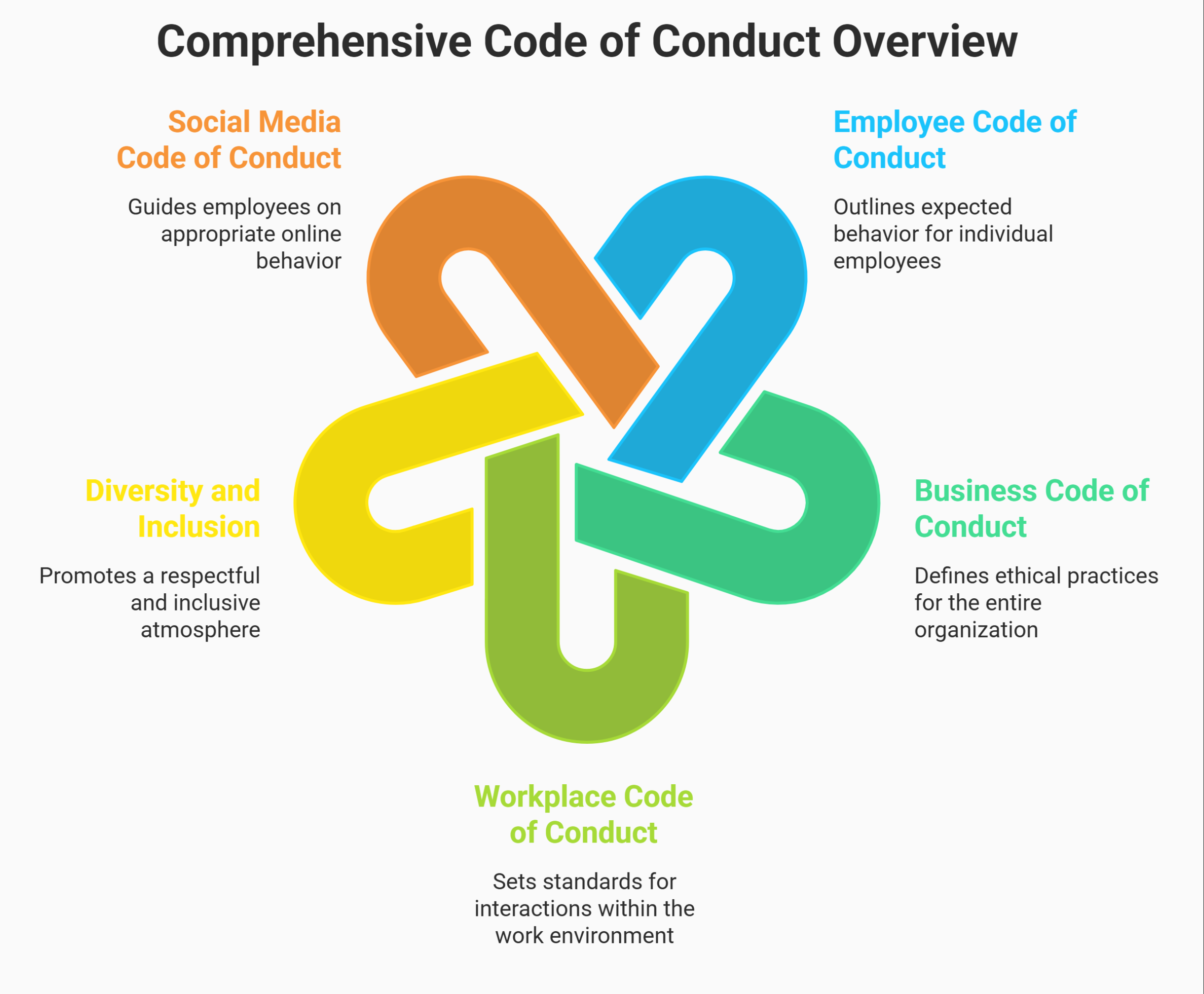
Employee Code of Conduct Example
PageGroup's code of conduct is devoted to honesty, respect, and data safety. It directs the staff to treat workmates and customers equally and to guard the company's information at all times.
Business Code of Conduct Example
Johnson & Johnson's business code emphasizes fairness, legal compliance, and transparency. It promotes employee reporting, the raising of concerns, and ethical decision-making across all business operations.
Workplace Code of Conduct Example
Netflix code of conduct encourages moral conduct and responsibility in the work place. The employees are expected to be truthful, not antagonistic, not law-defiant and guardians of business secrets.
Diversity and Inclusion Example
Google has a diversity code founded on respect, equality, and belonging. It encourages equality, eradicates discrimination and makes workers consider other backgrounds and opinions in the working place.
Social Media Code of Conduct Example
The social media code of IBM directs its employees to behave in a professional manner over the internet. It protects the reputation of the company, communicates with respect, and avoids the disclosure of confidential information.
These code-of-conduct examples show one thing clearly. Good rules create a strong culture.
Simple Code of Conduct Template for Any Company
A code of conduct template helps companies save time. It gives a clear structure that can be customized. Writing rules from scratch can feel hard. This section introduces a simple code of conduct template that works for any company. It helps HR teams and business owners create clear and useful policies without stress.
Basic Code of Conduct Template Sections:
- Company Values: Company values explain the beliefs of the organization. They decide, set the culture and make employees realize the values of honesty, respect, teamwork, fairness and responsibility in the workplace.
- Expected Behavior: Expected behavior explains how employees are supposed to act in their everyday lives. It includes respectful communication, honesty, teamwork, compliance with firm rules, protection of information and fair and thoughtful treatment of colleagues, customers and partners.
- Unacceptable Behavior: Unacceptable behavior contains the list of the actions prohibited. These are harassment, discrimination, company resource misuse, safety, conflict of interest and abuse of employees or the company.
- Reporting Issues: Reporting issues explains how employees can raise concerns safely. It involves who to address, the ability to remain confidential, and the promise that reporting issues will not result in punishment or mistreatment.
- Disciplinary Actions: Disciplinary actions explain fair consequences for breaking rules. These may include warnings, training, suspension, or termination, applied equally to all employees based on the seriousness of the issue.
Why Use a Template
- A template is easy to customize for different company needs.
- Using a template saves time during policy creation and approval.
- A template reduces errors by covering all important conduct areas.
A good template uses simple words. It avoids legal language. Employees should understand it without help.
Companies can update the template as they grow. This keeps it useful and relevant.
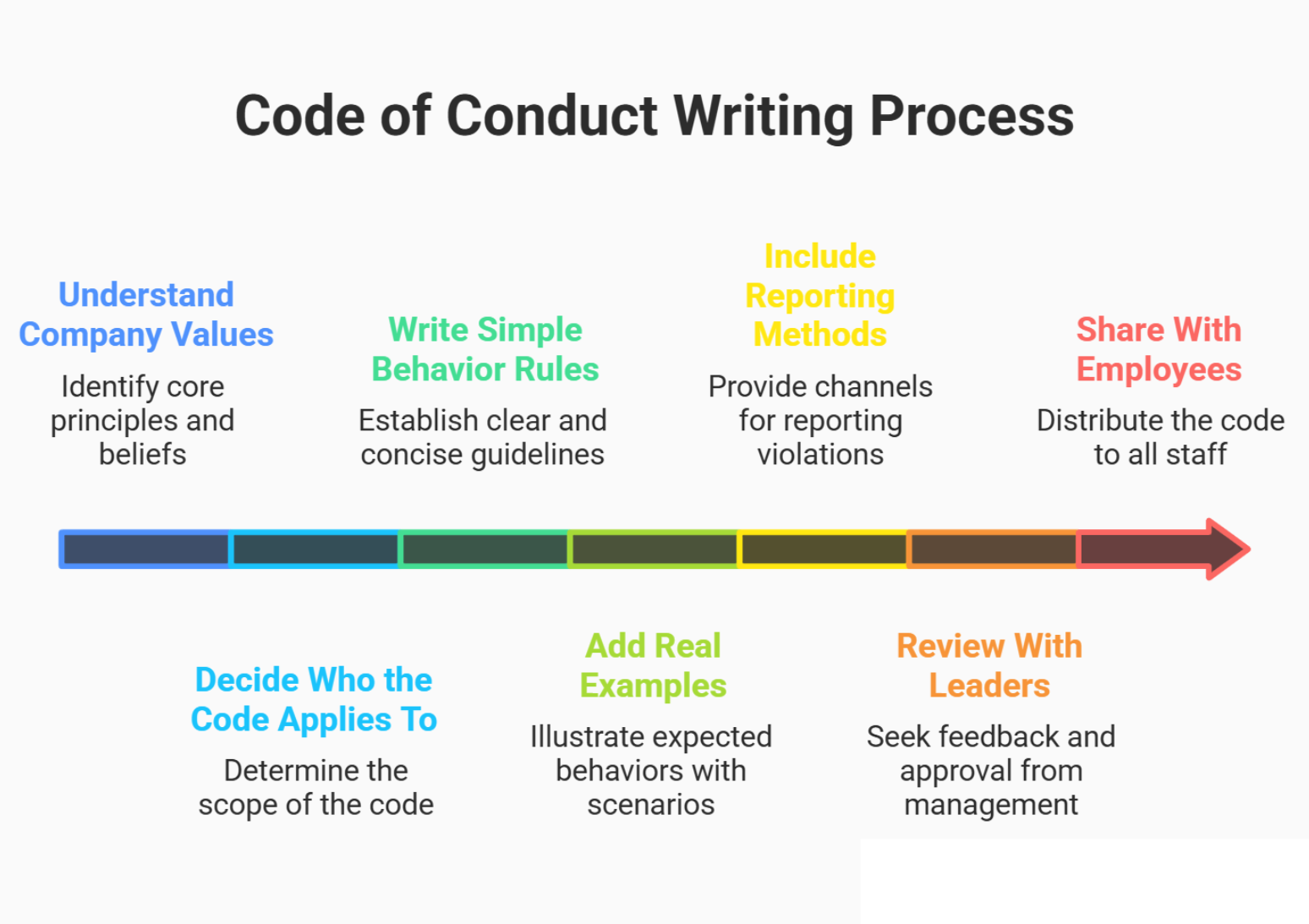
How to Write a Code of Conduct Step by Step
Writing a code of conduct is easier with clear steps. A good code of conduct needs planning.
Step1: Understand Company Values
These principles shape the action and decision. When clear, the code of conduct will illustrate what the company believes and expect in the day-to-day running of the company.
Step2: Decide Who the Code Applies To
Make it clear who has to adhere to the code of conduct. This can be employees, managers, contractors and partners. The scope is clear, thereby preventing confusion and everyone follows similar rules.
Step3: Write Simple Behavior Rules
Use simple and clear language when writing behavior rules. Explain what is allowed and not allowed. Easy words help employees understand expectations without needing help or clarification.
Step4: Add Real Examples
Include real-world examples to explain the rules better. Examples help employees understand how the code of conduct applies in daily situations and how to respond correctly.
Step5: Include Reporting Methods
Explain how employees can report issues safely. Provide clear steps and contact points. Assure employees that their concerns will be handled fairly and without fear.
Step6: Review With Leaders
Share the draft code of conduct with leaders and managers. Their feedback helps improve clarity, fairness, and alignment with company goals and legal needs.
Step7: Share With Employees
Communicate the ultimate code of conduct to all employees. Conduct training, emails and on boarding to make everybody know and obey the rules every day.
Tips for Better Writing
- The message should be written in simple language so that all employees can understand it.
- Use short sentences so ideas are clear and easy to read.
- Be clear and honest with employees to build confidence and ensure compliance.
The goal is clarity. Employees should know what to do in daily work situations.
A strong writing process creates a strong policy.
Common Mistakes to Avoid in a Code of Conduct
Many companies make mistakes while creating a code of conduct. Even good policies can fail if written poorly. Understanding these mistakes also enables the HR departments to develop better, more just, and valuable rules.
Common Errors
- Using confusing words can lead employees to misunderstand rules and feel unsure about correct workplace behavior.
- Being too strict creates fear and reduces trust, openness, and honest communication among employees.
- Ignoring employee feedback leads to policies that feel unfair, unrealistic, and difficult to follow.
- Not updating the policy makes the code of conduct outdated and ineffective over time.
Why These Mistakes Hurt
When rules are unclear, employees feel unsafe. When rules are unfair, trust breaks.
The code of conduct must favour the employees and not frighten them.
How to Avoid These Mistakes
- Make the code plain and easy for employees to follow and understand.
- Revise the code annually to align with evolving laws and job requirements.
- Train managers properly to apply the code fairly and consistently.
Why Modern Companies Use Tools Like Leelu Ai
A strong code of conduct works best with smart hiring. This is where Leelu Ai helps companies build better teams.
Leelu Ai is an artificial intelligence copilot recruiter. It helps firms reduce the time between a job posting and the first interview to a mere 24 hours. By saving time, HR teams will be able to focus more on people, culture, and values.
Leelu Ai supports fair hiring. It reduces bias and helps build diverse teams. This matches the values behind every good code of conduct.
Leelu Ai has served more than 2,000 companies and booked 50,000 interviews, a testament to the fact that hiring a person can be rapid and human.
Why Choose Leelu AI
- Leelu Ai enables faster hiring by moving from job posts to interviews within 24 hours.
- Leelu Ai ensures fair candidate screening by reducing bias through intelligent AI evaluation.
- Leelu Ai saves HR teams time by automating repetitive, manual hiring tasks.
- Leelu Ai uses human-centered AI that supports hiring rather than replacing them.
A good workplace starts with the right people. Leelu Ai helps companies recruit intentionally.
FAQs
What is the code of conduct?
A code of conduct is a set of rules that assists employees in guiding them in the workplace.
What does a code of conduct contain?
It contains values, rules of behavior, reporting procedures, and consequences.
What is the significance of a code of conduct?
It generates equity, security, and confidence at the workplace.
What is an example of a simple code of conduct?
Respect others and defend the laws as well as company data.
Is it possible for small businesses to use code of conduct templates?
Yes, templates are good in small and growing companies.


