You post a job.
Great candidates show up in your search results.
But most of them aren't looking.
They're not applying anywhere, not checking job boards, not replying to cold InMails either.
That's the passive candidate problem every recruiter runs into eventually.
The good news is you don't need to convince them to job hunt.
You just need the right tool to reach them at the right moment, with the right message.
Here's what we'll cover:
- What actually makes a tool good at finding passive talent
- 11 tools worth comparing, with real strengths and tradeoffs
- How to pick the right one for your hiring goals
Key Features to Look for in the Best Tools for Finding Passive Candidates
Not every sourcing tool solves the same problem.
Before comparing platforms, it helps to know what actually separates a good one from an average one.
Here's what to look for.
AI-powered candidate search and advanced filters
Passive candidates don't show up in a simple keyword search.
You need filters that go deeper — skills, seniority, past companies, even career trajectory.
A strong tool lets you layer these filters together instead of forcing broad, generic searches.
That's the difference between finding 10,000 loosely-matched profiles and finding 50 people who actually fit the role.
Suggested Reading:
AI Candidate Sourcing Tools: 10 Best Solutions for Recruiters (2026 Guide)Contact enrichment and verified email discovery
Finding someone on LinkedIn is only half the job.
You still need a way to actually reach them.
Look for tools that enrich profiles with:
- Verified work emails
- Phone numbers where available
- Updated employment details
- Cross-platform contact matching
Without enrichment, your outreach list is full of dead ends before you even send a message.
Multi-channel outreach and follow-up automation
Passive candidates rarely respond to the first message.
They need a sequence — email, LinkedIn, maybe a follow-up a few days later.
Doing this manually across dozens of candidates isn't realistic.
The right tool automates the sequencing while still keeping messages personalized, so outreach feels human instead of templated.
Suggested Reading:
13 AI Recruiting Tools for Email Outreach With Smart AutomationATS and CRM integrations
Sourcing tools shouldn't live in isolation.
If a platform doesn't sync with your ATS, you end up manually copying candidate data back and forth.
That's extra work nobody has time for.
Good integrations keep your pipeline updated automatically, so recruiters aren't stuck reconciling two systems.
Suggested Reading:
How to Successfully Integrate AI Recruiting Tools with Your ATSCandidate data accuracy and profile updates
A tool is only as useful as the data behind it.
Outdated job titles, old emails, and inactive profiles waste hours of recruiter time.
Look for platforms that refresh candidate data regularly instead of relying on static databases that go stale within months.
Analytics and recruiting workflow insights
Once outreach is running, you need visibility into what's actually working.
Useful analytics usually cover:
- Response and reply rates by channel
- Time-to-first-interview
- Sourcing funnel drop-off points
- Candidate engagement trends
These numbers tell you where to adjust — whether that's messaging, targeting, or follow-up timing.
Without this visibility, you're optimizing blind.
11 Best Tools for Finding Passive Candidates Compared
Now that you know what to look for, let's get into the actual options.
Every tool below takes a slightly different approach to sourcing.
Some focus on database size.
Others focus on outreach automation or data accuracy.
We'll break down what each one does well, where it fits best, and what it costs.
Starting with Leelu, since it covers the full workflow end to end.
1. Leelu
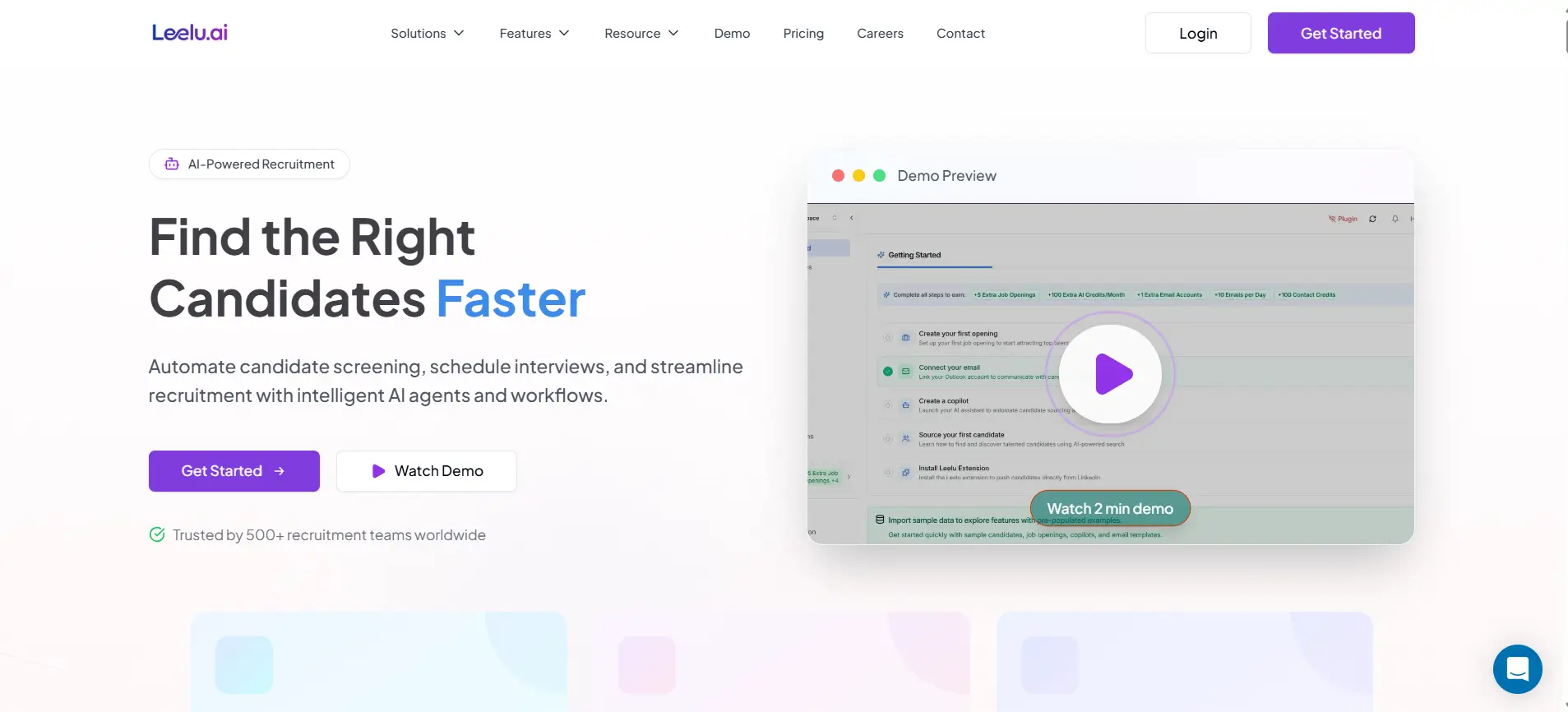
Leelu ai is one of the best tools for finding passive candidates, especially if you want sourcing and outreach handled in one place instead of stitching together five different tools.
It's built as a full recruiting copilot, not just a search engine.
Passive candidates aren't sitting on job boards waiting for you.
So the features that matter most are the ones built to find them anyway, and actually get a response.
Key Features
Here's what Leelu brings to that specific problem:
- Sources candidates from 500M+ profiles across LinkedIn, Indeed, Monster, and ATS platforms, so you're not limited to people actively applying
- Uses AI matching to rank candidates by job fit in seconds, instead of manually scanning hundreds of profiles
- Sends personalized outreach across email and LinkedIn automatically, so messages don't feel like a mass blast
- Handles follow-ups and replies around the clock, which matters most with passive candidates since they rarely respond the first time
- Schedules interviews directly through calendar sync, once someone finally says yes
Most tools stop at search.
Leelu keeps going through outreach, follow-up, and scheduling, which is exactly where passive candidates tend to fall through the cracks.
How It Helps Find and Engage Passive Candidates
Most passive candidates never open a job board.
They're heads-down at their current job, not actively looking.
Leelu finds them anyway by scanning multiple platforms at once.
Once identified, the AI drafts outreach that actually sounds personal.
Then it follows up automatically if there's no response.
That persistence is usually what turns a passive candidate into an interview.
Pricing
Leelu keeps pricing flexible depending on how much sourcing and outreach you actually need.
There's a free plan to start.
- Free: 50 data credits, 10 AI credits, 1 phone credit
- Pro: $34/month — 10,000 data credits, 500 AI credits, 200 phone credits
- Max: $79/month — 25,000 data credits, 1,000 AI credits, 600 phone credits
- Enterprise: Custom pricing for high-volume prospecting and outreach
Need more room without upgrading tiers?
Add-on credit packs are available for phone, email, and enrichment usage.
There's even a phone-credit-only plan for teams focused mainly on finding direct numbers.
Suggested Reading:
13 Passive Candidate Outreach Tactics to Fill Roles Quickly2. LinkedIn Recruiter
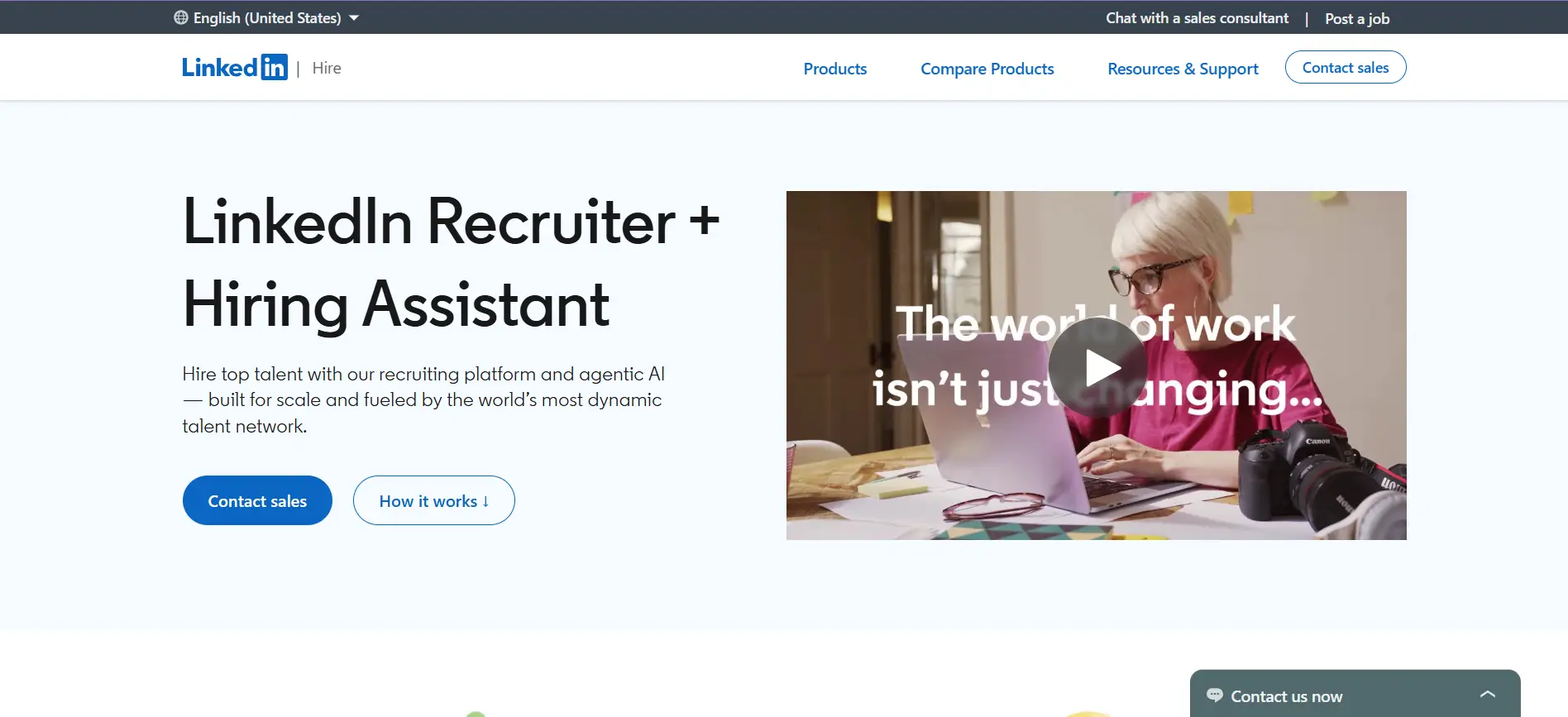
LinkedIn is where most recruiters start.
Makes sense, since that's where the majority of passive candidates already keep their profiles updated.
Key Features
- Access to LinkedIn's full network, including third and fourth-degree connections
- Advanced search filters based on skills, seniority, and job history
- InMail credits for direct outreach to candidates outside your network
- Team collaboration tools for shared pipelines and notes
- Integration with major ATS platforms
How It Helps Find and Engage Passive Candidates
Most professionals keep a LinkedIn profile even when they're not job hunting.
That makes it one of the few places you can reliably find passive talent.
The catch is response rates.
LinkedIn Recruiter Lite costs $170/mo, Corporate $835+/mo, and generic InMails typically pull in far lower response rates than personalized, multi-channel outreach.
Pricing
Recruiter Lite runs around $170 per month, while Professional Services sits between $6,000 and $10,000 per seat annually, and Corporate can exceed $15,000 per seat per year depending on team size and add-ons
3. SeekOut
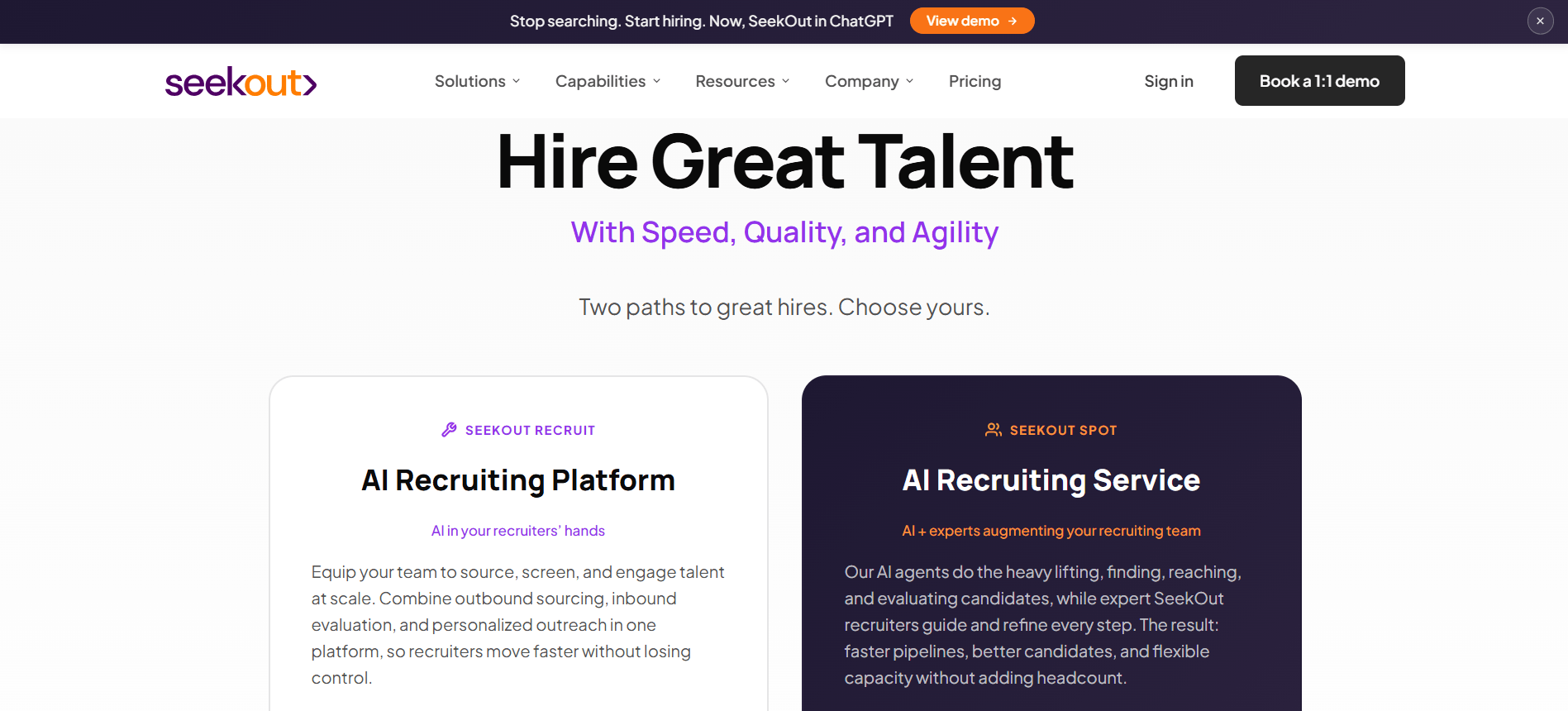
SeekOut takes a different angle than most sourcing tools.
Instead of just scanning LinkedIn, it pulls candidate data from GitHub, patents, and research publications too.
That makes it a solid pick when you're hiring for technical or highly specialized roles.
Key Features
- Searches 800M+ profiles across LinkedIn, GitHub, and academic sources
- AI-powered talent briefs that infer skills beyond job titles
- Deep diversity and DEI sourcing filters
- Talent pipeline workspace for managing shortlisted candidates
How It Helps Find and Engage Passive Candidates
Technical passive candidates rarely rely on job boards.
They're active on GitHub, publishing research, or contributing to open-source projects instead.
SeekOut finds them there, then enriches profiles with contact data so outreach doesn't dead-end.
The messaging tools are functional, but not as automated as purpose-built outreach platforms.
Pricing
SeekOut doesn't publish standard pricing.
Contracts typically range from $10,000 to $30,000+ per year, with a median around $20,000 based on negotiated deals.
4. hireEZ
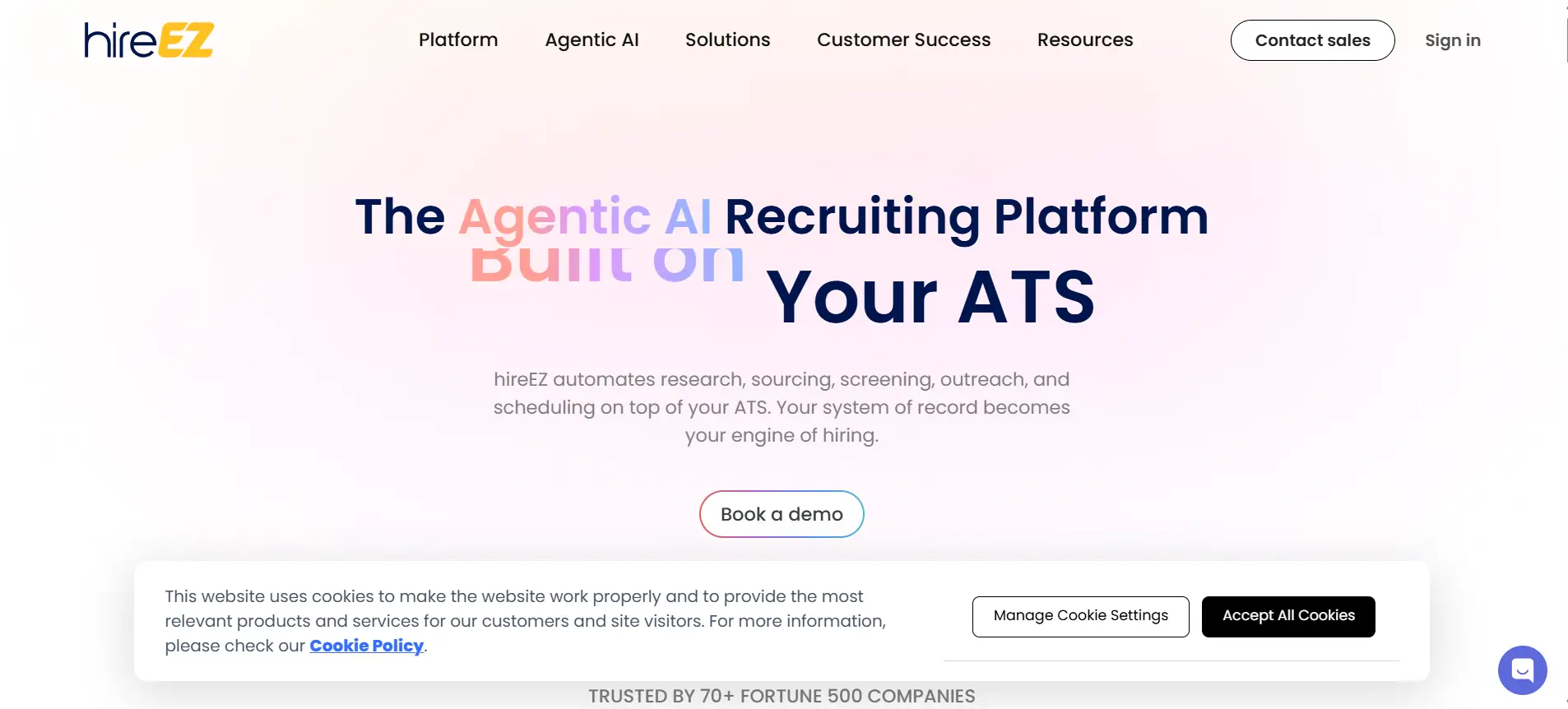
hireEZ takes a different approach from a single-database tool.
It pulls candidates from LinkedIn, GitHub, Stack Overflow, and dozens of other open-web sources at once.
That breadth makes it a favorite for technical and hard-to-fill roles.
Key Features
- Sources across 40+ open-web platforms in one search
- Agentic AI automates sourcing, shortlisting, and outreach steps
- ATS Rediscovery surfaces past candidates already sitting in your database
- Connects with 30+ ATS systems for pipeline sync
How It Helps Find and Engage Passive Candidates
Passive candidates often live outside LinkedIn entirely, especially in engineering and research-heavy fields.
hireEZ finds them across GitHub repos, papers, and niche communities.
Outreach is limited to email and InMail though, so multi-channel follow-up isn't as deep as some competitors.
Pricing
hireEZ doesn't publish pricing.
Real contracts typically land around $13,000 per year, ranging anywhere from $6,600 to $25,000 depending on seats and modules.
5. Gem
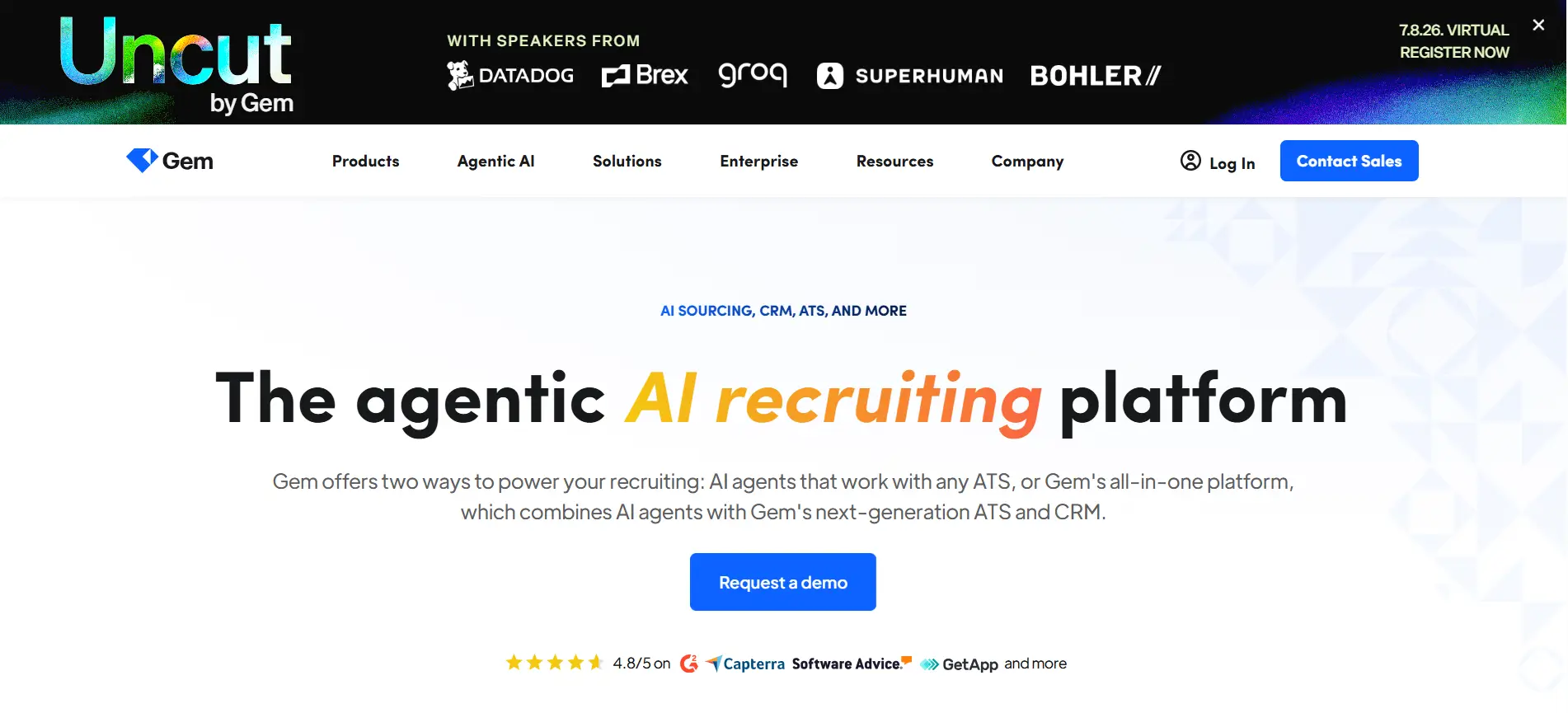
Gem started as a Chrome sourcing extension.
It's since grown into a full recruiting CRM.
Now it combines sourcing, outreach, ATS, and analytics in one platform.
Key Features
Gem's strength is its all-in-one design.
- AI sourcing across 800M+ profiles
- Omni-channel outreach sequences with email, InMail, and SMS
- Built-in ATS with customizable pipelines
- Talent Compass dashboards for pipeline analytics
That's a lot bundled into one workspace.
How It Helps Find and Engage Passive Candidates
Passive candidates rarely respond to a single message.
Gem runs multi-step sequences automatically, testing what actually gets a reply.
Its CRM also rediscovers past candidates who weren't a fit before but might be now.
That silver-medalist pool often turns into your fastest pipeline.
Pricing
Gem's startup plan starts around $135 to $270 per month.
Growth and Enterprise plans move to custom pricing, with real contracts averaging $19,800 to $94,560 a year depending on team size.
6. Loxo
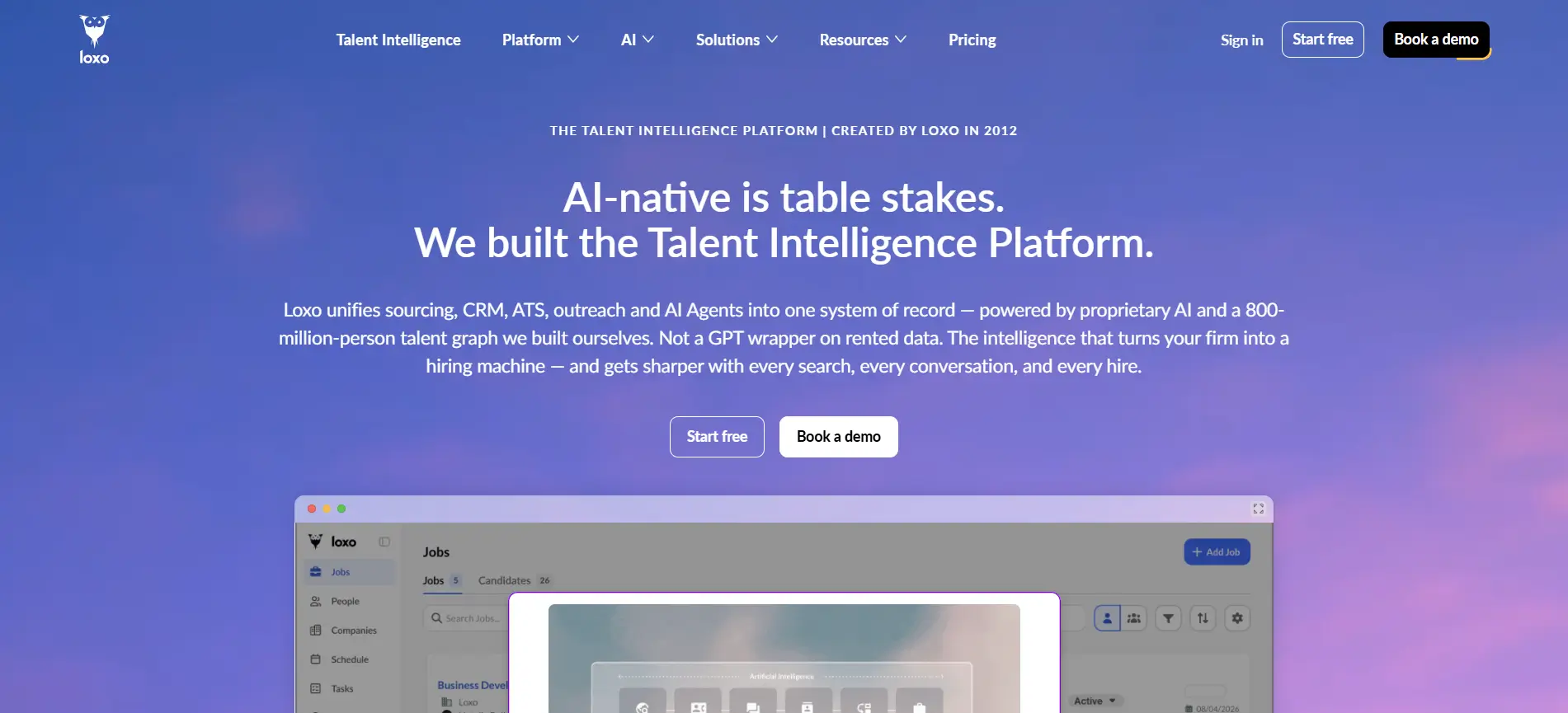
Loxo takes a "replace your whole stack" approach.
It bundles ATS, CRM, sourcing, and outreach into one system instead of layering separate tools together.
That consolidation is the whole pitch.
Key Features
Here's what's included across the platform:
- Access to 1.2 billion candidate profiles with verified emails and phone numbers
- AI-assisted search and candidate matching through Loxo's Copilot
- Multi-channel outreach with email, text, and calling built in
- A built-in Sales CRM for recruiter business development
That's a lot living under one login.
How It Helps Find and Engage Passive Candidates
Loxo's database leans heavily on verified personal contact info, not just work emails.
That matters for passive candidates who rarely check work inboxes.
Once you find someone, outreach campaigns run automatically across channels, so follow-ups don't fall through the cracks.
Pricing
Loxo offers a free plan for solo users.
Paid plans start around $109 to $119 per month, with Professional and Enterprise tiers requiring custom quotes.
7. AmazingHiring
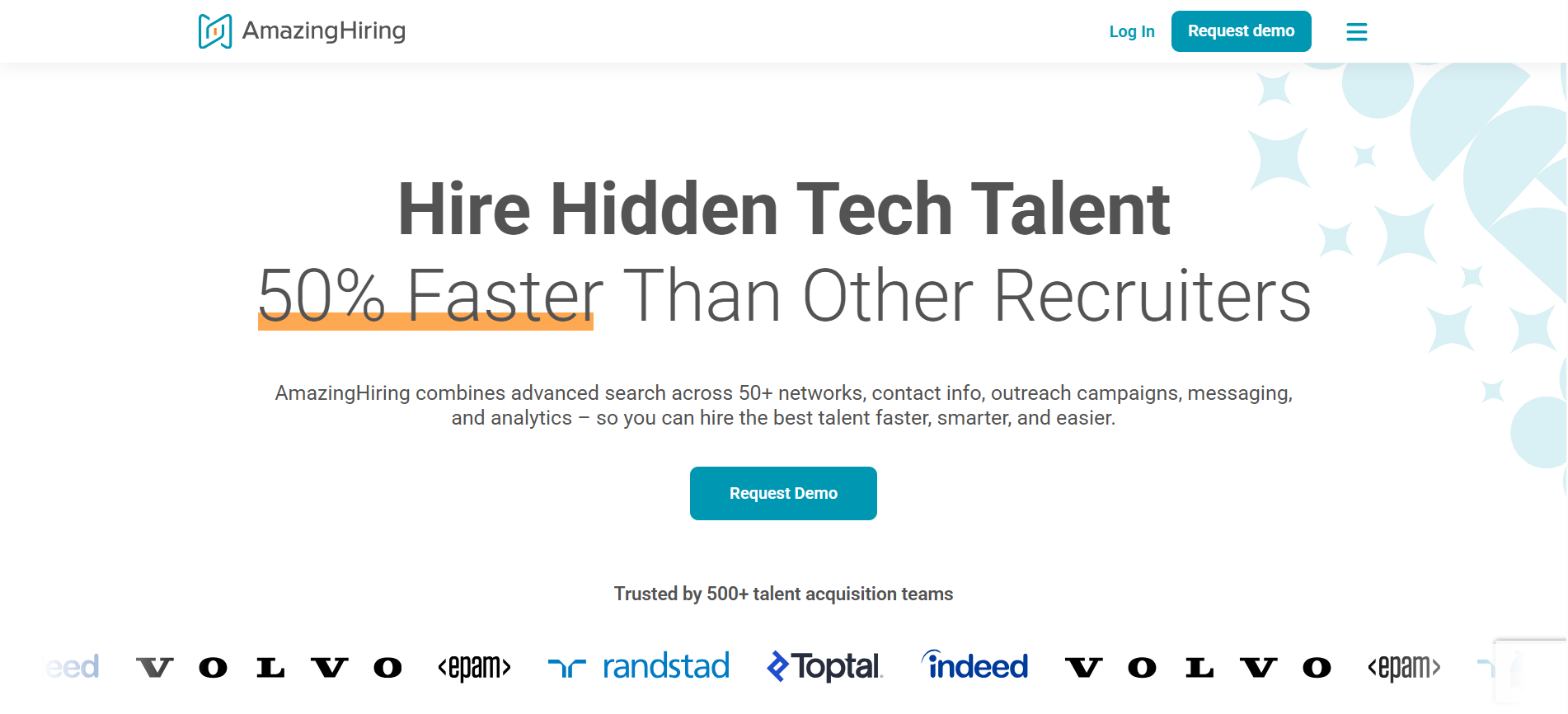
AmazingHiring goes all-in on one thing: technical talent.
It's built specifically for sourcing engineers, data scientists, and other hard-to-fill tech roles.
That focus shows up everywhere in how the platform works.
Key Features
- Aggregates 600M+ profiles from 50+ sources, including GitHub, Stack Overflow, and Kaggle
- AI ranking based on GitHub commits, coding activity, and technical signals
- Boolean search with diversity and geography filters
- Chrome extension for real-time sourcing while browsing LinkedIn or GitHub
How It Helps Find and Engage Passive Candidates
Most passive engineers aren't updating their LinkedIn.
They're pushing code, answering Stack Overflow questions, and building side projects instead.
AmazingHiring finds them through that activity, then surfaces personal and work emails so outreach doesn't rely on LinkedIn InMails.
Some users report response rates above 55% once they're reaching people through the right channel.
Pricing
AmazingHiring doesn't publish pricing.
Reported costs run around $3,600 to $4,800 per user per year, with quotes available on request.
8. Fetcher
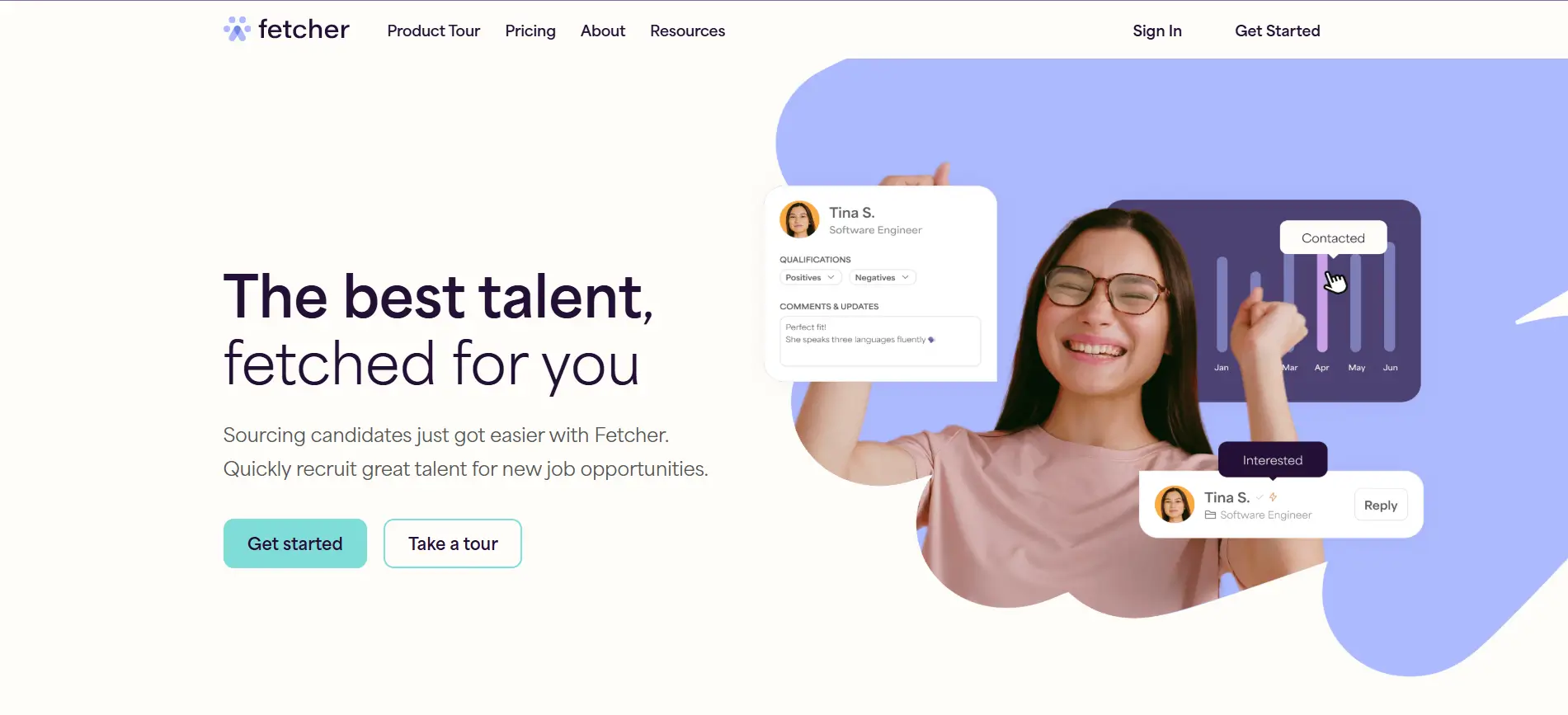
Fetcher takes a hybrid approach.
AI sources candidates, then a human sourcing specialist reviews and refines the list before it reaches you.
That mix of automation and human judgment is Fetcher's core pitch.
Key Features
- AI sourcing combined with human-reviewed candidate curation
- Automated email sequences for outreach and follow-ups
- Diversity-focused sourcing filters and reporting
- ATS integrations with Greenhouse, Lever, and Workday
How It Helps Find and Engage Passive Candidates
Passive candidates don't respond to generic outreach.
Fetcher's outreach campaigns report around 40% average response rates, partly because a human reviews candidate fit before messages go out.
The tradeoff is volume.
Growth and Amplify plans cap you at 500 to 1,000 sourced candidates a year, which can feel tight if you're hiring at scale.
Pricing
Fetcher starts at $379/month on the Growth plan.
Amplify runs $649/month, and Enterprise pricing is custom, with real contracts averaging around $11,000 a year.
9. Recruit CRM
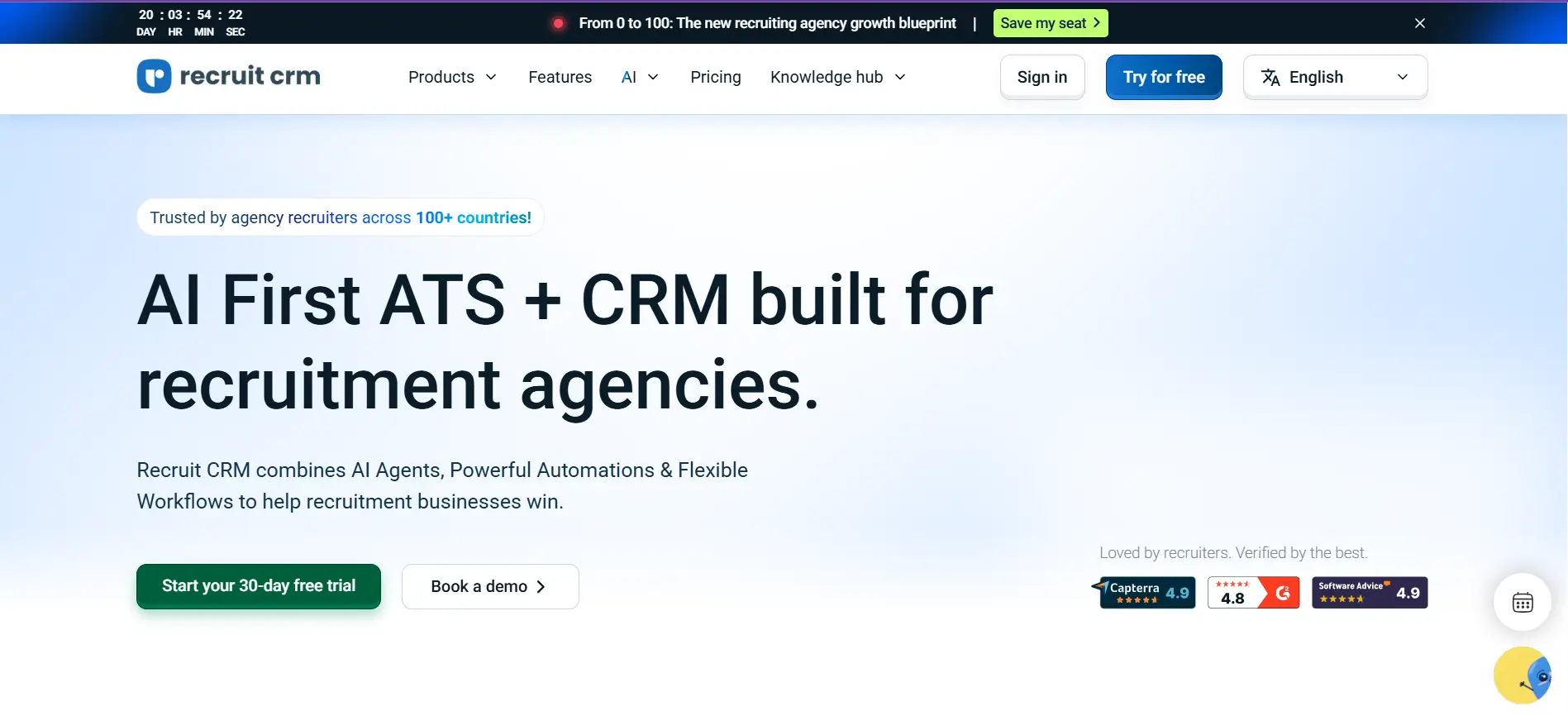
Recruit CRM leans more into the agency and executive search world.
It combines an ATS with a full CRM, so client and candidate management sit in the same place.
That's a different focus than pure sourcing tools.
Key Features
- Chrome extension for pulling candidates straight from LinkedIn
- AI resume parsing and candidate matching
- Email, SMS, and LinkedIn outreach sequencing
- Workflow automation with no-code triggers
How It Helps Find and Engage Passive Candidates
Passive candidates often get lost between spreadsheets, inboxes, and LinkedIn tabs.
Recruit CRM keeps sourcing, outreach, and client updates in one workspace, so nothing slips through.
Its LinkedIn messaging integration also tracks conversations directly inside the platform, which helps when following up on cold outreach.
Pricing
Plans start around $95 to $109 per user per month.
Annual billing on Pro and Business plans gets up to 20% off, and a free trial is available with no credit card required.
10. ContactOut

ContactOut solves a narrower problem.
It's not a full sourcing platform.
It's built to find verified emails and phone numbers for people you've already identified, usually straight from LinkedIn.
Key Features
- Chrome extension that reveals contact info directly on LinkedIn profiles
- Search portal covering 300M+ professionals with 20+ filters
- Email campaign builder for basic outreach sequences
- Data enrichment for existing candidate lists via CSV upload
How It Helps Find and Engage Passive Candidates
You already know which passive candidates you want to reach.
The problem is getting their actual contact details, not another InMail that sits unread.
ContactOut's Chrome extension pulls verified personal emails and phone numbers right from the profile, so outreach doesn't depend on LinkedIn's messaging limits.
Pricing
Plans run from a free tier up to $99/month for Email+Phone access.
Team and API access is custom priced, with fair-use caps around 2,000 email credits per user monthly.
11. Wellfound
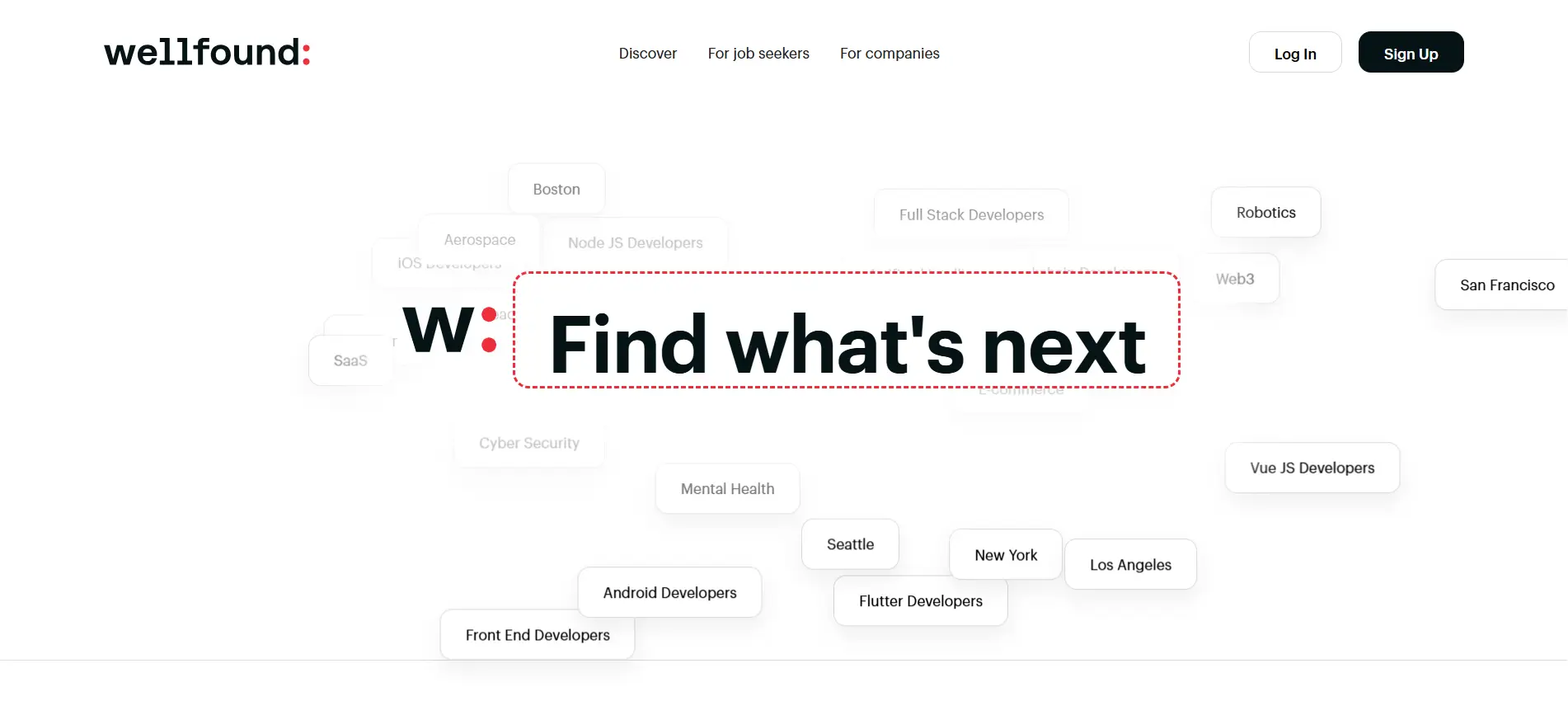
Wellfound has a different vibe than the rest of this list.
It's built specifically for startups, not enterprise recruiting teams.
That focus shapes everything about who's on the platform.
Key Features
- 10M+ startup-intent candidates plus 500M+ enriched external profiles
- Free ATS with unlimited job postings
- AI Autopilot for automated sourcing and outreach
- Salary and equity transparency built into job listings
How It Helps Find and Engage Passive Candidates
Startup candidates on Wellfound already want startup jobs.
That's different from cold-sourcing someone off LinkedIn who's happy at a big company.
Wellfound Reach responds at noticeably higher rates than typical outreach, partly because candidates opted in specifically for this kind of opportunity.
Pricing
The free tier covers job posting and basic ATS access.
Recruit Pro starts around $250 per month per seat, with Curated and Enterprise plans scaling up from there.
How to Choose the Best Tools for Finding Passive Candidates
You've now seen 11 tools, each with a different angle.
That's a lot to compare at once.
So let's break down how to actually pick between them.
Match the platform to your hiring goals
Start with what you're actually hiring for.
A startup filling its first ten roles has different needs than an enterprise team running fifty open reqs.
- Hiring mostly tech roles? Look at tools built for GitHub and technical sourcing
- Hiring across functions? You'll want broader platform coverage
- Small team, tight budget? Prioritize tools with transparent, scalable pricing
- High volume, multiple recruiters? Look for team collaboration features
The right tool isn't the one with the most features.
It's the one that fits how you actually hire.
Compare candidate databases and data quality
A huge database means nothing if the data is stale.
Outdated titles and dead emails waste more time than they save.
Before committing, check how often the platform refreshes candidate data.
Also check how deep the coverage goes beyond LinkedIn.
Some tools pull from GitHub, patents, and niche communities.
Others rely almost entirely on one source.
Evaluate outreach automation and integrations
Sourcing is only step one.
You still need candidates to respond, and that depends on how outreach is built.
Look for tools that support multi-channel sequences, not just a single email blast.
Check whether follow-ups happen automatically or if you're manually tracking who's been contacted.
And confirm the tool actually connects to your ATS.
If it doesn't, you'll end up copying data back and forth manually, which defeats the purpose of automating anything.
Balance pricing with long-term value
Cheaper isn't always better, and expensive isn't always justified.
What matters is cost per hire, not just the sticker price.
A $99/month tool that gets you nowhere is more expensive than a $300/month tool that fills roles fast.
Before signing anything, ask what happens at scale.
Some platforms look affordable until you add seats, credits, or contact reveals.
Others, like Leelu, keep pricing predictable with credit-based plans that scale as your hiring volume grows.
That kind of clarity upfront saves you from renewal surprises down the line.
Conclusion
Passive candidates aren't hiding.
They're just not looking, which means the burden is on you to find them and reach out well.
The 11 tools above each solve a piece of that puzzle.
Some are stronger on database size, others on outreach or contact accuracy.
Pick based on what your team actually struggles with, not what looks impressive on a features page.
If you'd rather not juggle five tools to do what one could handle, Leelu covers sourcing, enrichment, and outreach in a single workflow.
Worth a look before you build out a bigger stack than you need.
Frequently Asked Questions (FAQs)
How many passive candidate sourcing tools should a recruiting team actually use at once?
Most teams do fine with one or two.
One tool for broad sourcing, maybe one specialized tool for technical or niche roles.
Stacking five or six tools usually creates more data fragmentation than it solves.
Do passive candidates respond differently to LinkedIn InMail versus email outreach?
Generally yes.
Email tends to feel less transactional than InMail, especially when personalized.
Many recruiters see stronger response rates blending both channels instead of relying on just one.
How long should a passive candidate outreach sequence run before giving up?
Most effective sequences run three to five touches over two to three weeks.
Fewer touches often miss the response window.
Too many can start to feel like spam instead of genuine interest.
Is it worth sourcing passive candidates for entry-level roles, or just senior positions?
It depends on your talent pool.
For competitive entry-level roles, especially in tech, passive sourcing still helps.
For high-volume, easily filled roles, inbound applications are usually more efficient than active outreach.
Can a small recruiting team realistically compete with LinkedIn Recruiter using cheaper tools?
Yes, often more effectively.
Smaller platforms tend to offer better response automation and multi-channel outreach at a fraction of Recruiter's cost, which matters more for reply rates than raw database size alone.


