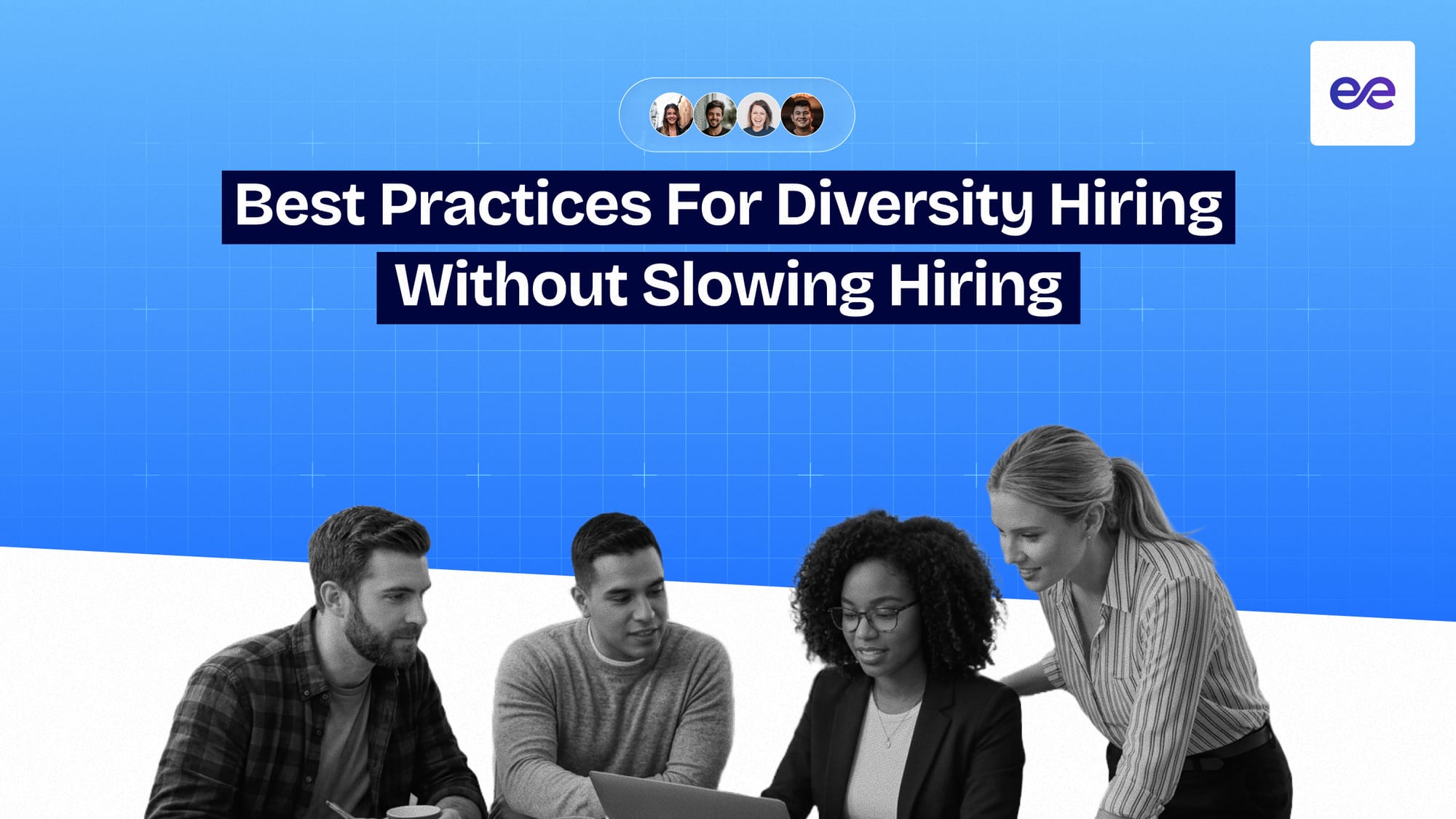
Hiring diverse talent often feels like a trade-off between doing the right thing and moving fast.
You want inclusive teams, but long pipelines, manual screening, and limited sourcing can slow everything down.
The truth is, diversity hiring doesn’t have to delay your process if done right.
In this guide, you’ll learn:
- How to hire more diverse candidates without slowing down
- Practical ways to remove bias while improving speed
- 10 best practices that actually work in real hiring scenarios
Why Diversity Hiring Matters in Modern Recruitment
You might think diversity hiring is just about meeting goals or checking boxes, but it directly impacts how your team performs and grows.
When you approach it strategically, it doesn’t slow hiring down. It actually makes your process stronger, wider, and more effective.
Diverse Teams Drive Better Business Outcomes
When your team includes people from different backgrounds, perspectives naturally expand.
You get more balanced discussions, fewer blind spots, and better overall outcomes.
This often shows up in stronger performance, higher retention, and teams that adapt faster to change.
Inclusive Hiring Expands Your Talent Pool
If you hire from the same networks every time, you limit who you can reach.
Inclusive hiring helps you tap into talent you might otherwise overlook, making your pipeline richer and more competitive.
This means you’re not just filling roles faster, but also finding better-fit candidates.
Diversity Improves Innovation and Decision-Making
Innovation doesn’t come from similar thinking. It comes from different viewpoints challenging each other.
When your hiring process brings in varied perspectives, your team becomes better at solving problems and making thoughtful decisions.
Strong Diversity Practices Strengthen Employer Brand
Candidates today pay attention to how companies hire, not just what they offer.
When your hiring reflects real commitment to diversity, it builds trust and makes your company more attractive to top talent.
10 Best Practices for Diversity Hiring Without Slowing Hiring
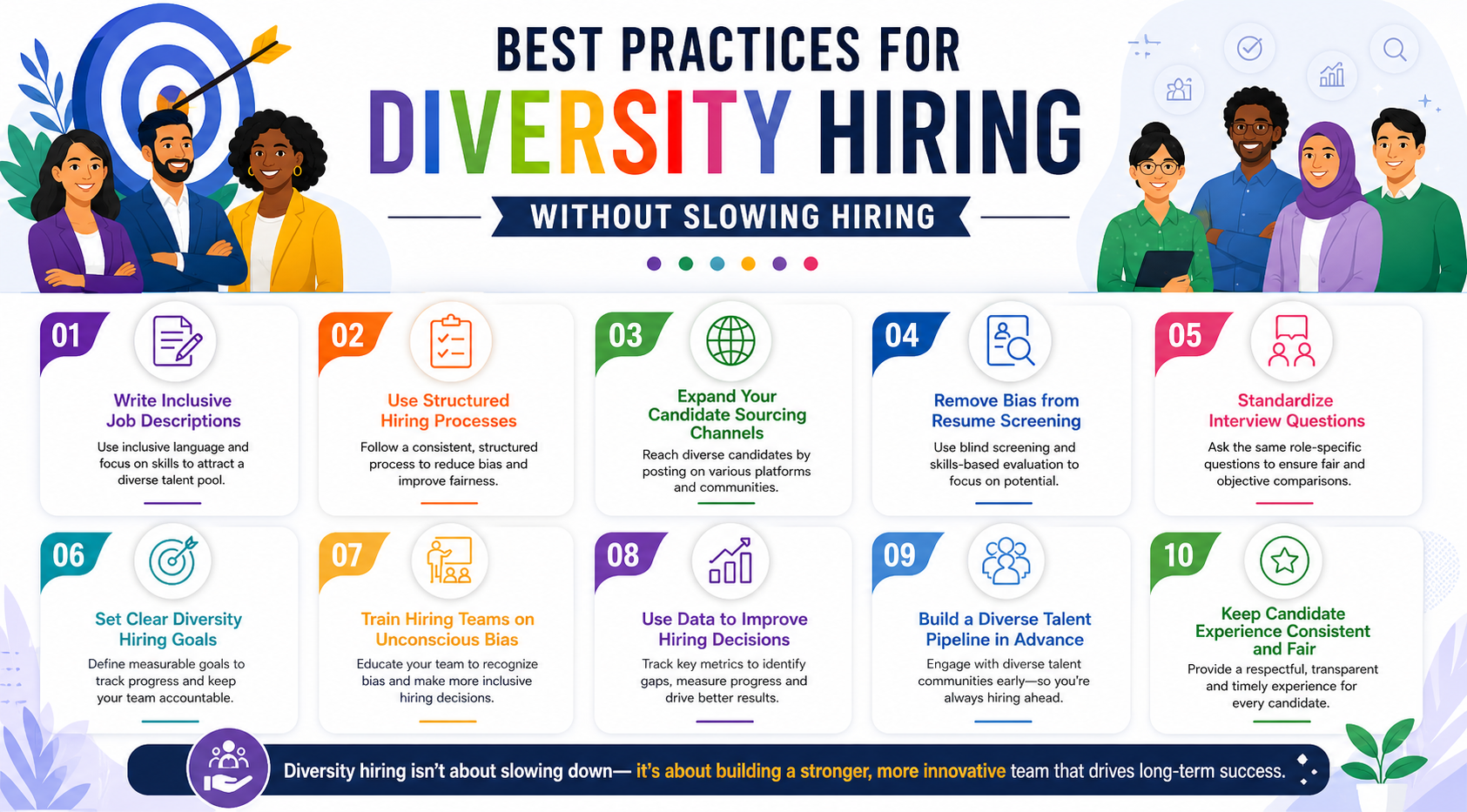
Now that you know why diversity hiring matters, the next question is practical.
How do you actually implement it without adding friction to your hiring process?
The key is not doing more work, but doing the right work in a smarter way.
These best practices will help you build a faster, more inclusive hiring system without stretching timelines.
1. Write Inclusive Job Descriptions
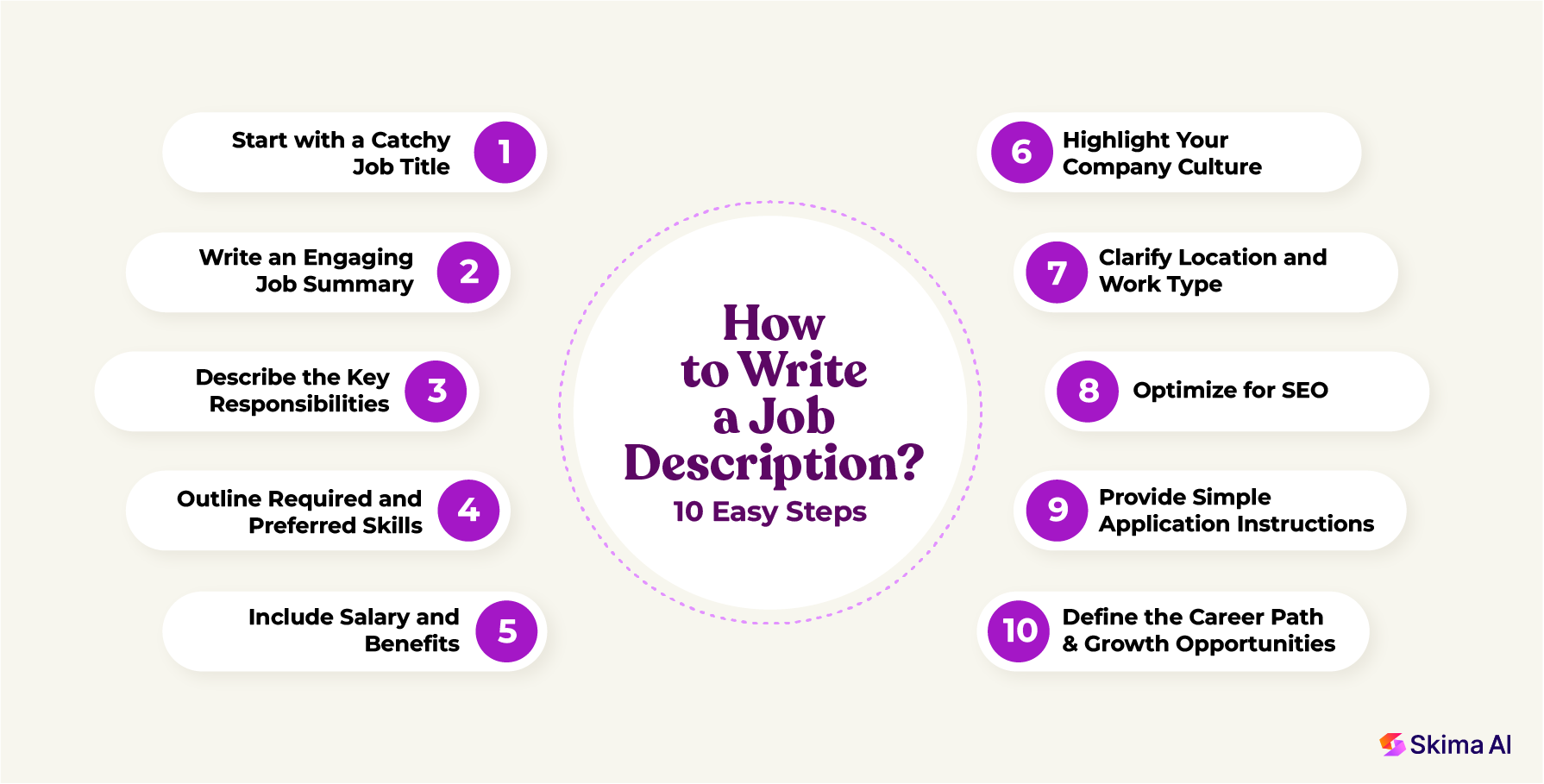
Your hiring process starts long before candidates apply. It begins with how your job description speaks to them.
Many job descriptions unintentionally discourage diverse candidates by using biased language, unrealistic requirements, or unclear expectations.
Small wording choices can decide who feels encouraged to apply and who opts out.
To make your job descriptions more inclusive:
- Avoid gender-coded or overly aggressive language
- Focus on must-have skills instead of long wishlists
- Use clear, simple language instead of jargon-heavy descriptions
- Highlight flexibility, growth, and inclusive culture
When you remove unnecessary barriers at this stage, you attract a broader range of candidates without increasing effort later.
This reduces drop-offs and improves the quality of applicants coming into your pipeline.
2. Use Structured Hiring Processes
Unstructured hiring is where both bias and inefficiency quietly grow.
When every interviewer follows a different approach, decisions become inconsistent and slower.
A structured hiring process creates clarity and speed at the same time.
Instead of relying on gut feeling, you evaluate every candidate using the same criteria.
Here’s how to implement it:
- Define clear evaluation criteria before starting interviews
- Use standardized scorecards for every candidate
- Align your hiring team on what “good” looks like
- Set clear decision timelines
This approach reduces back-and-forth discussions and speeds up decision-making.
At the same time, it ensures fairness because every candidate is assessed on equal ground.
3. Expand Your Candidate Sourcing Channels
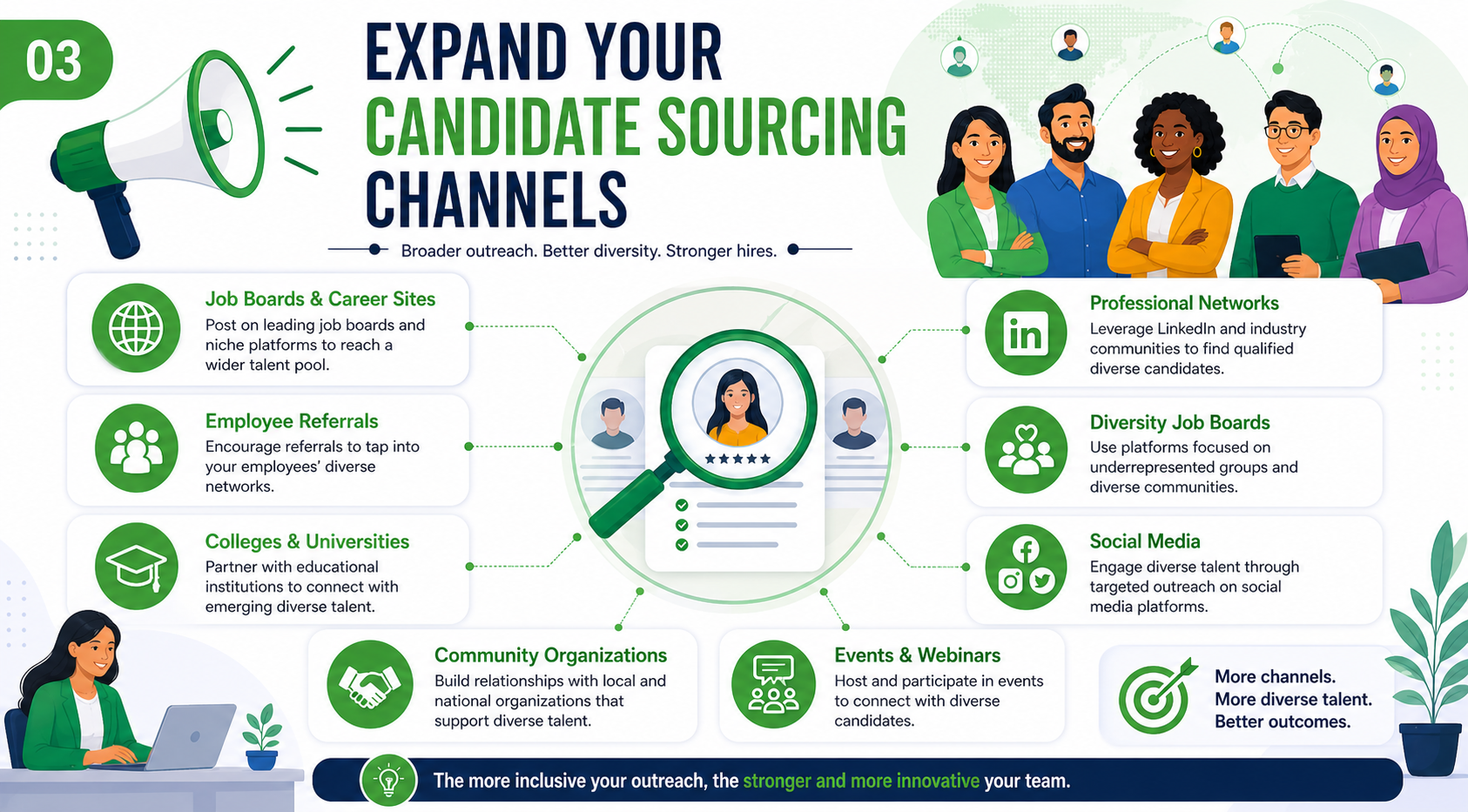
If you keep sourcing from the same places, you’ll keep getting the same type of candidates.
That limits diversity and slows down hiring when those pipelines dry up.
Expanding your sourcing channels helps you access untapped talent pools without increasing manual effort.
You can do this by:
- Exploring niche job boards and communities
- Partnering with diversity-focused organizations
- Engaging with talent groups across different regions and backgrounds
- Leveraging multiple platforms instead of relying on one
The goal is not to source more manually, but to source smarter across wider networks.
When your reach increases, your chances of finding the right candidate faster also improve.
Suggested Reading:
Top 7 Talent Sourcing Platforms4. Remove Bias from Resume Screening
Resume screening is one of the biggest bottlenecks in hiring.
It’s time-consuming, and unconscious bias can easily influence decisions at this stage.
When bias enters early, it not only affects diversity but also leads to missed high-quality candidates.
You can make this step both faster and fairer by:
- Using blind screening techniques (removing names, photos, etc.)
- Defining clear screening criteria before reviewing resumes
- Focusing on skills and outcomes instead of background signals
- Automating initial screening where possible
This helps you move through large volumes of candidates quickly without compromising fairness.
Instead of filtering based on assumptions, you focus on actual capability.
5. Standardize Interview Questions
Interviews often become inconsistent without you realizing it.
Different candidates are asked different questions, which makes comparison difficult and decisions slower.
Standardizing interview questions solves both problems at once.
It ensures fairness while also making evaluation quicker and clearer.
Here’s how to do it effectively:
- Create a fixed set of role-specific questions
- Ask every candidate the same core questions
- Use a consistent scoring framework for responses
- Train interviewers to stick to structured evaluation
This reduces bias and eliminates unnecessary discussions during decision-making.
When every candidate is evaluated on the same parameters, hiring becomes both faster and more reliable.
6. Set Clear Diversity Hiring Goals
If your diversity hiring efforts are vague, your results will be too.
Without clear goals, teams often default to familiar patterns, which slows progress and creates inconsistency.
Setting specific, realistic diversity hiring goals gives your team direction without adding complexity.
You don’t need overly complicated targets. What matters is clarity and alignment.
Here’s how you can approach it:
- Define what diversity means for your organization
- Set measurable goals for representation or pipeline diversity
- Align hiring managers and recruiters on these targets
- Track progress regularly without overcomplicating reporting
When everyone knows what they’re working toward, decisions become faster and more intentional.
This reduces hesitation during hiring and keeps your process moving smoothly.
7. Train Hiring Teams on Unconscious Bias
Bias doesn’t always show up in obvious ways.
It often appears in small decisions, quick judgments, or “gut feelings” during hiring.
If your hiring team isn’t aware of this, even a well-designed process can become inconsistent.
Training helps your team recognize and reduce these patterns without slowing them down.
You can make this practical by:
- Running short, focused training sessions instead of long workshops
- Sharing real hiring scenarios to make learning relatable
- Encouraging structured decision-making over intuition
- Reinforcing bias awareness regularly, not just once
The goal isn’t to make hiring rigid, but to make it more intentional.
When your team becomes aware of bias, decisions become clearer and faster.
8. Use Data to Improve Hiring Decisions
When hiring decisions rely only on opinions, they take longer and often lead to disagreements.
Data brings clarity, which speeds up both evaluation and decision-making.
Instead of debating, your team can rely on measurable insights.
You can use data effectively by:
- Tracking diversity metrics across your hiring funnel
- Identifying where drop-offs happen for different candidate groups
- Measuring time-to-hire alongside diversity outcomes
- Using performance data to refine your hiring criteria
This helps you spot inefficiencies early and fix them before they slow you down.
Over time, your hiring process becomes more predictable, faster, and more inclusive.
Suggested Reading:
Top HR Metrics Every HR Professional Should Track9. Build a Diverse Talent Pipeline in Advance
One of the biggest reasons hiring slows down is starting from scratch every time.
If you wait until a role opens to look for diverse candidates, you’ll always feel behind.
Building a pipeline in advance removes that pressure.
You already have a pool of qualified, diverse candidates ready to engage.
Here’s how to do it:
- Continuously source and engage candidates even when roles aren’t open
- Stay connected with past applicants and passive talent
- Build relationships with diverse communities and networks
- Use tools that help you manage and nurture talent pools
This shifts your hiring from reactive to proactive.
When a role opens, you move faster because the groundwork is already done.
10. Keep Candidate Experience Consistent and Fair
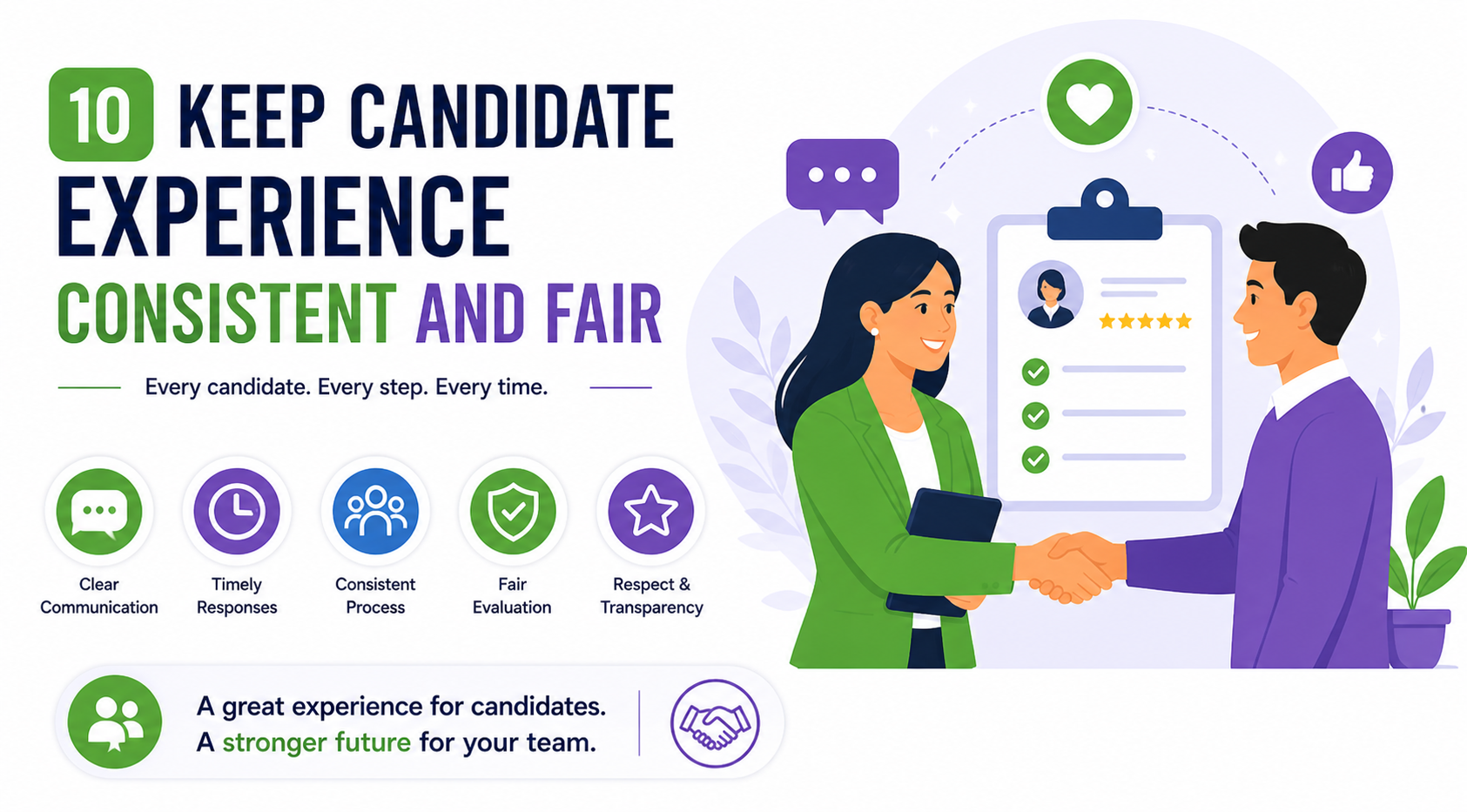
A slow or inconsistent candidate experience can undo all your diversity efforts.
If candidates face delays, unclear communication, or different processes, it affects both speed and perception.
Consistency is what keeps your hiring process efficient and inclusive at the same time.
You can improve this by:
- Setting clear timelines and sticking to them
- Communicating regularly with every candidate
- Ensuring every candidate goes through the same process
- Providing structured feedback when possible
When candidates know what to expect, they stay engaged and move through the process faster.
This reduces drop-offs and helps you close roles more efficiently while maintaining fairness.
How can Leelu AI help in Diversity Hiring
Diversity hiring becomes easier when your process is both structured and fast.
Leelu AI is an AI recruiting copilot that automates sourcing, screening, outreach, and scheduling end-to-end, helping you hire faster while keeping the process consistent and inclusive.
Instead of managing multiple tools and manual steps, you handle everything in one streamlined workflow.
Here’s how Leelu supports diversity hiring step by step:
- Source Diverse Talent at Scale Access 500M+ candidate profiles across LinkedIn, job boards, and ATS platforms, helping you reach wider and more diverse talent pools without extra effort.
- Screen & Match Candidates Objectively Screen and rank 1000+ resumes in minutes using AI scoring, so decisions are based on skills and fit rather than manual bias.
- Engage with Personalized Outreach Send 100–300 personalized messages daily across email and LinkedIn, ensuring every candidate gets equal and consistent communication.
- Automate Follow-Ups Continuously Keep candidates engaged with 24/7 automated responses, reducing drop-offs and ensuring no candidate is missed.
- Schedule Interviews Instantly Book interviews in under a minute with calendar sync, removing coordination delays and keeping the process smooth.
- Manage Hiring in One Unified Workflow Reduce hiring effort by 70–85% and move from job posting to first interview in nearly 24 hours while maintaining a fair, structured process.
Conclusion
Diversity hiring becomes easier when you stop treating it as extra work and start building it into your core process.
With the right structure, clear goals, and consistent workflows, you can improve both hiring speed and inclusivity together.
The focus should always be on removing friction, not adding steps.
When you combine practical hiring practices with smart systems, you create a process that is faster, fairer, and built to scale.
Frequently Asked Questions
What is diversity hiring and why is it important?
Diversity hiring means building teams with people from different backgrounds, experiences, and perspectives.
It improves decision-making, drives innovation, and helps your company perform better over time.
Does diversity hiring slow down the recruitment process?
It may seem that way if your process is manual or unstructured.
But with the right systems and workflows, diversity hiring can actually speed things up.
How can you make diversity hiring more efficient?
You can improve efficiency by standardizing interviews, removing bias in screening, and expanding sourcing channels.
Automation also plays a key role in reducing delays without affecting inclusivity.
What are the biggest challenges in diversity hiring?
Some common challenges include unconscious bias, limited talent pools, and inconsistent evaluation methods.
These issues can slow down hiring and impact the quality of decisions.
How can technology support diversity hiring?
Technology helps streamline sourcing, screening, and communication across the hiring process.
It ensures consistency, reduces manual effort, and makes hiring faster while staying fair.